A weekend in Bristol, England: what to see, what to do
If you’re looking for a destination for two or three days, think about Bristol, England! It’s a city that’s perfect for a city trip over a long weekend, easy to reach by plane from France or by train from London.
· updated on
For the May 1st long weekend, we decided to give the city of Bristol a chance. On EasyJet’s website, it’s often one of the cheapest destinations on offer for a return trip from Paris. After a bit of research, we realised the city had way more to offer than just its industrial past: we hope this gives you the itch to go there too!
How to get to Bristol from Paris or London
We took a direct return flight (about 1 hour in the air) with EasyJet from Paris-Orly airport, for €69 per person, booking four months ahead. Keep an eye out for the promo periods the airline runs, since prices are very often good for this destination.
You can also get to Bristol from London by train with Great Western Railway (GWR). The direct journey takes about 1 hour 30 minutes between London Paddington and Bristol Temple Meads.
How much time do you need to visit Bristol?
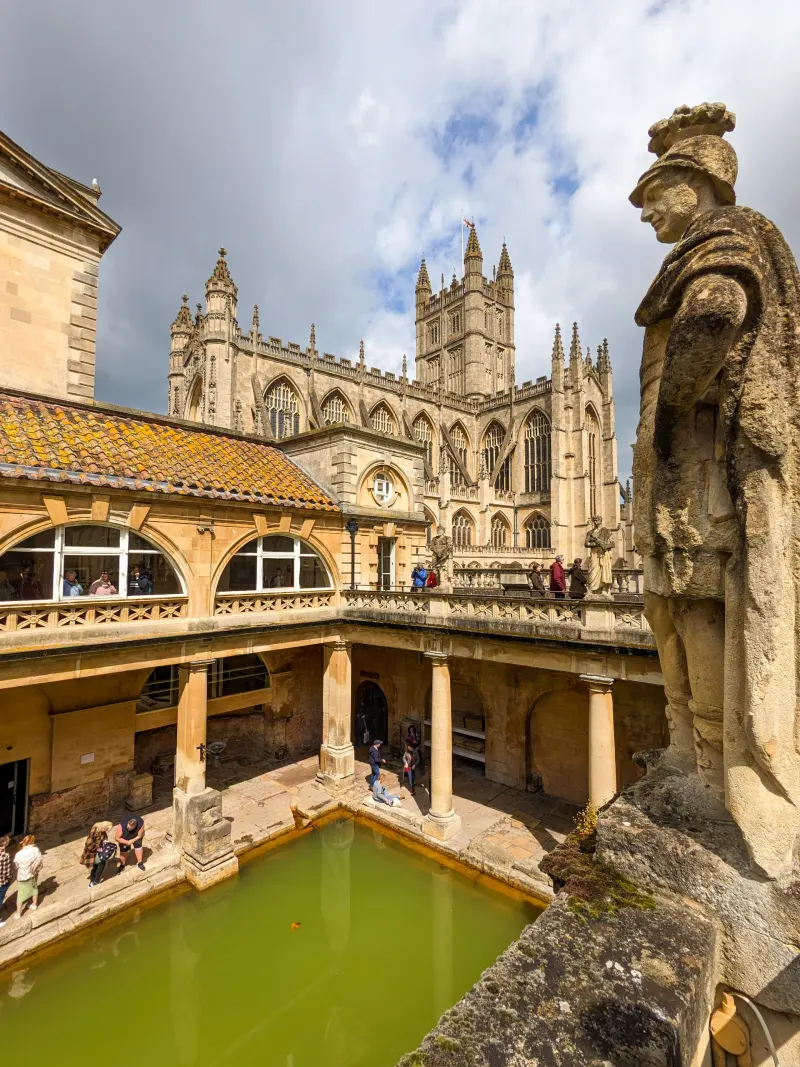
Bristol is a perfect destination for a long weekend: two full days are enough to cover the city and see the must-sees. Plan on an extra day if you want to visit a museum, do an activity, or explore the surrounding area. We stayed 4 nights ourselves to take our time and fit in a day trip to the nearby town of Bath.
Our tips for planning your trip to Bristol
- Get a fee-free international bank card
Since England isn’t part of the eurozone, the local currency is the pound sterling (£). But there’s no need to withdraw cash from an ATM: everything’s paid by card, and contactless at that! We use our BoursoBank Ultim cards, which let us pay in the local currency with no fees at all.
- Don't forget a plug adapter
English electrical outlets (type G) aren’t the same as in France (type E). An adapter is a must if you want to use your electronics during your stay.
- Check your phone plan
Roaming to England can be free depending on your phone carrier. Make sure to check what’s included in your plan to avoid any bad surprises when you land.
Our 2-day itinerary for Bristol
- Day1
- Temple Church
- Finzels Reach
- Old city
- Canon’s Marsh
- End the day in Clifton
- Day2
- Bristol Museum & Art Gallery
- Lunch break at the Harbourside Street Food Market
- Harbourside
- End the day at Ashton Court Estate
What to see and do in Bristol?
Over two full days, we had time to visit the city’s main points of interest and wander through its different neighbourhoods. In this article, we’re listing the must-sees you shouldn’t miss, but also some lesser-known spots off the usual tourist trail.
Bristol is considered one of the most appealing cities in England, having made the most of its industrial heritage and its past as a thriving merchant port. The different neighbourhoods have been renovated and transformed into unique places to live and stroll through: you have to go there to really get the alternative, creative vibe the city gives off! Far from the dreary, dated image you might have in mind, we found Bristol to be a trendy city that’s genuinely nice to live in.
Here’s a route to follow on foot, starting from Bristol Temple Meads station and heading to the Old City:
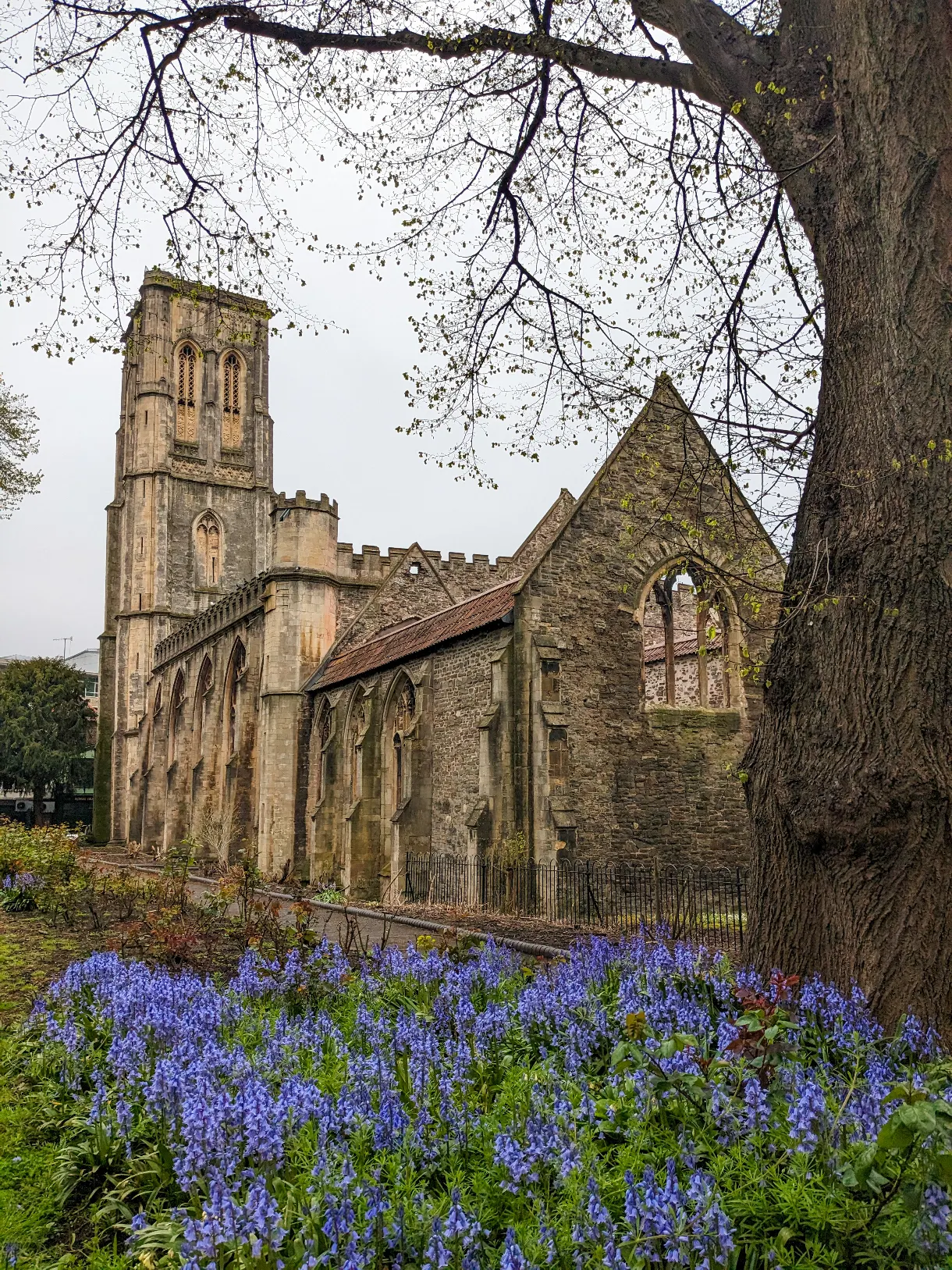
- Temple Church: a lovely park home to the ruins of the Gothic Holy Cross church, completely destroyed during the Second World War. It’s famous in Bristol for its leaning tower, seen as the city’s own version of the Tower of Pisa. A really beautiful spot, not touristy at all, that you won’t find in every guidebook.
- Finzels Reach: on the waterfront, about fifteen minutes from the station, you’ll come across a former industrial neighbourhood that’s been completely redeveloped and now hosts food halls, bars and craft breweries. A market (the Finzels Reach Street Food Market) is held every Wednesday and Friday from 11am on Old Temple Street.
- Then take the Castle Bridge footbridge, which leads straight into Castle Park, one of Bristol’s main parks, a lovely spot for a stroll or a picnic on a sunny day.
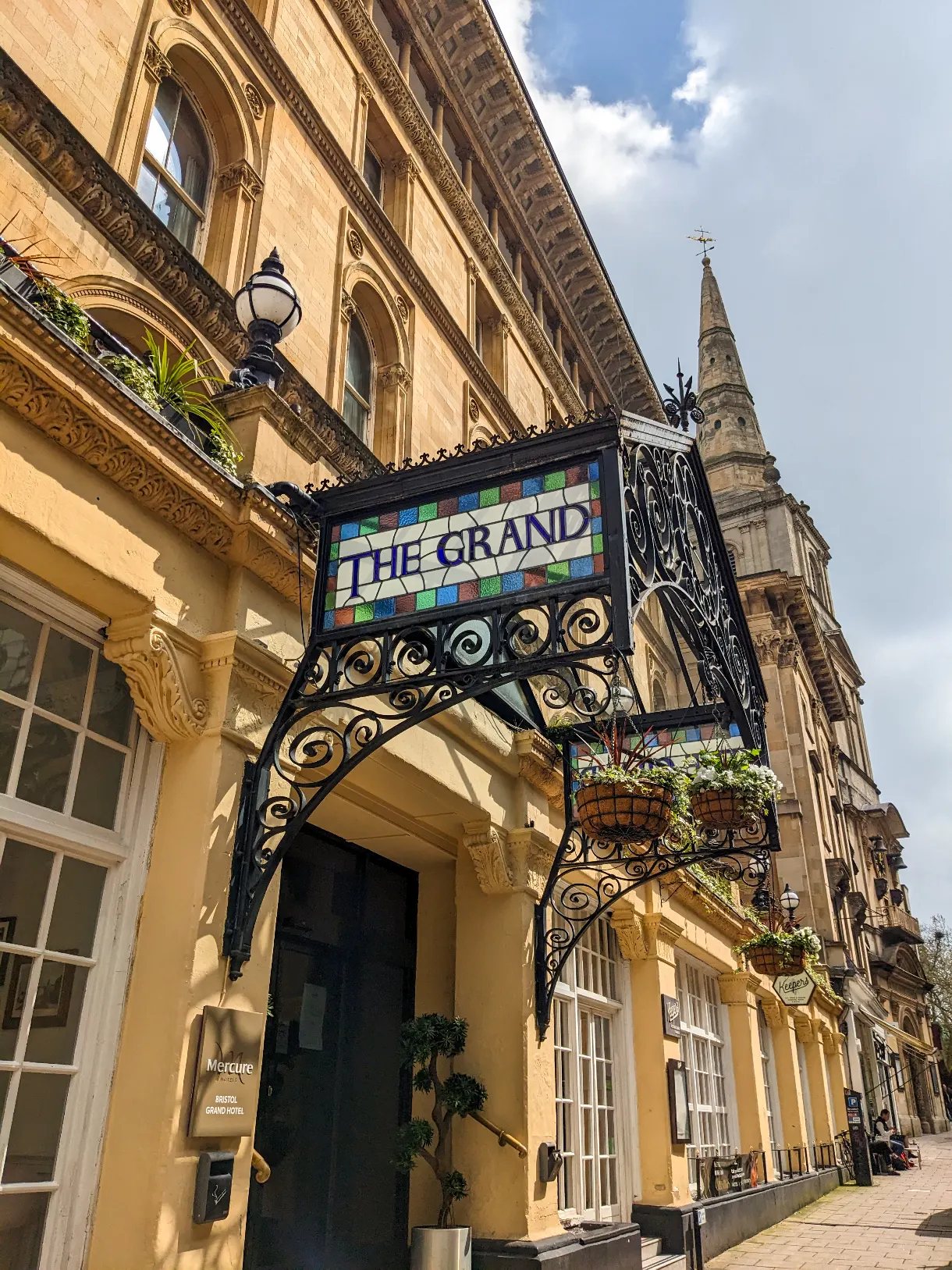
Old city
This is Bristol’s historic heart and the oldest part of the city, once surrounded by medieval walls. Most of the must-see spots and the main landmarks are packed in here: everything’s within walking distance, no need to take any transport. We loved wandering the charming cobbled streets, with their mix of Victorian and Georgian architecture that stands in contrast to the industrial heritage and modernity of the other neighbourhoods. Time for the tour: here are all the places you shouldn’t miss, along with our favourites.
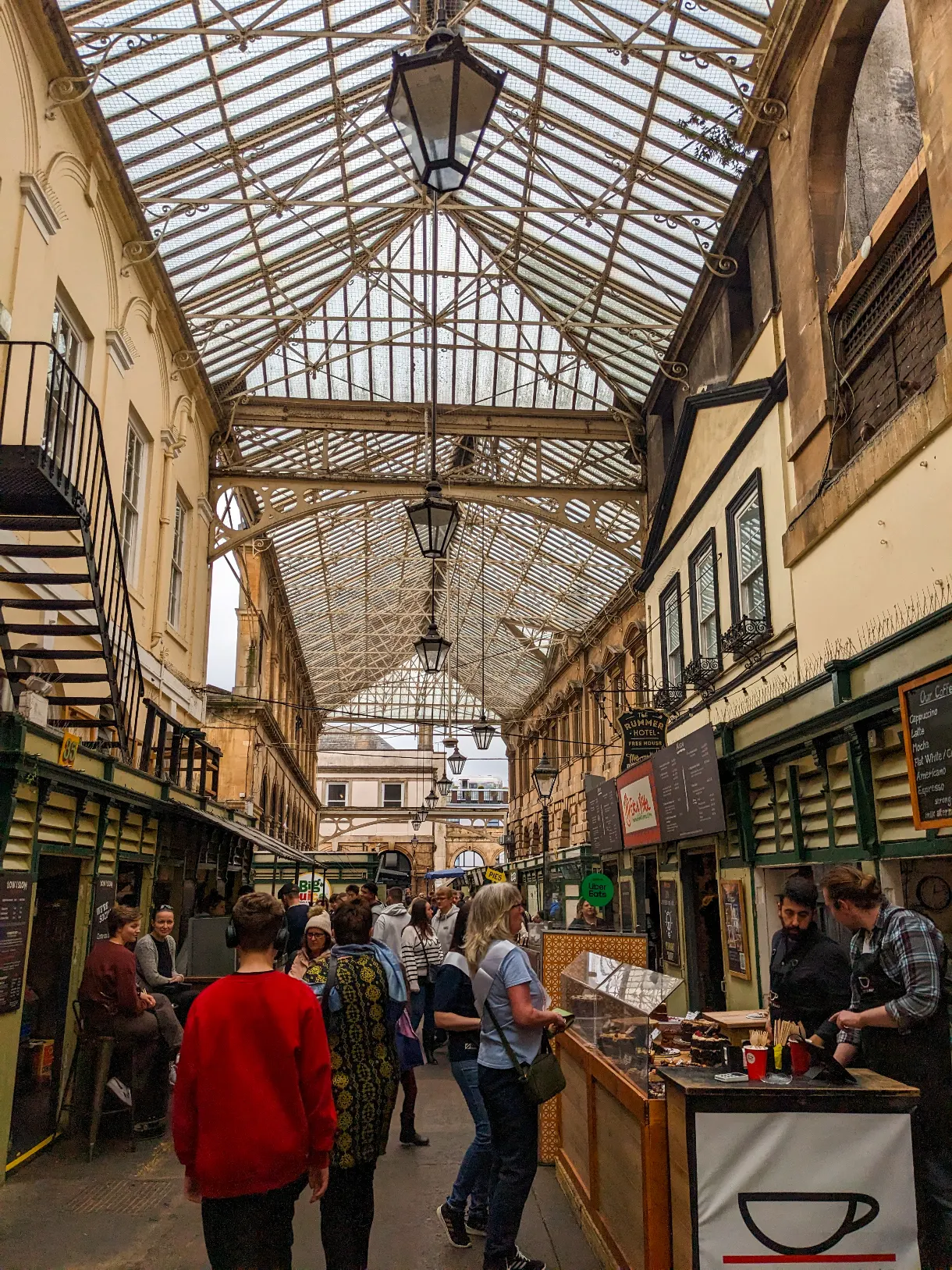
We started our visit of the Old City with one of Bristol’s iconic spots: Saint Nicholas Market, a covered market with Georgian architecture housing loads of street-food stalls serving cuisines from all over the world. The perfect place to try the local specialties and soak up the buzz of the city.
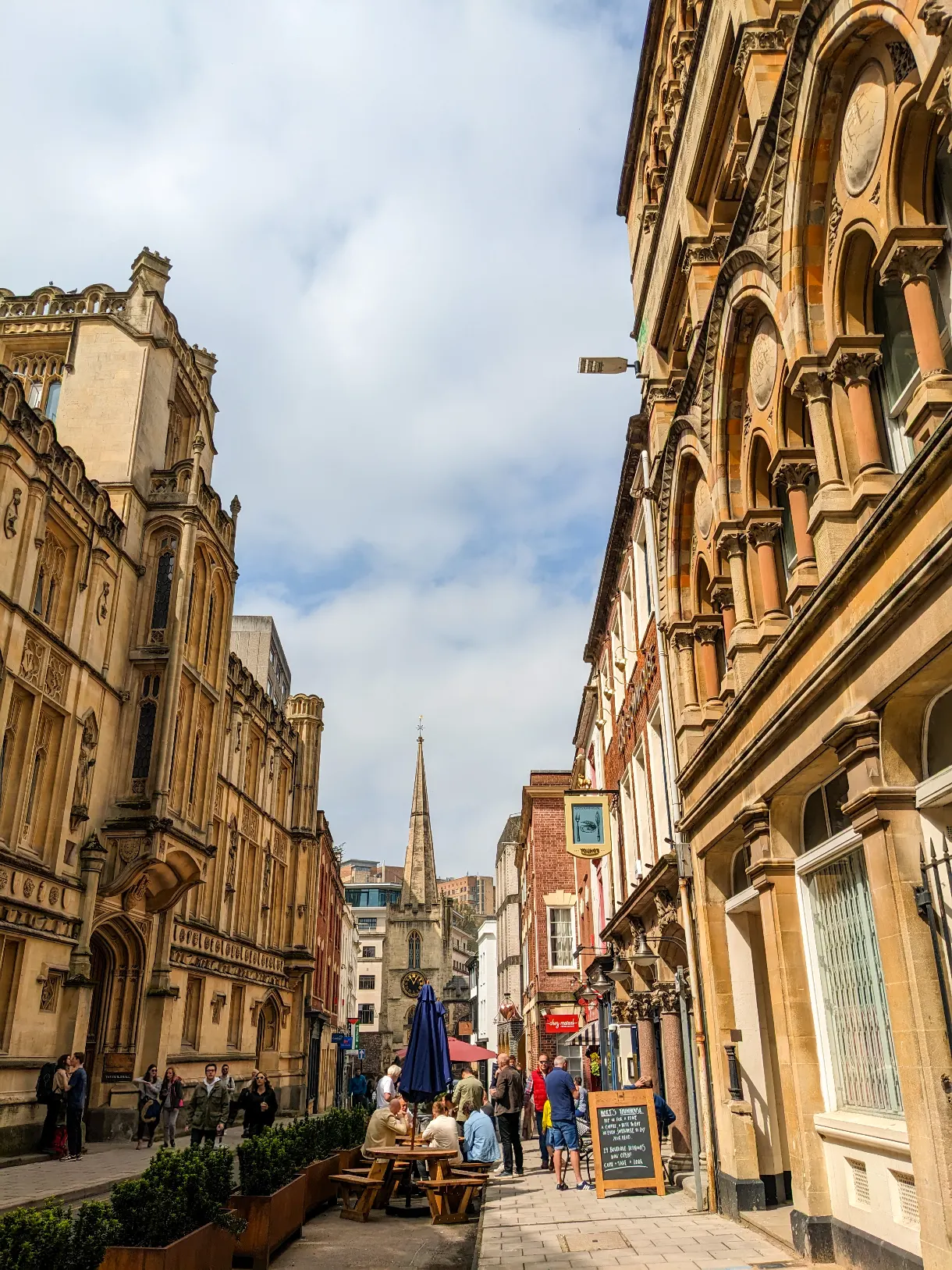
We carried on our visit through the surrounding streets, like the famous Corn Street, lined with beautiful Georgian buildings that used to house banks, and the parallel lanes of Small Street and Broad Street, where you’ll find St John on the Wall church. The best thing to do is just wander and get a little lost to discover the small passageways under the arches.
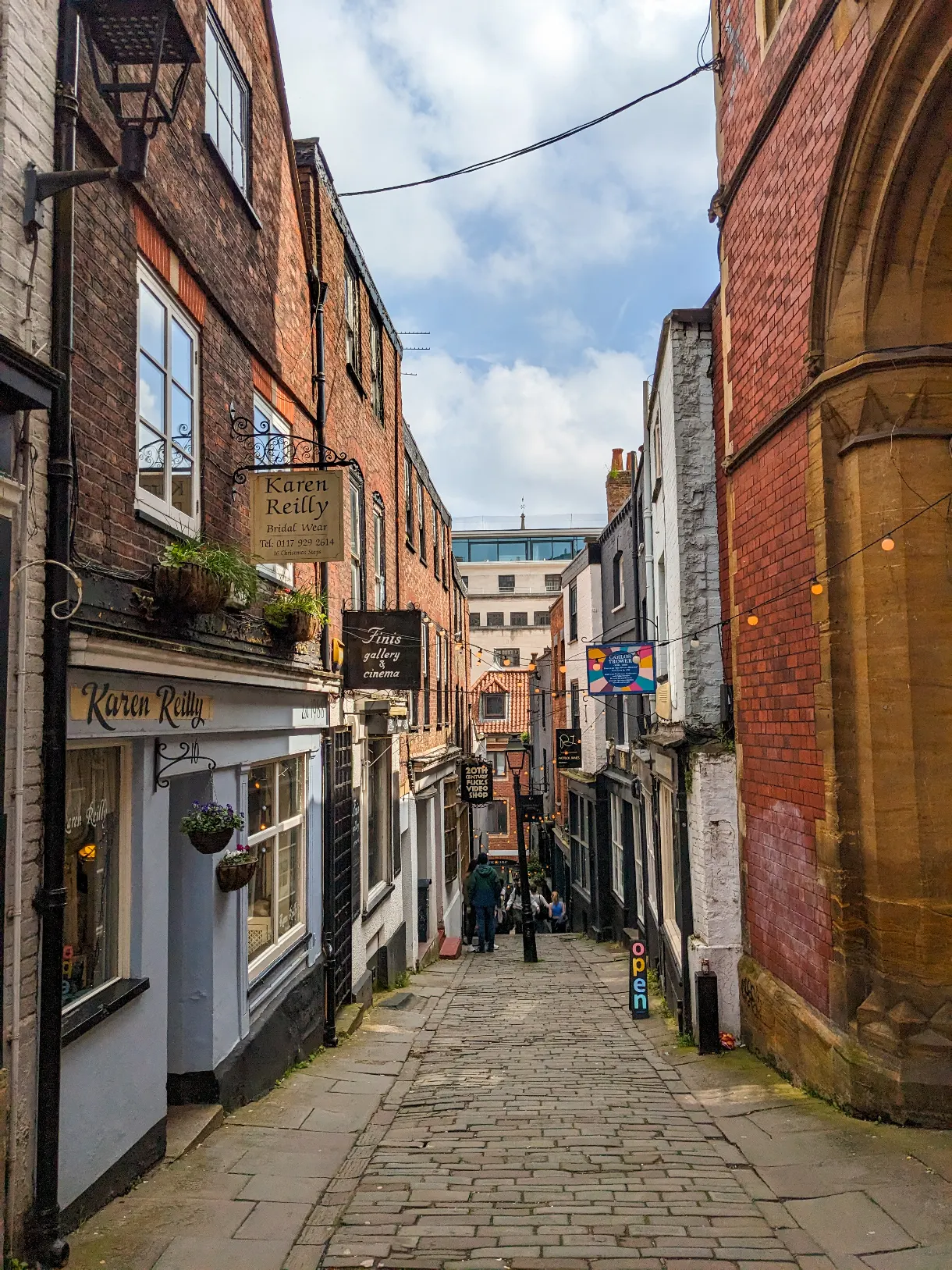
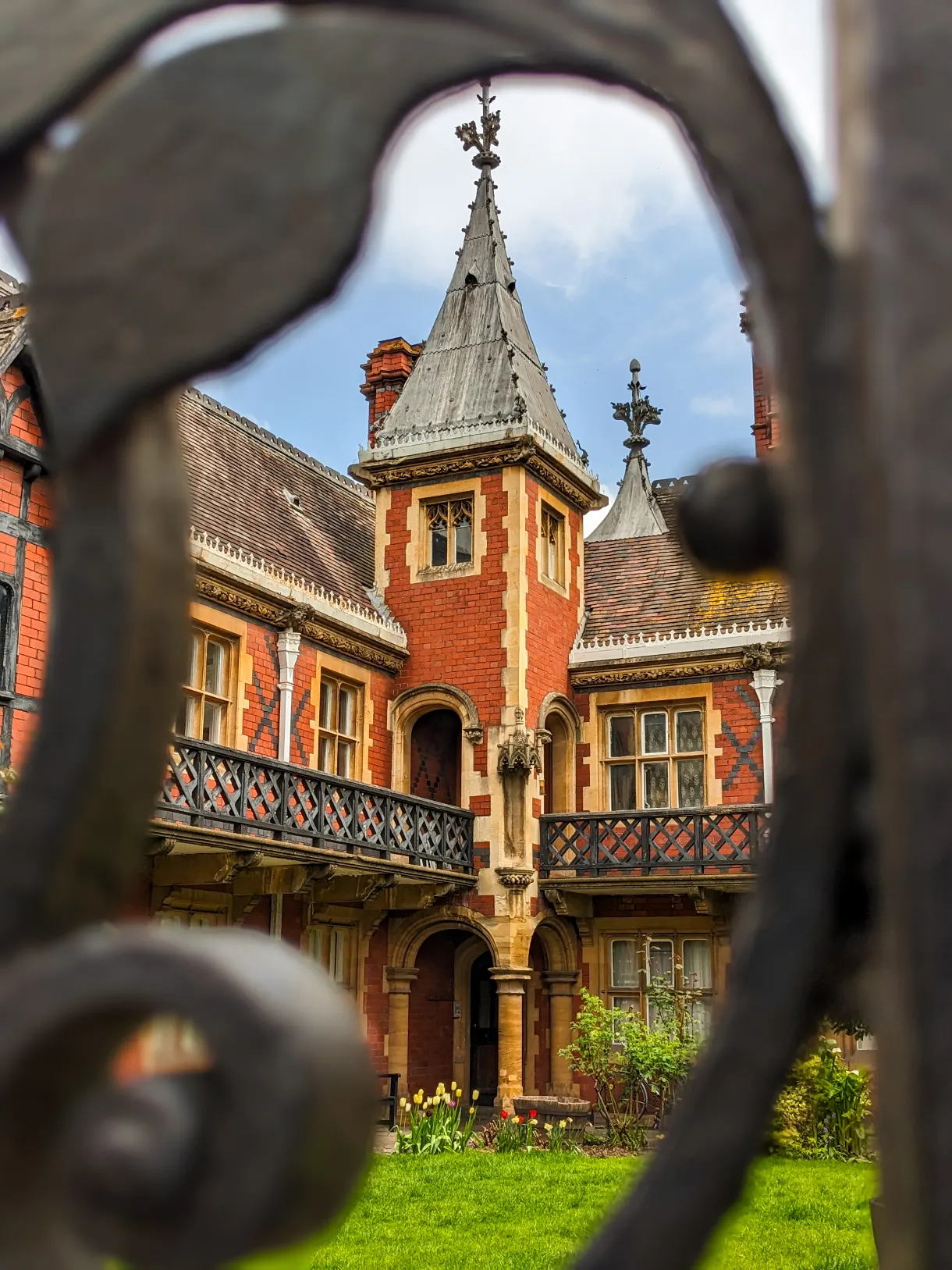
North of the Old City, we stumbled on Christmas Steps, a narrow pedestrian stepped street that’s incredibly picturesque and photogenic. Don’t miss this lovely spot, whose 17th-century buildings are listed historic monuments. Today it’s home to craft shops and art galleries that give the Christmas Steps Arts Quarter all its charm. At the top of the steps, you’ll find Foster’s Almshouses, the old brick almshouses dating back to the 15th century: a really beautiful set of buildings worth seeing.
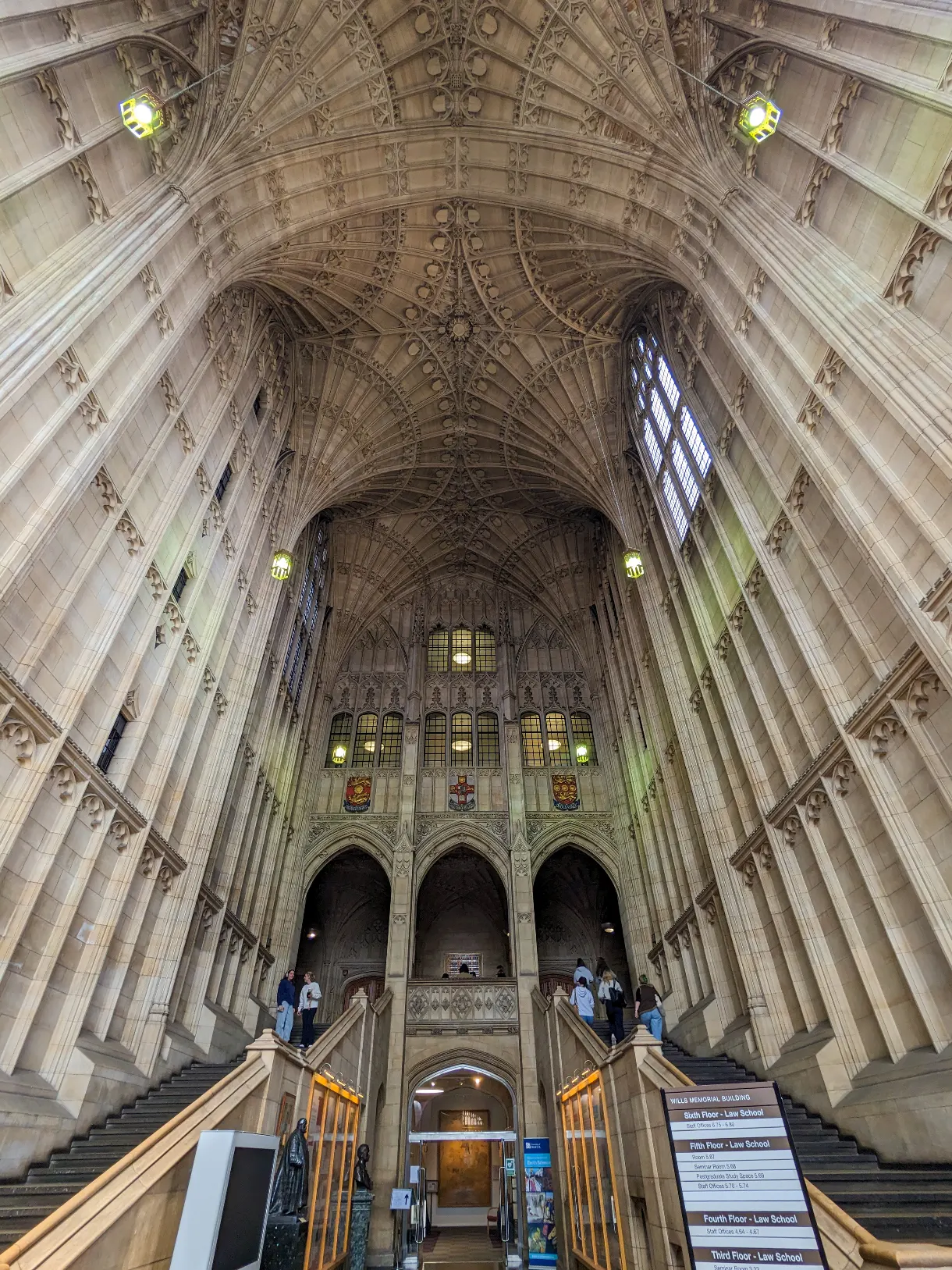
In the Tyndalls Park area, we were lucky enough to get into the main building of the University of Bristol, one of England’s most prestigious universities. What makes this neo-Gothic building stand out is its huge tower, rising 68 metres high. Guided tours of the Wills Memorial Building are run: we weren’t there on the right day so we couldn’t go up, but the view from the top looks phenomenal over all of Bristol.
- Price: £5 per person
- Hours: Saturdays at 11am or 1pm
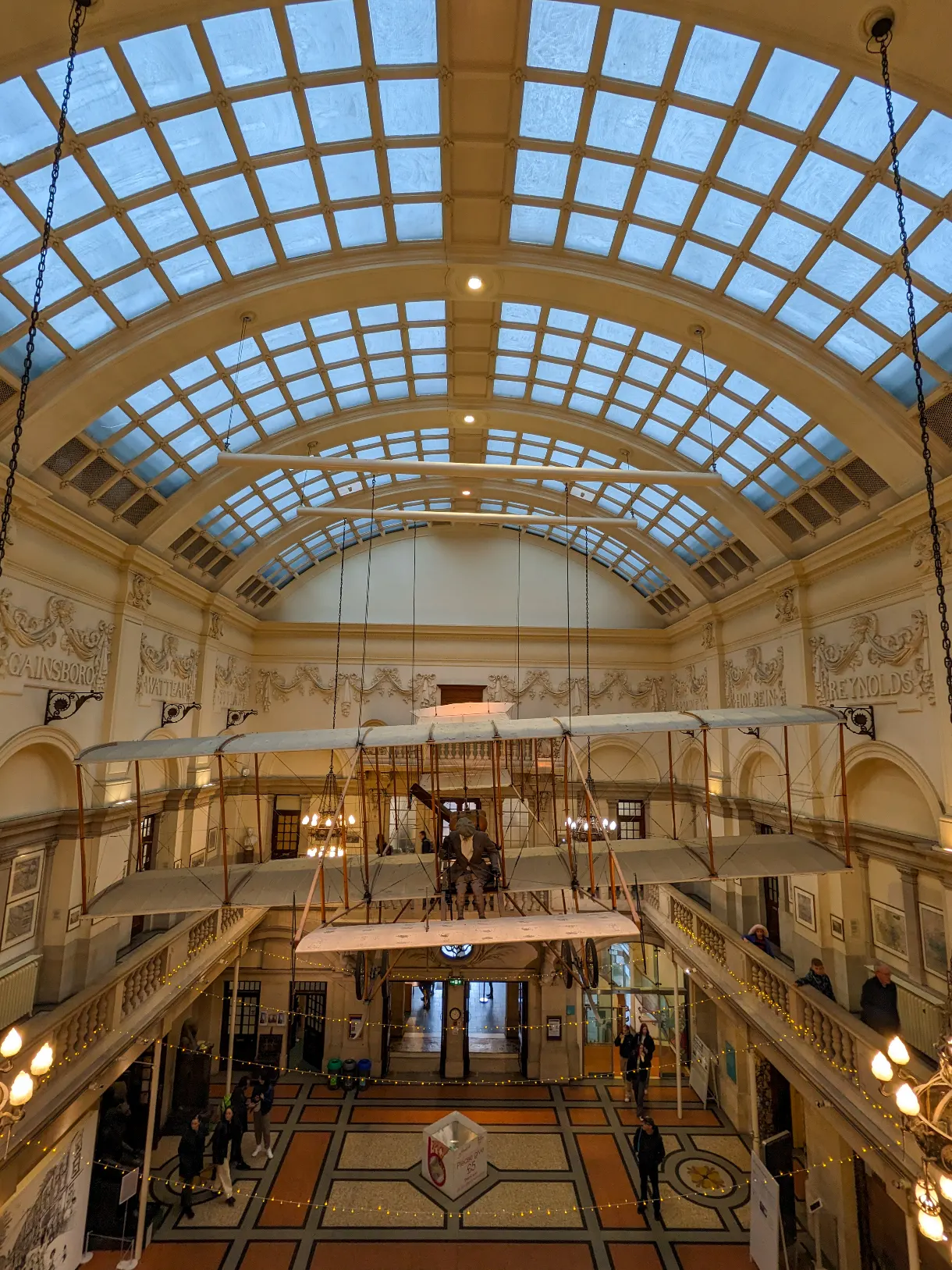
A little further on in the same neighbourhood is the Bristol City Museum and Art Gallery, an impressive, huge museum that brings together an archaeology museum, a natural history museum and a fine art museum all under one roof. When we visited, we also got to experience a temporary virtual reality exhibition about the Lascaux caves: it’s worth checking out the museum’s programme.
- Price: free entry (for the permanent exhibitions)
- Hours: Tuesday to Sunday, 10am to 5pm
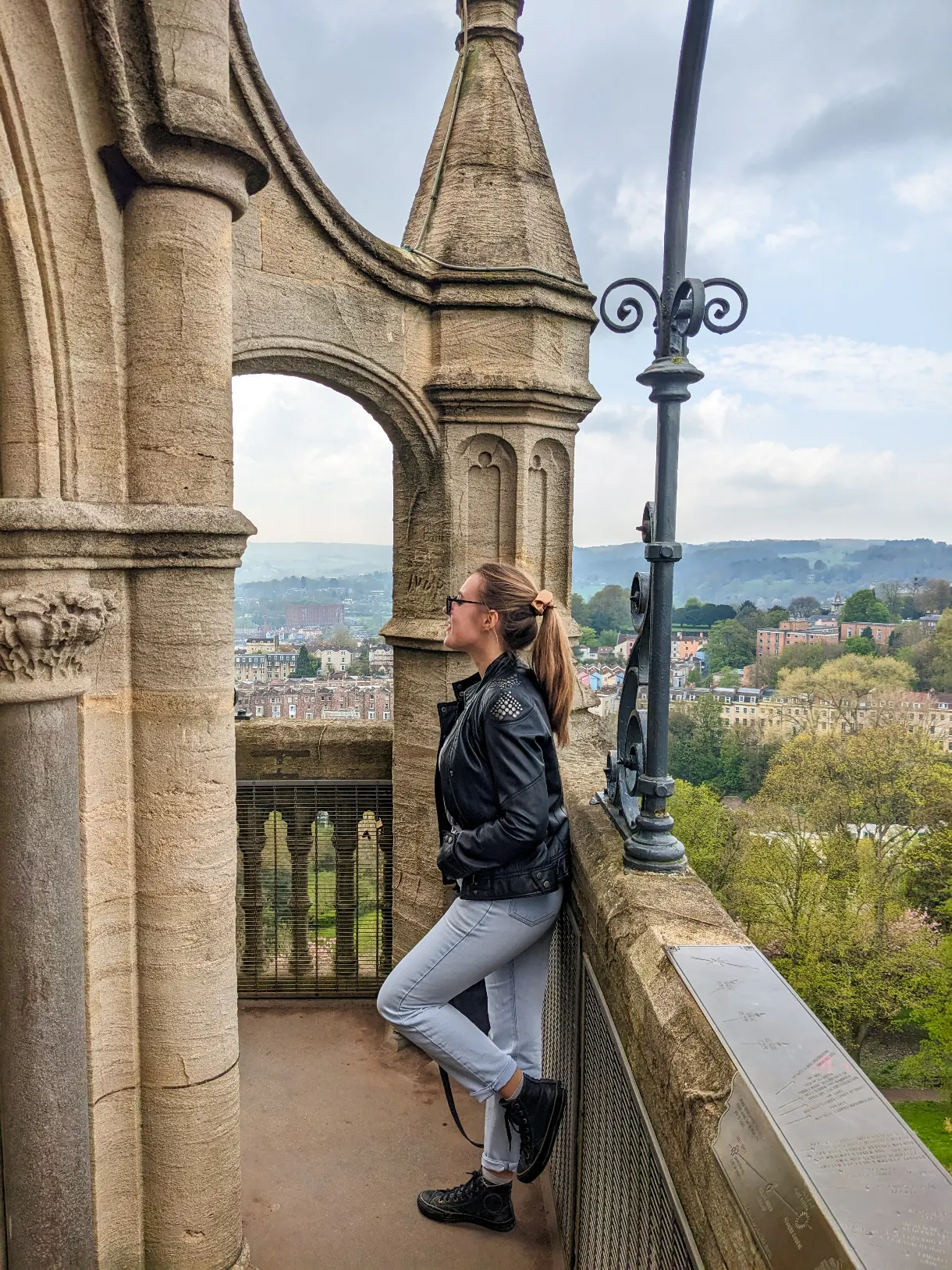
Across from the Bristol City Museum and Art Gallery, we took the small street climbing up to Berkeley Square and Brandon Hill park, one of Bristol’s green lungs, sitting on a hill as its name suggests. Get your calves ready, it’s a bit of a climb! It’s a walk we really enjoyed: finding yourself in nature right in the middle of the city, between little wild meadows and forest paths, is a real treat. Don’t miss the (free) climb up Cabot Tower, which looms over the city, and from the top of which you get a panoramic view over Bristol
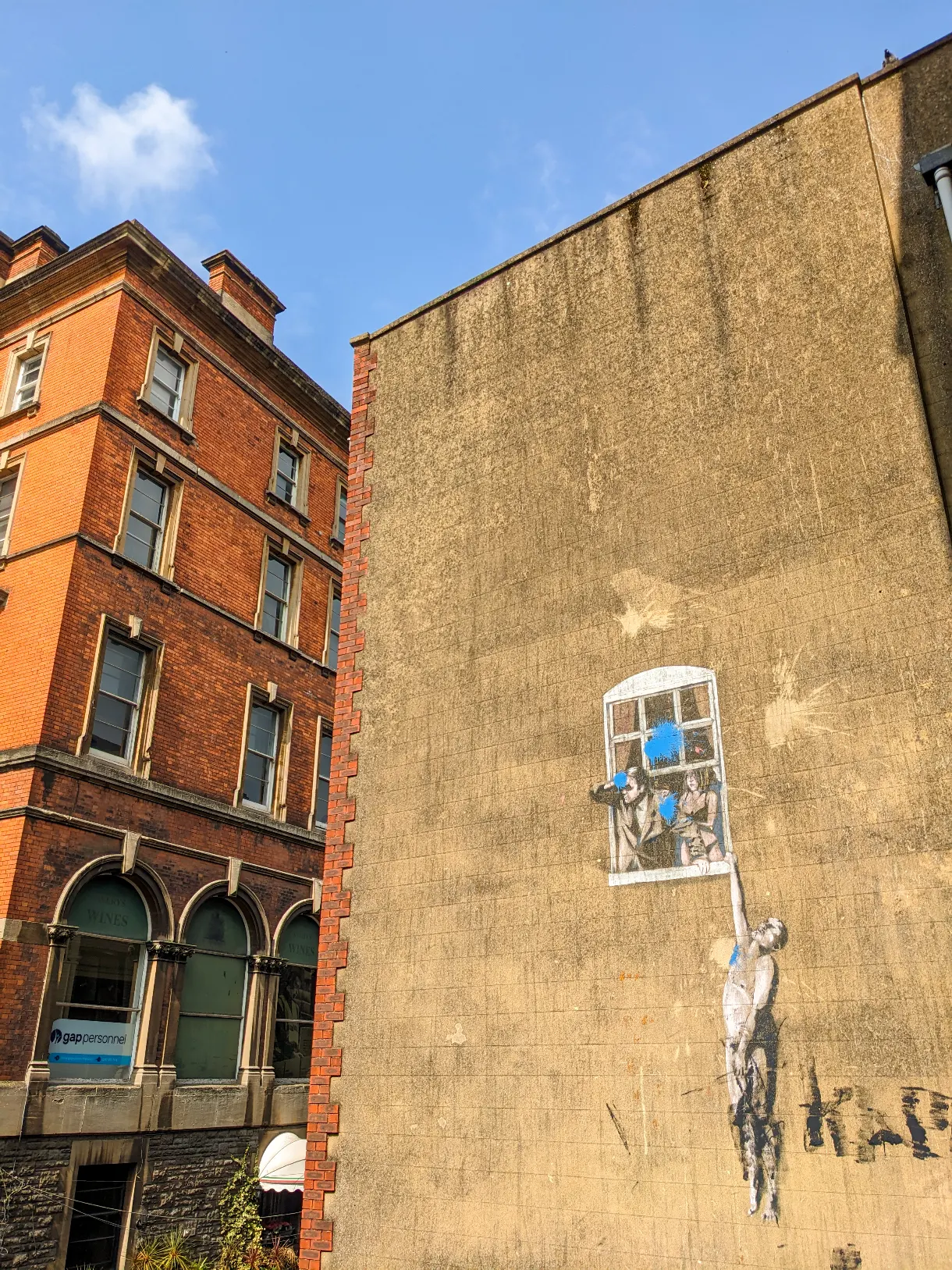
We headed back down from the park towards the city centre and passed the free Georgian House Museum, which recreates a typical Bristol home (we didn’t go inside), and the Banksy mural “Well Hung Lover”, visible from the small bridge on Park Street. Because yes, Bristol is a city famous for its street art, and it’s where Banksy is from! A few metres further on is the lovely, tree-lined College Green, a really nice spot for a break: the view of the cathedral is gorgeous, we loved this place.
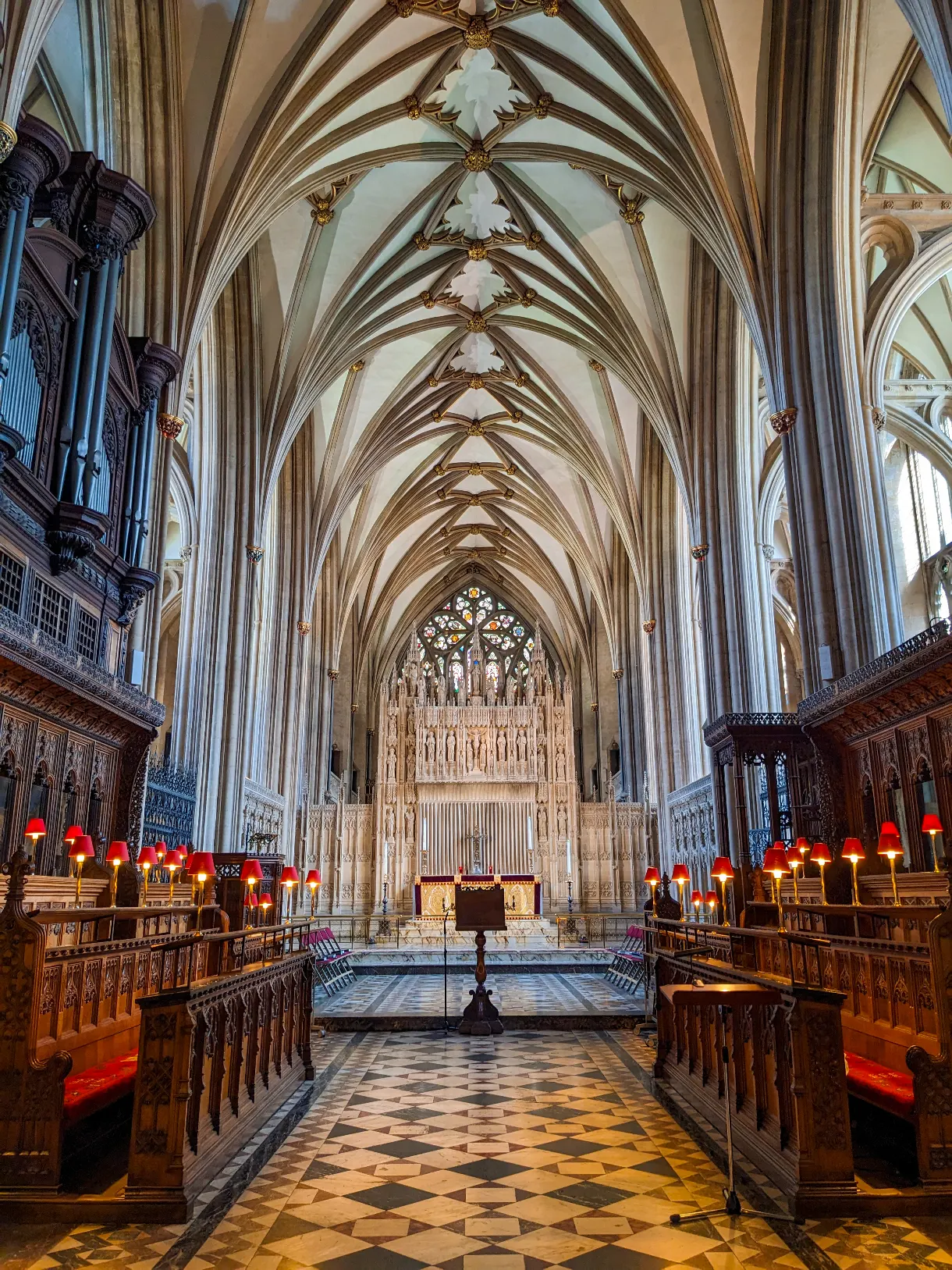
You can’t miss the stunning Bristol Cathedral of the Holy and Undivided Trinity! It’s hands down one of the most beautiful landmarks in the city. It’s free to visit and open every day of the week: there’s no excuse to skip it during your weekend. The carved vaults, the woodwork, the arcades… every architectural detail is beautiful. A discreet door leads to the cloister and a small garden, which is a real haven of peace.
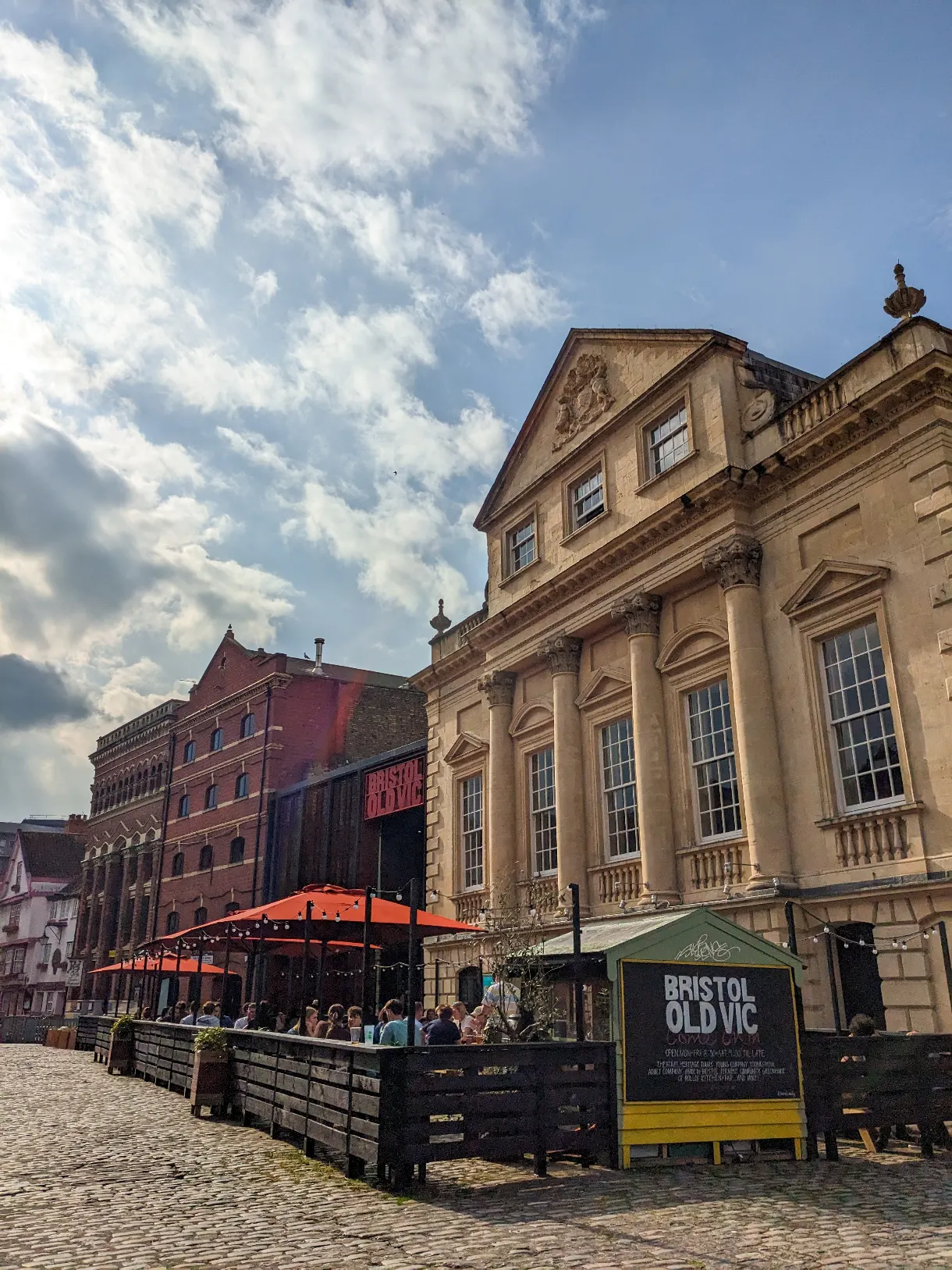
We finished our grand tour of Bristol’s Old City by discovering Queen Square, a really beautiful square lined with Georgian-style buildings: it felt just like being back in Bath. Here again, a patch of greenery right in the city, with its lawns and tree-lined paths, perfect for a stroll. We then wandered the cobbled streets around the square, especially King Street, lined with bars (packed by mid-afternoon already… proper British vibes guaranteed). Honestly, Bristol’s historic centre kept surprising us at every turn!
Harbourside
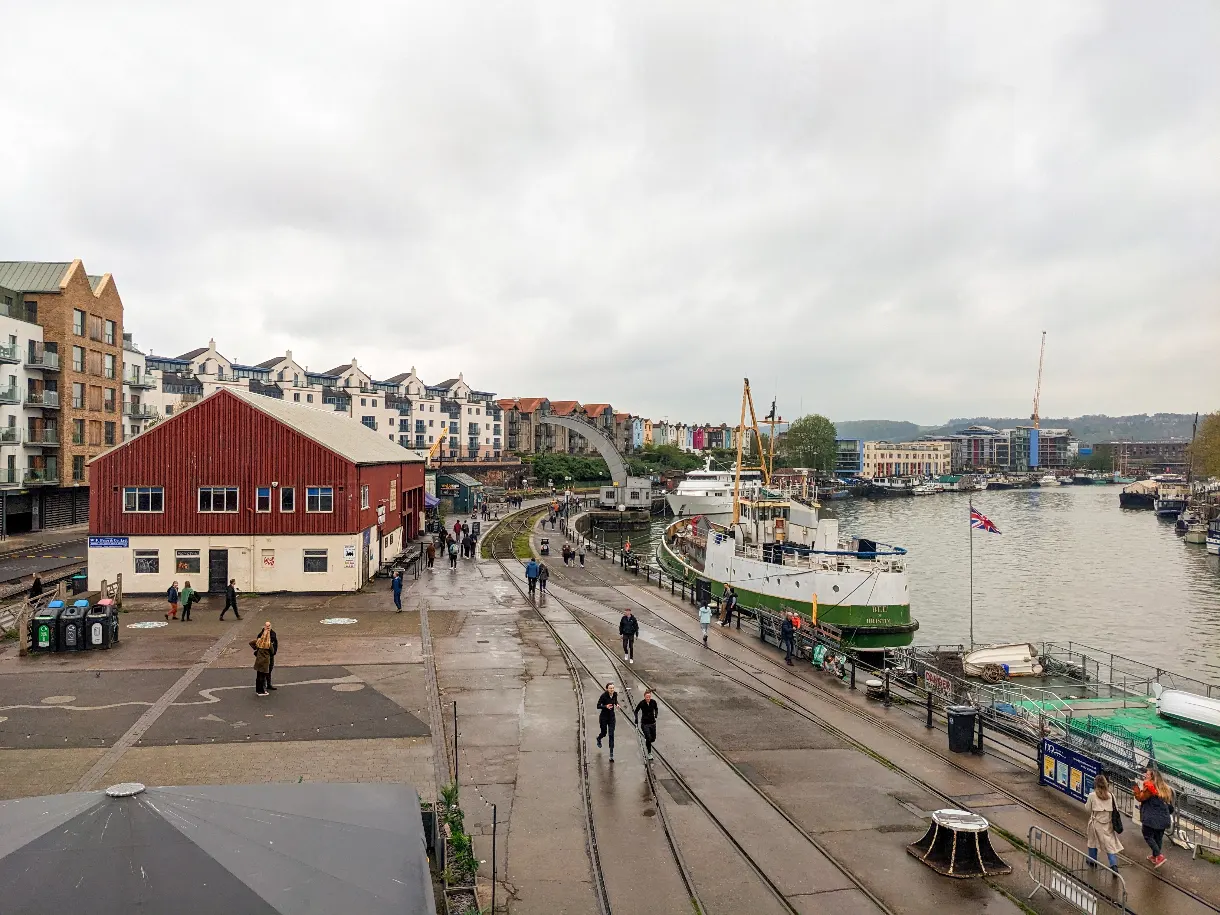
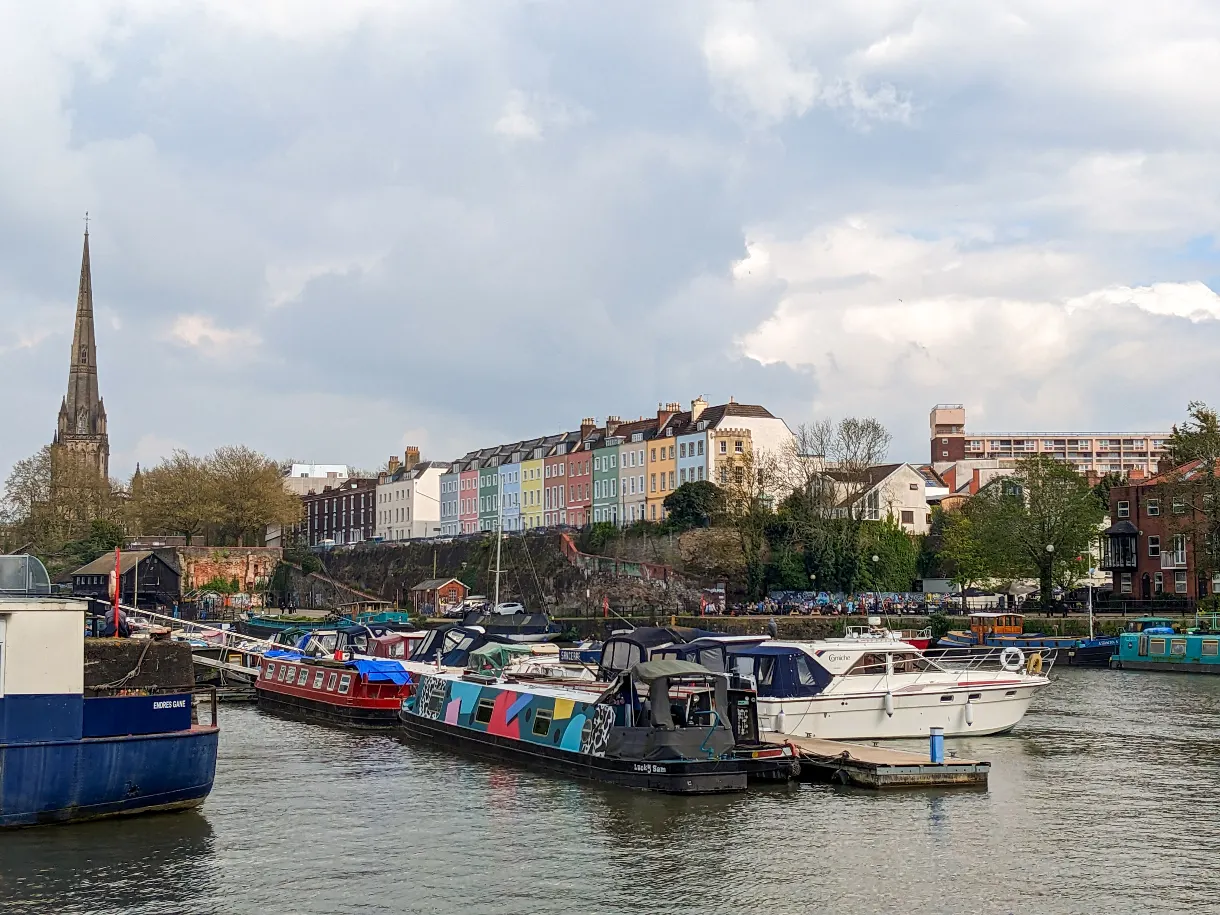
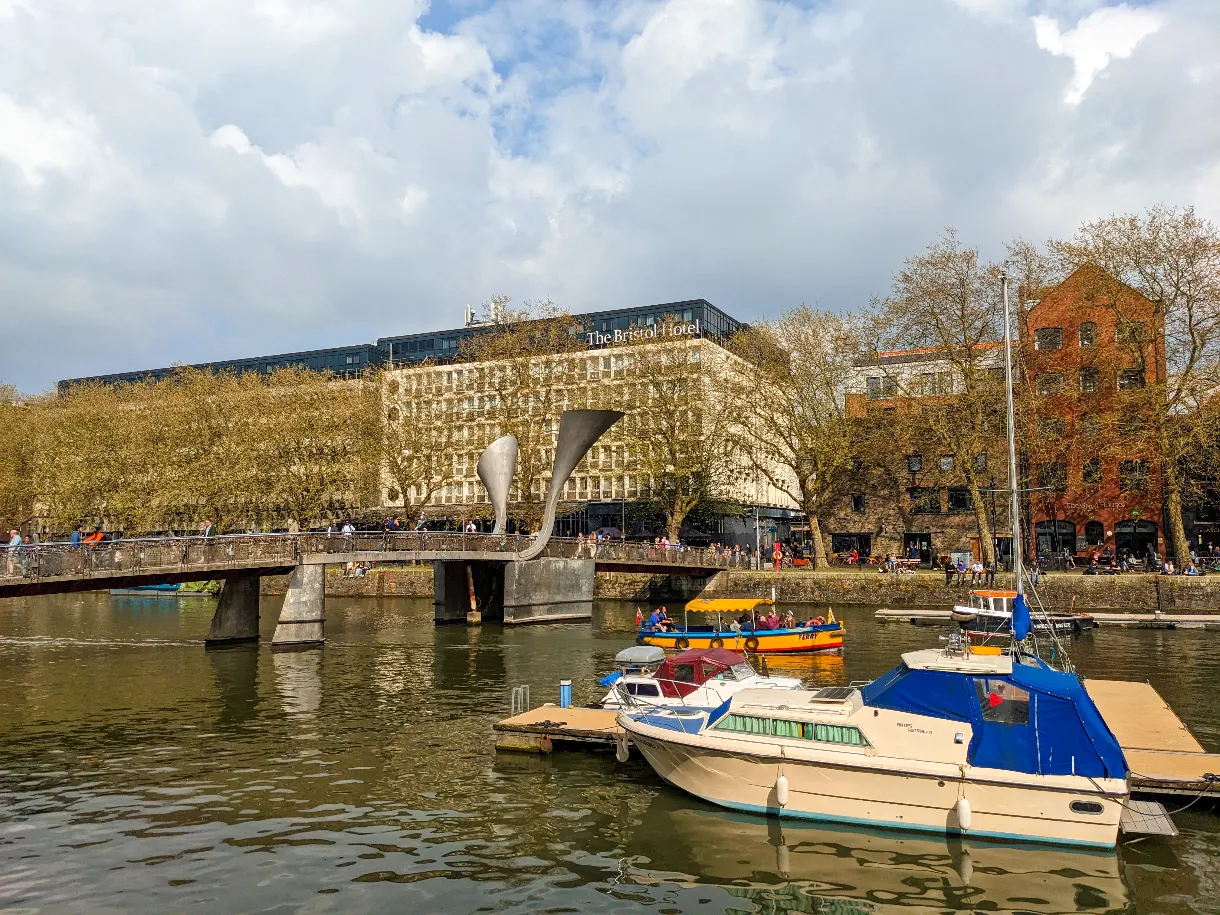
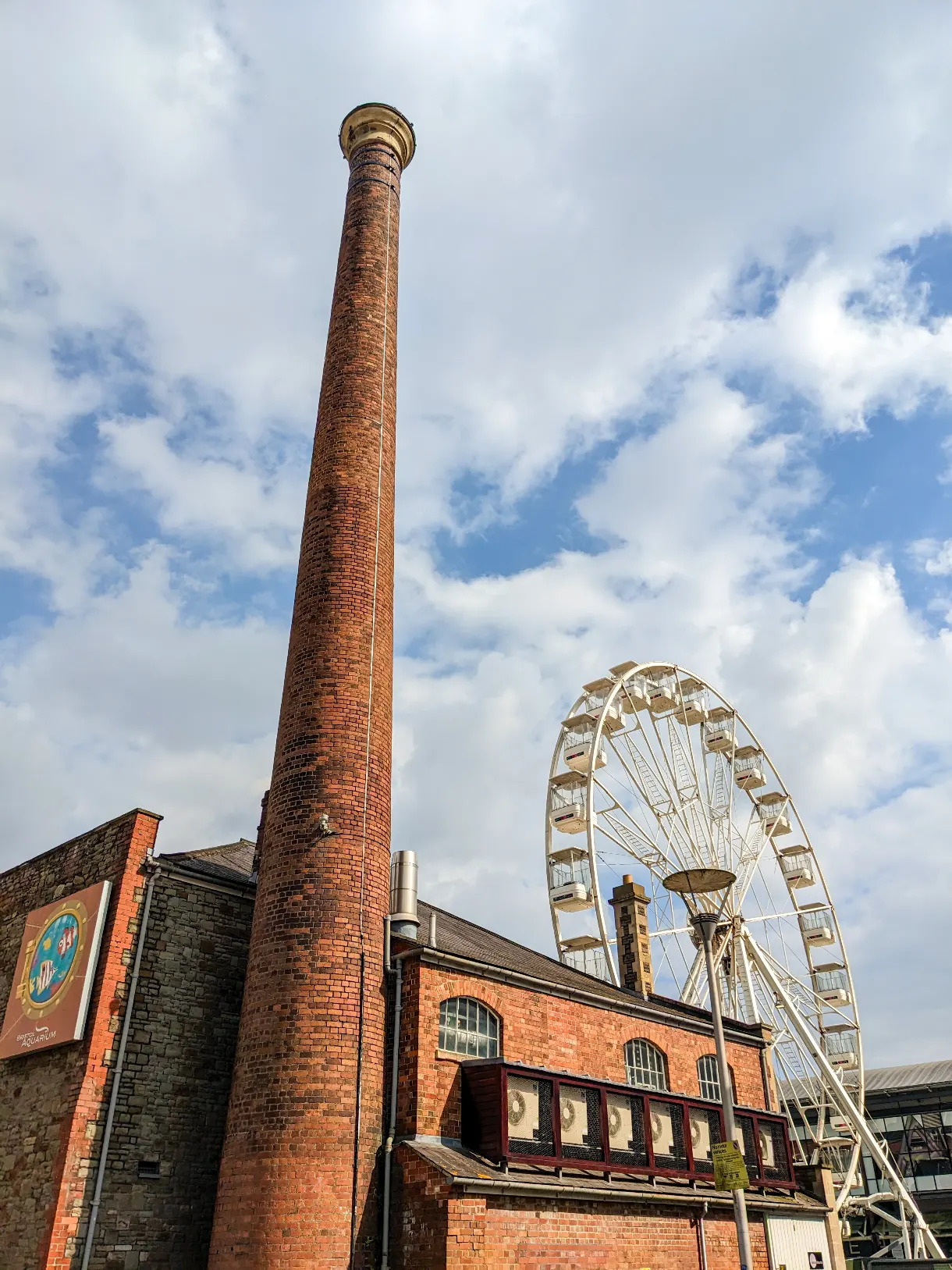
Bristol was long considered one of England’s main industrial ports, and you can still see traces of that maritime past in the city today! The old docks have been completely redeveloped and turned into a genuinely nice neighbourhood to walk around. Museums, food courts, art galleries, bars and restaurants… there’s plenty to see and do.
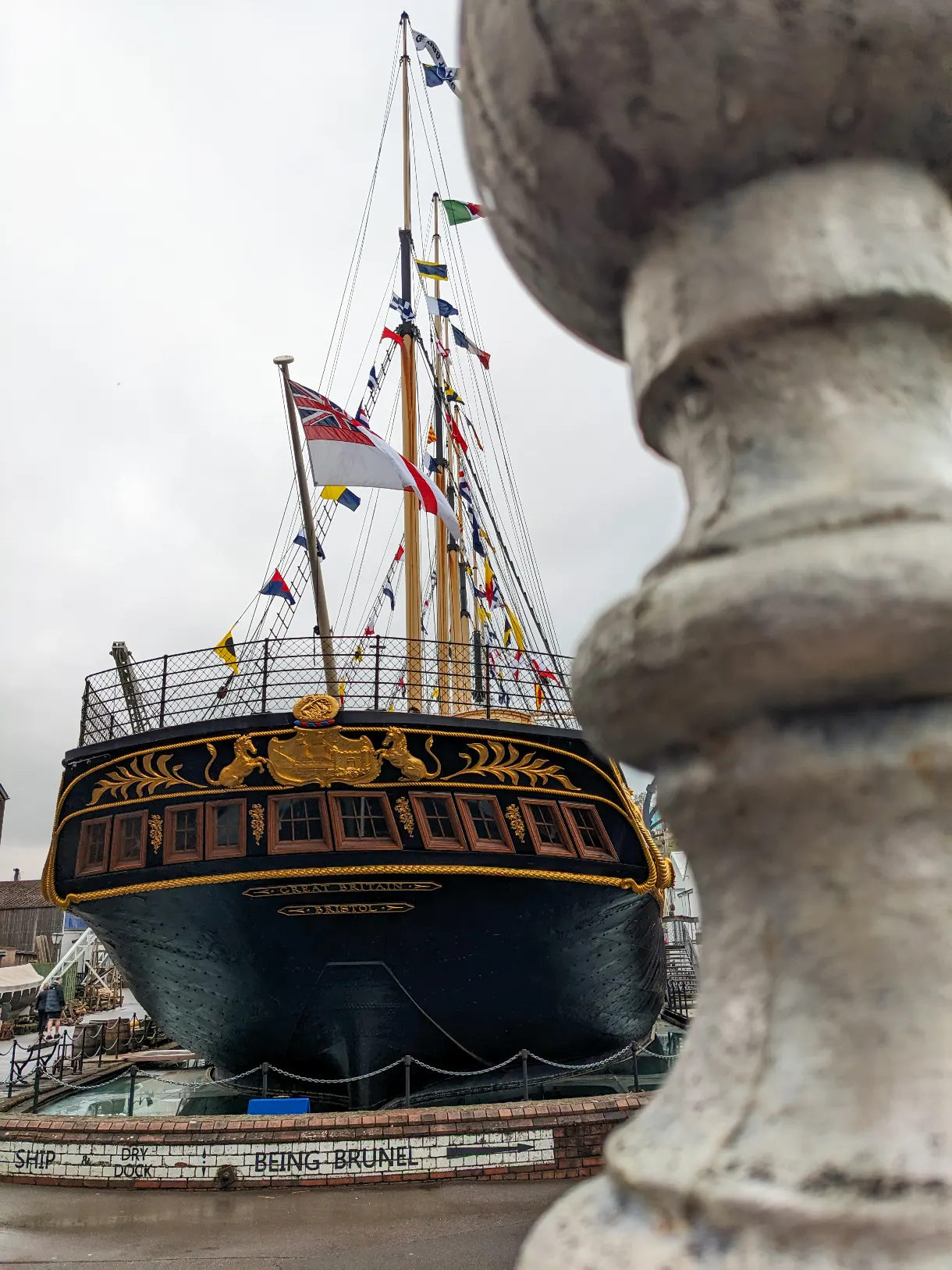
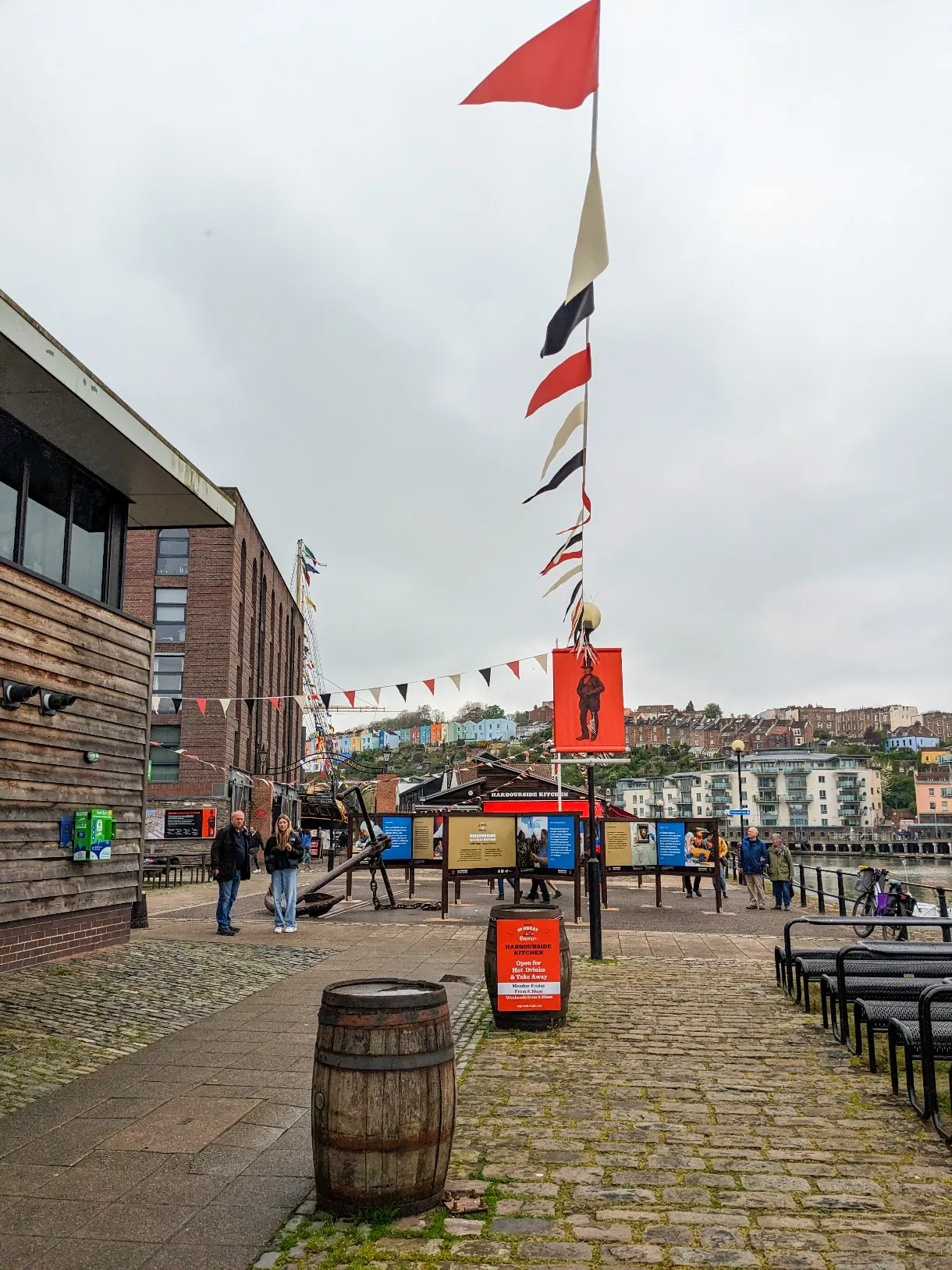
- Canon’s Marsh: head to this large, almost entirely pedestrian neighbourhood set right on the quays, by the water. On the attractions side, there’s plenty of choice, with the We The Curious interactive science centre, a planetarium, an aquarium and a big amphitheatre.
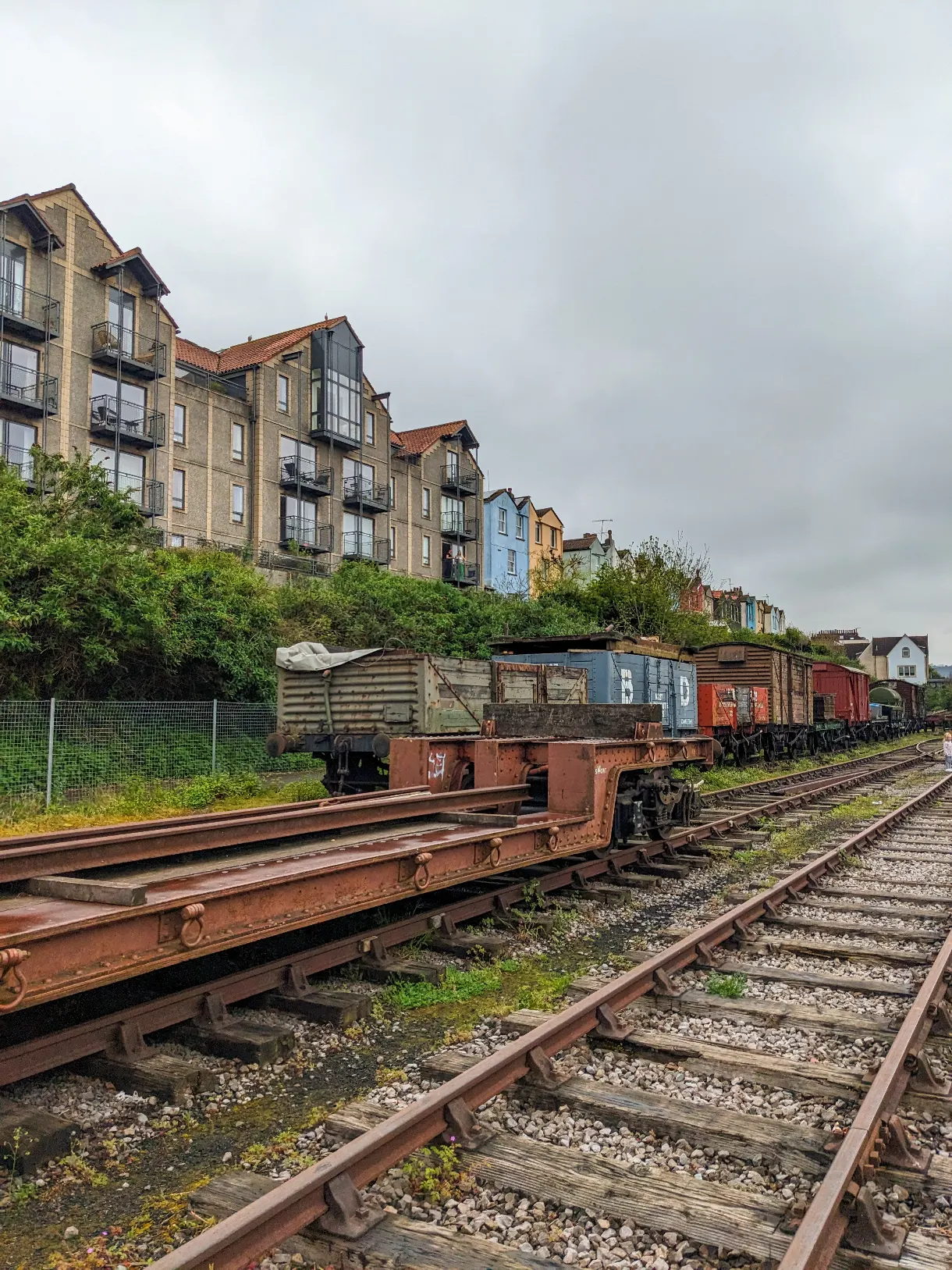
- Wapping Wharf: this is Bristol’s old naval district, now redeveloped and pretty trendy. You can still see the loading docks, the warehouses, the railway line and the old shipping containers now home to restaurants and street-food stalls. This spot reminded us a lot of the Ribeira da Pena neighbourhood in Porto, for those who know it!
- M Shed Museum: this free museum tells the story of Bristol in a modern, fun way, from a social and industrial point of view. The big windows offer a great view over the quays.
- SS Great Britain: this beautiful moored transatlantic liner has been turned into a maritime museum. We didn’t visit it, for lack of time, but it’s one of the must-see visits in Bristol according to the guidebooks.
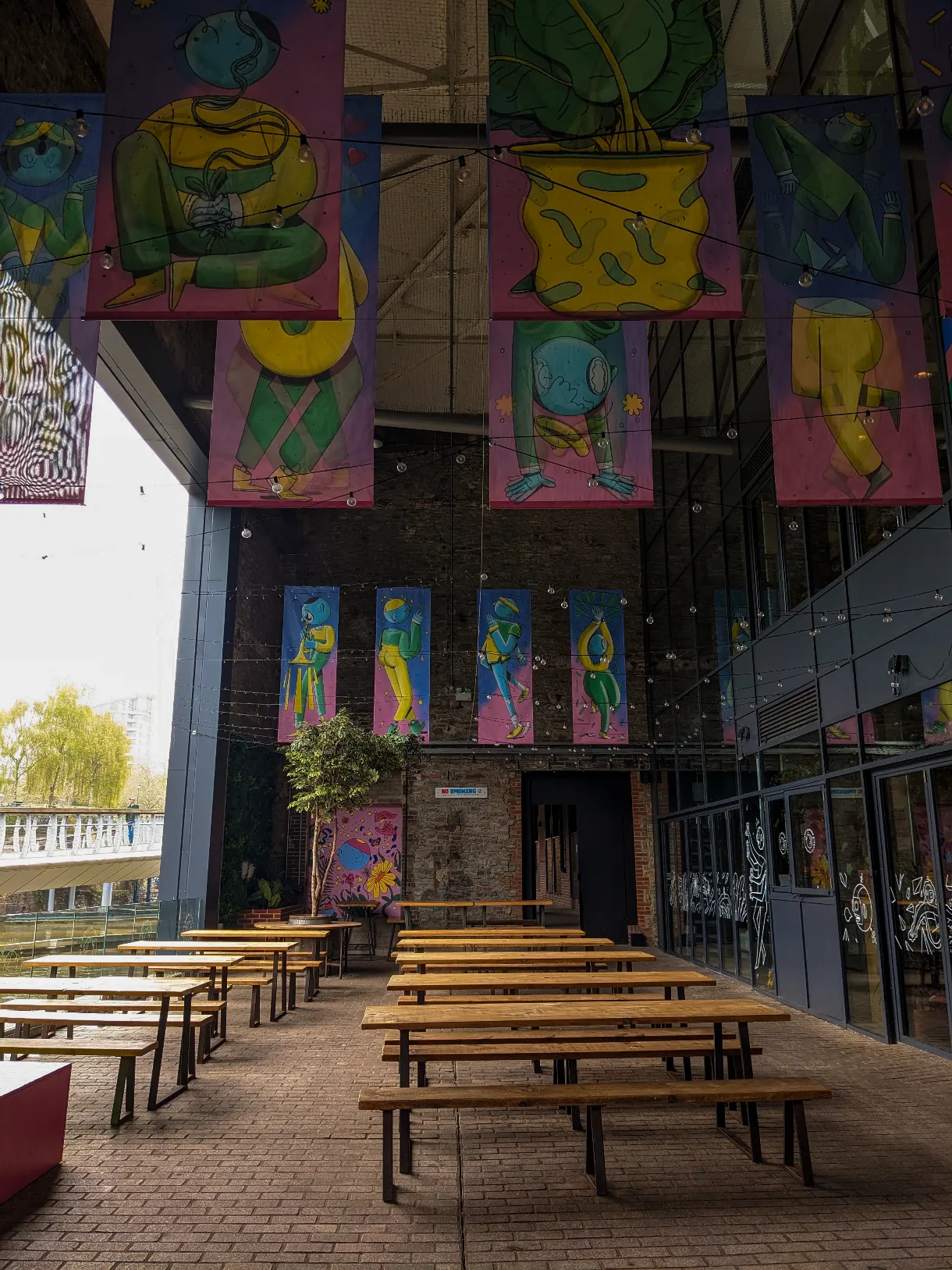
- Harbourside Street Food Market: if you’re after an original spot to grab a quick bite, this is the place to come. You’ll find loads of street-food stalls from all over the world, with tables set up in the middle to sit down. The market’s open every Wednesday, Thursday, Saturday and Sunday.
Clifton
A neighbourhood we loved discovering in Bristol, probably our favourite! Perched up on a hill above the city, about forty minutes’ walk from the city centre, this smart residential neighbourhood won us over. It has a peaceful, village-like feel, while still staying lively and full of energy. We especially loved the main street with its many well-decorated shops (antique dealers, bookshops, tea rooms…). Here you’ll find a great choice of places to eat: street food, high-end restaurants, brasseries, cuisines from all over the world… there’s something for every taste. We’d recommend coming to wander around in the afternoon to soak up the vibe, and staying for dinner in the evening after watching the sunset from the famous suspension bridge.
Take the time to wander its streets and discover the Georgian architecture of the grand houses, the covered Clifton Arcade, and the lovely Mall Gardens. Here are a few must-see spots not to miss on your visit:
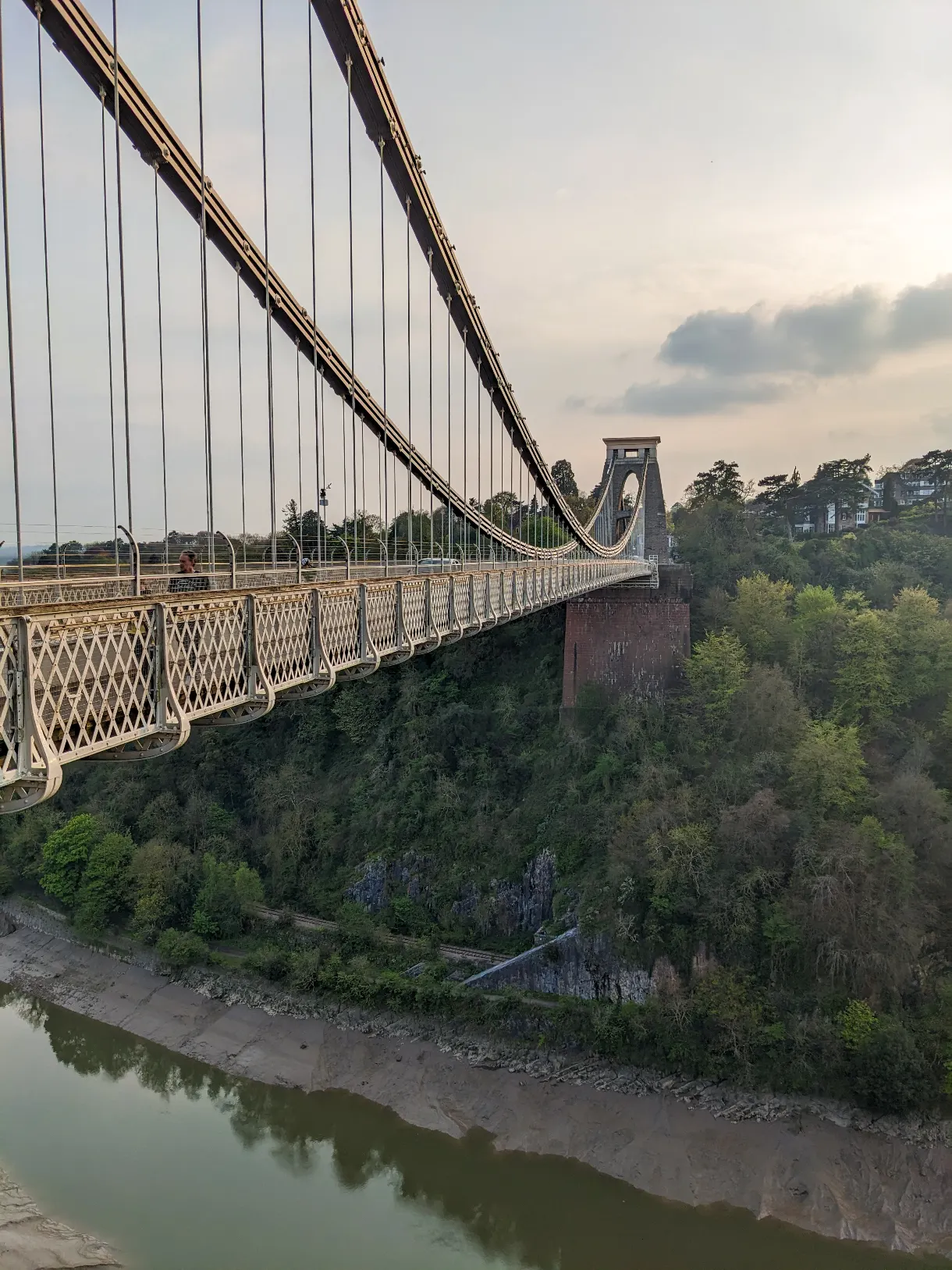
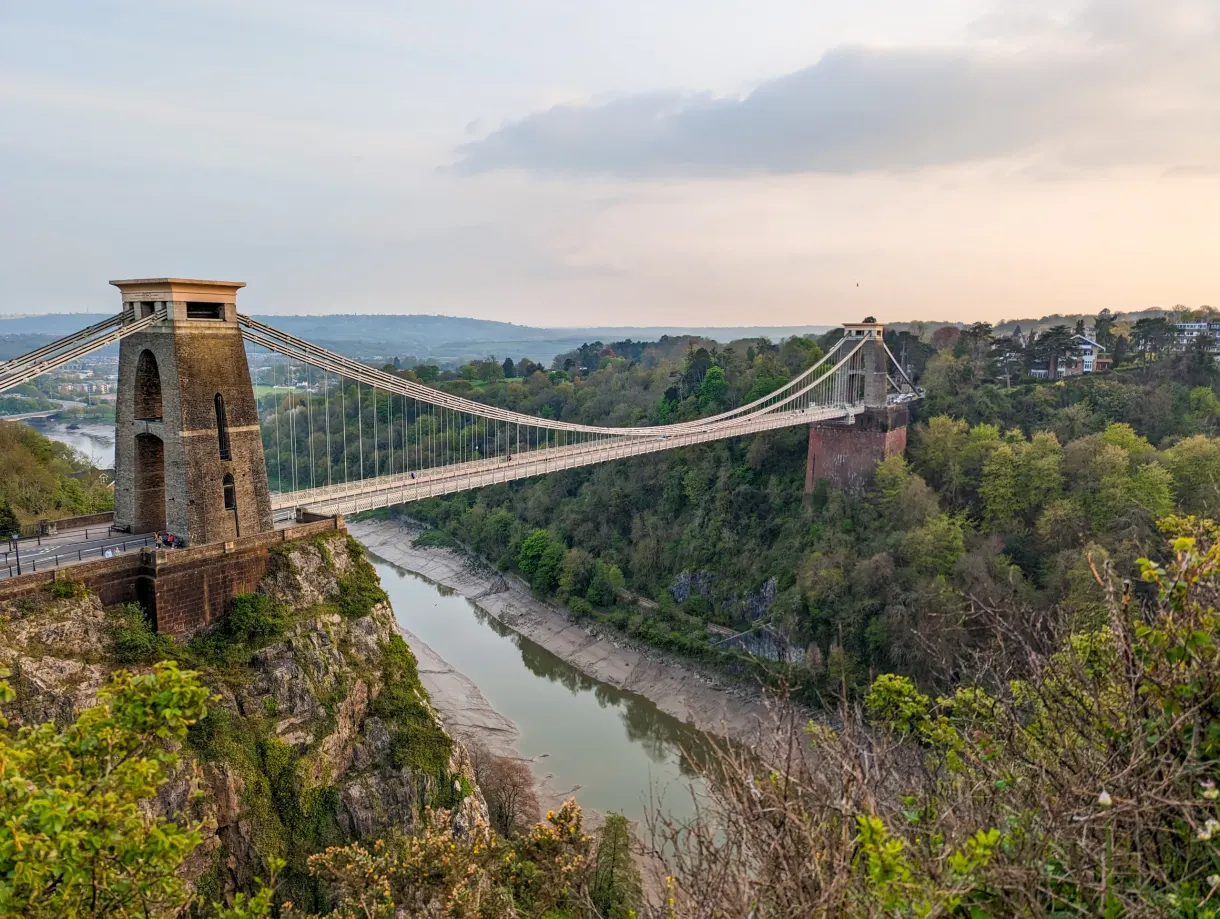
Clifton Suspension Bridge is a landmark you can’t miss on your first trip to Bristol: it’s the city’s emblem! This 19th-century bridge spans the River Avon: note that it’s a toll bridge for cars, but free for pedestrians. We’d recommend two spots to admire the bridge’s monumental architecture, which offers a stunning view over the Avon Gorge:
- The Lookout Lectern viewpoint, at either end of the bridge
- from the Clifton Observatory, up on the hill. We were there at sunset and the colours were gorgeous!
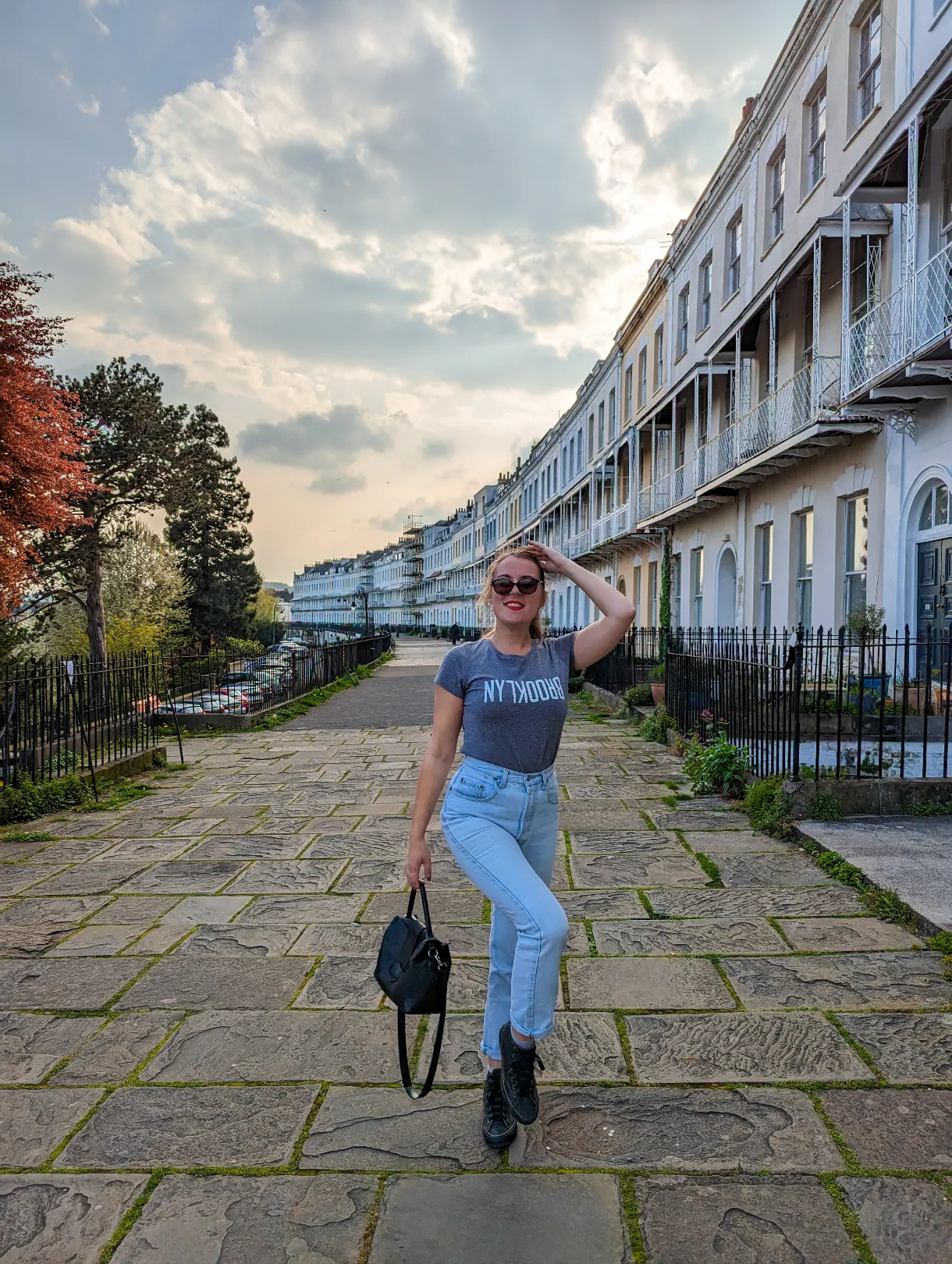
Royal York Crescent is a perfect arc formed by a long row of terraced houses: it’s said to be the longest Crescent in Europe. The walkway running alongside it offers lovely views over Bristol.
Ashton Court Estate
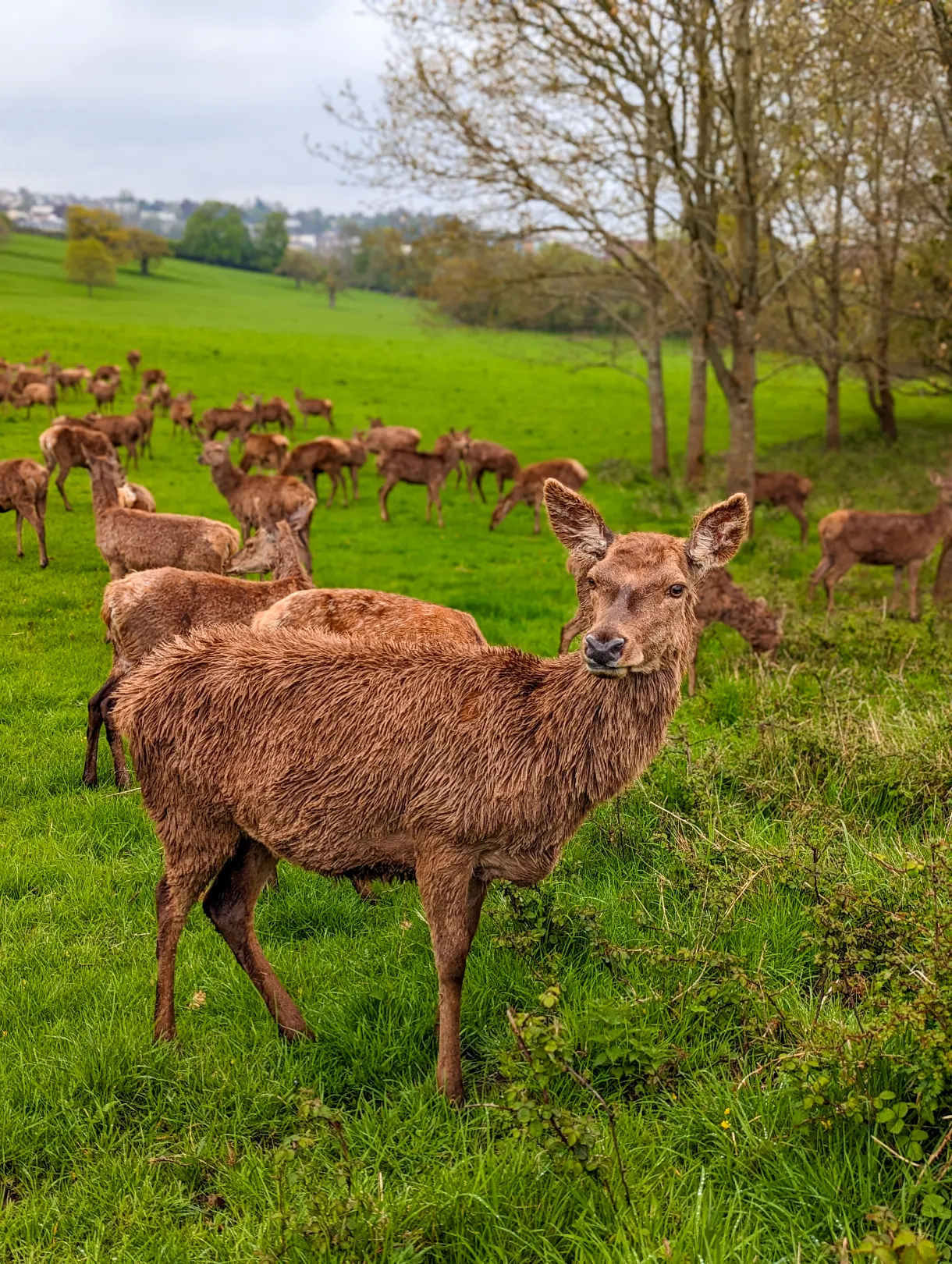
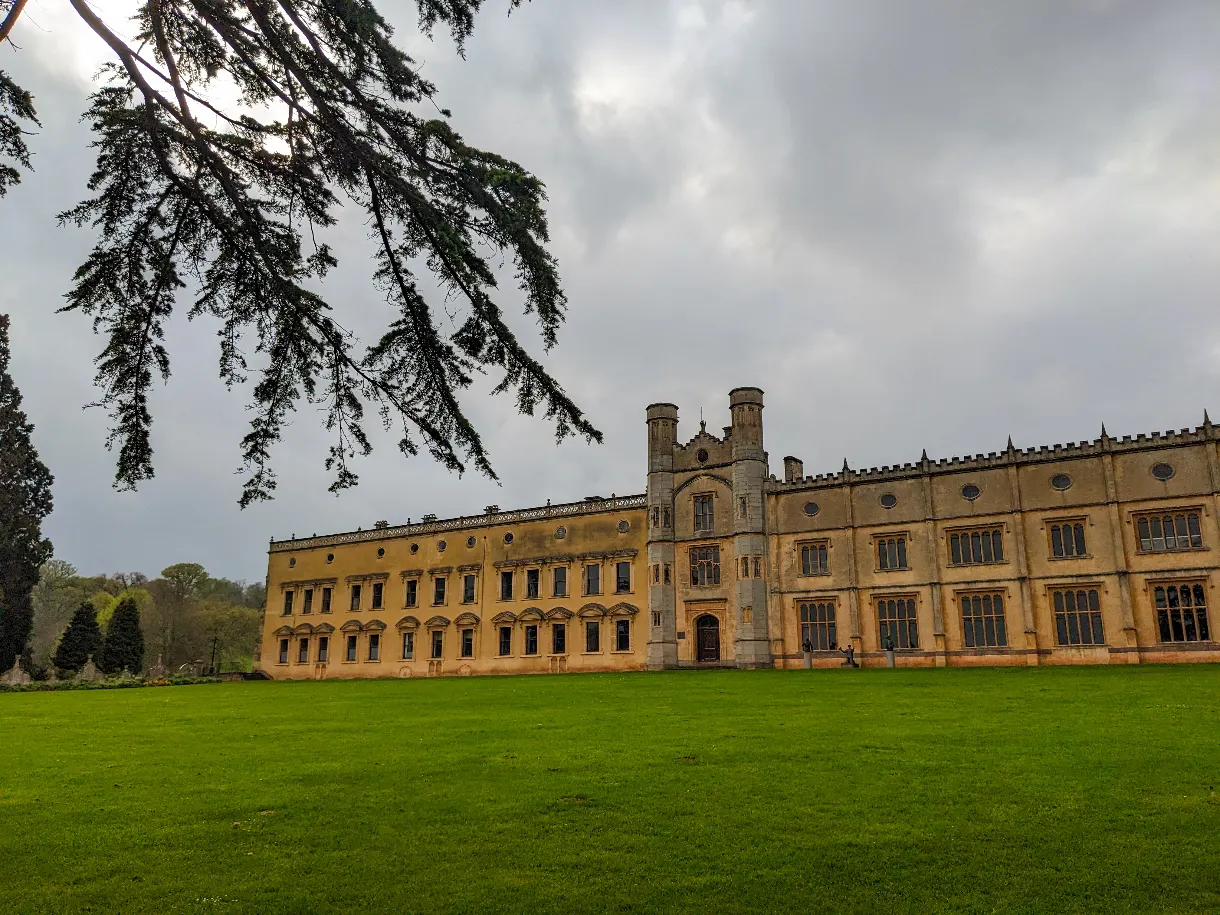
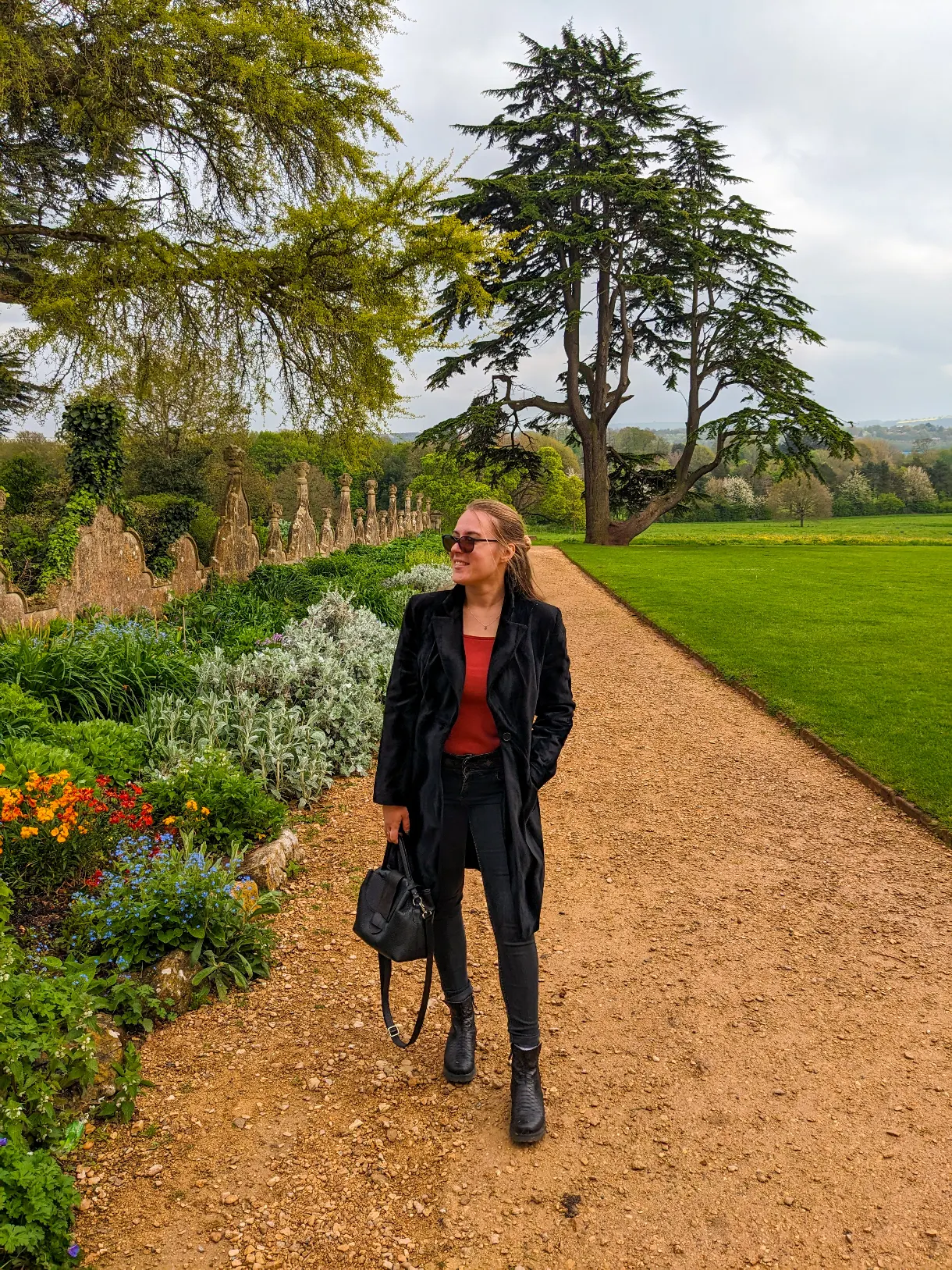
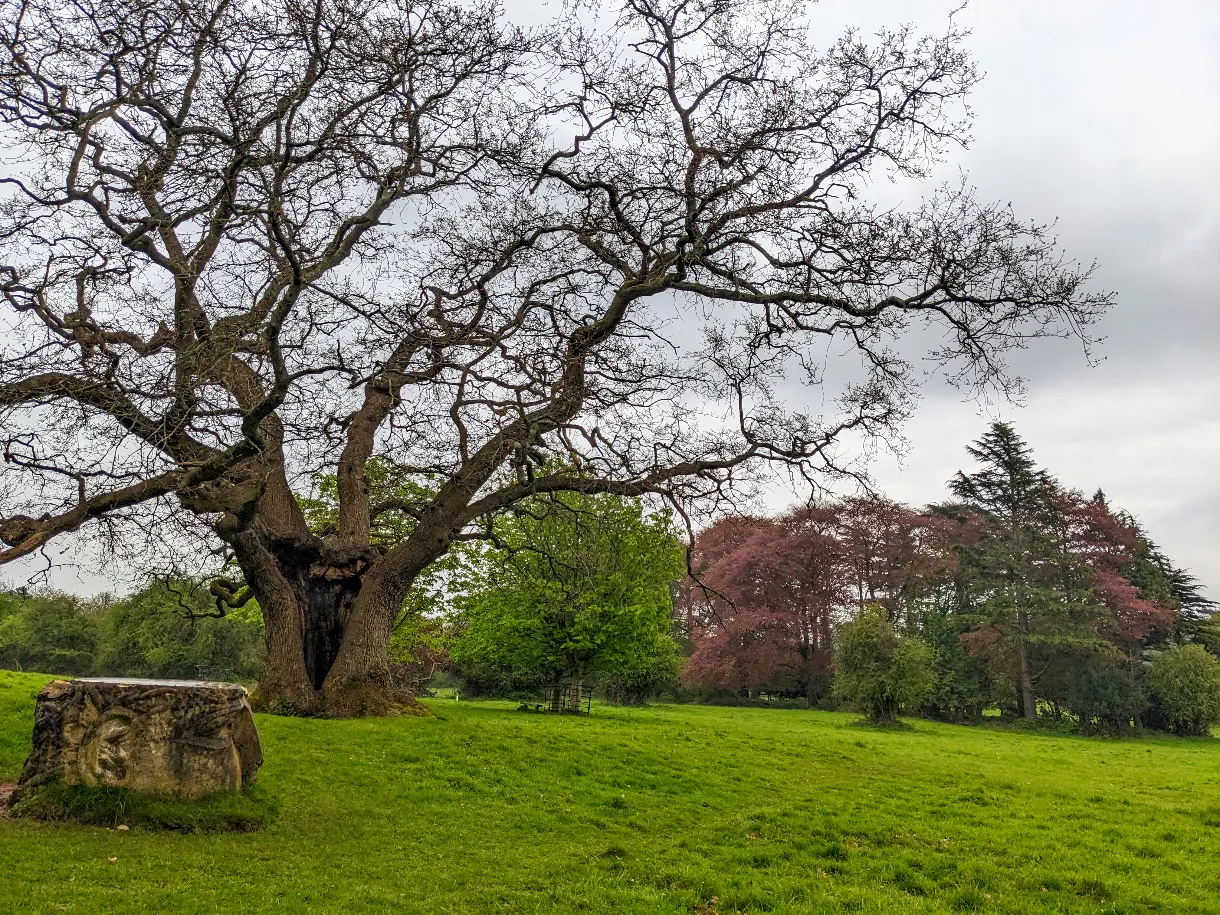
If there’s one green space you shouldn’t miss in Bristol, it’s Ashton Court Estate! This vast historic estate is known for its woods and meadows surrounding a beautiful manor house that’s belonged to the Smyth family since the 16th century. But the highlight of the visit is the deer, which have lived on the estate for over 600 years and can be spotted fairly close up if you’re lucky! During our visit, we followed the marked trails from the park entrance and found them further down, around the middle of the park, all gathered together in a herd. We stayed a long while watching them from a distance and taking photos. We then carried on our walk towards the manor house and its gardens. The place is really calm and relaxing: you wouldn’t guess you’re anywhere near a big city.
The park is easy to reach by bus from the city centre: it takes about 10 to 15 minutes on the X3 or X4 lines (check the Citymapper app for the best route). We chose to get off at the Leigh Woods stop, right near one of the park entrances, up on the hill, close to Clifton Bridge.
- Free entry. All the information about the park here.
Accommodation: where to stay in Bristol?
Keep in mind that places to stay in Bristol’s city centre are seriously overpriced. So we stayed outside the centre, in the Totterdown neighbourhood, a 20-minute walk from Bristol Temple Meads station and a 20-minute taxi ride from the airport. We booked a private room on Airbnb for €347 for 4 nights (so under €87 a night for two): a really great place to stay near Bristol!
The room Helena offers is on the lower level of her house, with a big window looking out onto a terrace with a view over the city; so the room is self-contained and separate from the rest of the house. Everything was clean and nicely done up, with really cosy decor, perfect for feeling right at home. Our host had even left us the makings of breakfast in the morning.
Food and drink: where to eat in Bristol?
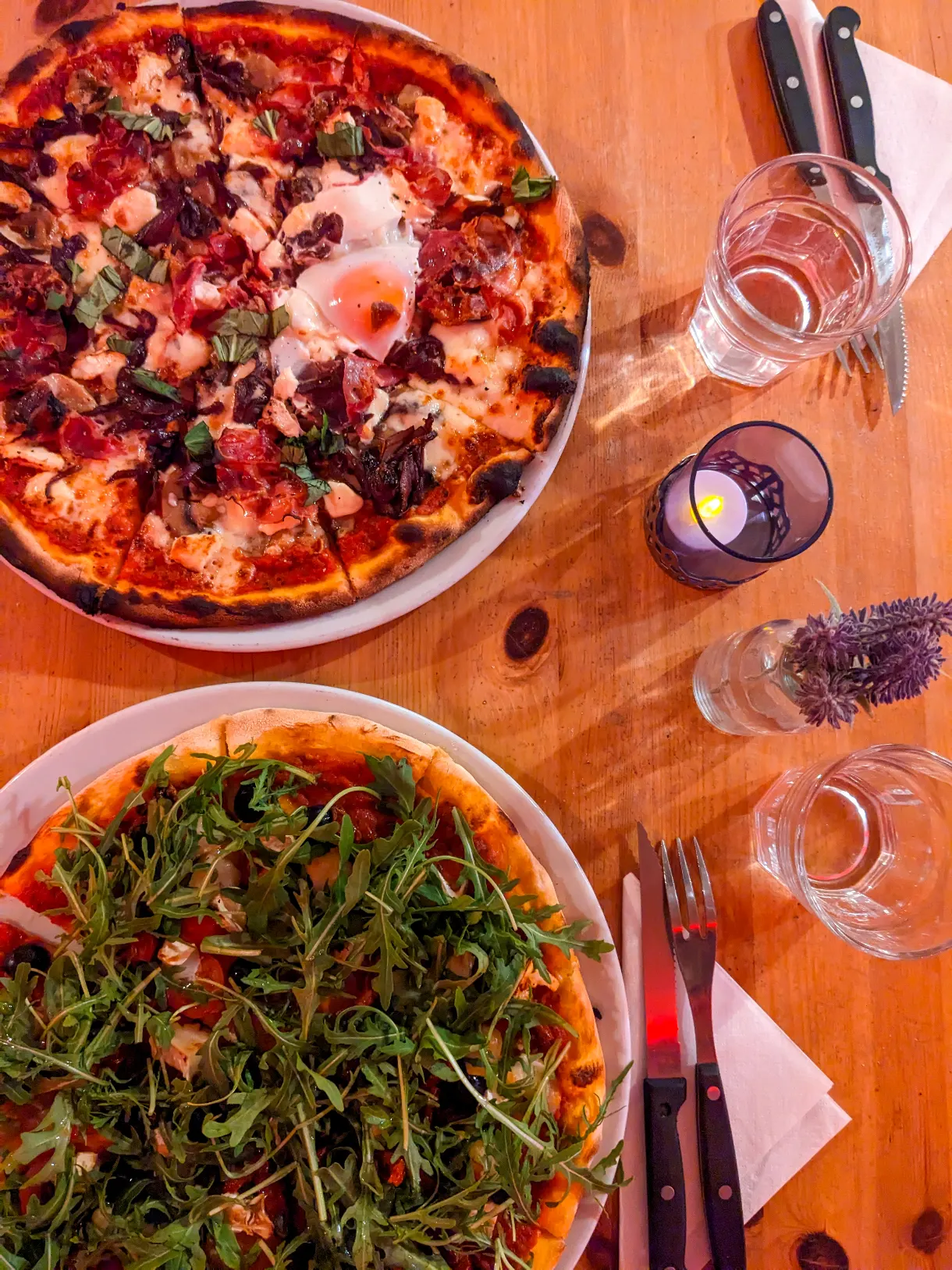
- A Cappella Cafe & Pizzeria: a really good spot in Totterdown that we went to twice. Good pizzas (£13.95) and really good, cheap desserts (special mention for the “sticky ginger, orange and cinnamon cake”). Bill came to around €40 for 2 pizzas and 2 desserts.
- Low and Slow St Nicholas Market: a good street food spot inside the covered market; £8.50 (€9.70) for the Box Meal with pulled meat, slaw, mac & cheese and beans.
- The Harbourside Street Food Market: an open-air market in the city centre, perfect for a lunch break without breaking the bank. We tried the sausage roll and black pudding pastries, plus the brownies from the little stall at the end of the market.
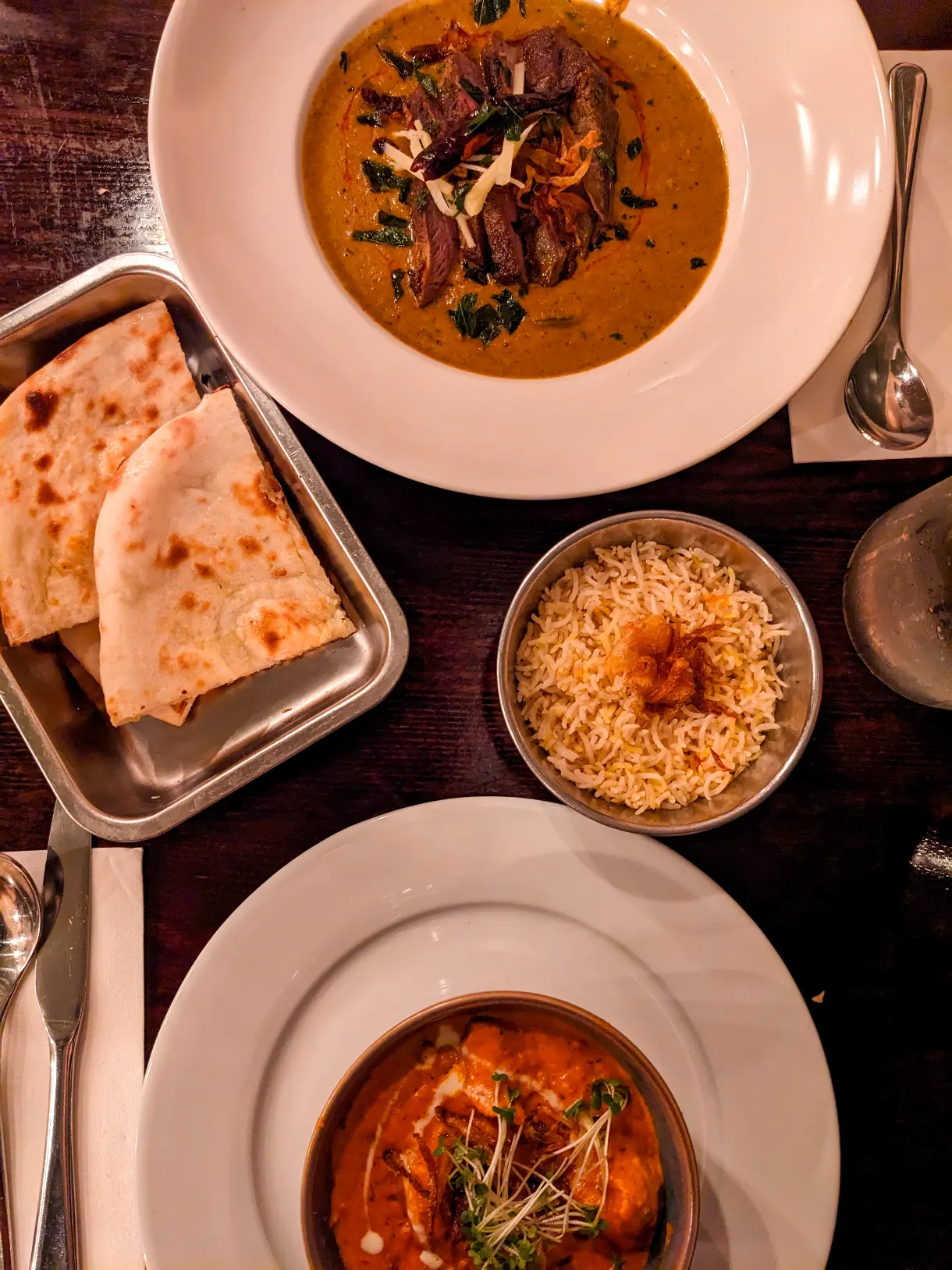
- Nutmeg: a really good Indian restaurant in the Clifton neighbourhood, listed in the Michelin guide; €63 for two starters, two mains and some naan. Book ahead, this place is in high demand.
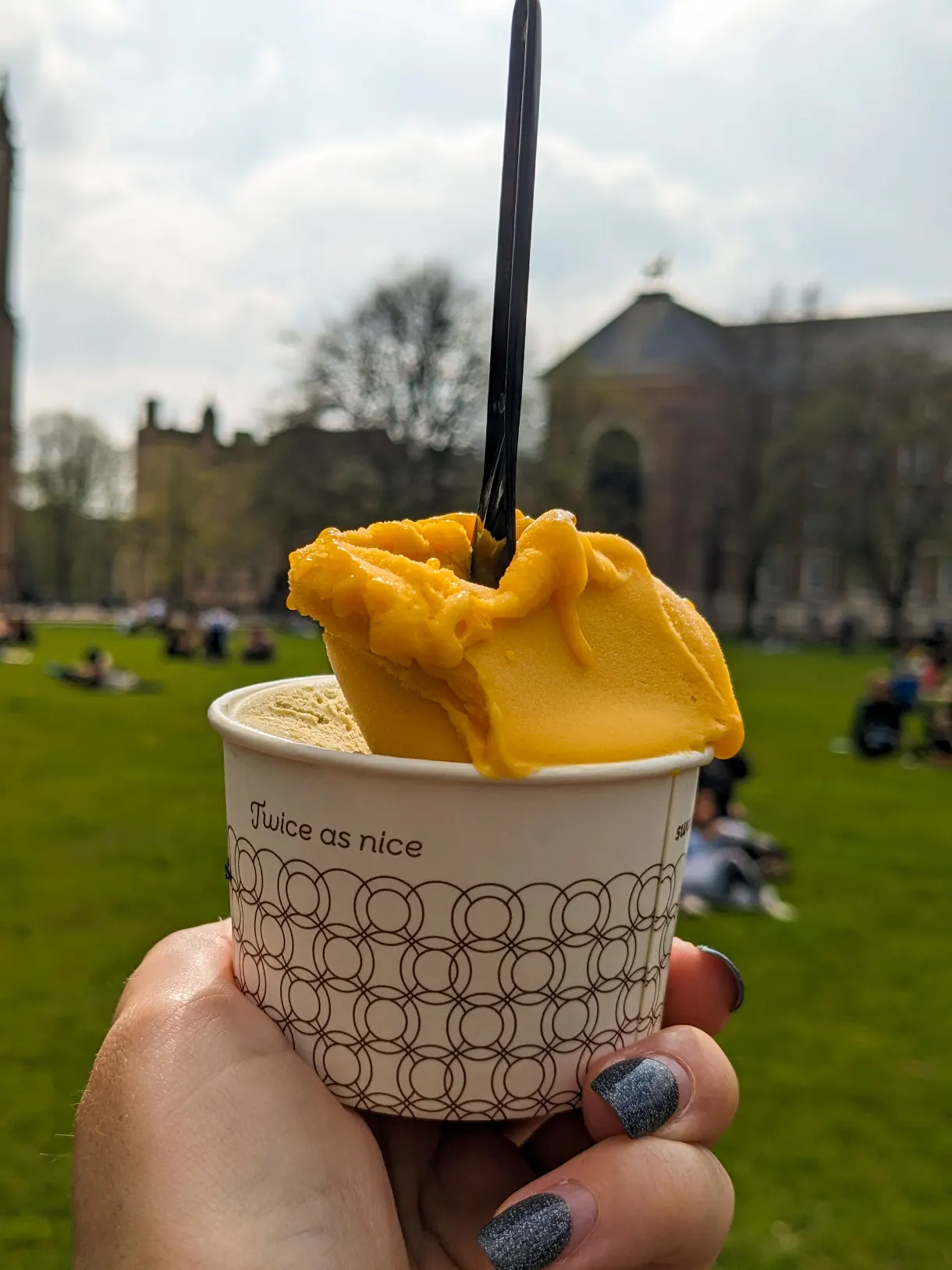
- Swoon Gelato: good ice cream in the centre of Bristol; £5 for two scoops (really good pistachio ice cream), €10.73 for two.
- Crafty Beans Cakes & Cafe: good brownies in different flavours; £6 for 3 brownies (including a Guinness one, worth trying!)
What we thought of Bristol
We weren’t quite sure what to expect coming to Bristol, and yet we really loved our few days in England! The city is pretty much off the radar for French tourists and gets way less visited than London, say: this under-the-radar destination is definitely worth the trip.
Bristol is a young, dynamic city, constantly evolving, with loads of restaurants, cafés, craft shops… the place is buzzing! We felt it was an artistic, creative city that really showcases its industrial heritage. We were also struck by how close it is to nature: you can easily escape the hustle and bustle of the city centre thanks to its many parks and quieter, residential neighbourhoods like Clifton. In short, a city worth discovering! So keep Bristol in mind for your next long weekend from France, quick and easy to reach by plane, with lovely day trips to be had nearby like the town of Bath.
Planning a trip to England? Get inspired and check out all our articles on the country!
Leave a comment
Thank you for your comment! Marie & Romain
Be the first to leave a comment.