Tunisia
Tunisia is best visited from October to April for the southern desert, and in spring or autumn for the center and north. We discovered it in winter 2023, and we loved this destination so much that we went back a few months later in spring. We fell for it immediately.
On our first trip, we did a ten-day road trip through southern Tunisia, across the desert, visiting iconic spots like the ksour, the troglodyte villages, and the Sahara desert. On our second stay, we explored the center of the country, between the cities of Monastir, Sousse, El Jem, and Kairouan, as well as the north, visiting Carthage and Sidi Bou Said, linking the two regions by train.
Check out our tips, our itineraries, and our favorite spots in our detailed articles.
When to go to Tunisia
In 2023, we went to Tunisia twice, exploring a very large part of the country. In March, we chose to explore southern Tunisia with its desert and troglodyte villages, and in May, we headed to the center of the country on the coast (Monastir, Sousse) and inland (Kairouan, El Jem), as well as to the north of Tunisia (Carthage, Sidi Bou Said). So we can speak from experience about these two different seasons.
- From autumn to spring (October to April): southern Tunisia has a desert climate with intense heat, so it’s best to go from October onward. Keep in mind that nights are cold in the desert in the middle of winter, so bring warm clothes if you’re going between December and February. In early March, we had beautiful blue skies and lovely daytime temperatures (around 25°C), with quite a chill once night fell.
- The shoulder seasons (April and May, September and October): these are the best months for discovering the Tunisian coast and the center of the country, with pleasant temperatures and fewer tourists around. We were there in May and we loved visiting the archaeological sites and towns in bearable heat and without the crowds.
What to see in Tunisia
Tunisia has a huge number of regions and varied landscapes: the desert and Berber villages in the south, historic and religious cities along the coast and in the center, and ancient sites in the north. We covered three very distinct areas, and we can tell you one thing: there’s a lot more to discover in Tunisia than just the island of Djerba.
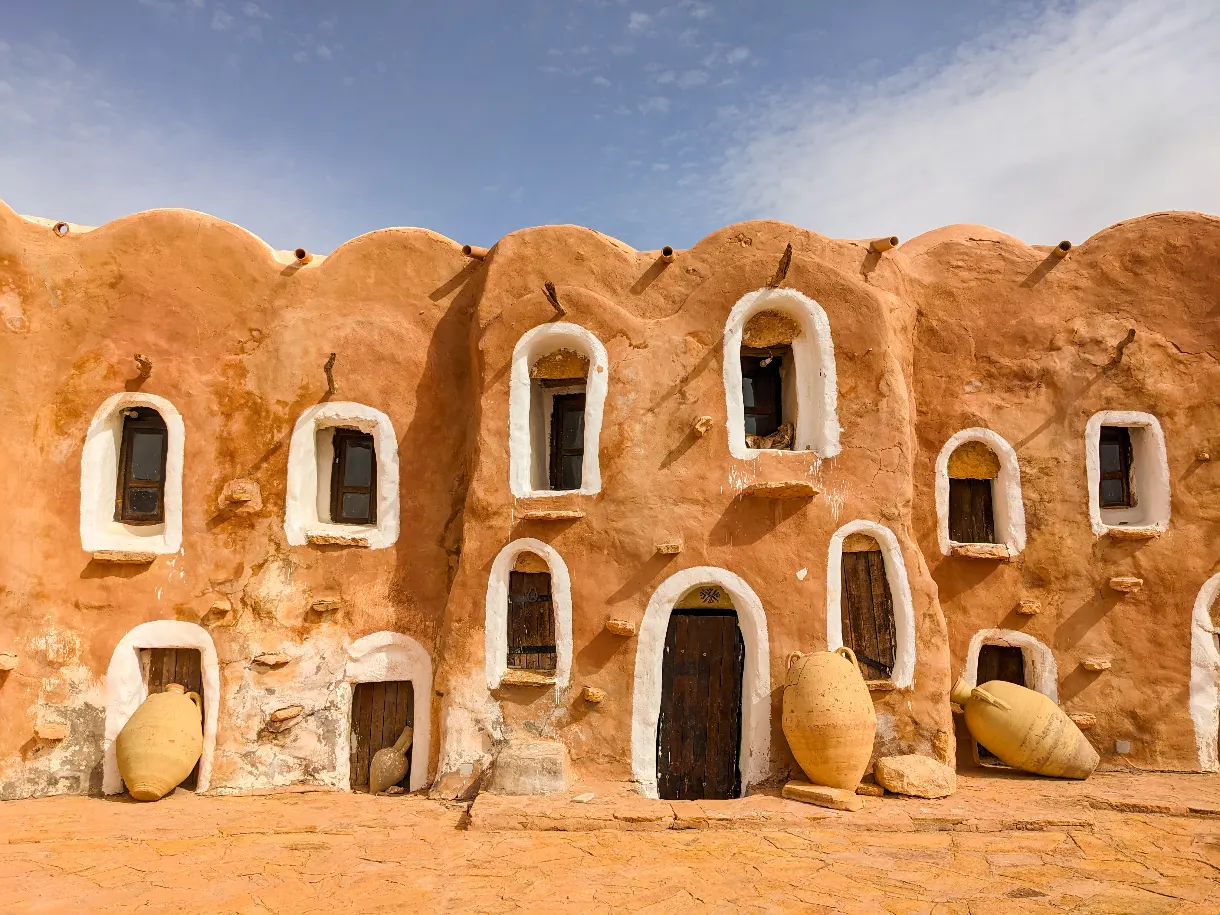
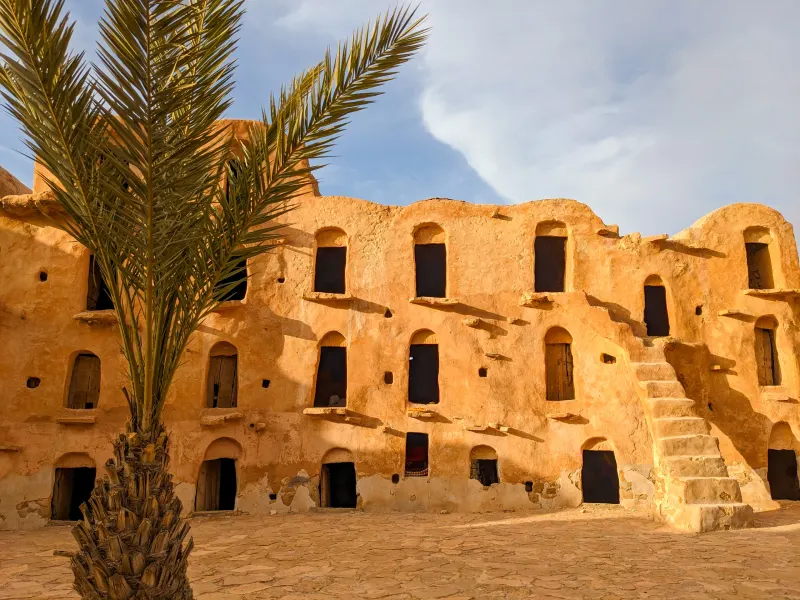
The south, the desert, and the Berber villages. The ksour, these fortified earthen granaries, can be visited around Matmata and Tataouine: Ksar Ouled Soltane, Ksar Hadada, Ksar Hallouf, and Ksar Ouled Debbab. The troglodyte villages of Douiret, Guermassa, and Chenini are also worth visiting. Further west, toward the beautiful town of Tozeur, the Chott el Djerid and its salt desert, and the mountain oases of Chebika, Tamerza, and Mides, won us over.
The center, the medinas, the mosques, and the Roman amphitheater. Kairouan, a UNESCO World Heritage Site since 1988, is the fourth holiest city in Islam: its great mosque is well worth the visit. Another major site: El Jem and its Roman amphitheater, listed since 1979, is one of the best-preserved in the world: it reminded us of a mini Roman Colosseum, minus the crowds. As for towns like Sousse with its medina, and Monastir with its ribat and the Bourguiba Mausoleum, they should also be on your itinerary.
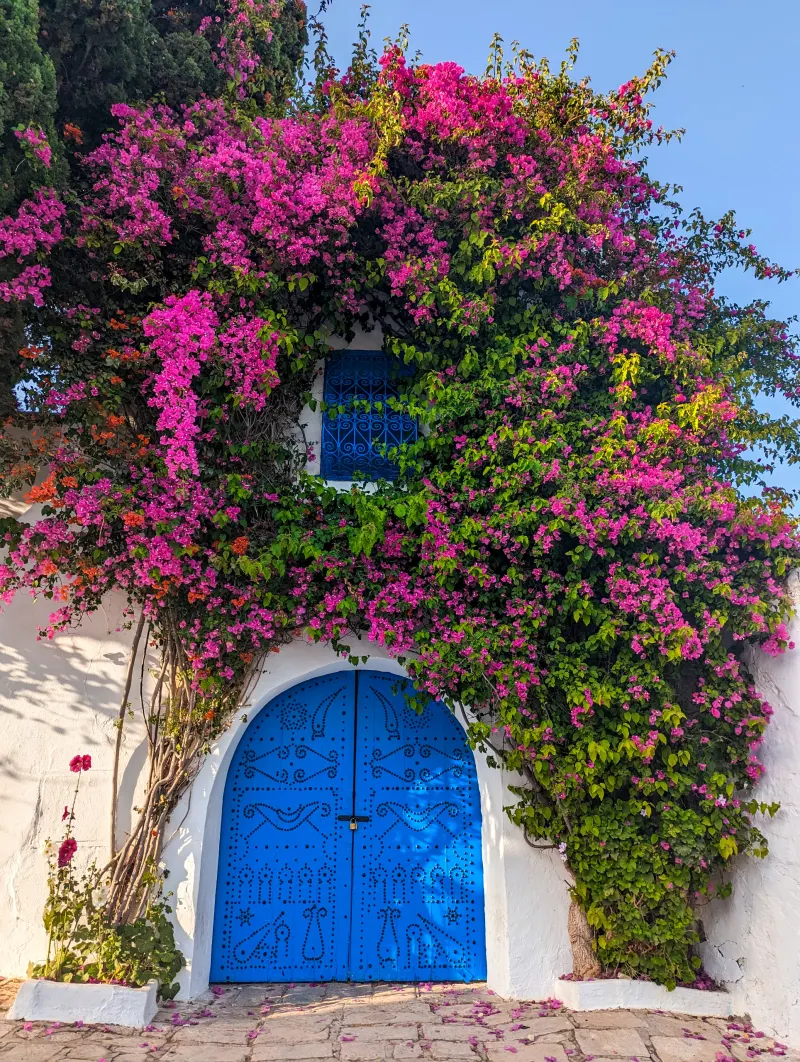
The north, Carthage, and Sidi Bou Said. The archaeological site of Carthage and the blue-and-white village of Sidi Bou Said are two gorgeous spots you can visit from Tunis.
Our tips for traveling to Tunisia
Here are some general recommendations based on what we experienced on the ground.
- Be curious, don't just stick to a beach holiday
Tunisia is a country of huge cultural richness: it would be a shame to go there just to tan on a lounger at a resort. Rent a car and explore the south, for example, or take the train, which serves cities like Sousse, Tunis, and Sidi Bou Said really well.
- Wear covering clothes
Tunisia is a tolerant country used to tourism, but show respect by favoring long clothing that covers the knees and shoulders (long skirts and dresses for women). For visiting places of worship and temples, we’d suggest packing a scarf or a light long-sleeved shirt to cover up during the visit.
- Be careful with the water and certain foods
Tap water isn’t safe to drink in Tunisia: be careful even when brushing your teeth, especially if you have a sensitive stomach. Avoid drinks with ice cubes if you’re not sure where the ice came from, raw fruit and vegetables washed in unfiltered tap water, and undercooked food.
Frequently asked questions about Tunisia
Do you need a passport or an ID card to go to Tunisia?
A passport is required, a national ID card isn’t enough. Since January 1, 2025, it must be valid for at least 3 months after your entry date into Tunisian territory.
What's the ideal length for a trip to Tunisia?
10 days to do a road trip through southern Tunisia and the desert. A week for a beach holiday or to visit the main cities in the center and north of Tunisia (Sousse, El Jem, Kairouan, Tunis, Carthage, Sidi Bou Said, and so on).
Is it dangerous to travel to Tunisia right now?
The main tourist areas and the coast are safe and monitored, with a strong security presence. You should avoid the border areas and the far south of the country, along the border with Libya and Algeria. For more information, check the France Diplomatie website.
Leave a comment
Thank you for your comment! Marie & Romain
Be the first to leave a comment.