10 days in Lanzarote: the heart of the island
The centre of Lanzarote deserves several days of visiting all on its own, there is so much to see and do! It is definitely a rich region that deserves some time to discover the more “rural” soul of Lanzarote.
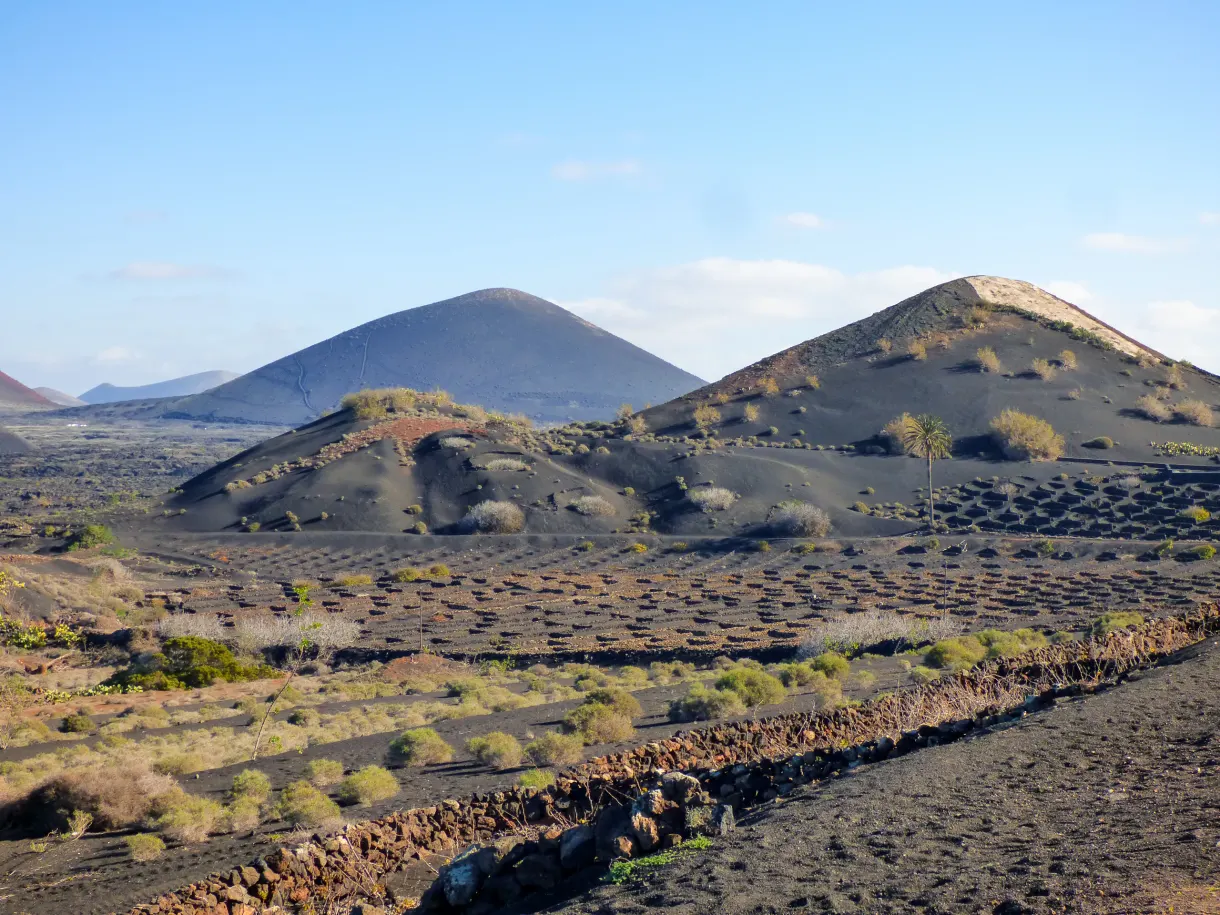
The centre of Lanzarote deserves several days of visiting all on its own, there is so much to see and do! It is definitely a rich region that deserves some time to discover the more “rural” soul of Lanzarote. So here in detail are all the places we were able to explore during our stay on the island…
What to see in the centre of Lanzarote
Discovering the volcanoes…
Timanfaya National Park
To be honest, we were very hesitant about visiting this Timanfaya National Park… after reading plenty of opinions on blogs, we were torn between wanting to discover this must-see spot on the island (“We’re here, let’s do it. We won’t be back any time soon! ”), which looked so touristy though (“Is it really worth it? ”). Well, even after our visit, we’re still in two minds! We don’t regret being curious, but we wouldn’t recommend it 100% as an essential thing to do in Lanzarote. At the entrance to the park there is a toll booth where you pay the entry fee: we paid 24€ for the two of us. Then you have to drive a while to reach a summit… and a huge car park where the staff tell you exactly where to park. Everything is measured to the millimetre and you quickly feel like you’ve landed in a tourist factory. This is where we came across the most people, by the way…
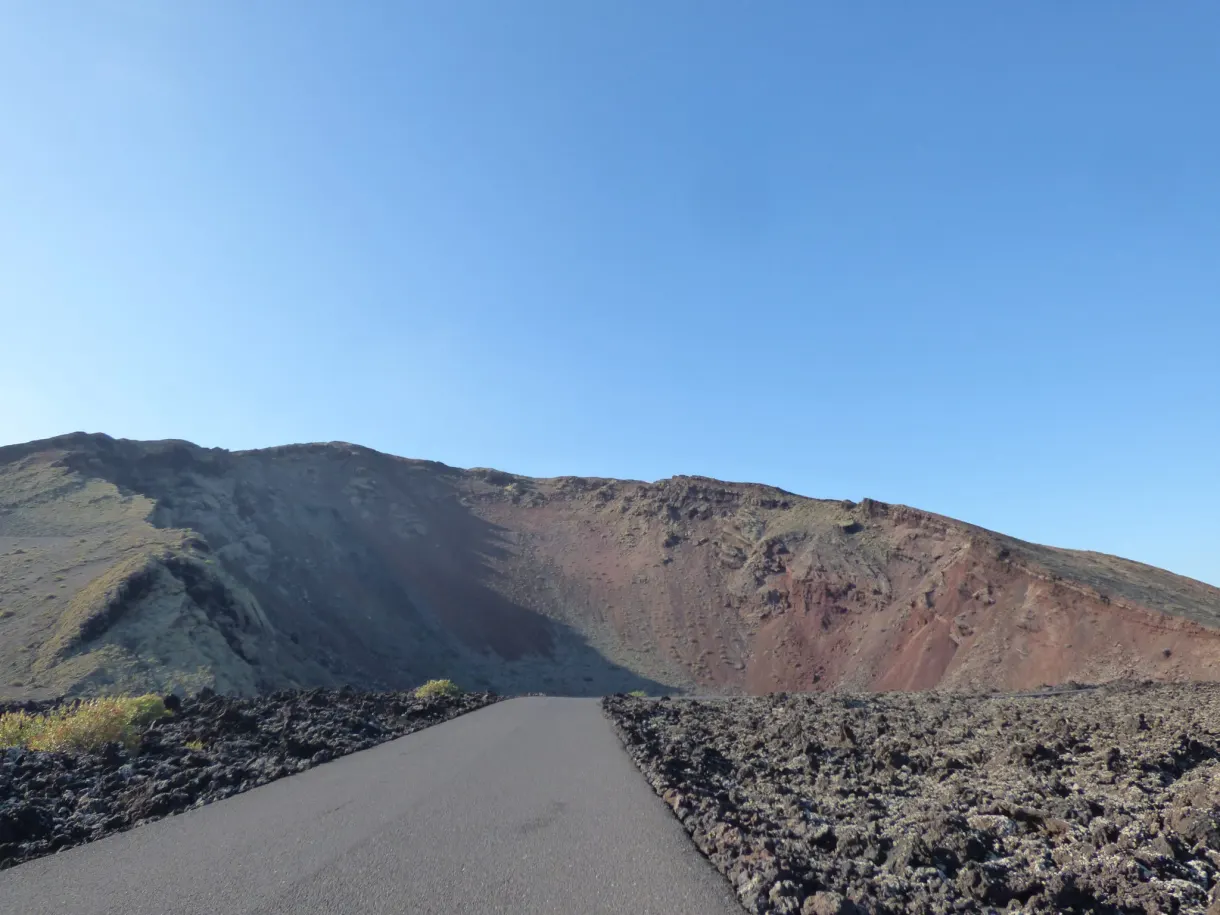
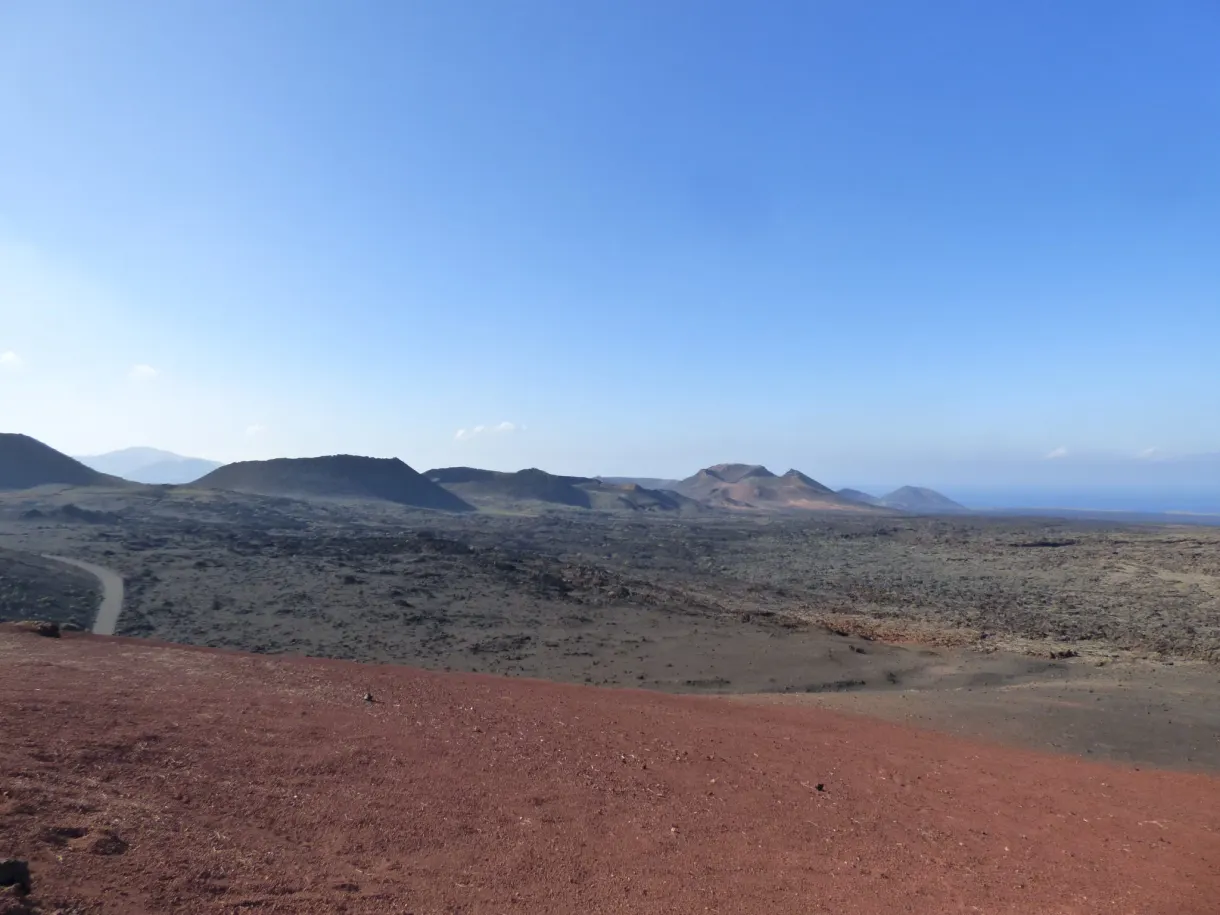
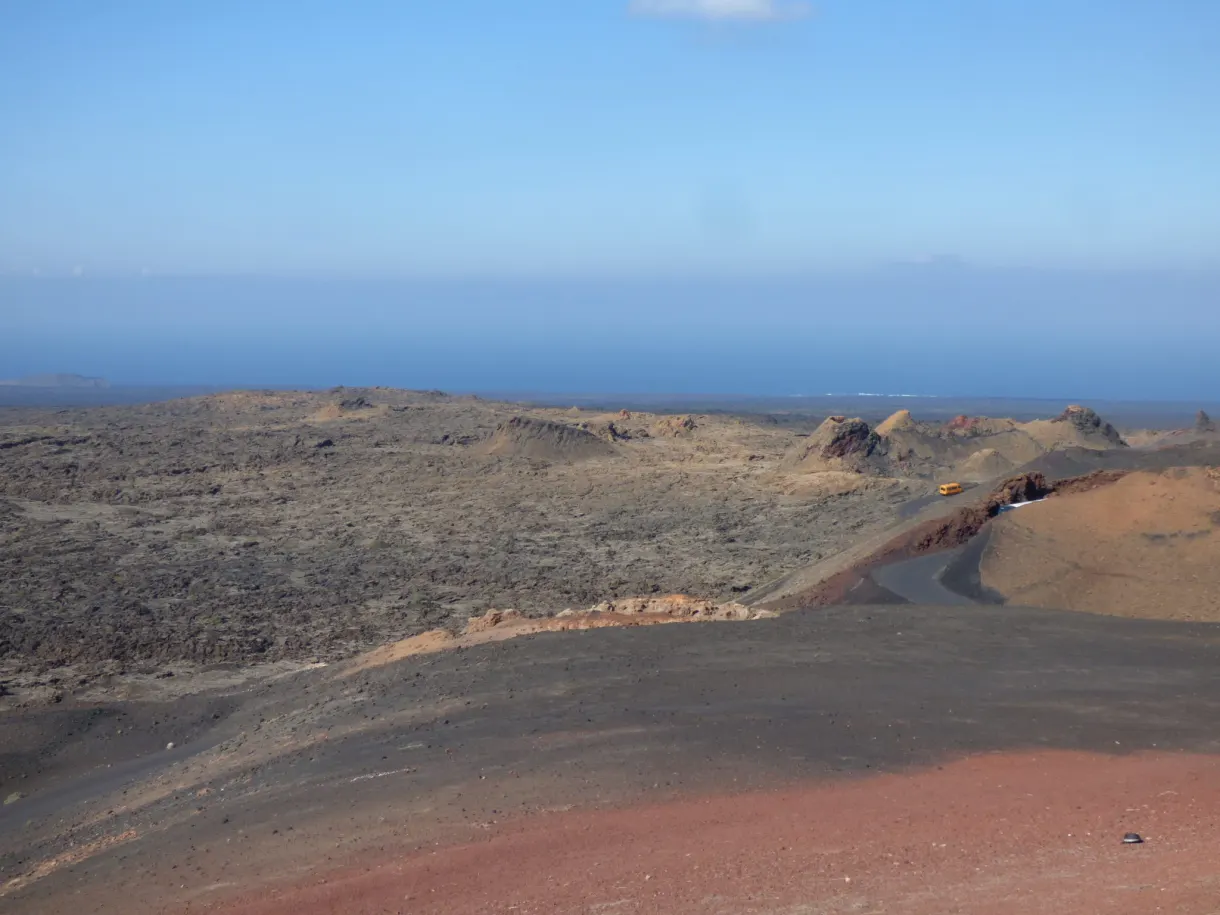
Once you arrive on site, in the middle of the crowd, you wonder where to go and what to do. The entry ticket entitles us to a 45 minute bus tour through the volcanoes (to preserve the site, no cars are allowed to drive around), and to a few demonstrations linked to the volcanoes. Up there you’ll also find a shop and a panoramic restaurant that cooks its meat with the heat of the volcano’s lava: we didn’t want to have lunch there, it looked far too much like a restaurant packed with tourists. After searching and asking several people, we finally found the white bus (parked opposite the shop) that takes us on a tour of the volcanoes. That’s the part we preferred during this visit, because the landscapes are really impressive! Unfortunately, the bus’s tinted windows don’t do the photos any favours… At the end of the ride, we watched the famous demonstrations, which consist of lighting a fire with the heat of the volcano and creating a geyser with the pressure. Nothing mind-blowing but it’s worth seeing if you’re there.
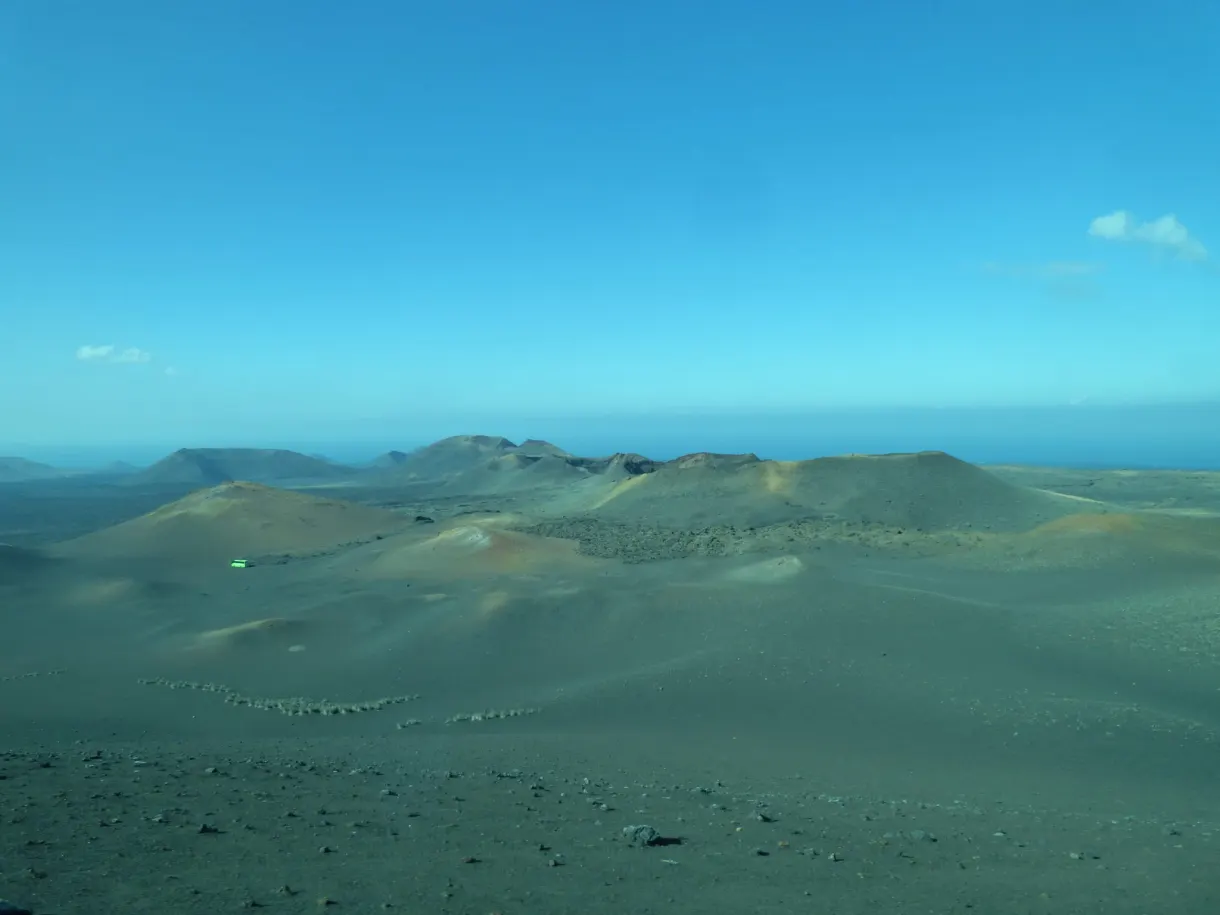
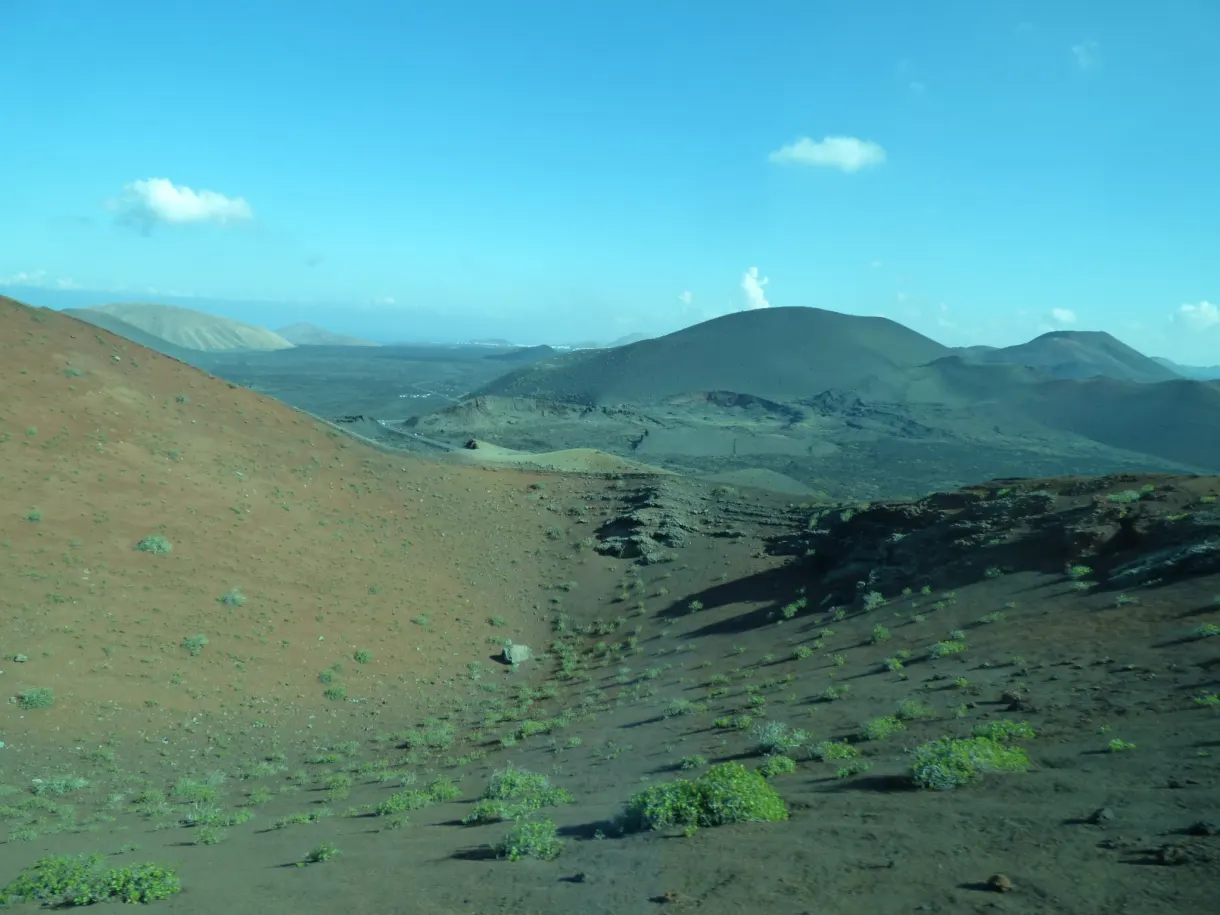
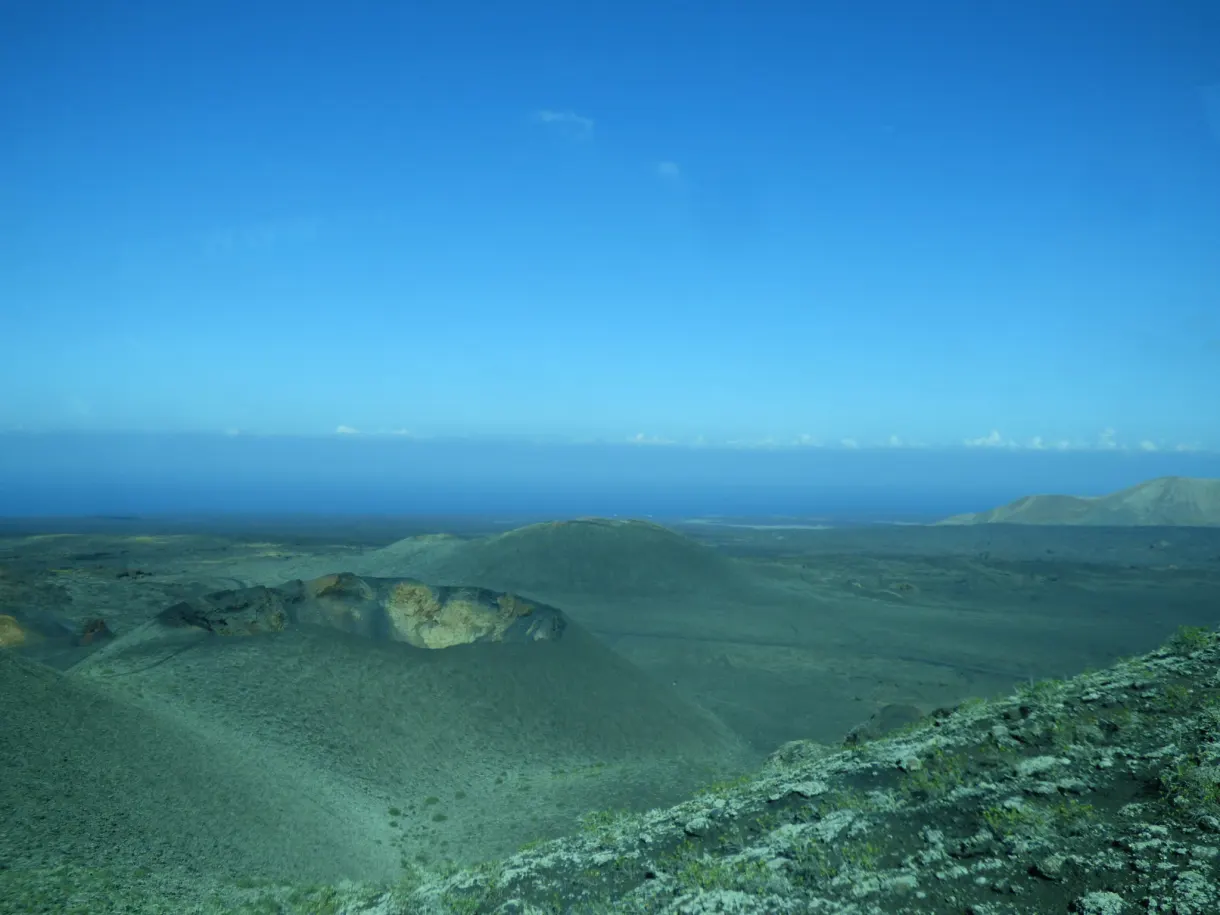
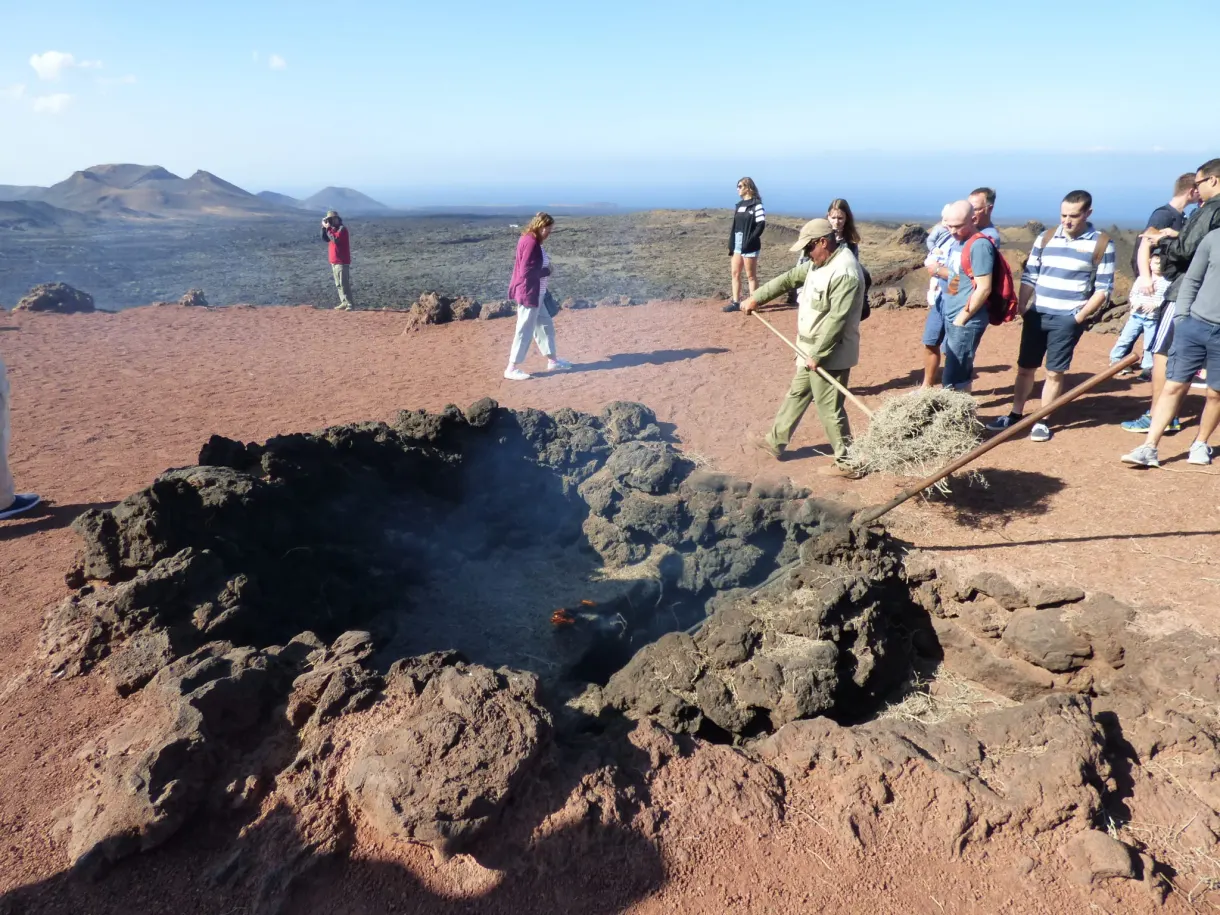
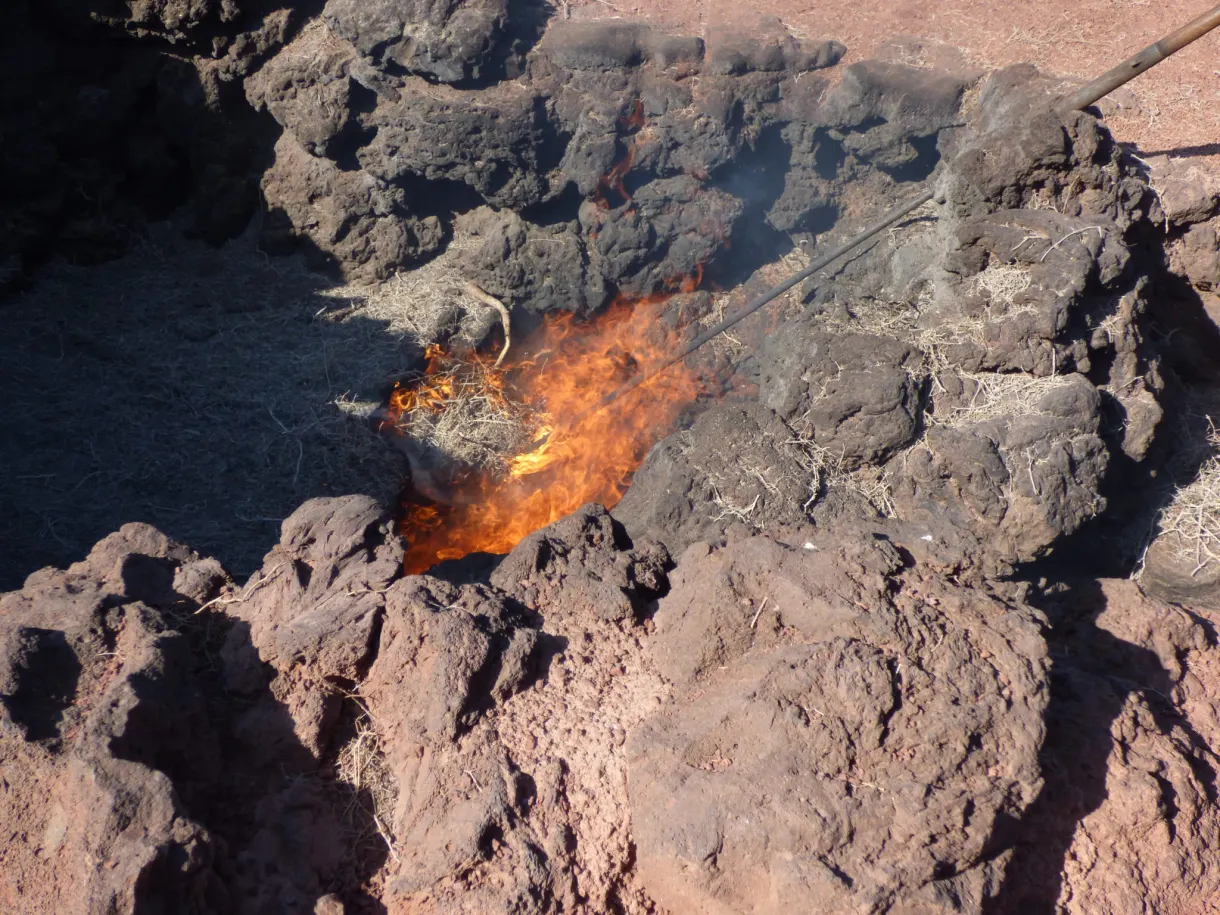
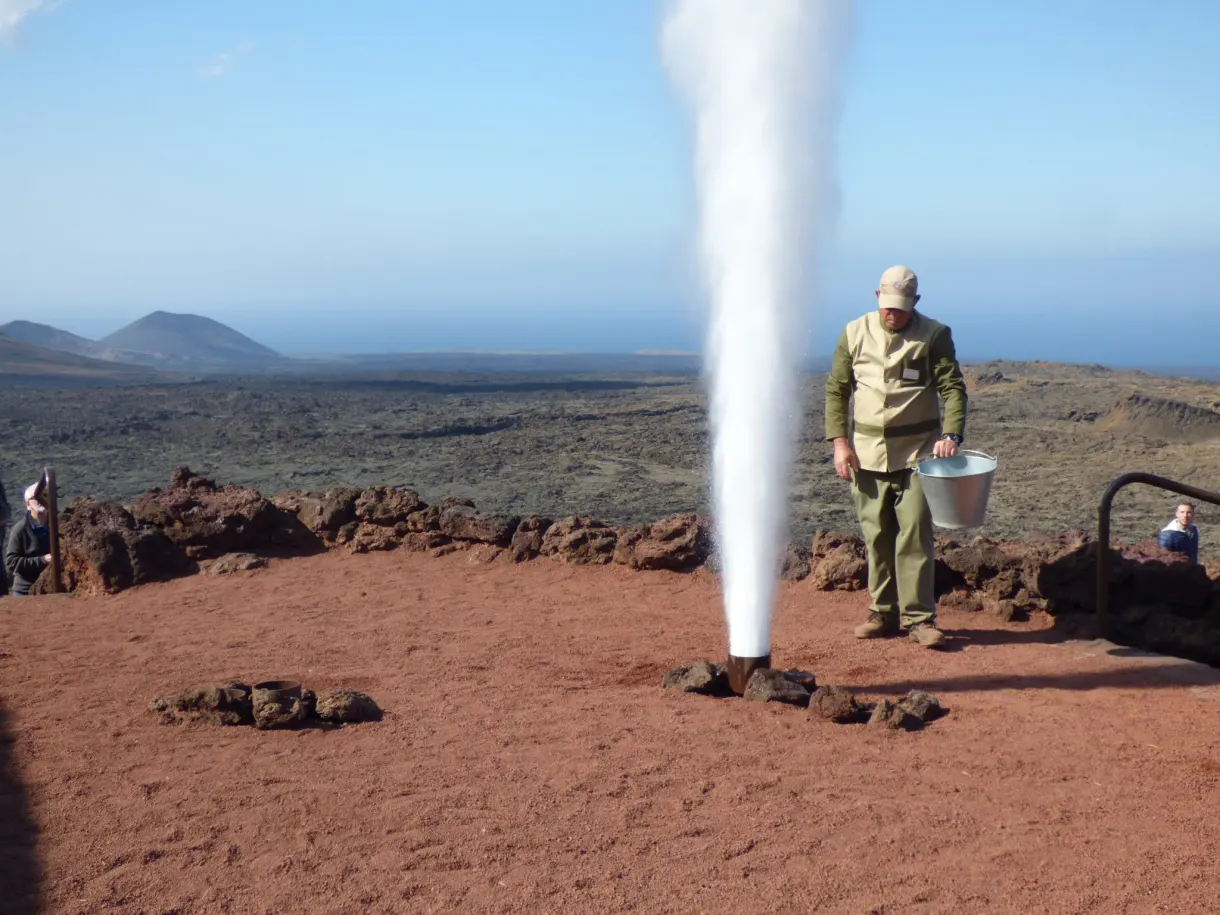
We spent a little time away from the crowd, contemplating this lunar landscape with the sea in the background, and taking photos to keep a memory of this park we had hesitated to visit. It has to be said that the view is still spectacular…
Mancha Blanca Interpretation Centre
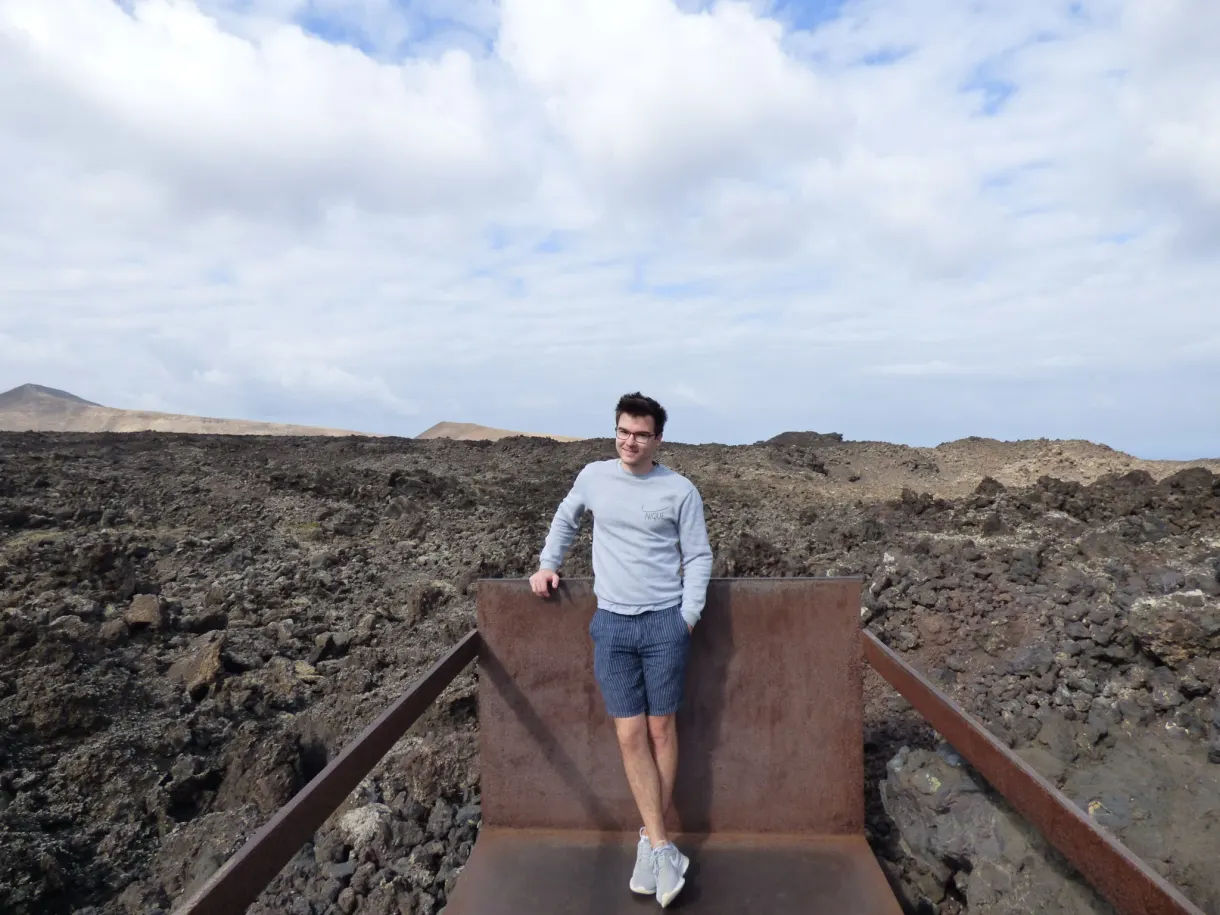
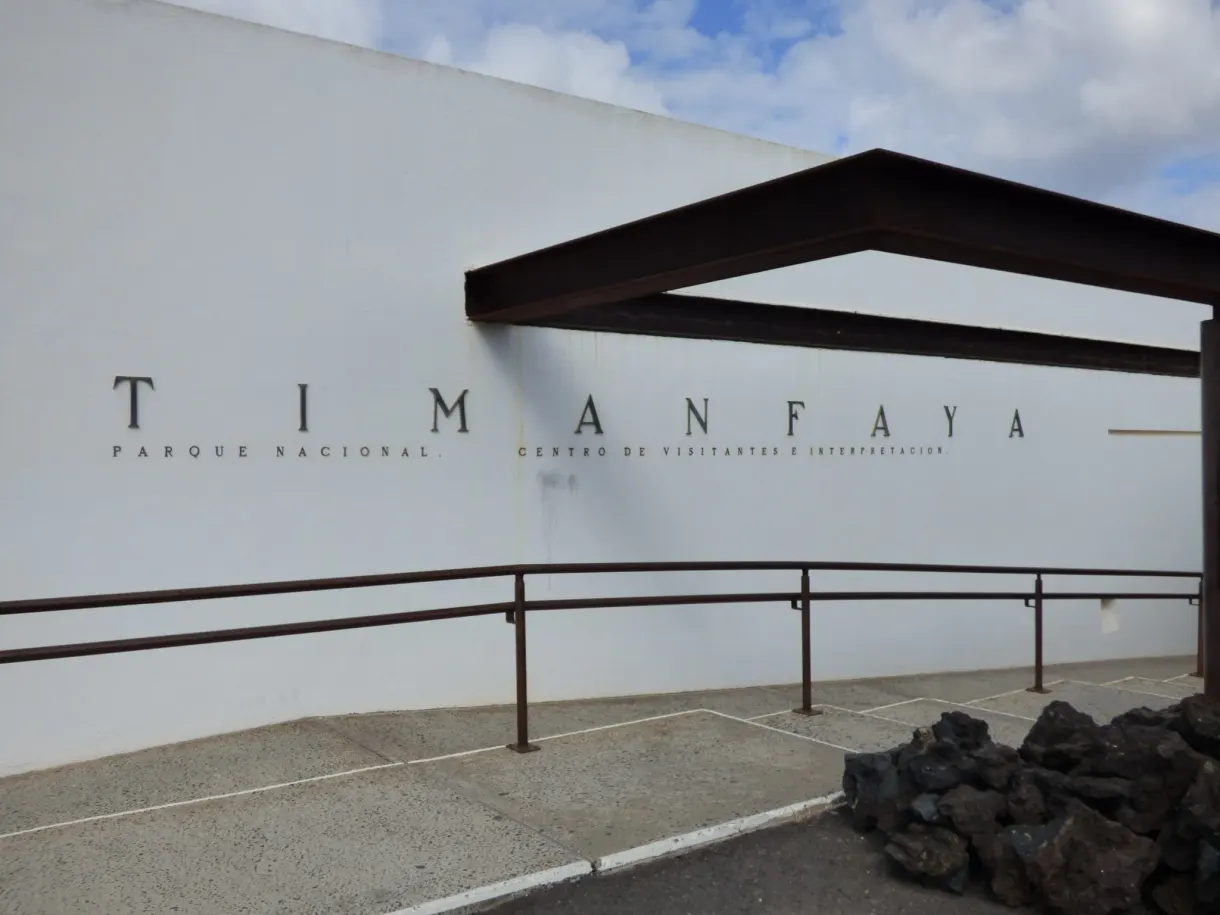
To find out more about how this volcanic island was formed, we went to the visitor and interpretation centre of Timanfaya National Park, located in Mancha Blanca. Entry to the centre is free and gives access to a museum section, a panoramic terrace above the lava flow that took place in Lanzarote from 1730 to 1736, a screening room and even the simulation of an eruption. It’s a very interesting place that gives you all the keys to understanding the various volcanic eruptions that shaped Lanzarote, but also all the wildlife and plants found on the island. We recommend it!
Montaña Colorada
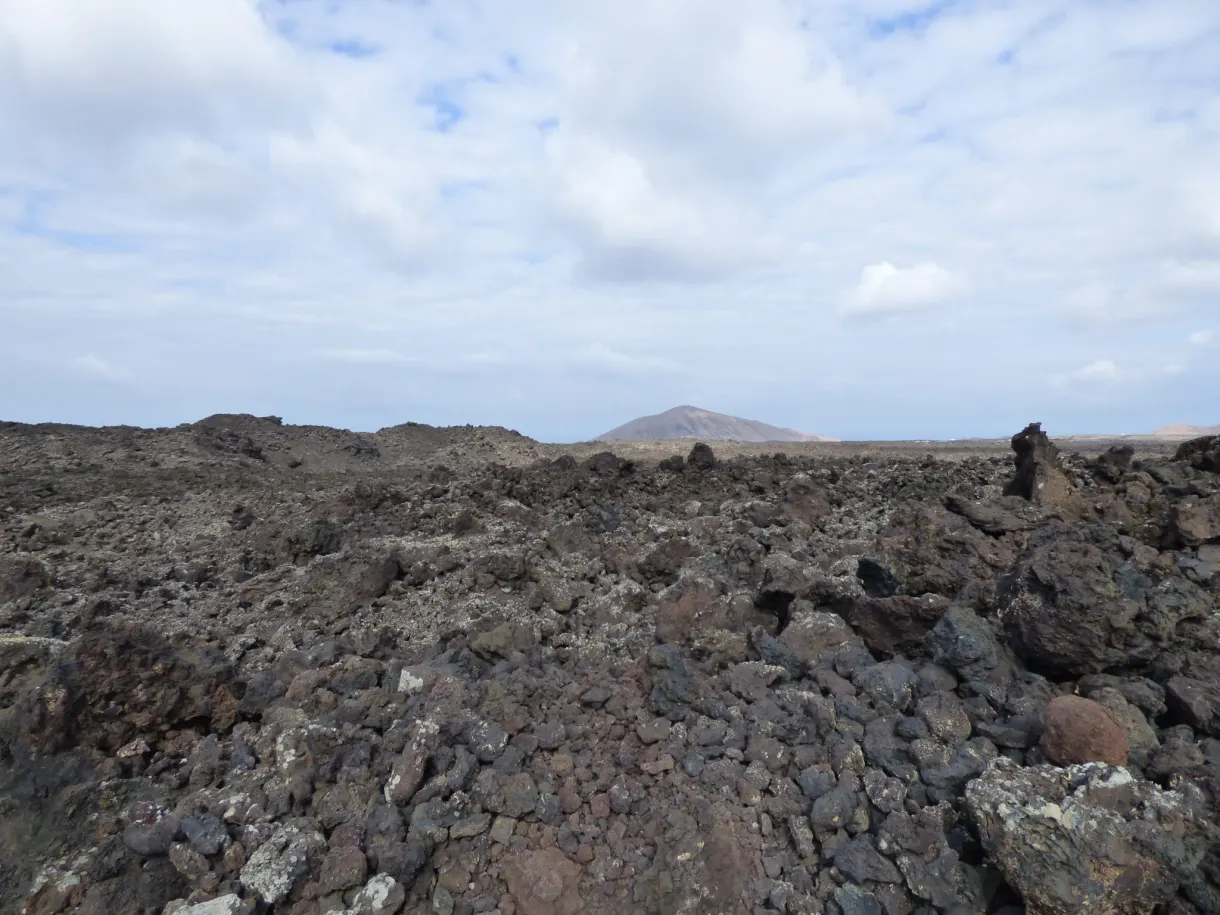
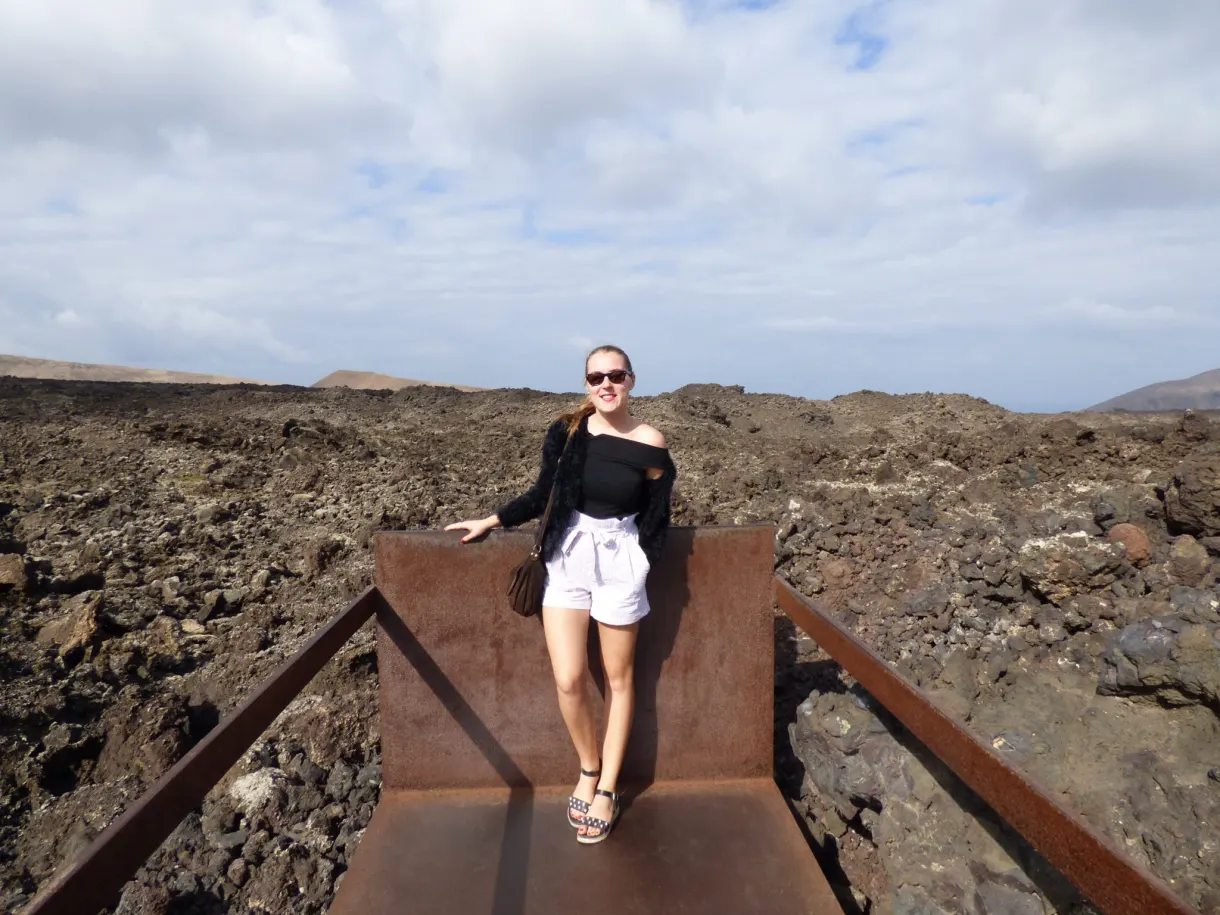
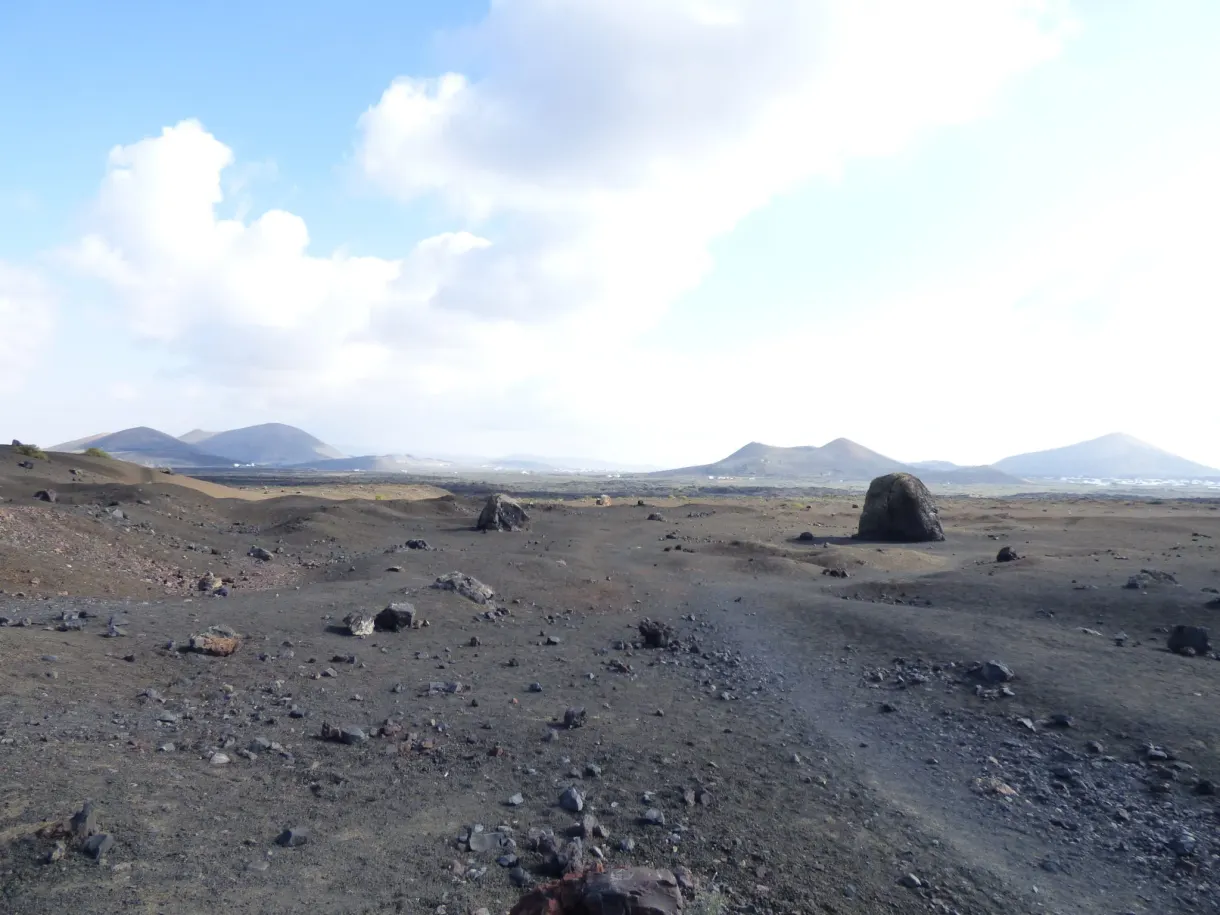
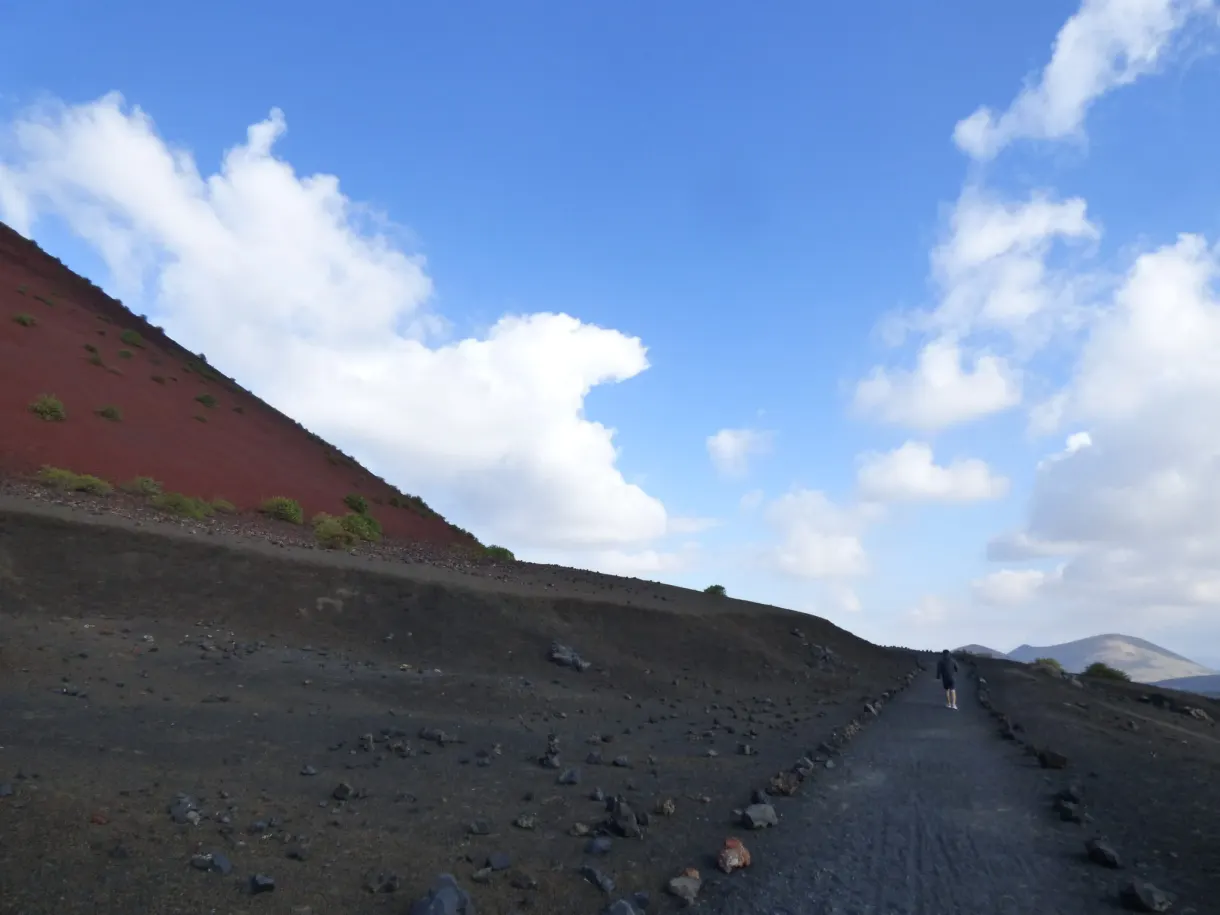
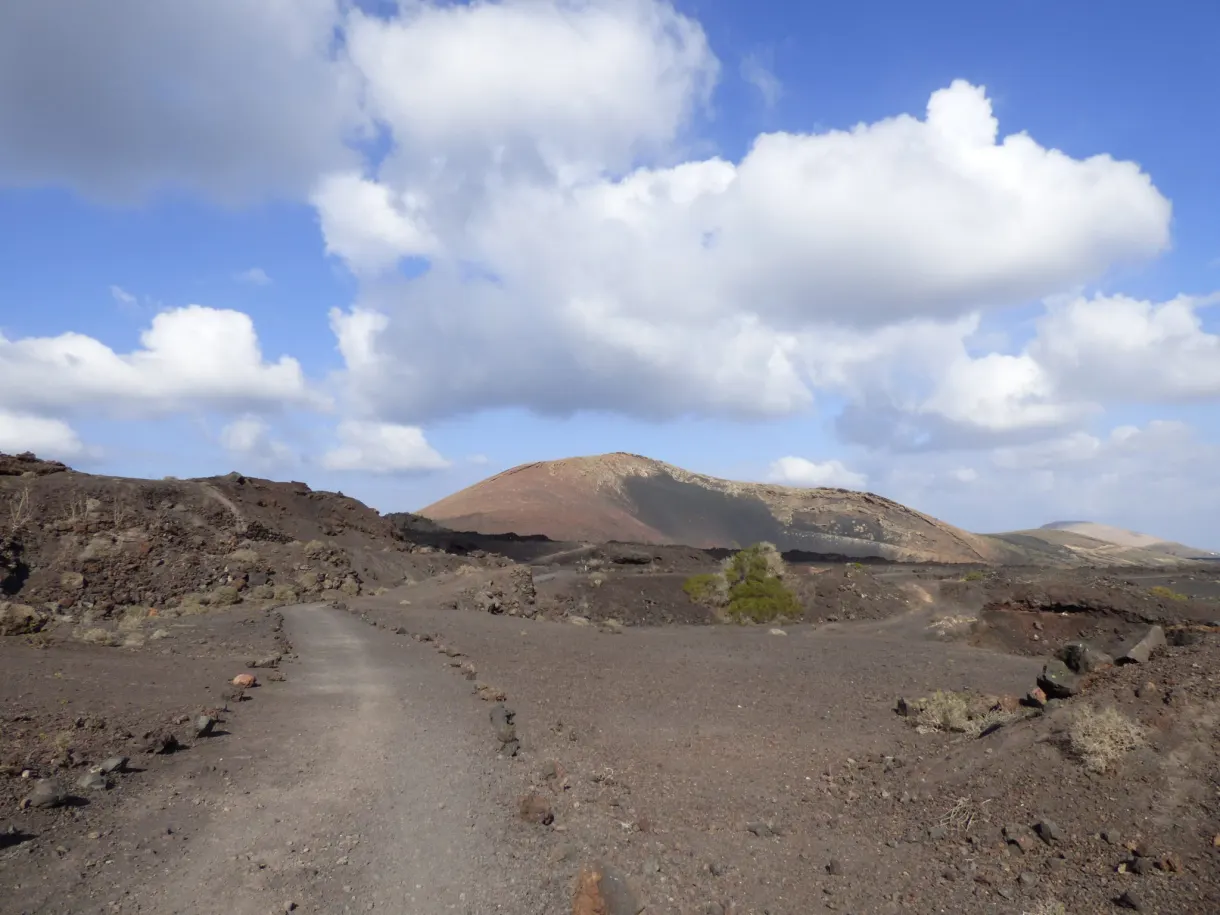
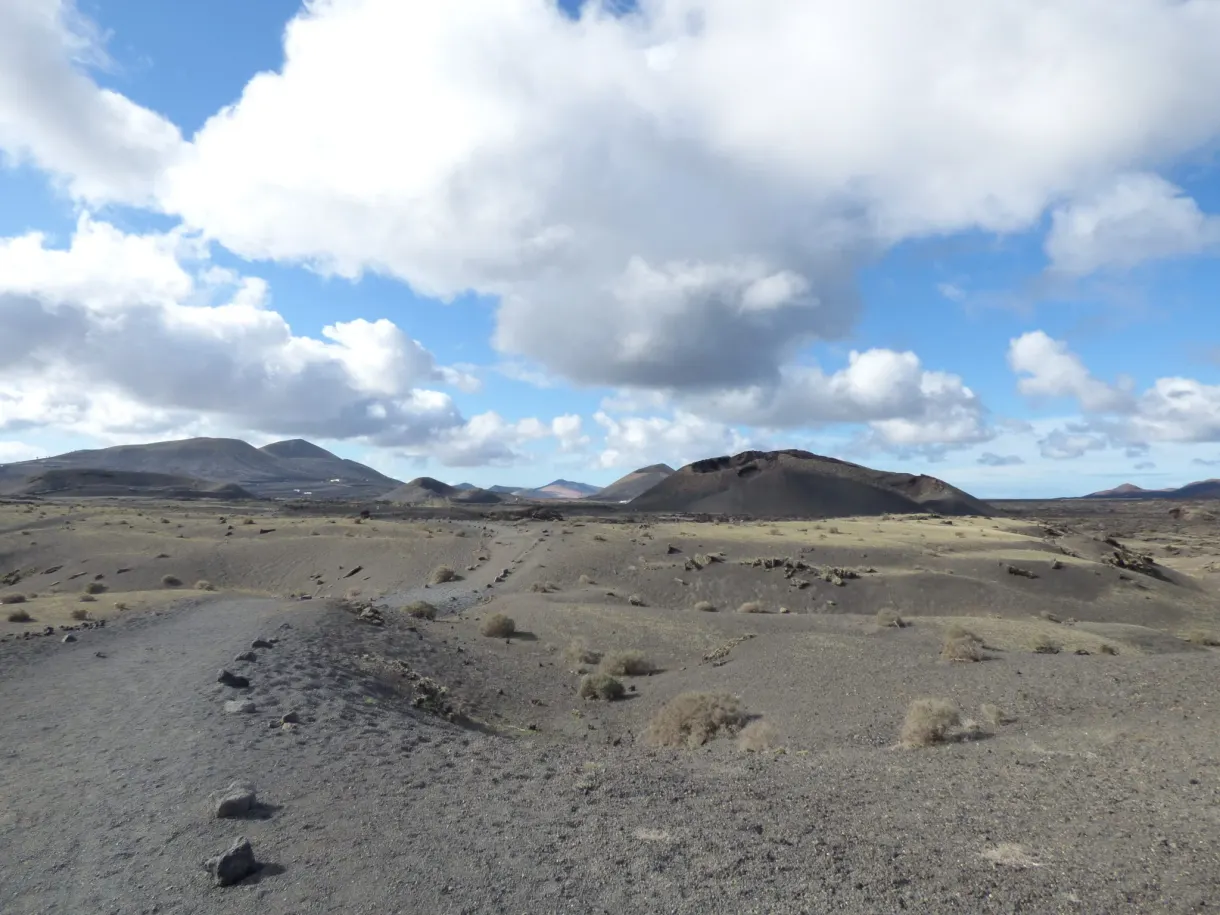
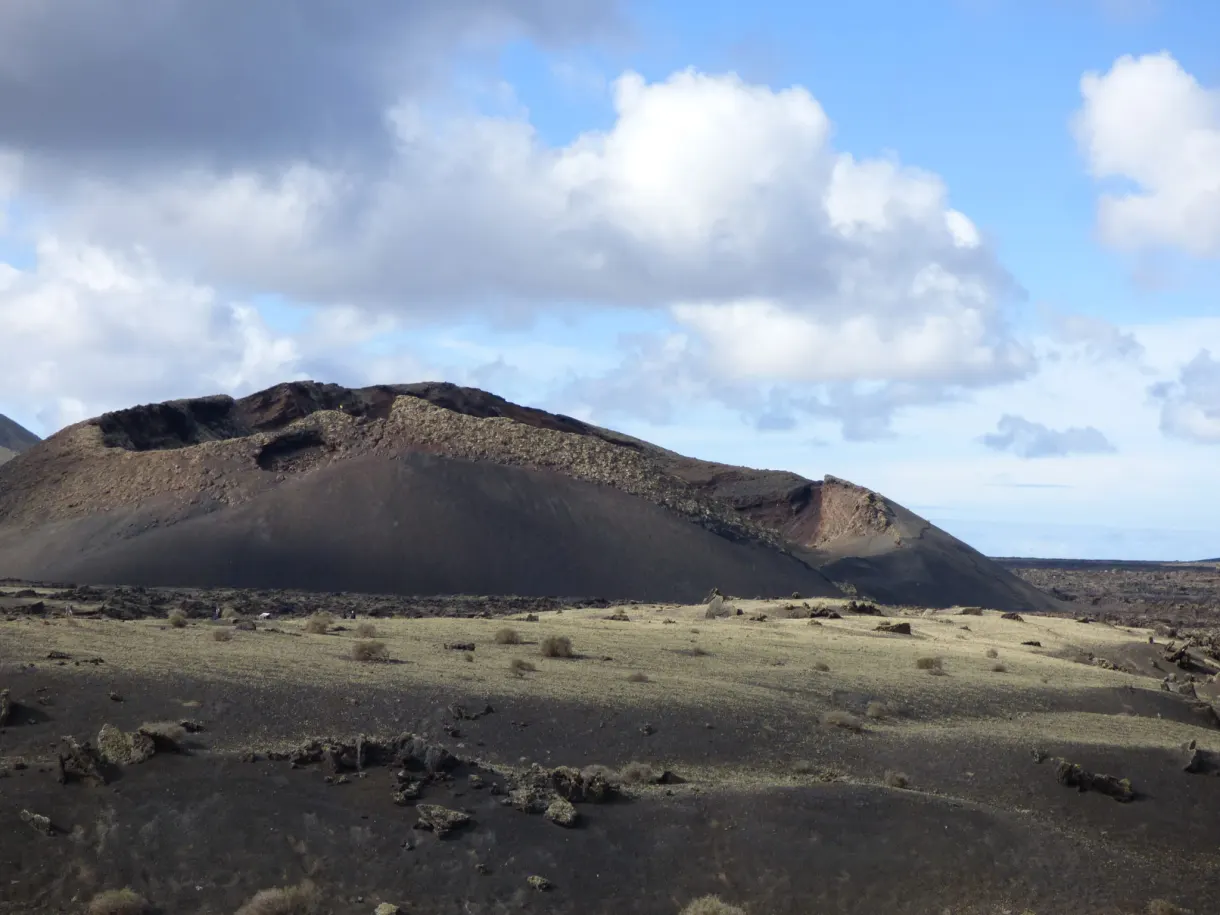
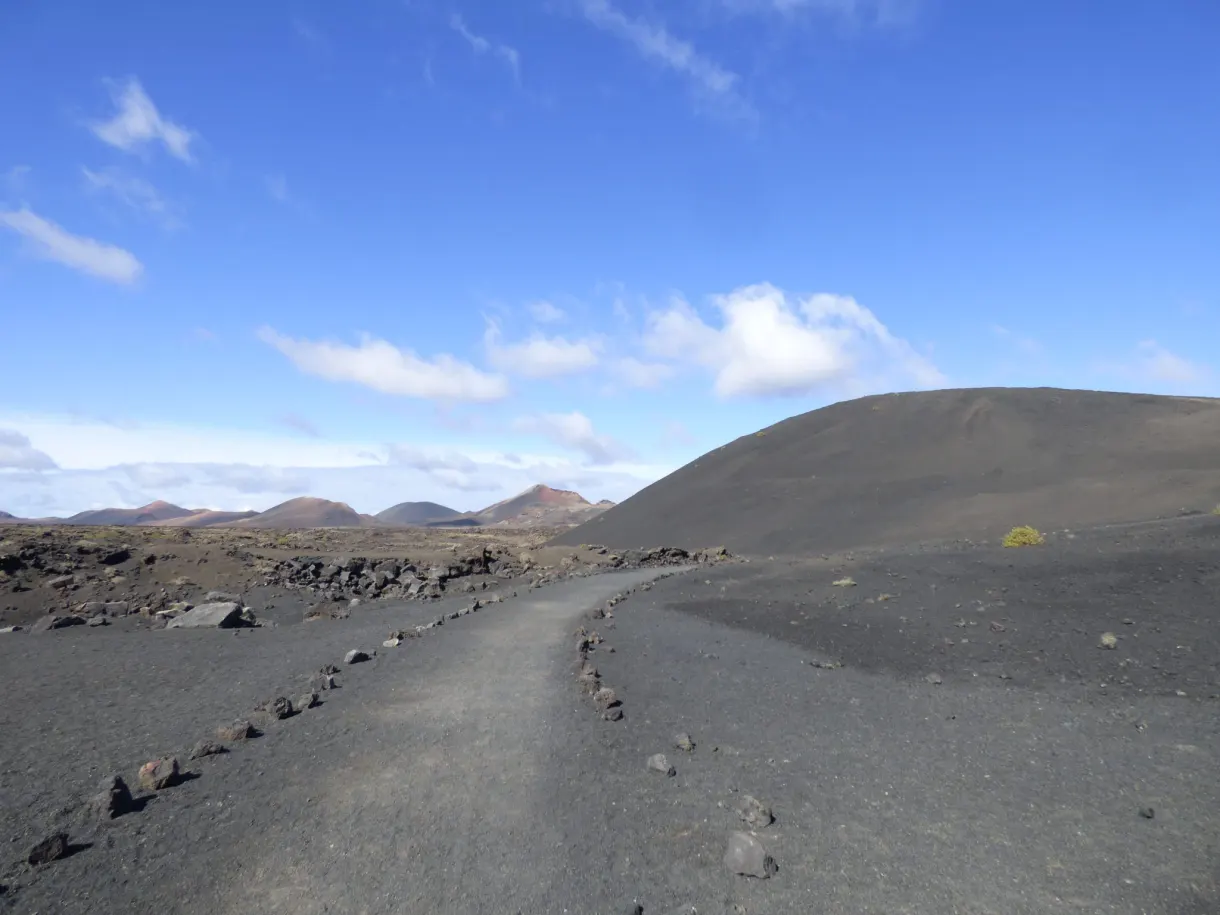
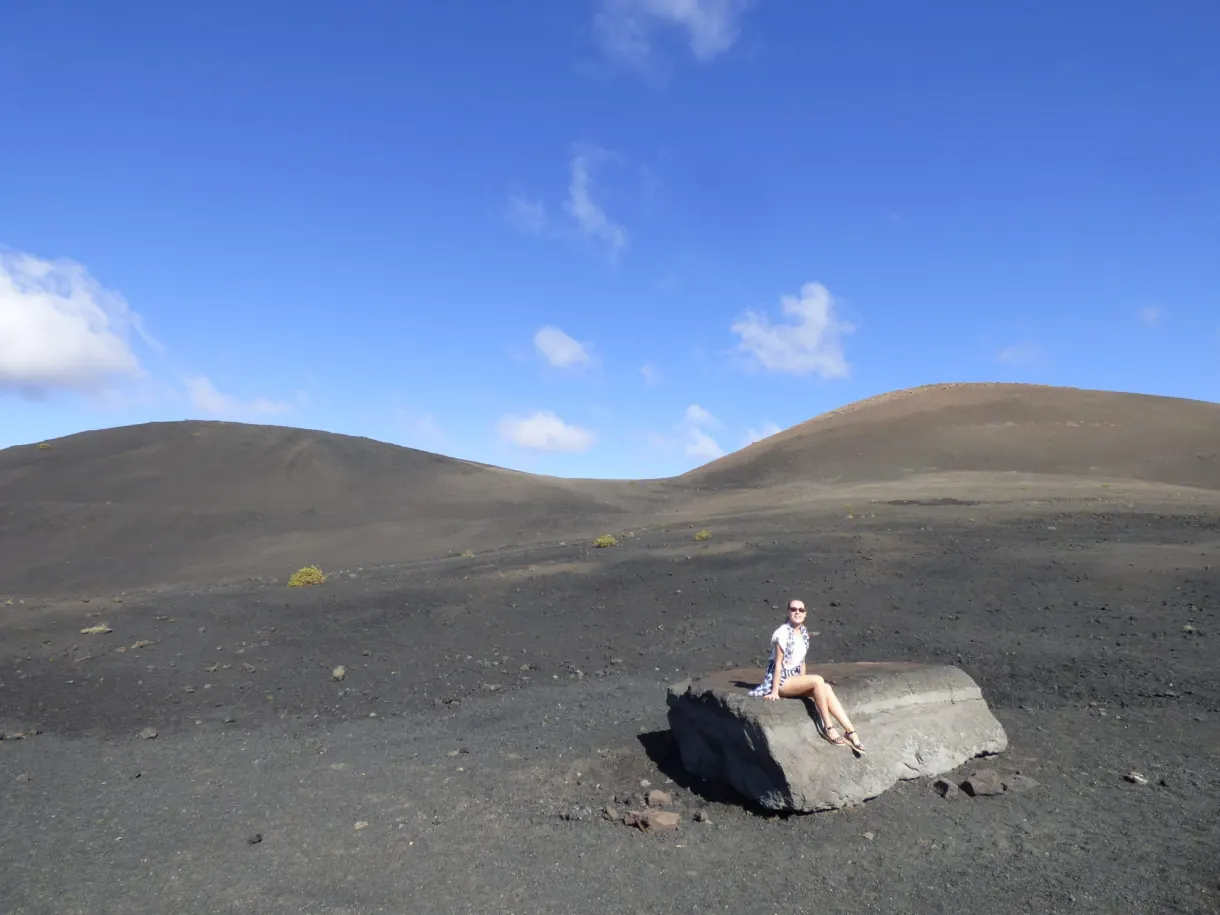
For our first hike, we chose the Caldera Colorada, located on the LZ-56. The volcano takes its name from its reddish colour. Rated easy, this walk takes us around the volcano in about an hour. Information panels are dotted along the hike and tell us about the plant life, the history of the place and even the geology. Here again, we didn’t come across many people!
Cuervo Volcano
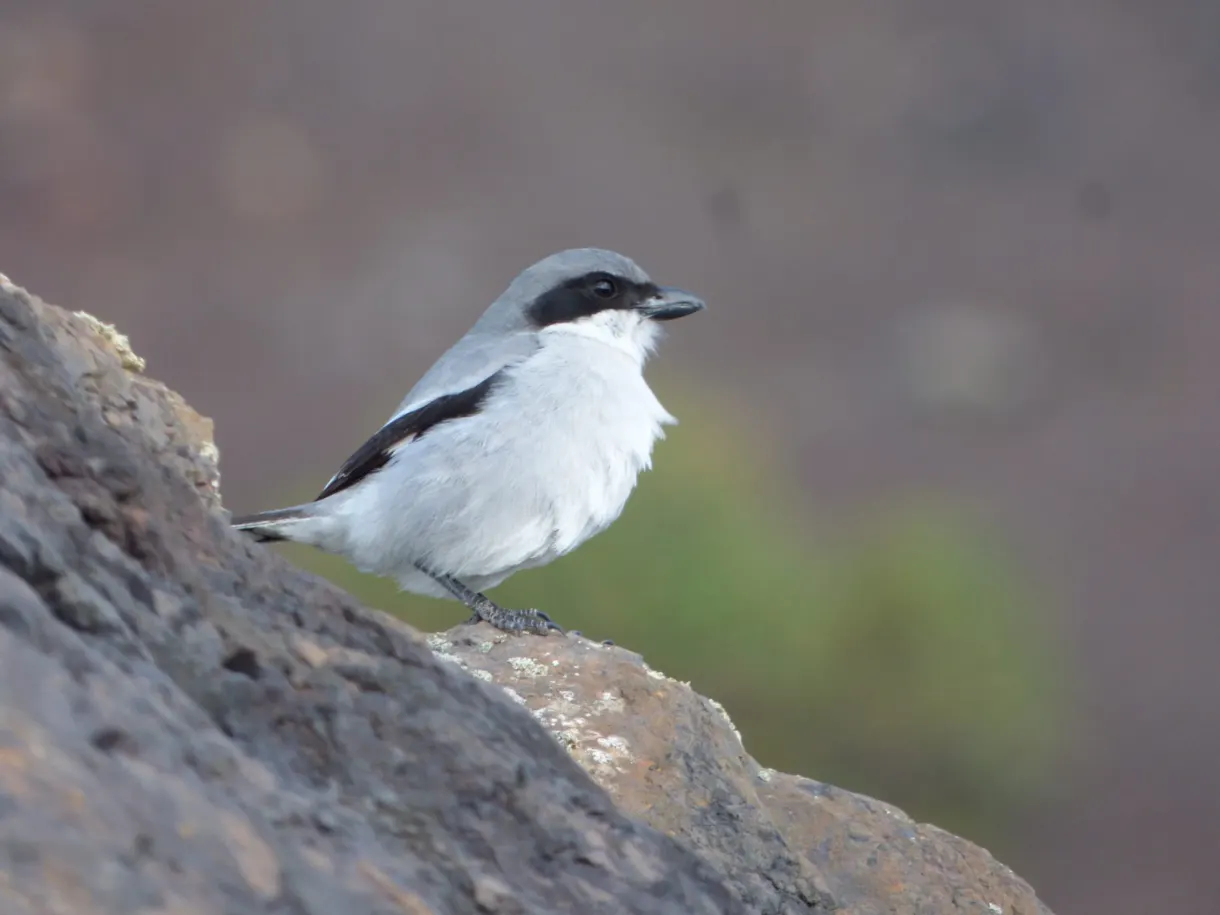
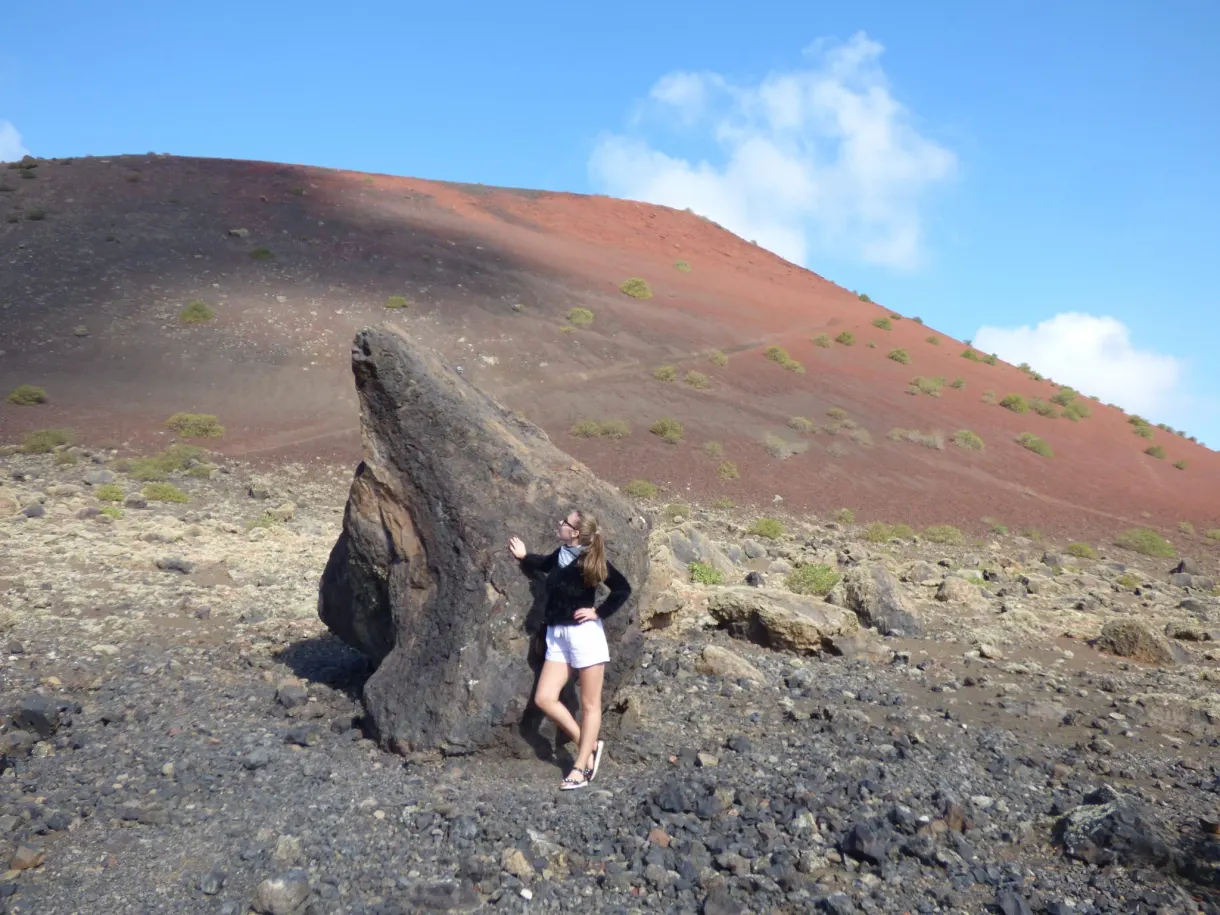
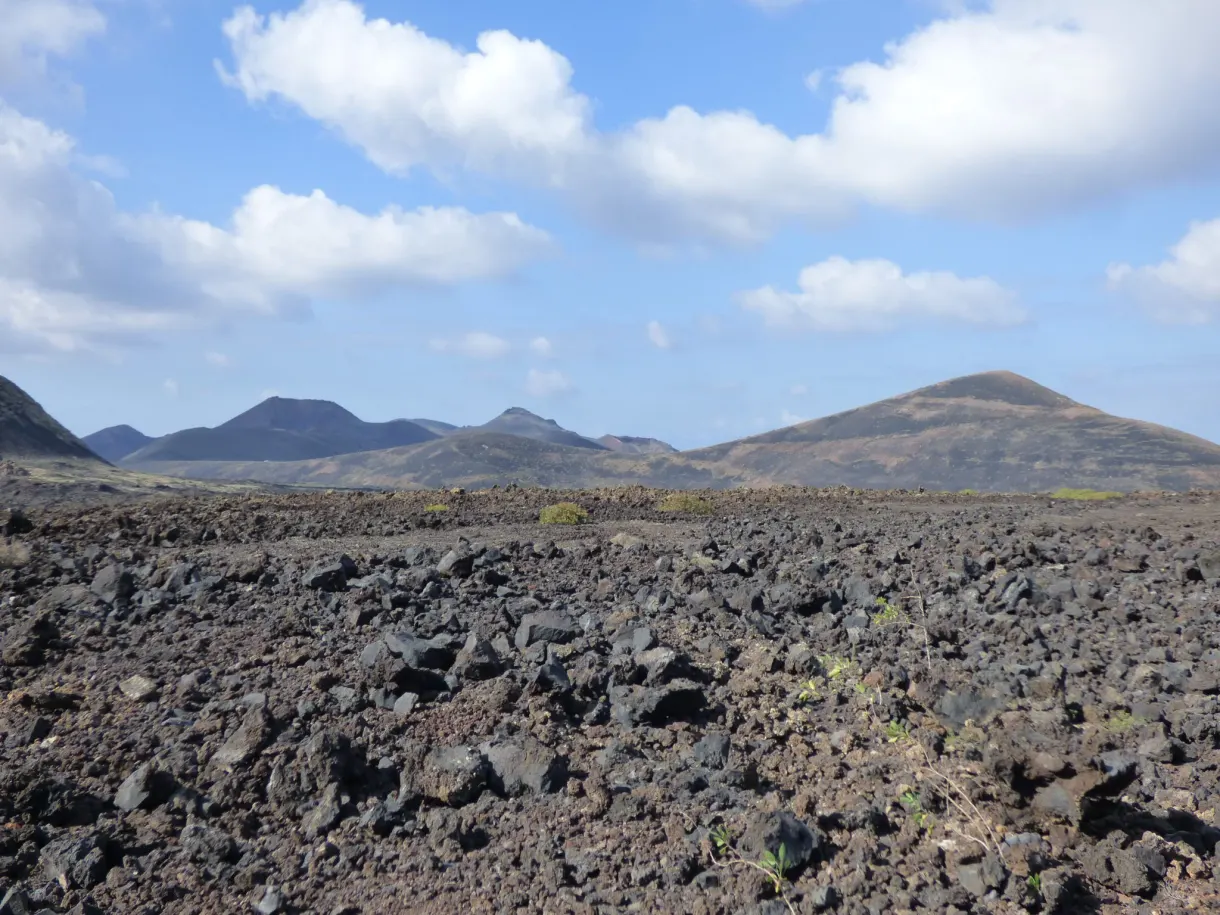
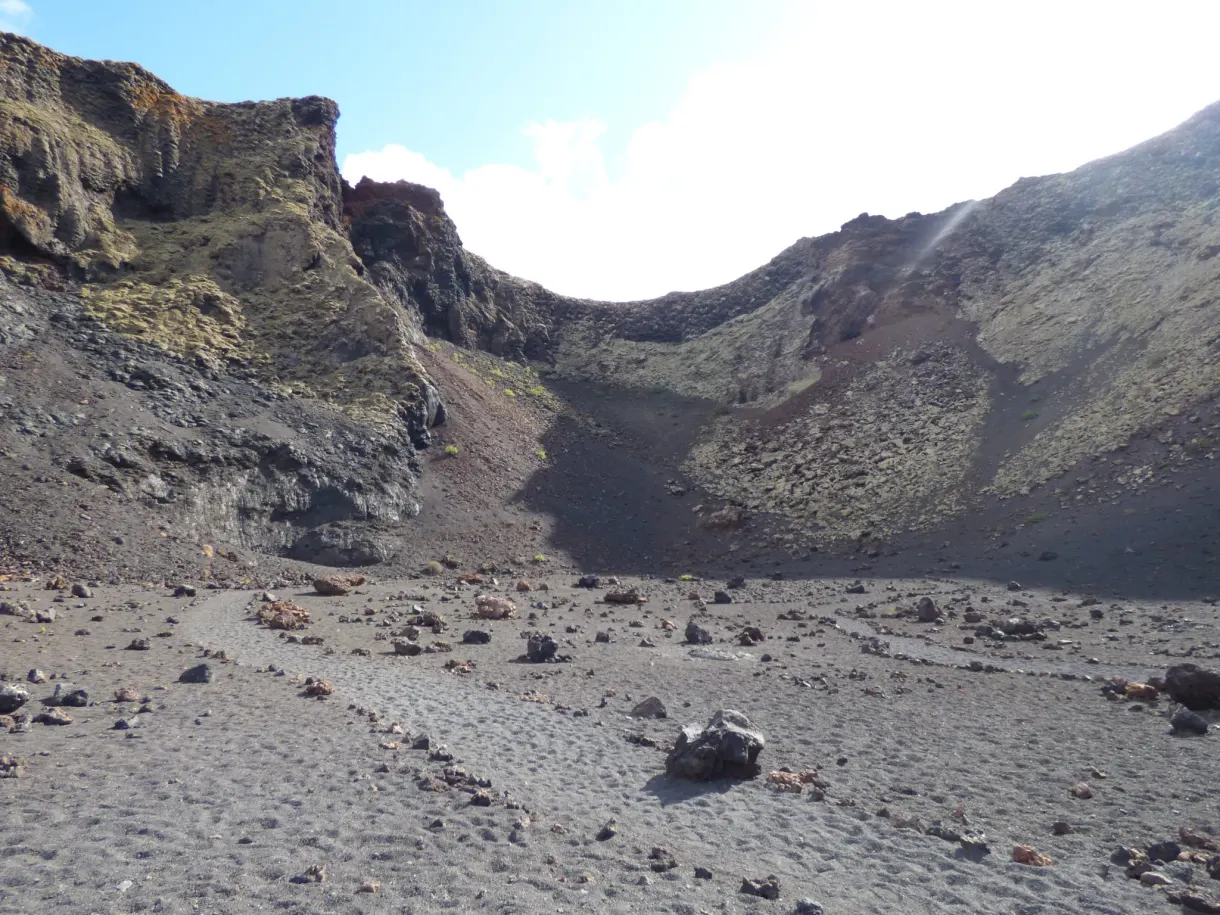
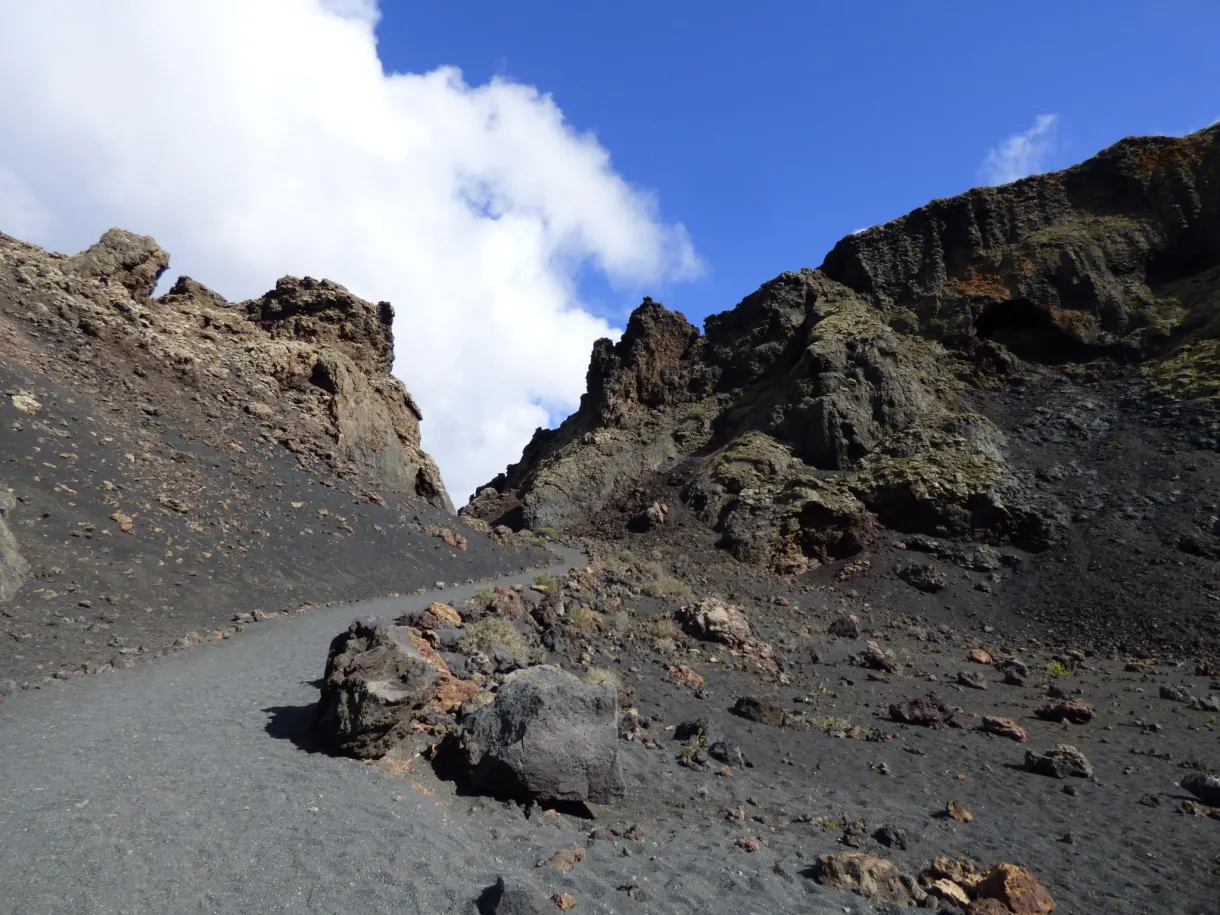
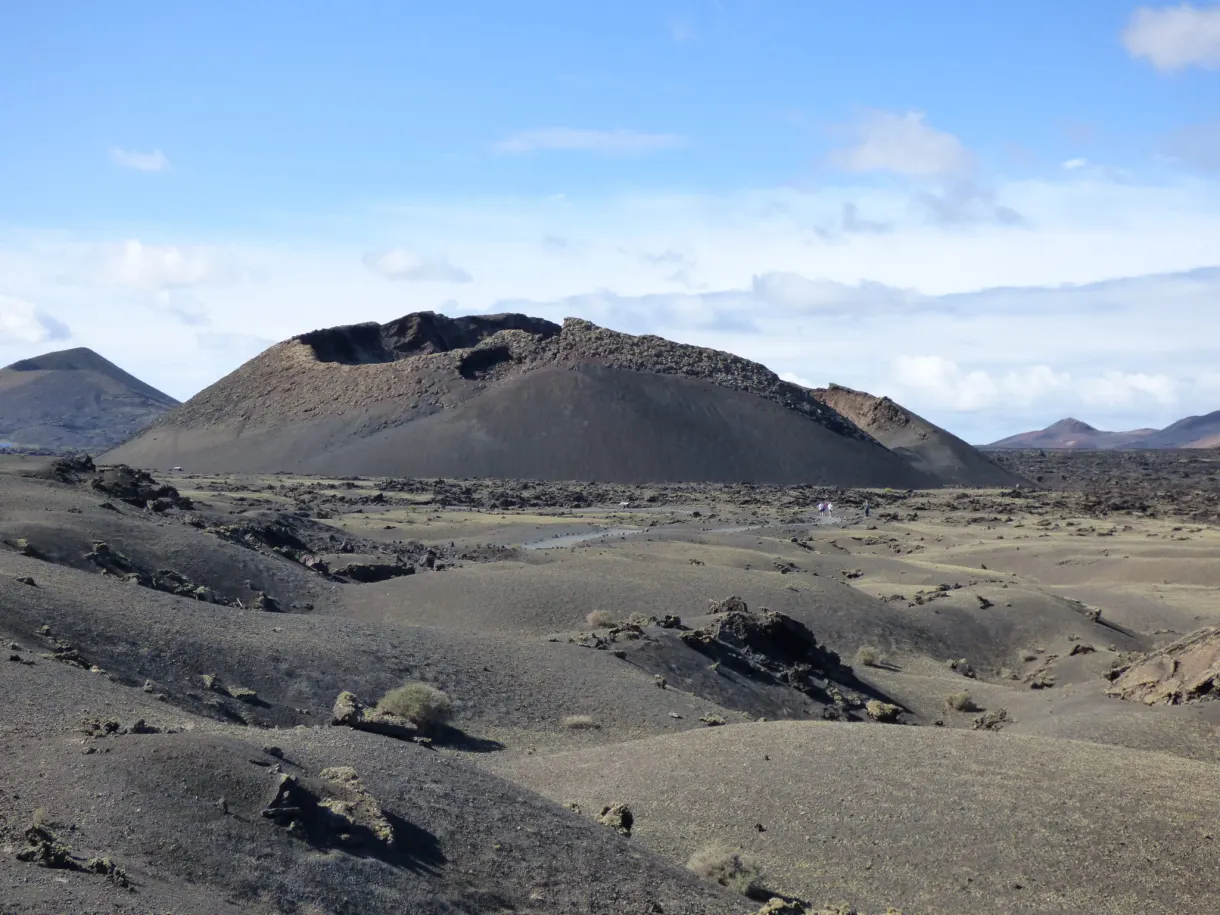
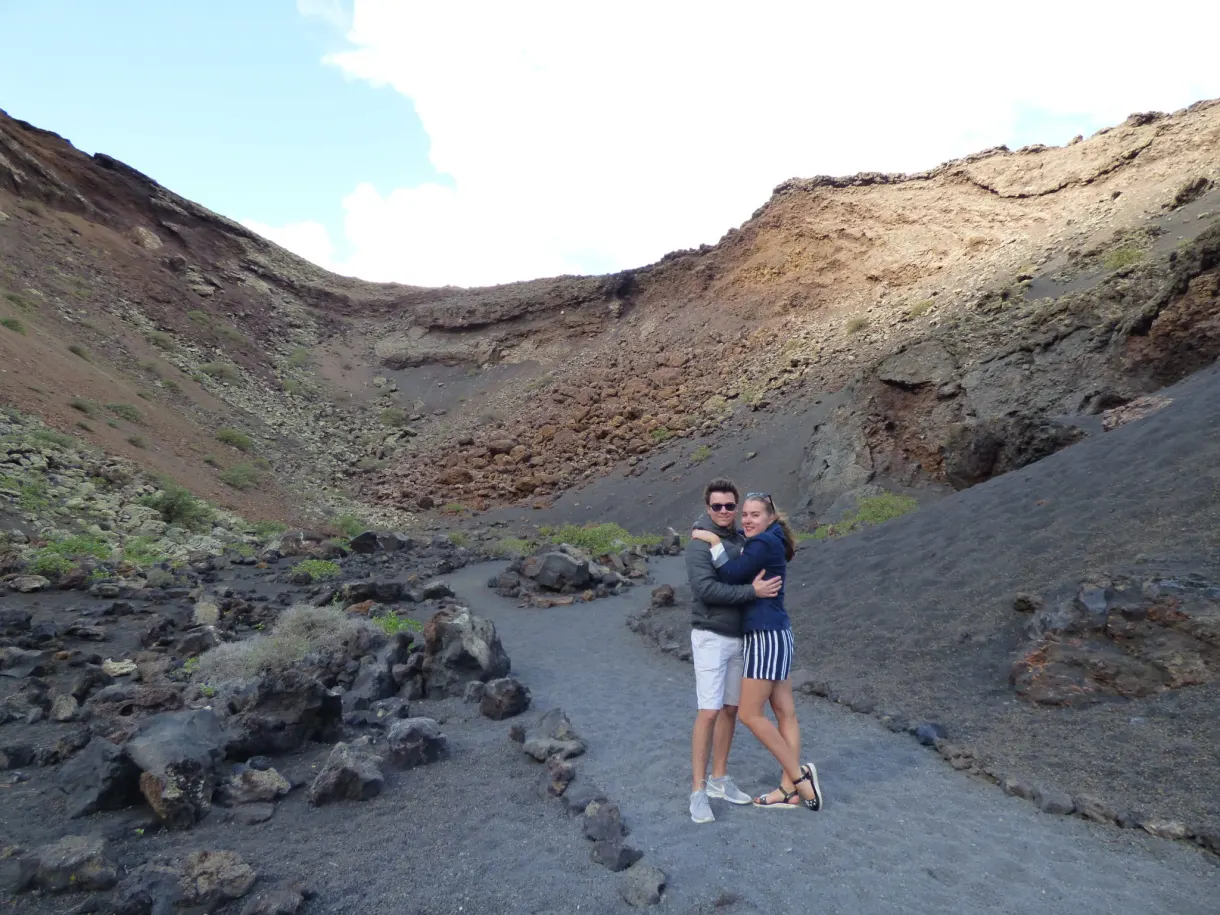
Still on the LZ-56 is the Cuervo volcano, which you can discover on a hike (easy level!). We went in the morning so as not to run into too many people. In the car park, a map of the site shows the circuit to follow and the various points of interest you discover all along the hike (about 1h30). What makes this one special is that you go right inside the volcano’s crater, which is pretty impressive! We highly recommend this walk, which we really liked, because it lets you enjoy a landscape different from that of Montaña Colorada.
By the sea…
Tenesar
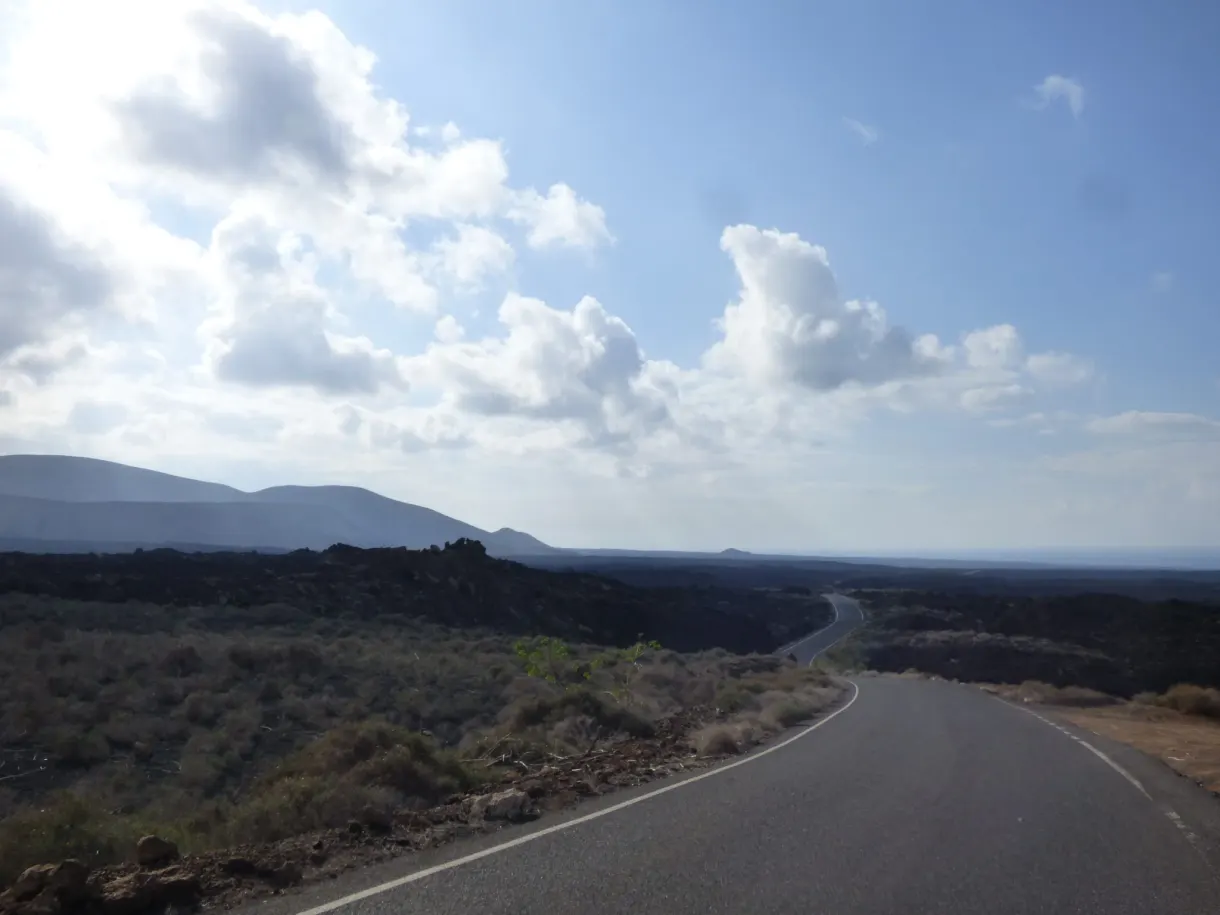
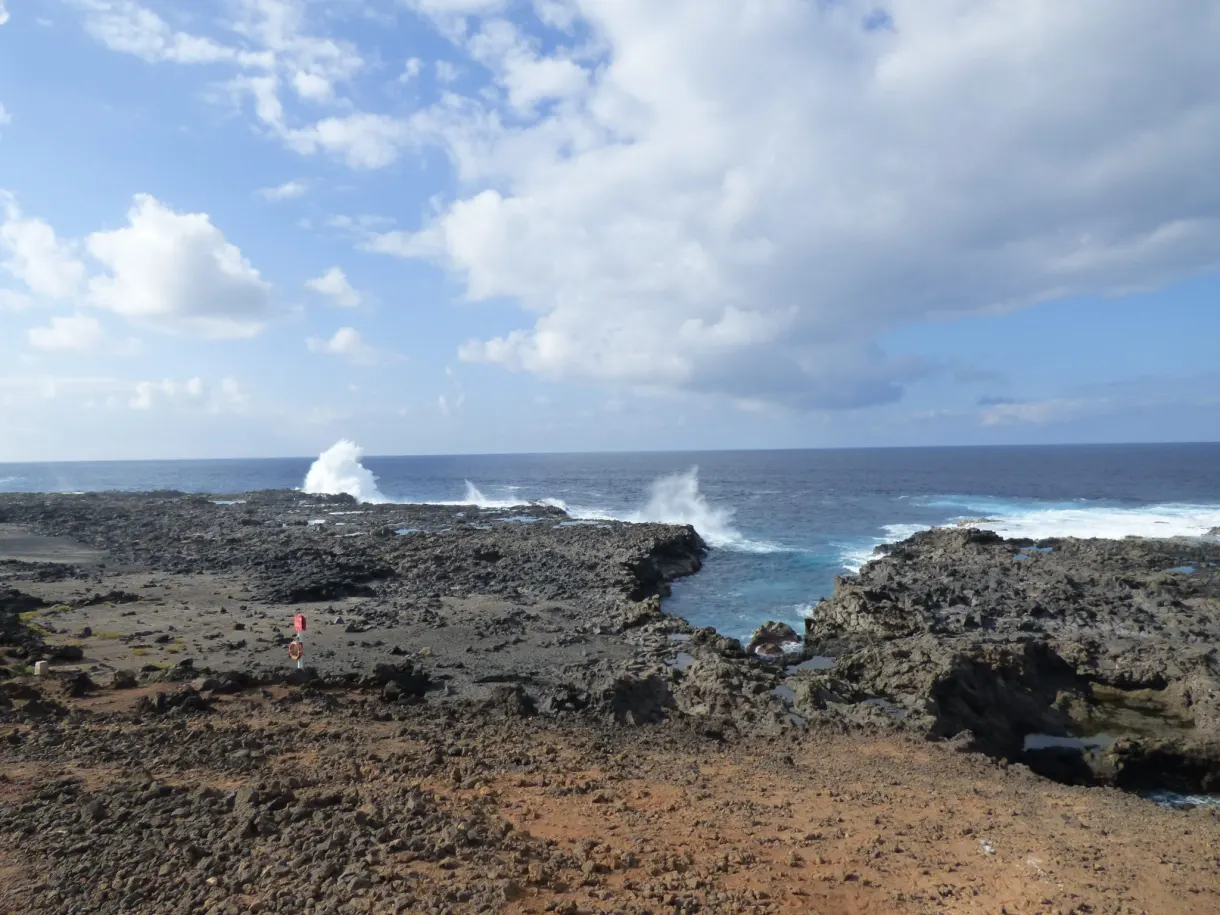
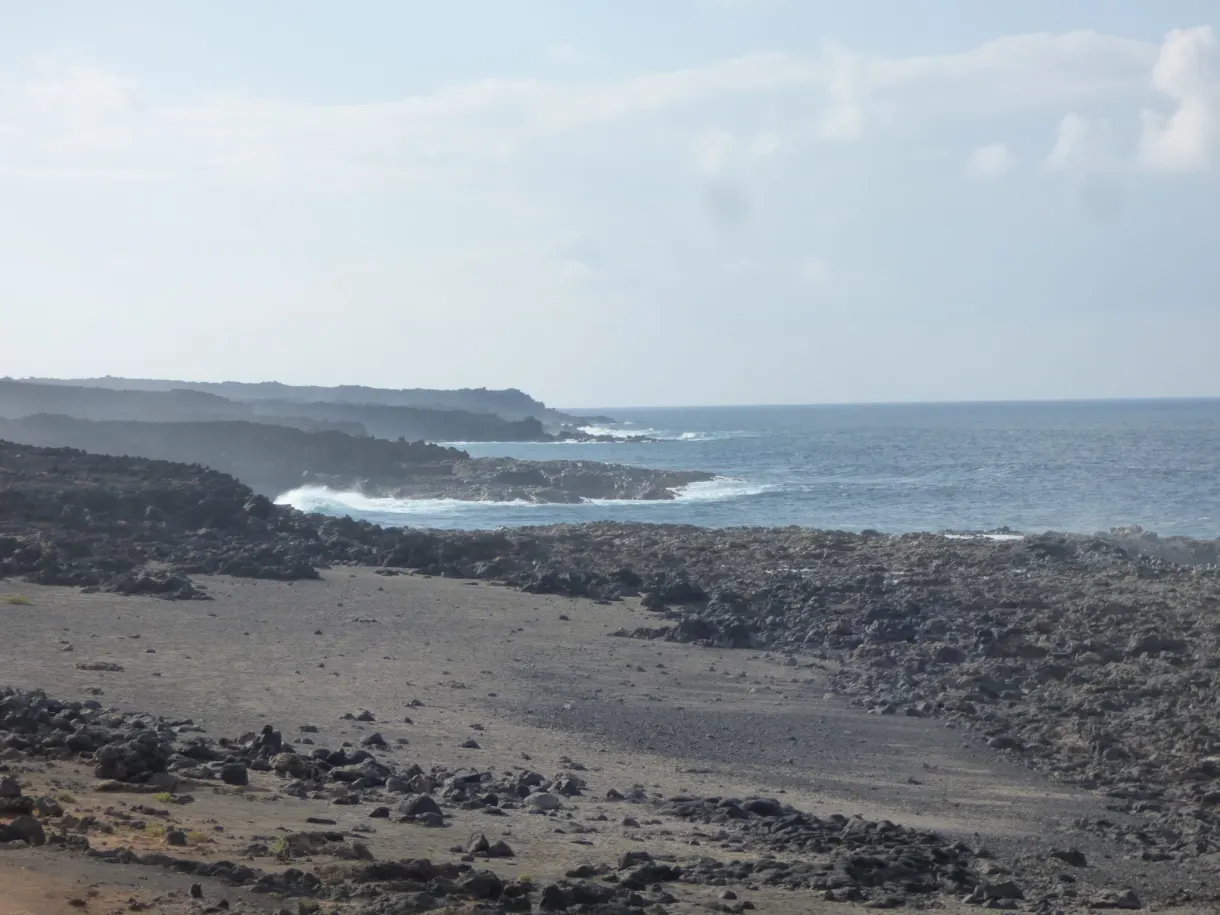
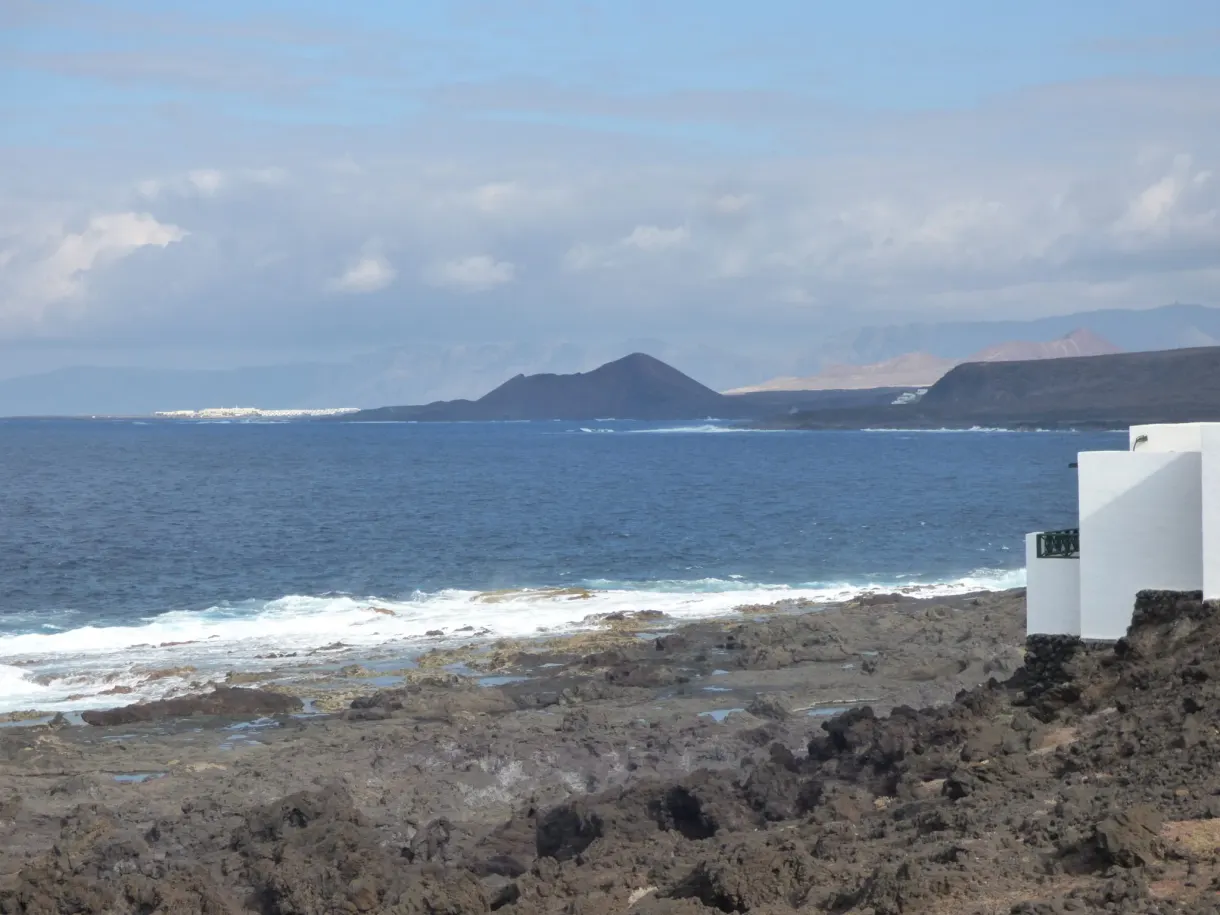
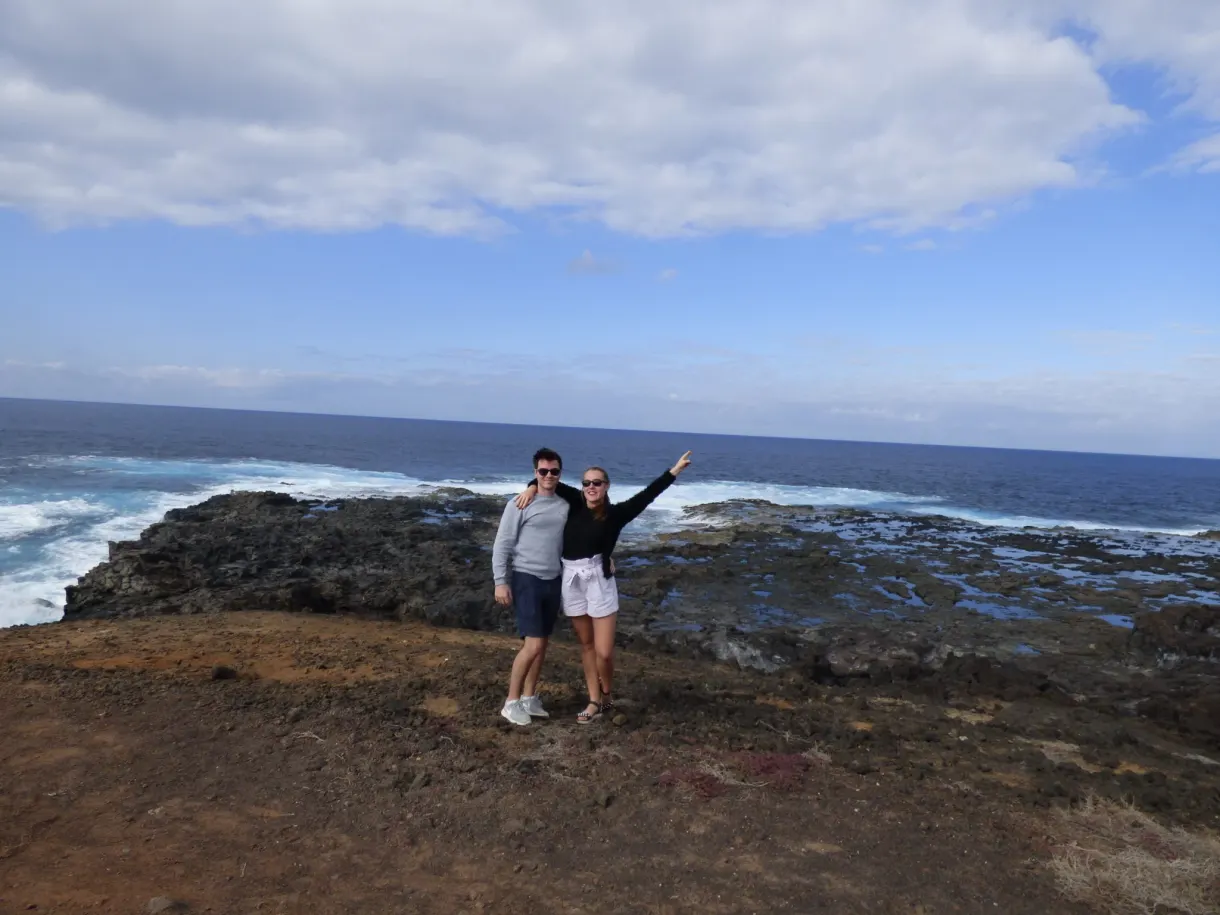
After visiting the Timanfaya National Park Interpretation Centre, we took a small road to get to Tenesar, a tiny village on the north coast of the island. We had spotted this viewpoint on the internet, which had an end of the world feel… To get there, the road from Mancha Blanca is magnificent, winding between the volcanoes and the lava, with a stunning view over the sea. We didn’t come across a single car during our round trip: you’ll definitely be alone there in low season! The viewpoint is on a dirt road, on the left, before heading towards the village of Tenesar.
Caleta de Famara
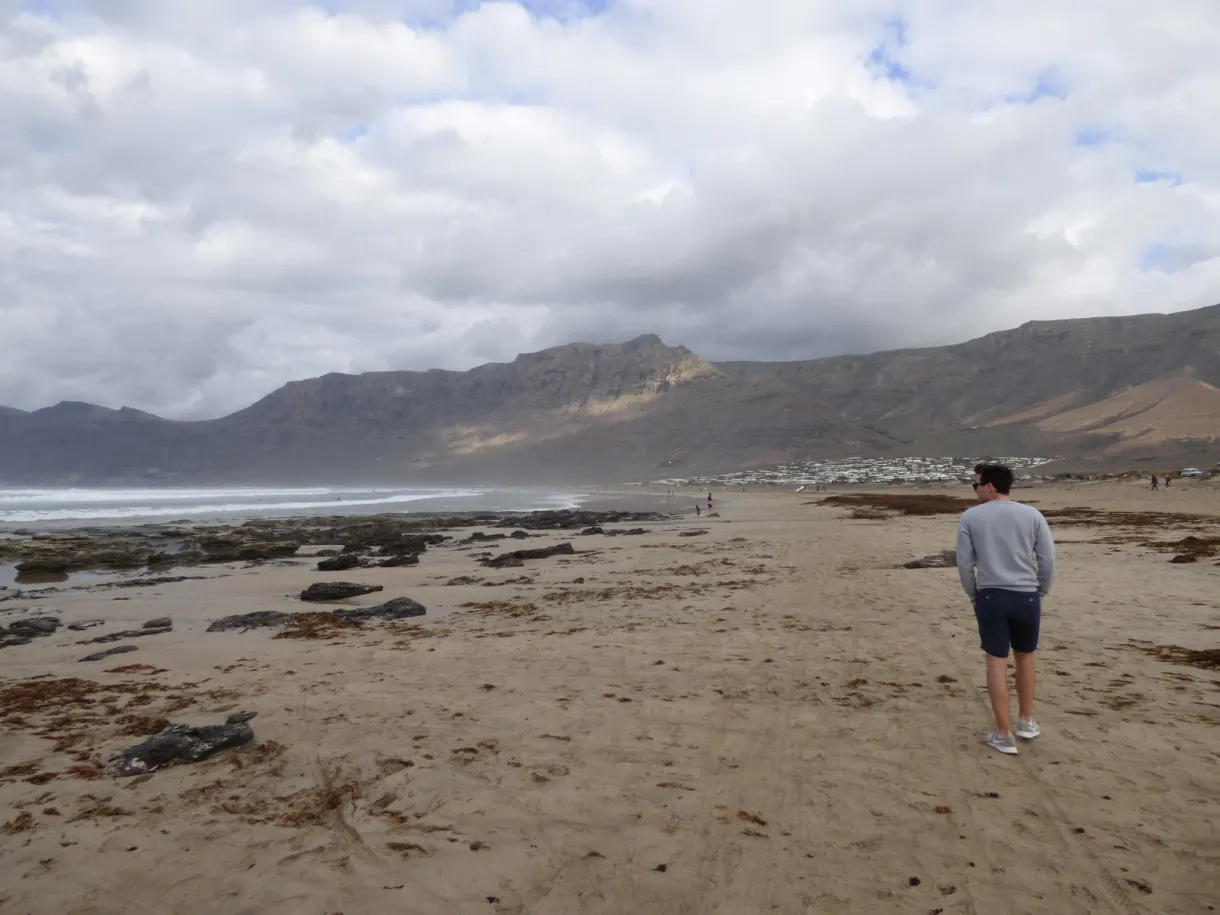
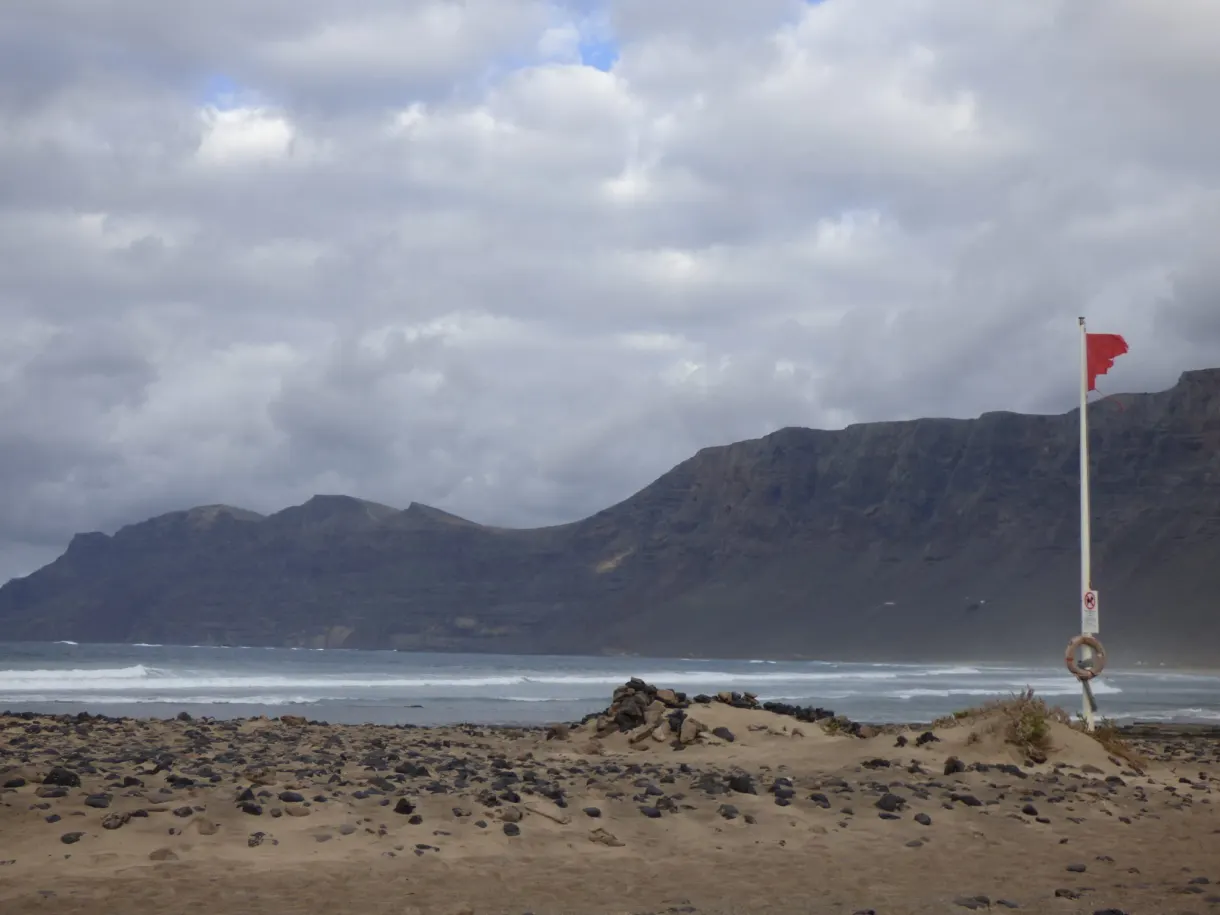
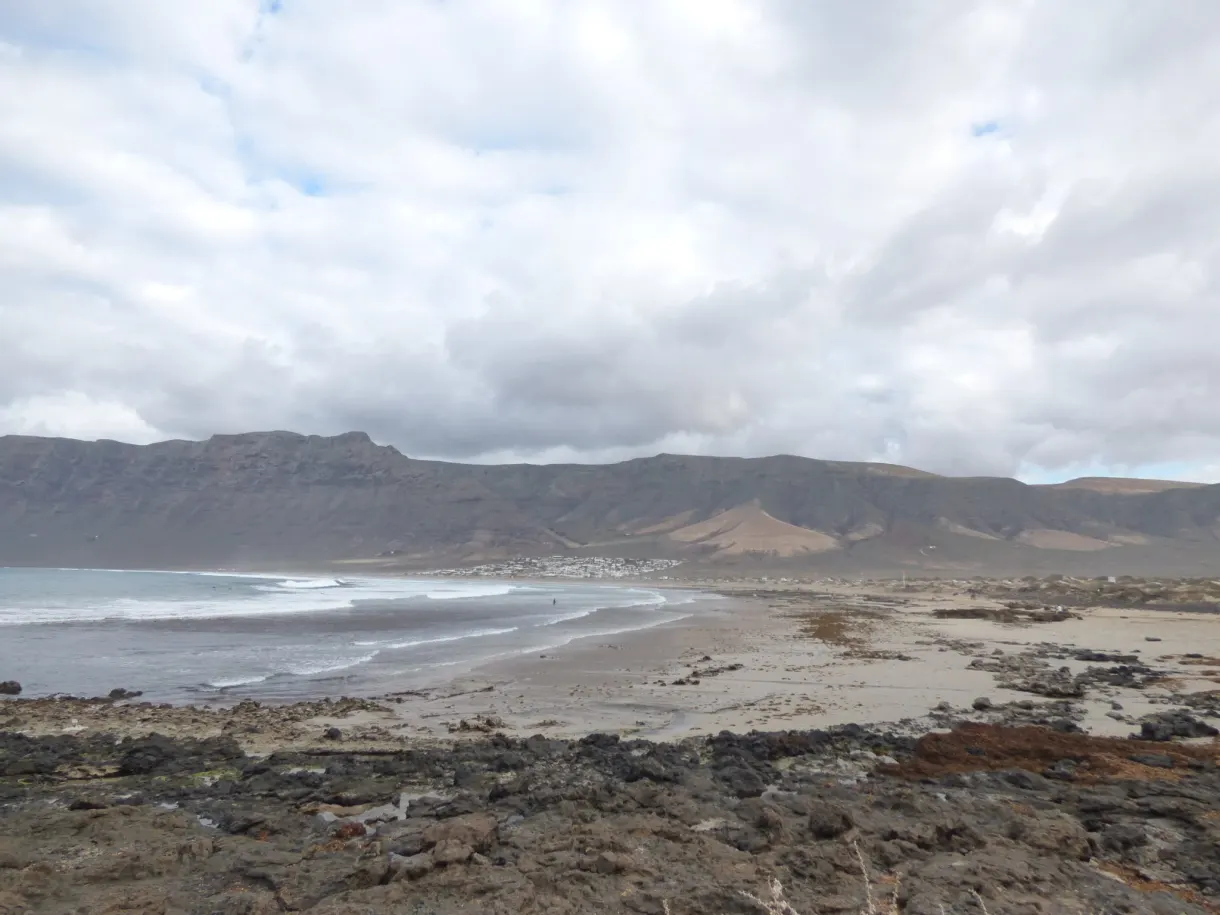
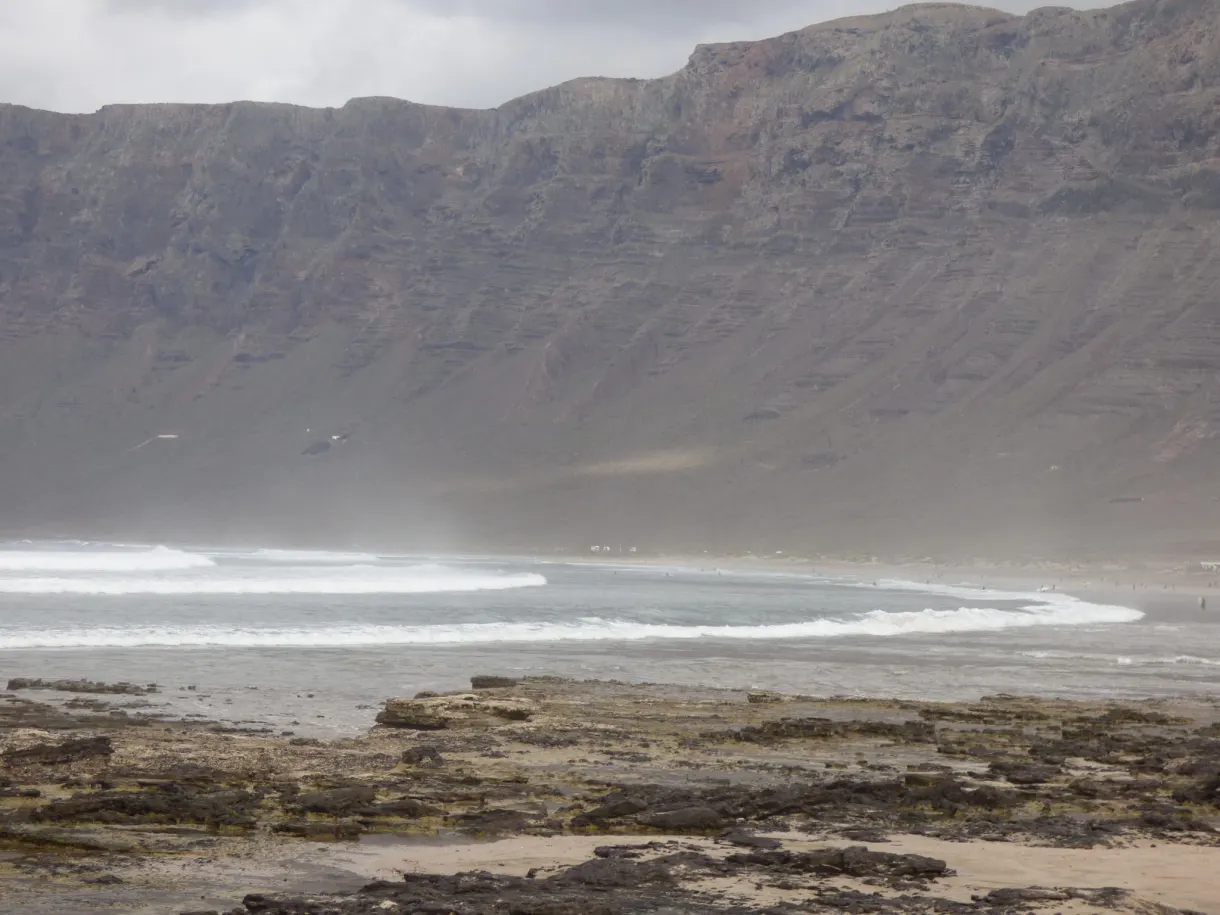
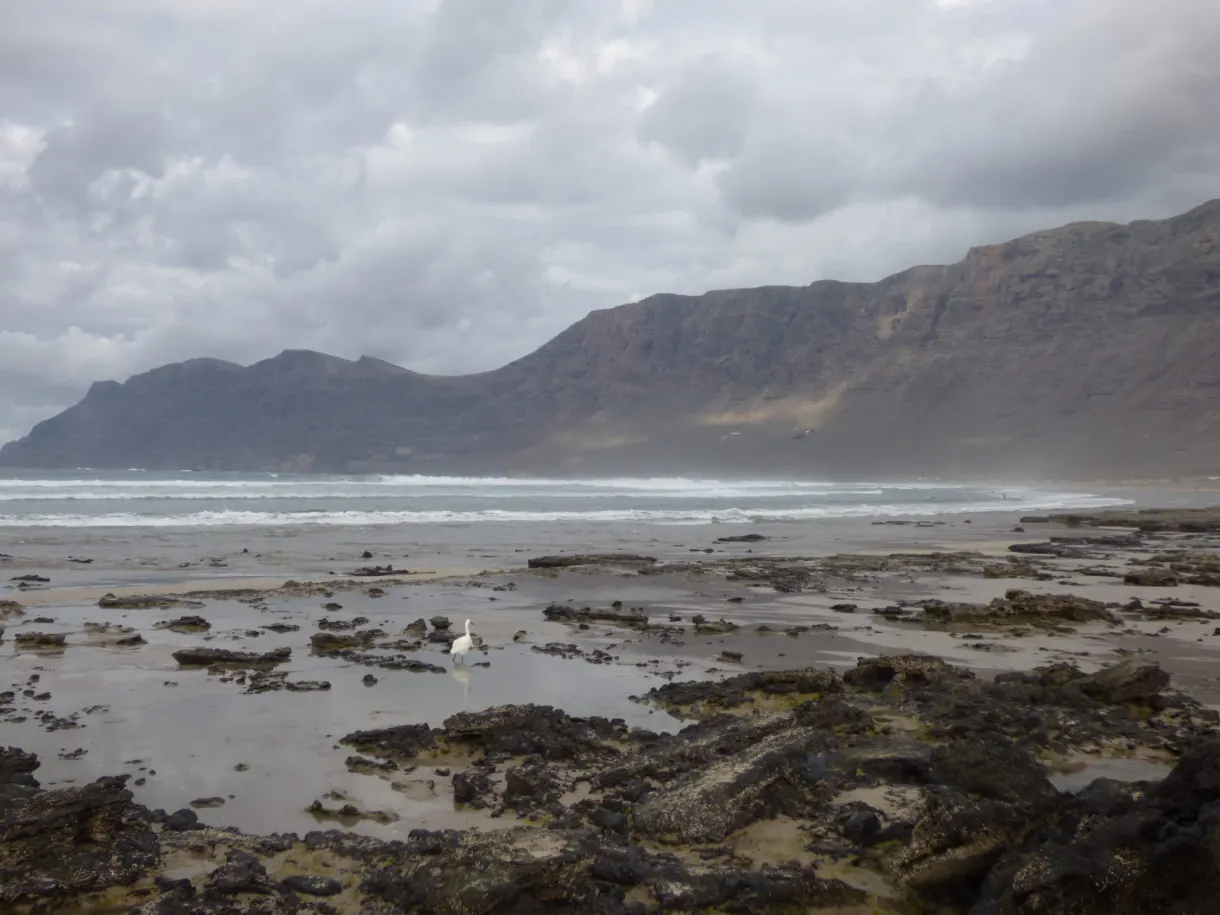
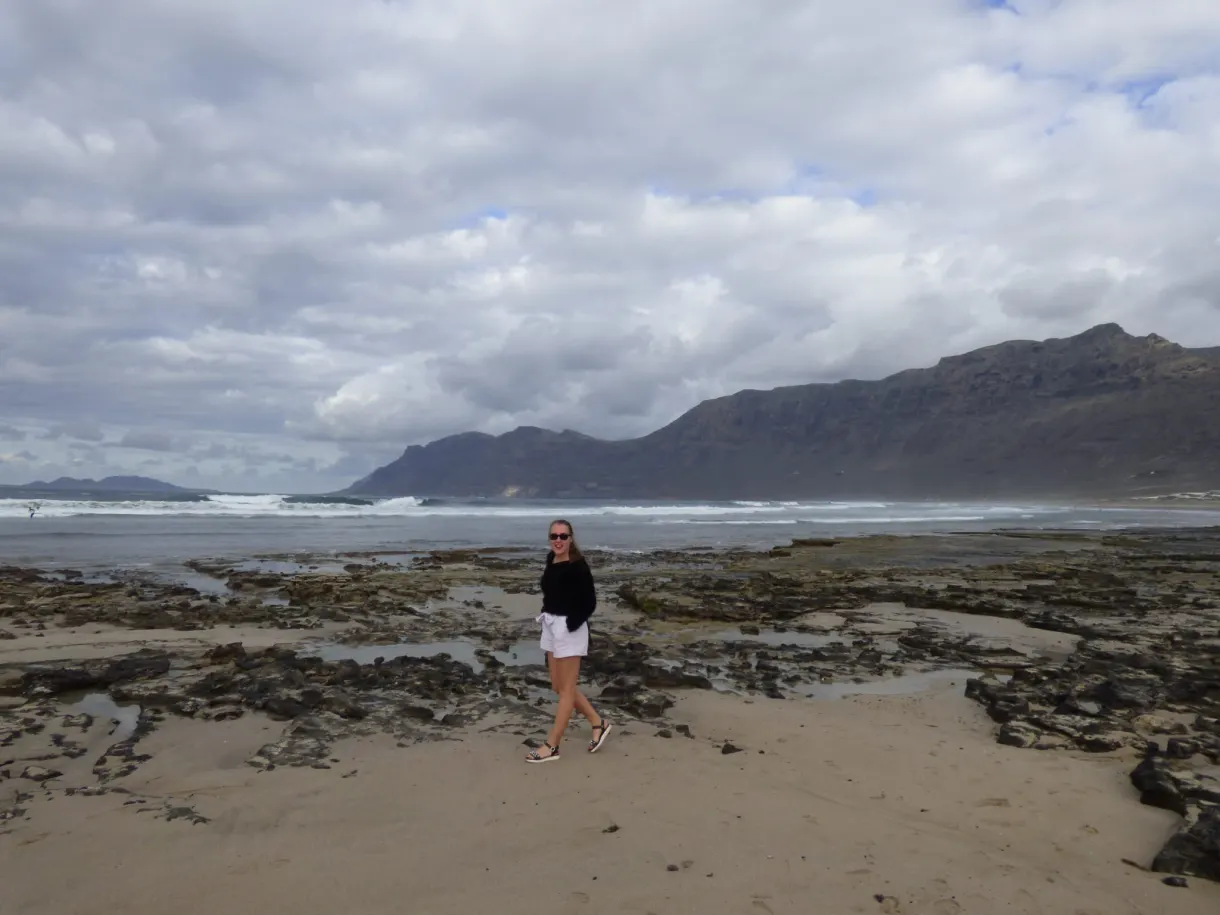
We then hit the road towards the famous Famara beach, renowned for its high waves that attract surfers. The huge beach lies at the foot of immense cliffs. We went late in the afternoon, with fairly gloomy weather and a lot of wind, so we didn’t really see the charm that so many people talk about on the internet or on social media… We probably should have gone back to discover the beach in a better light!
Inland…
The vineyards of La Geria
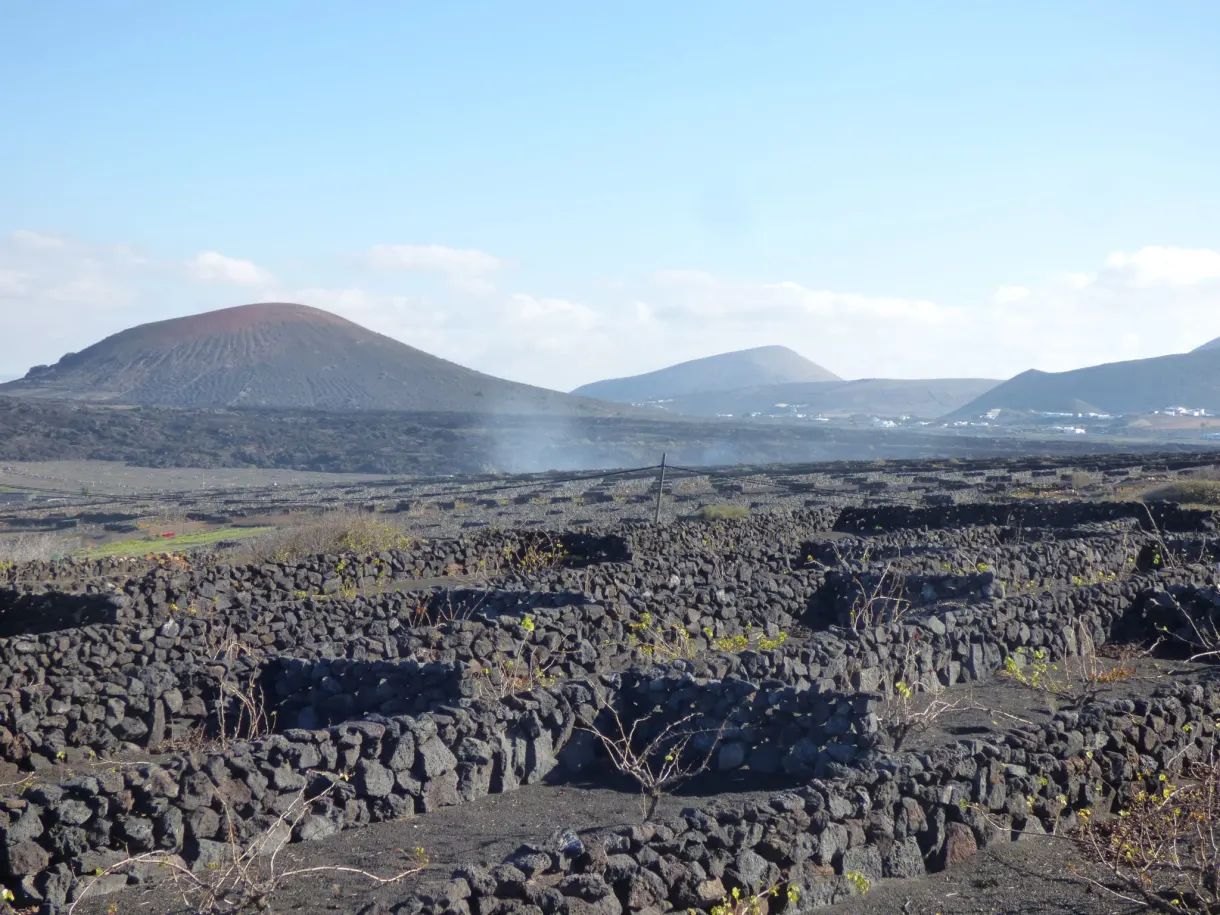
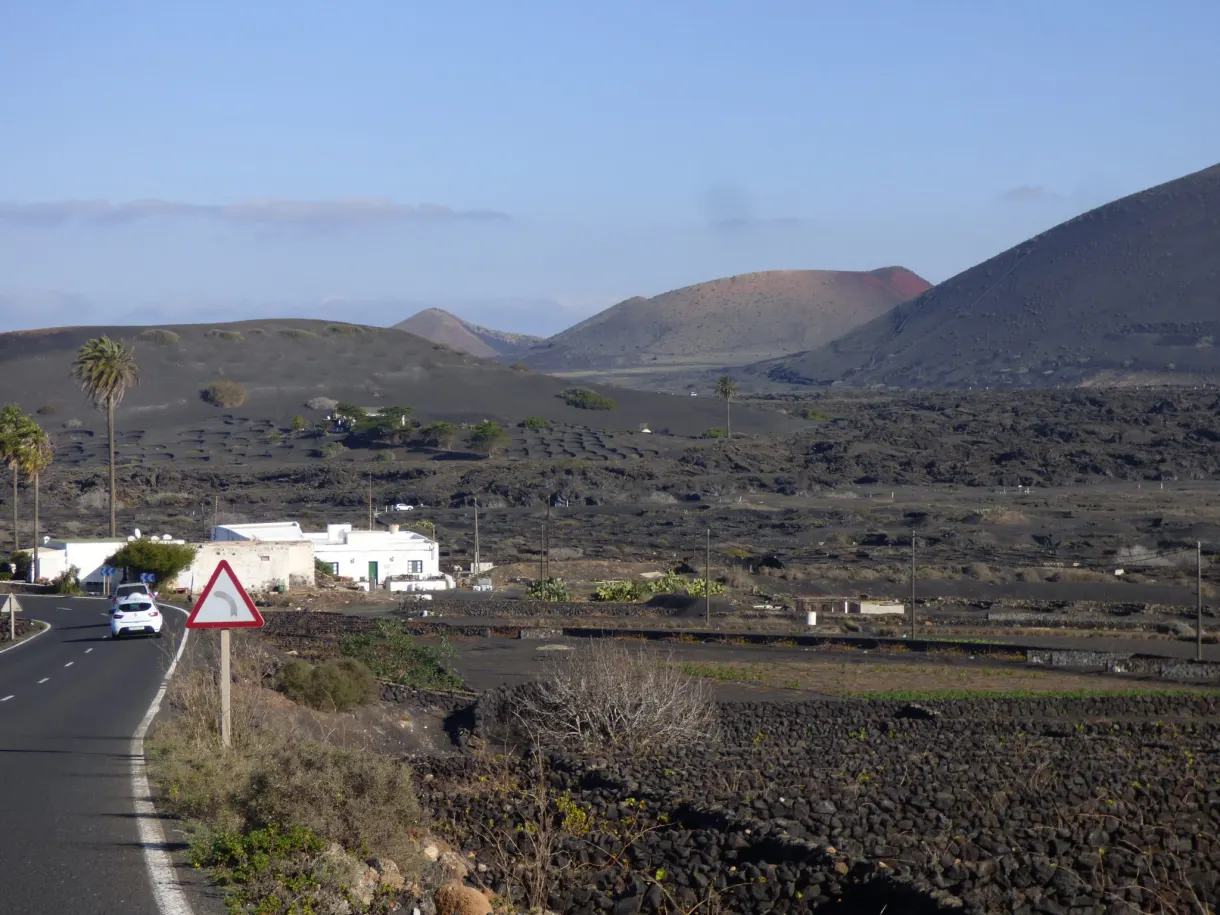
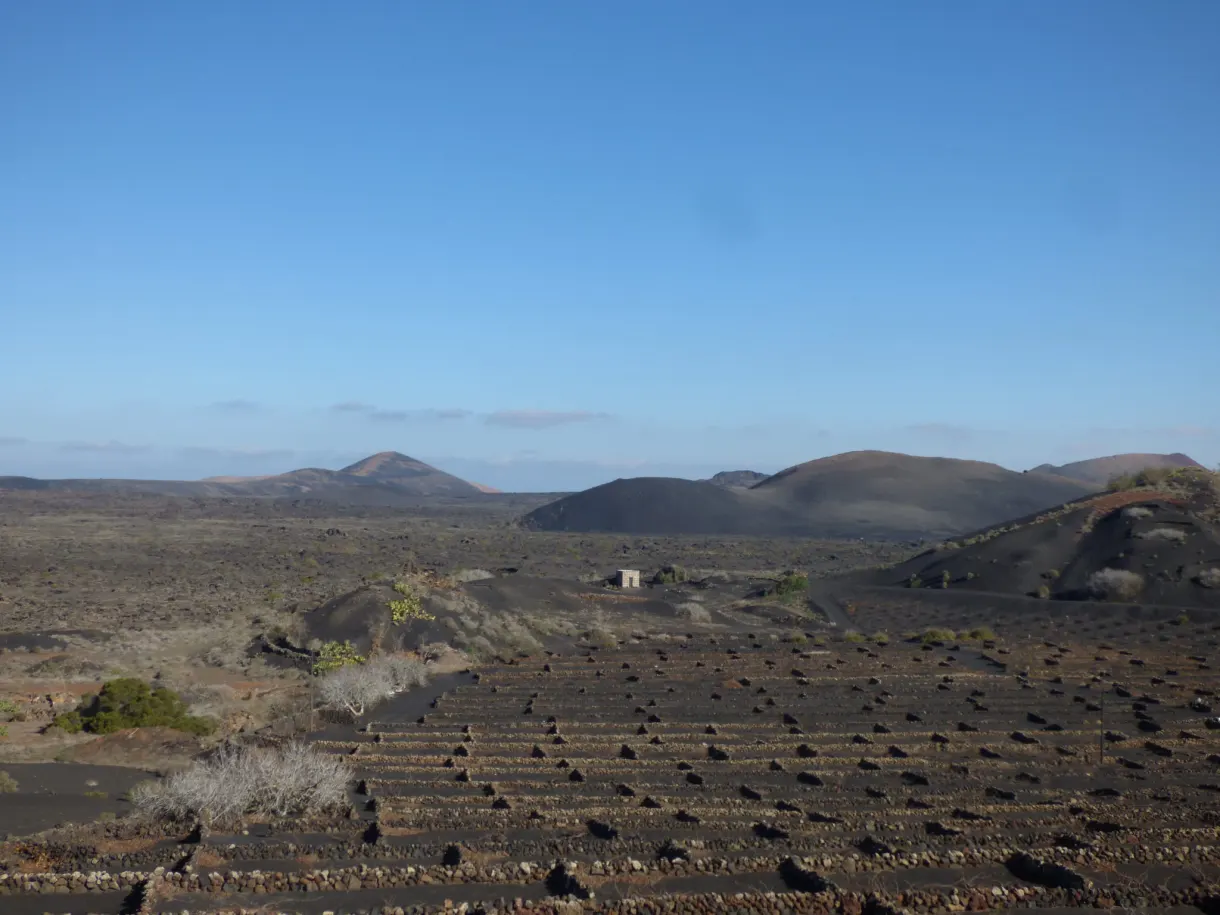
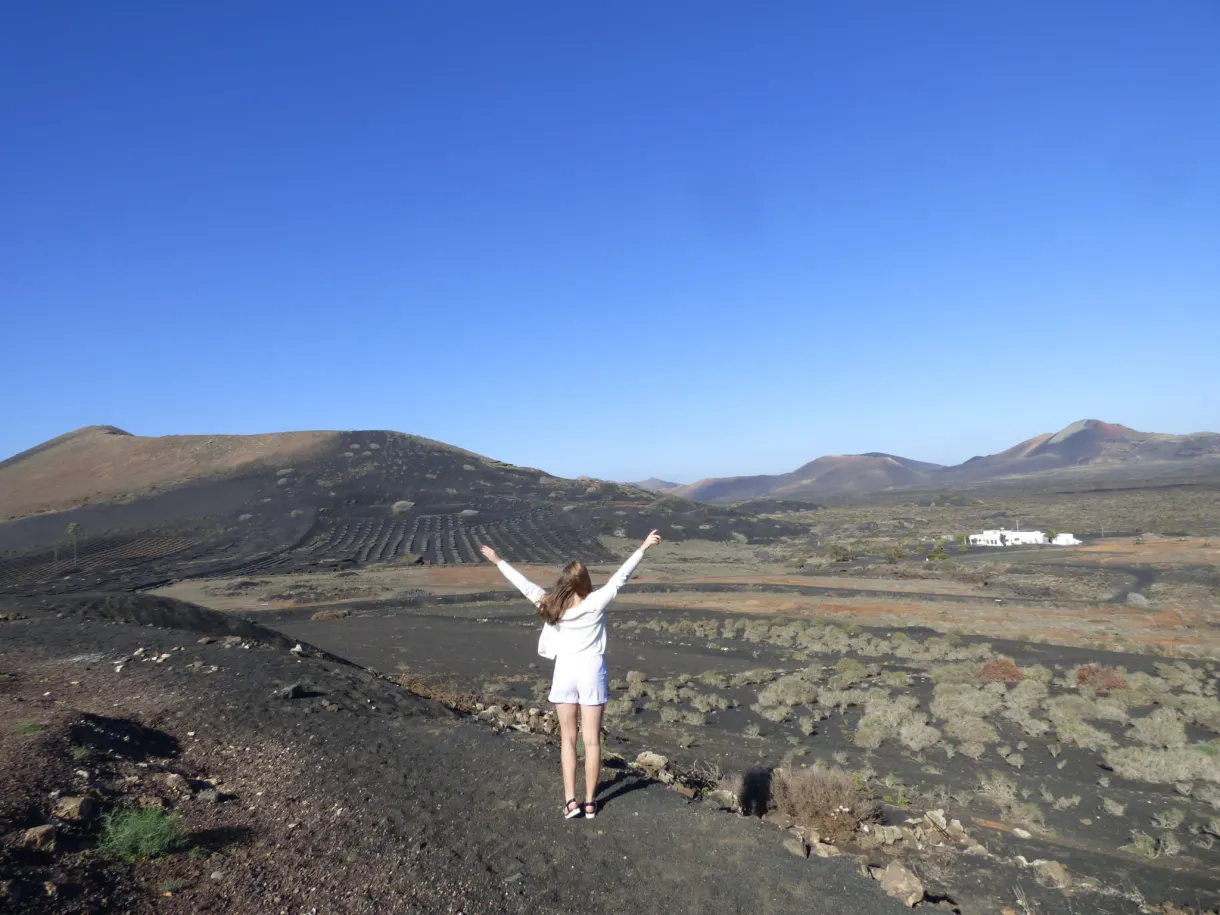
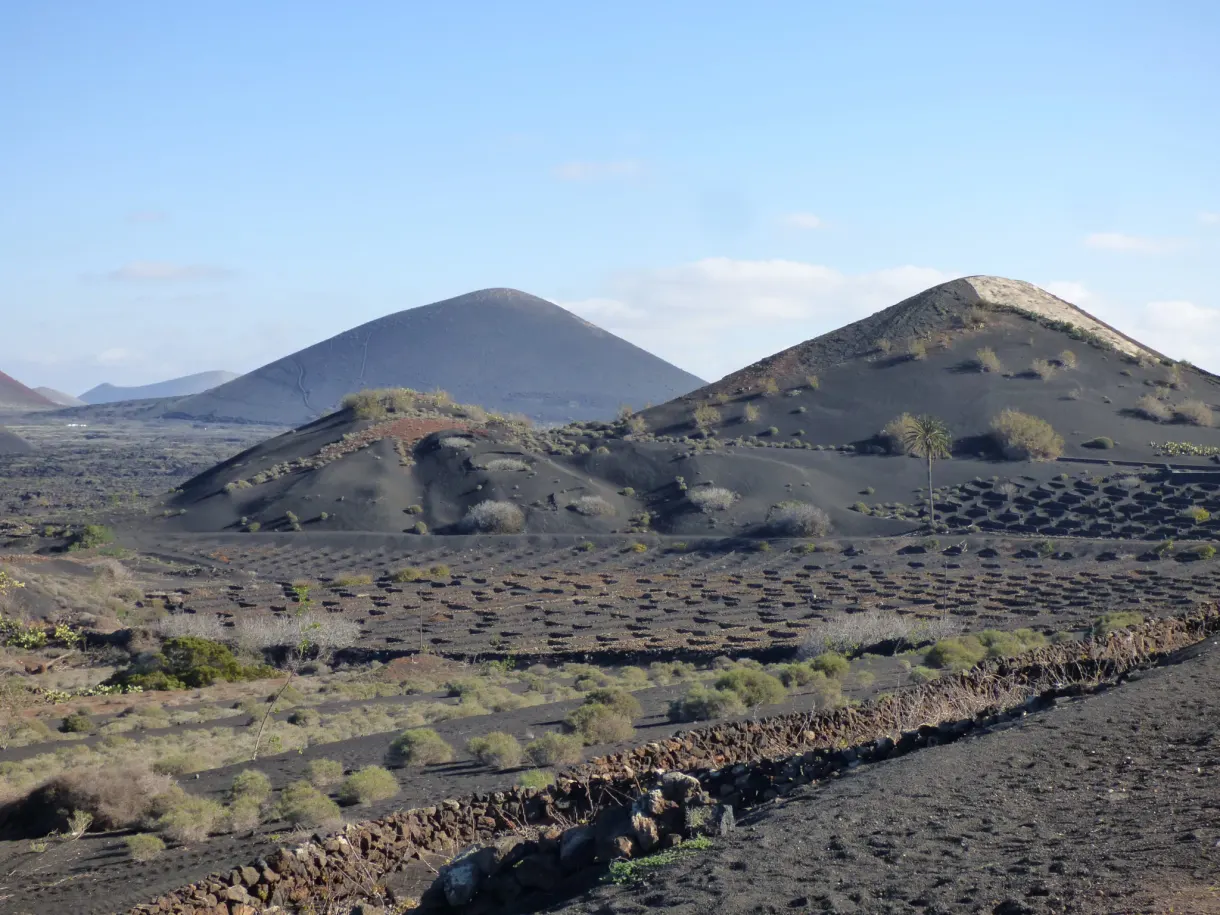
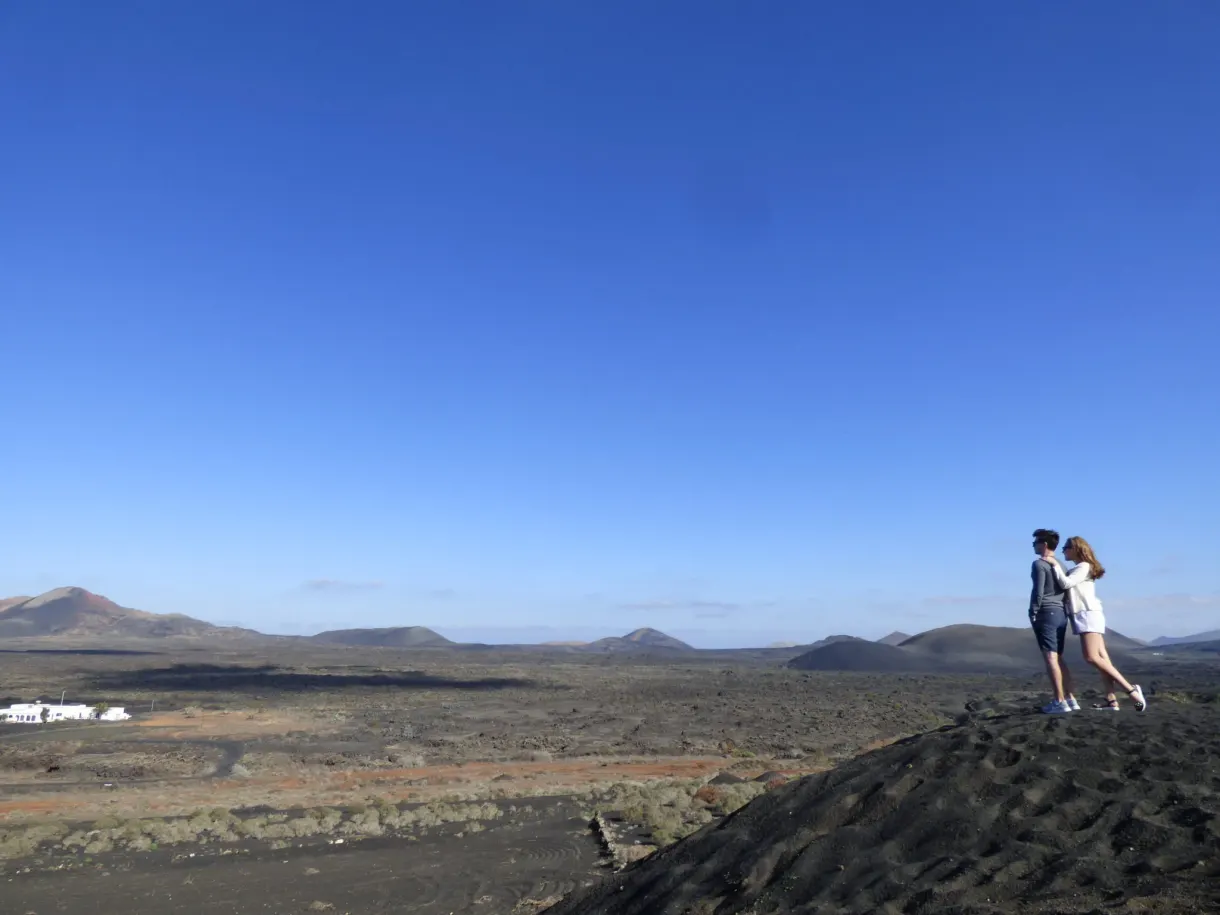
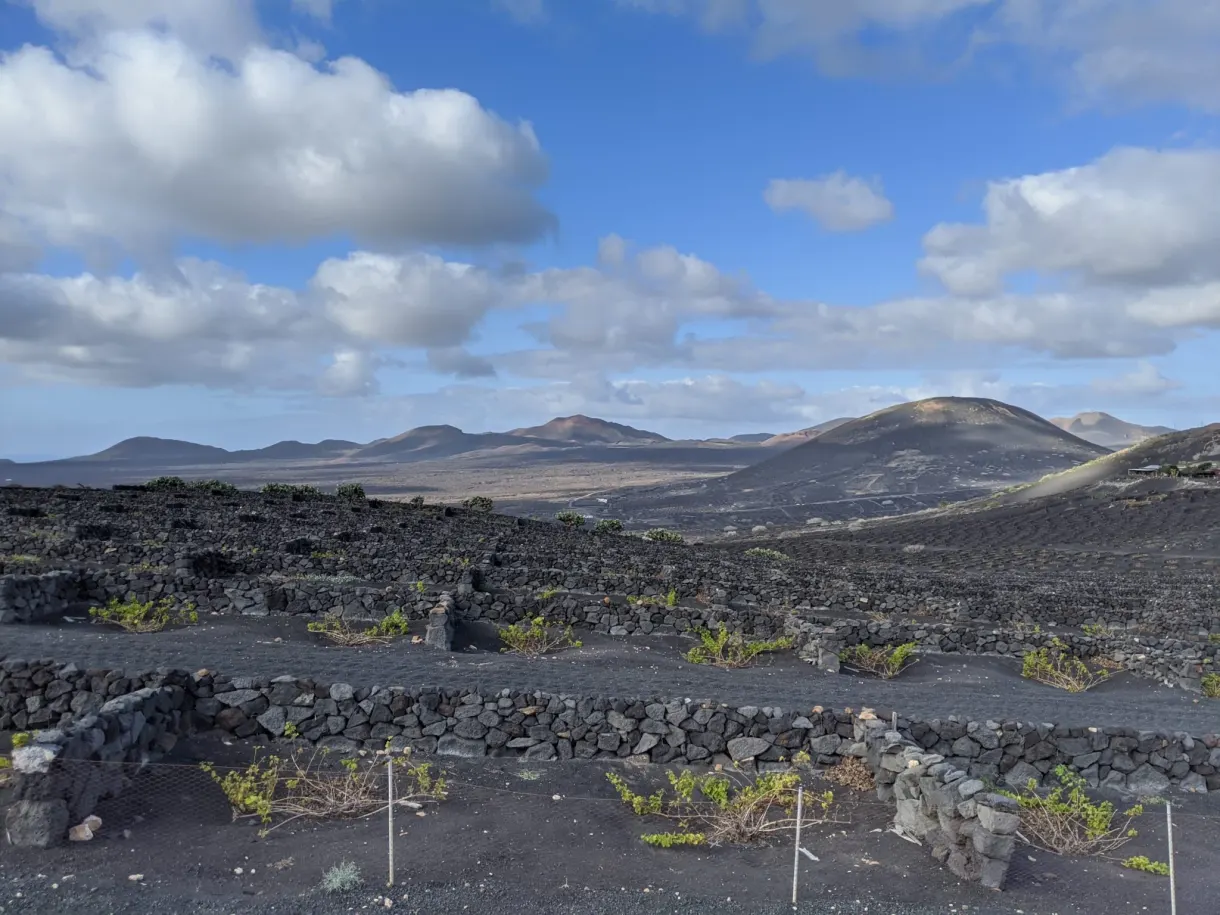
We couldn’t wait to discover the landscape of the La Geria region, so praised in travel guides and on blogs as a different and exceptional landscape. And indeed, we were impressed by this very special wine growing, which you don’t find on French soil.
The vines are grown in a particular way following the volcanic eruptions that shaped the island. Deep holes have been dug, so that the vine can draw from the soil the moisture and coolness it needs. These holes are surrounded by dry stone walls that act as shelter against the wind. Ingenious!
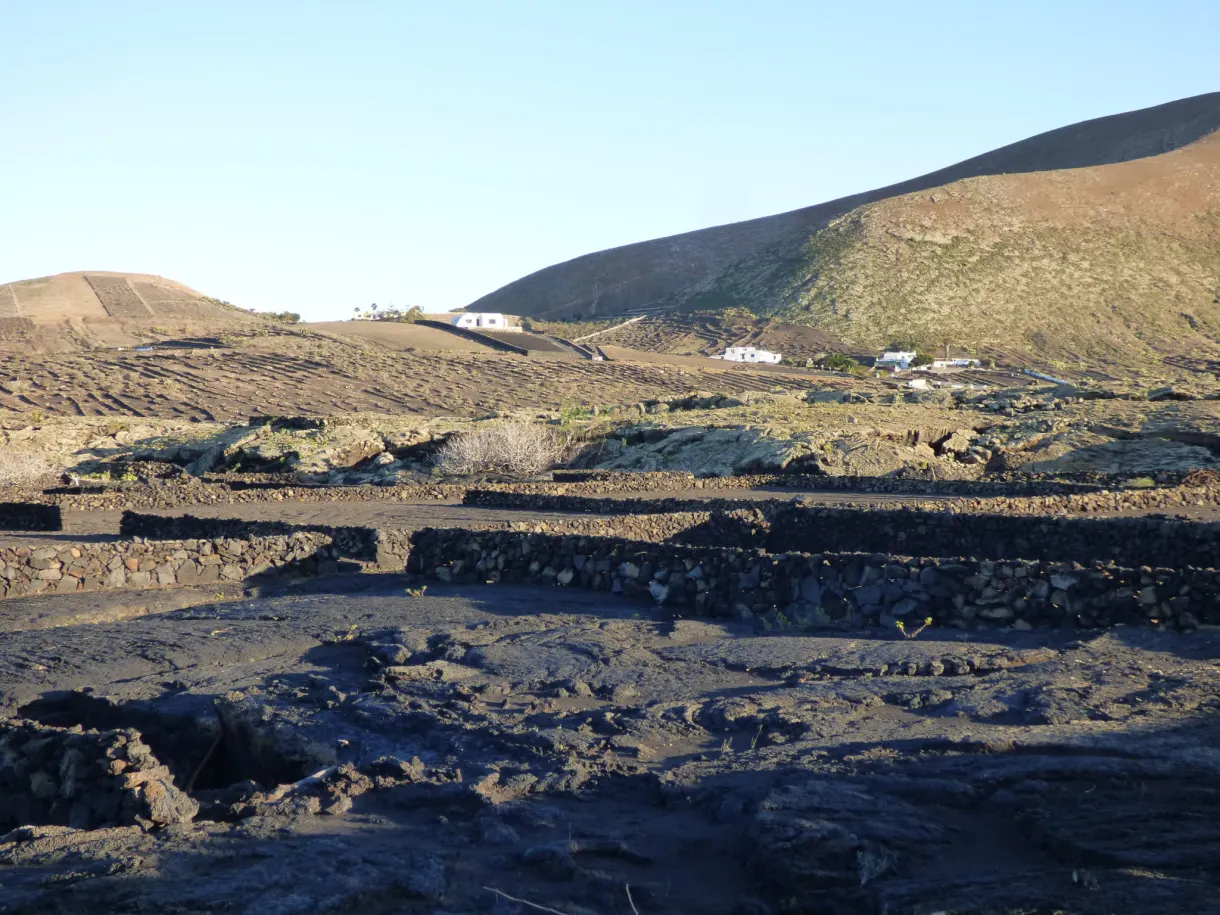
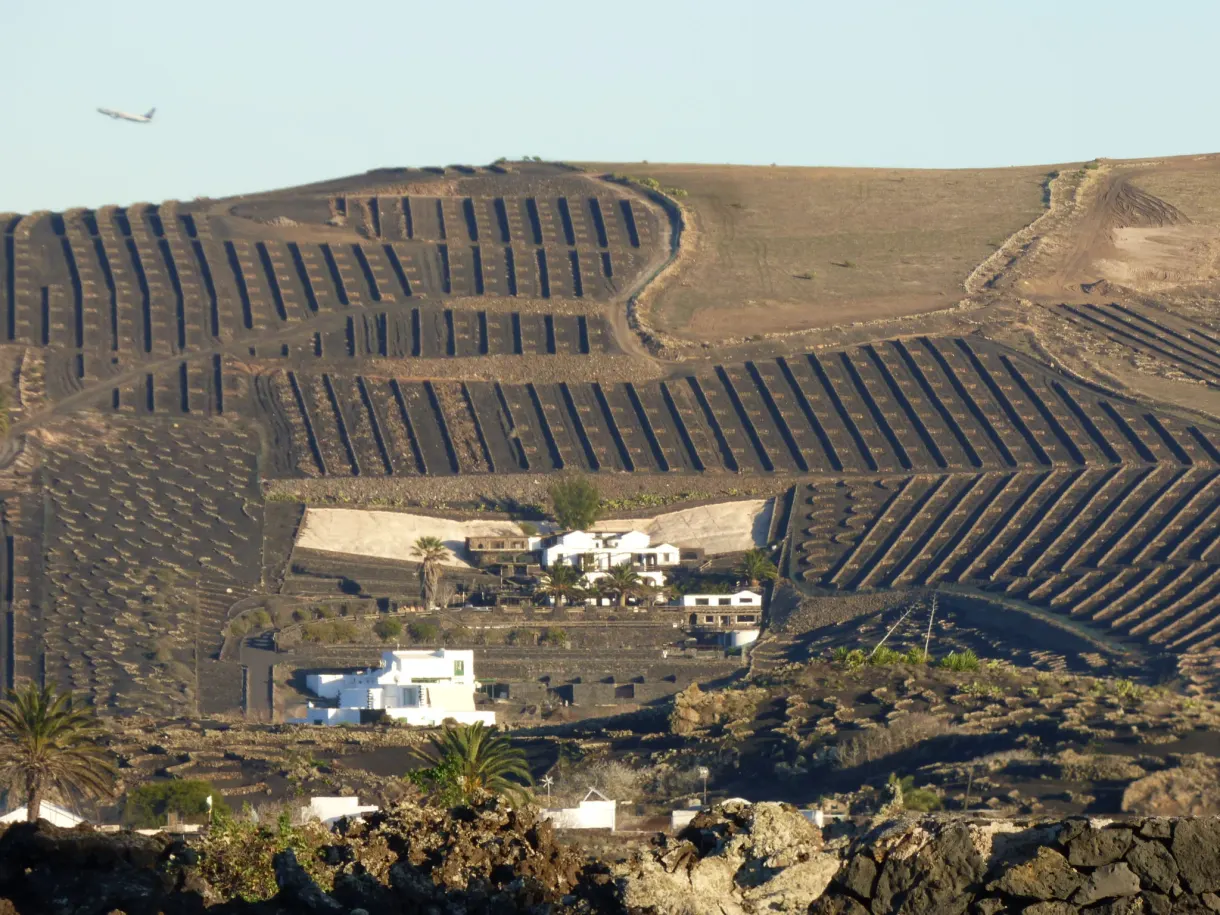
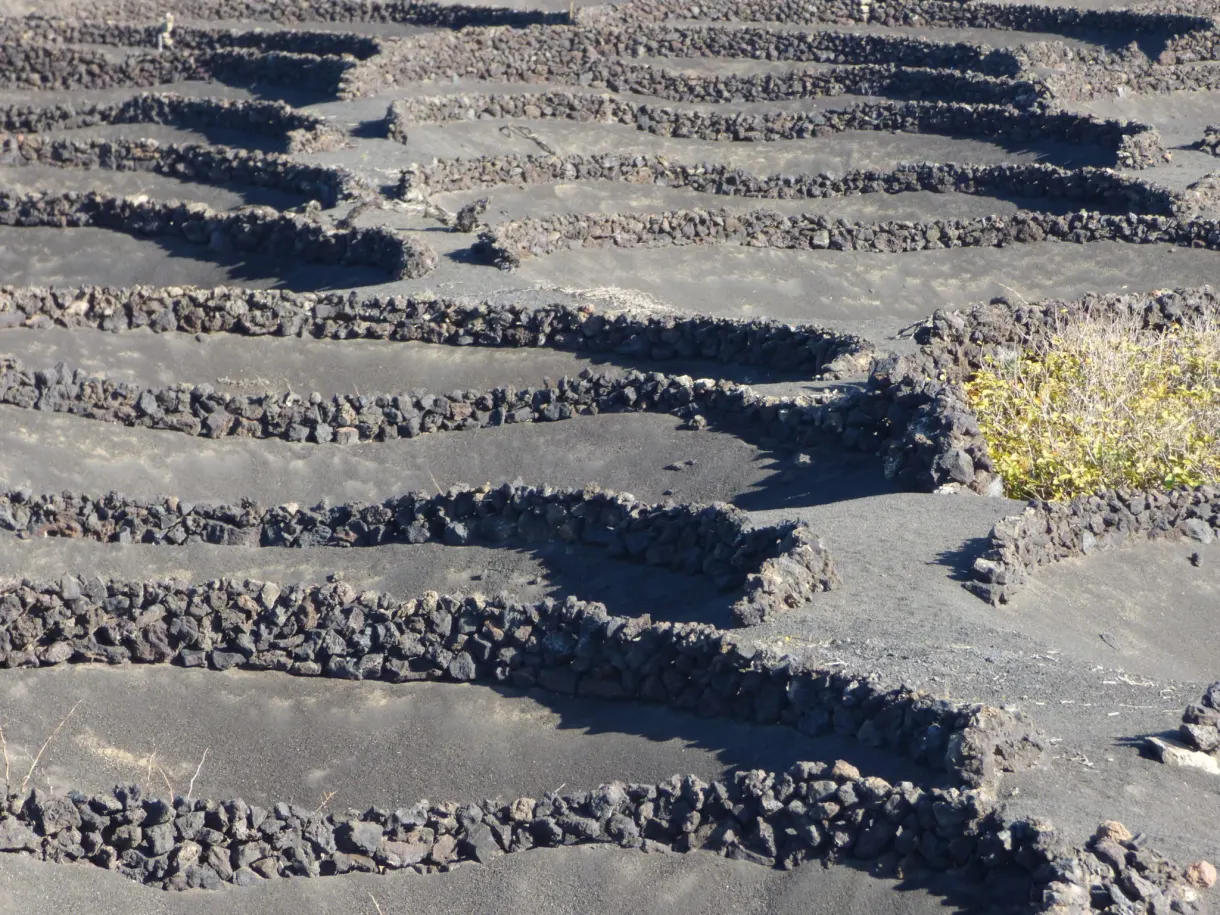
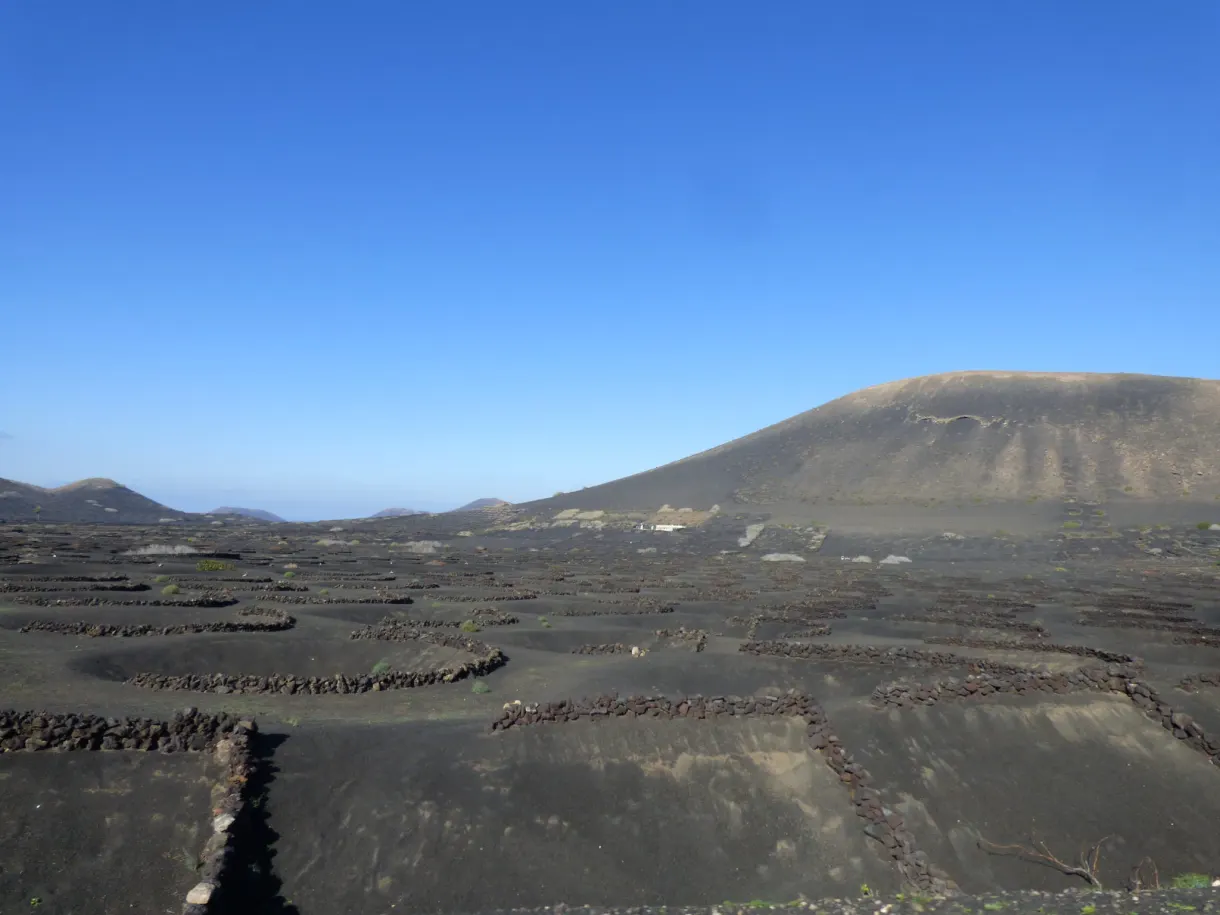
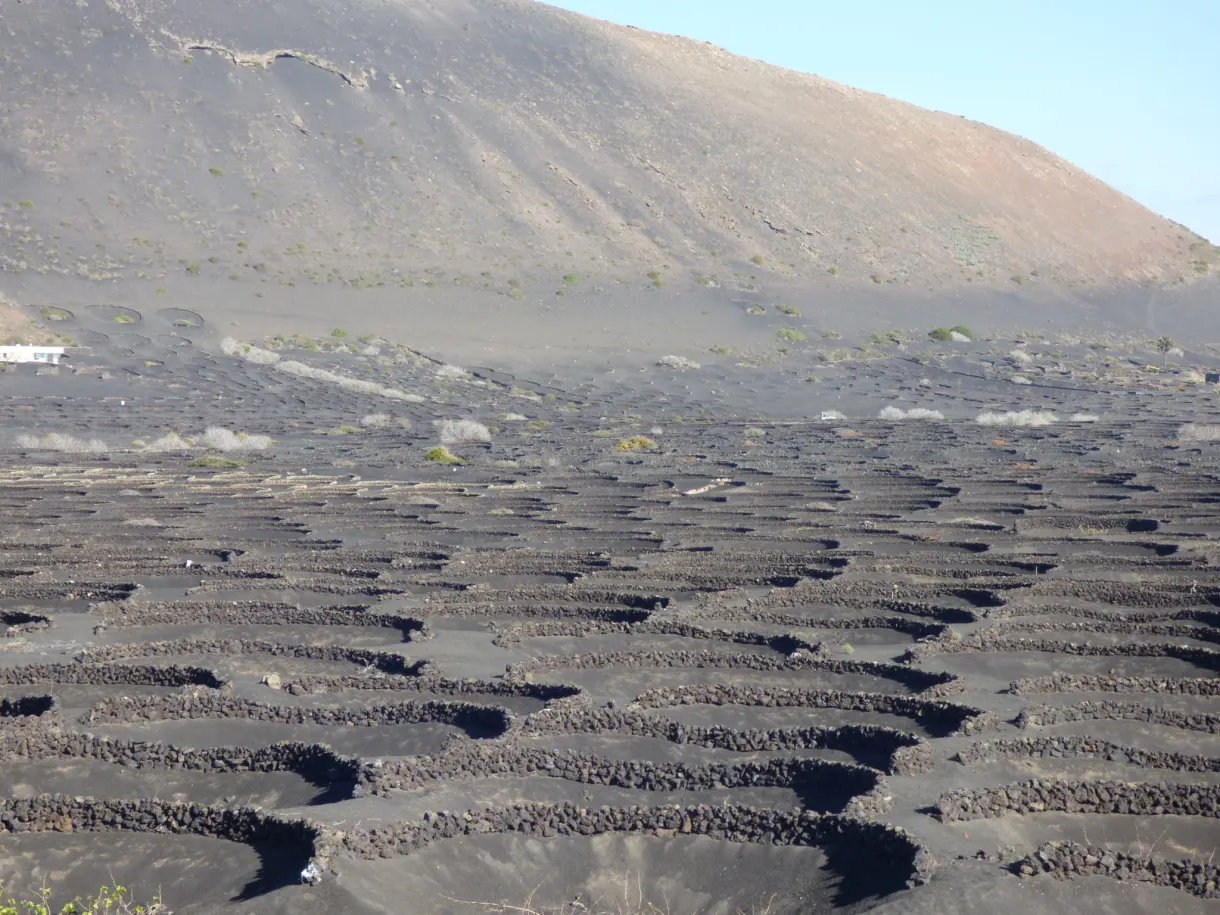
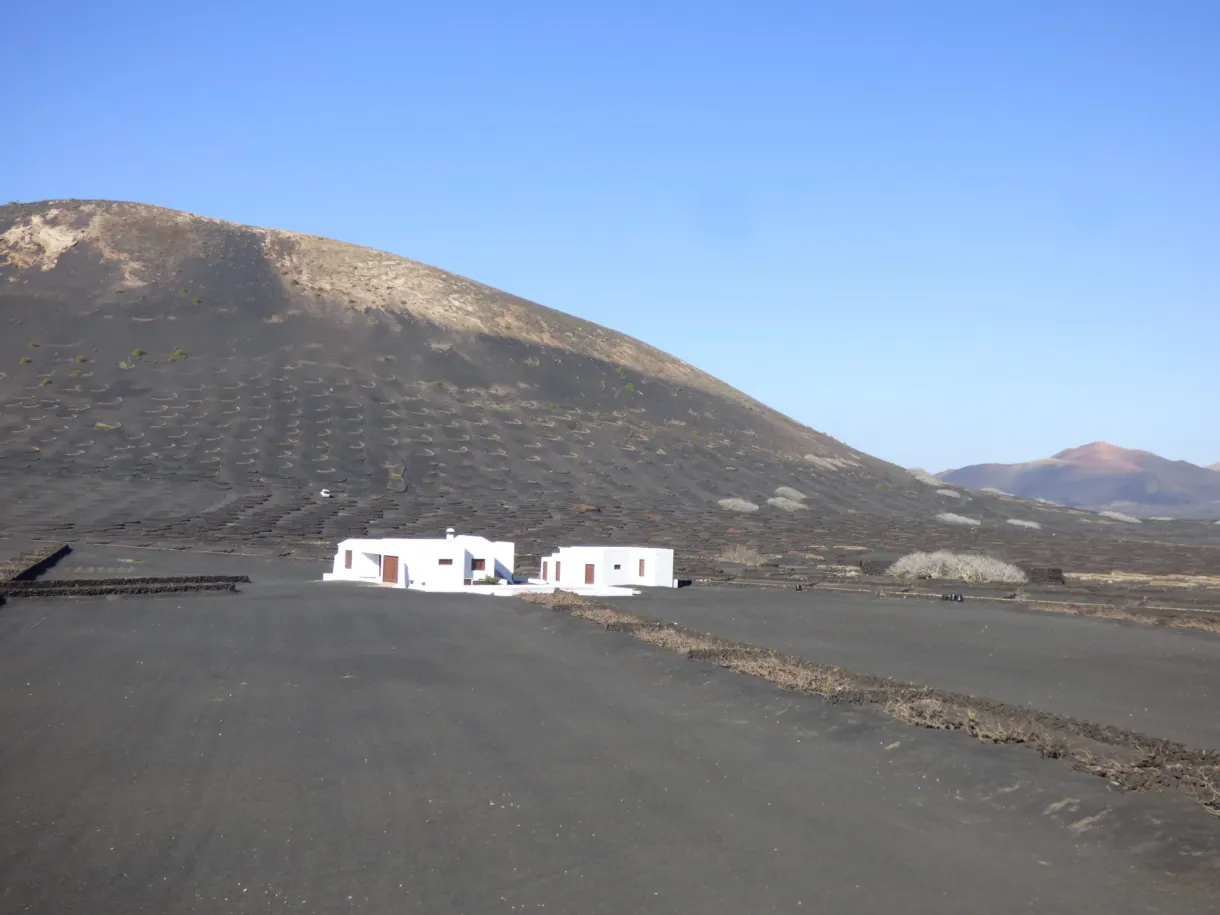
All along the wine route in the heart of La Geria you’ll find Bodegas, estates that most often combine museum, shop and tasting. As we don’t drink wine, we didn’t visit any of the bodegas, but we’d suggest Bodega Stratus, which apparently has an exceptional cellar.
Casa Museo del Campesino
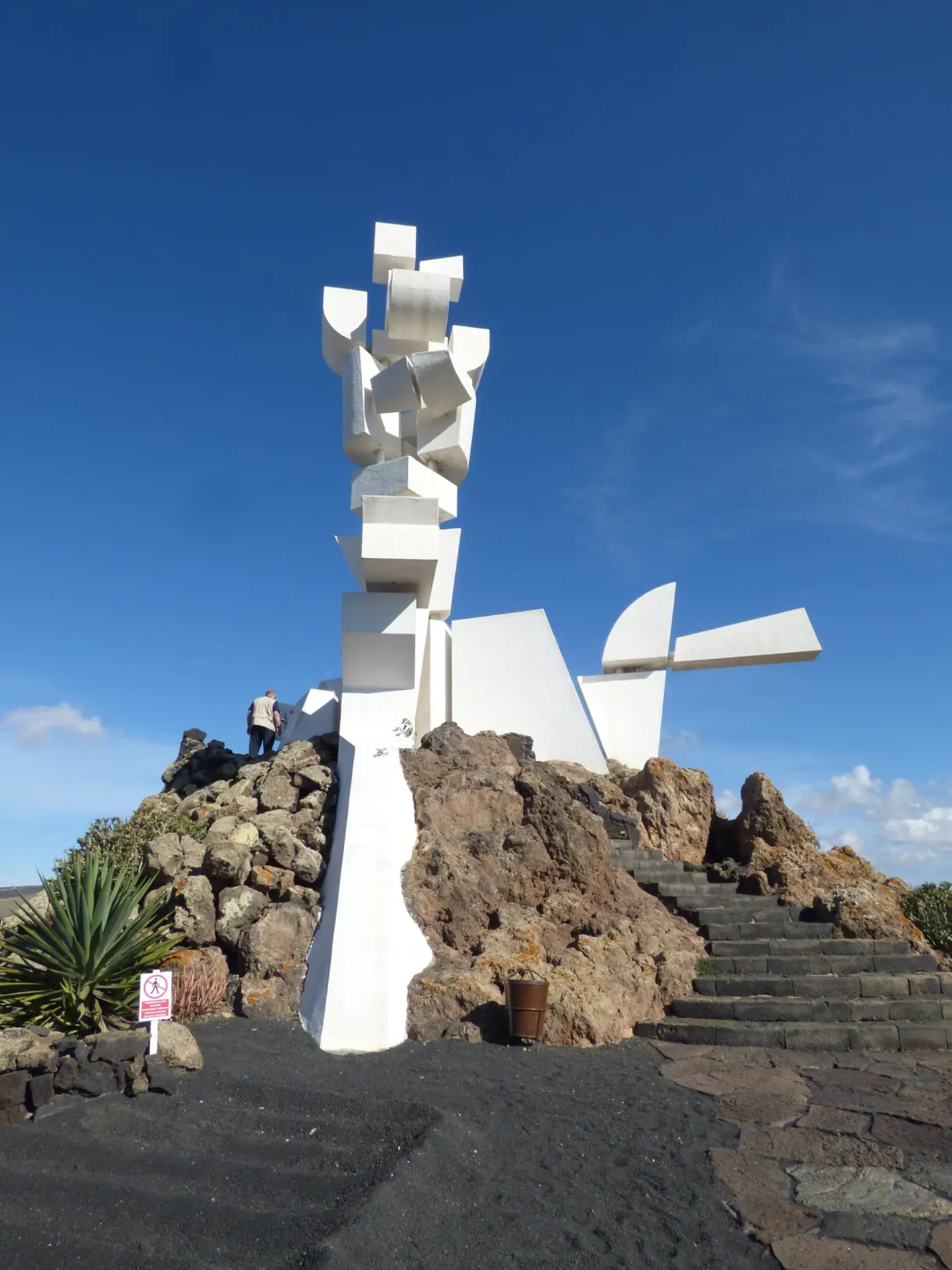
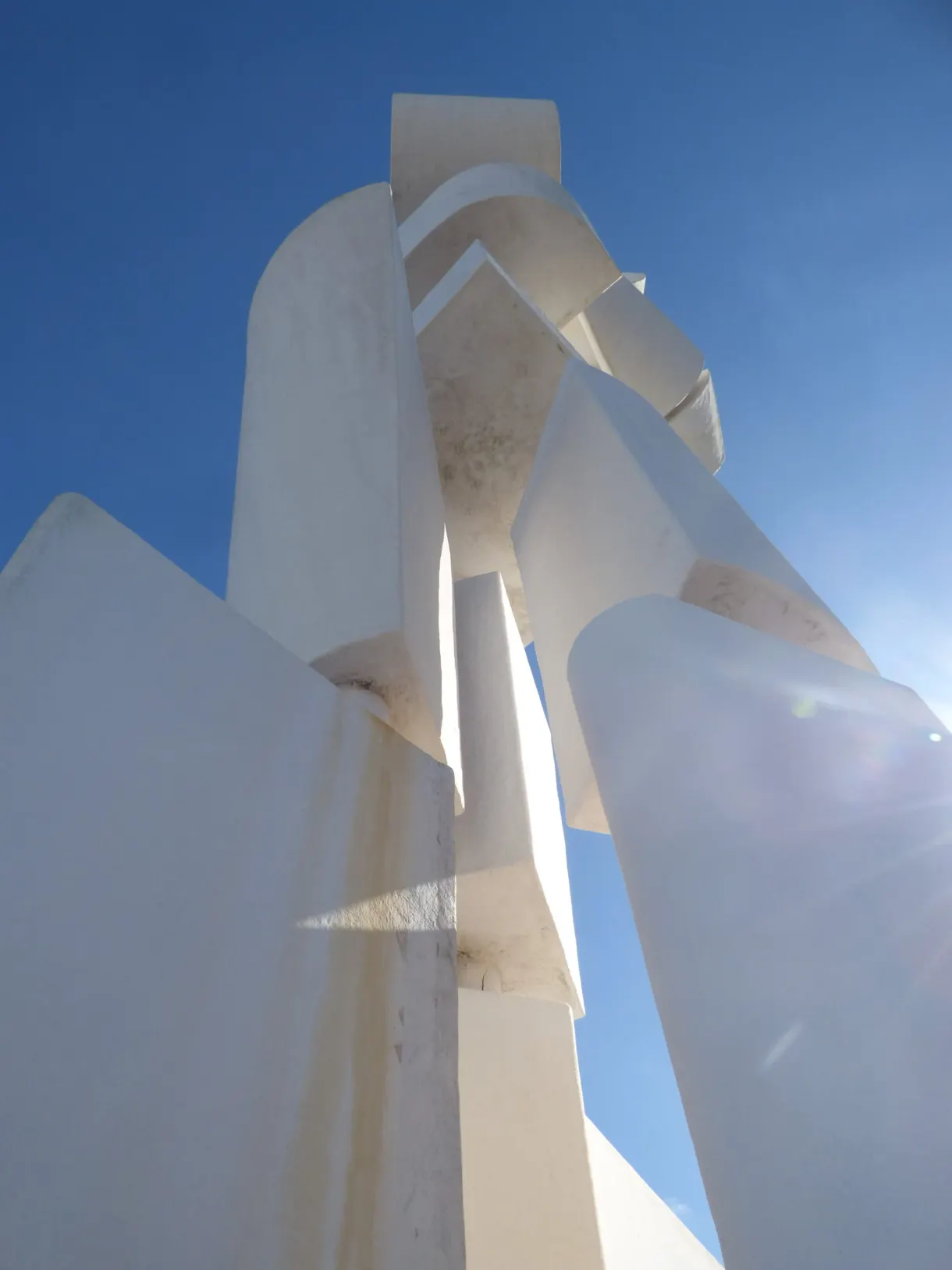
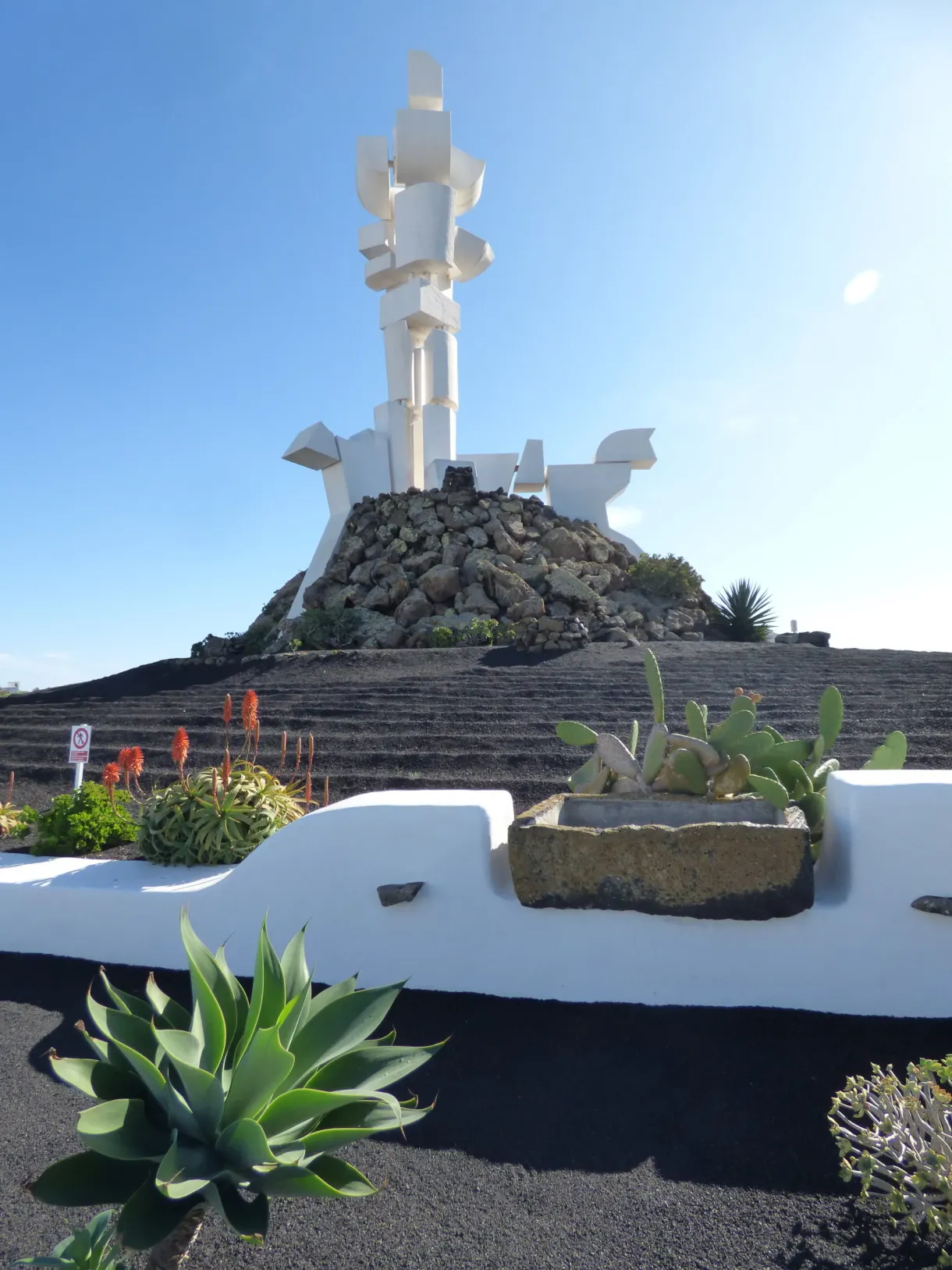
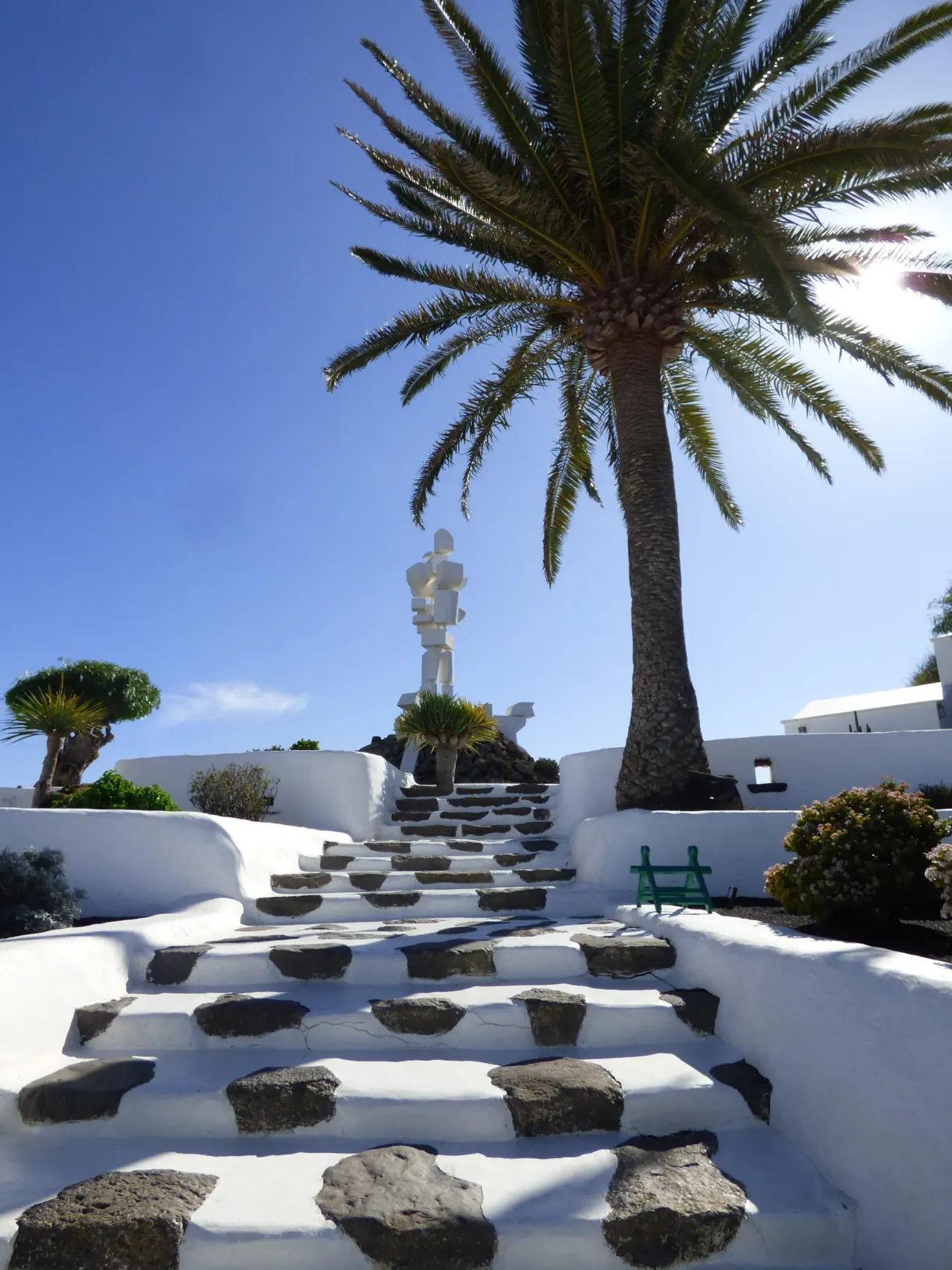
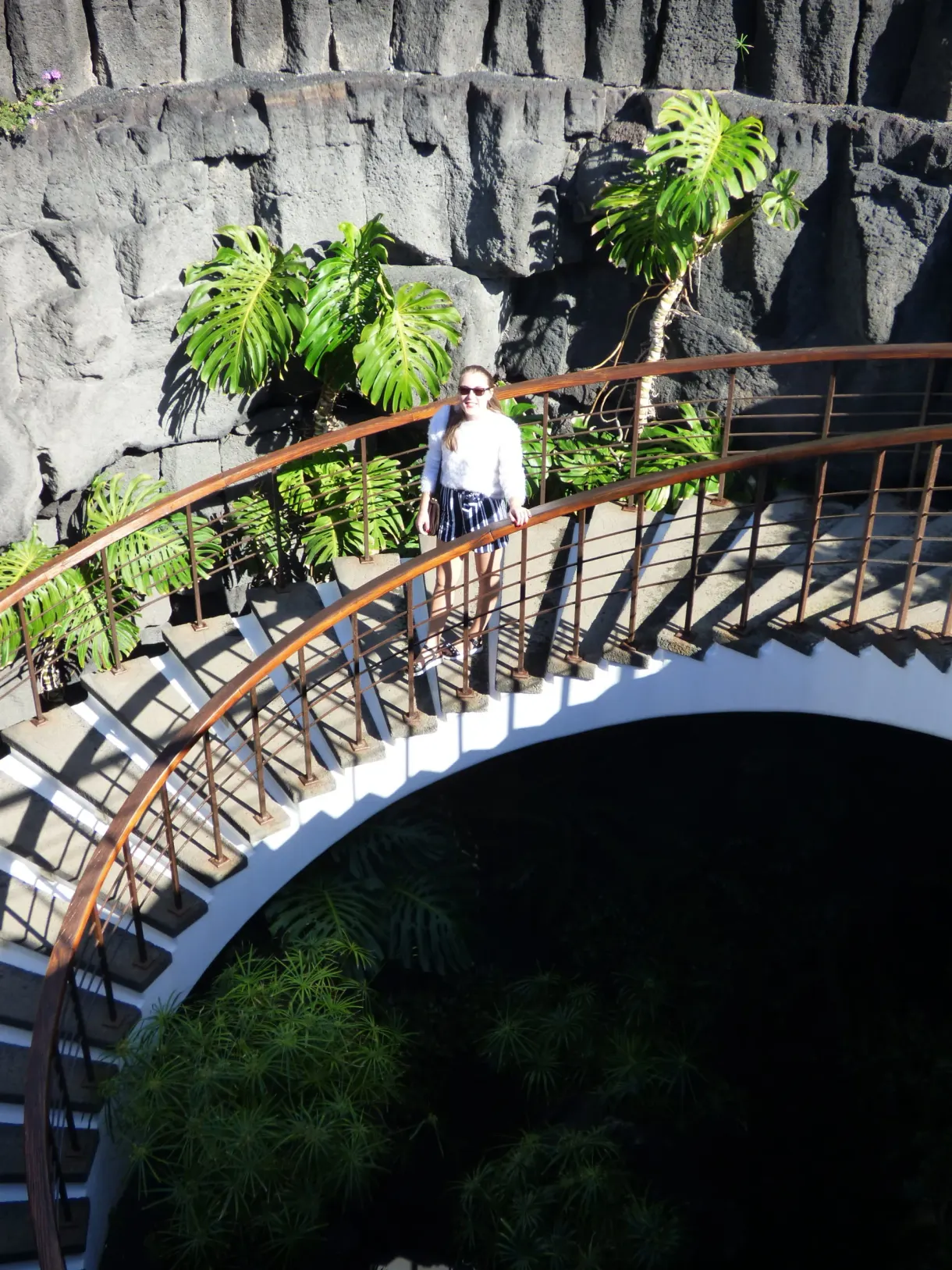
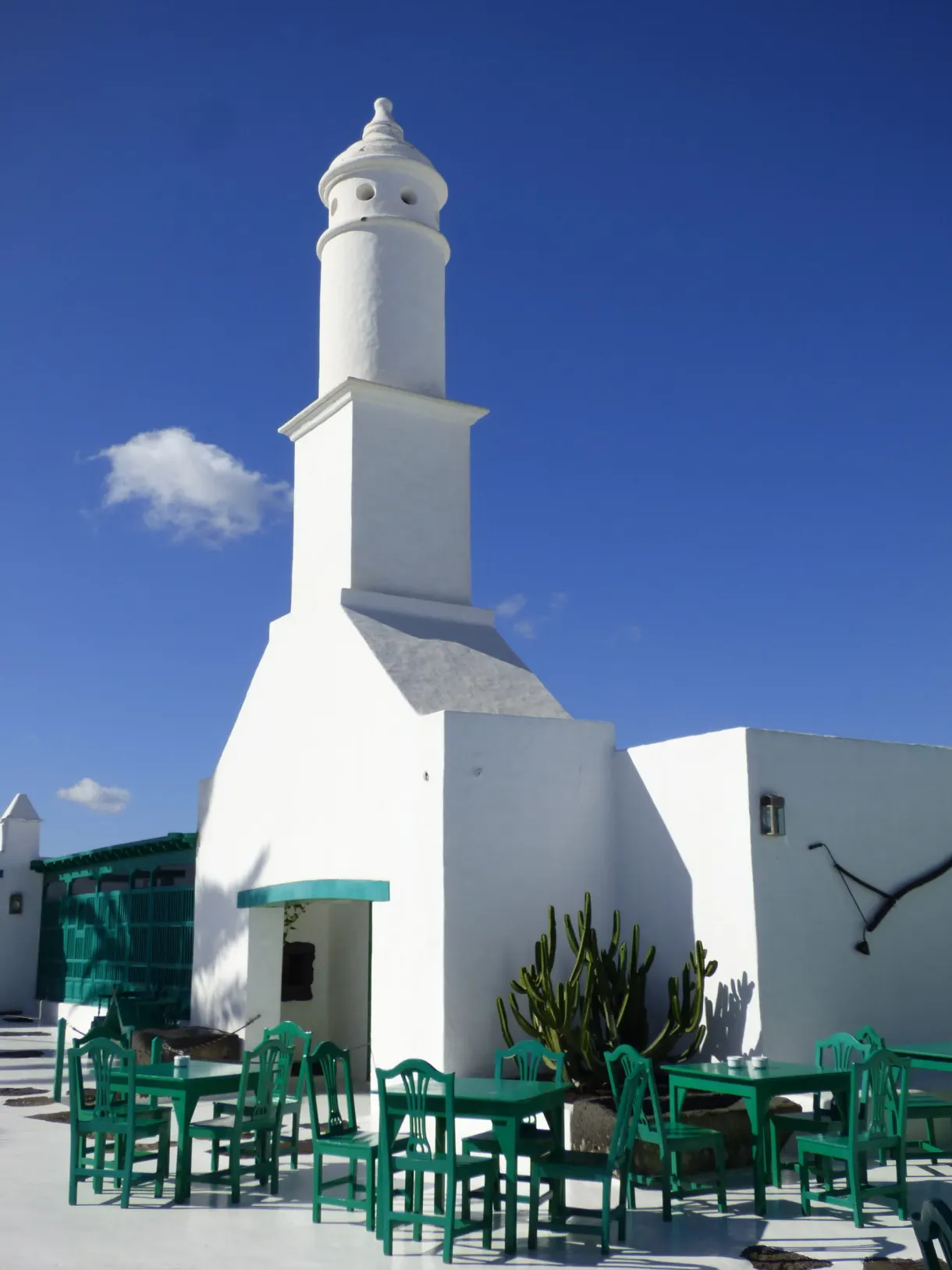
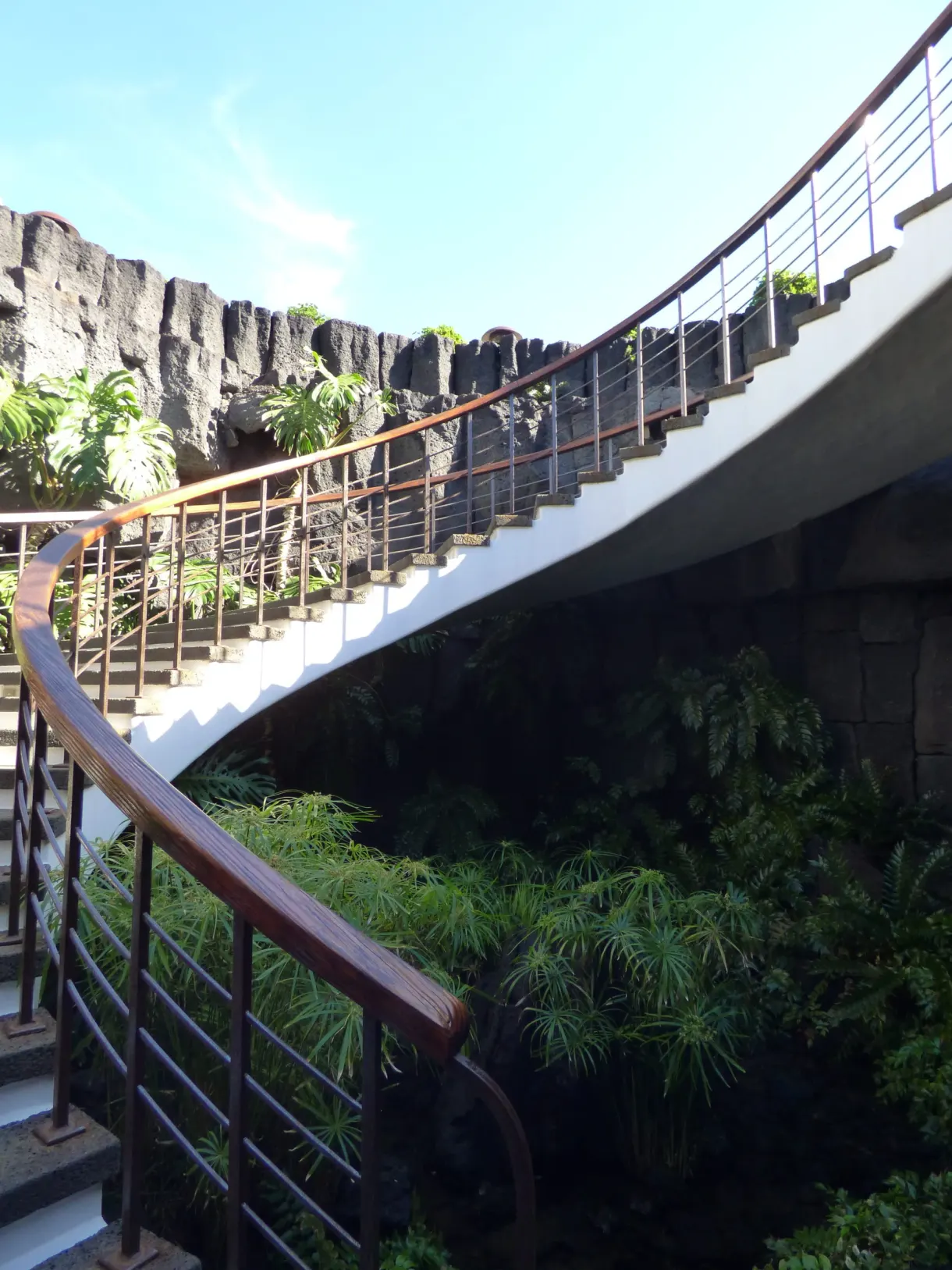
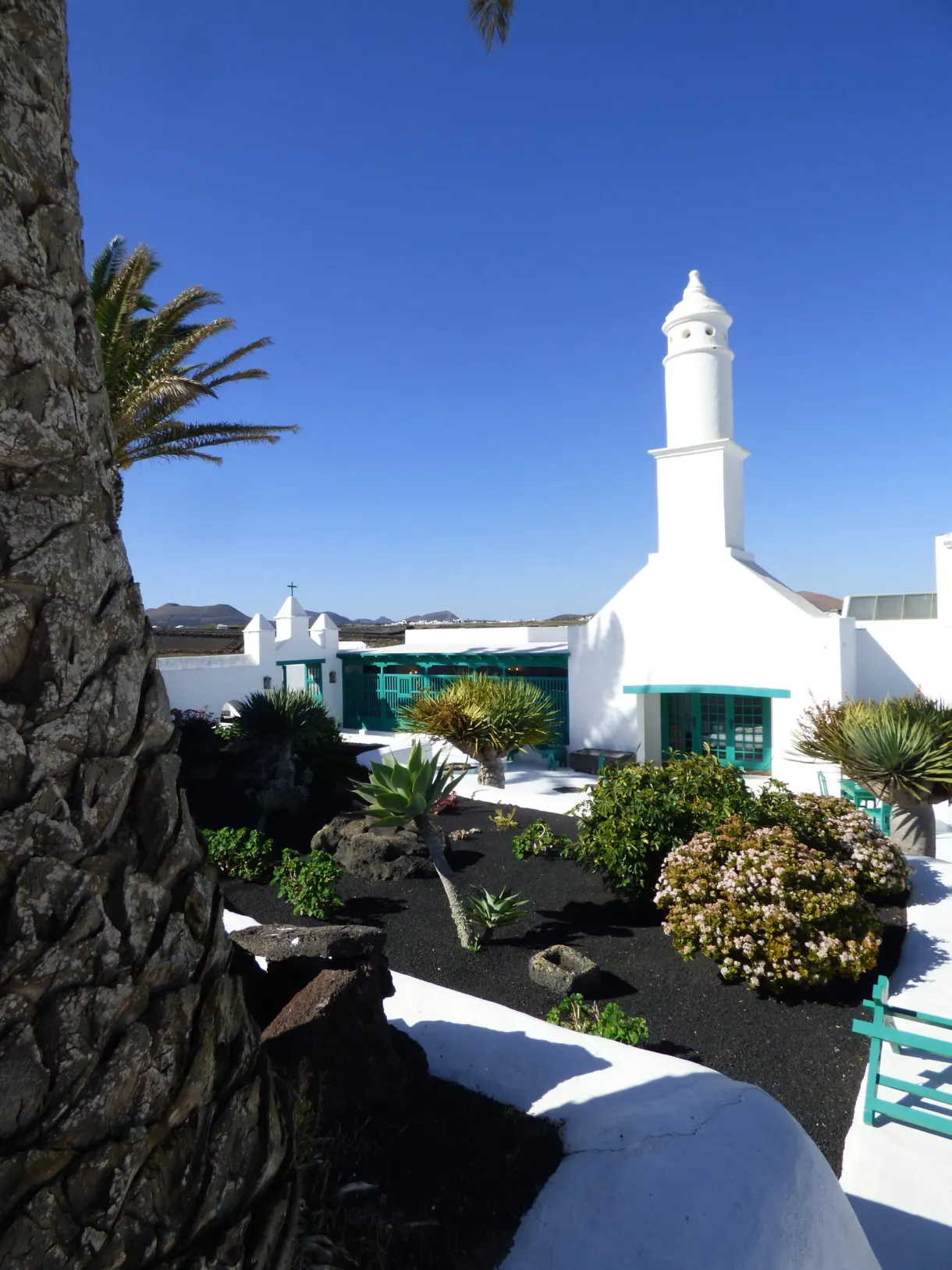
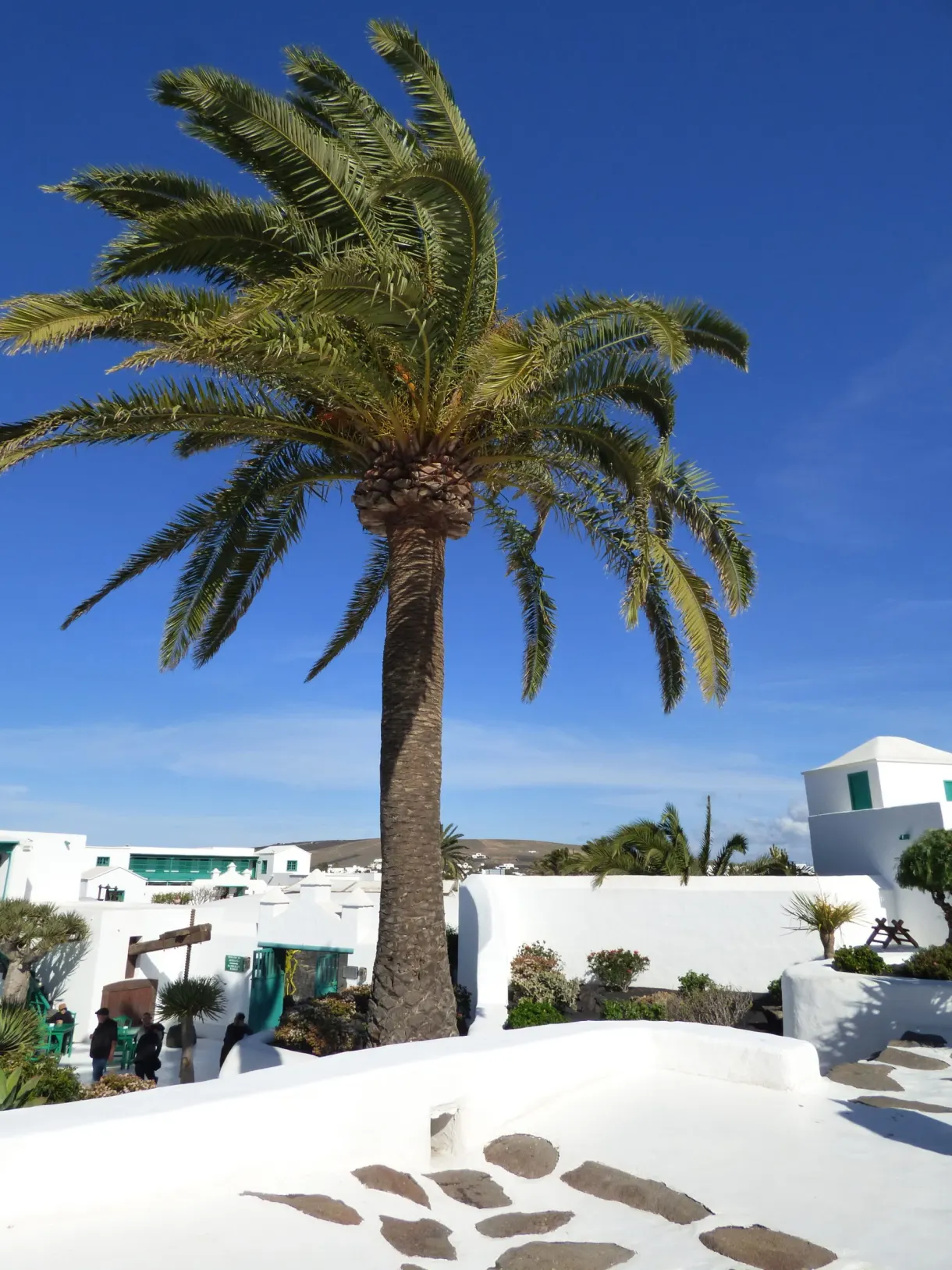
Located at the junction of the LZ-30 and the LZ-20, the Casa Museo del Campesino is one of the works of the artist César Manrique. It is a reconstruction of a traditional farming village, overlooked by a huge white statue (Monumento a la Fecundidad). It’s better to come fairly early in the morning, because the tourist coaches arrive around 11am. This is also where you’ll find a small local craft market, with a potter, a cheesemaker, a soap maker… a chance to bring back souvenirs typical of the island!
Teguise
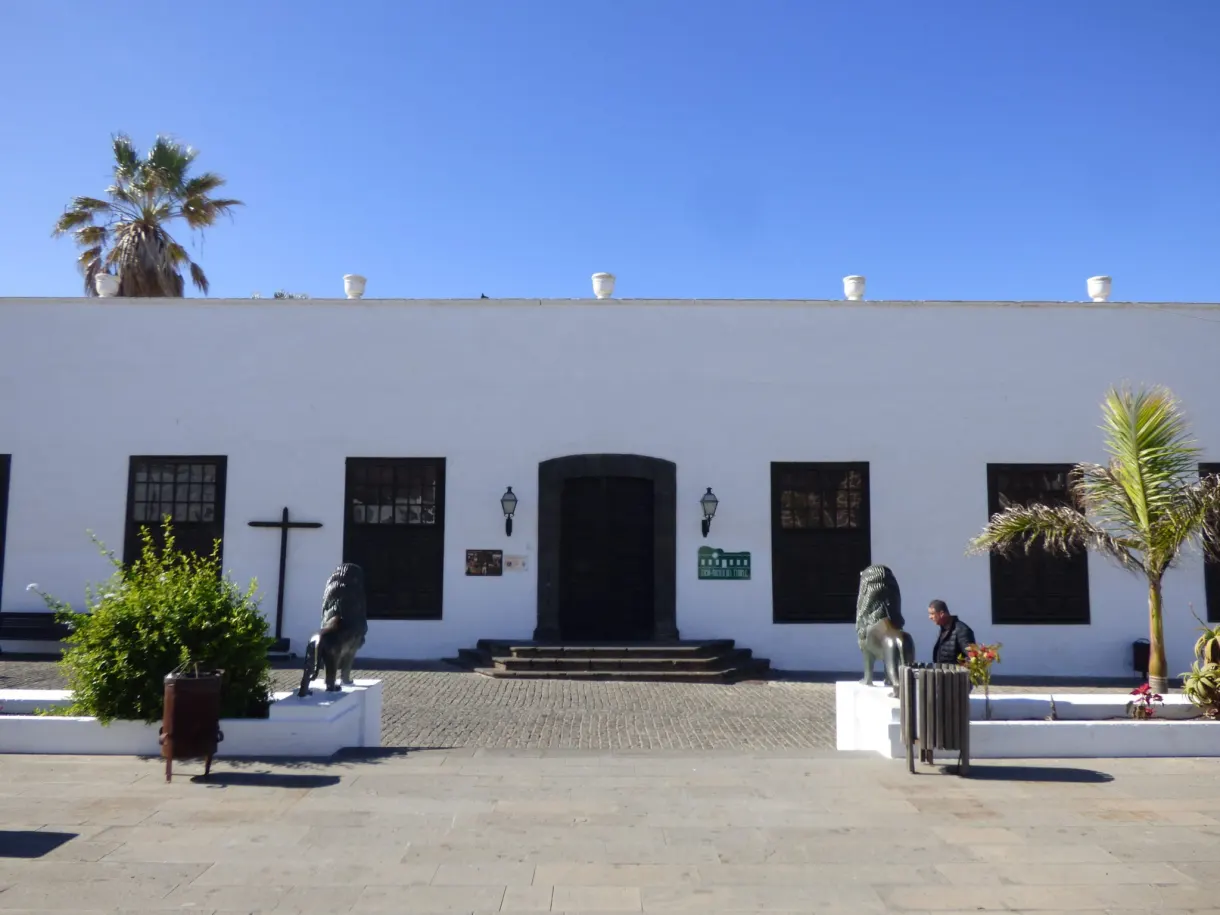
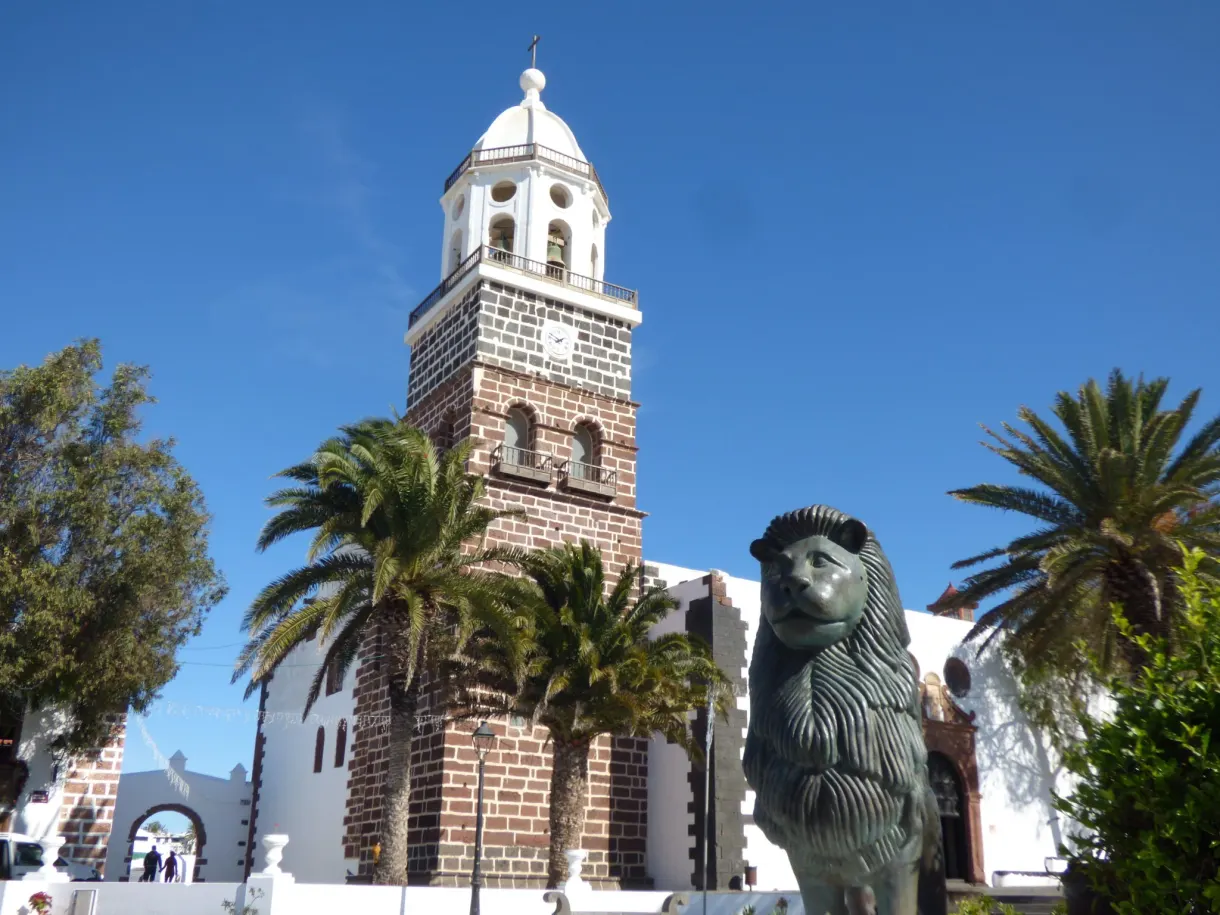
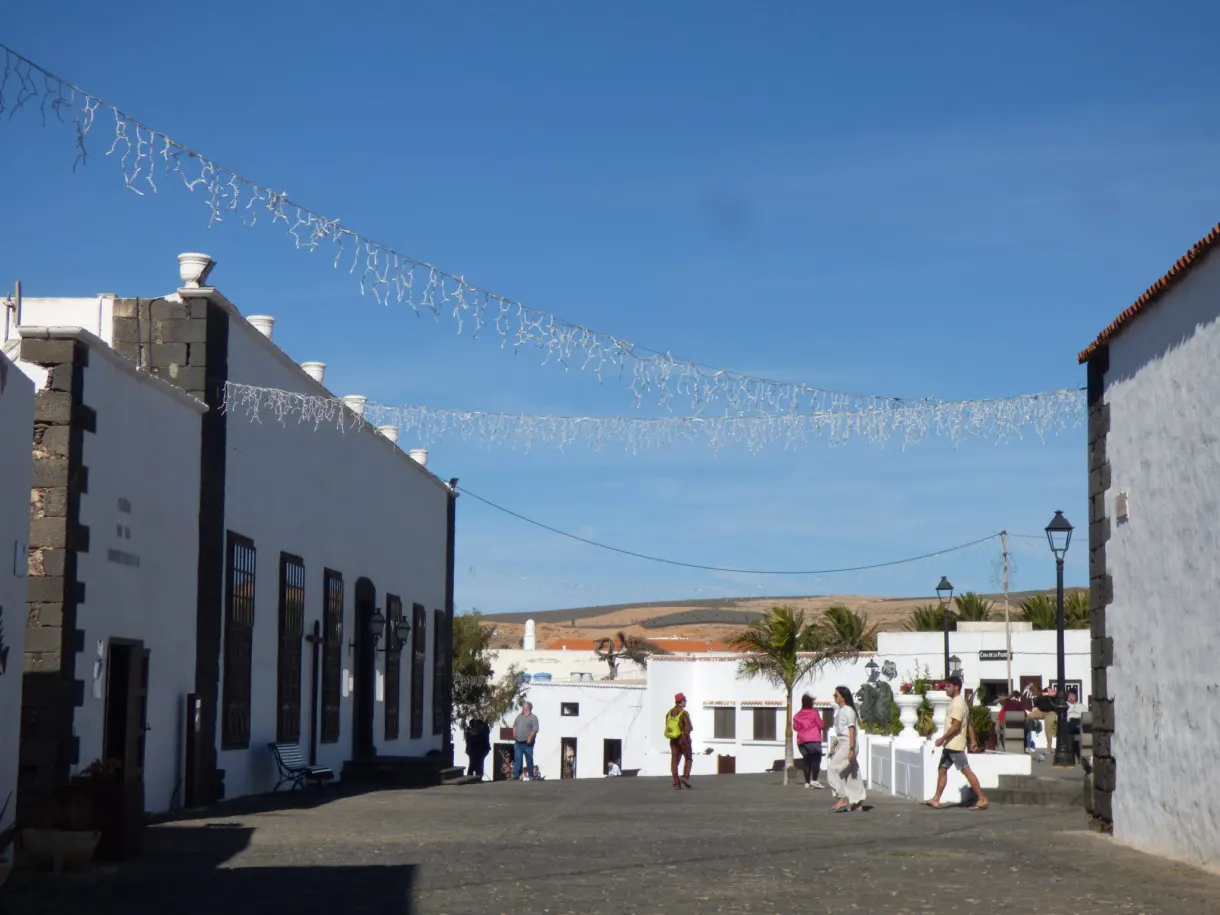
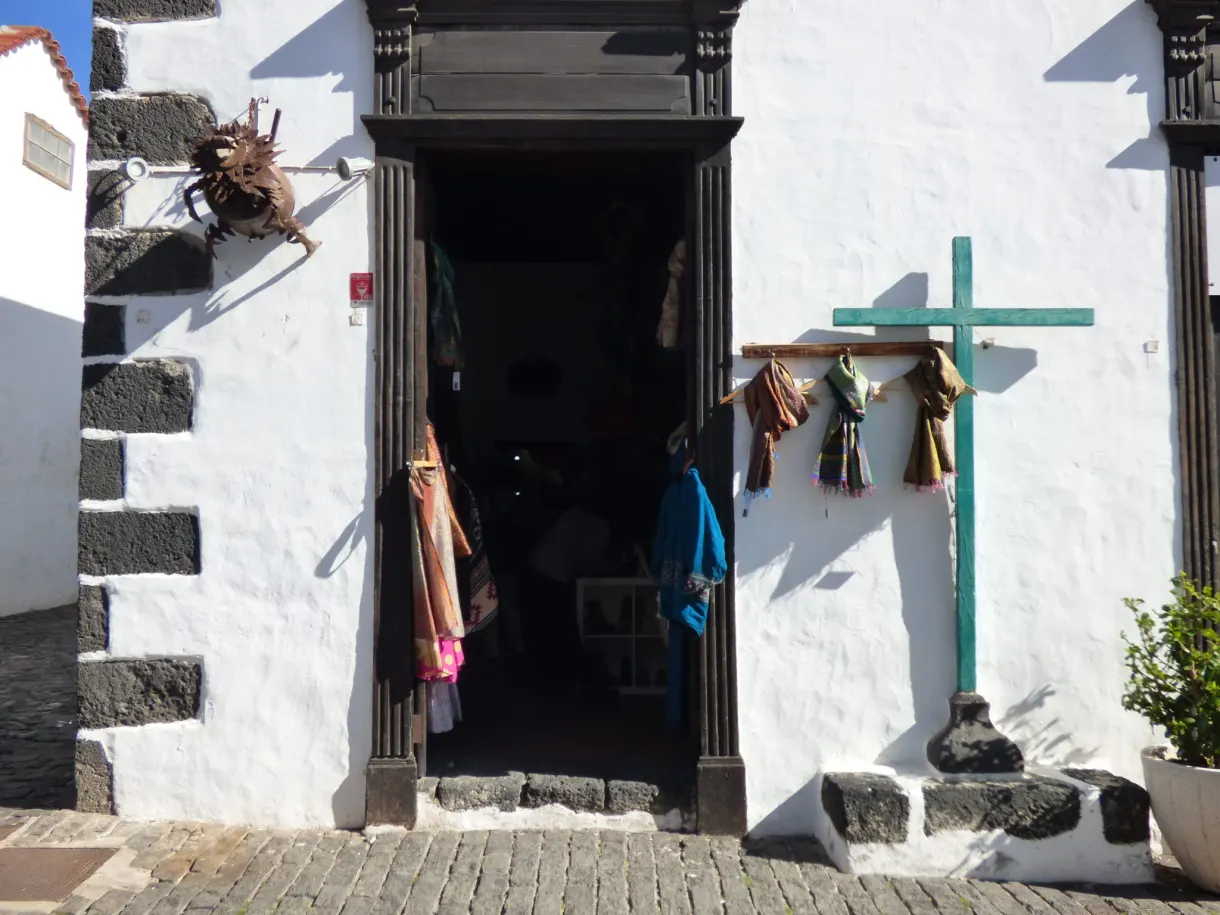
Teguise is without doubt the most picturesque and prettiest town in Lanzarote! The town centre isn’t very big but its pedestrian lanes are full of charm. When the weather is nice, the blue sky brings out the white of the town’s low houses. We came twice, in particular to have lunch (address at the bottom of the article). In the middle of winter, there weren’t many people in the streets, but apparently the town is packed in summer…
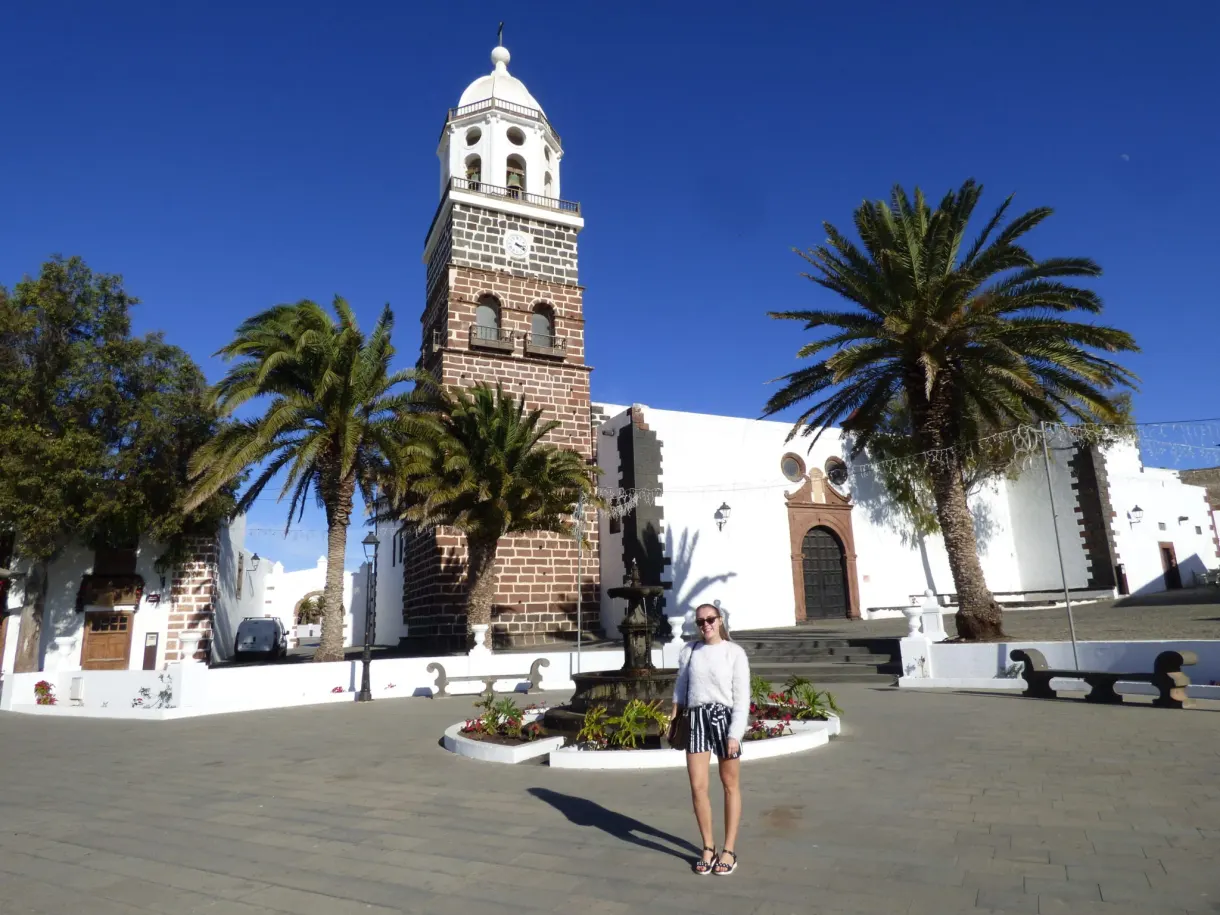
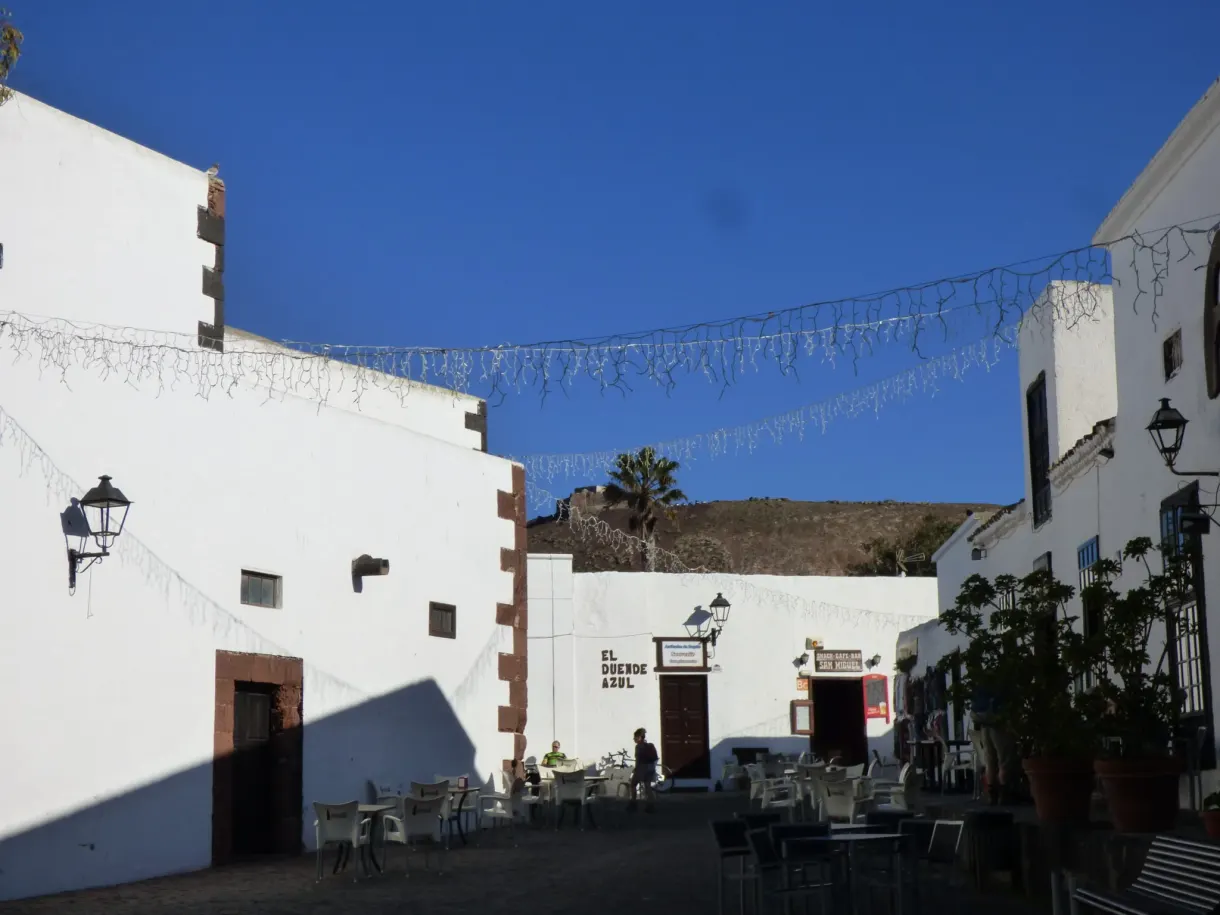
Restaurants spotted but not tested: Hespérides (fine dining), Queso Project (cheese shop and tapas bar)
Castillo de Santa Barbara
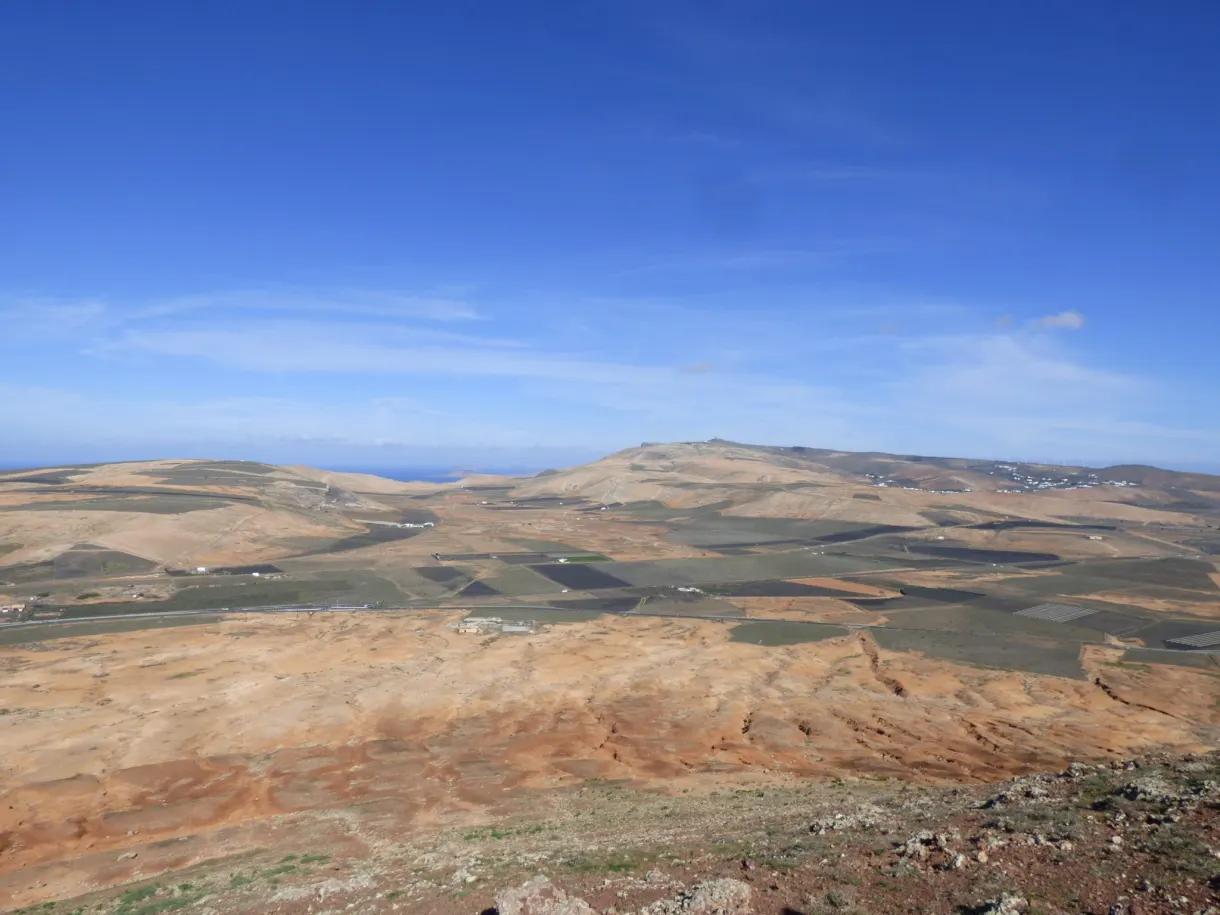
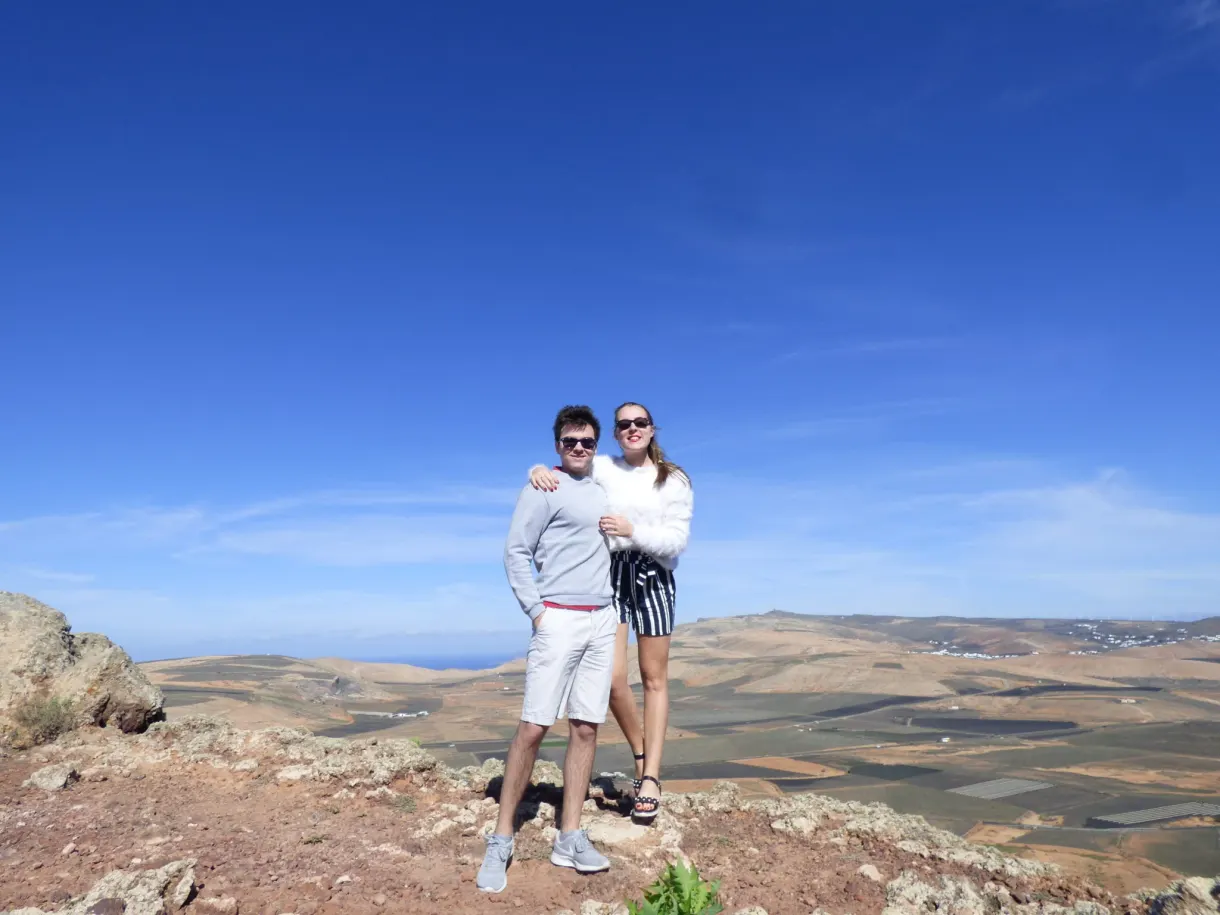
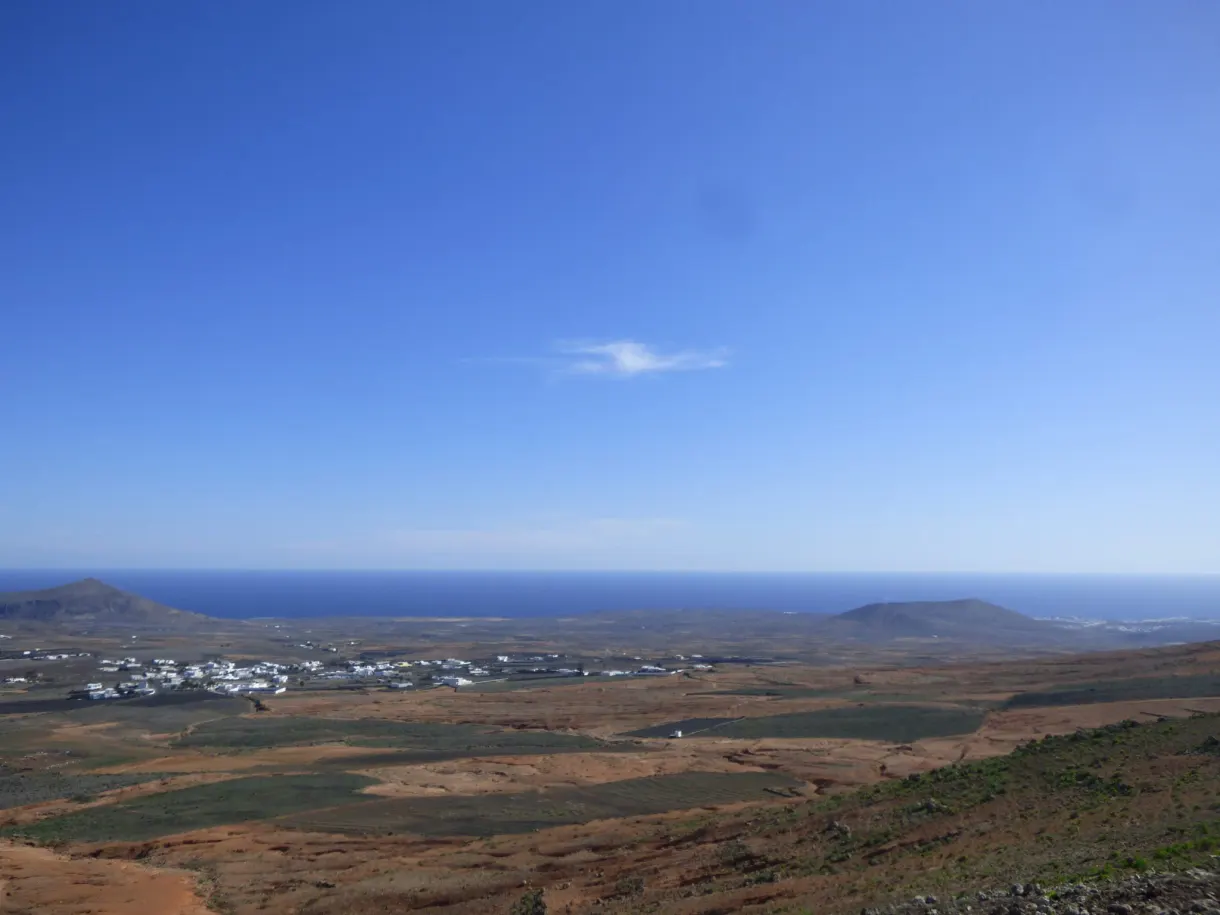
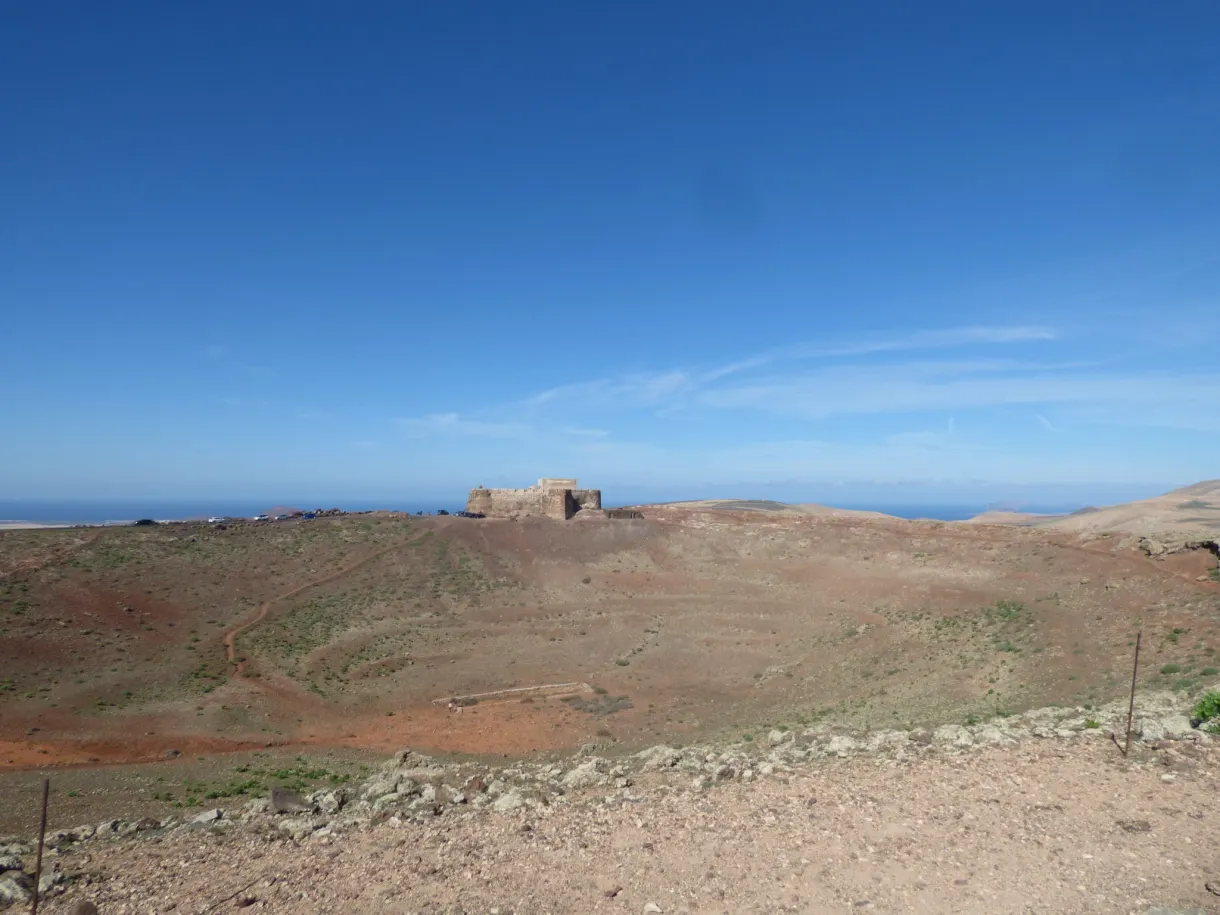
On the way out of Teguise, on the LZ-10, don’t miss going up to the Santa Barbara castle, which houses the Piracy museum. For our part, we didn’t visit the inside of this fortress, but we took a walk on the heights to get a stunning view over the surroundings.
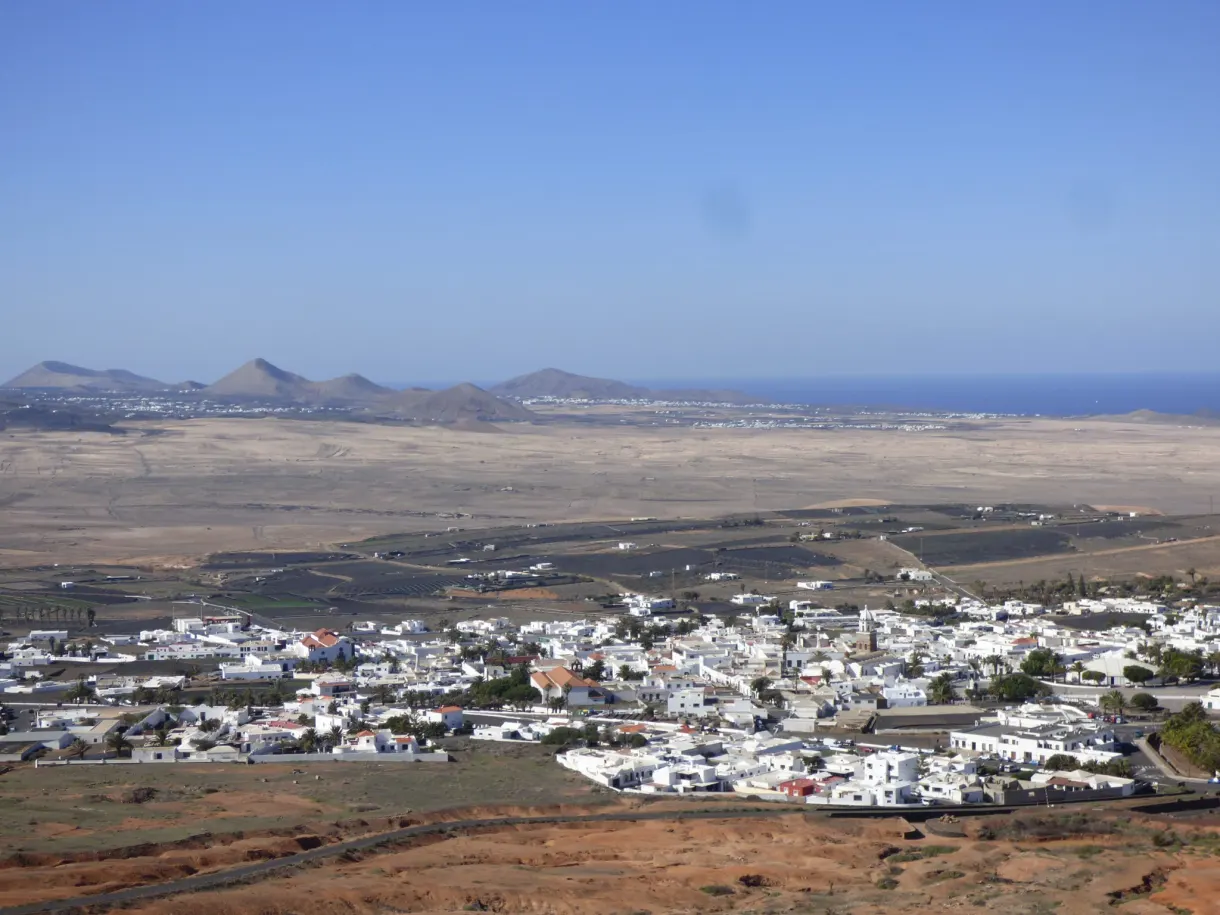
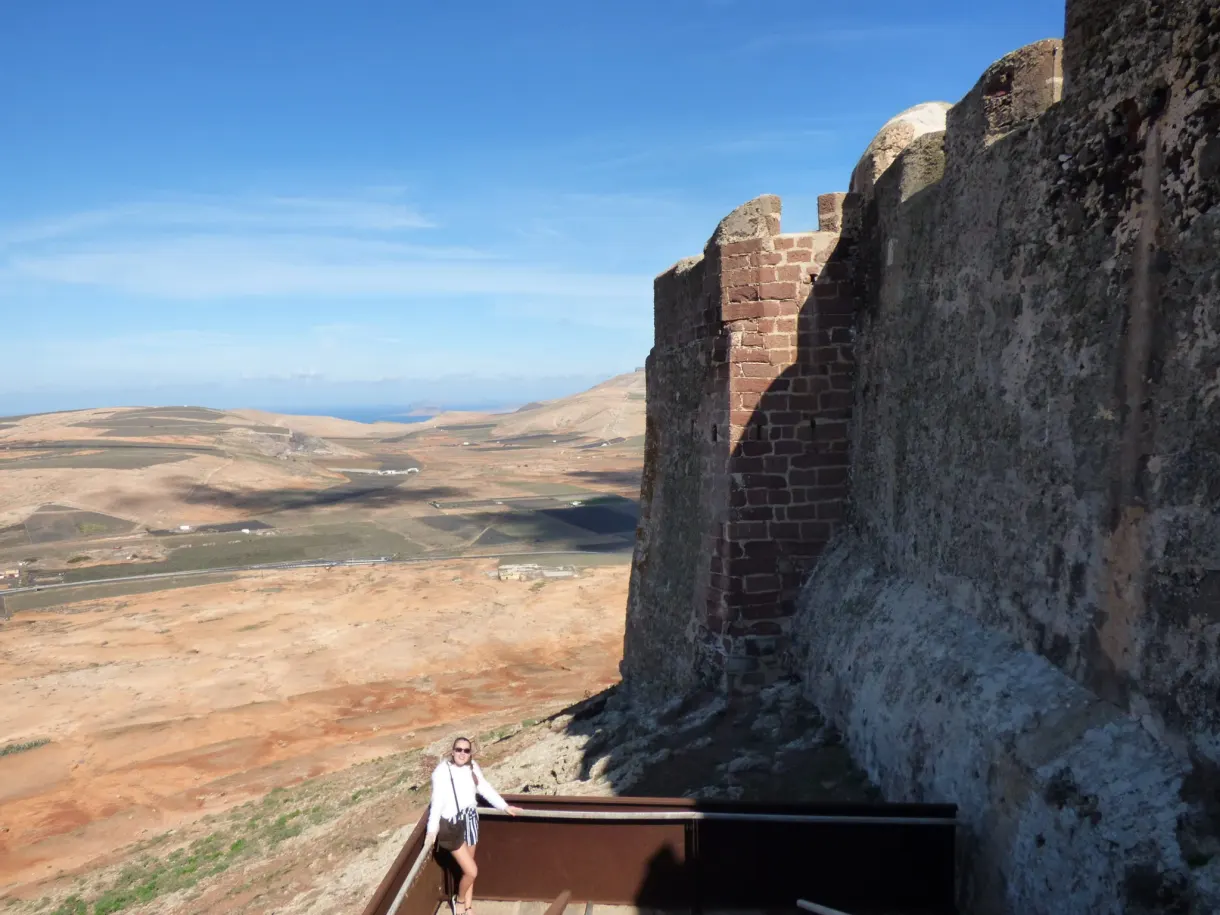
Lagomar, Nazaret
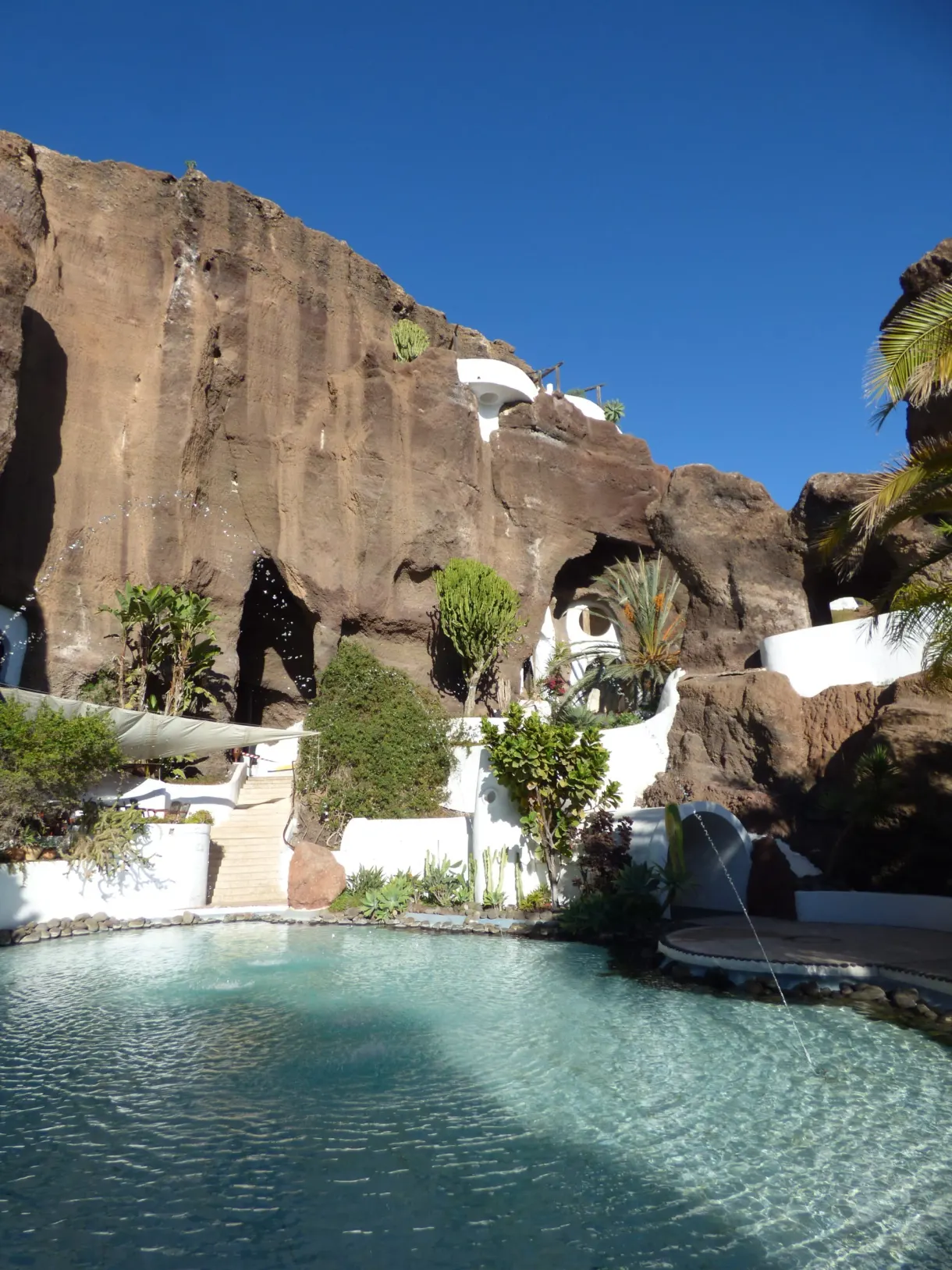
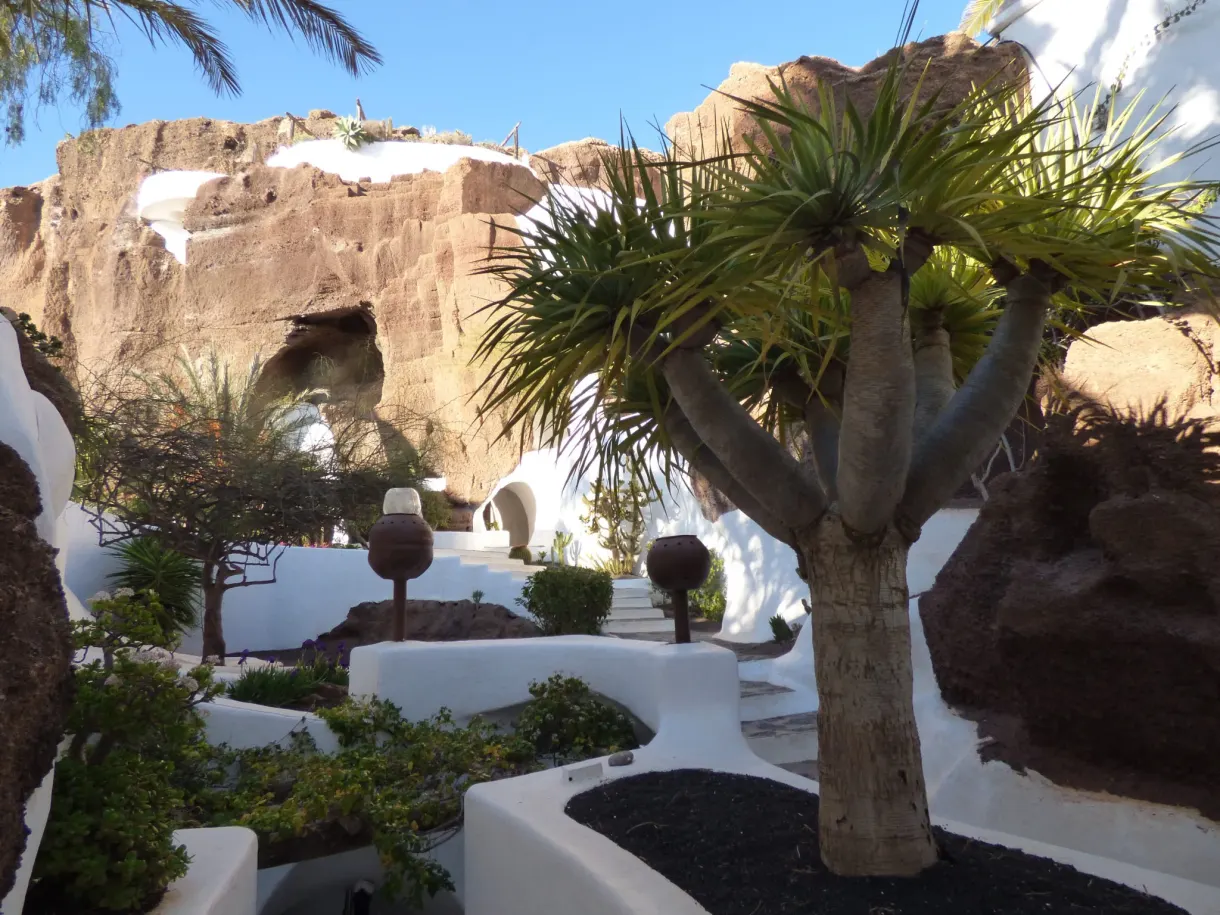
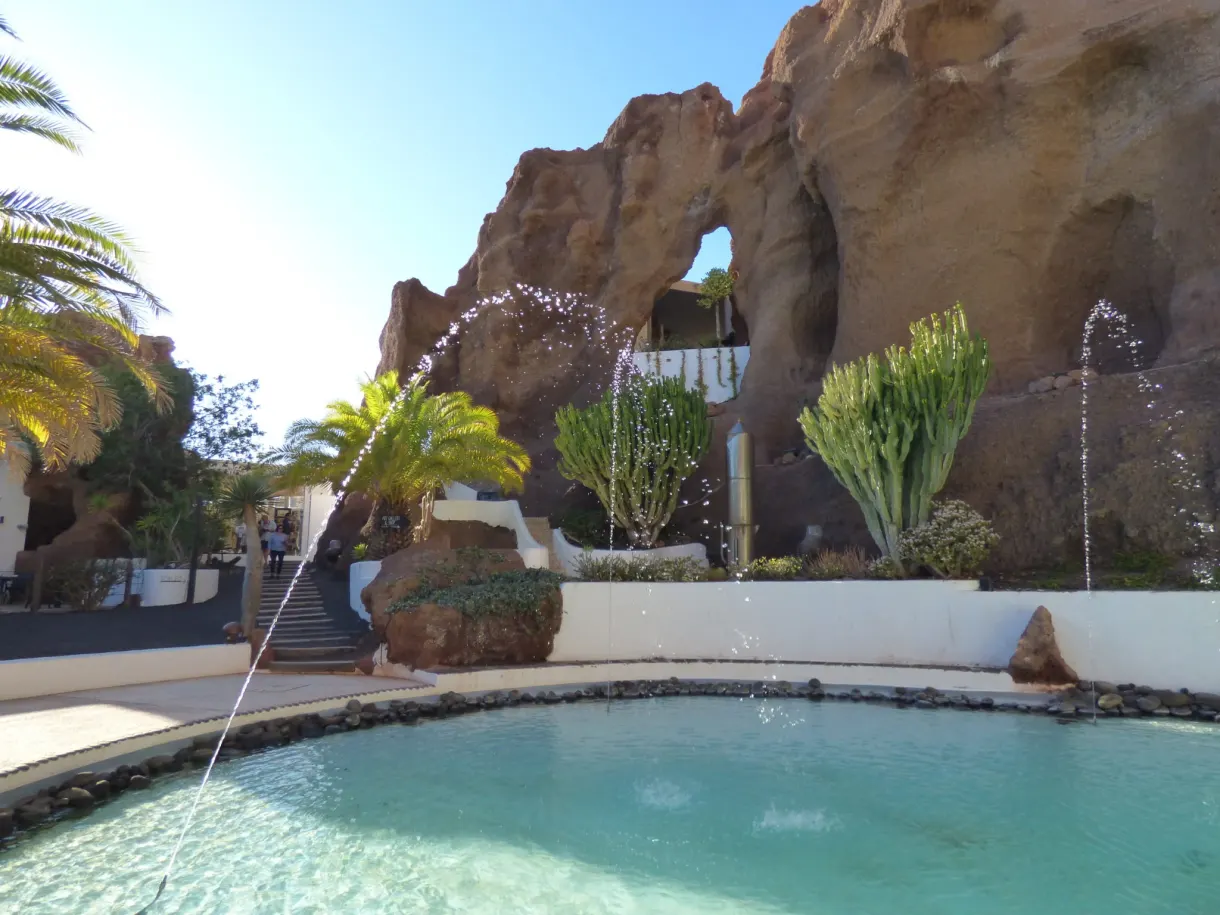
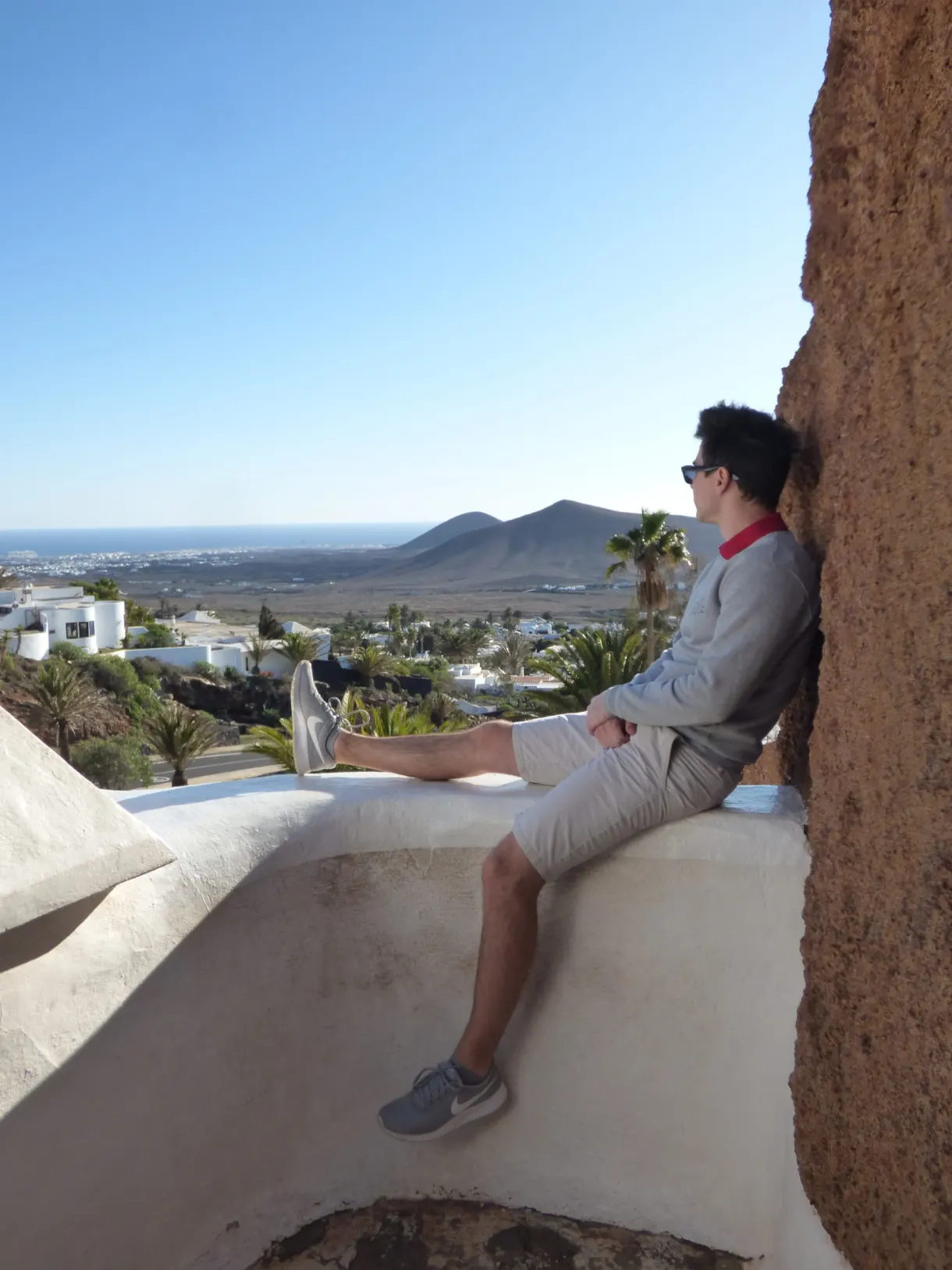
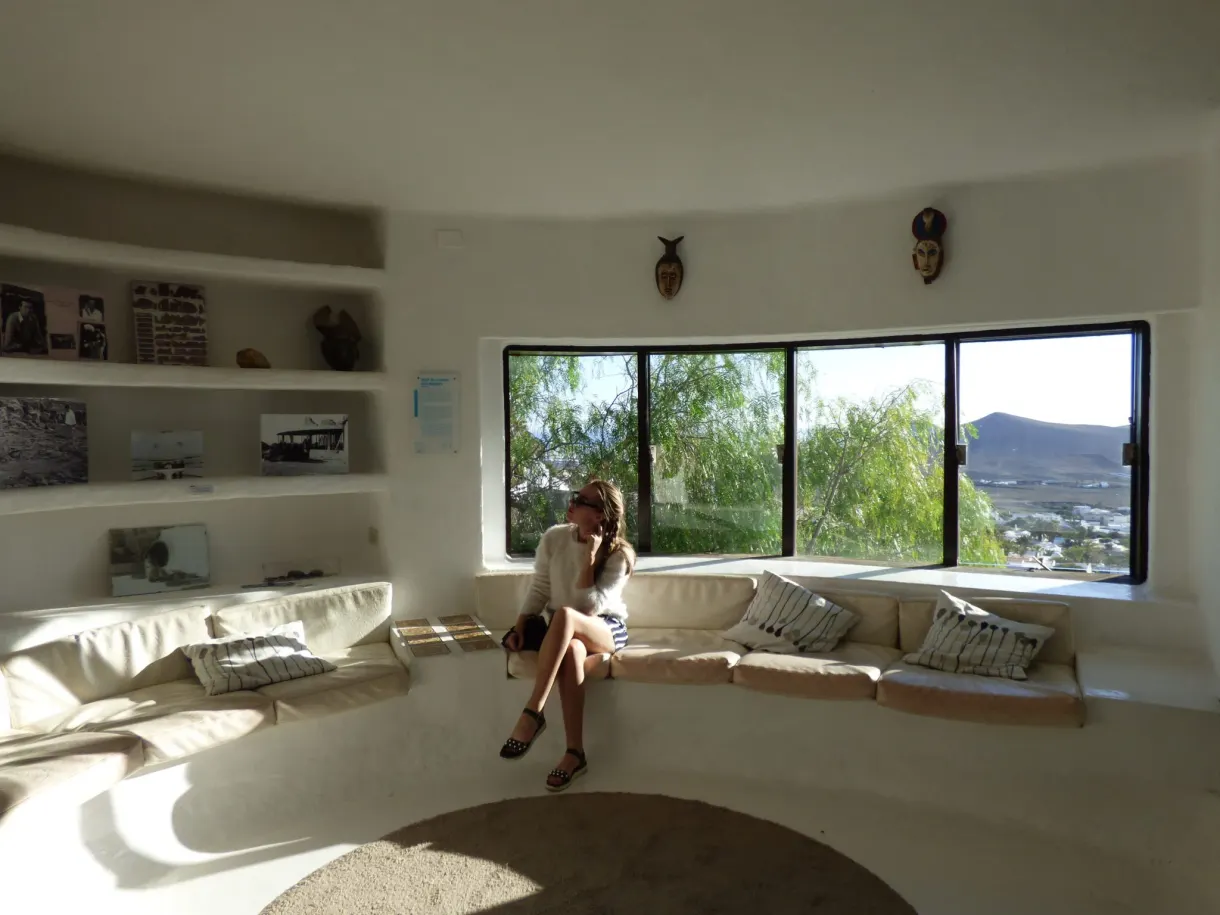
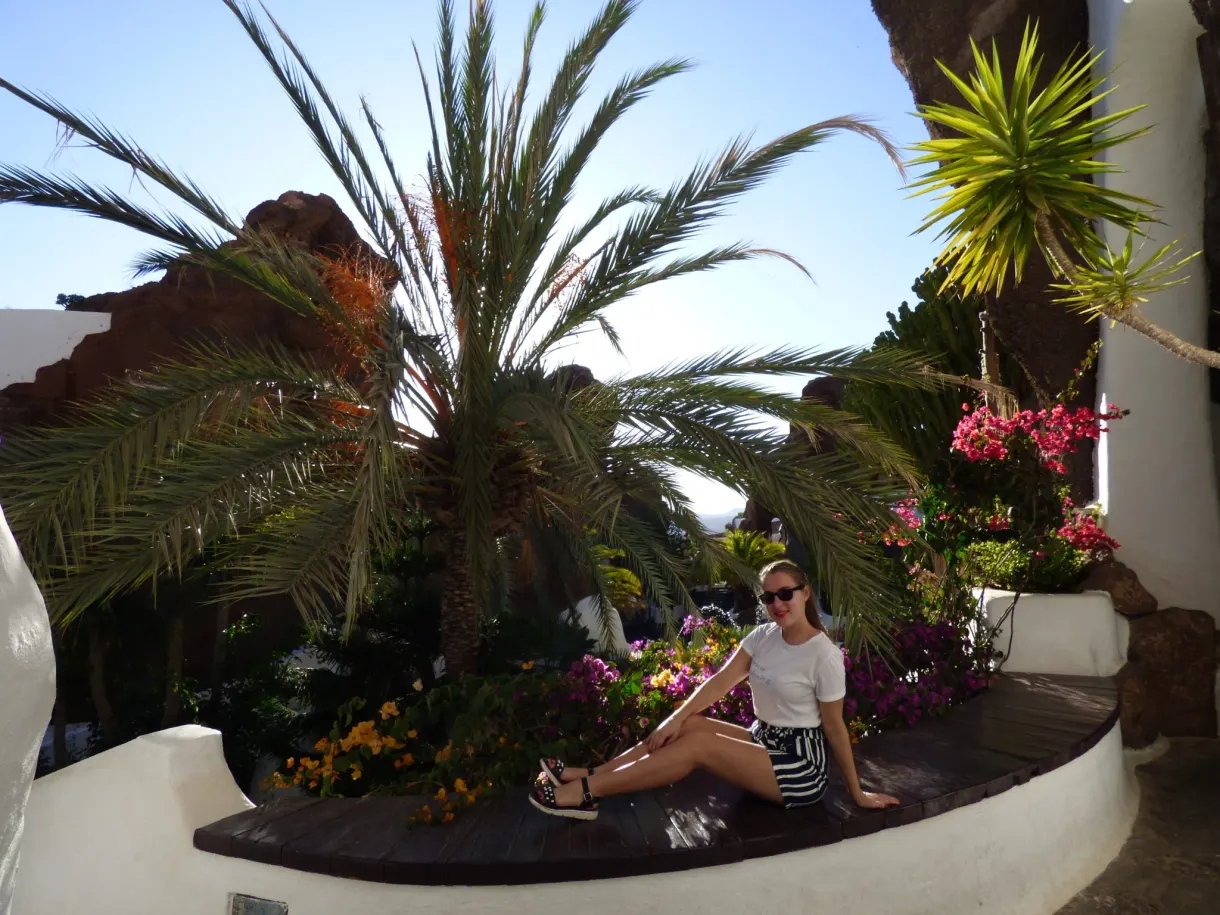
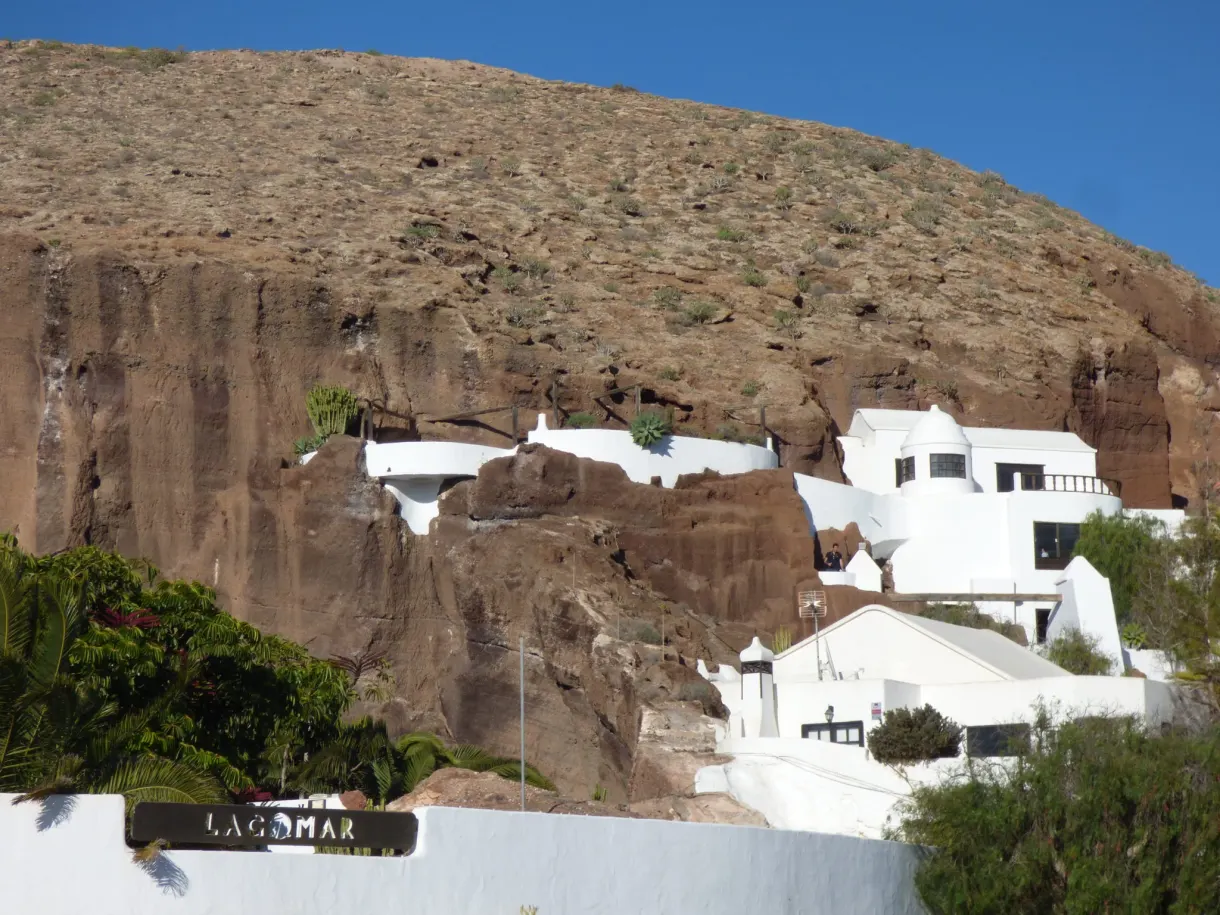
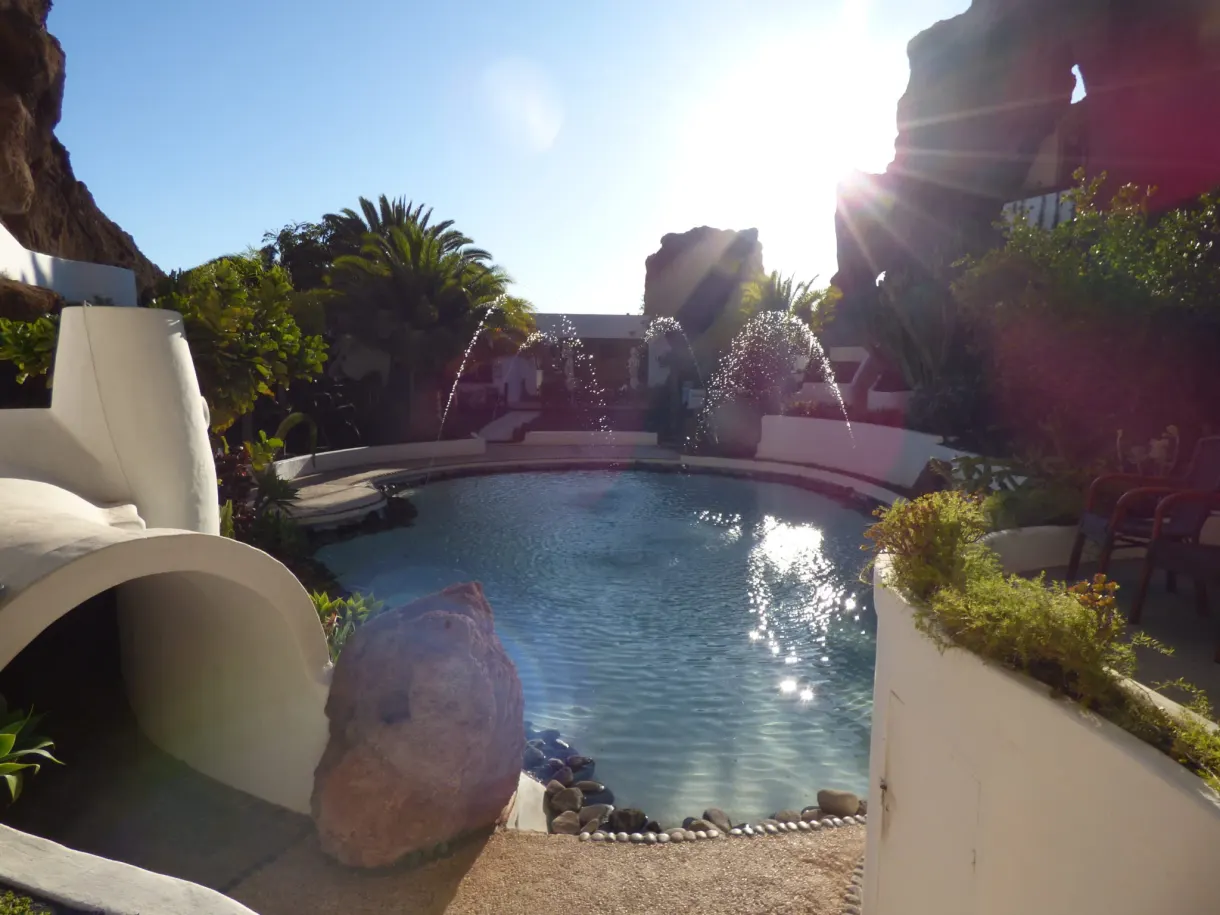
One of the must-see visits in the heart of the island is the LagOmar museum, located in the small village of Nazaret, up on the heights. Entry costs 6€ per person. The villa, designed in part by César Manrique, is built right into the rock, in a volcanic stone quarry. For a few days it belonged to the actor Omar Sharif, who lost it playing bridge. This house is truly impressive for its volumes and its very lush outdoor spaces. Not to be missed!
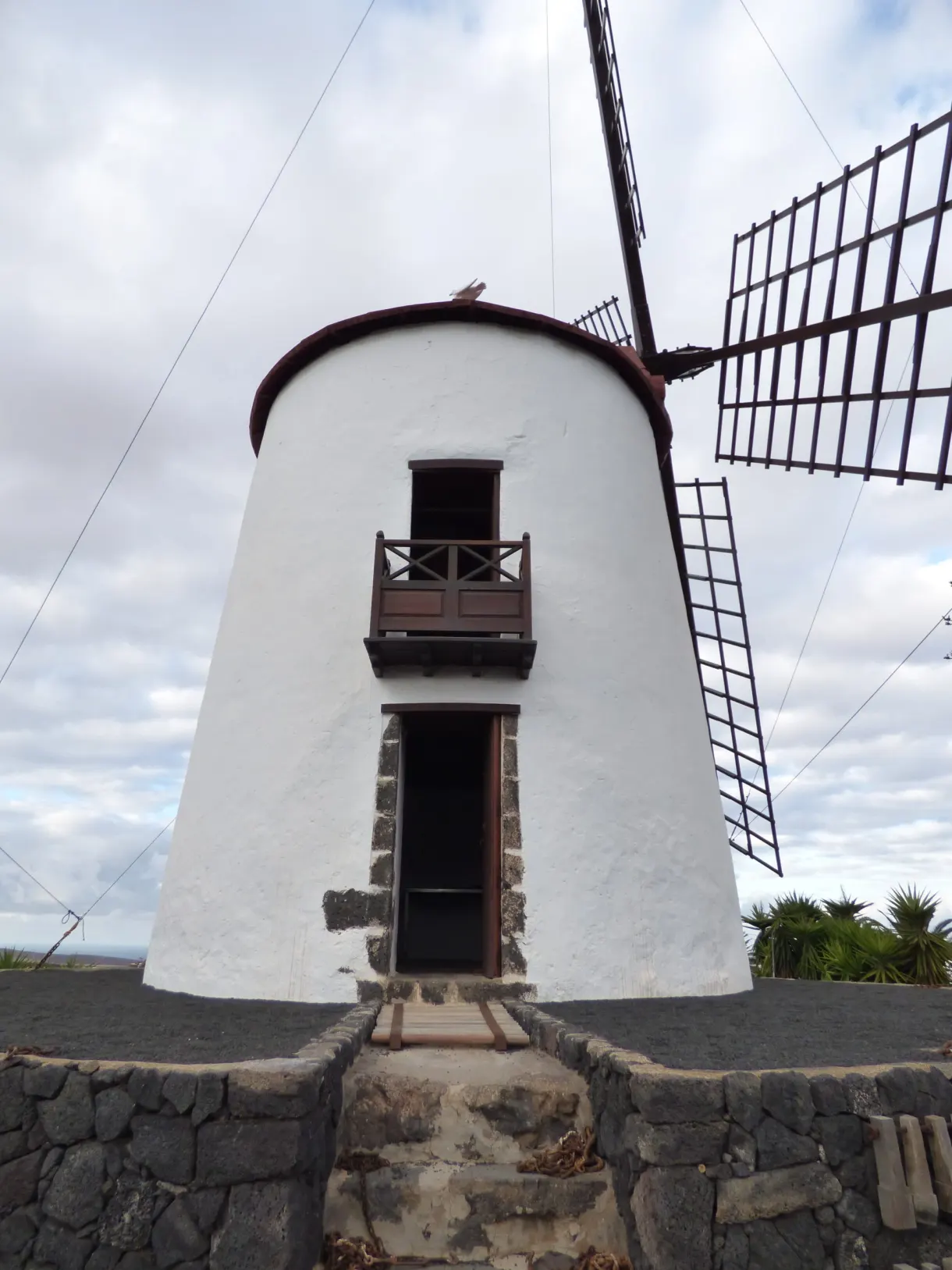
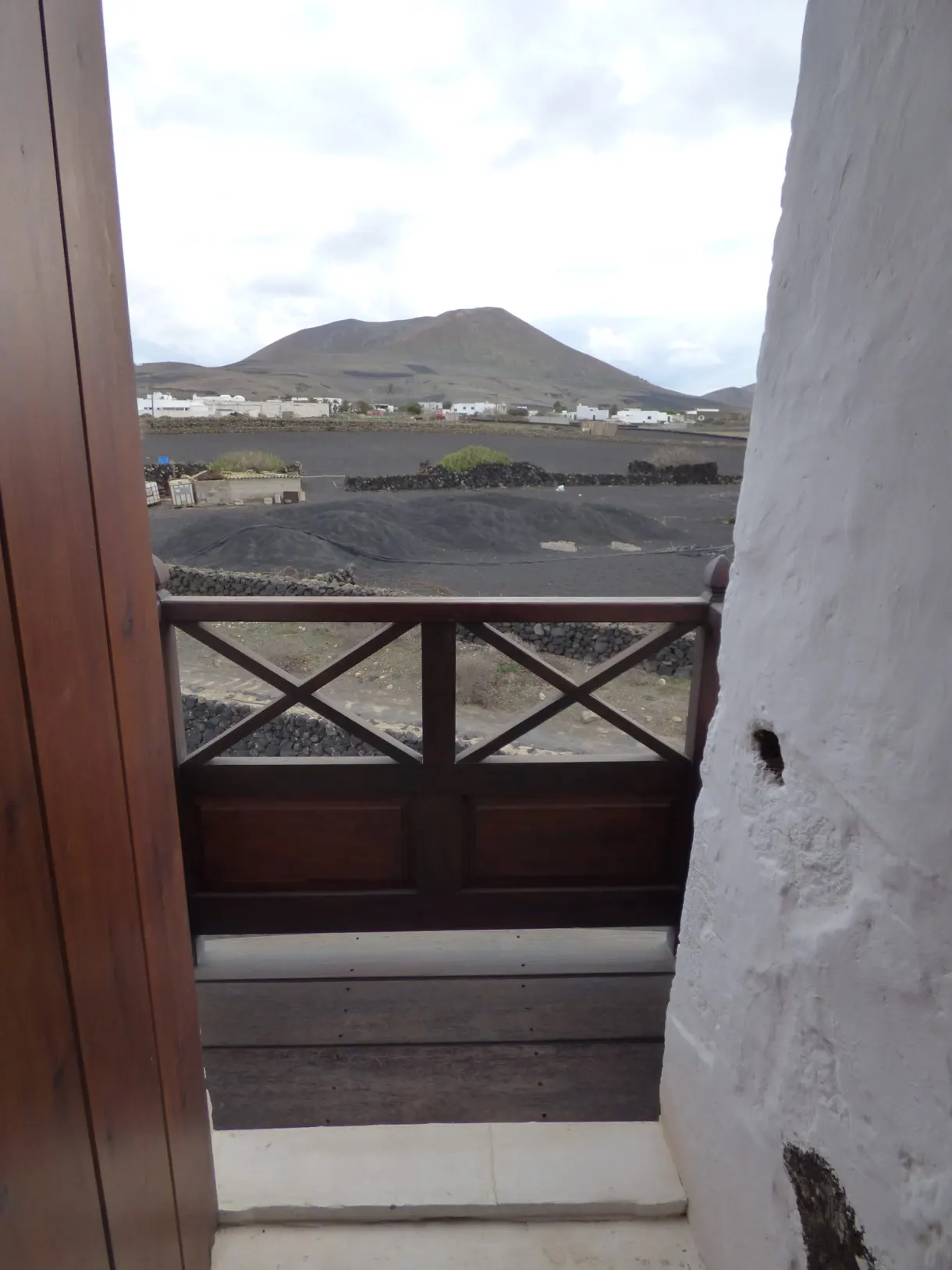
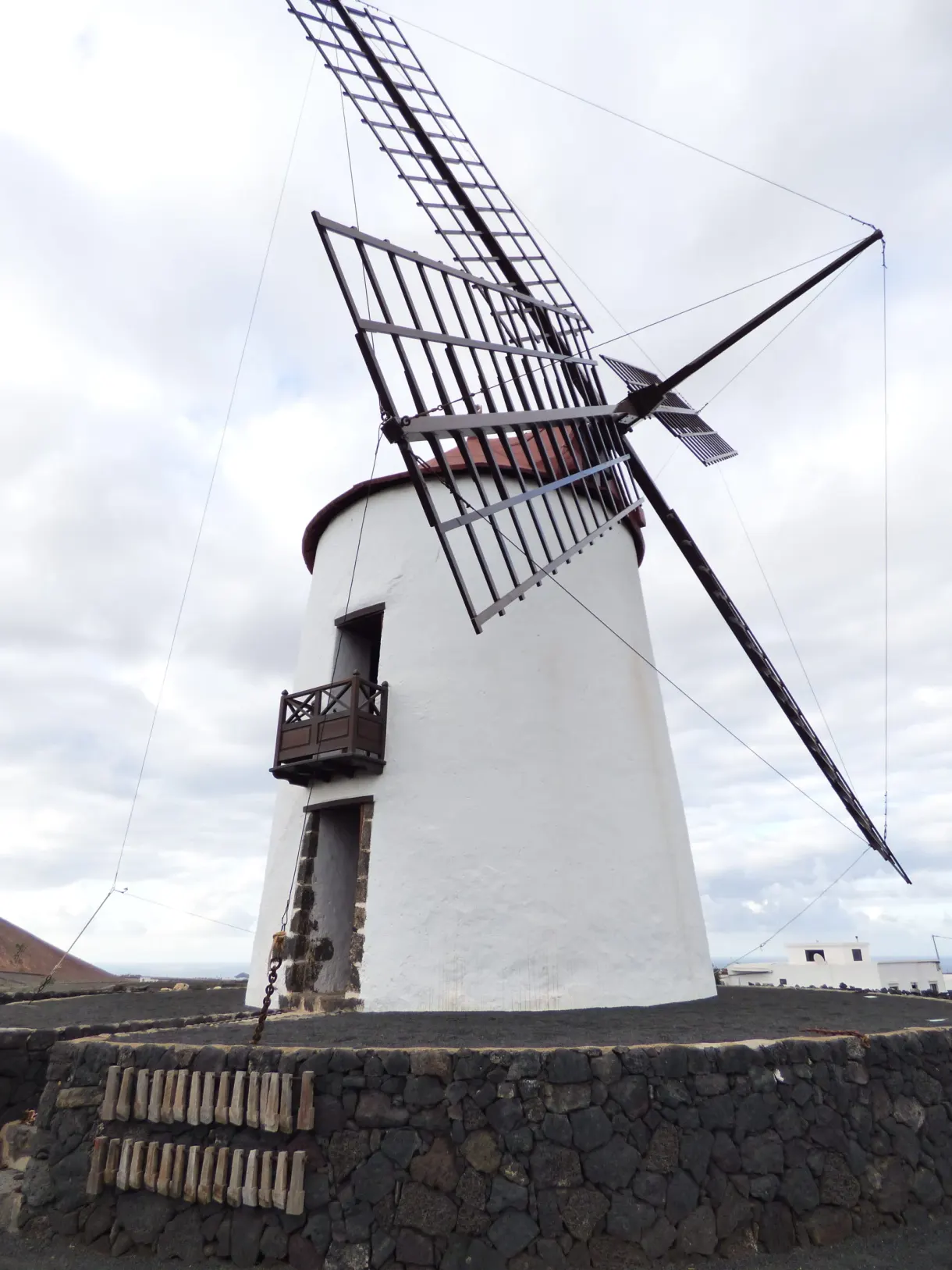
The Tiagua windmill
In the small town of Tiagua, we visited an old windmill, entry to which is free. You can go inside and climb up to the wheel on the first floor. It’s not an essential visit but if you’re coming from Famara beach, you can stop off on the LZ-401.
What to do in the centre of Lanzarote
Horse riding
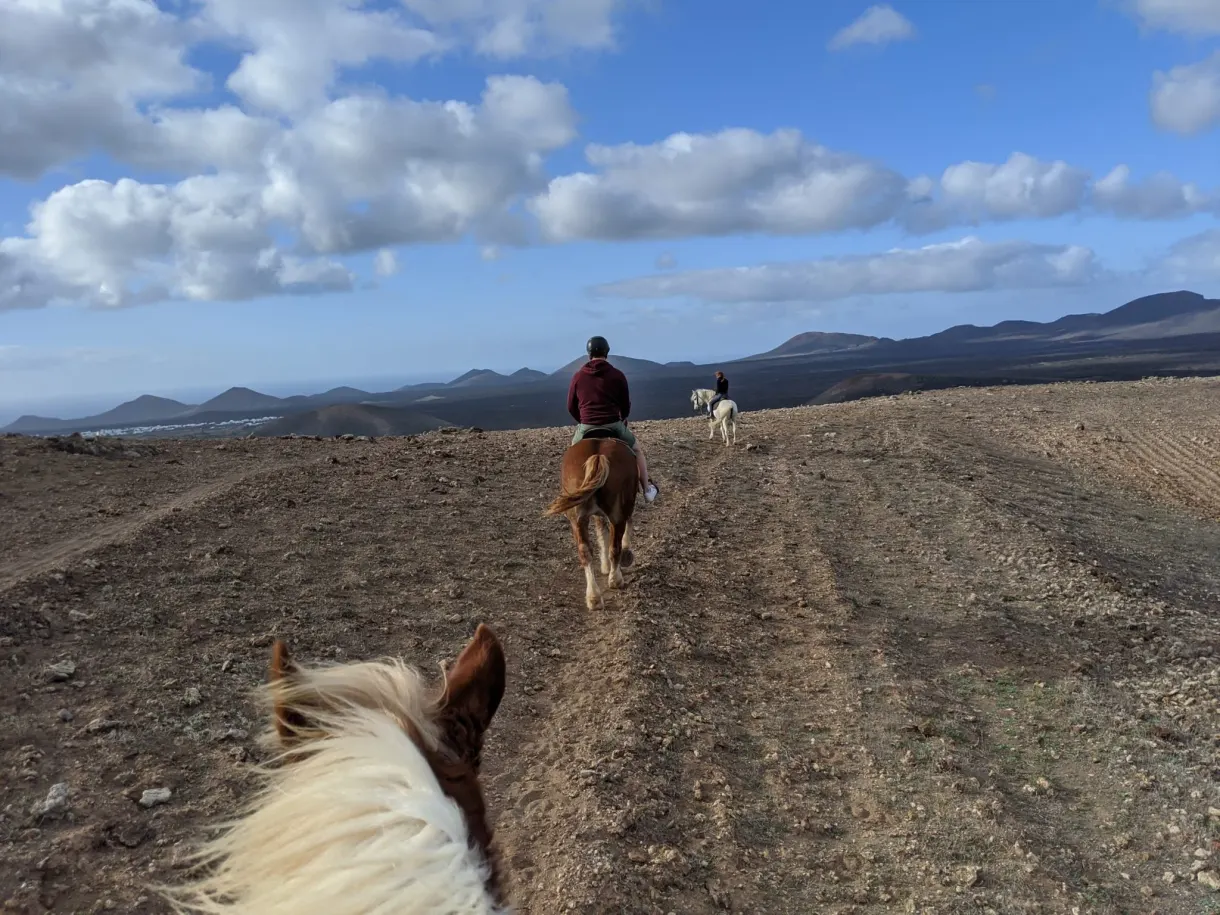
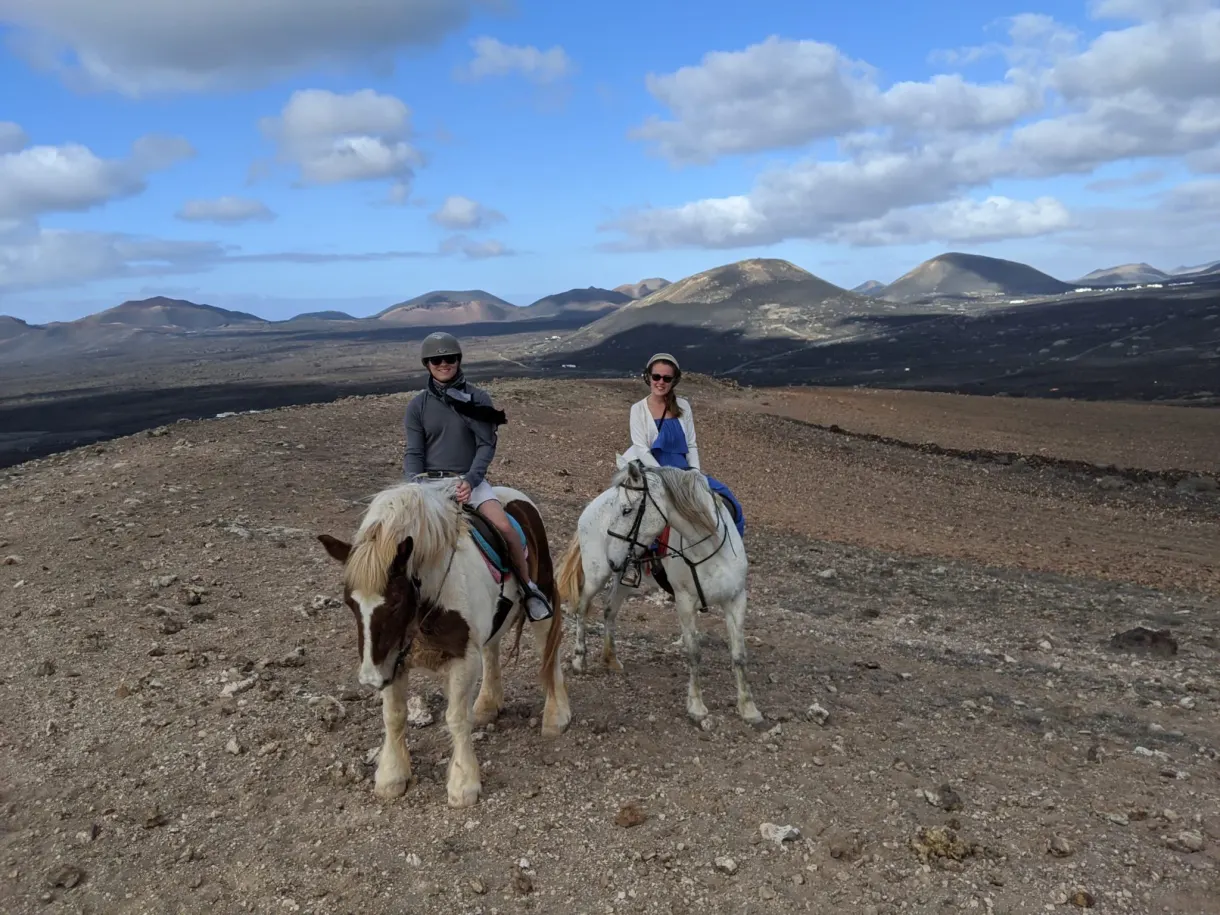
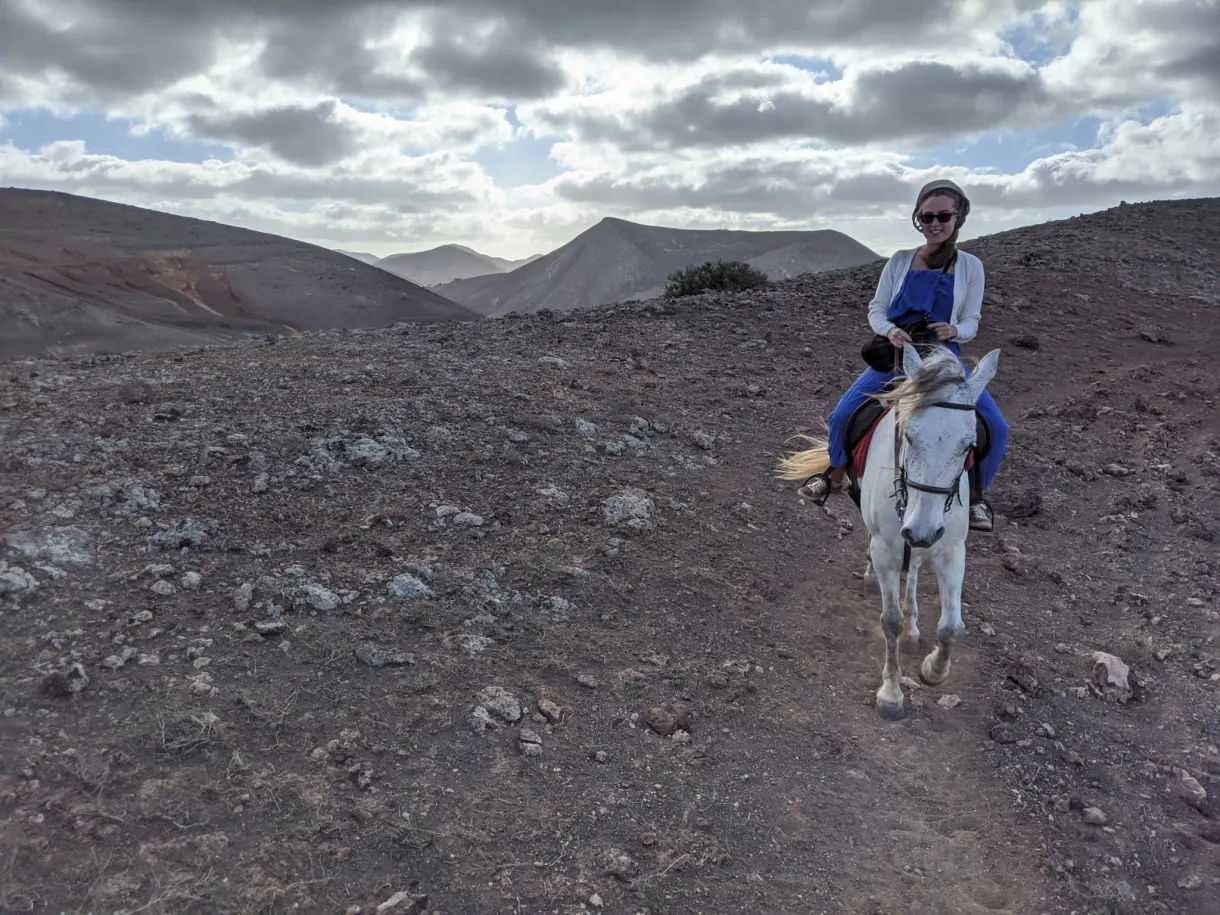
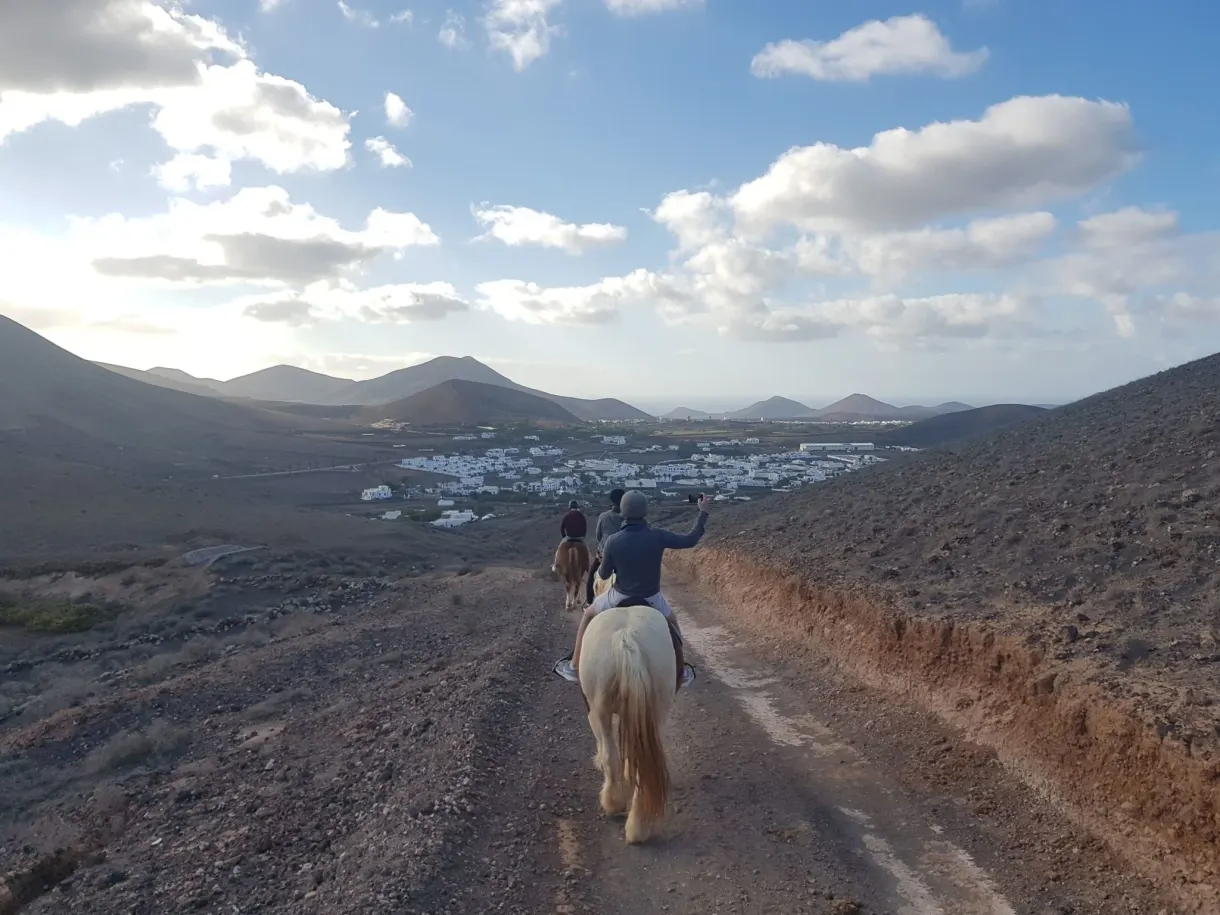
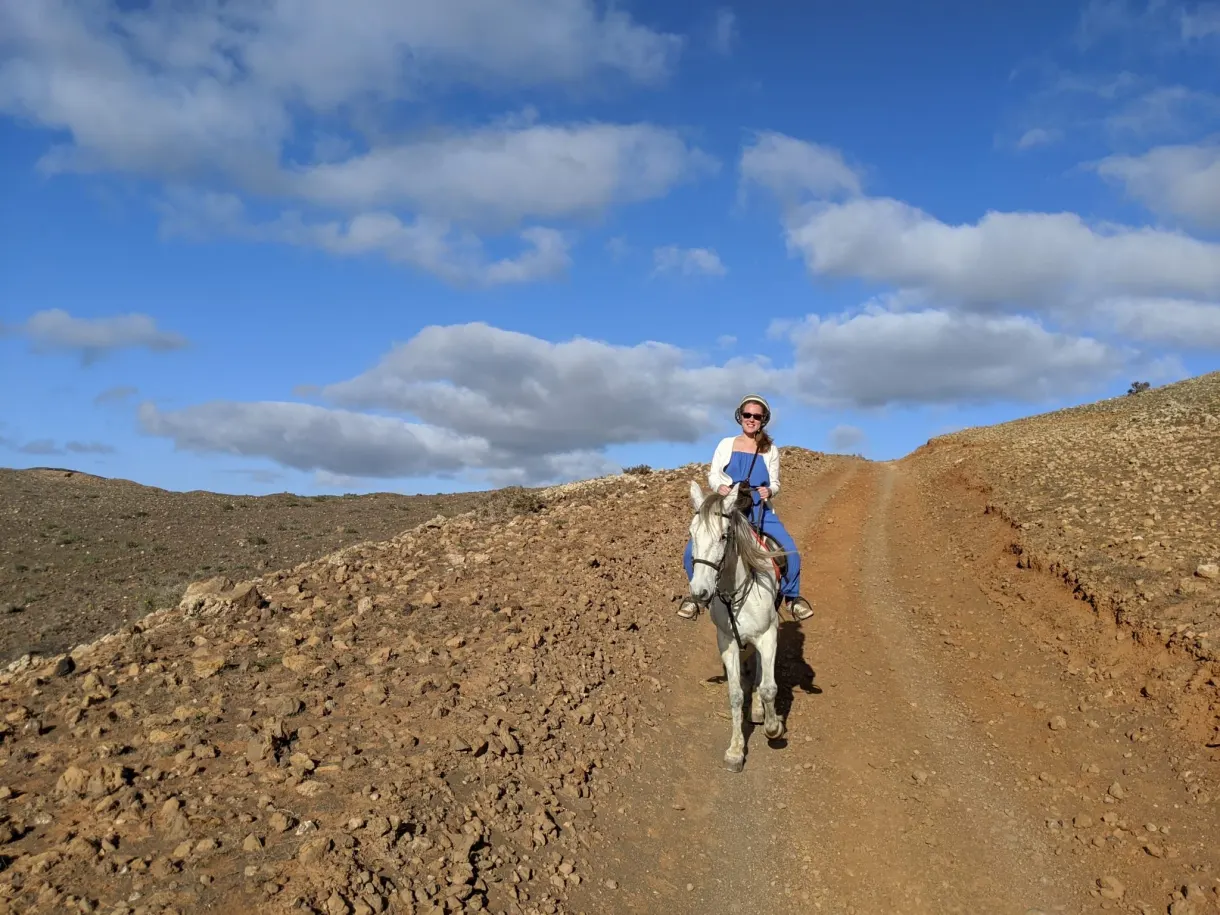
For our second to last day in Lanzarote, we decided to treat ourselves to an activity we had never done together before: a horse ride! So we booked our ride with Lanzarote a Caballo, a ranch on the LZ-2 between Uga and Playa Quemada. We chose the “Route to Mount Tinasoria”, lasting 1h30 (40€ per person). It’s an experience we absolutely loved: we felt like we were travelling differently, in a slower, more authentic way. As always in low season, there aren’t many people, so it was just two couples and the guide on this ride. We highly recommend this place!
Our favourite place to eat in the centre of Lanzarote
- El Patio Creperie: a very good place in Teguise, on a quiet street. We had lunch twice on their terrace, among palm trees and bougainvillea. On the menu, cheese and charcuterie boards, bruschettas, savoury galettes and crêpes… at more than reasonable prices.
What we thought of the centre of Lanzarote
Here again, it’s a region of the island we really liked, especially for the variety of landscapes you can come across! There is so much to see and do between the typical villages, the beaches, the vineyards, the hikes on the volcanoes, the museums linked to César Manrique… the heart of Lanzarote is rich and full of character.
We can only advise you to spend several days criss-crossing this region, without skipping Teguise, the works of César Manrique and of course the volcanoes!
Planning a trip to Lanzarote? Read all our articles about the island!
2 comments
Thank you for your comment! Marie & Romain
Nicole Noël18 April 2020
L’âme rurale du cœur de Lanzarote donne envie de la découvrir , ainsi que l’expérience de rentrer dans le volcan . Les vignes dans les trous creusés au milieu de la lave doivent être assez typiques . Quant à la Casa museo del.Campesino et le musée Lagomar , les photos magnifiques donnent envie de les visiter
Marie18 April 2020
La région de la Geria est véritablement un incontournable à Lanzarote : les vignes valent le coup d’être vues; c’est certain ! 🙂
Reply