A week in Istria (Croatia)
For this summer of 2021, we had planned a road trip in Slovenia and Croatia, more precisely in Istria, that triangle-shaped region at the far west of the country.
For this summer of 2021, we had planned a road trip in Slovenia and Croatia, more precisely in Istria, that triangle-shaped region at the far west of the country. It was the first time we had come to Croatia and we couldn’t wait to discover this more authentic region, a little less known to the French than Dalmatia or the southern islands.
After picking up our rental car in Koper on the Slovenian coast, we took the road south towards Croatia. For the border crossing, we didn’t wait very long because we simply had to show our passports from the car.
On the itinerary side, it all depends on where you arrive in Istria. If like us you come by car from Slovenia, the wisest thing is to start by visiting the whole north of Istria and to work your way down gradually towards the west and east coasts. If you arrive by plane, the airport that serves the region is in Pula, the main town at the far south of Istria: you will therefore have to start with the southern tip and head back up towards the western coast and inland Istria. Follow the guide!
What to see in Istria
Inland Istria: the land
Buje
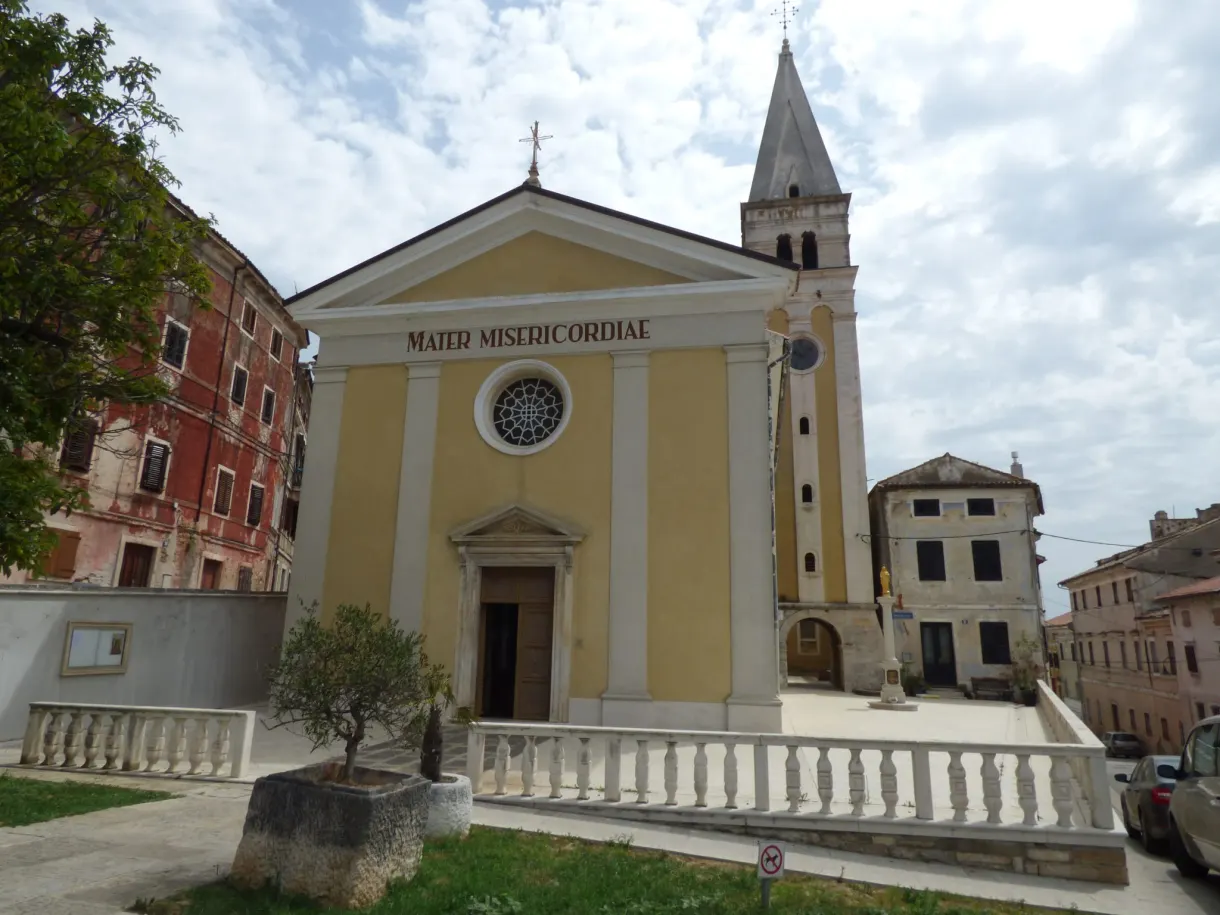
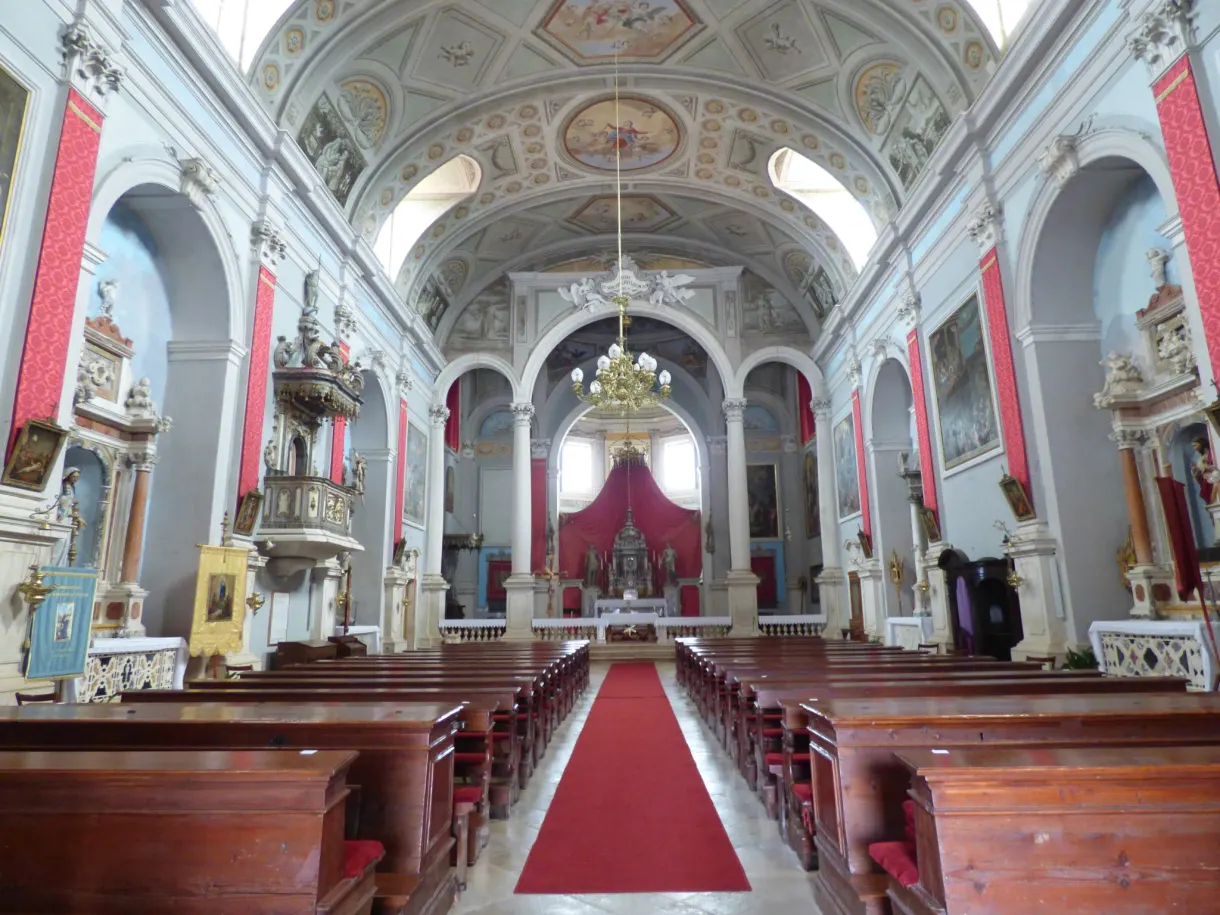
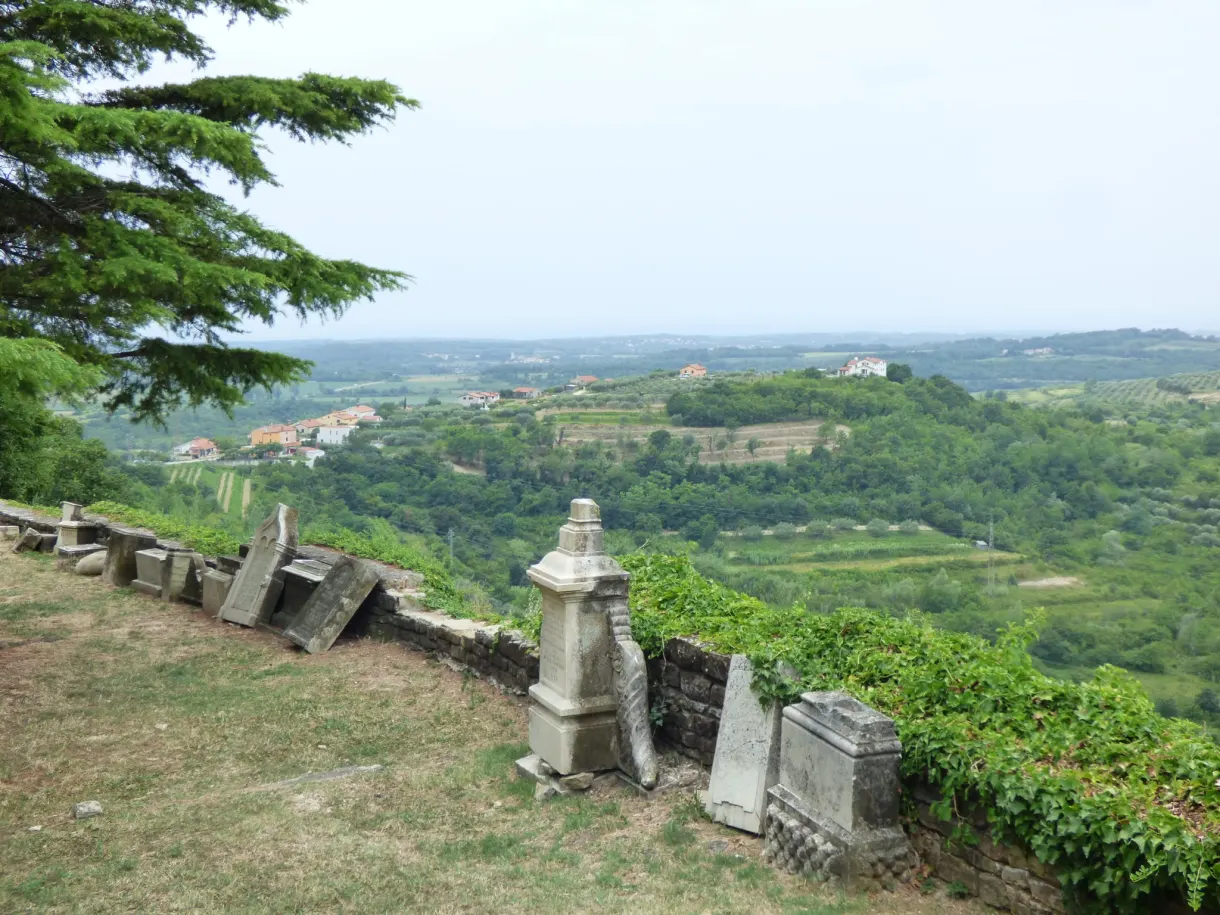
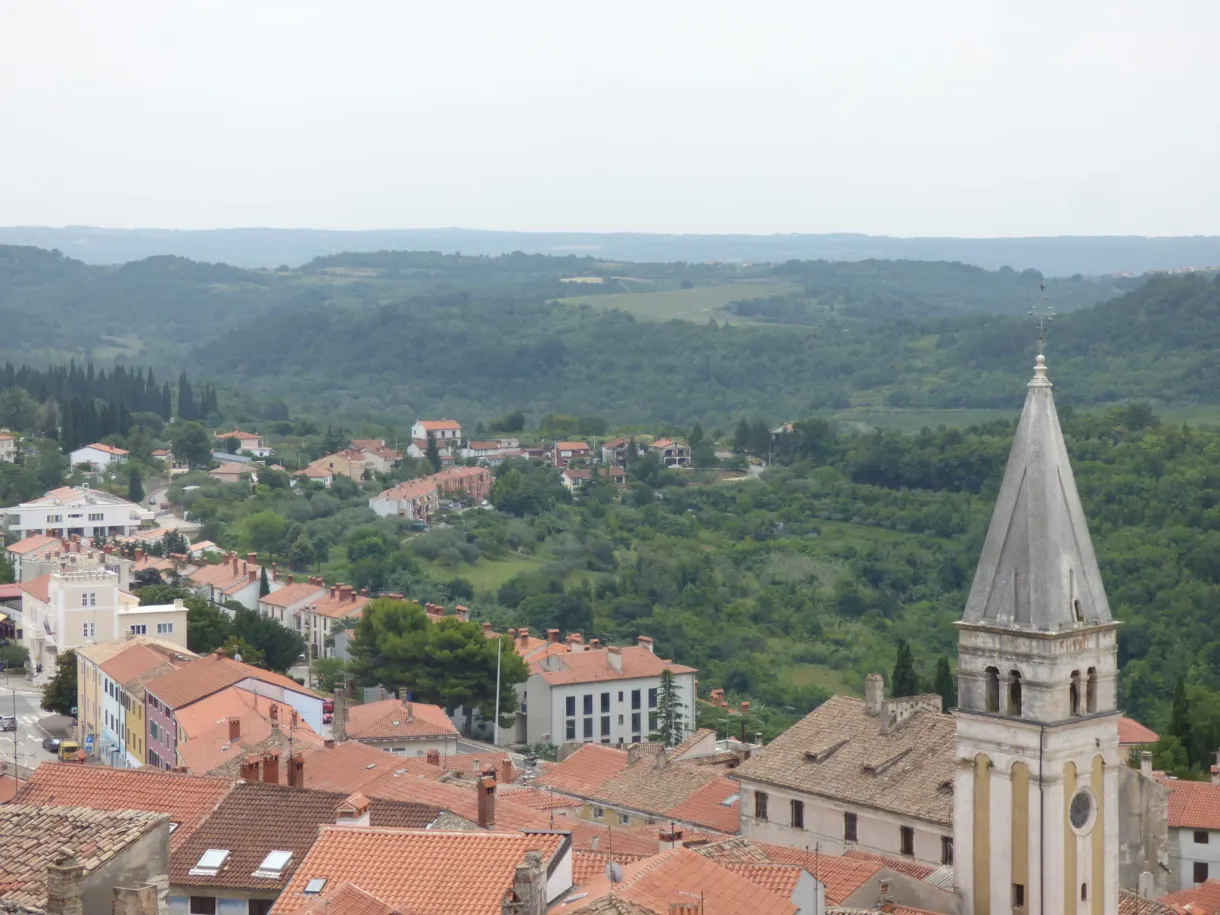
First stop on our arrival in Croatia, the little village of Buje sits right at the north of the Istria region. There was not a single tourist, so we were literally alone walking its cobbled lanes! Buje is tiny and all the points of interest are concentrated in the upper town: the church (nicely decorated inside), the bell tower (which we climbed to the top of), the viewpoint and the military cemetery.
Grožnjan
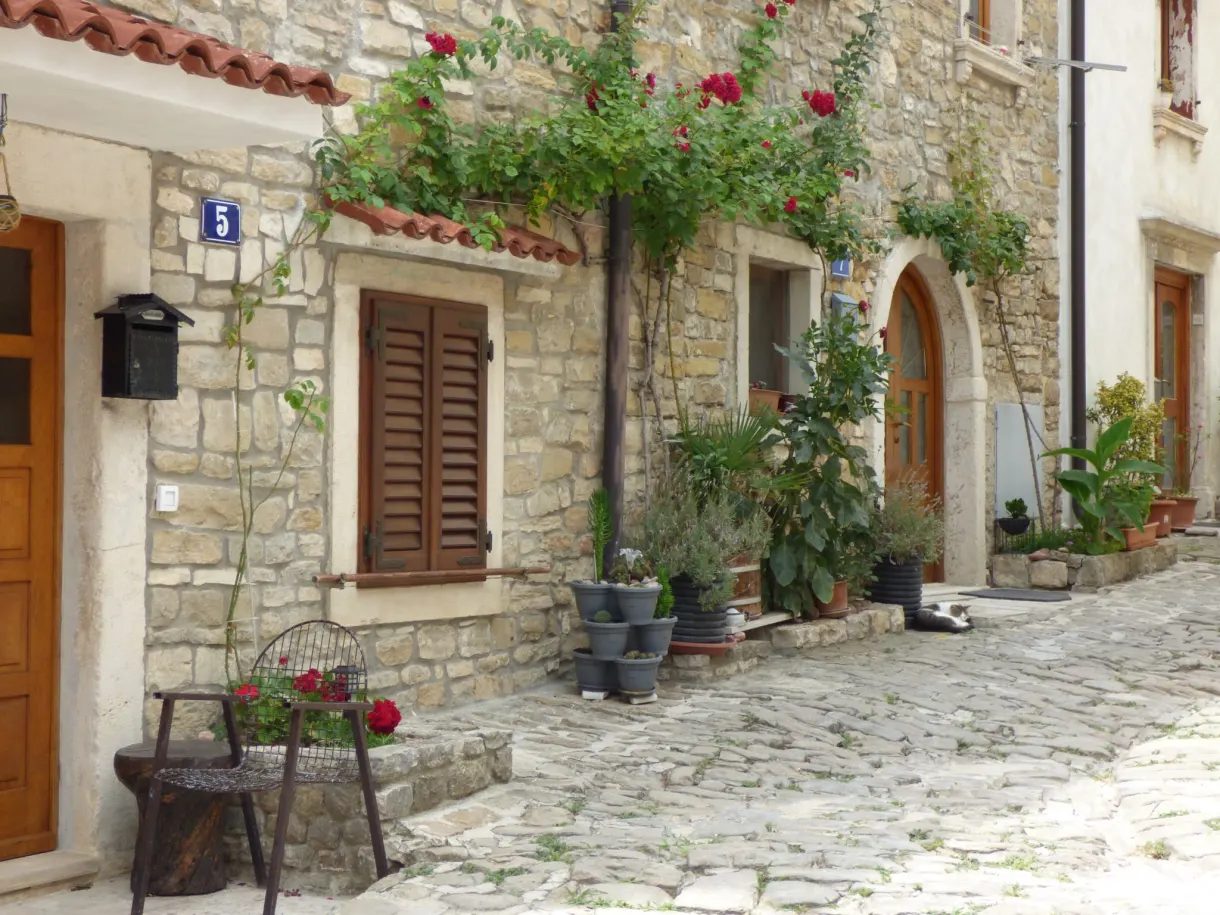
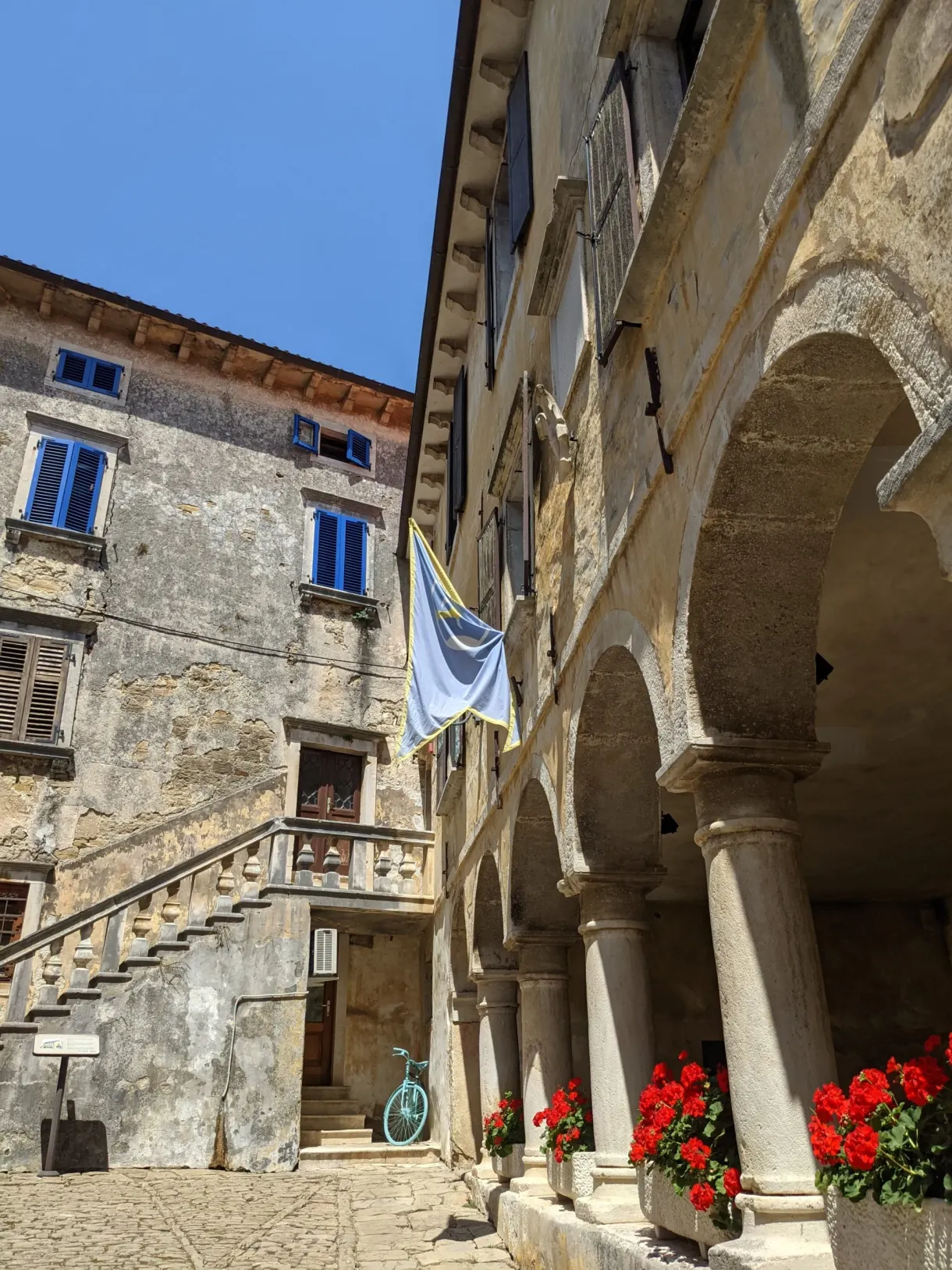
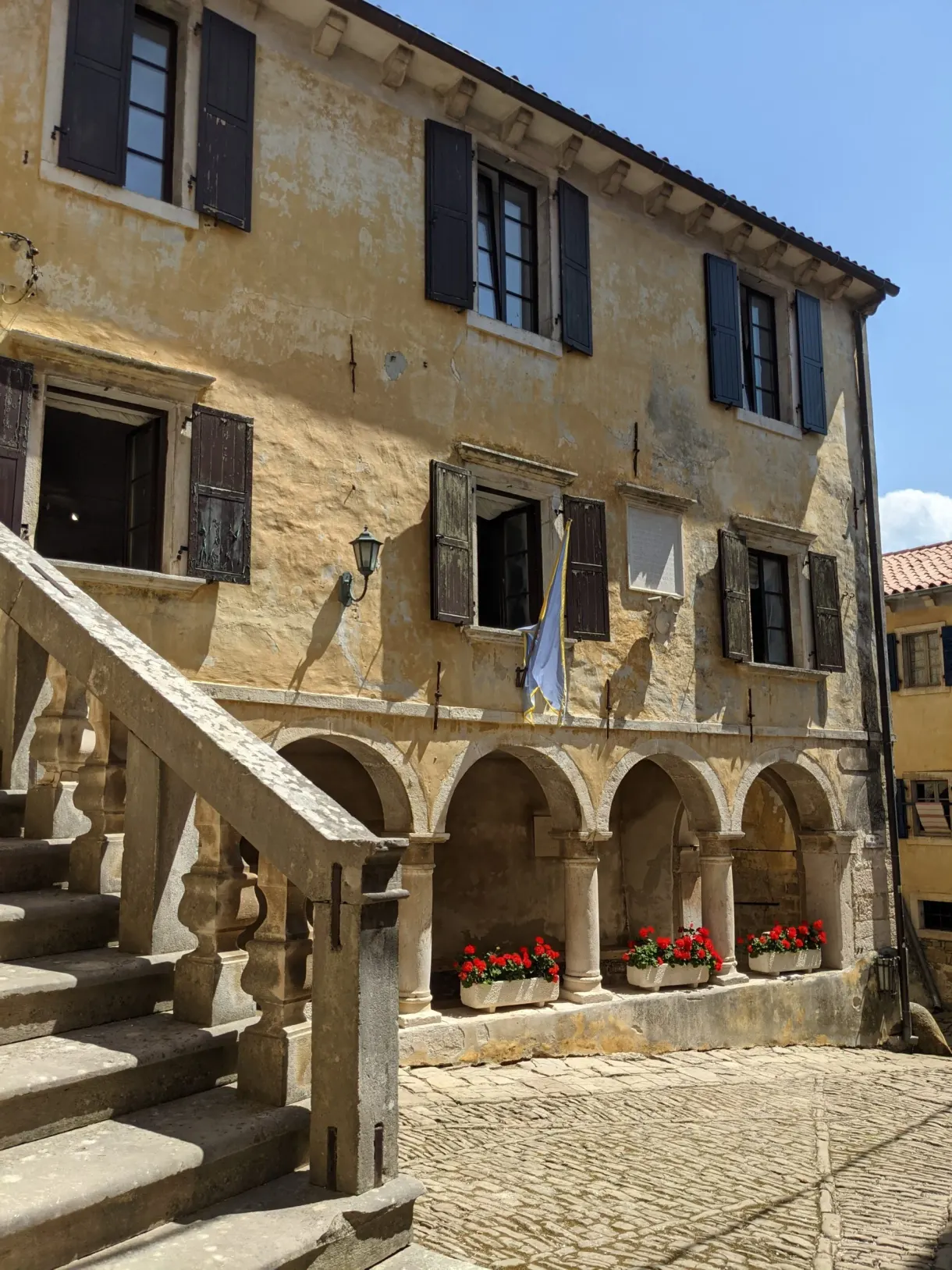
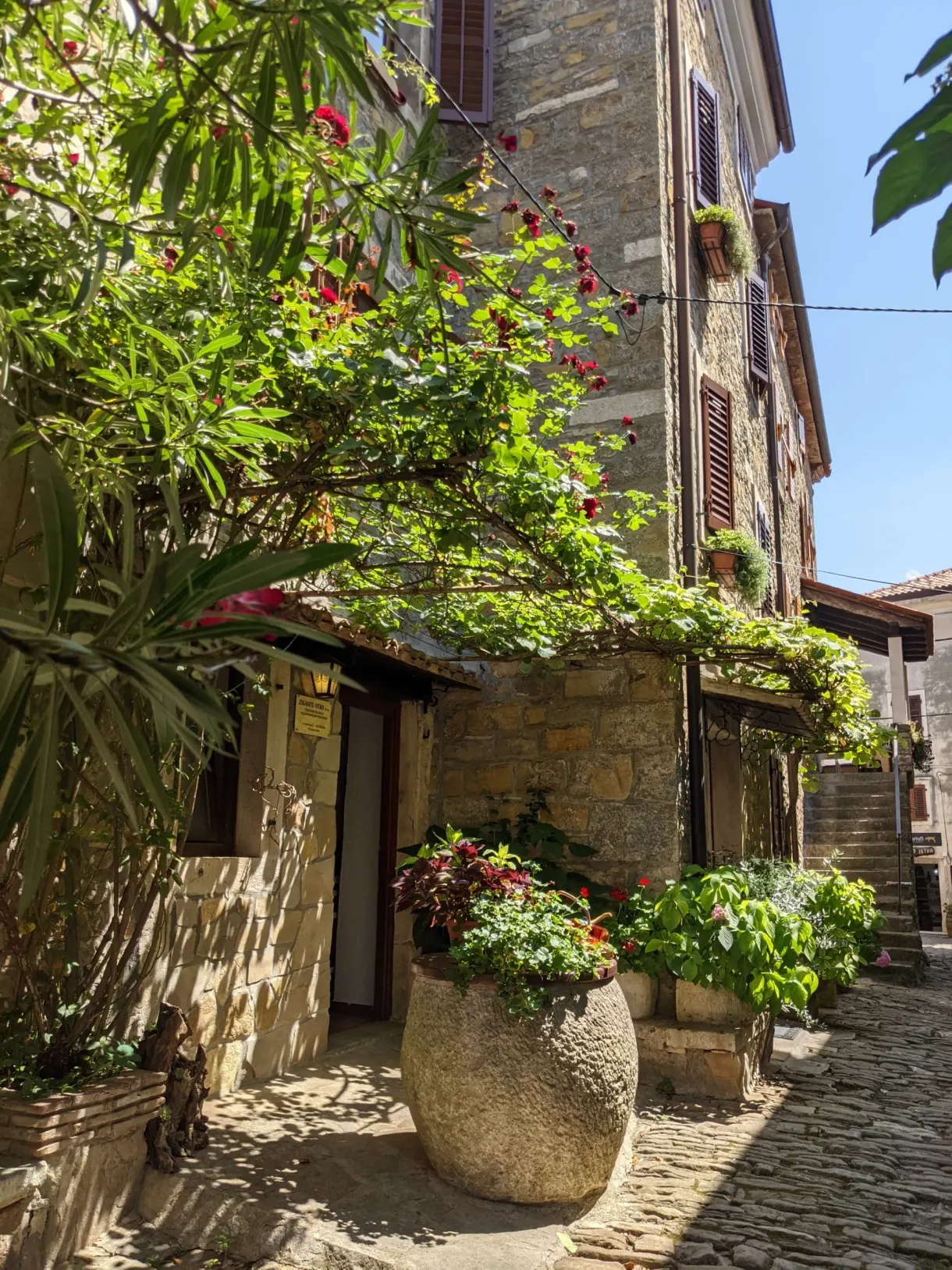
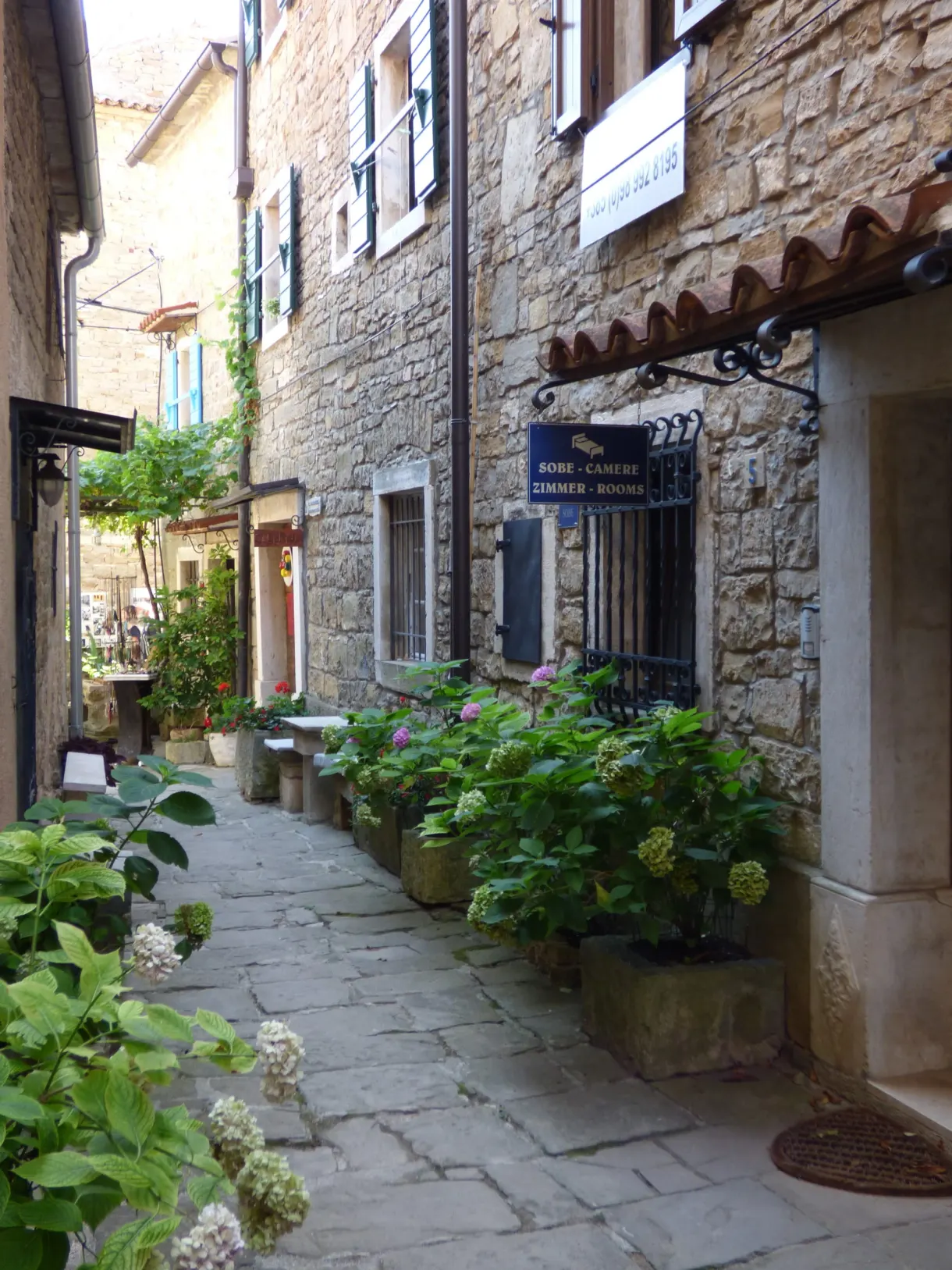
Grožnjan was one of our favourite villages in inland Istria: it reminded us enormously of a Provençal village in the Luberon because of the stunning view over the green hills, the narrow cobbled lanes and the stone houses.
Oprtalj
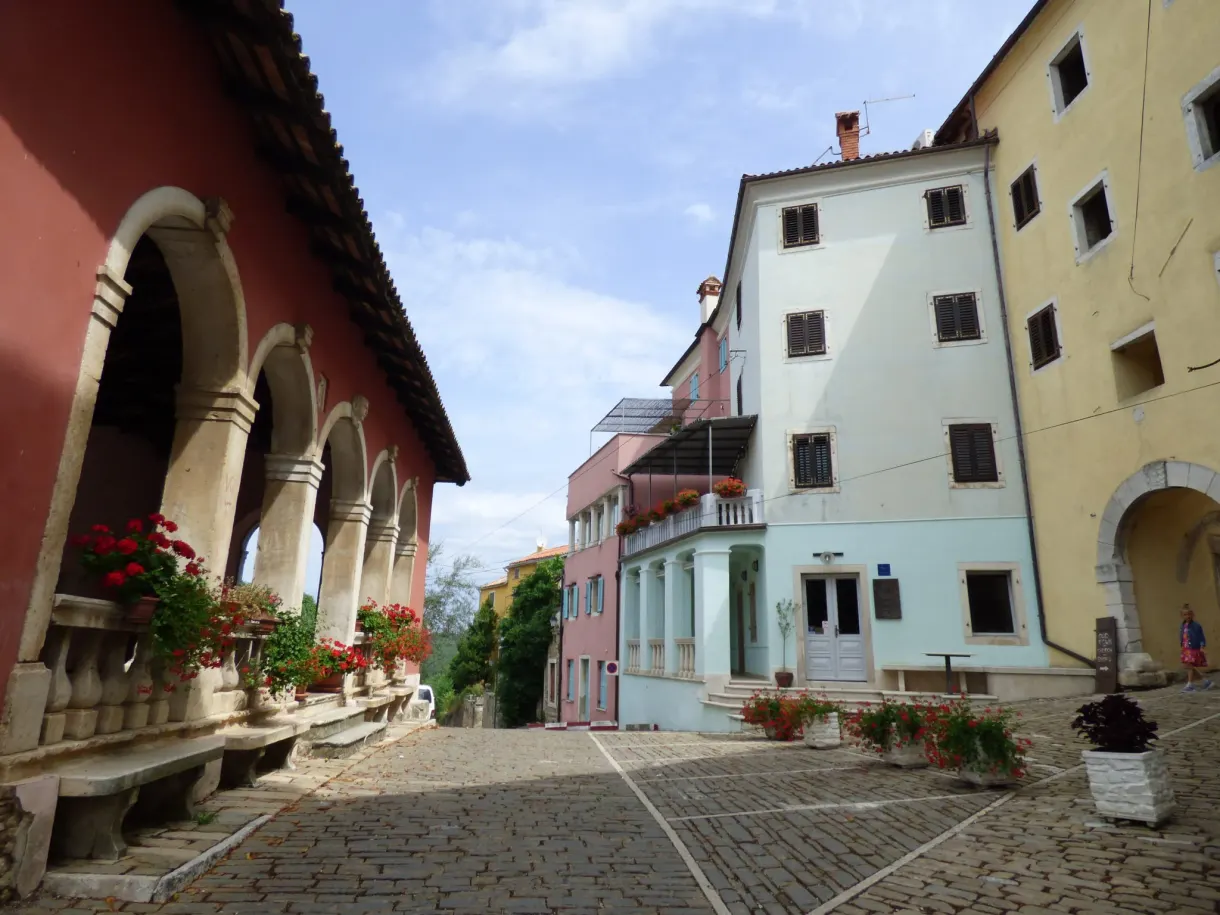
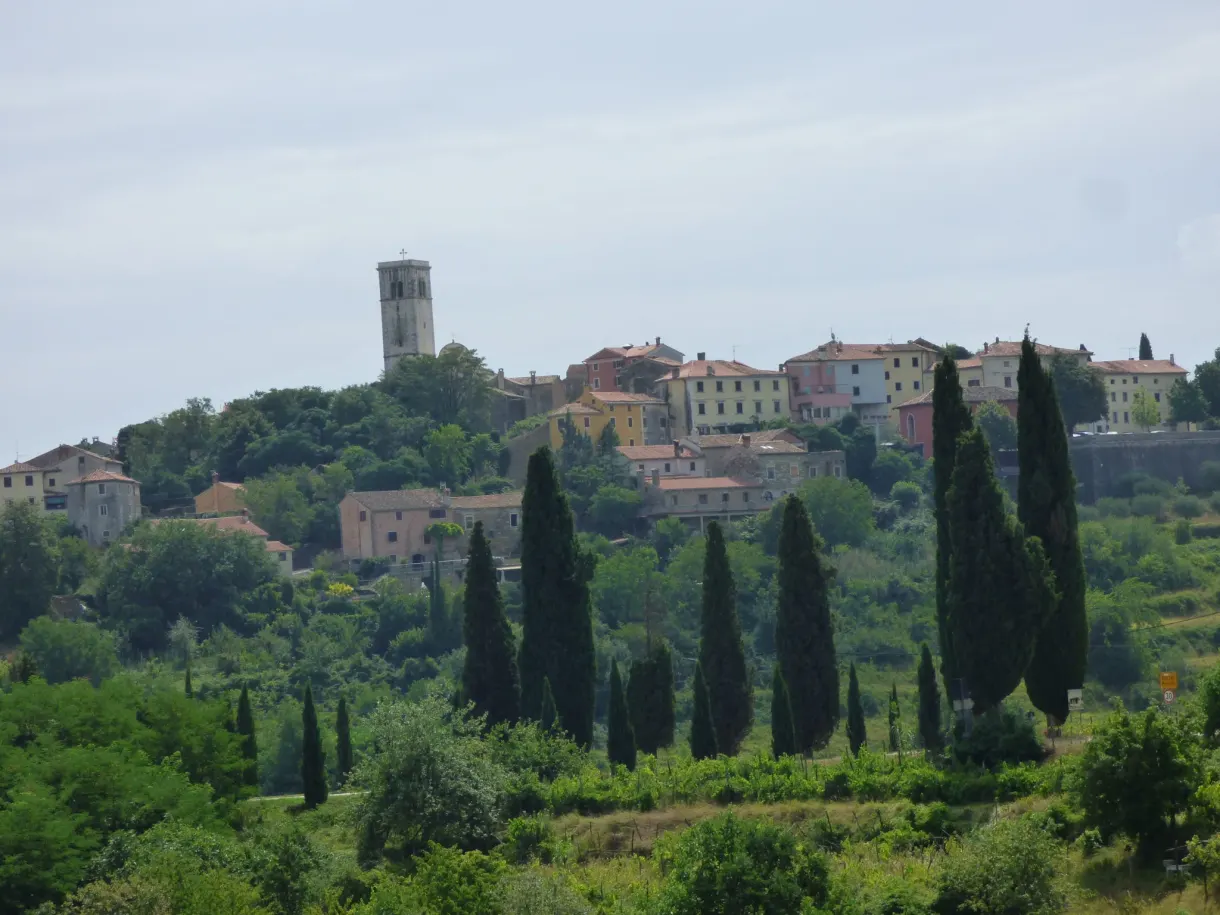
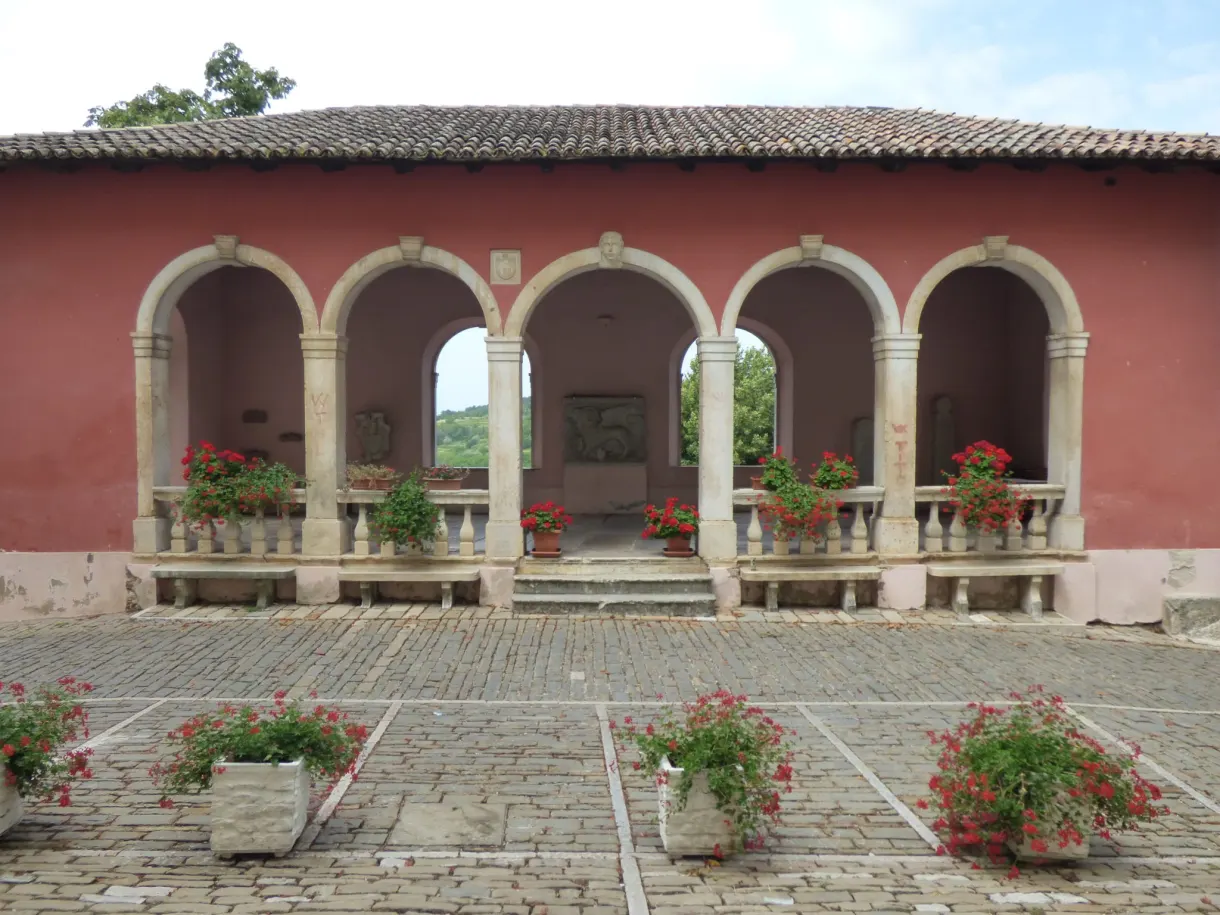
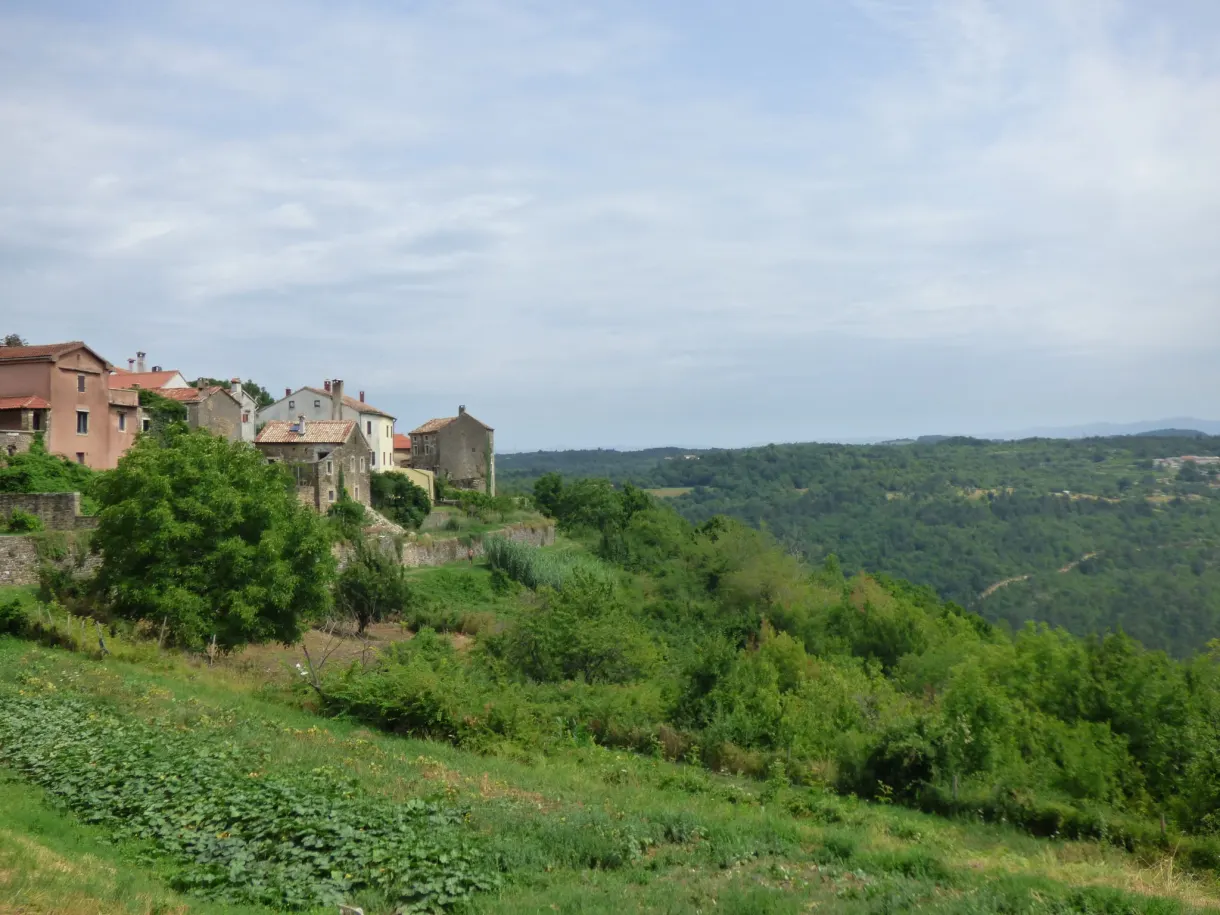
Oprtalj is a small hilltop village in the north of Istria, very pretty to admire from a distance on the road when you come from Sterna. This is not where you will run into tourists, we were alone during our visit! The village has kept a few old monuments such as its loggia or its church, but unfortunately more than half of the houses are abandoned once you go deeper into the lanes.
Motovun
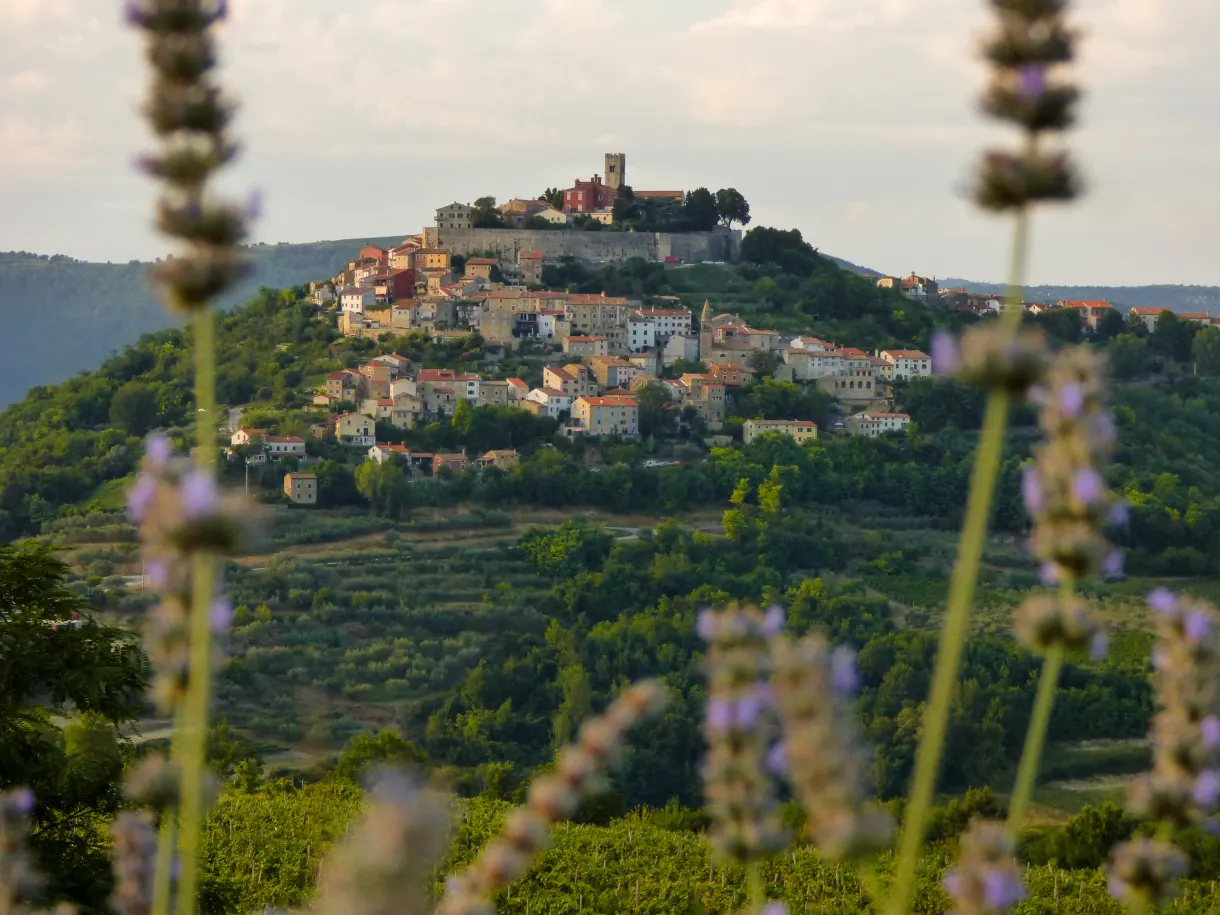
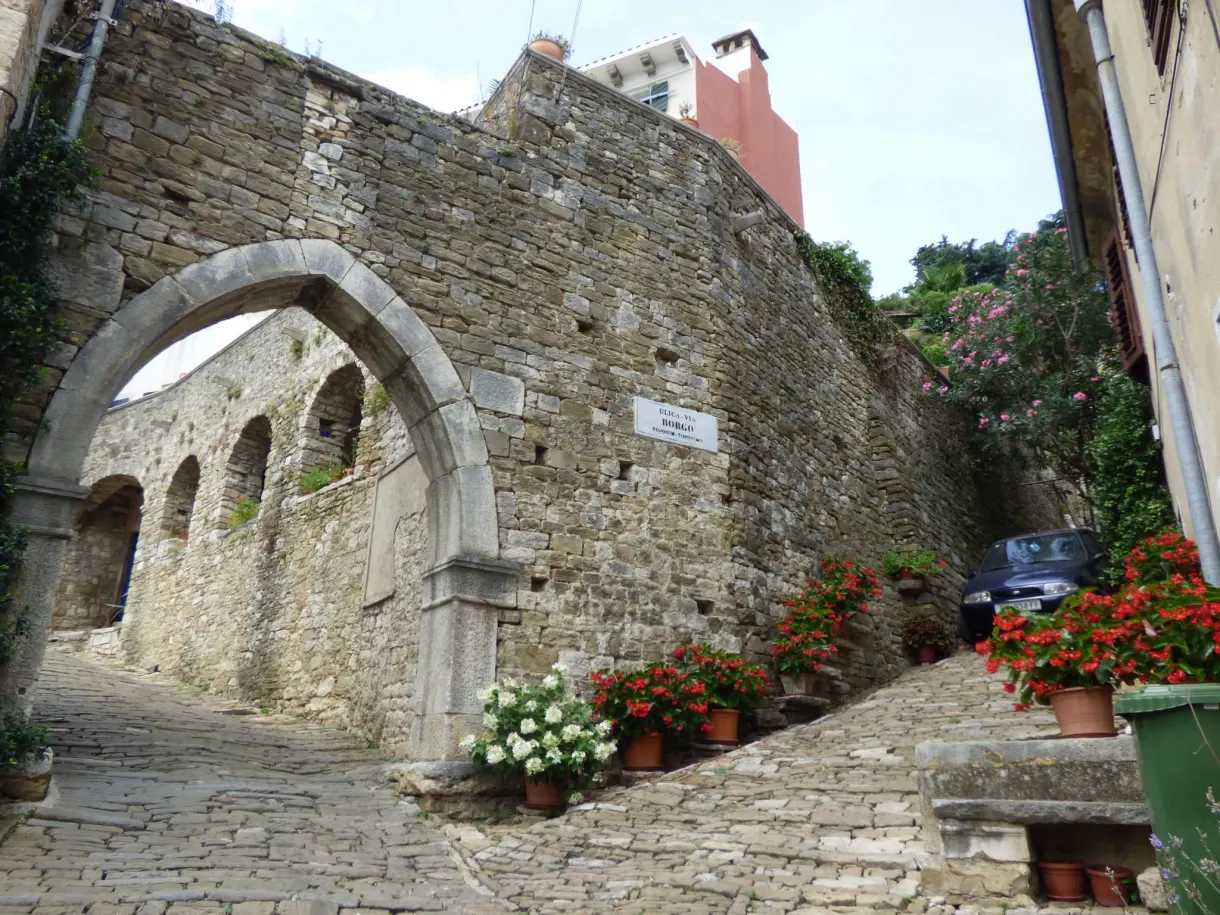
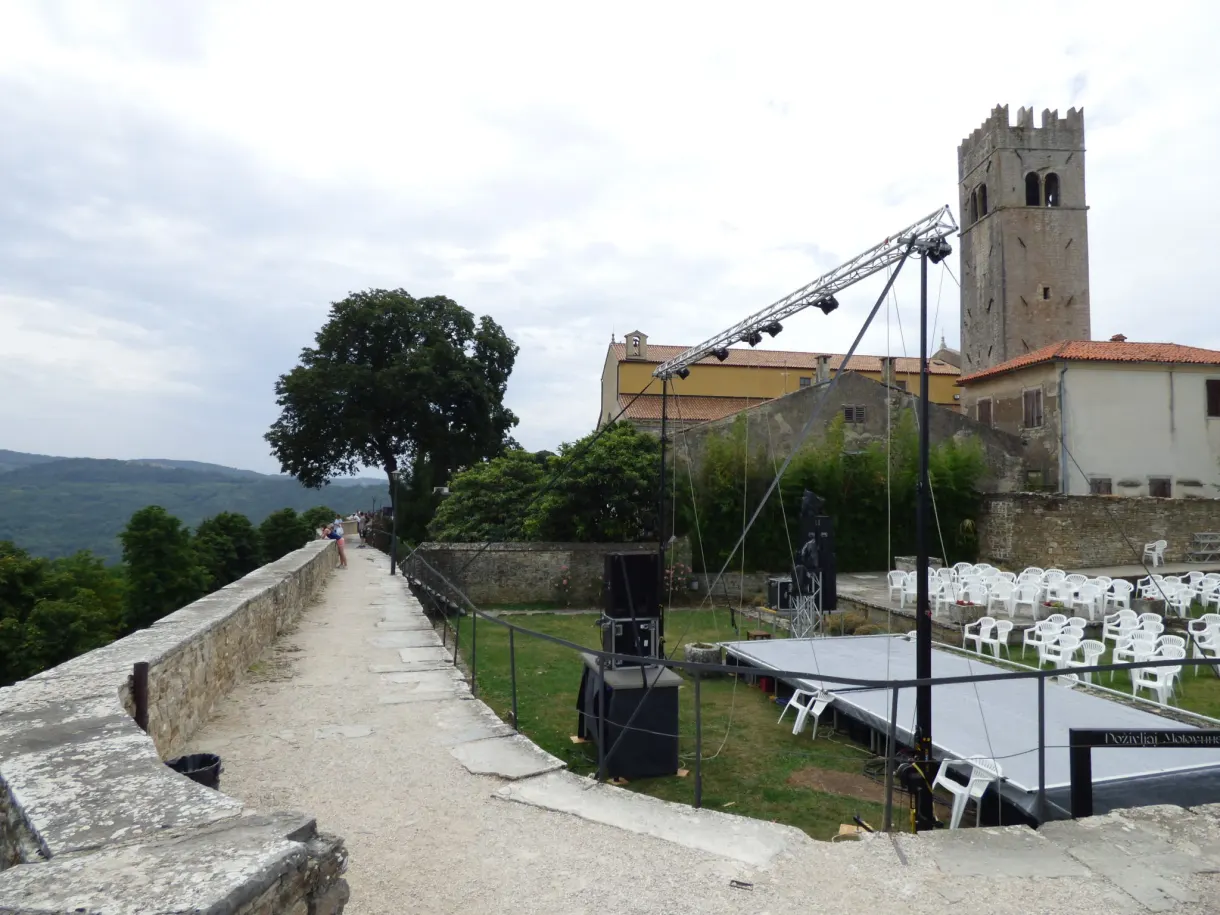
Motovun is one of the best known and most touristy villages in Istria. We visited it in very hot, stormy weather and one thing is certain: the climb is very hard in the heat! The slope up to the top of the village is very steep and the cobbles slippery. We got a cool drink from a seller of smoothies and fresh juices (Merlin juices, cash only), opposite the loggia, after doing the walk around the ramparts to get a lovely view over the region.
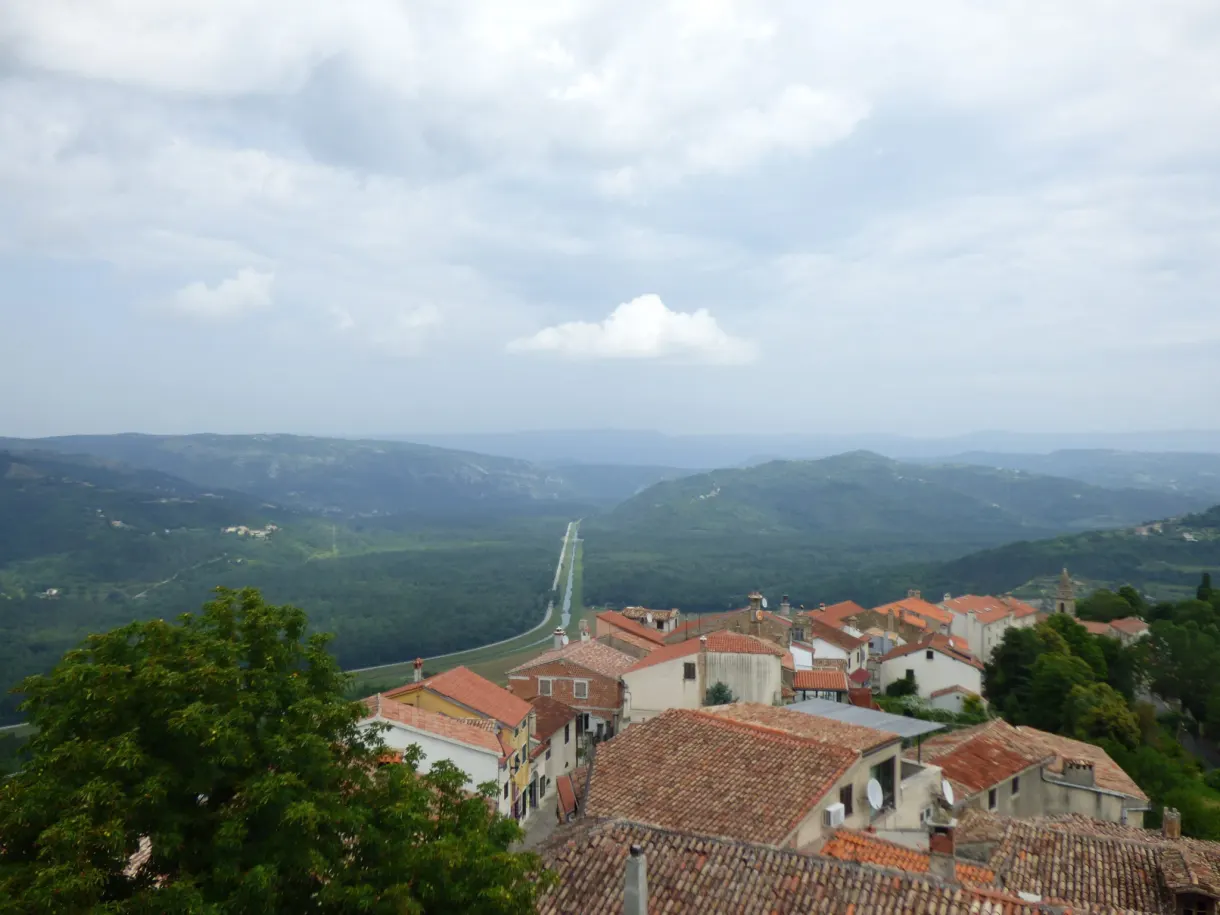
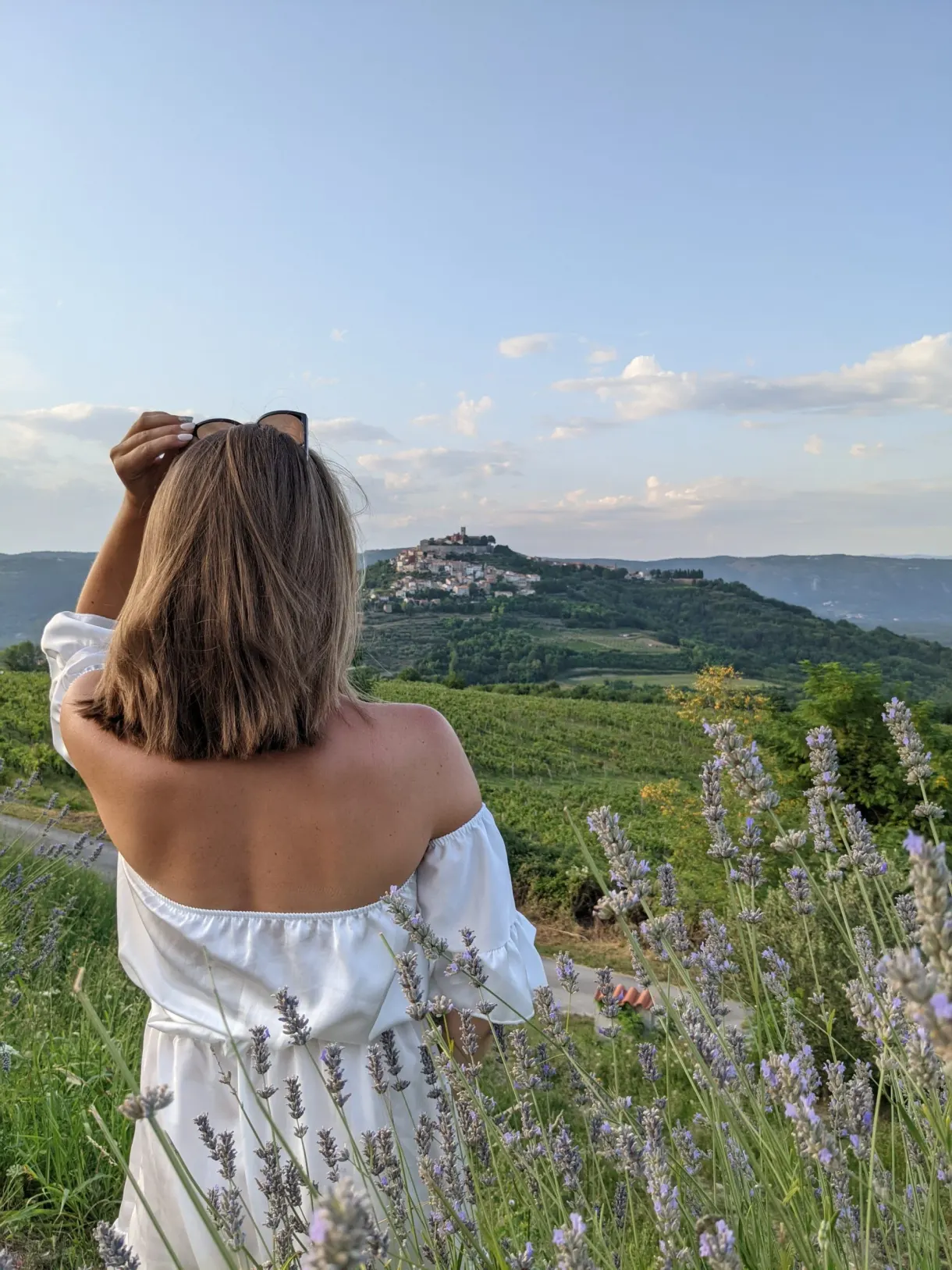
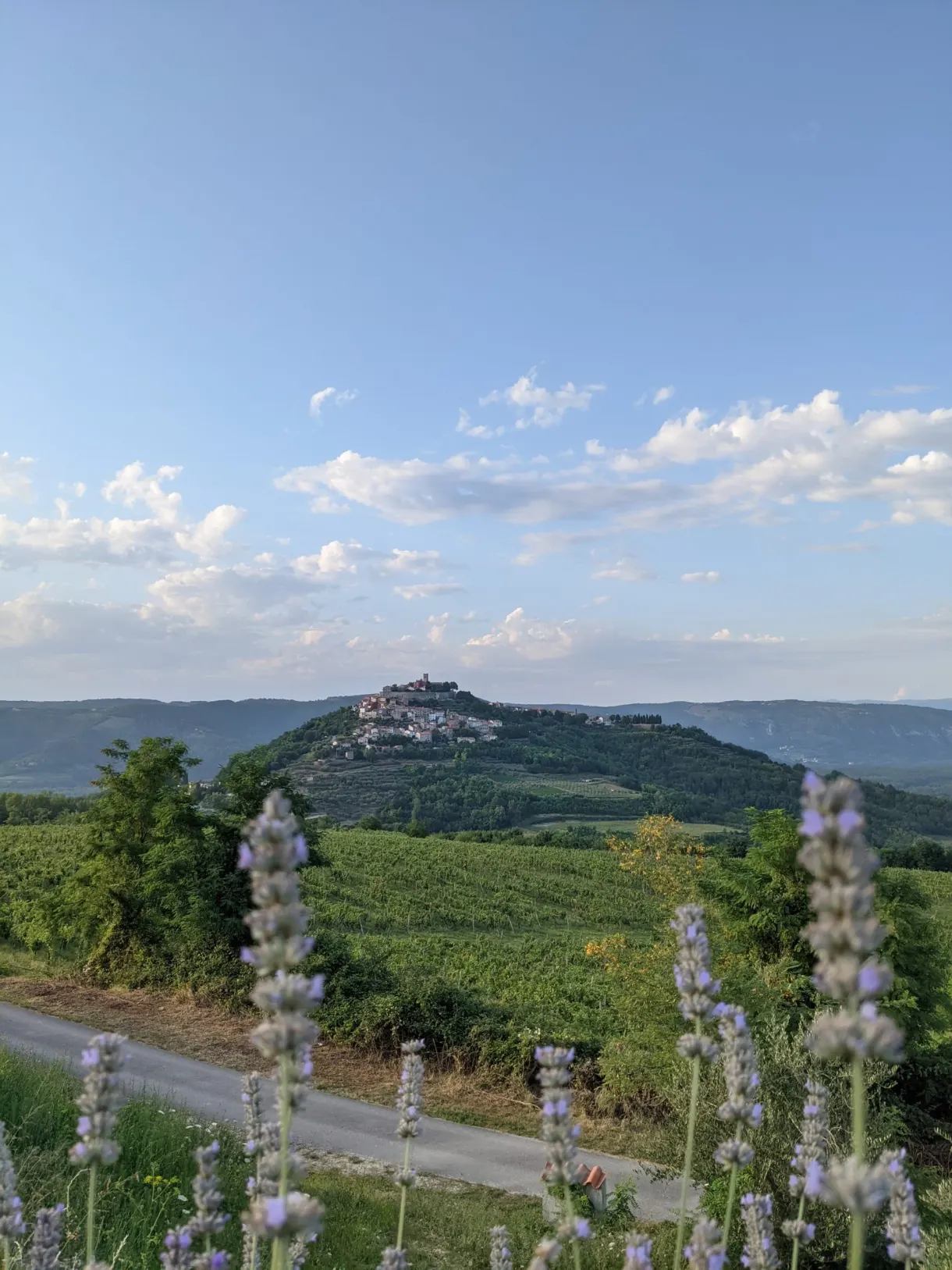
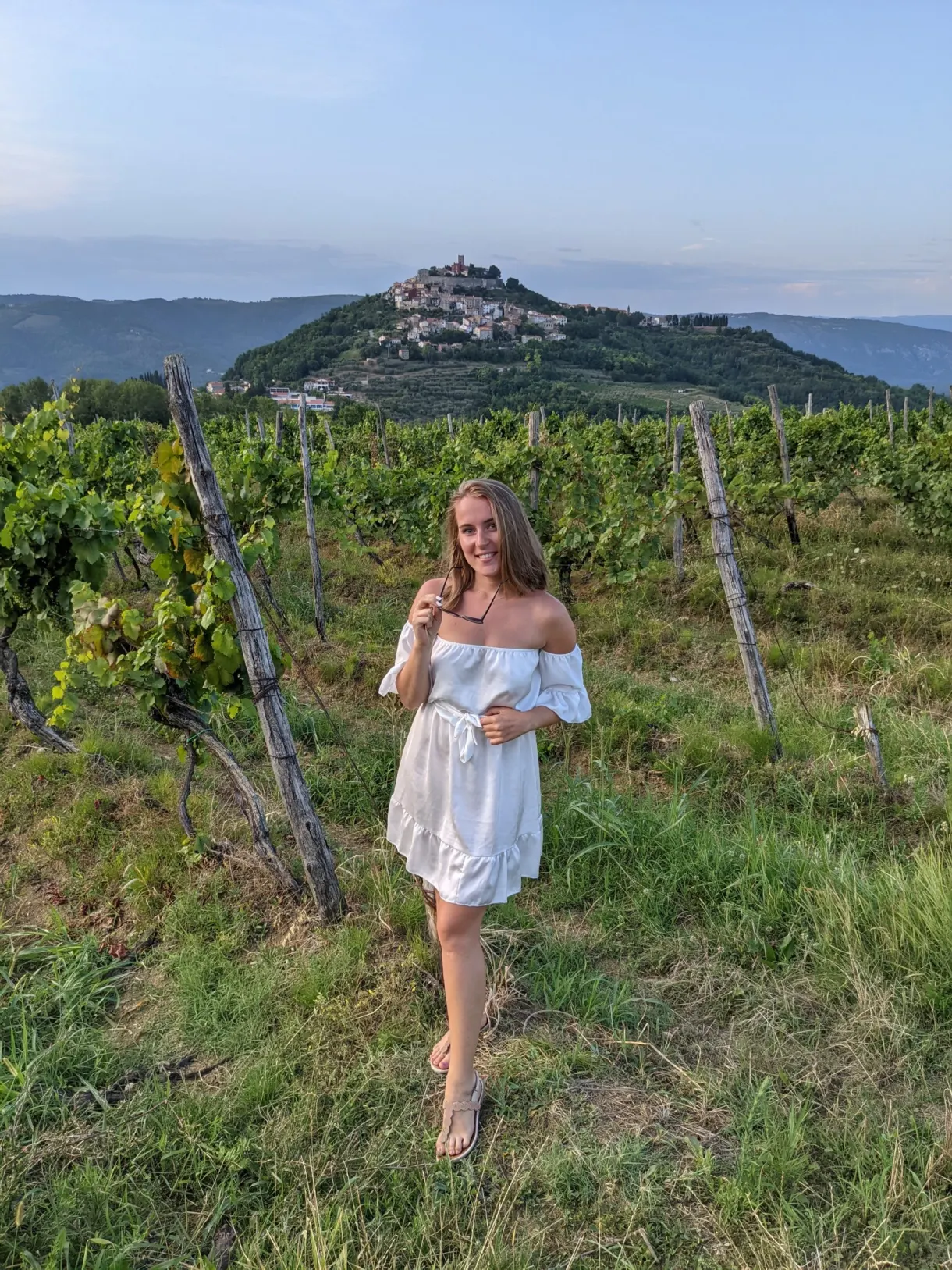
But the famous view of Motovun, you will find it from the road as you arrive from the south. A magnificent spot between the vines, the hills and the lavender.
Hum
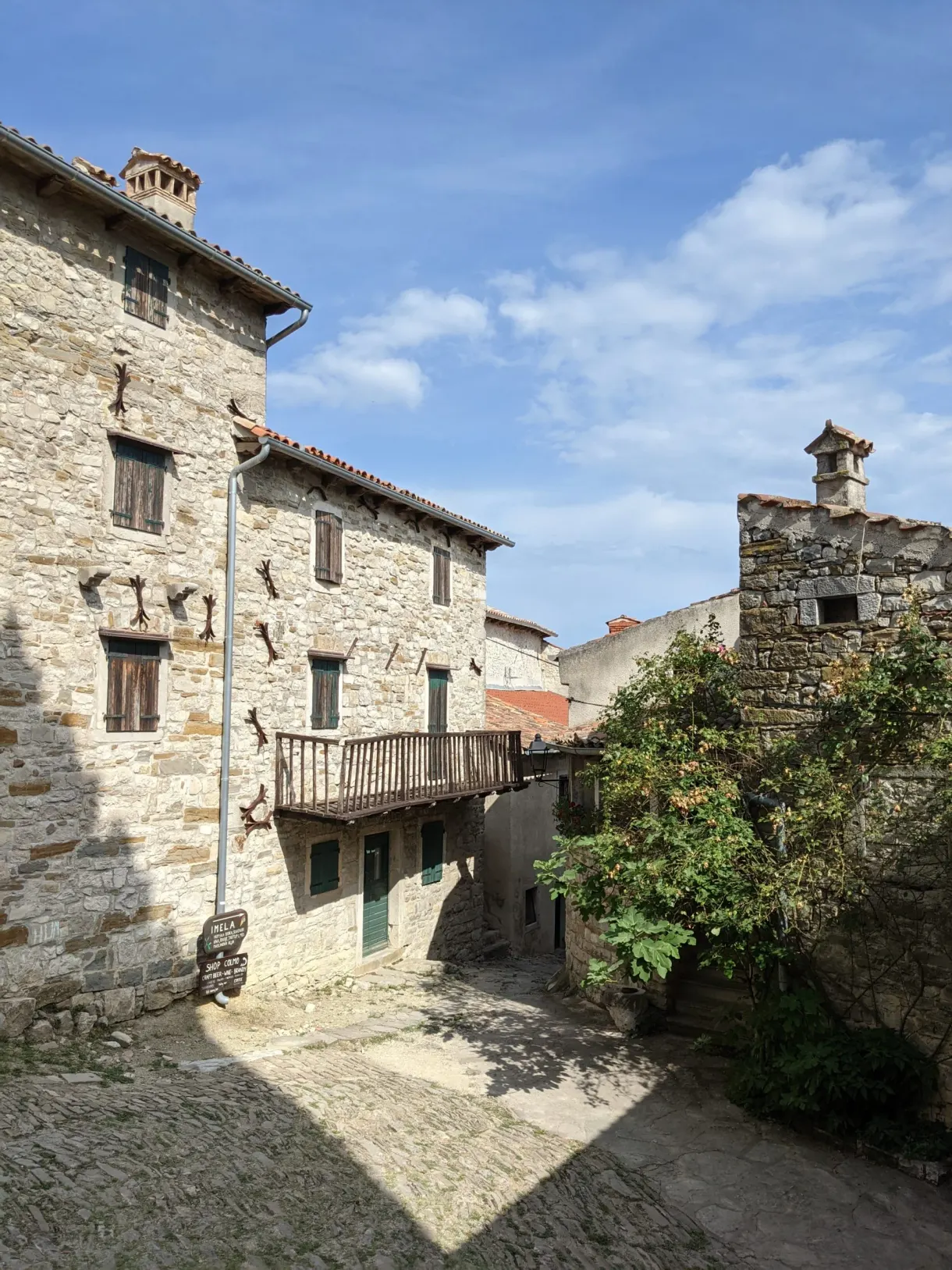
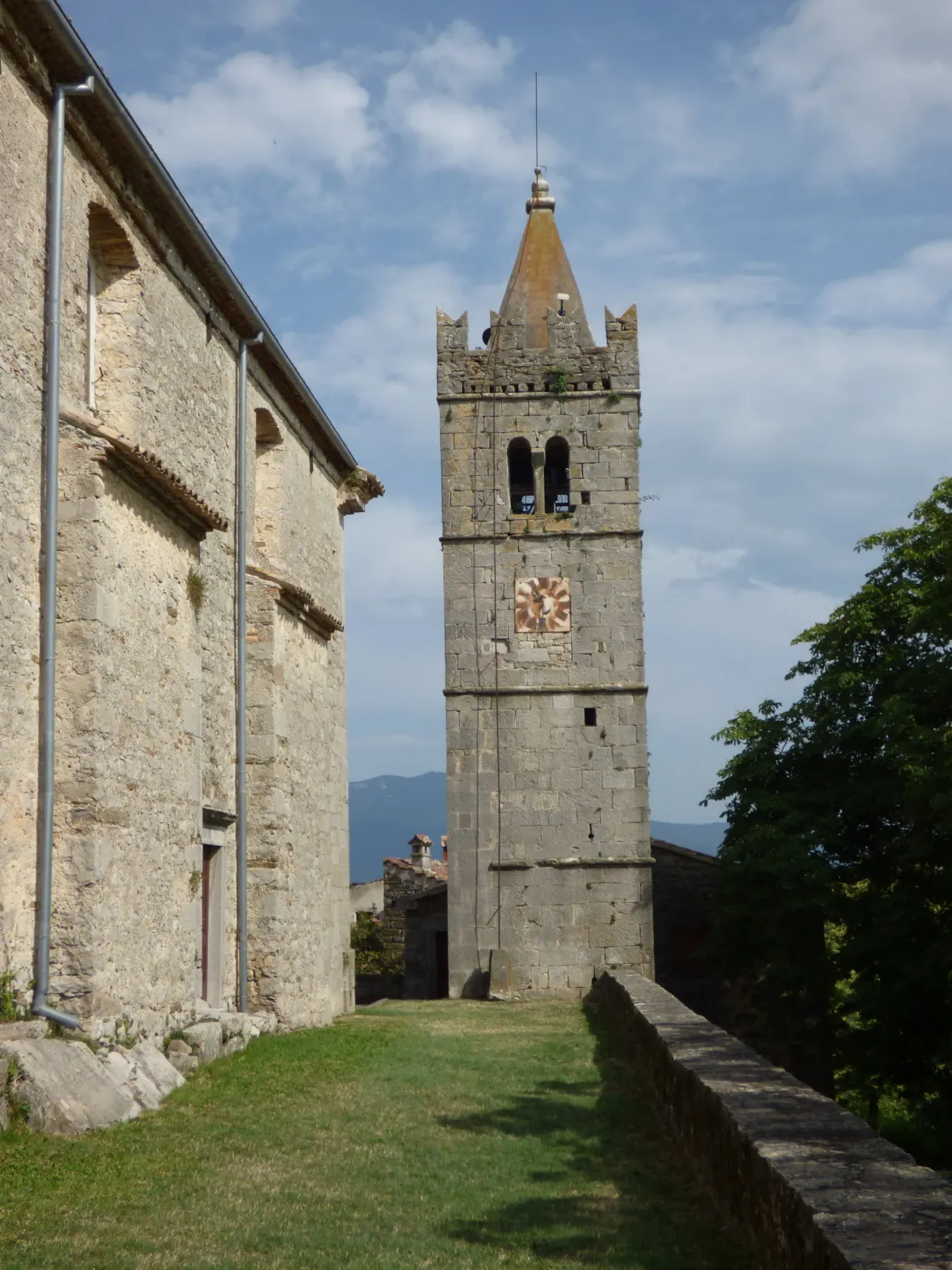
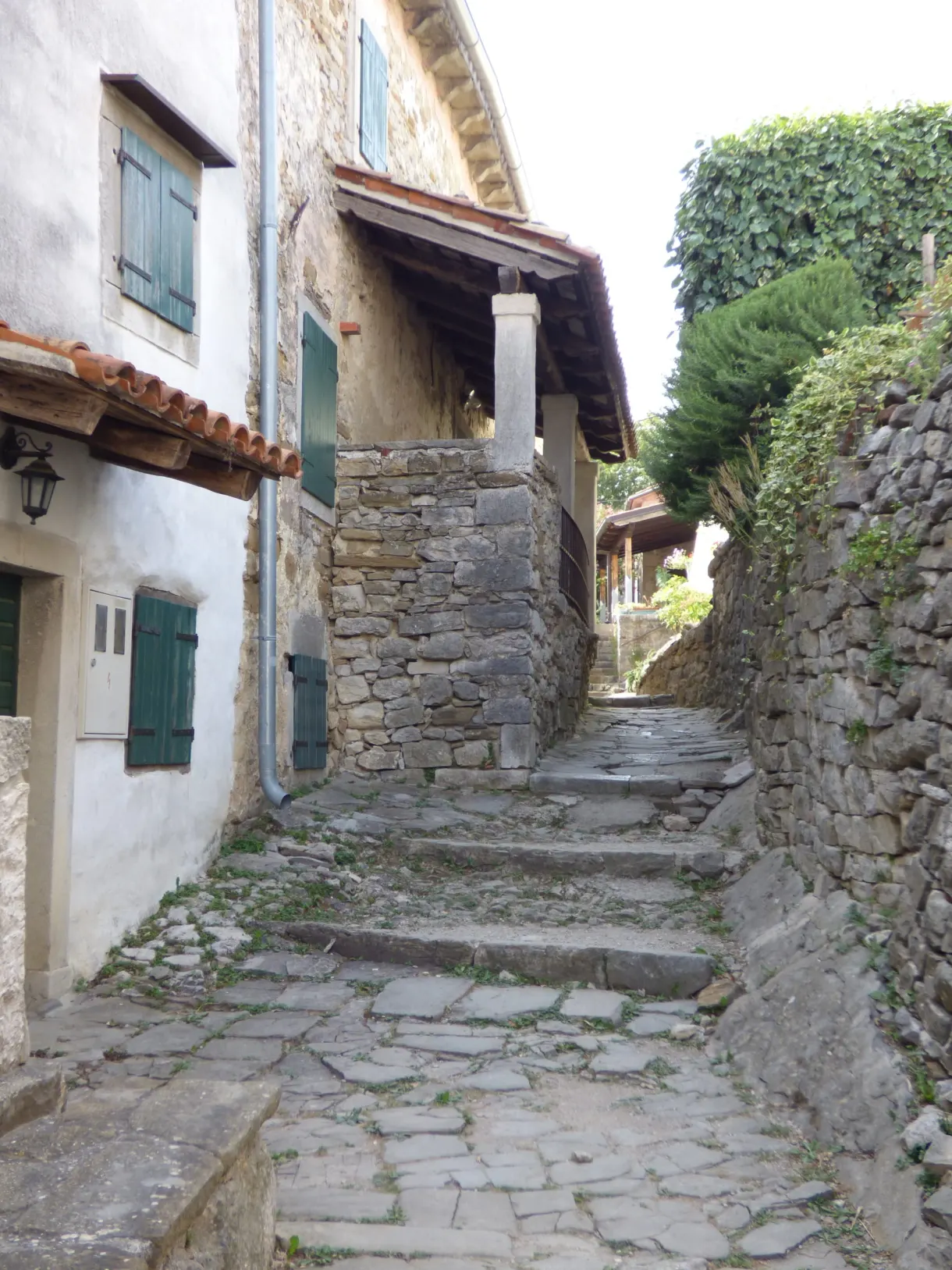
Hum has been named the smallest town in the world because it has only two streets! So we wanted to see this curiosity, which still has ramparts, a loggia and a belfry.
🅿️ Careful, the car park has to be paid for and is quite expensive… which is excessive, especially to spend only about ten minutes there. So we parked in front of the entrance to the ramparts.
Lake Butoniga
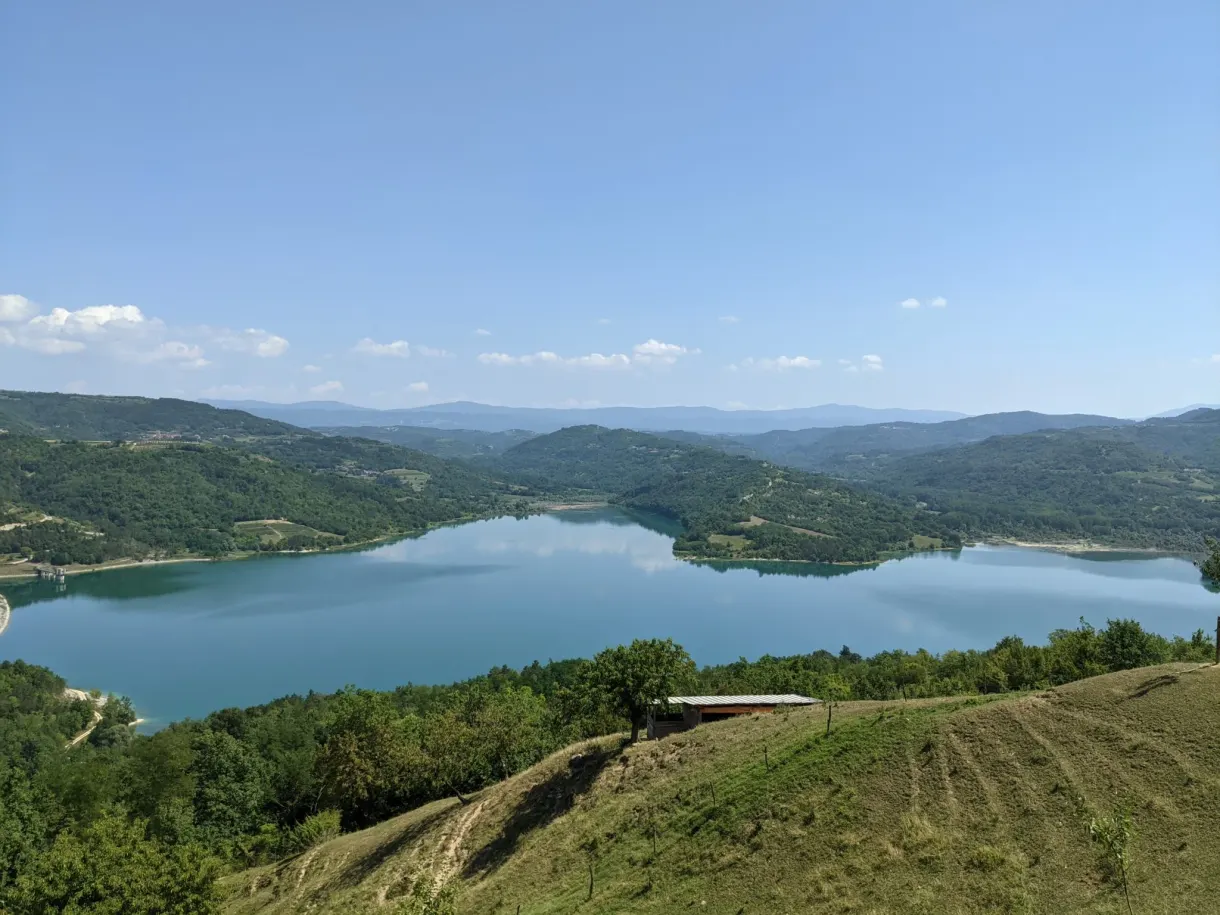
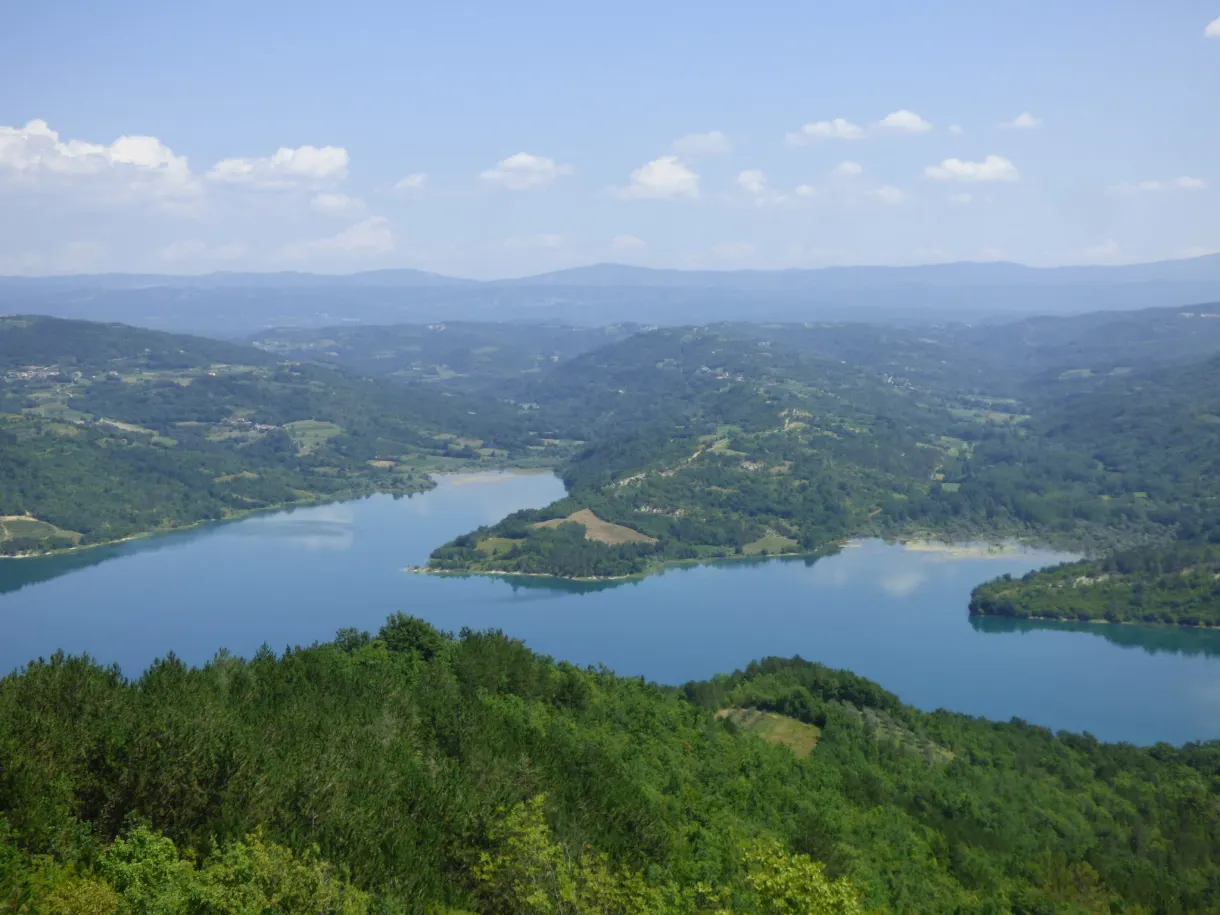
On the road between the villages of northern Istria and Pazin there is a curiosity: the artificial lake of Butoniga, over which the Viewpoint Ukotići offers a splendid panorama of the surroundings. This lake is not in the travel guides, we found it in a local brochure, so you will not meet anyone there.
Pazin
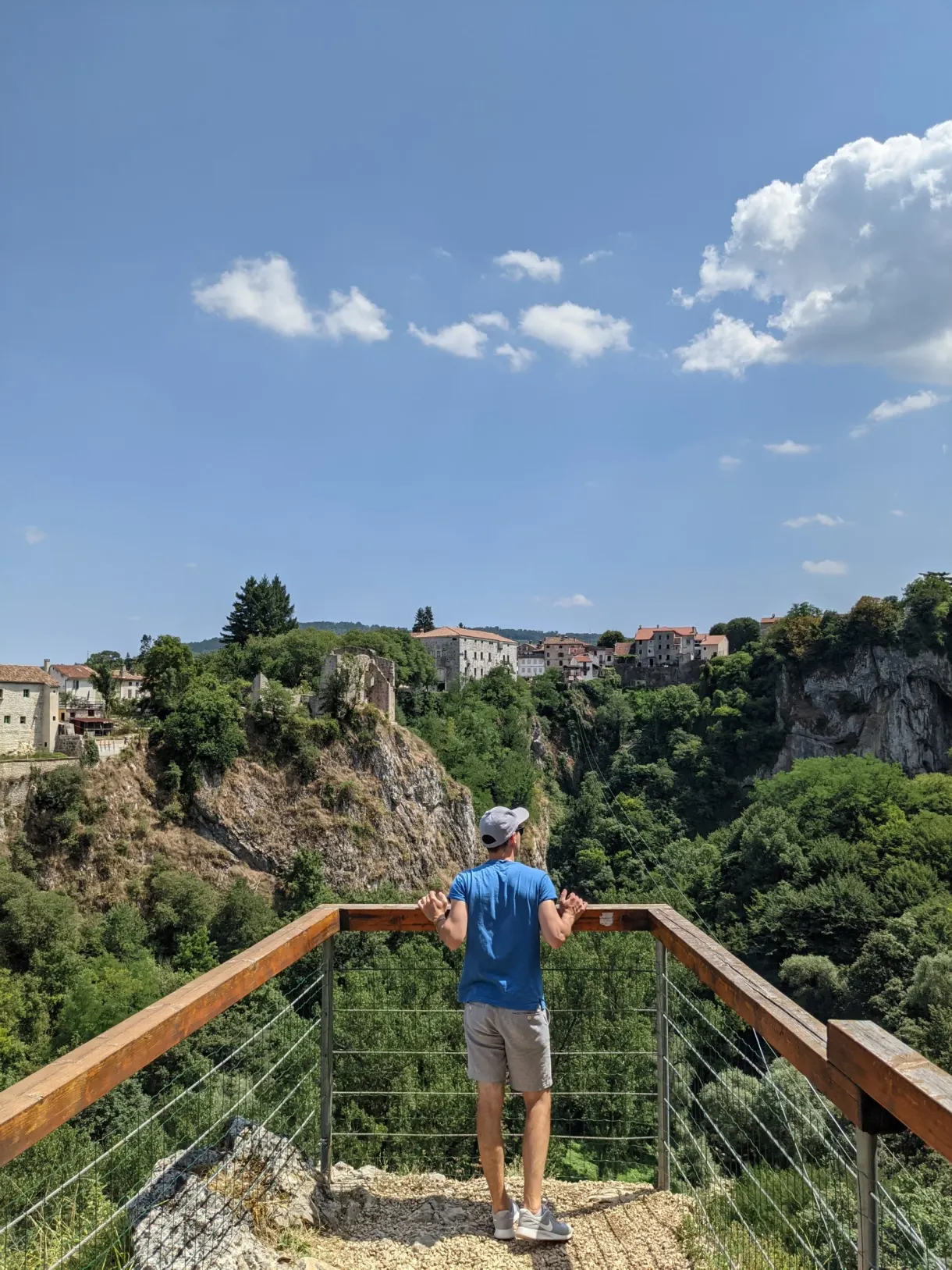
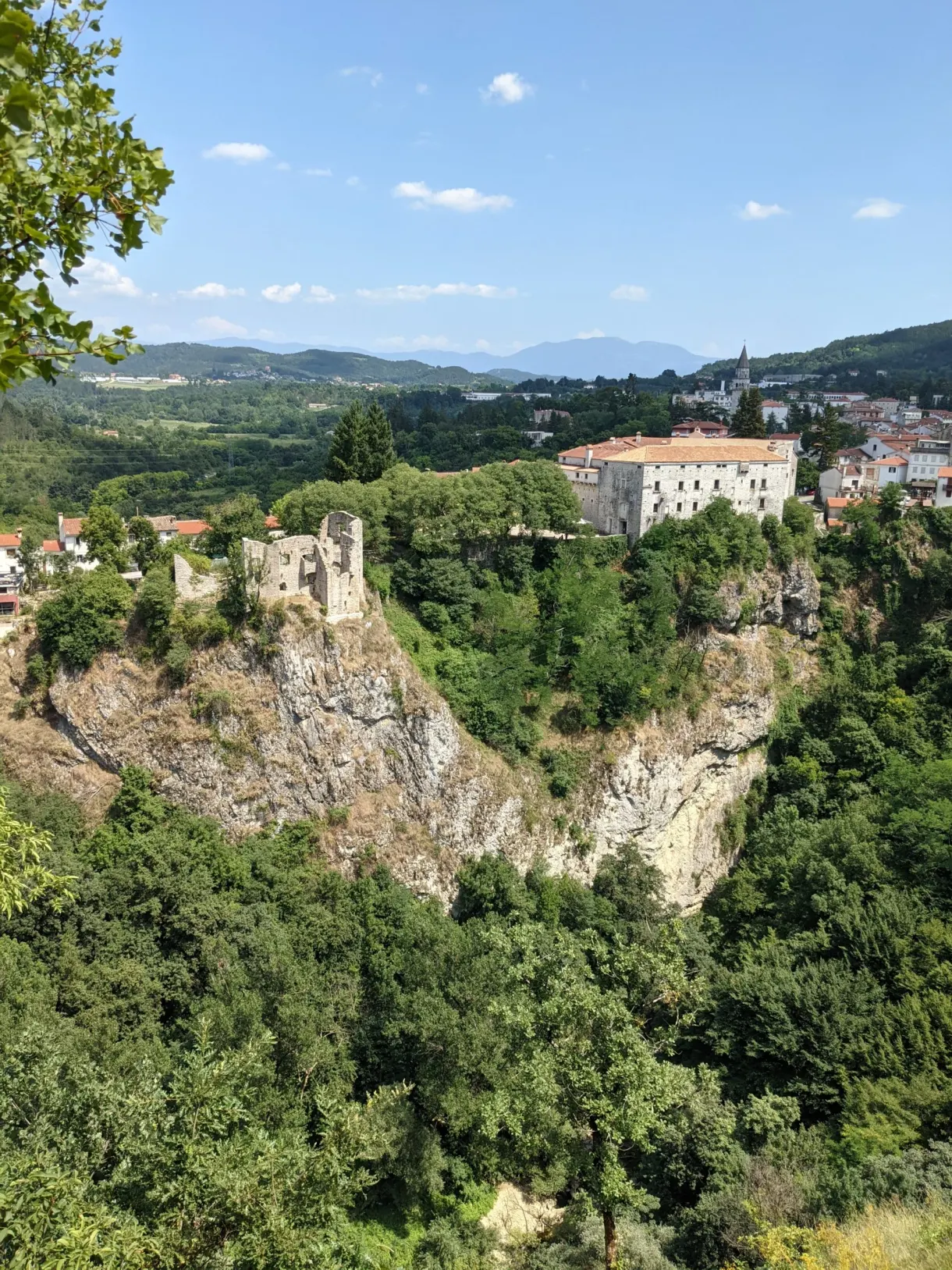
Pazin is the main town in the heart of Istria: it is from here that the roads set off in every direction to explore the region. Built on the edge of a ravine with a river flowing at the bottom, this town attracts tourists for two reasons: its medieval castle overlooking the chasm and the giant zip line that crosses the chasm. To get a viewpoint over the castle, you have to cross the bridge and head towards the start of the zip line. Careful, the path that goes down into the chasm has to be paid for.
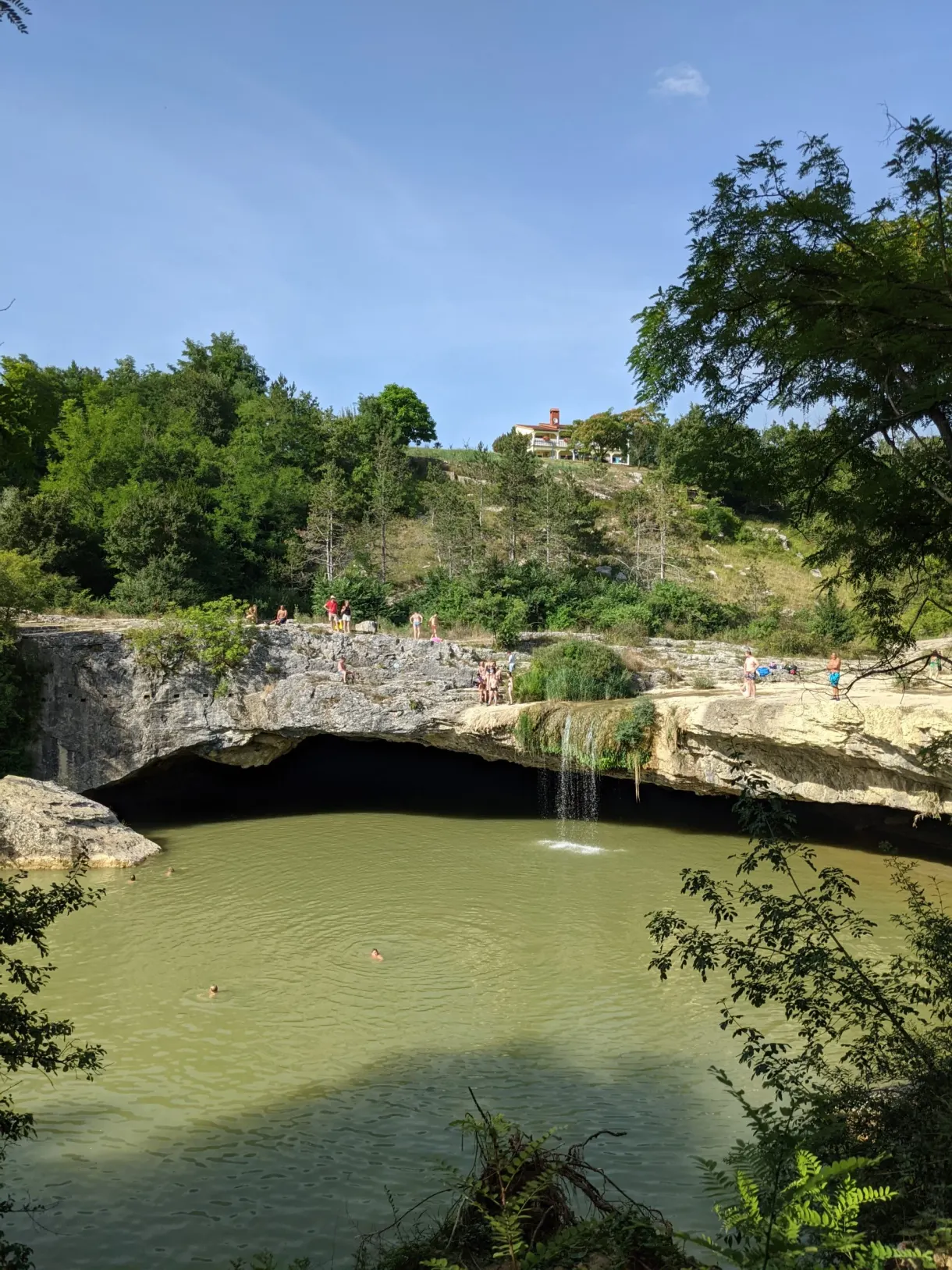
A few minutes from Pazin is the Zarečki Krov waterfall, where the locals and a few tourists come to cool off. The place is worth a look and the path to reach it is not very long.
Gračišće
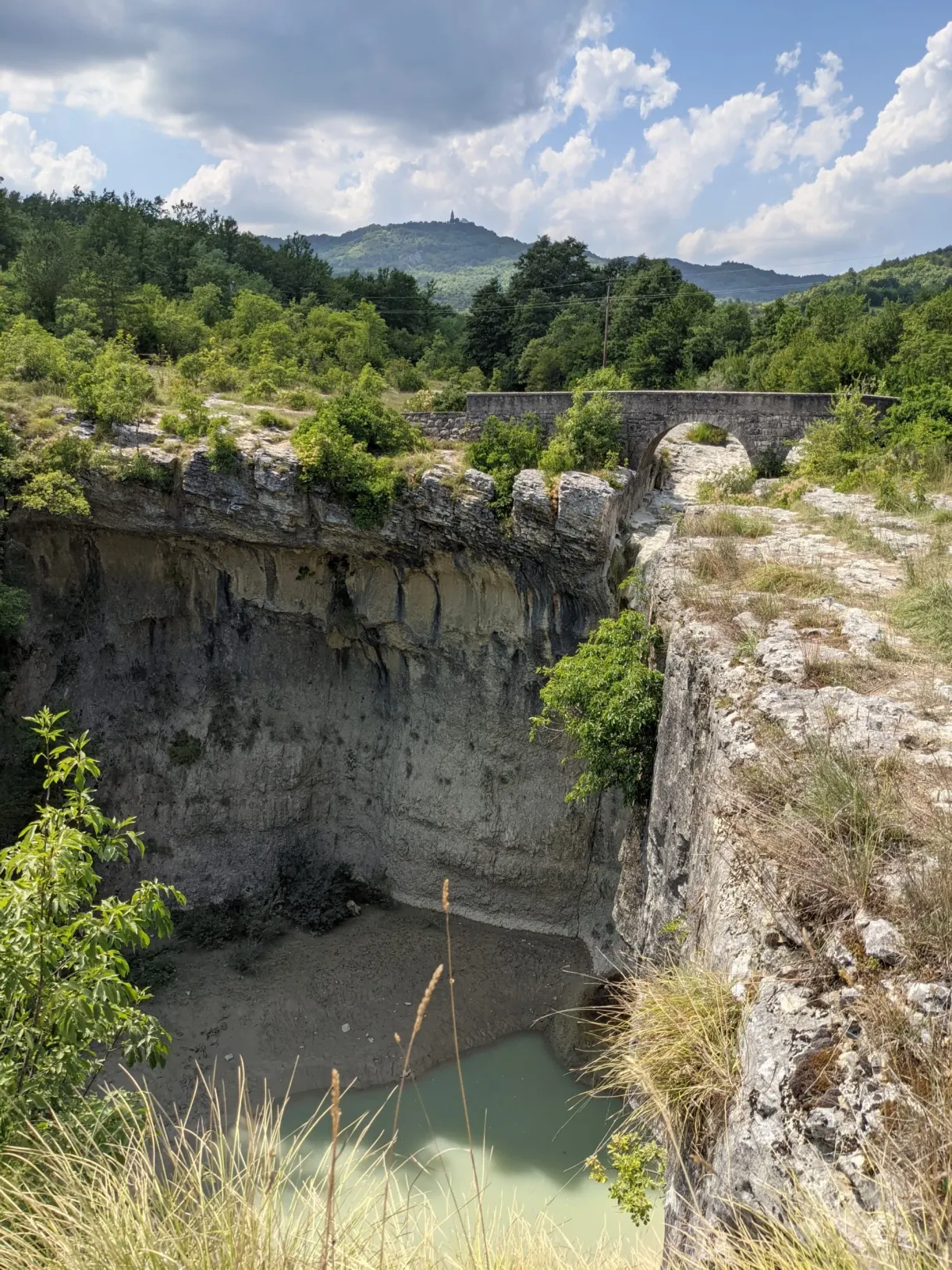
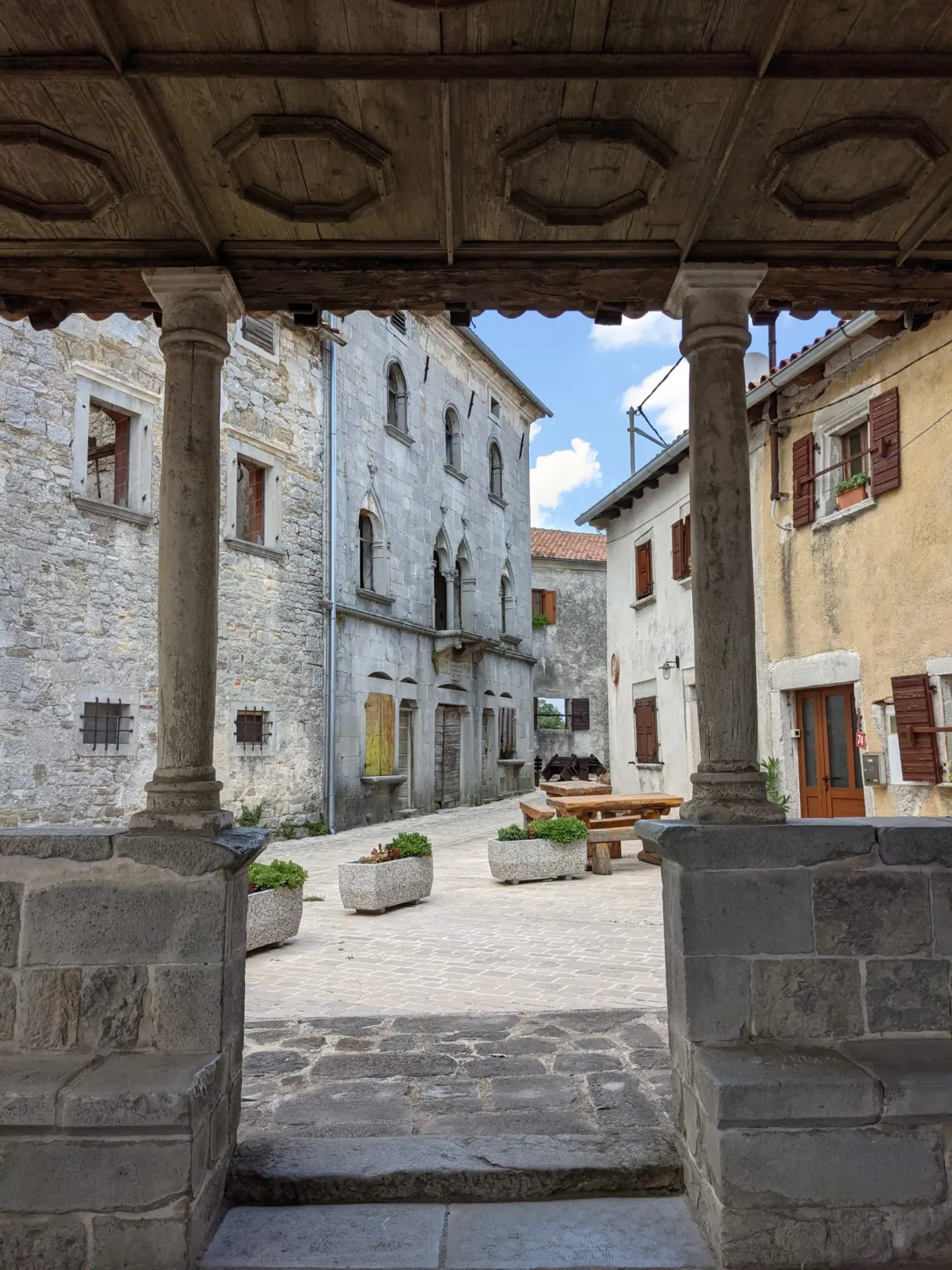
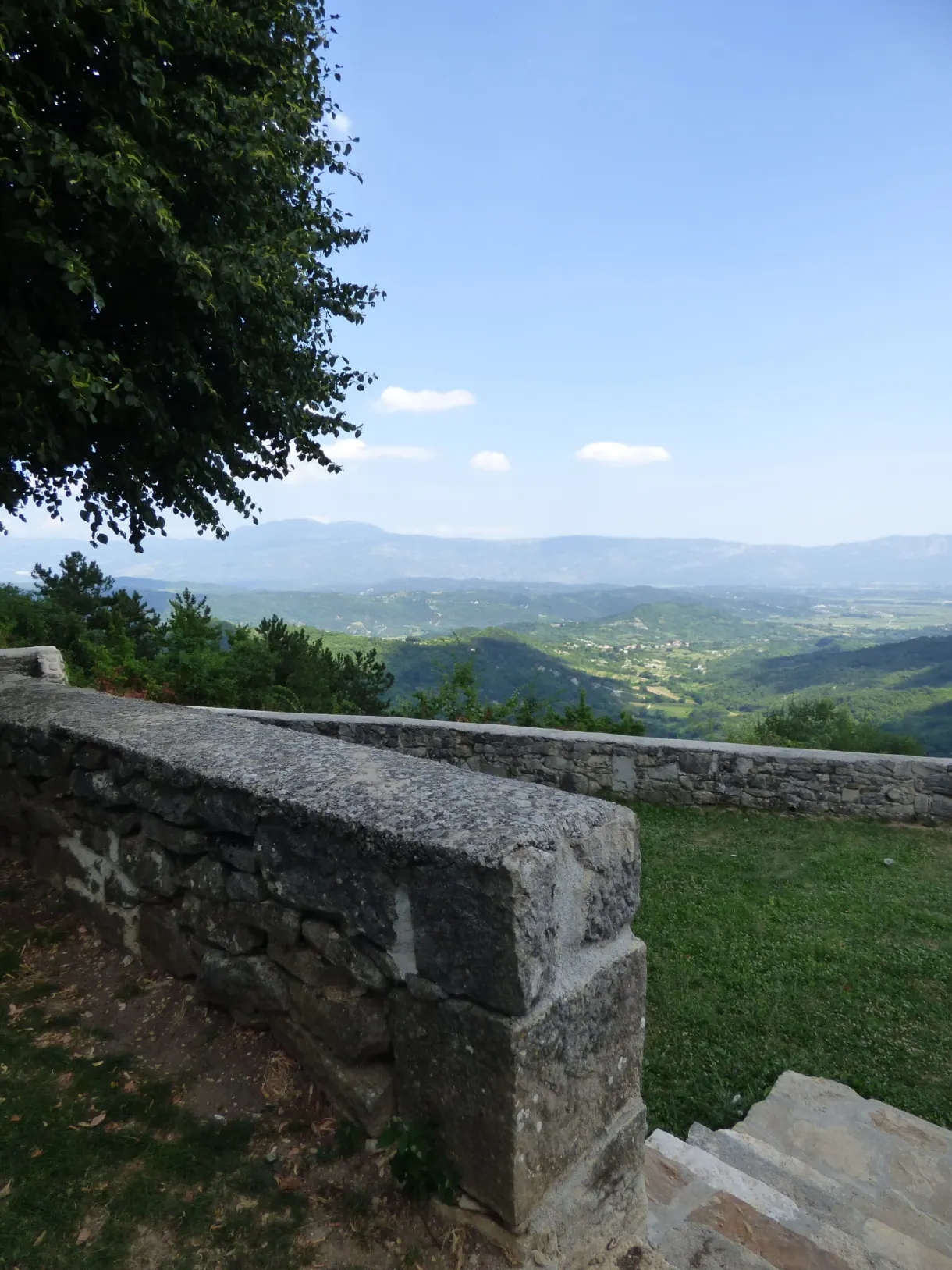
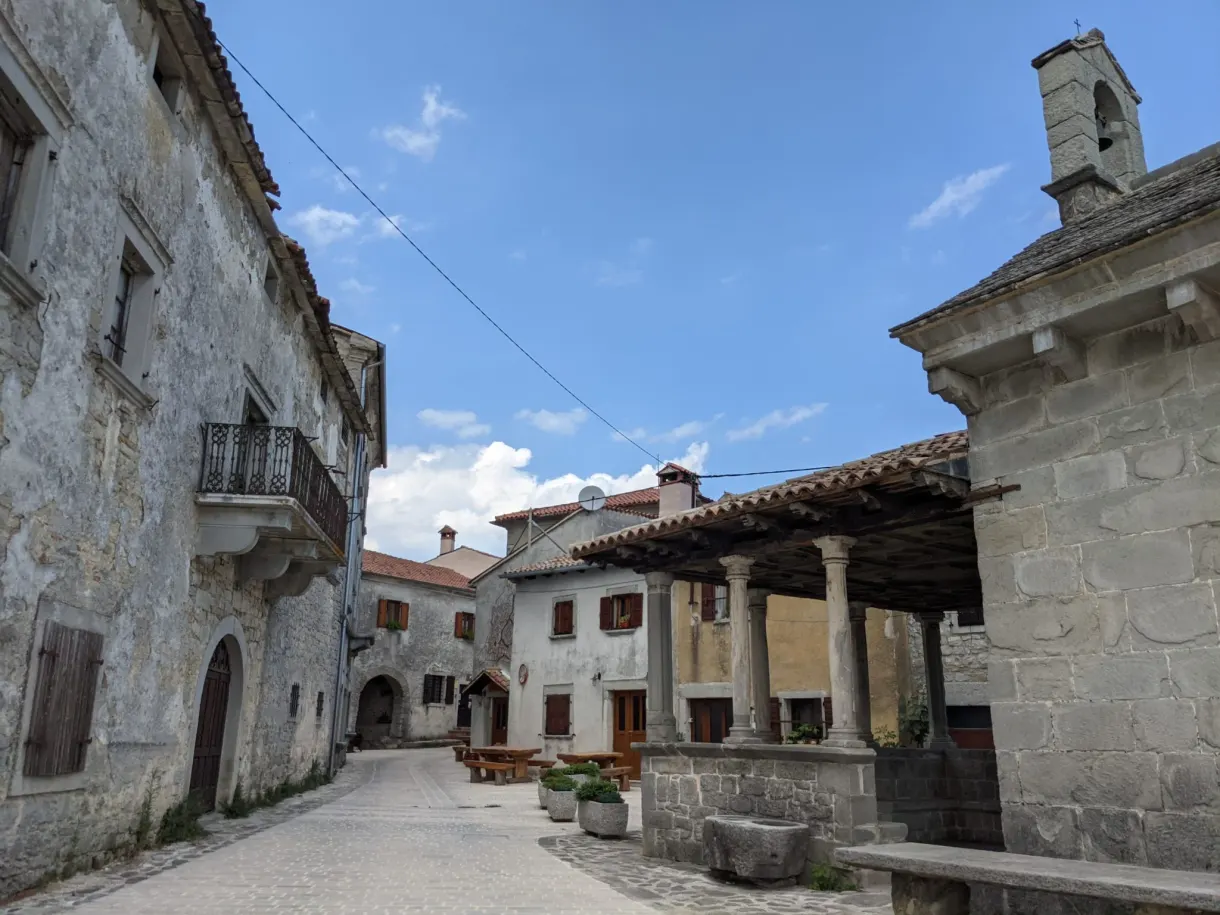
Gračišće is a tiny stone village east of Pazin, on the road that goes down towards Plomin. We were alone there once again! The panorama from the church is truly sublime because the village looks out over the whole valley. A few kilometres from the village is the Sopot waterfall, which was unfortunately completely dried up when we visited. Going by the photos found on the internet, it must be magnificent with water!
Sveti Lovreč
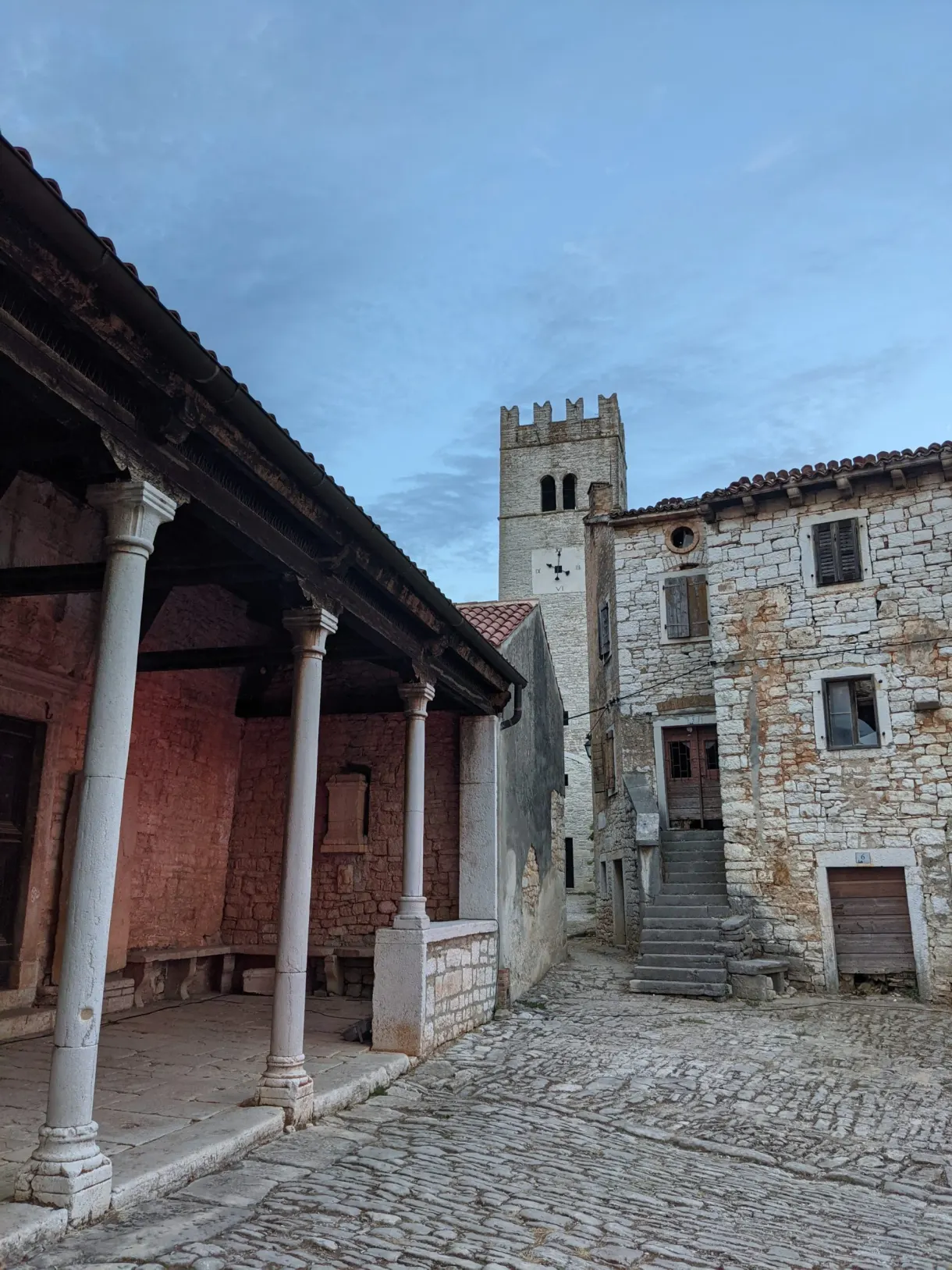
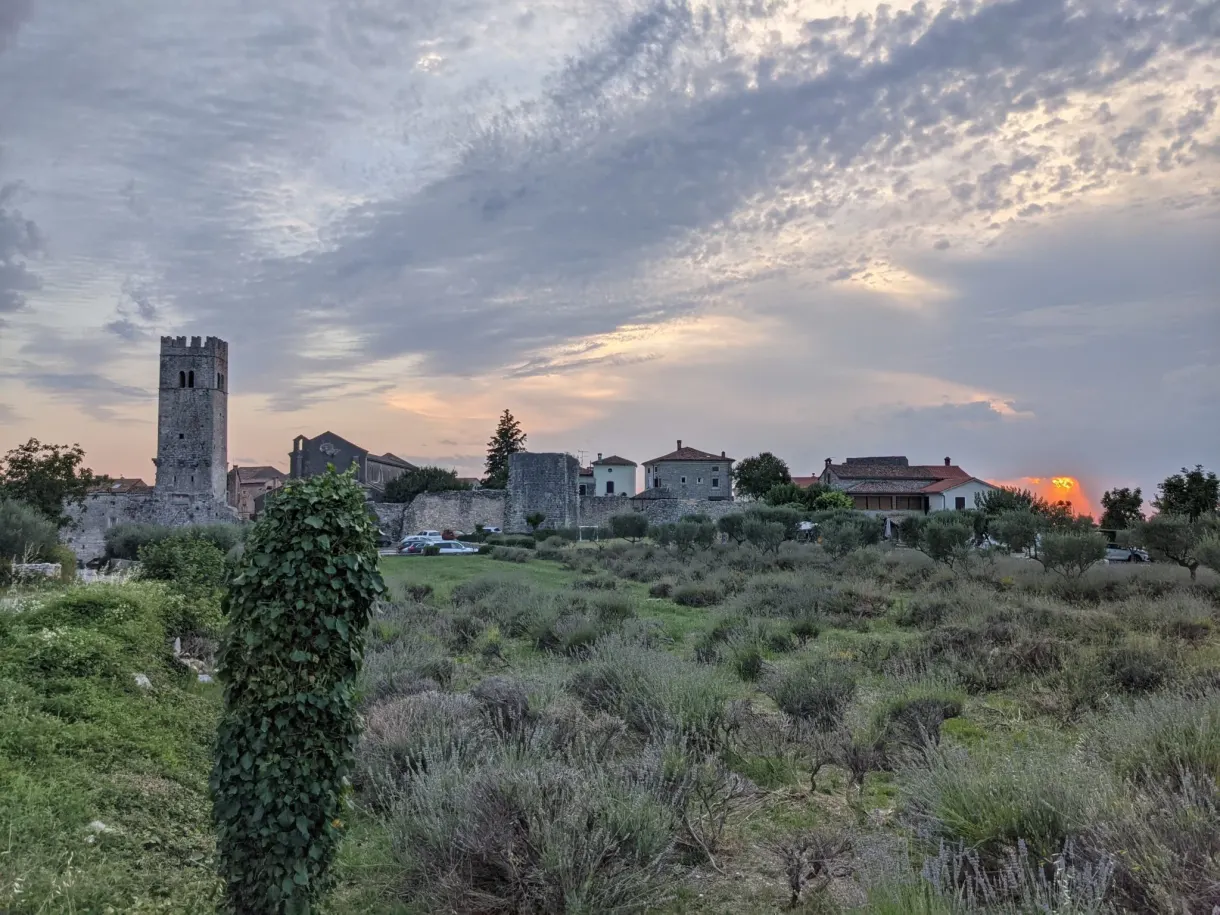
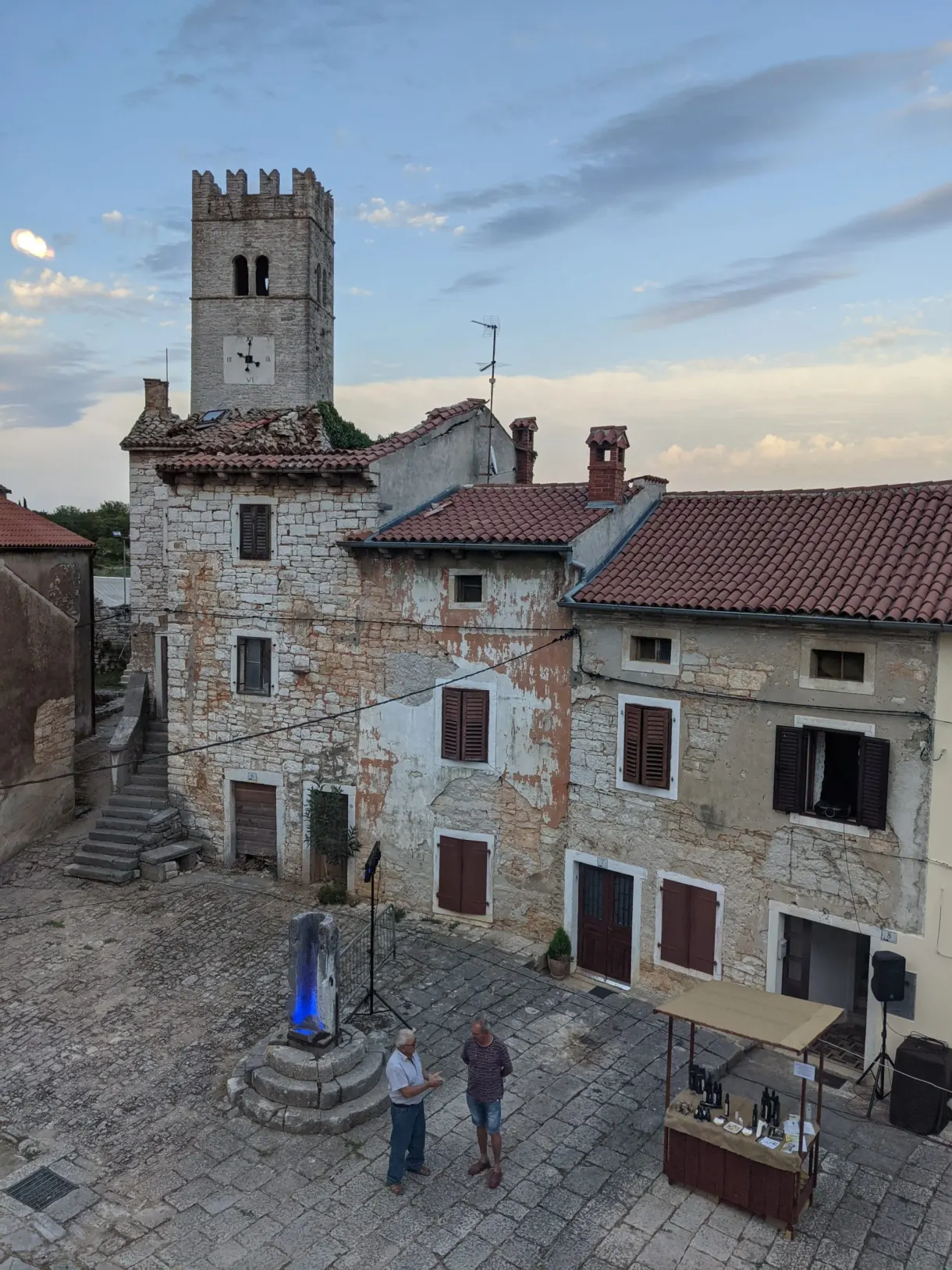
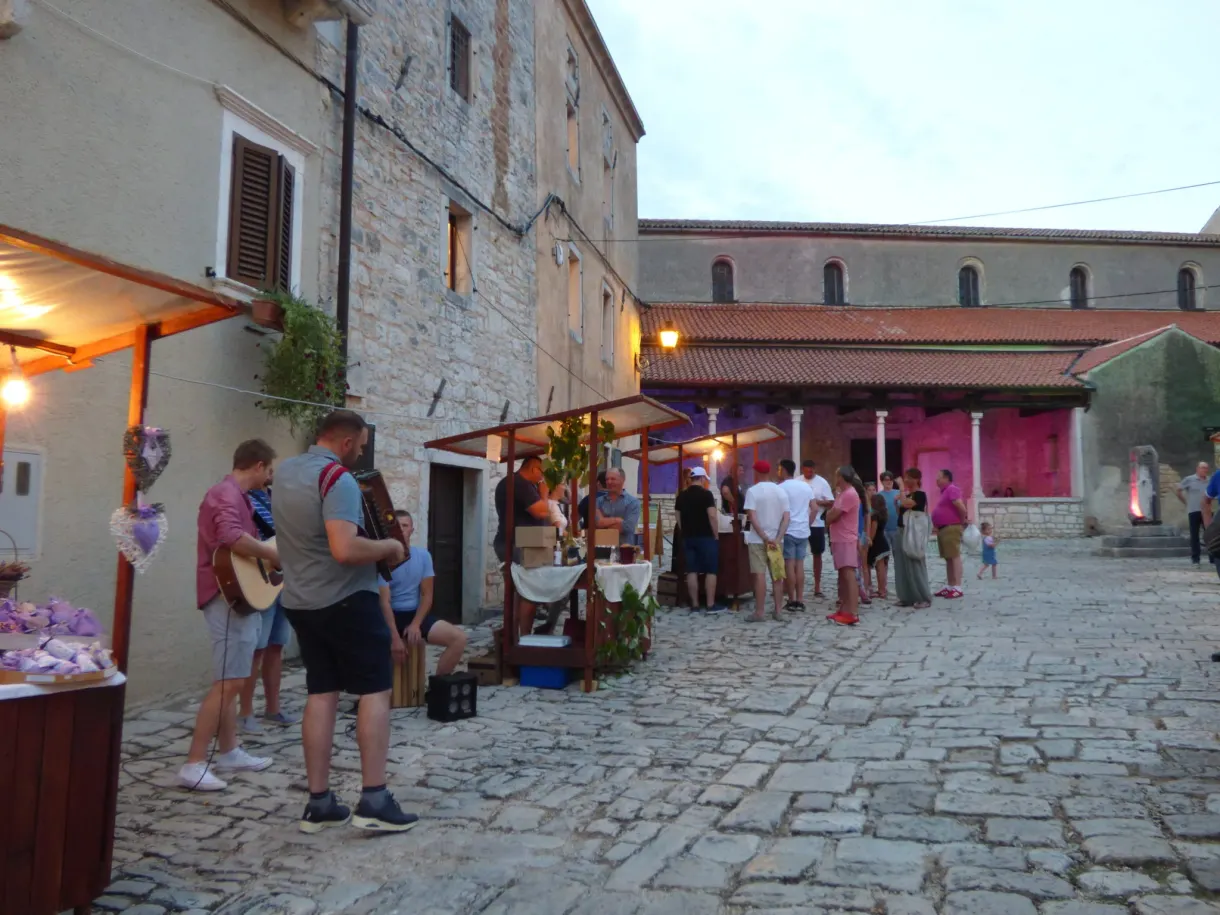
Do not miss Sveti Lovreč either, one of the best preserved fortified medieval villages in Istria! We discovered it in the early evening, on the day of the local festival celebrating the region’s craftspeople. So there was plenty going on and we got to see all the village’s monuments, open for the occasion, in particular the church bell tower. The village is also known for its lavender: a few fields surround the village, enough for some pretty photos at the start of summer.
Dvigrad
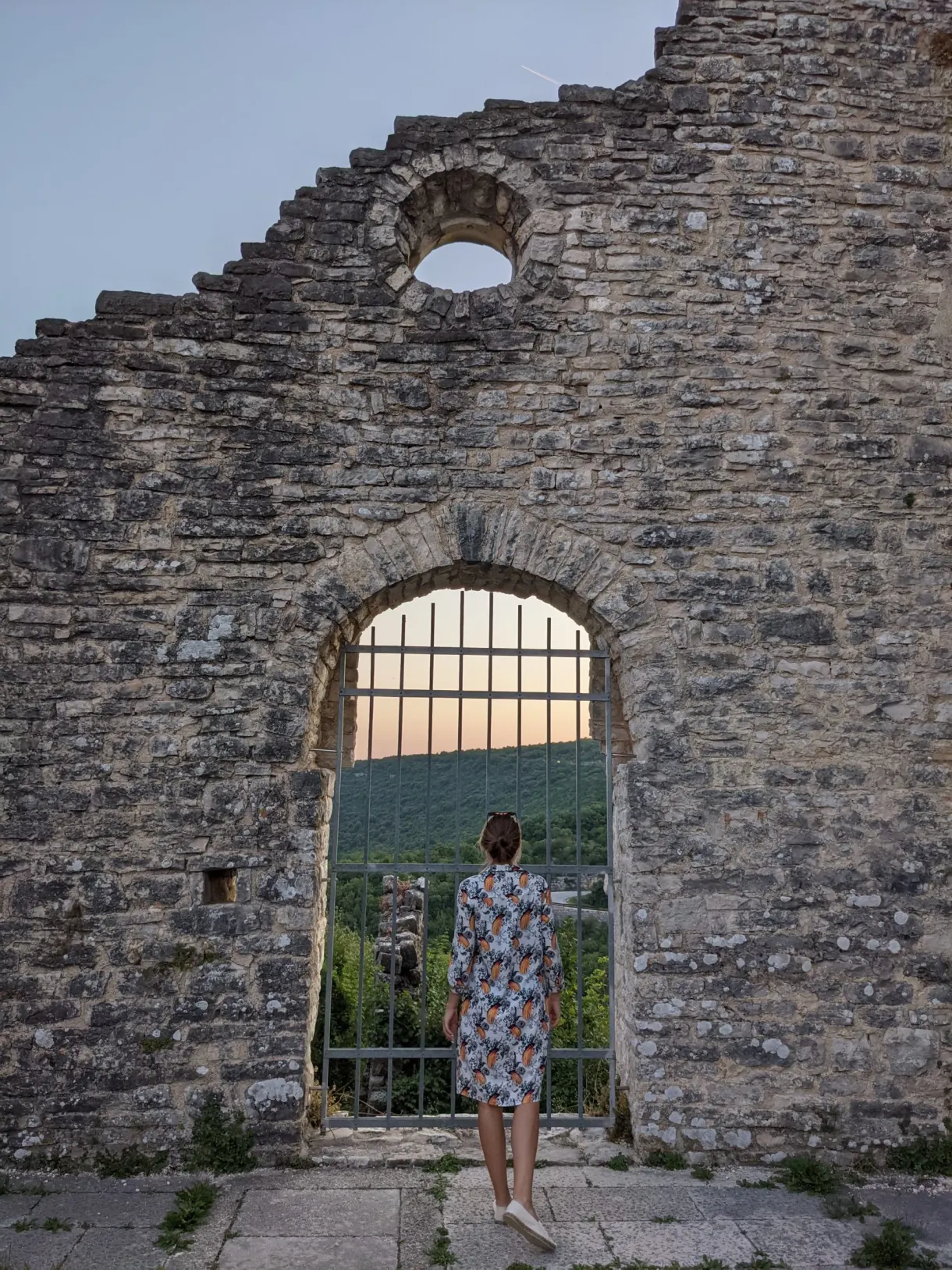
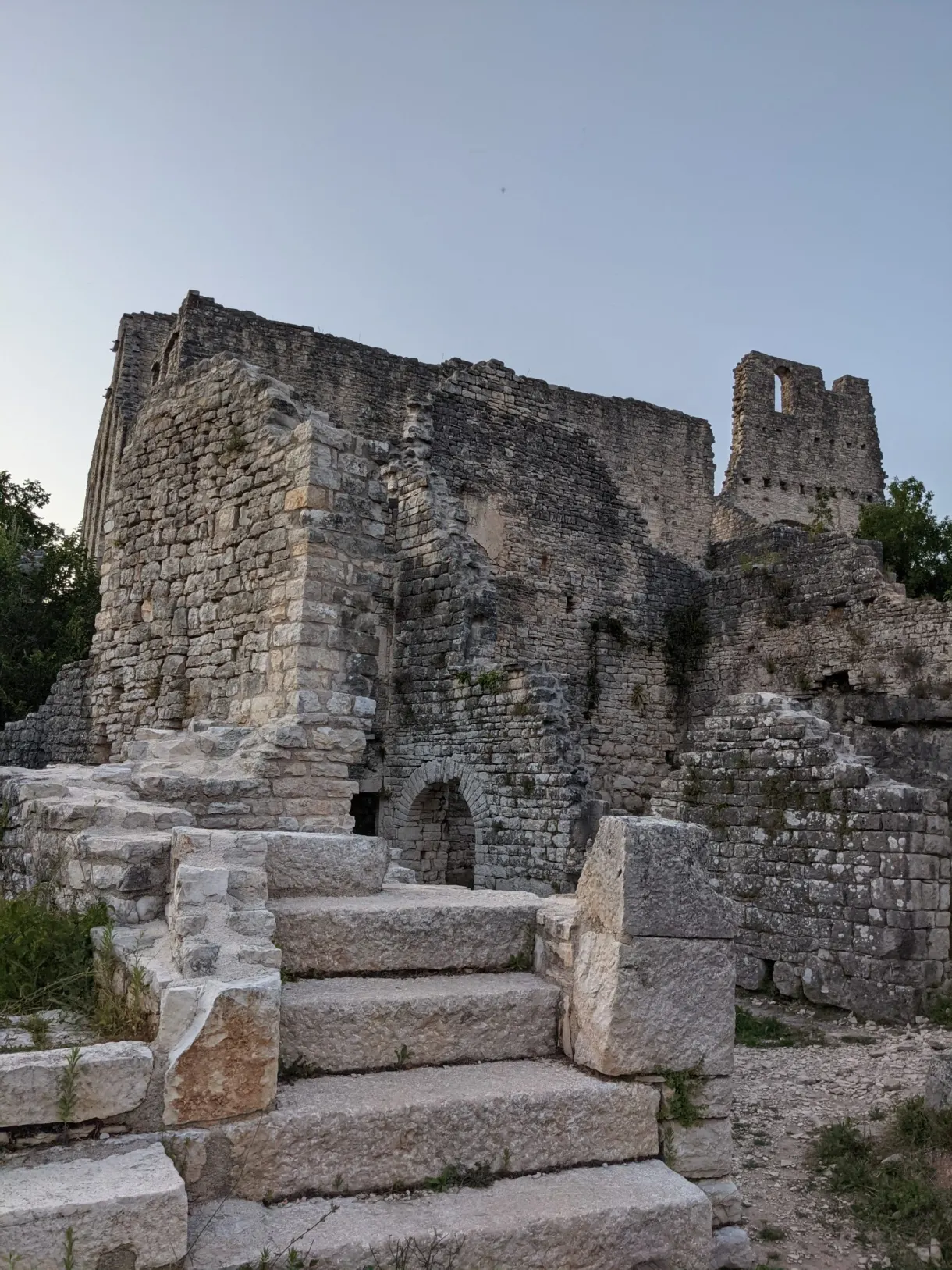
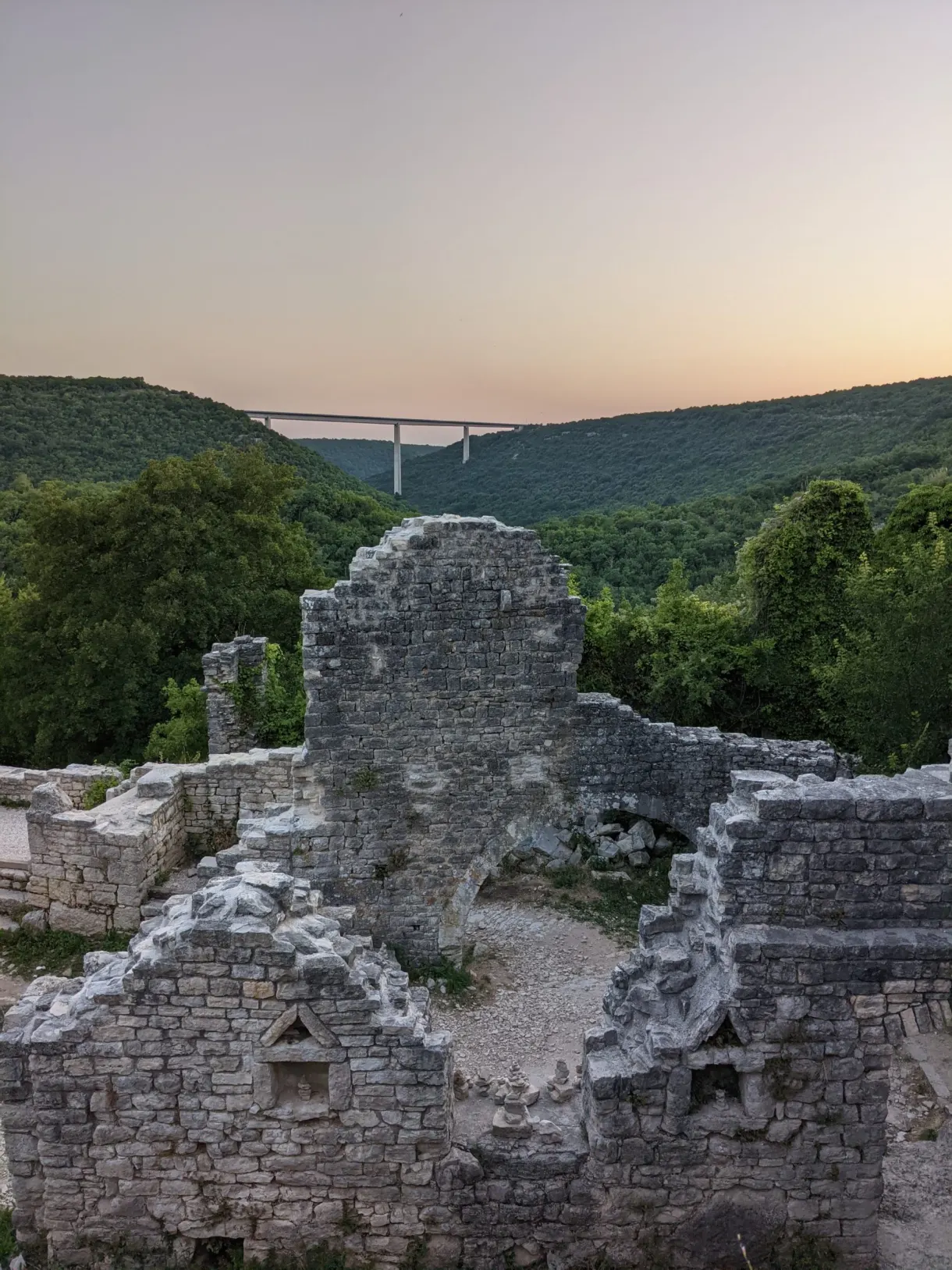
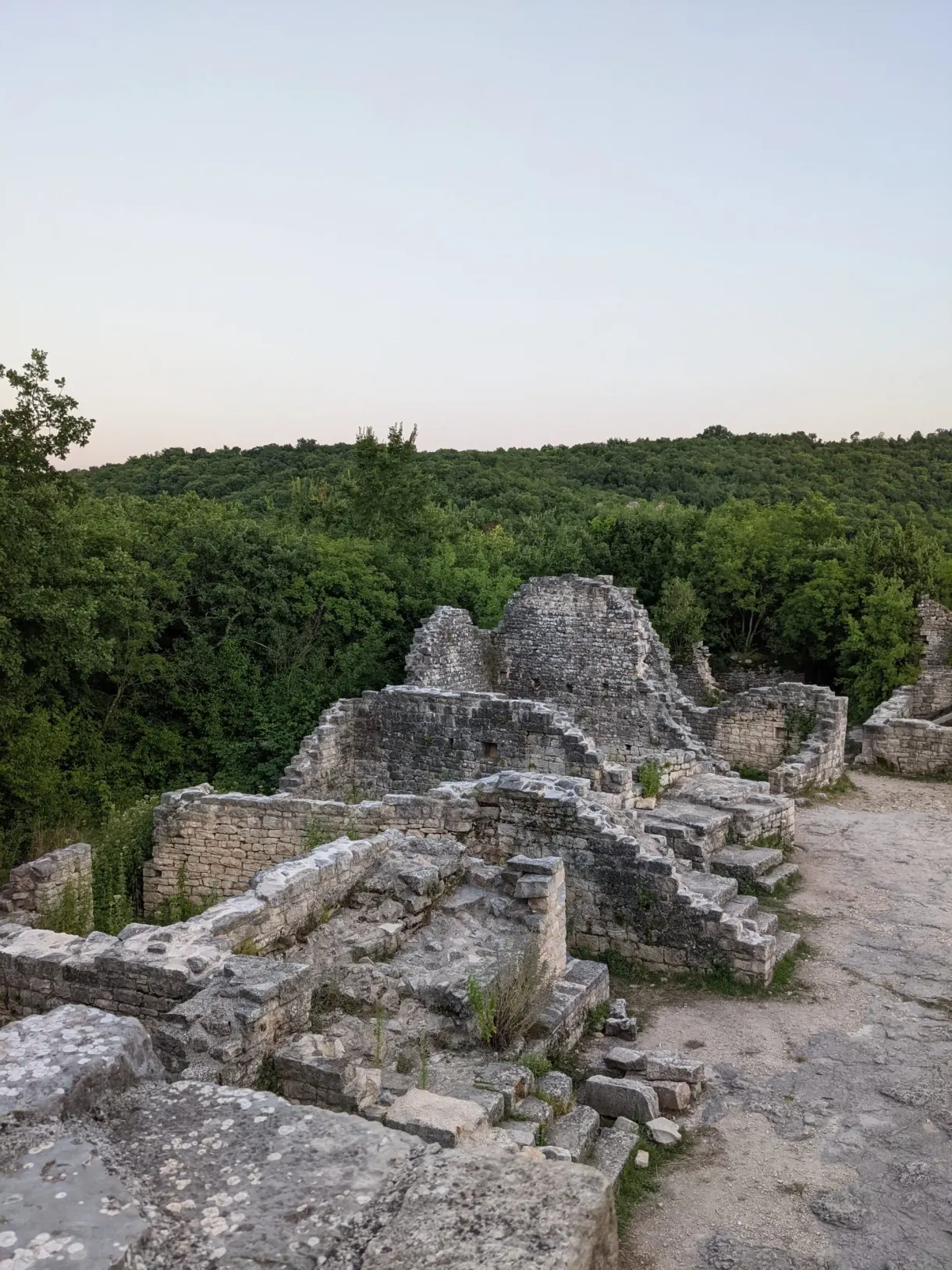
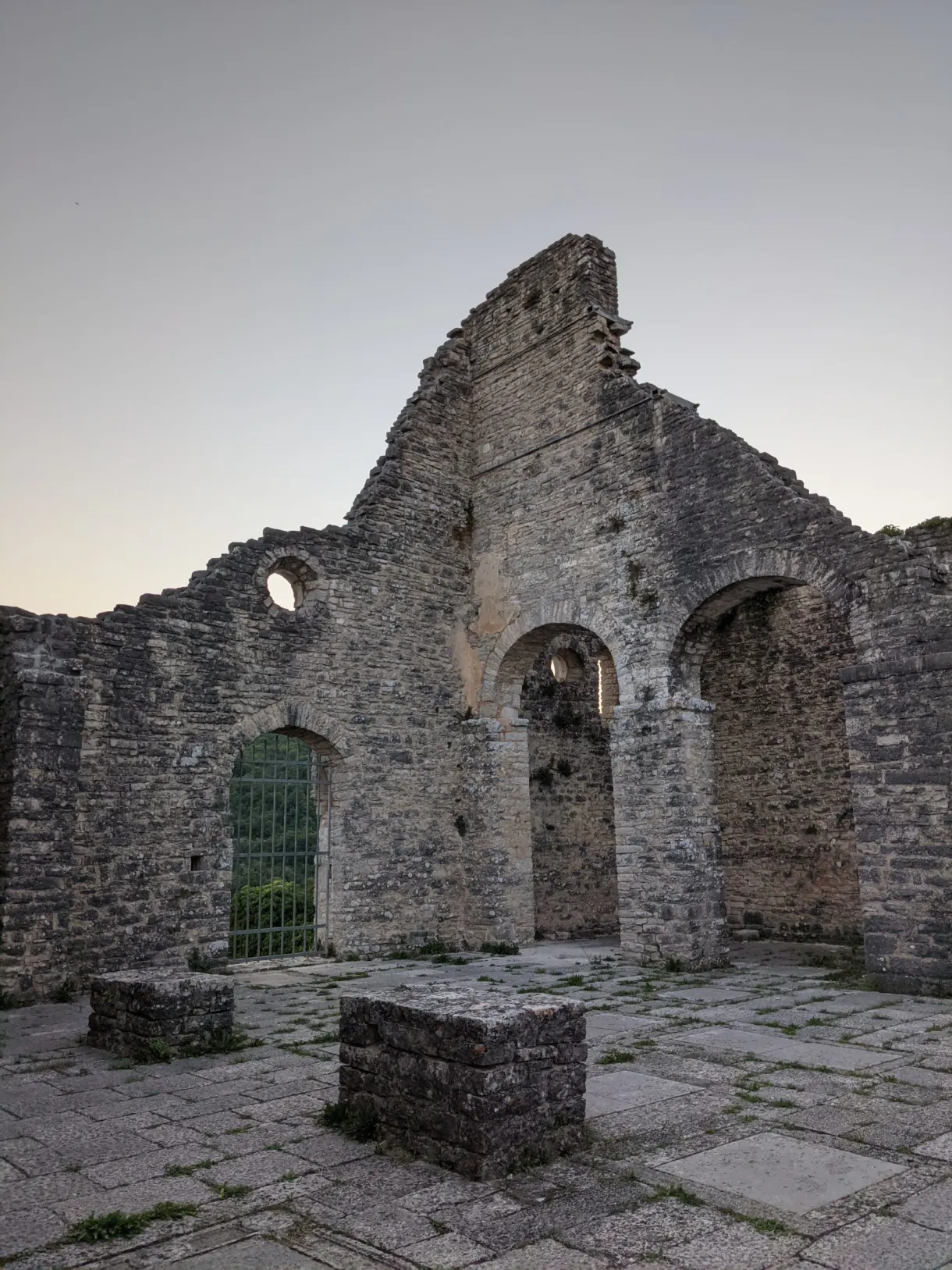
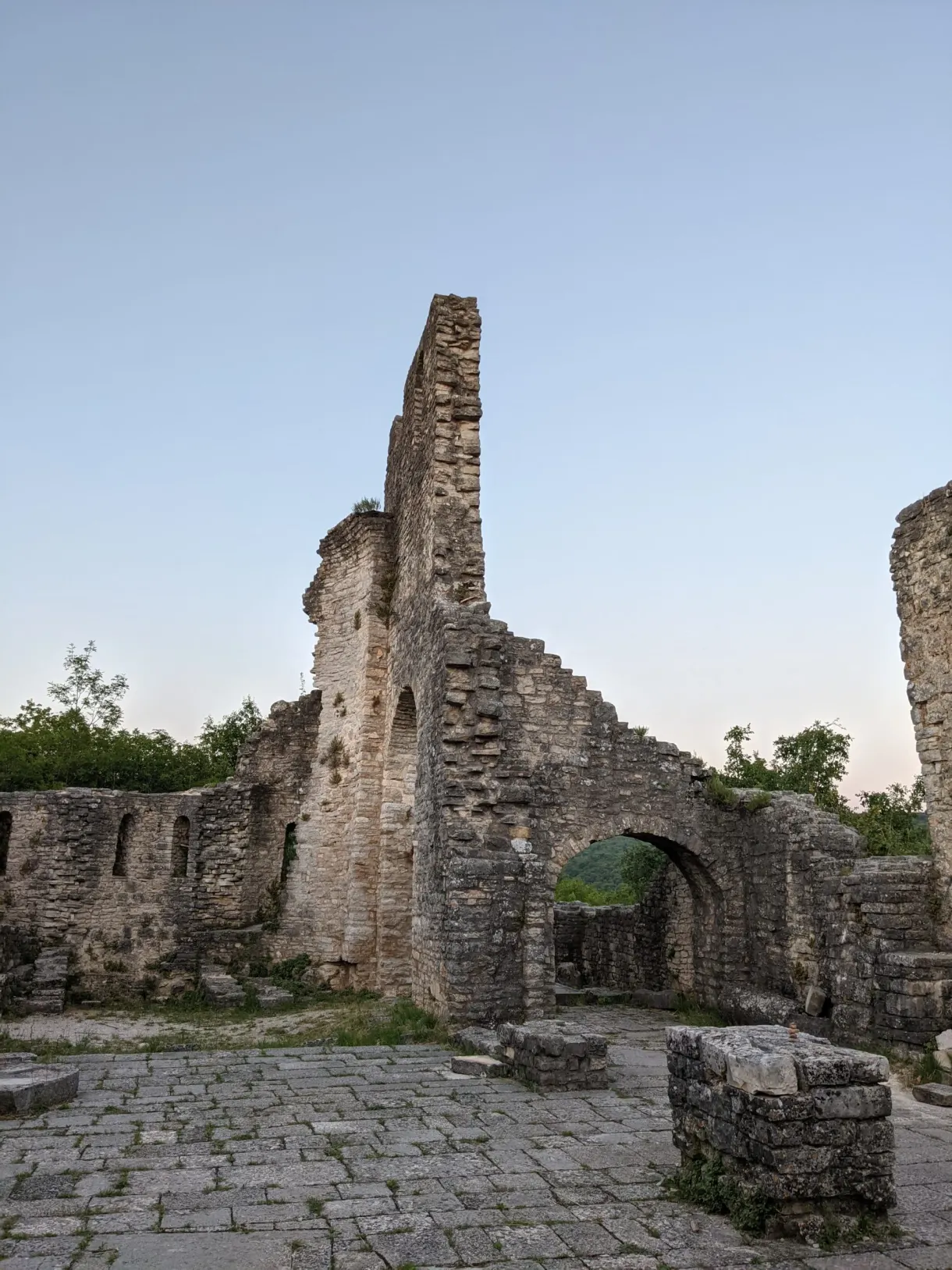
One of our favourites in Istria! Dvigrad is an abandoned medieval village perched on top of a hill: quite simply impressive. We went at sunset and the light on the ruins was magnificent. We strongly advise you to take a look when you pass by Kanfanar.
Svetvinčenat
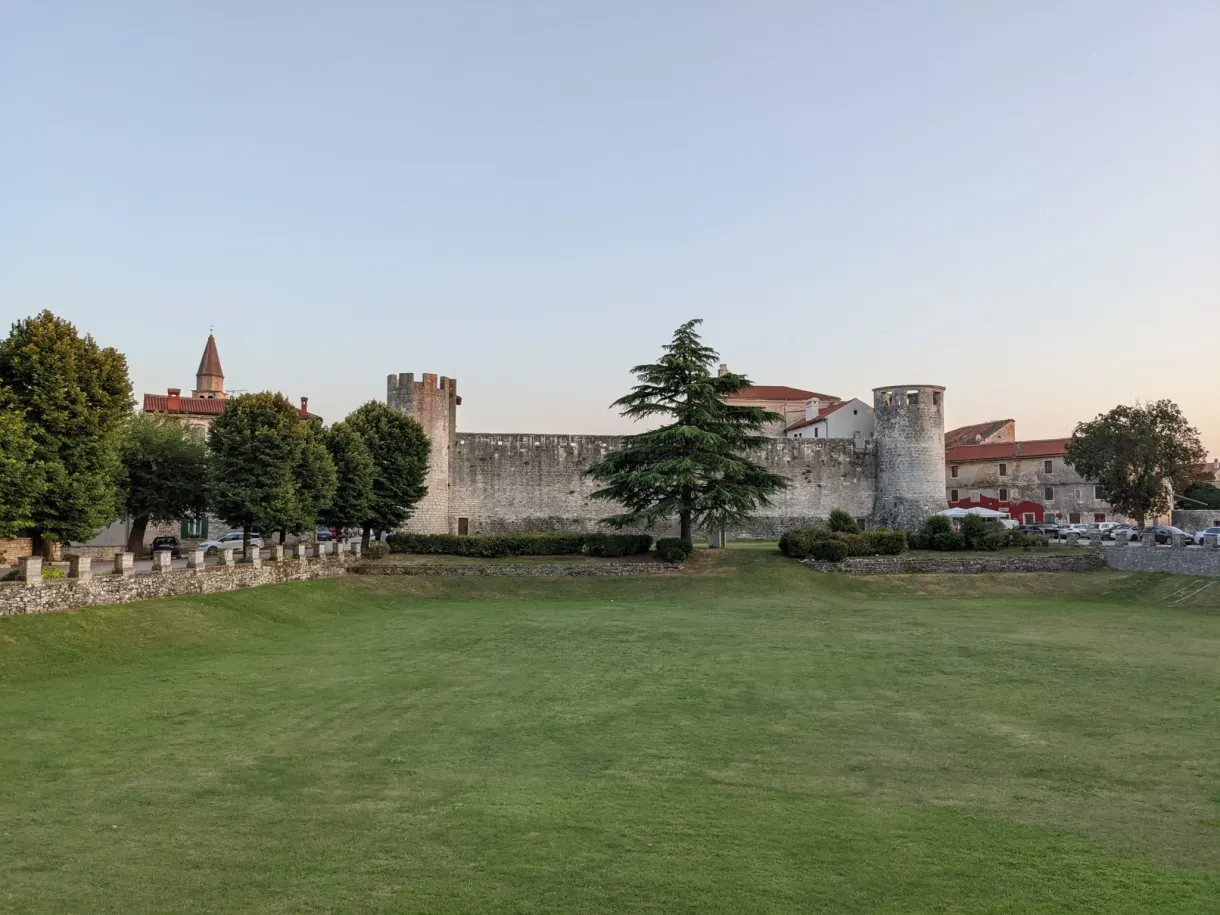
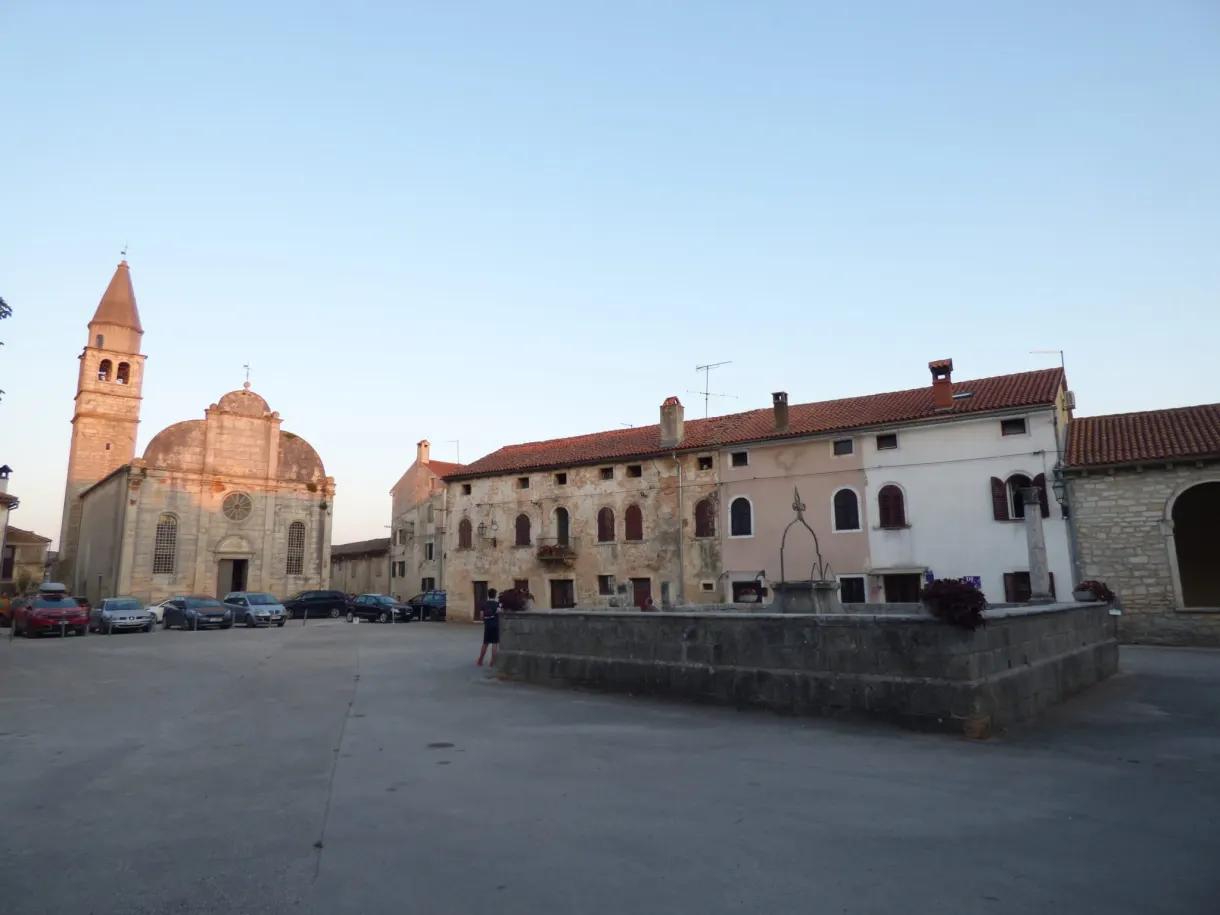
Svetvinčenat is a small village we liked a lot: we went there twice, in particular to have dinner at the foot of its castle (details at the end of this article). The main attraction of the village is of course its big, well preserved medieval castle, stronghold of the Grimani family in the Middle Ages.
Bale
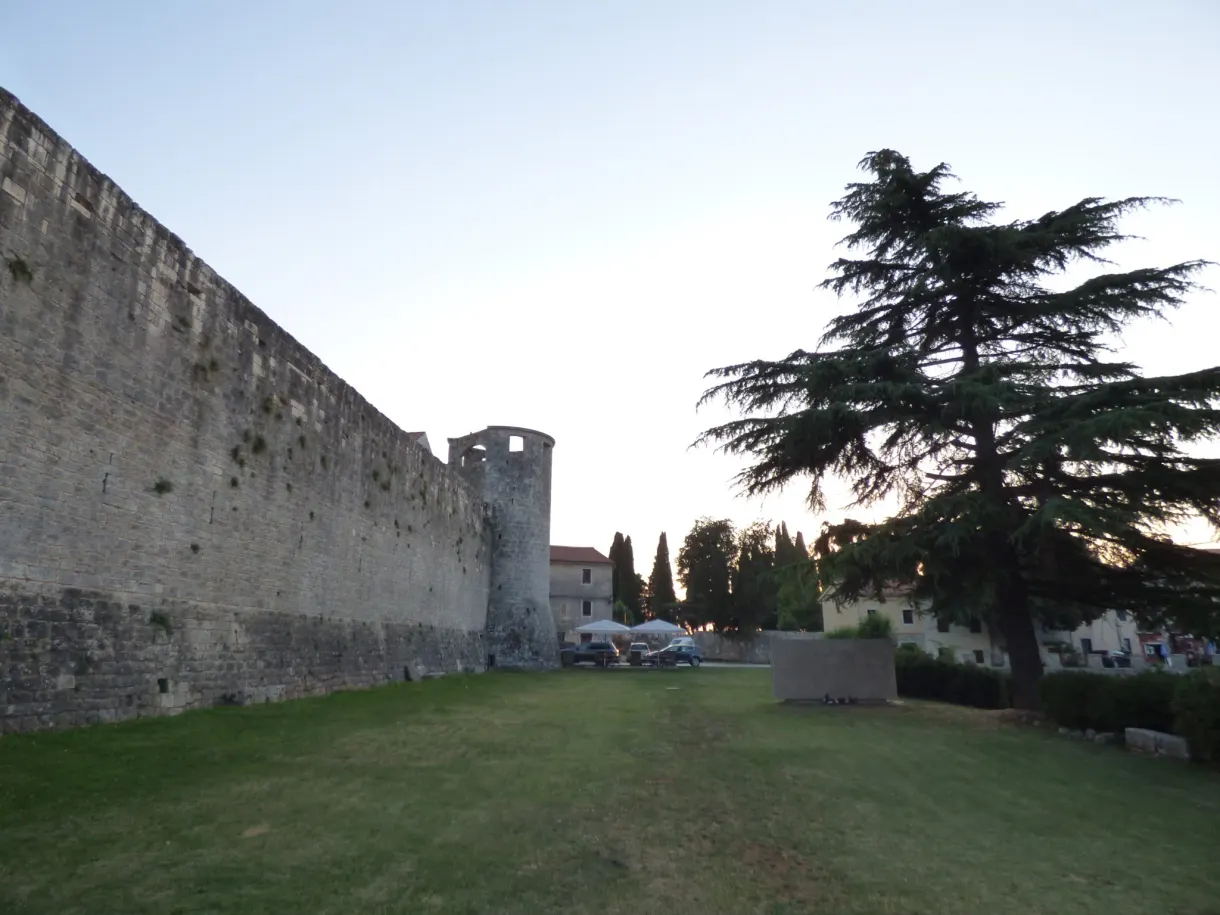
We discovered Bale at the end of the day and unlike many of the villages we drove through, this one was quite lively in the evening with a few bars and restaurants. A small medieval town, Bale is surrounded by ramparts: one of its major monuments is the fully restored Bembo palace. Worth seeing!
Vodnjan
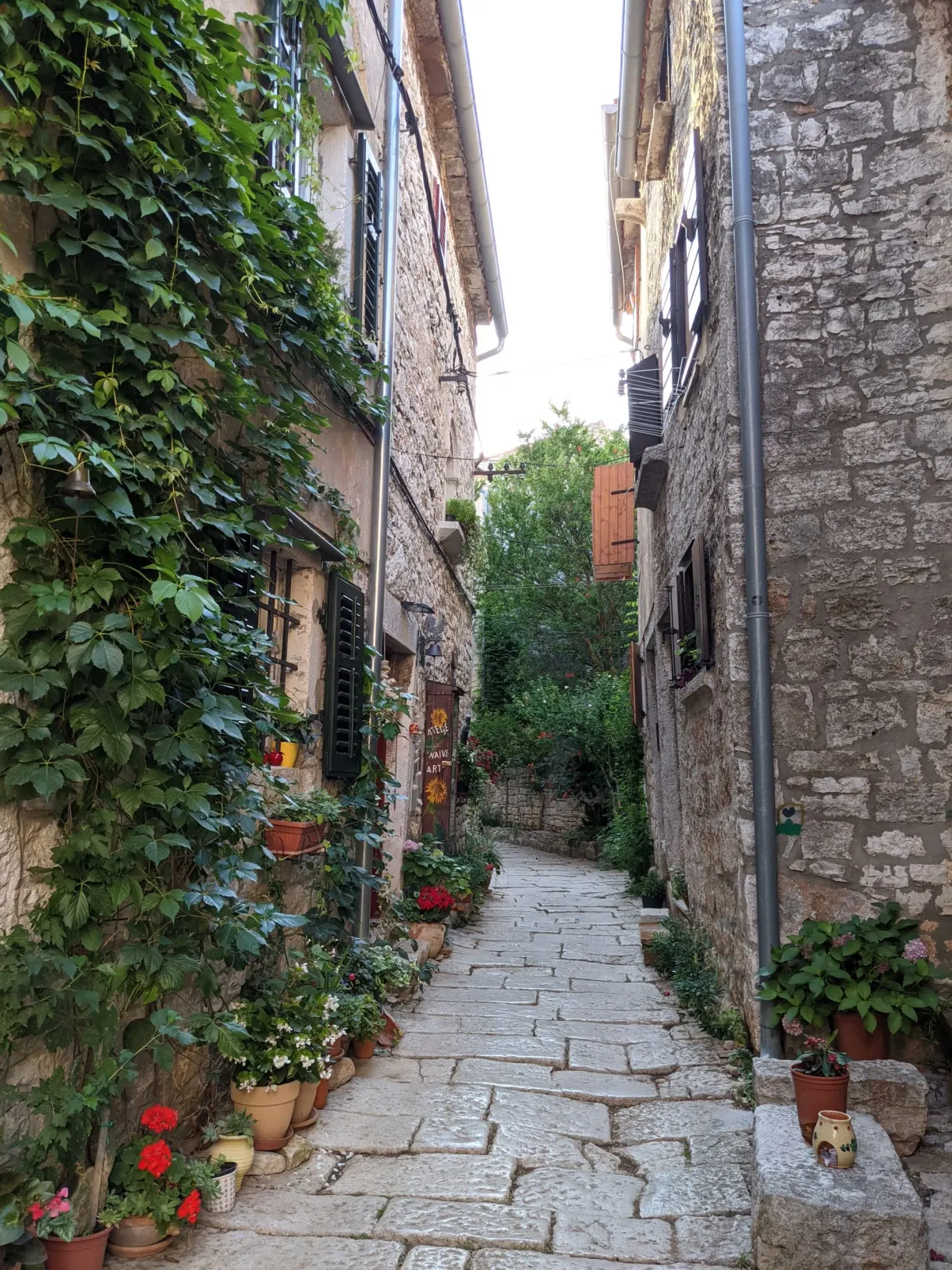
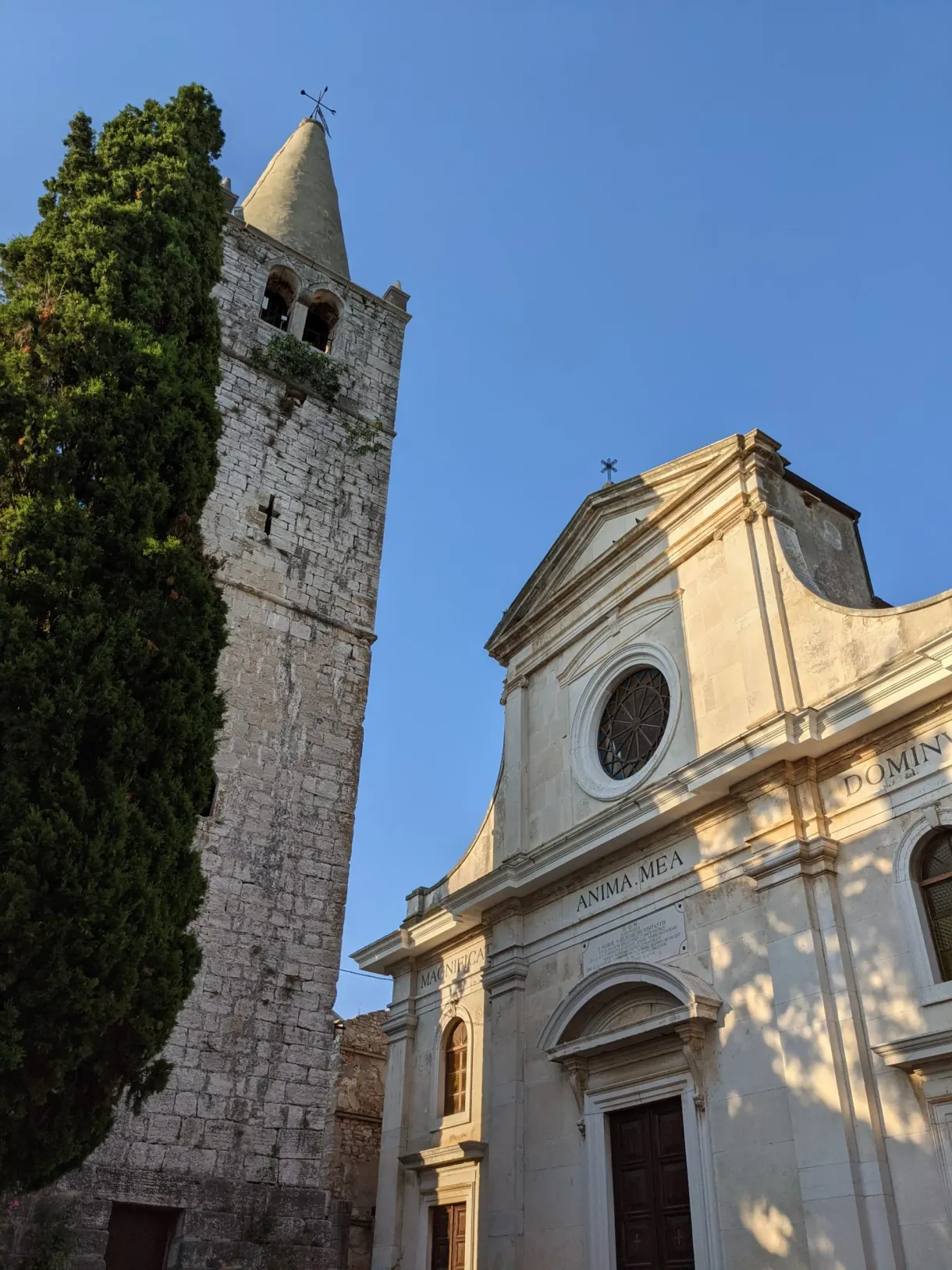
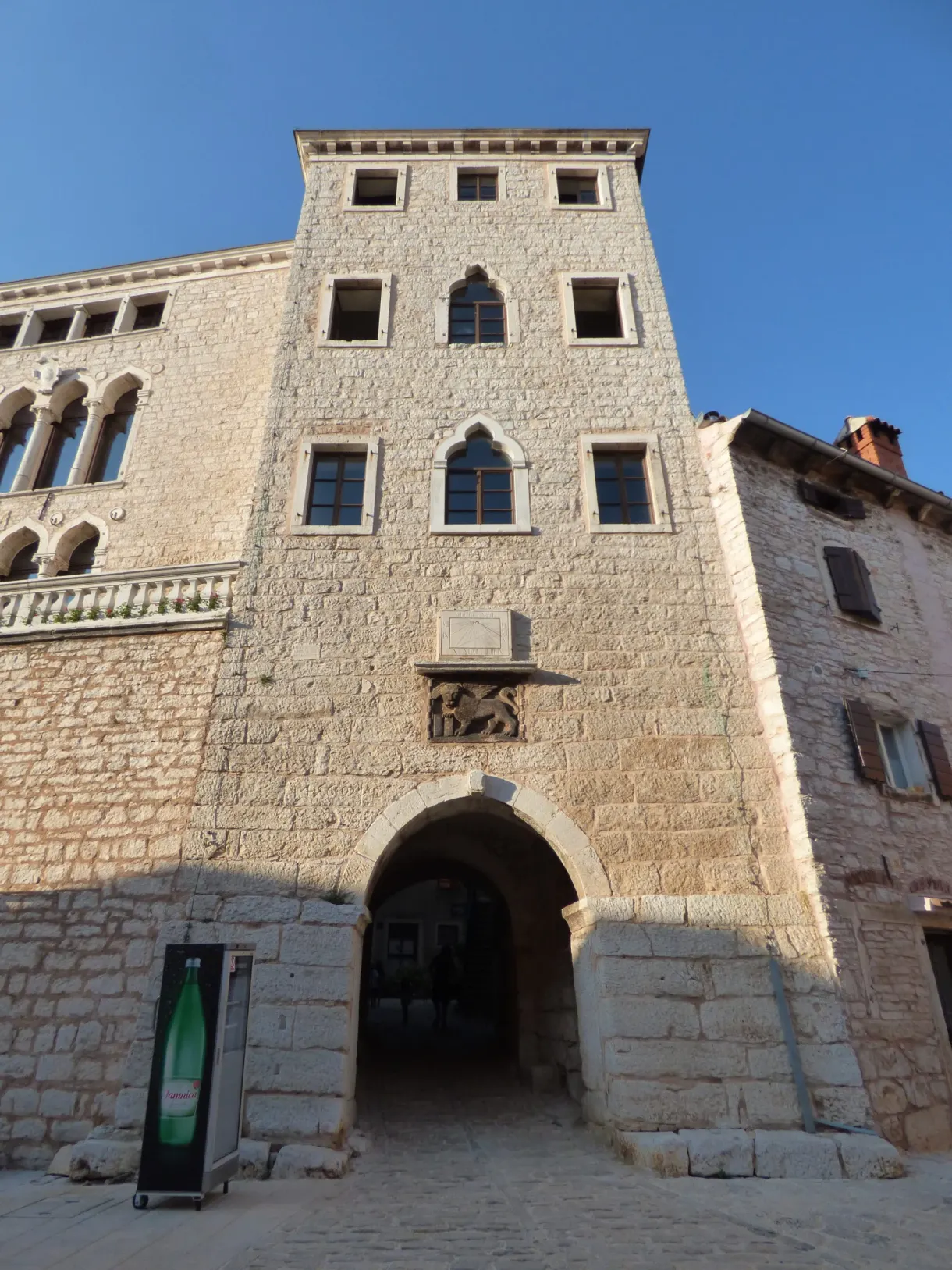
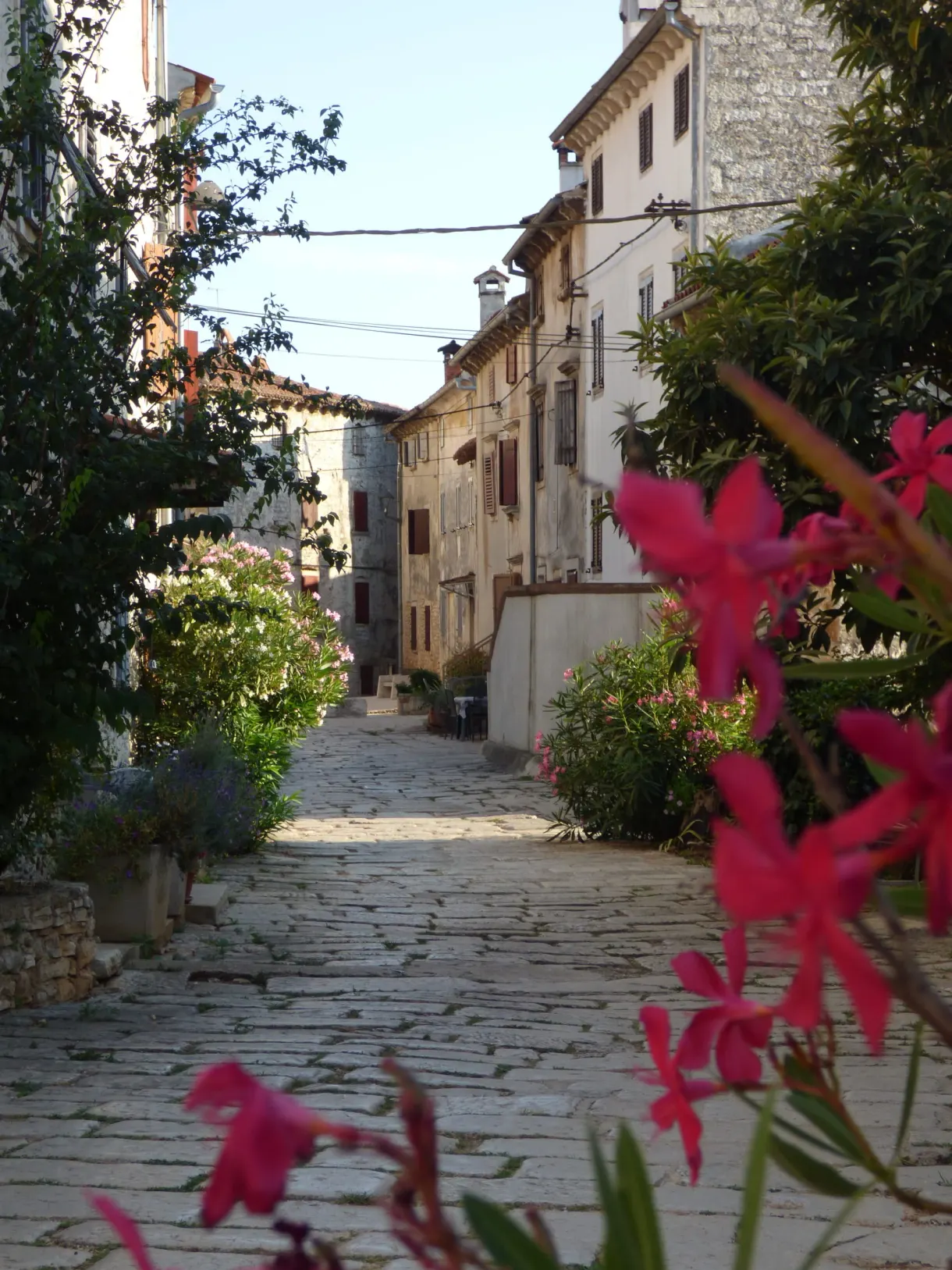
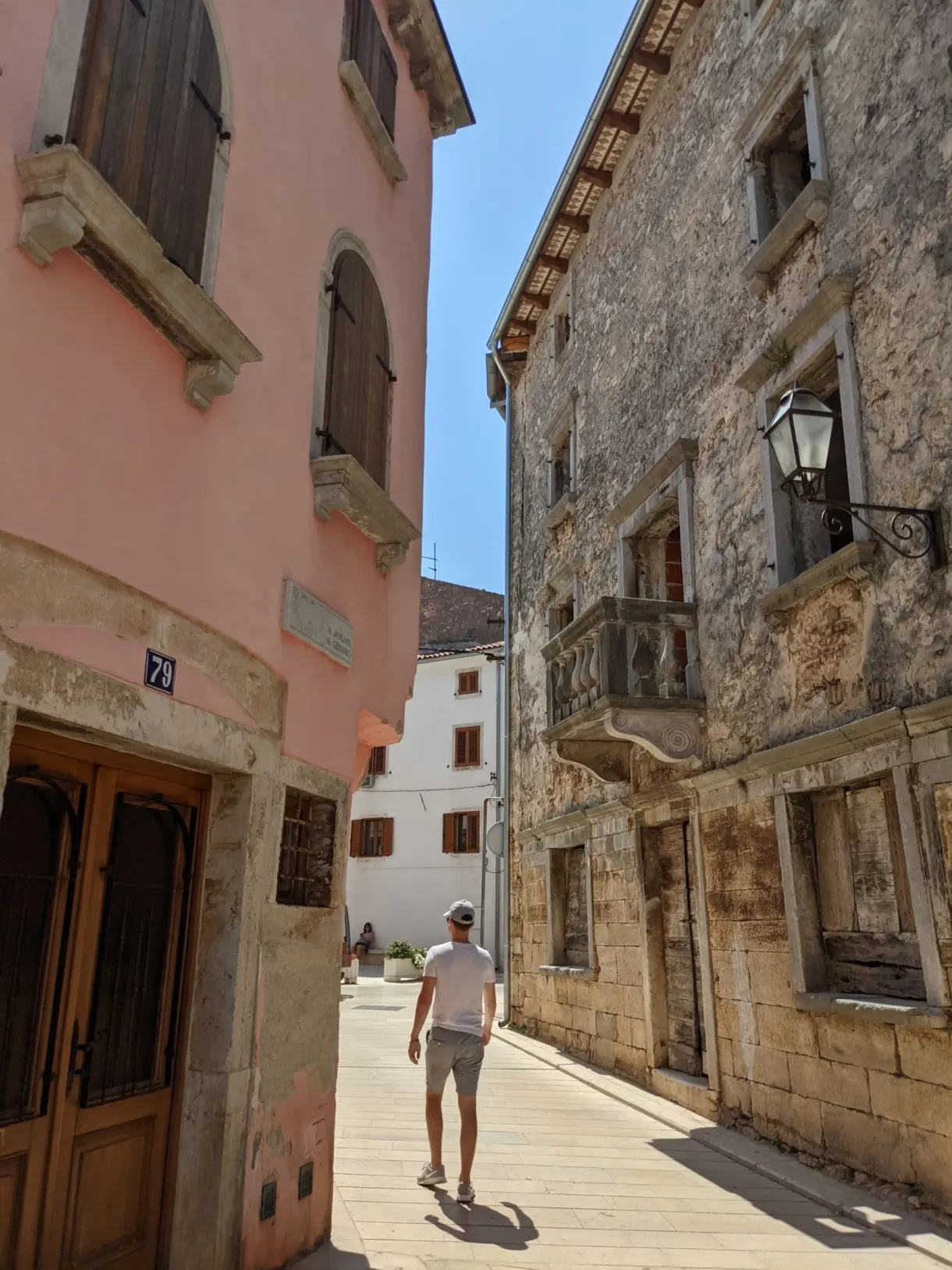
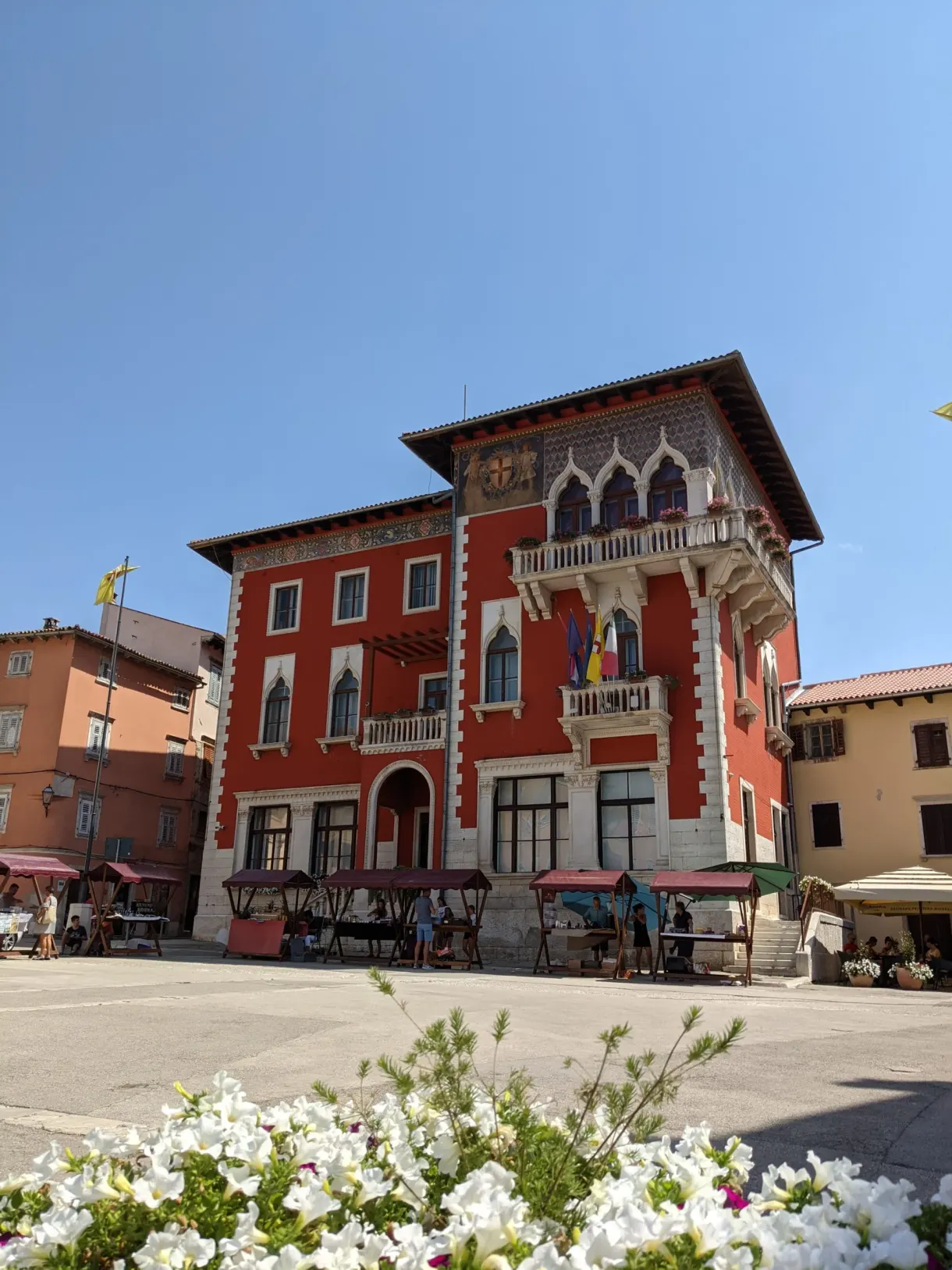
Just before reaching Pula, we stopped at Vodnjan, an old village that has a pretty main square with a few historic palaces. Visiting this small town is not essential but it makes for a break on the road heading to the south of Istria. The village is best known for its six mummies of saints, which are kept in the S. Blaza church.
The west coast
Poreč
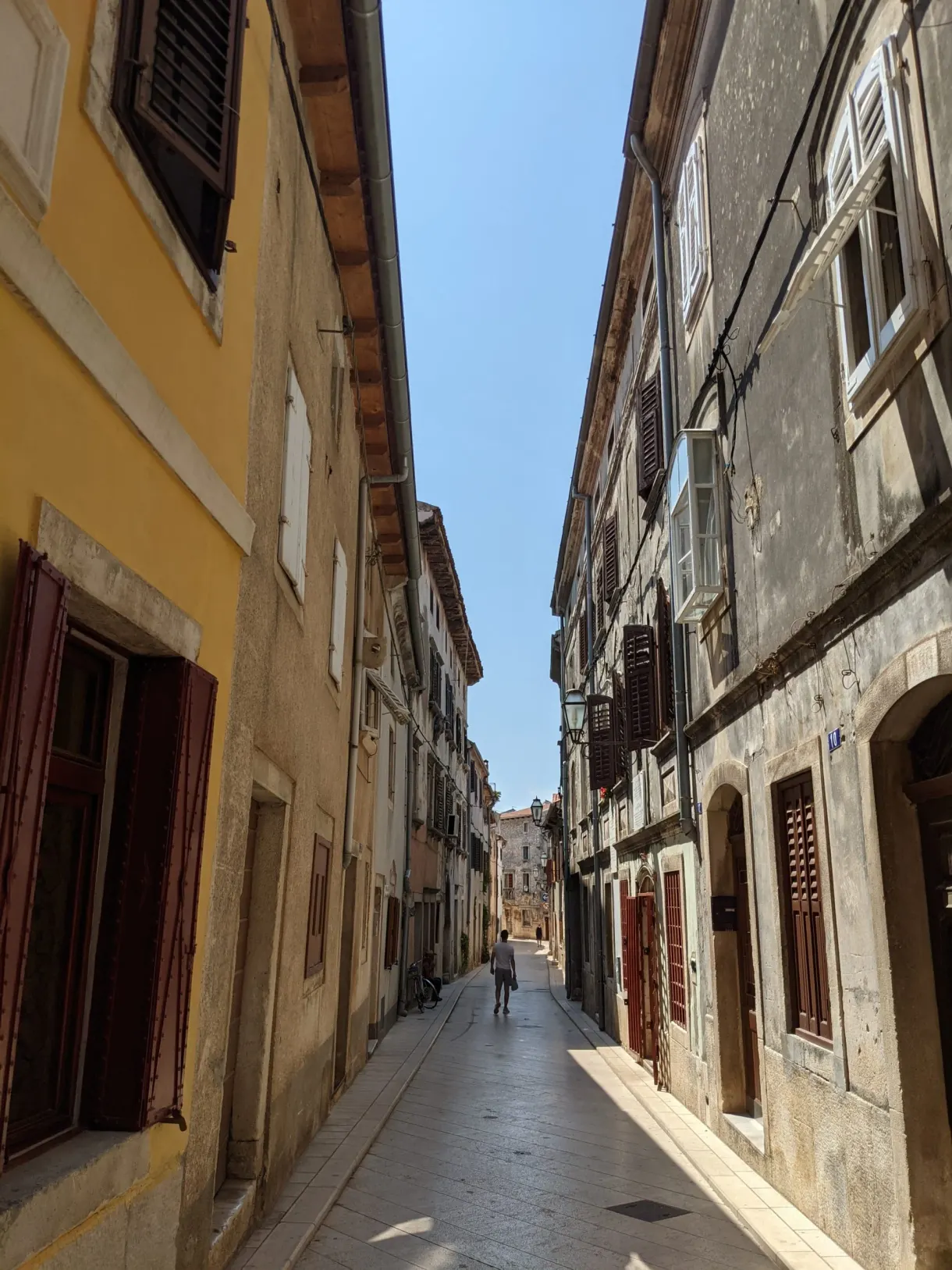
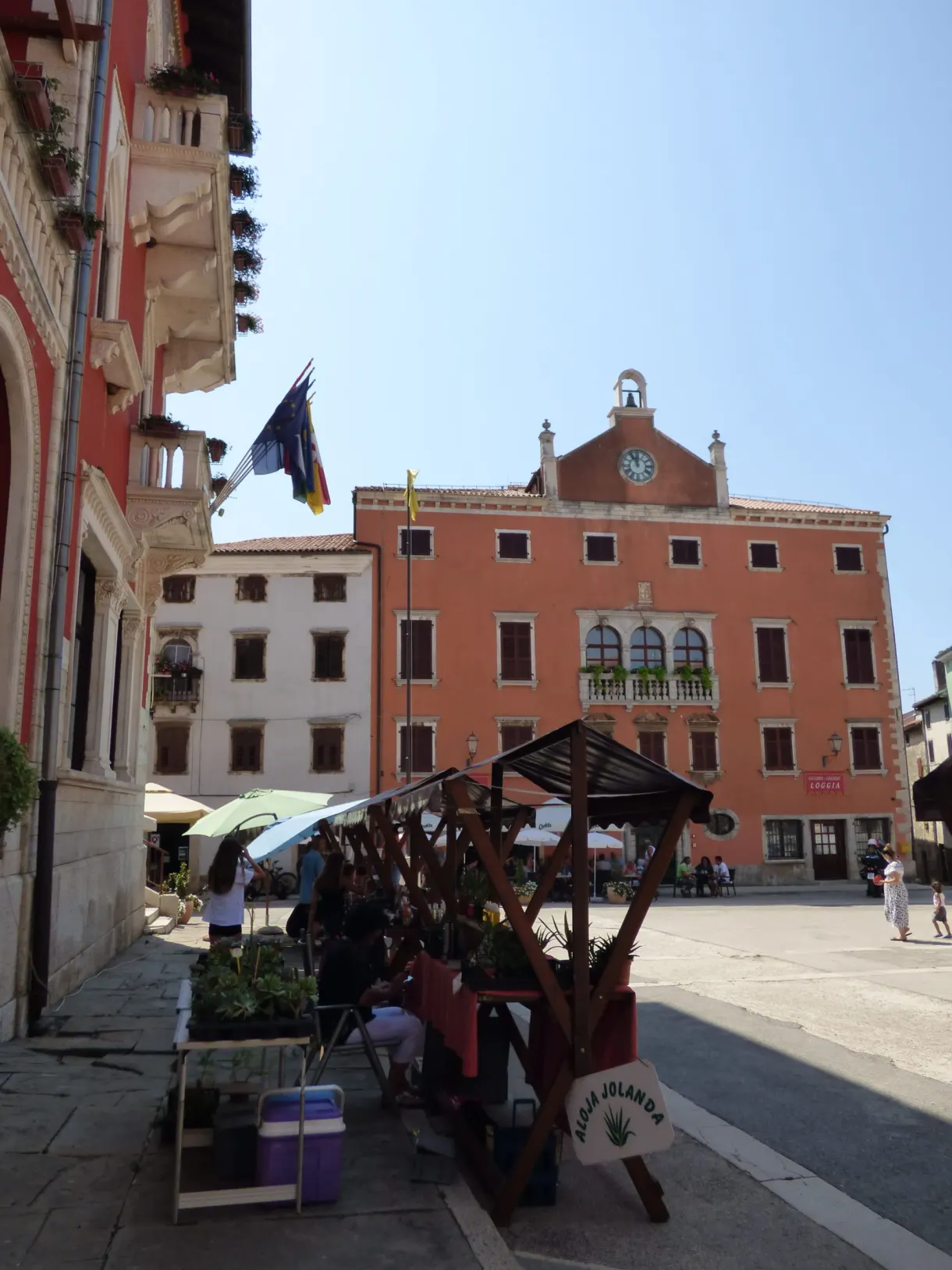
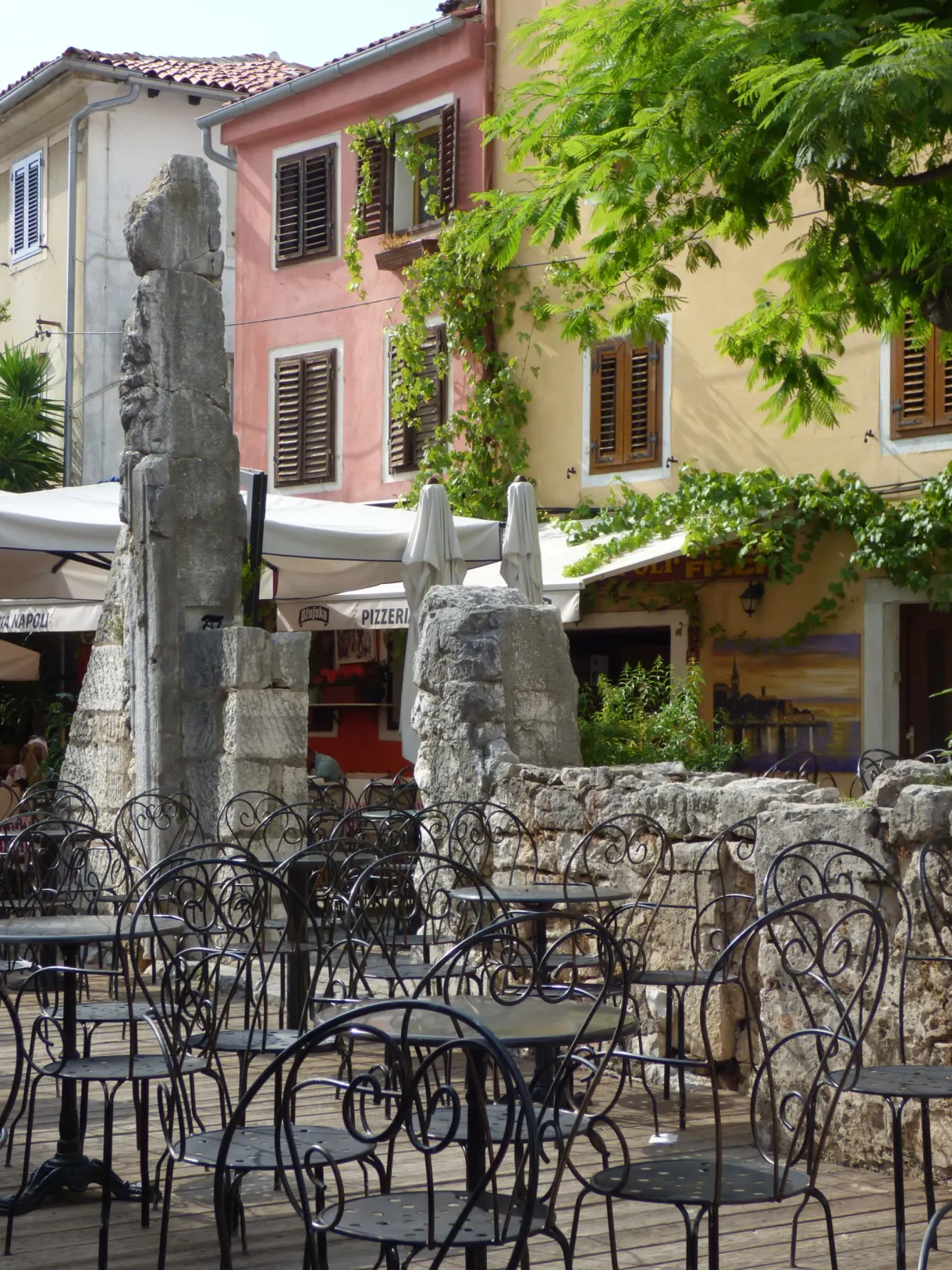
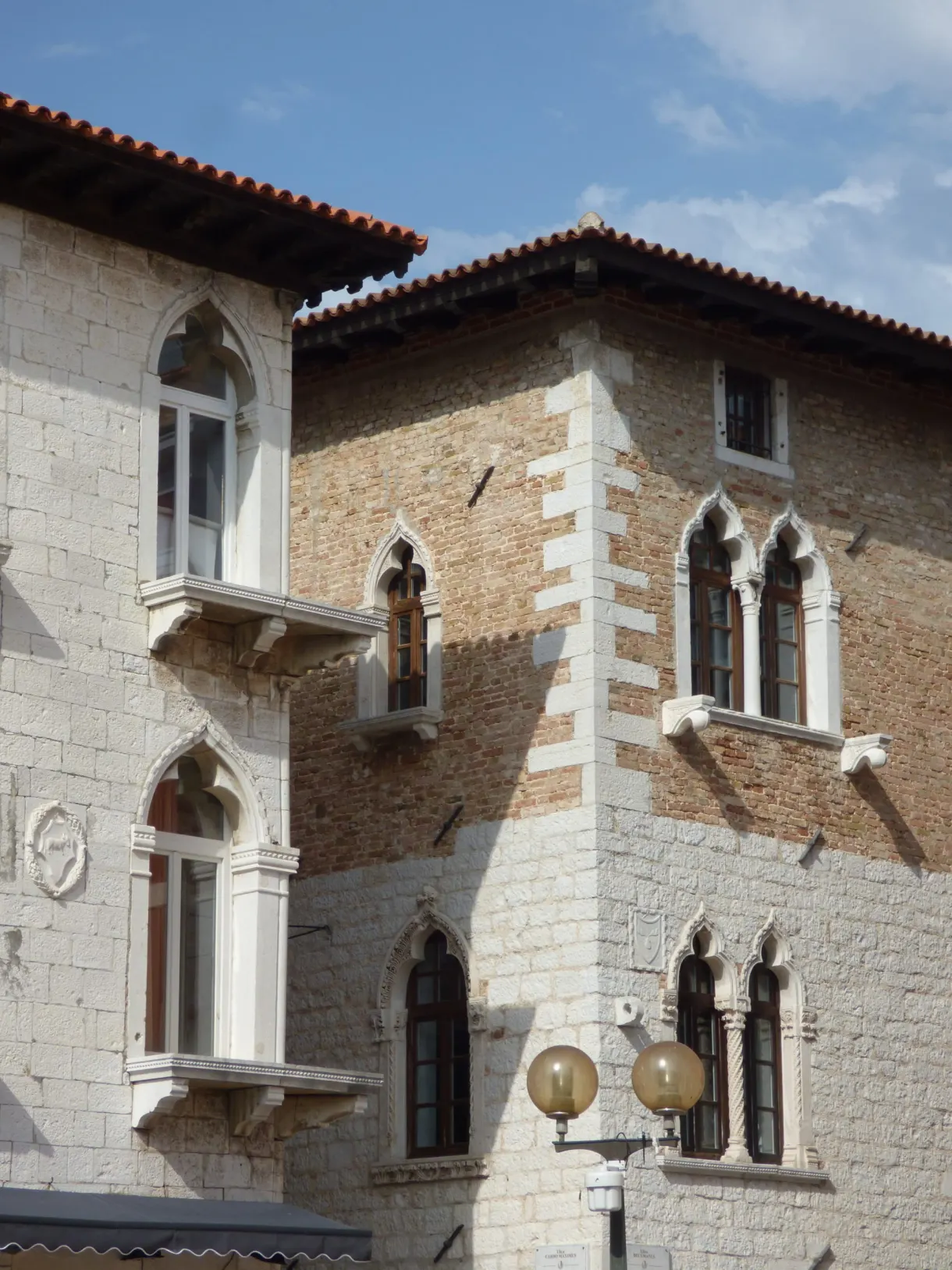
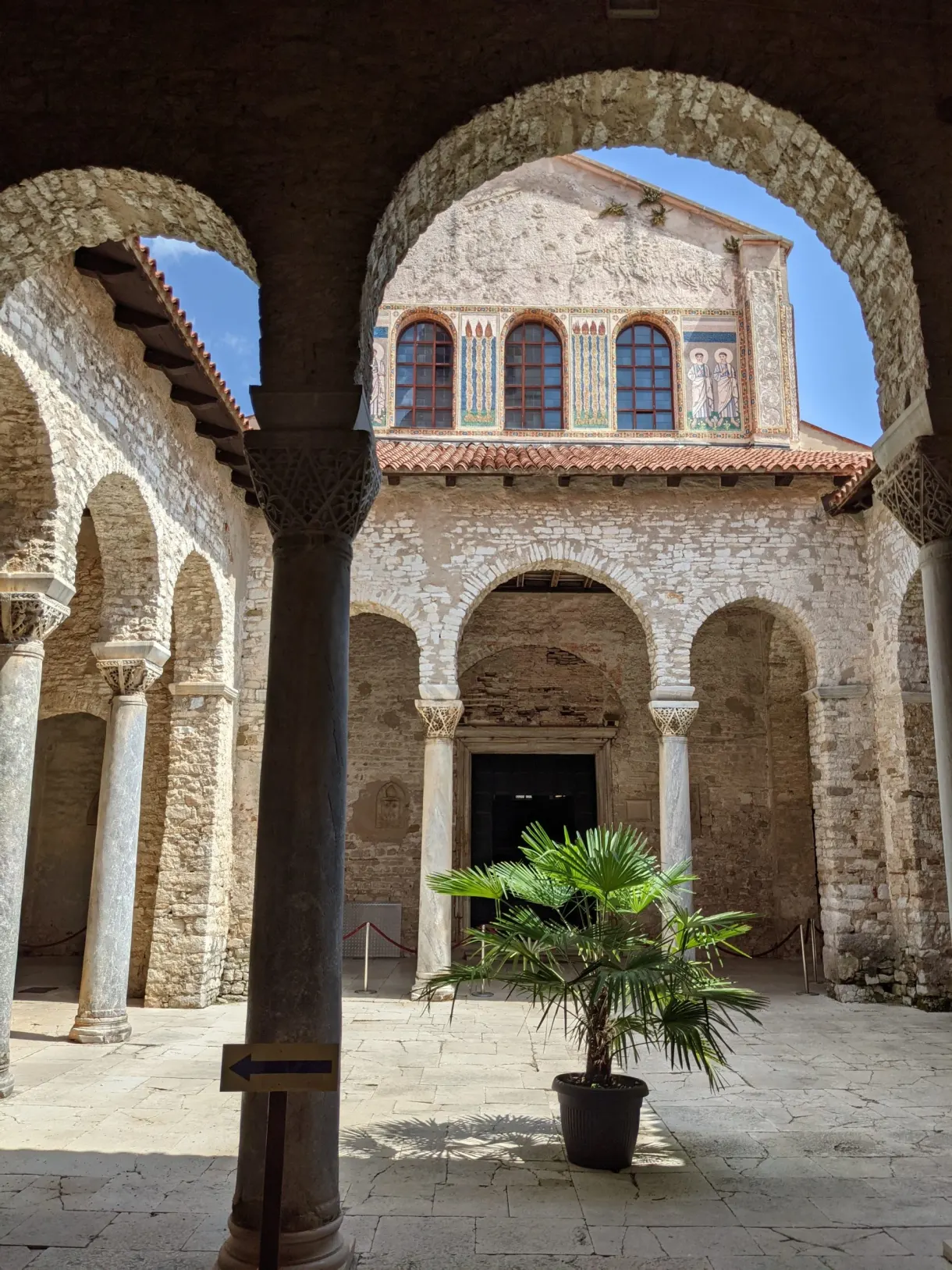
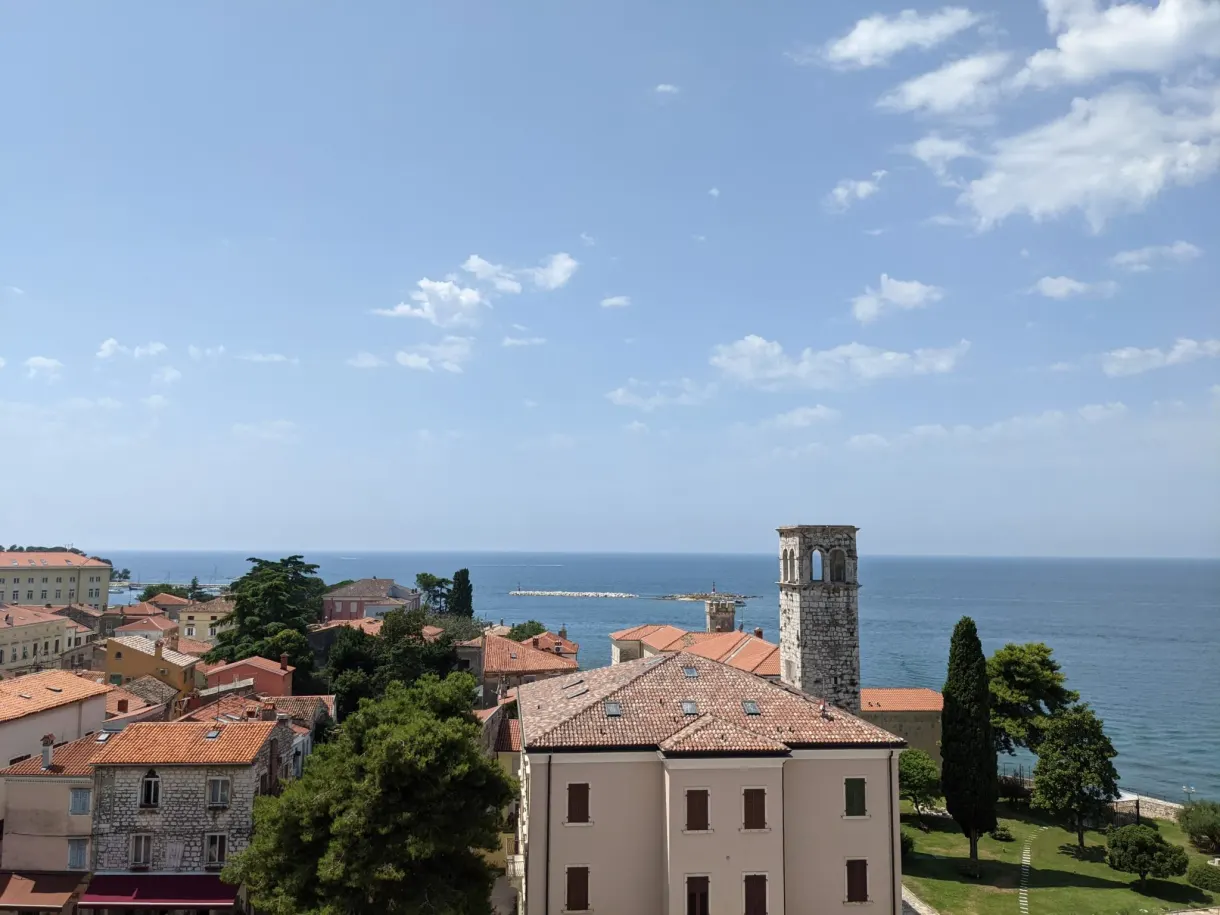
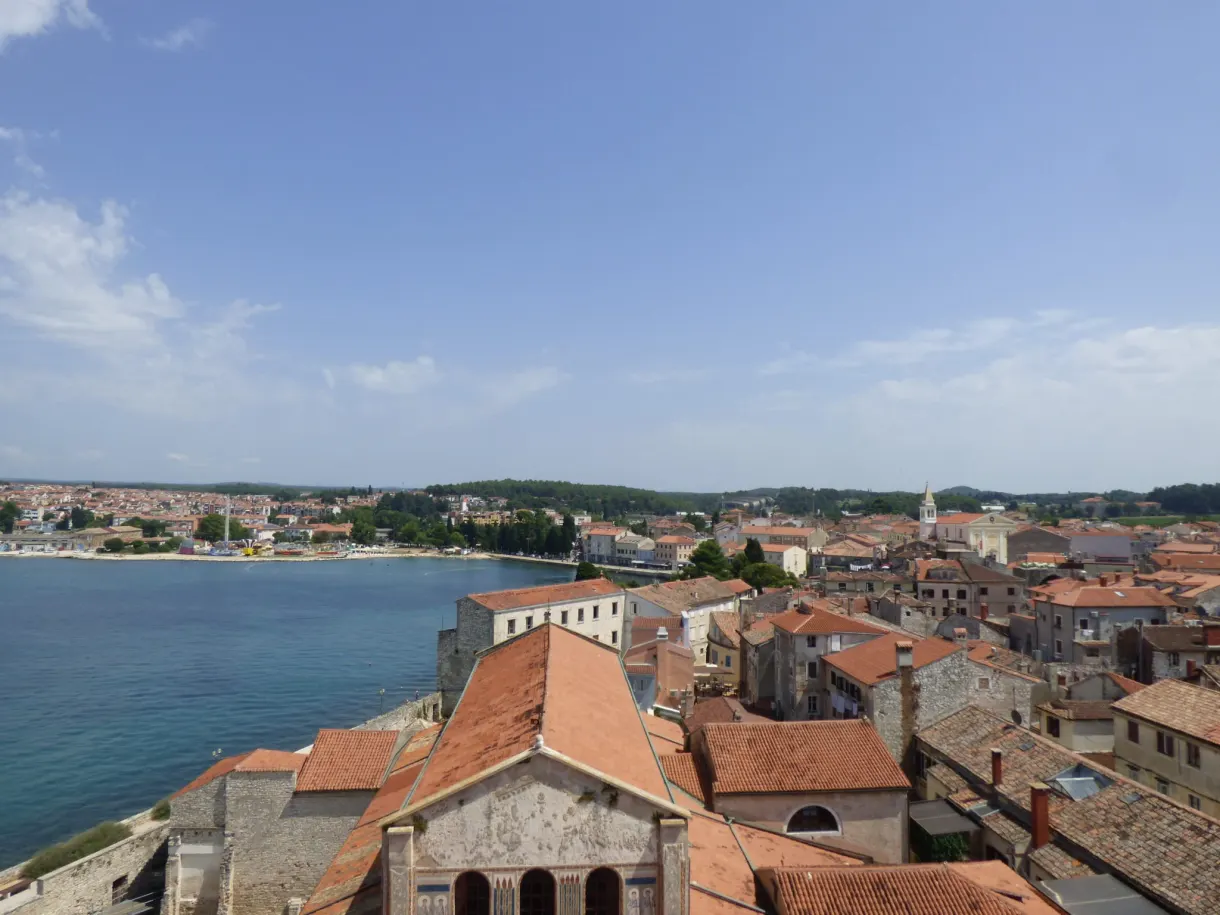
If you are only to visit two coastal towns in Istria, we advise you to see Poreč and Rovinj. On our side, we were very taken with the historic centre of Poreč, which has kept many remains of its Roman past. The heart of the town is pedestrian, which makes strolling in the cobbled lanes and around the ramparts very pleasant. Several monuments are worth noting: the Romanesque House, the House of Two Saints, Palais Zuccato… look up!
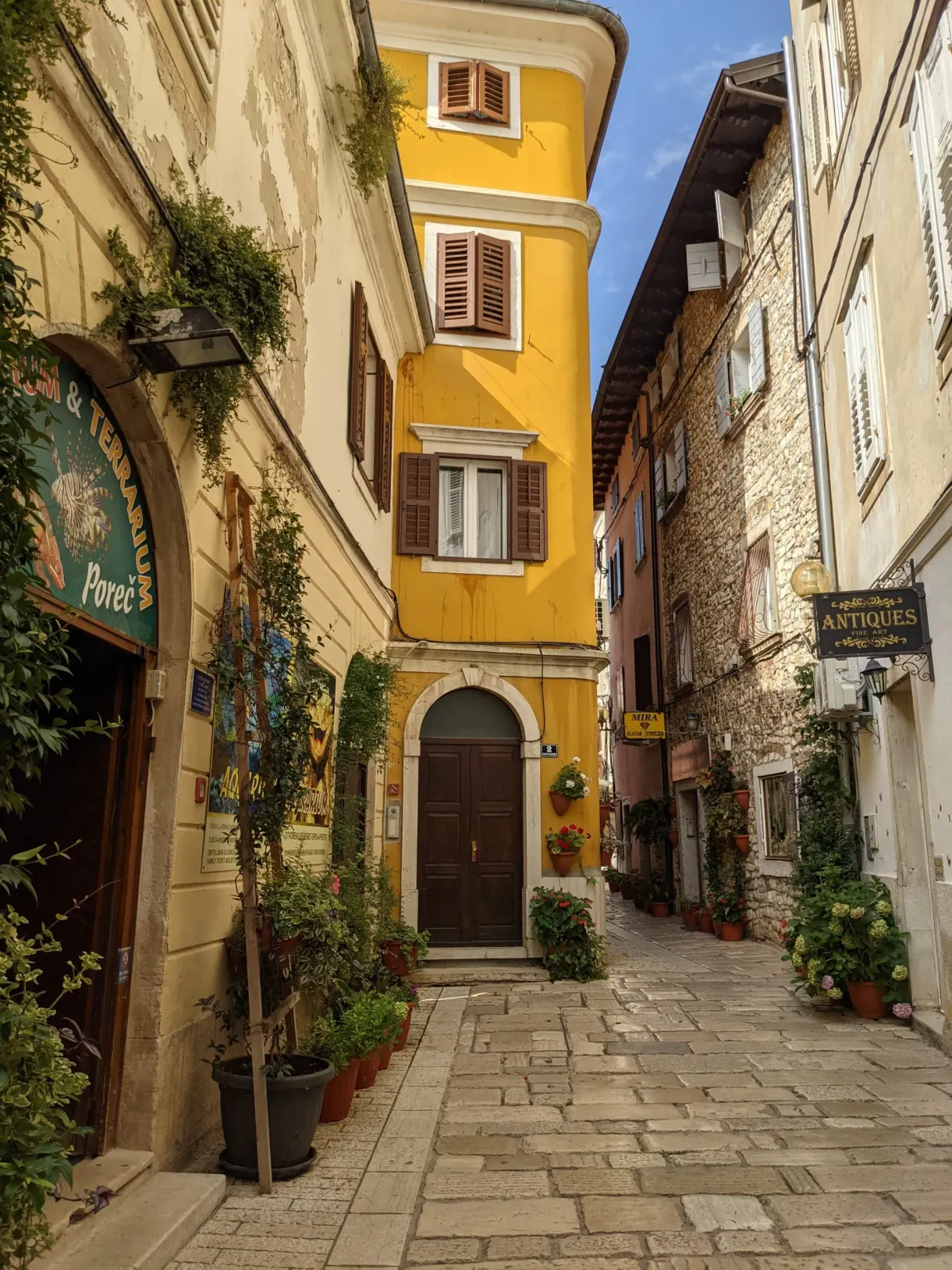
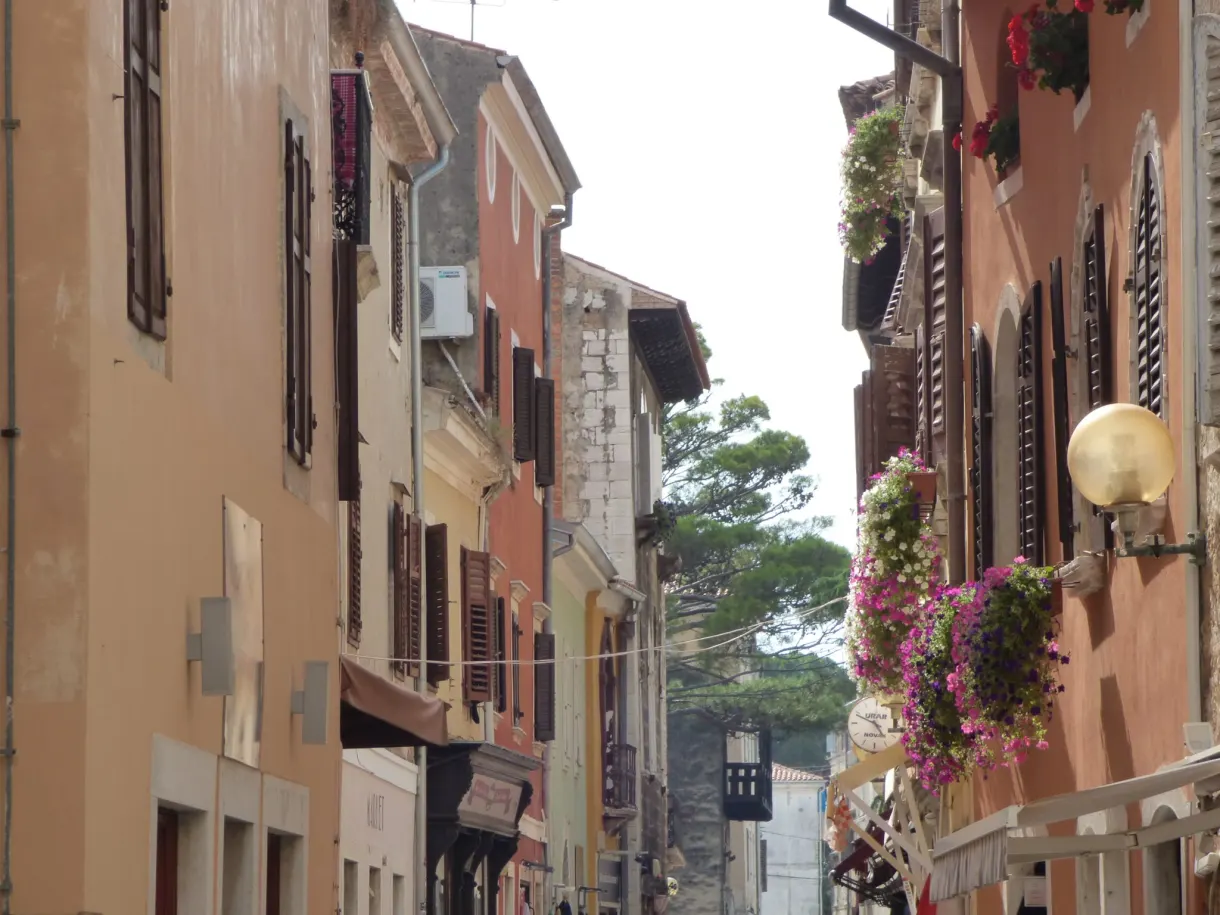
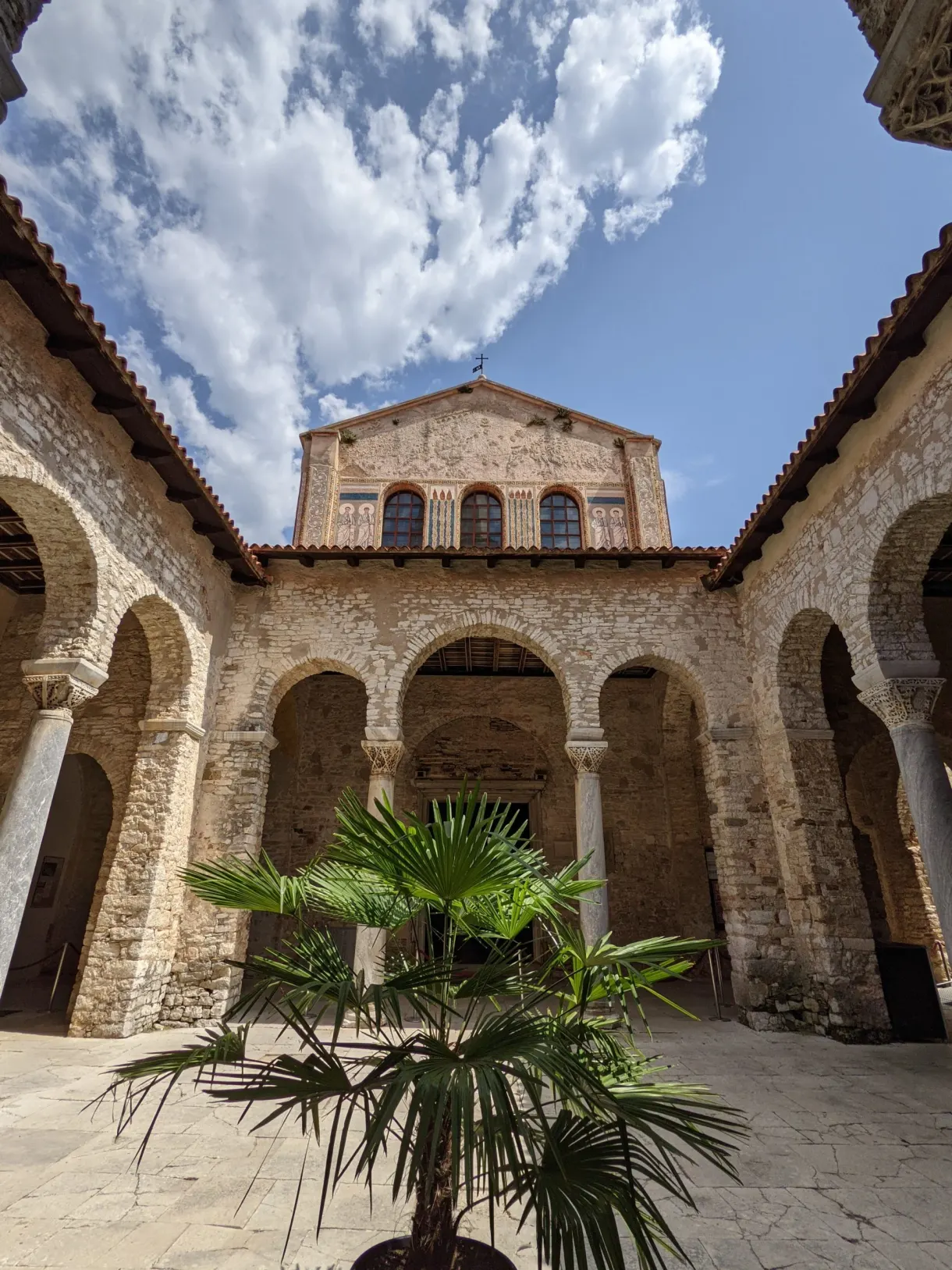
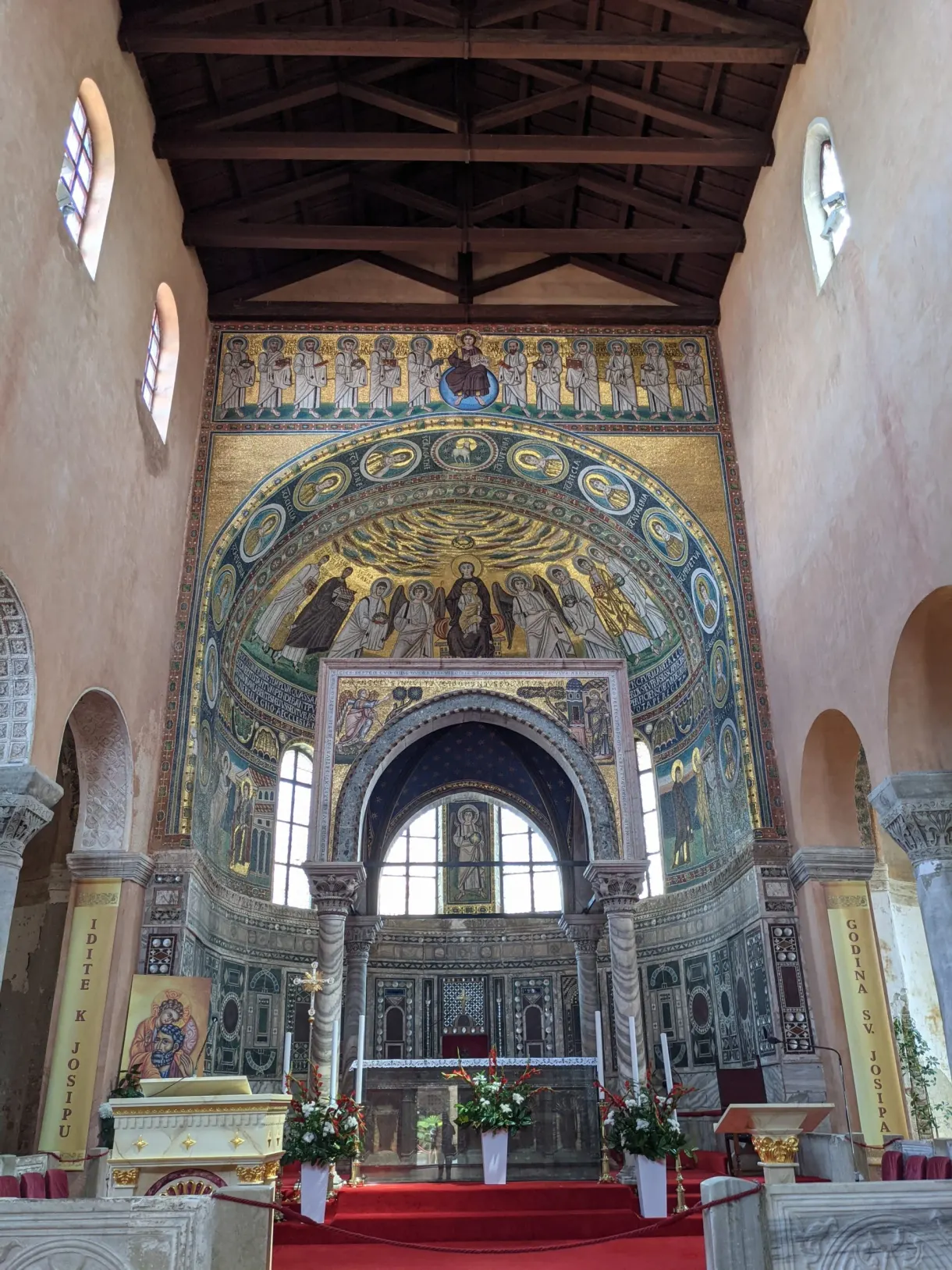
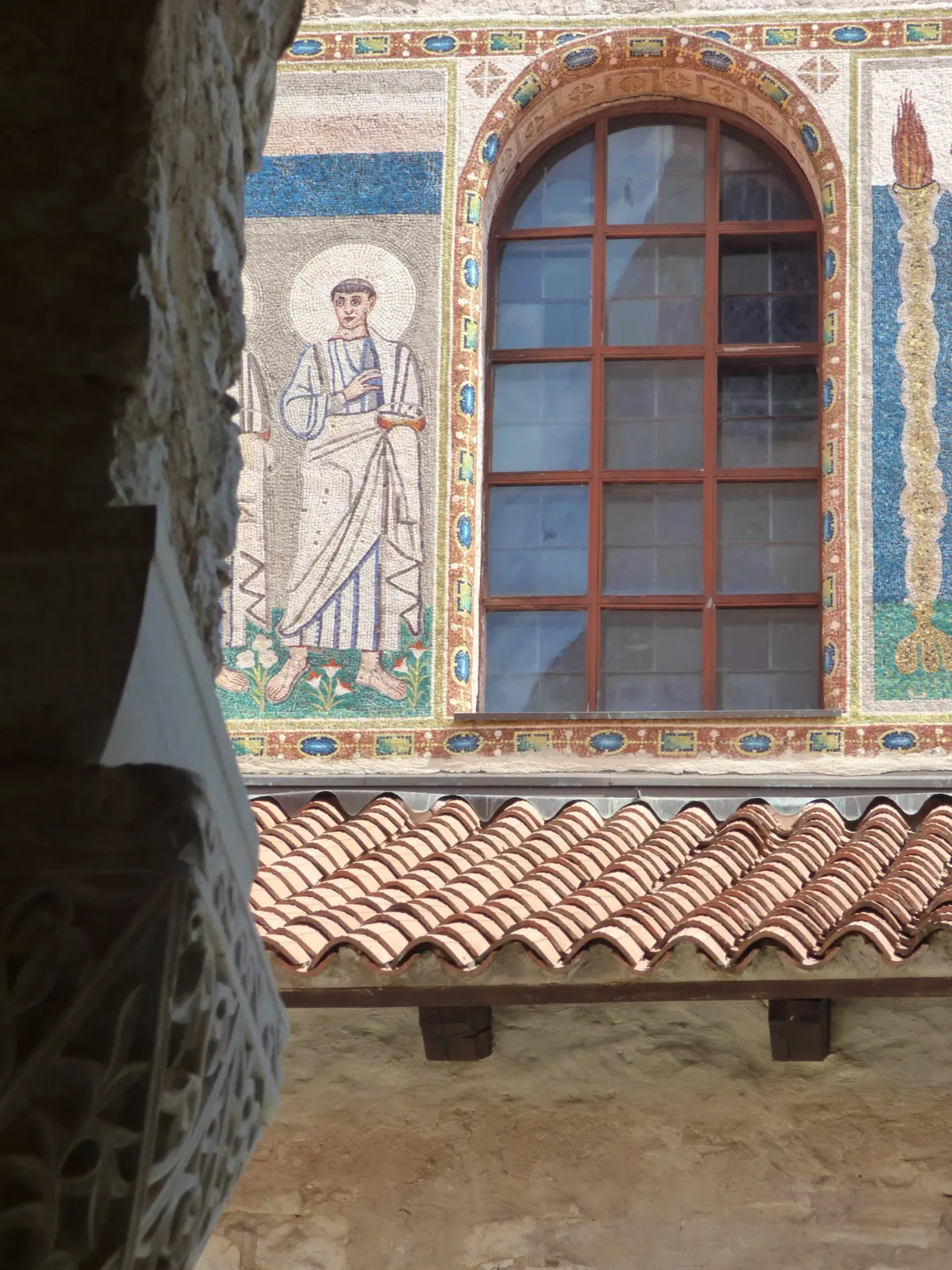
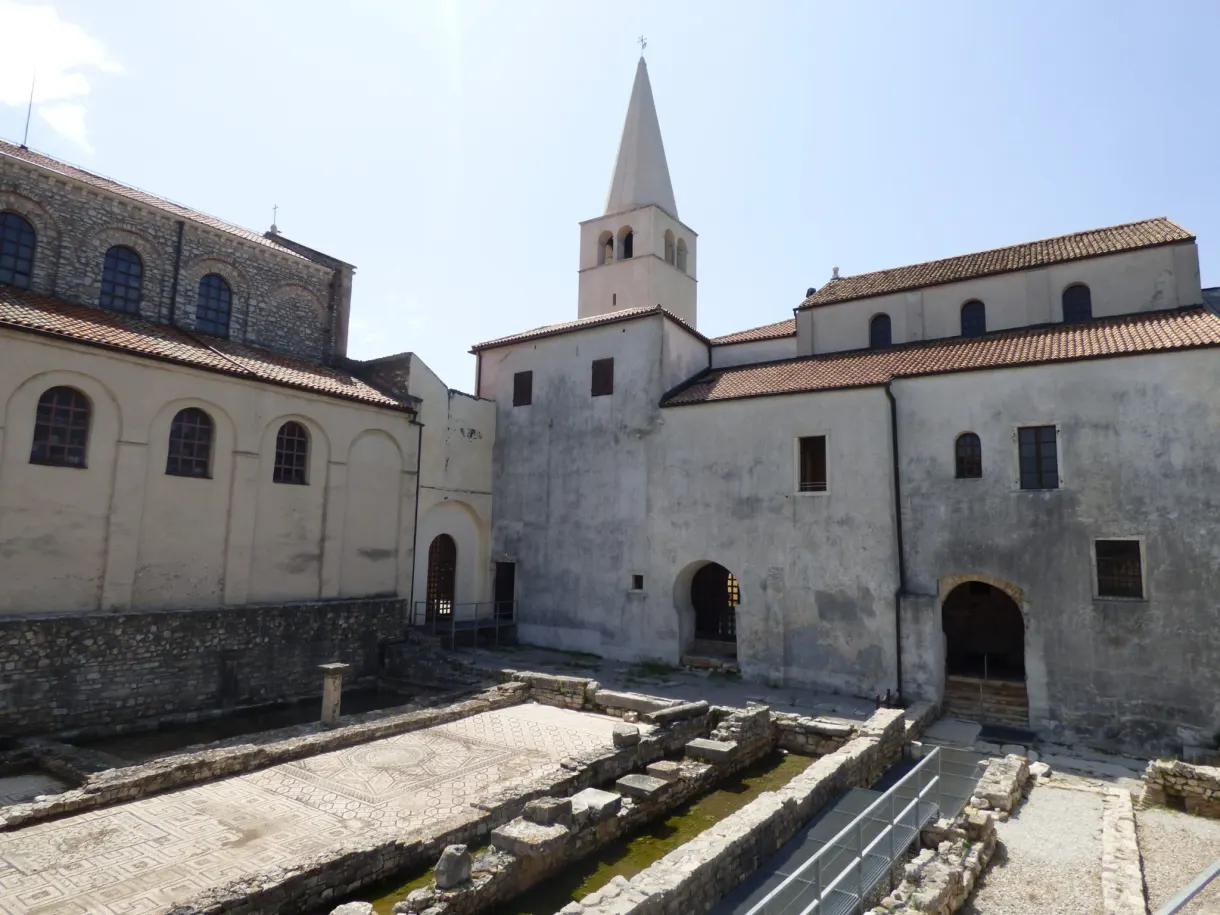
In Poreč, whatever you do, do not miss the visit of the Euphrasian Basilica, on the Unesco World Heritage list (50kn, 6,70€ for entry). This episcopal complex is very large and magnificently well preserved: the self-guided visit takes about an hour (a little more if you linger in the museum).
Plava Laguna
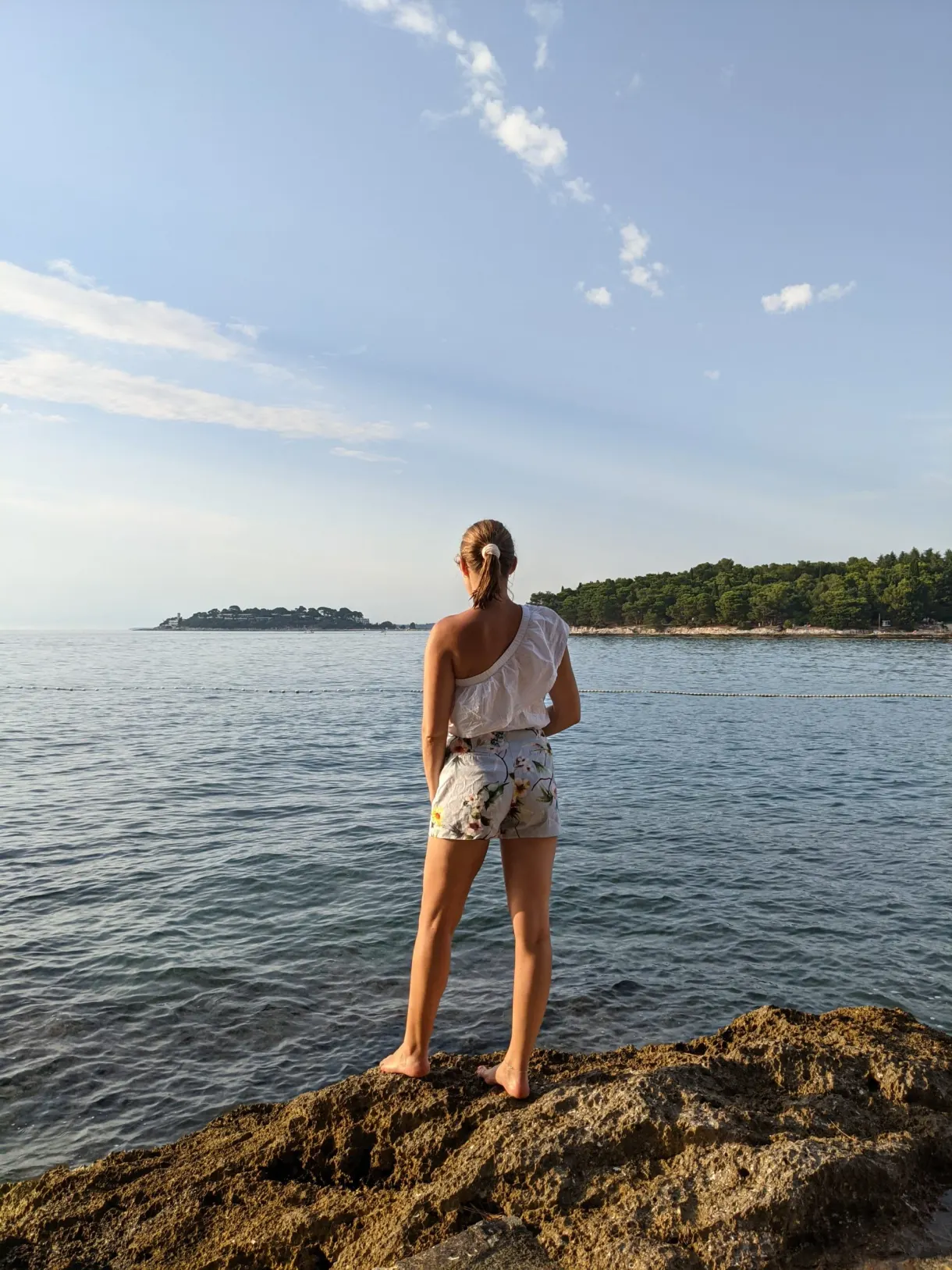
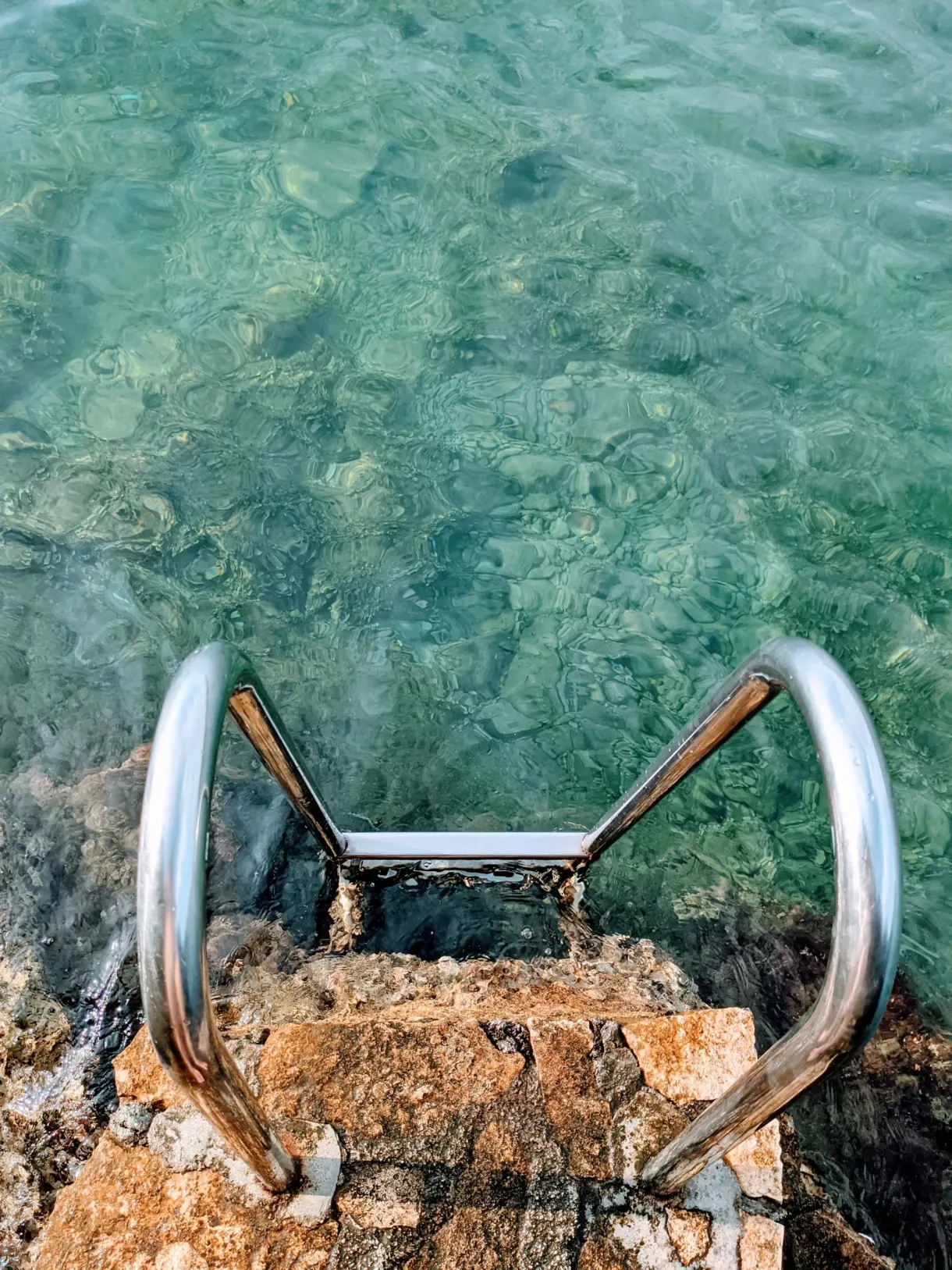
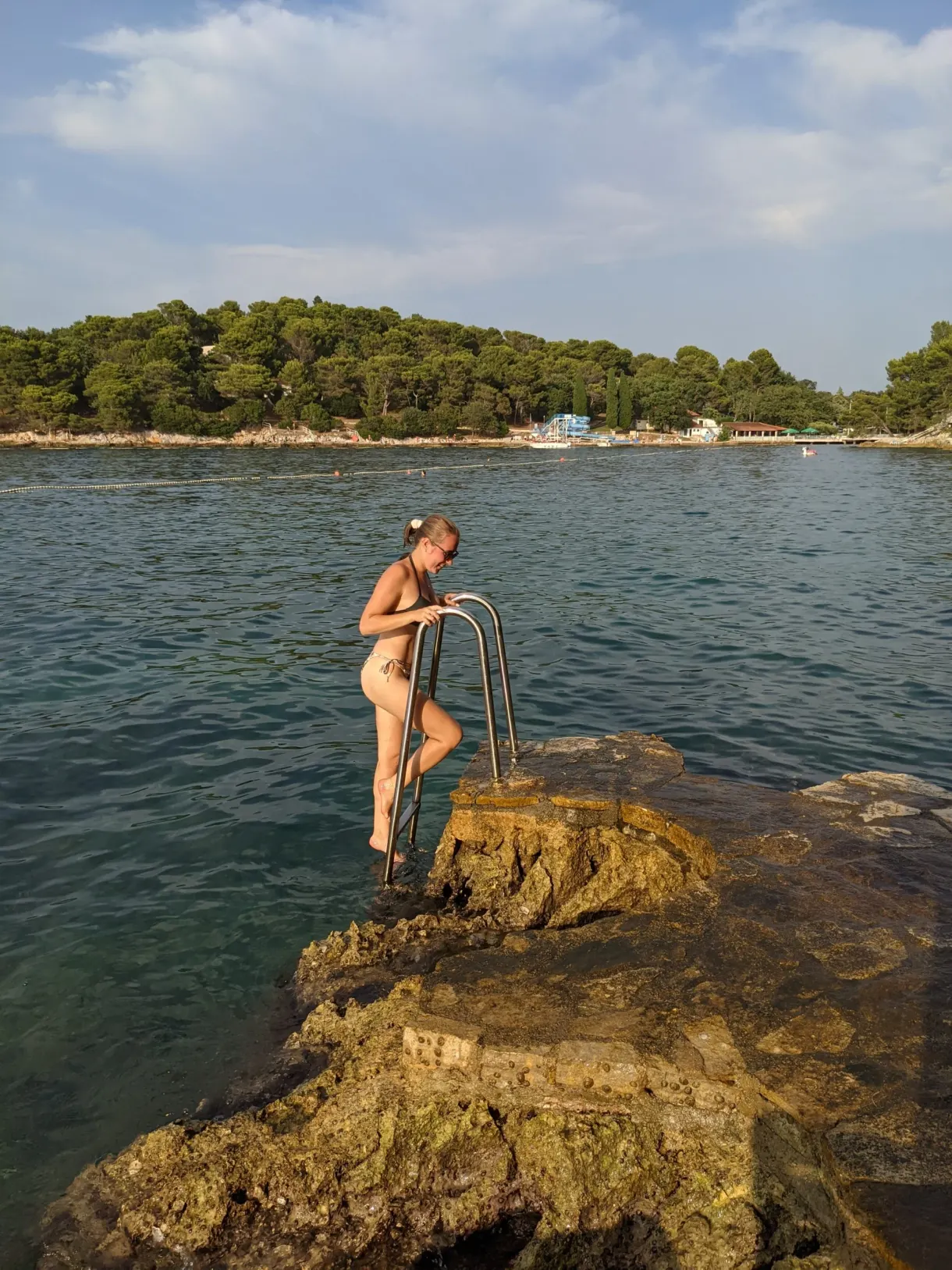
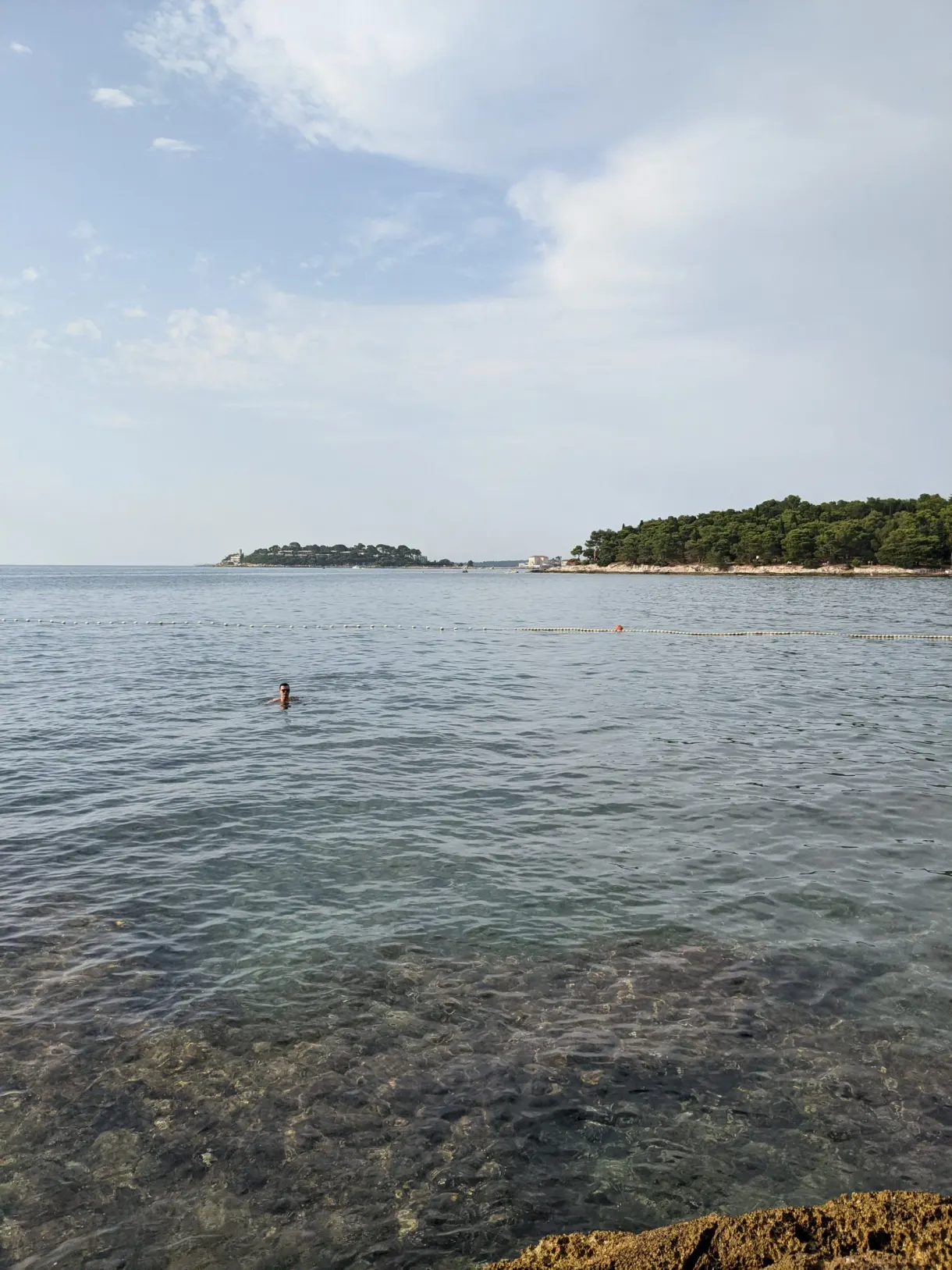
With the somewhat stifling heat, we looked for a beach to cool off. We chose to go to Plava Laguna, south of Poreč in the hotel zone, which has the advantage of being a bit set up: concrete platforms let you lay down your towel and there are even showers available. Try to go at the end of the day to avoid the crowds! Watch out though for the rocks, which hurt your feet terribly: it is better to swim with shoes on.
The Lim canal
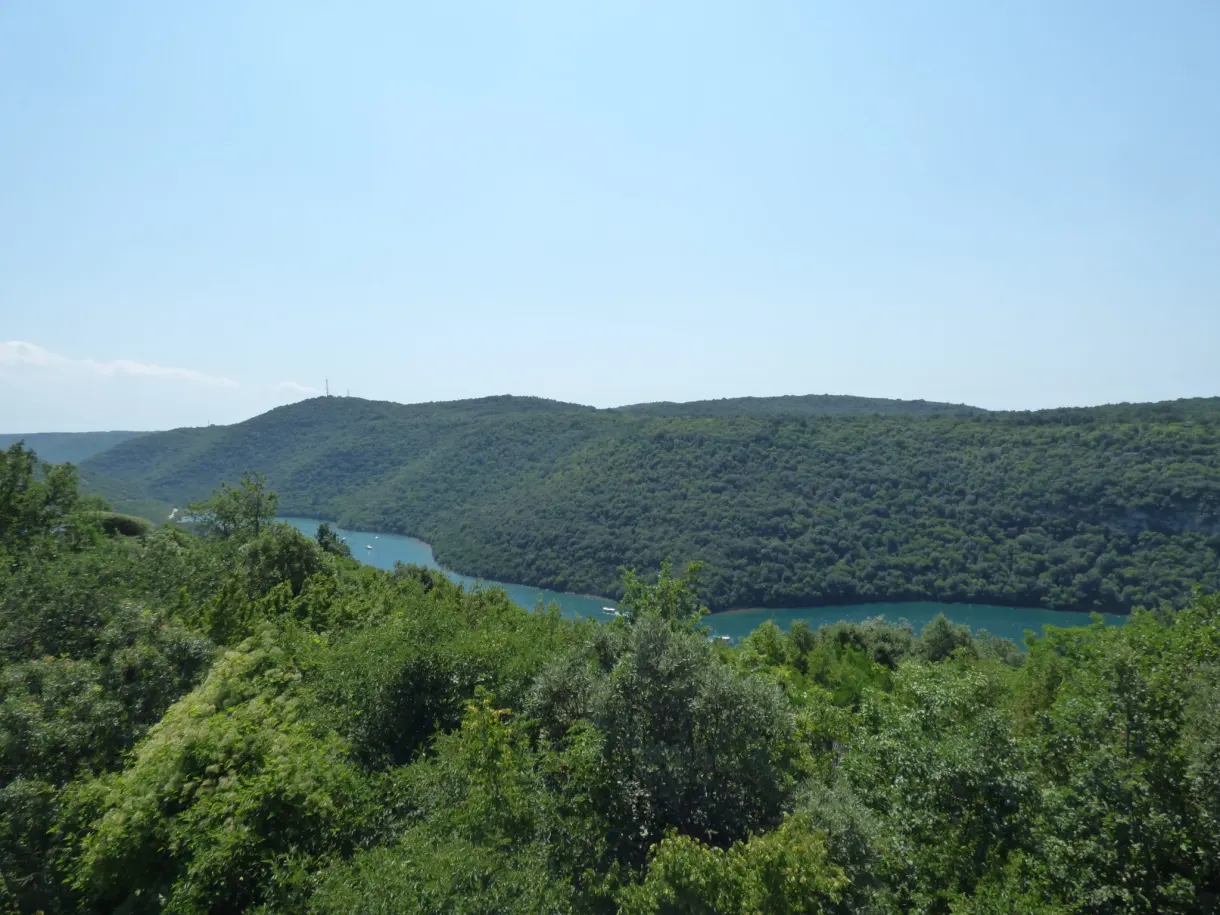
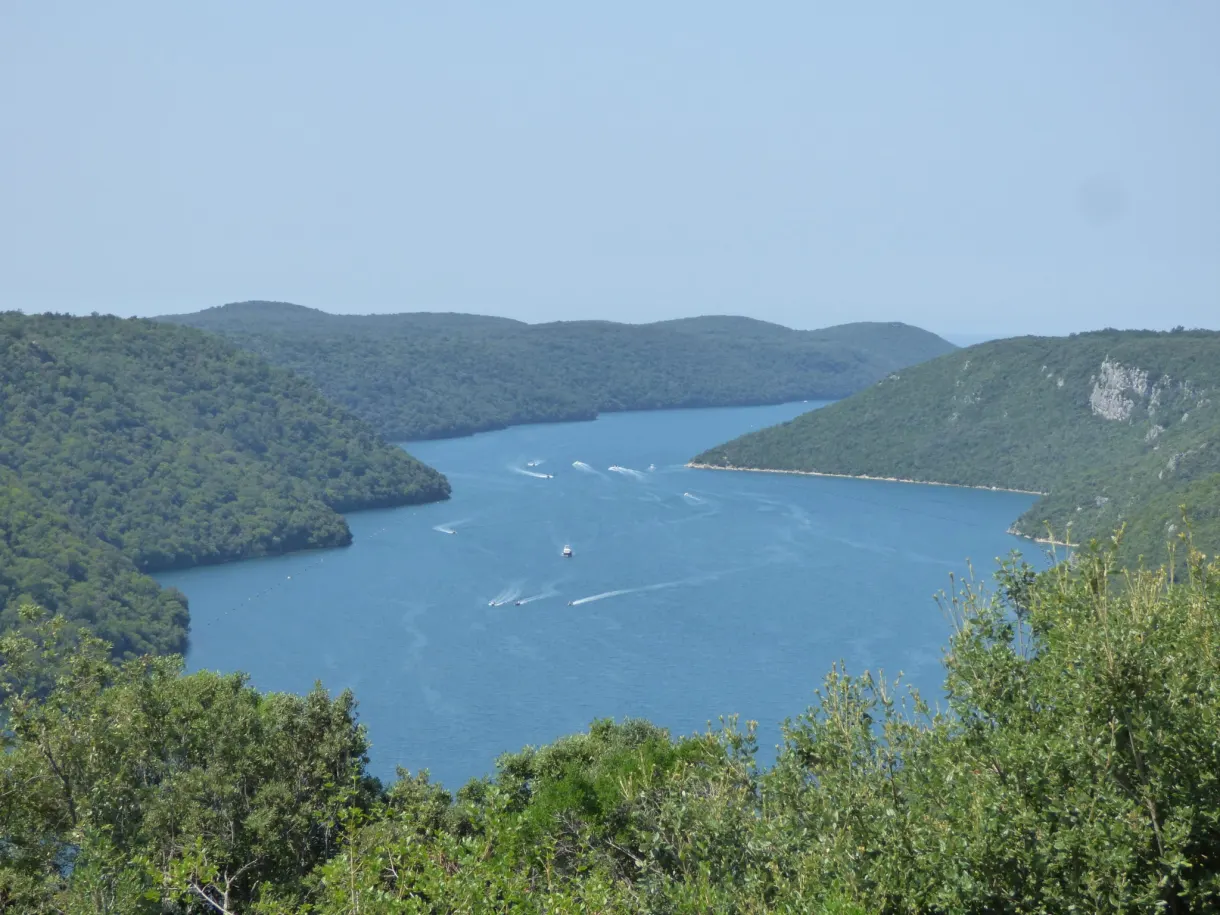
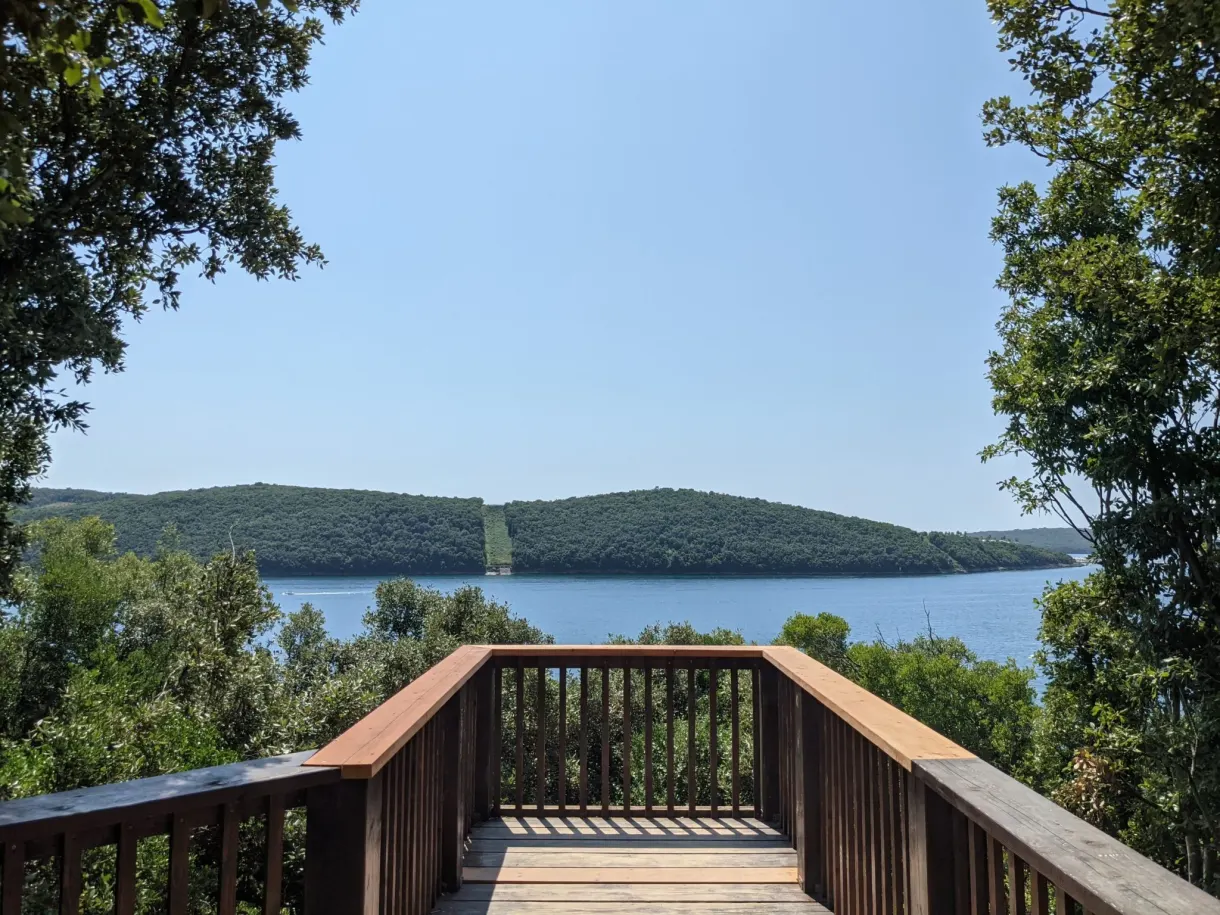
Between Poreč and Rovinj is the Lim river valley, 10 kilometres long down to the sea. It looks like a small fjord which unfortunately is not very visible from the road. So we made a few stops at viewpoints to admire the landscape more closely: Lim fjord viewpoint and Vidikovac are the two views worth the detour. If you are short on time, do not take this canal road: the Plomin fjord on the east coast is far more impressive!
Rovinj
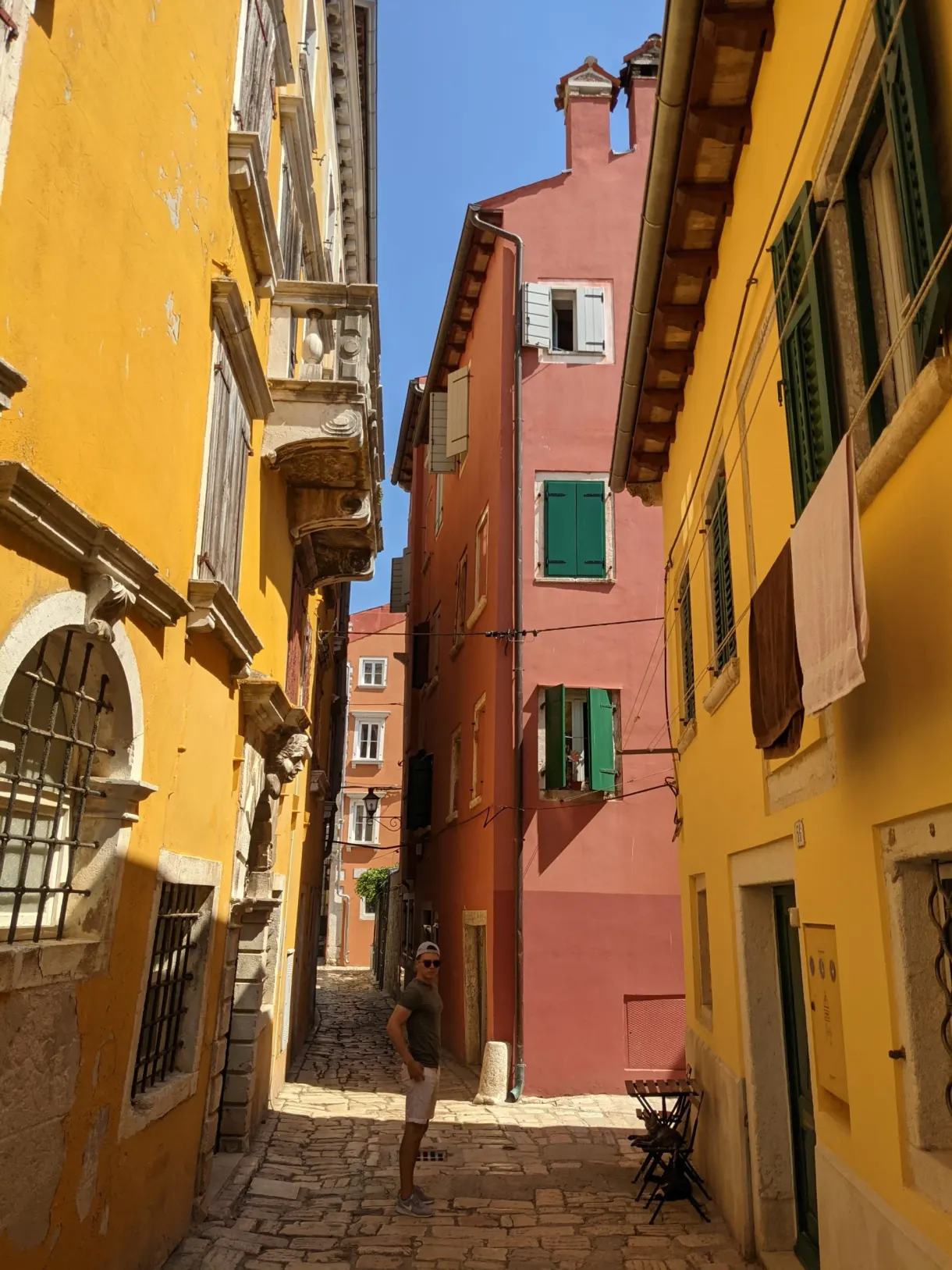
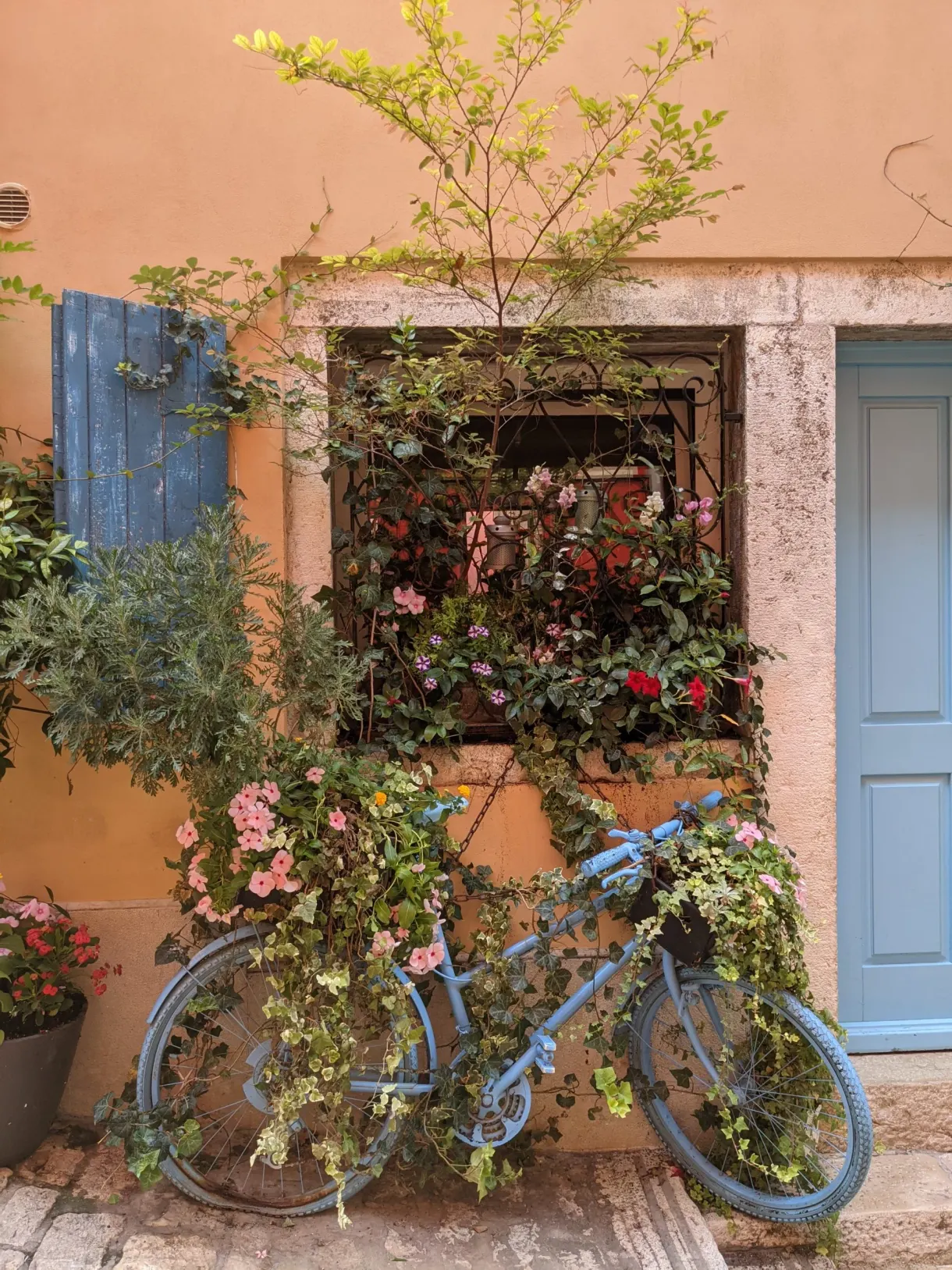
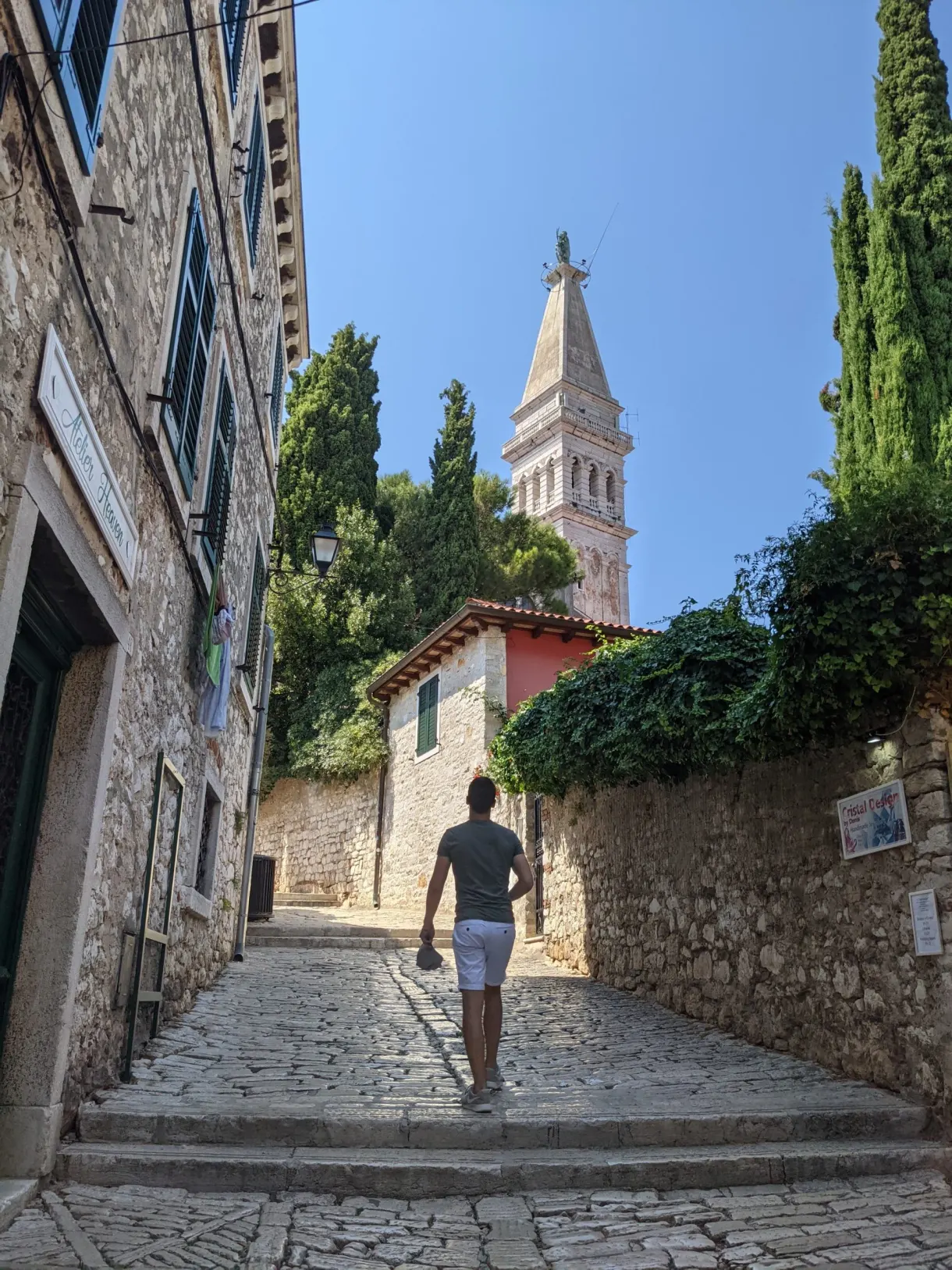
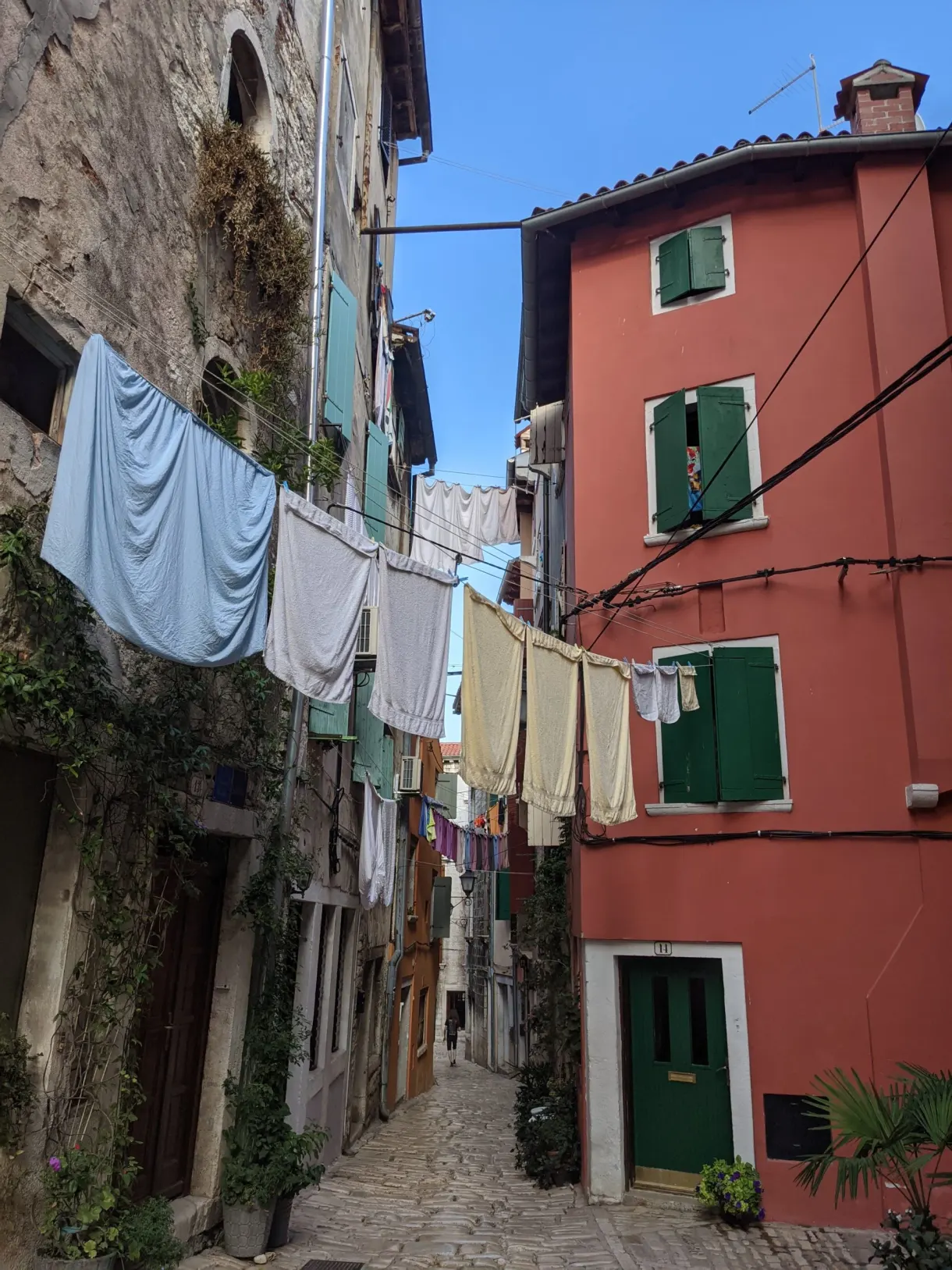
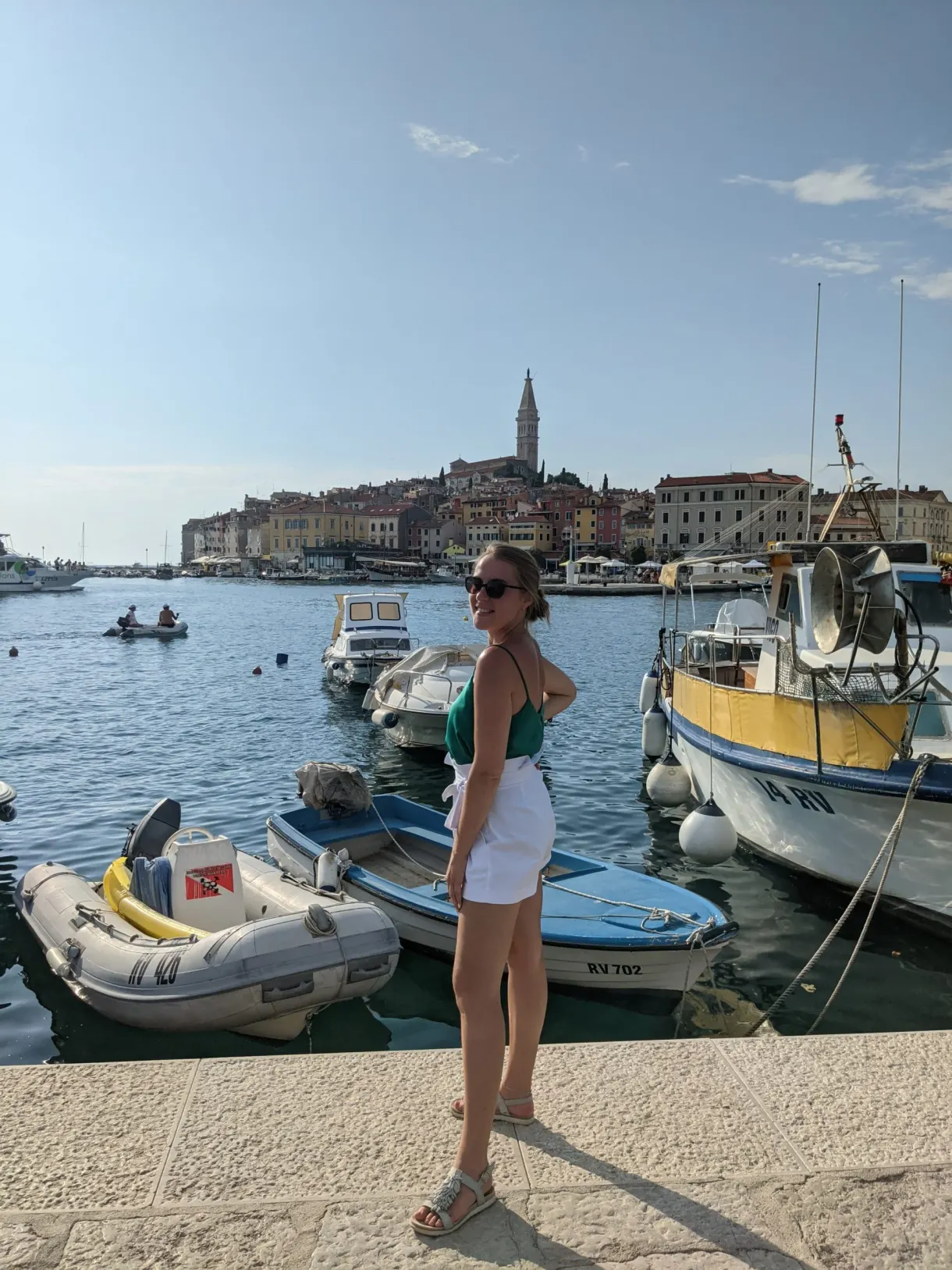
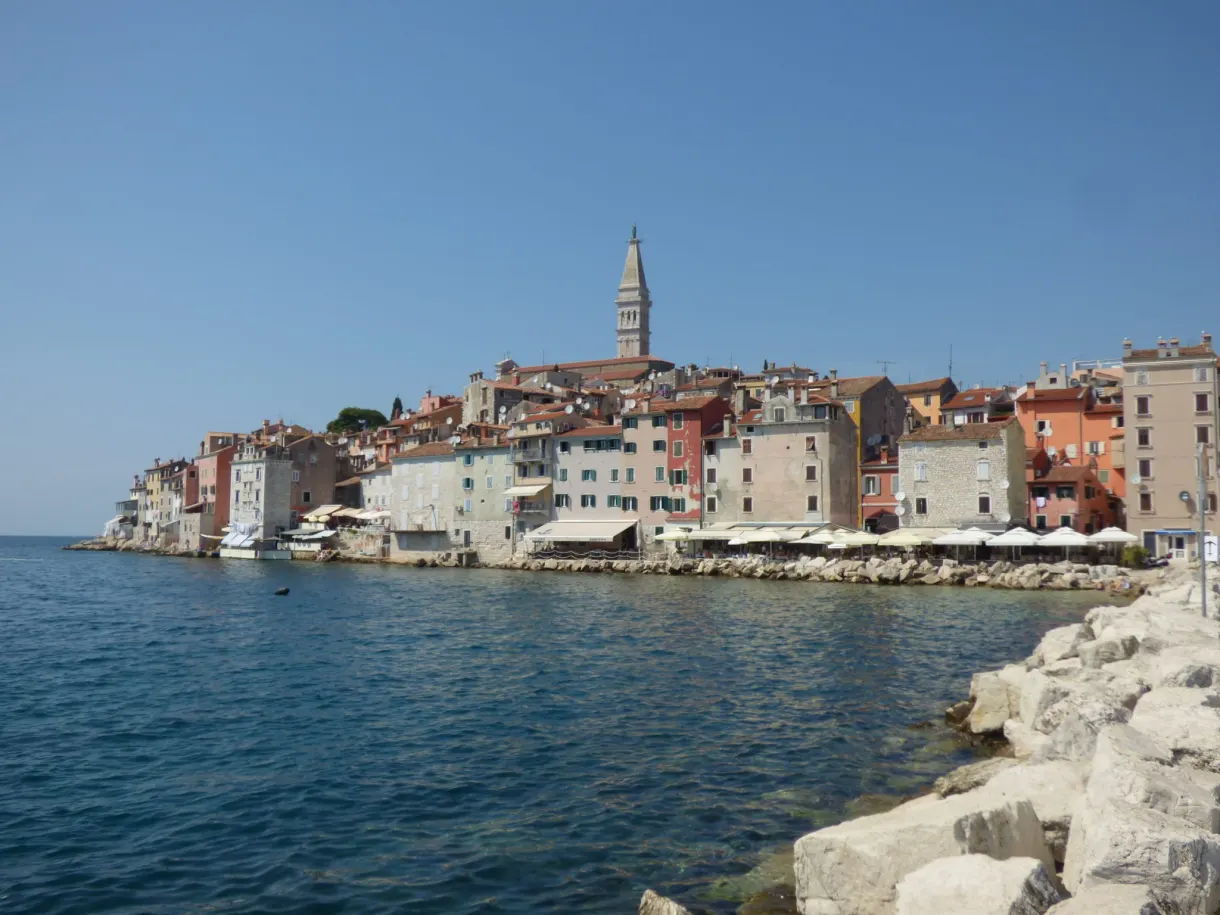
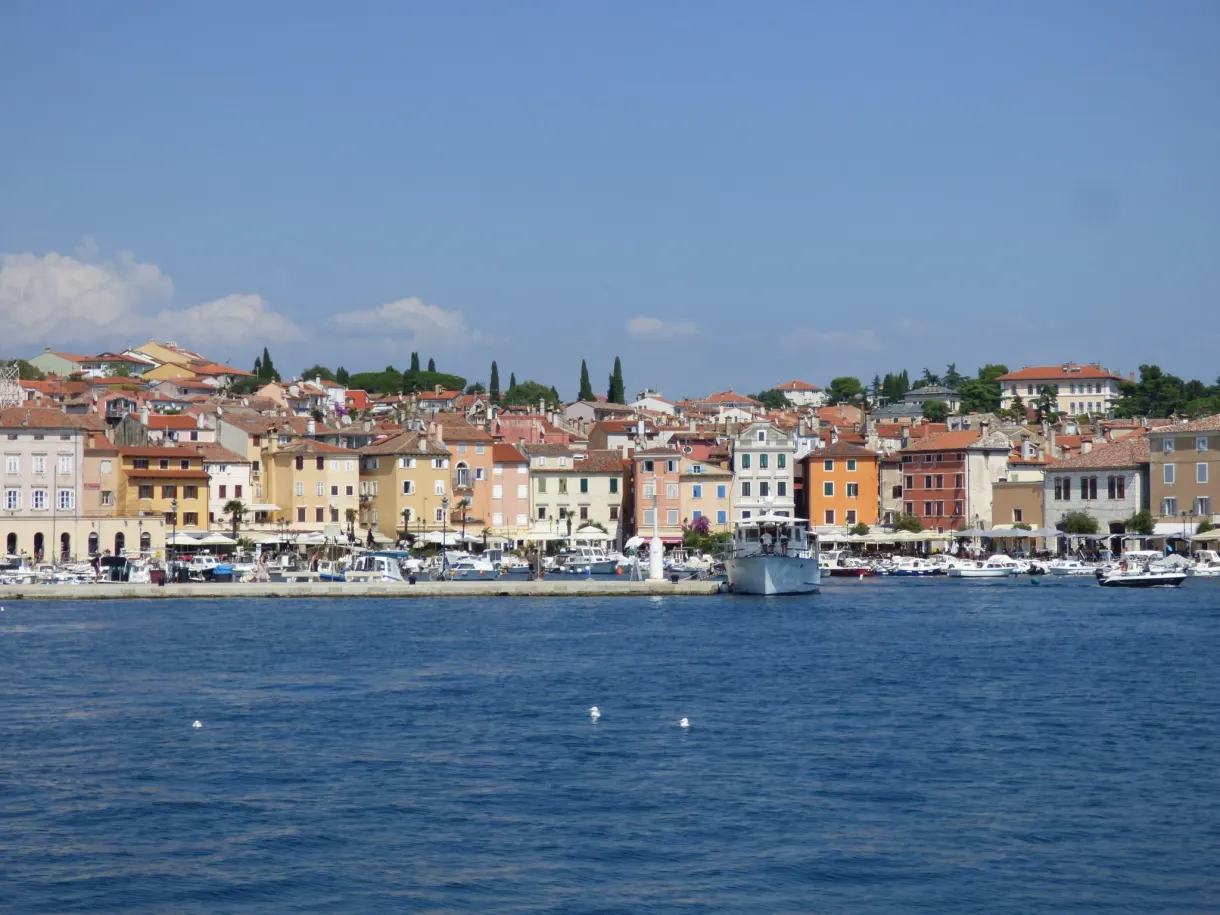
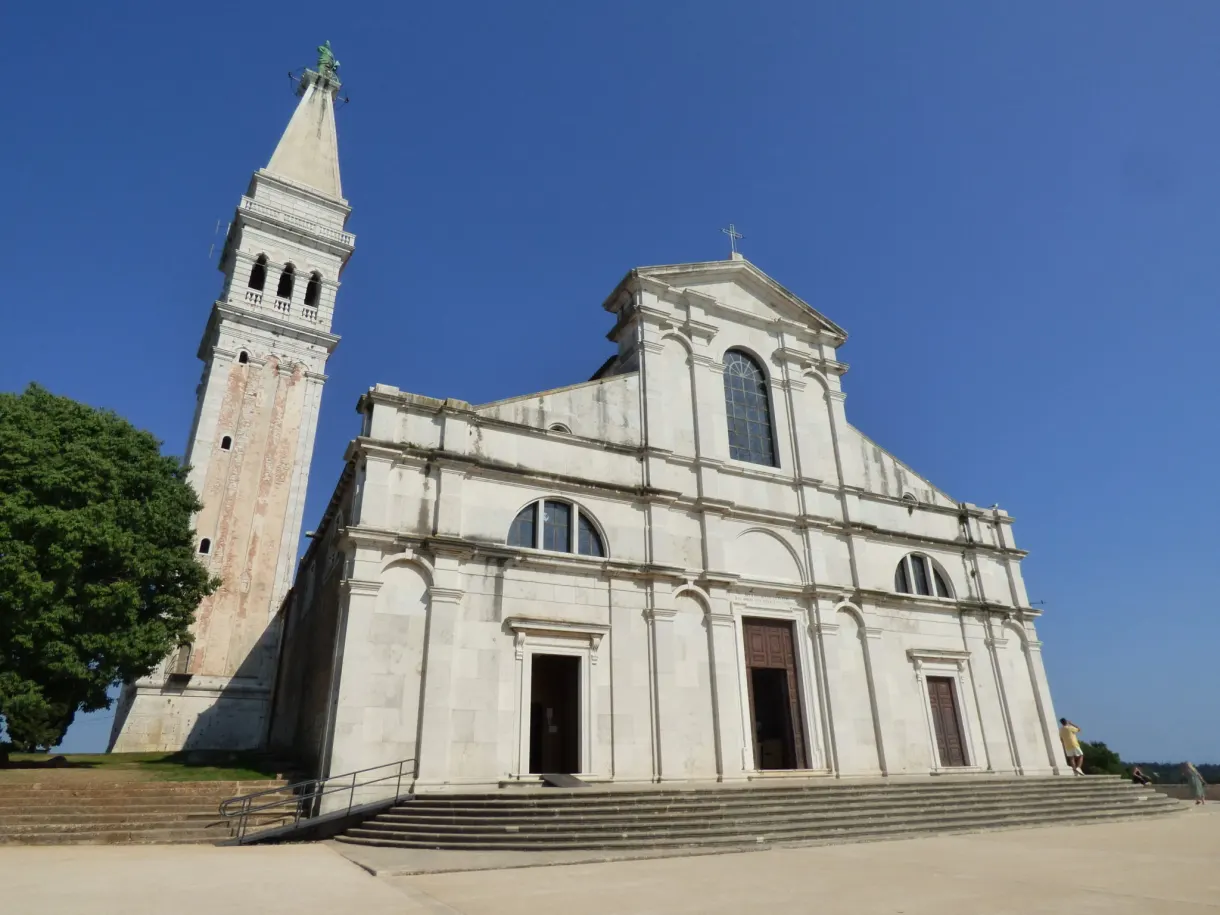
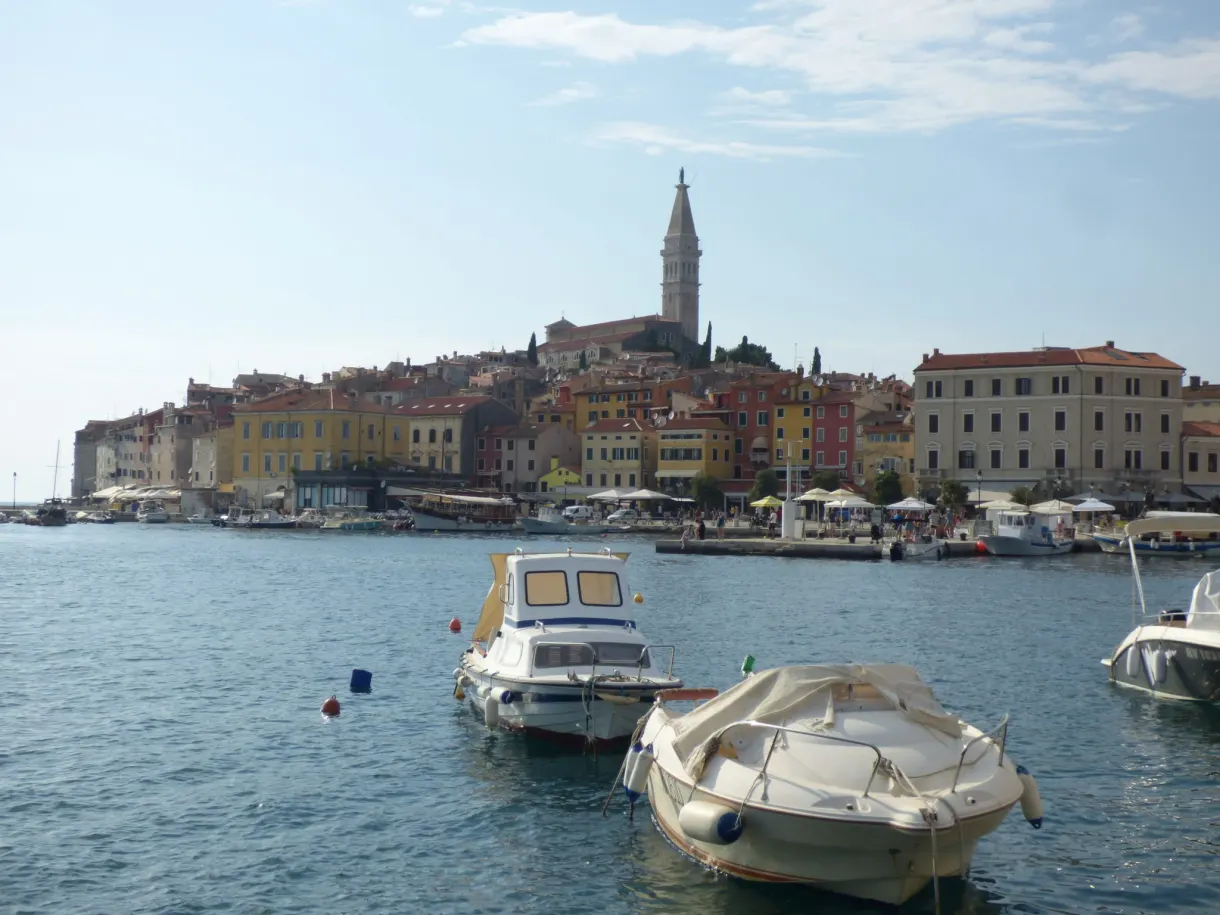
We then went to Rovinj, one of the best known and most touristy towns in Istria: this is where we met the most people. It has to be said that the town is very colourful and has a lot of charm, even bringing an Italian town to mind. To get a lovely viewpoint over Rovinj, you have to go over to the harbour side and the marina facing it. Get your calves ready, it climbs a lot!
The east coast towards the Gulf of Kvarner
Trget
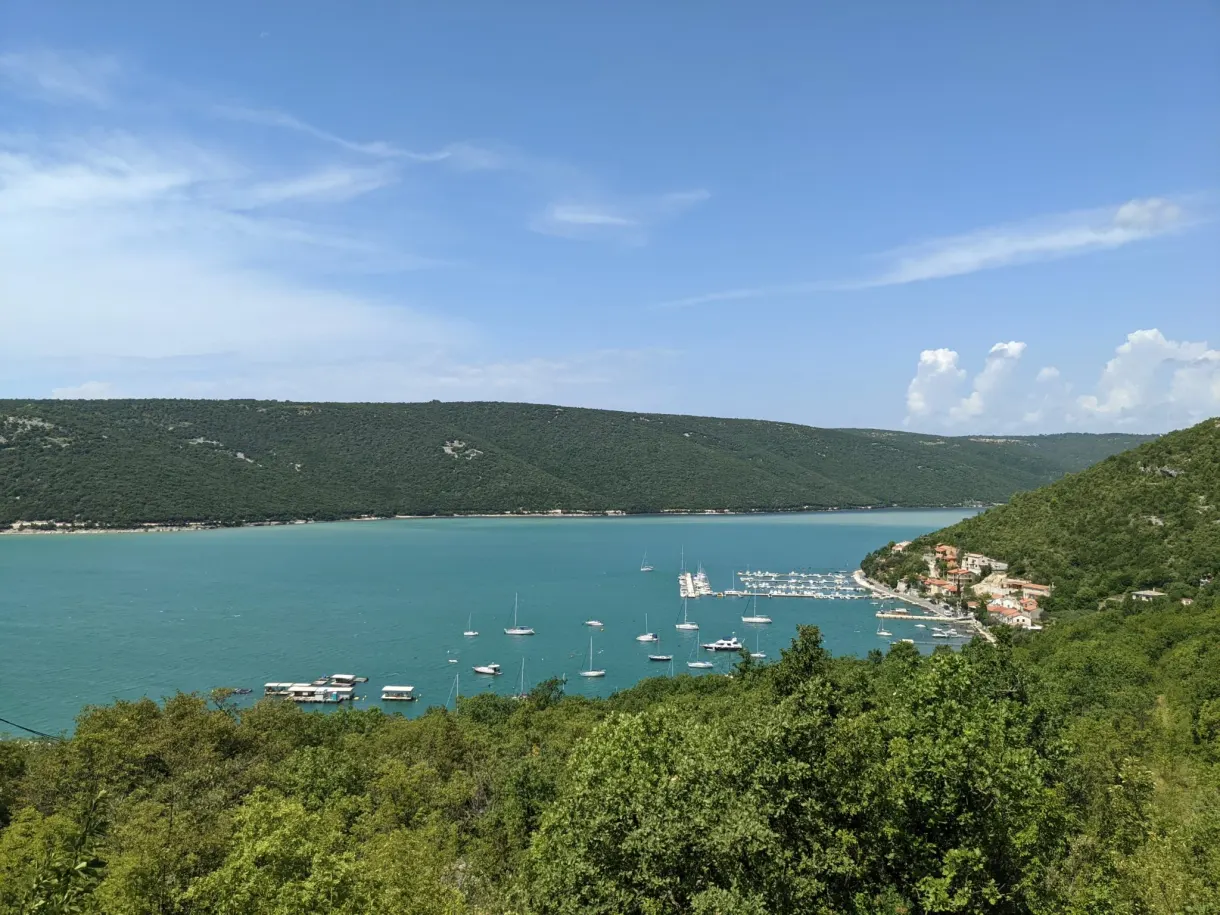
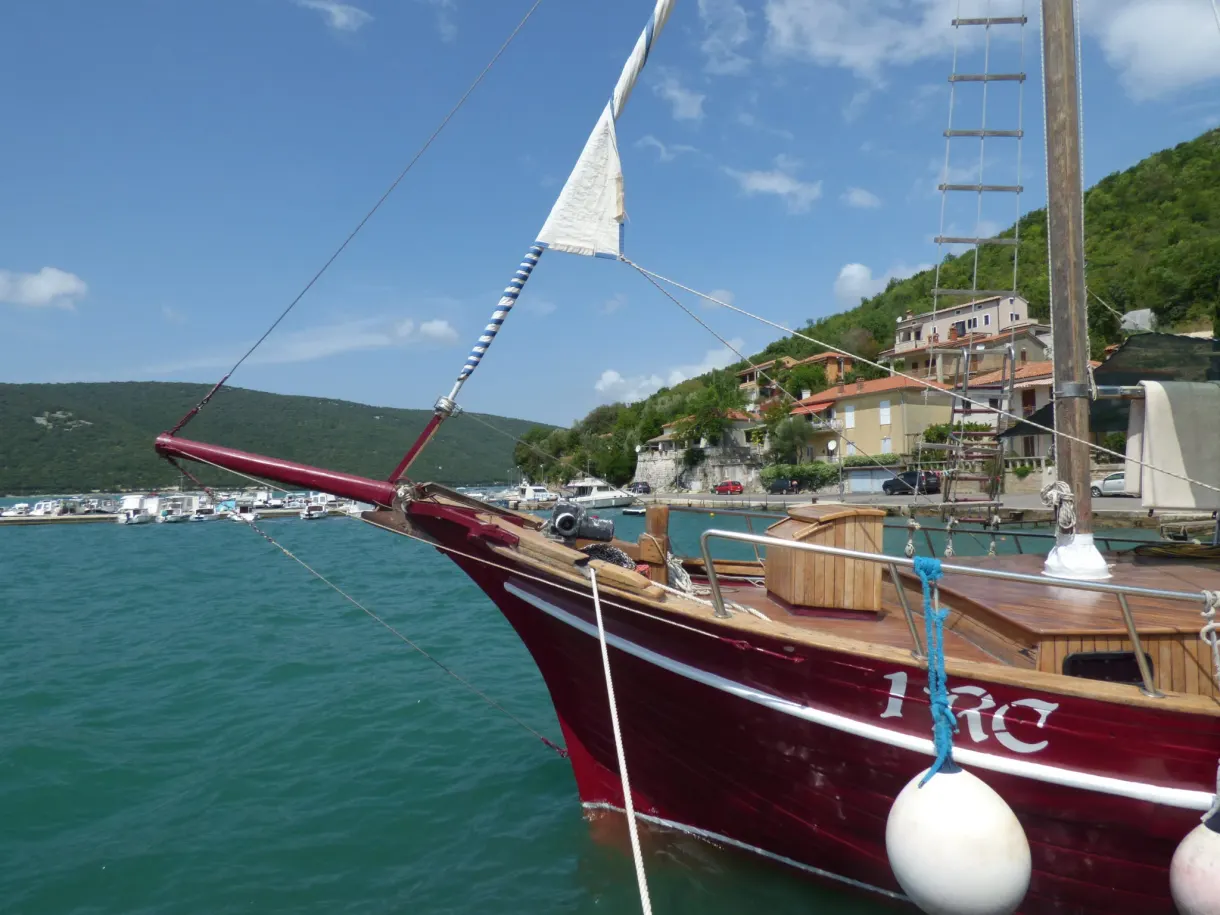
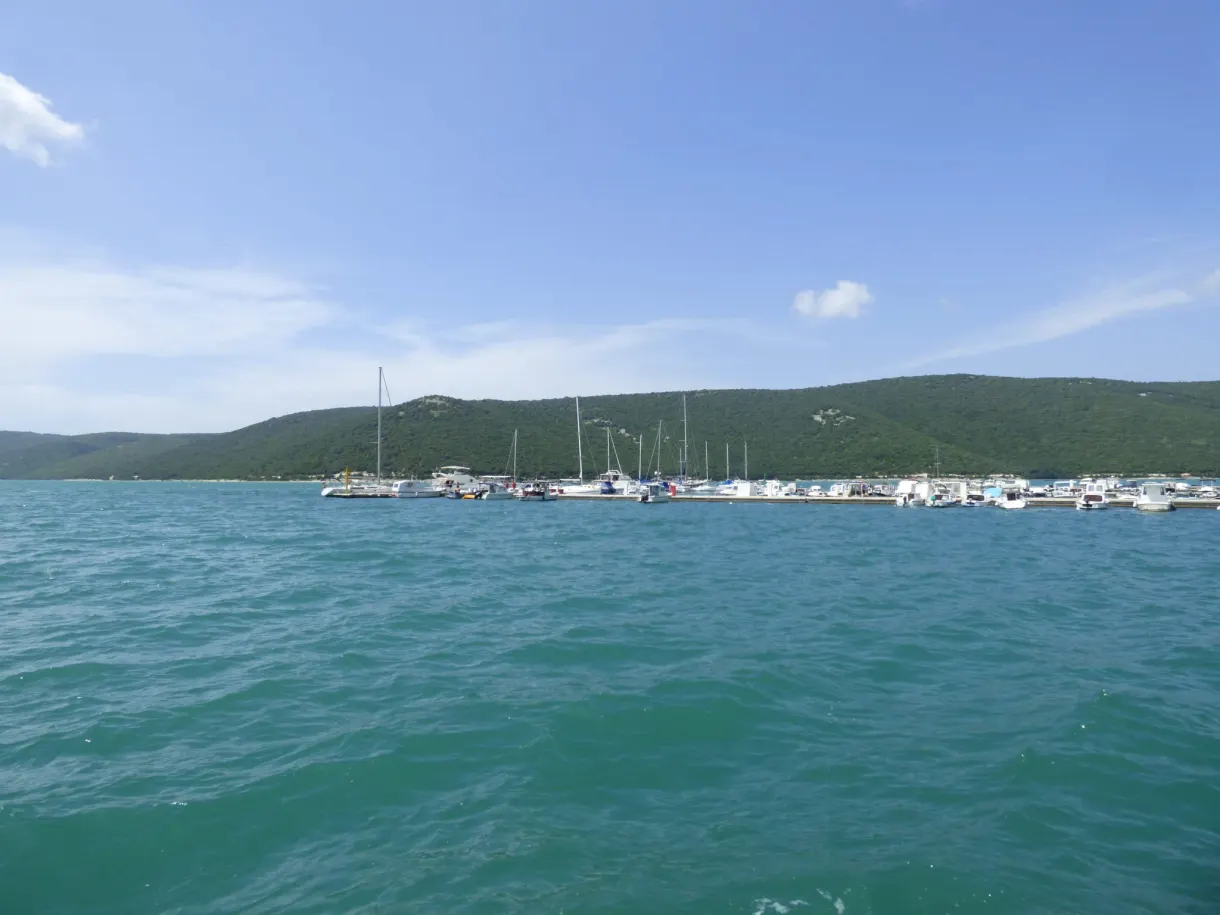
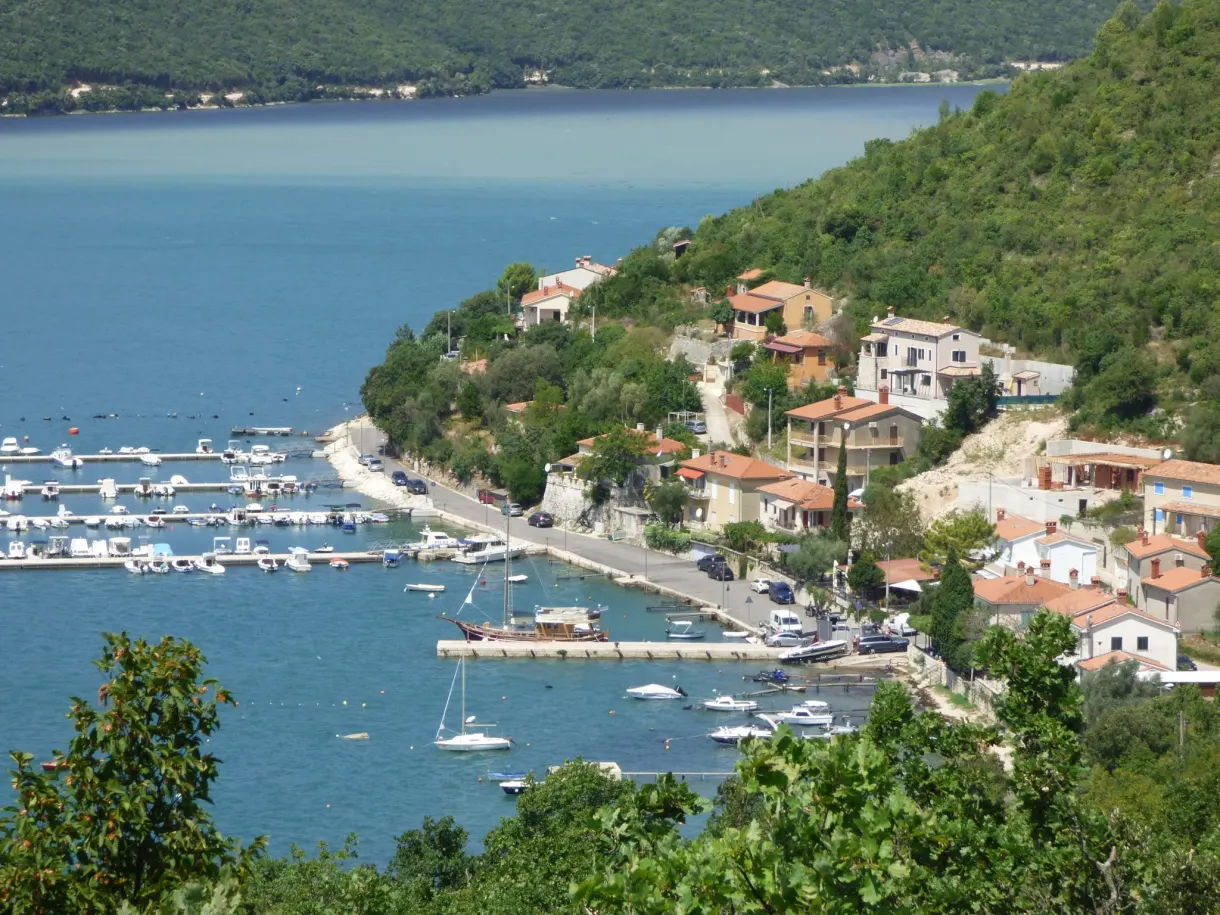
We began our way back up the east coast of Istria at the small harbour of Trget, on road 421. The landscapes change a lot compared with what we had been able to see on the west coast: here, the fjord is wide and surrounded by high wooded cliffs. Going back up the road towards Labin, you will enjoy a magnificent view over the village and the fjord with its blue and green colours.
Labin
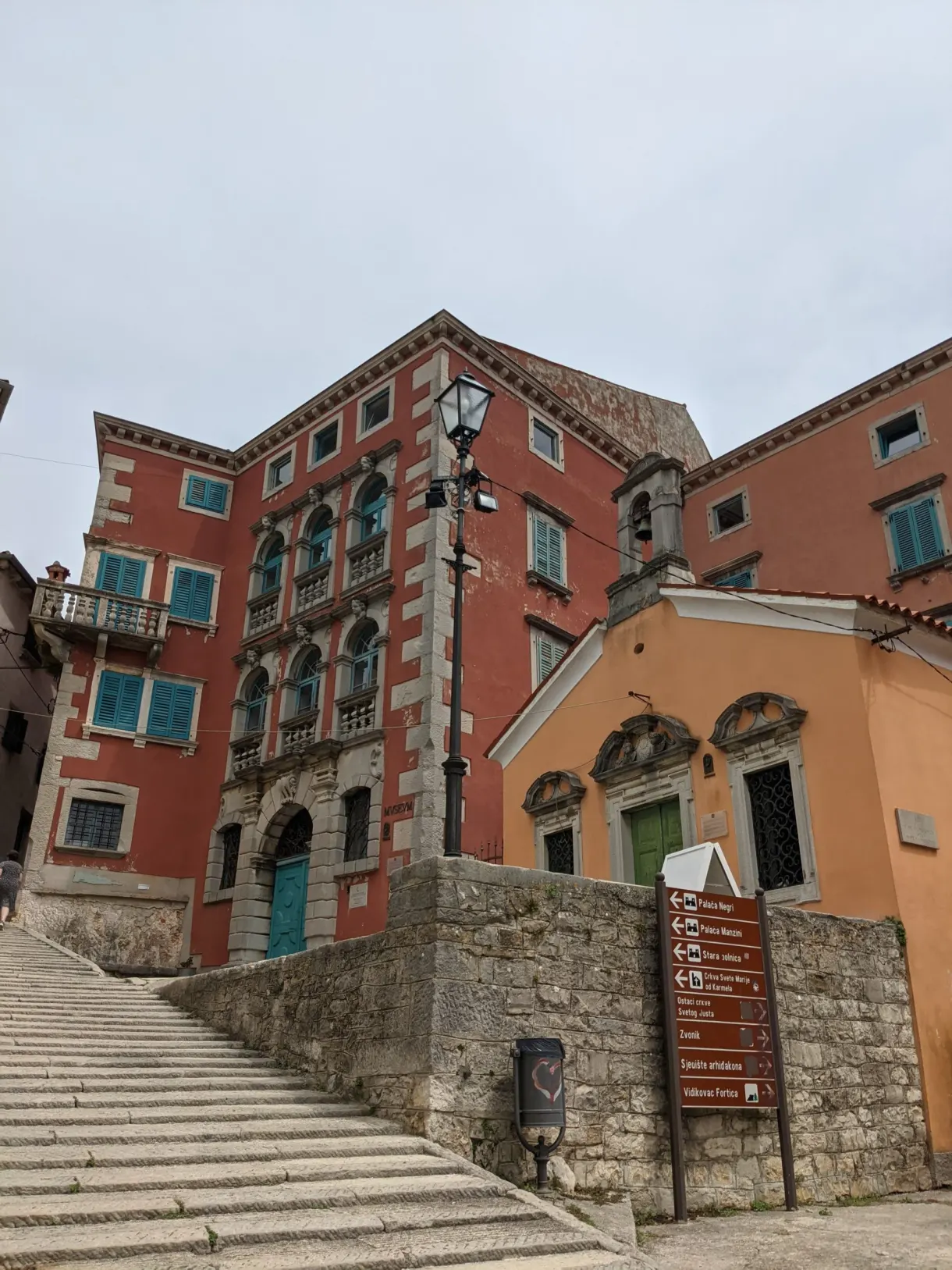
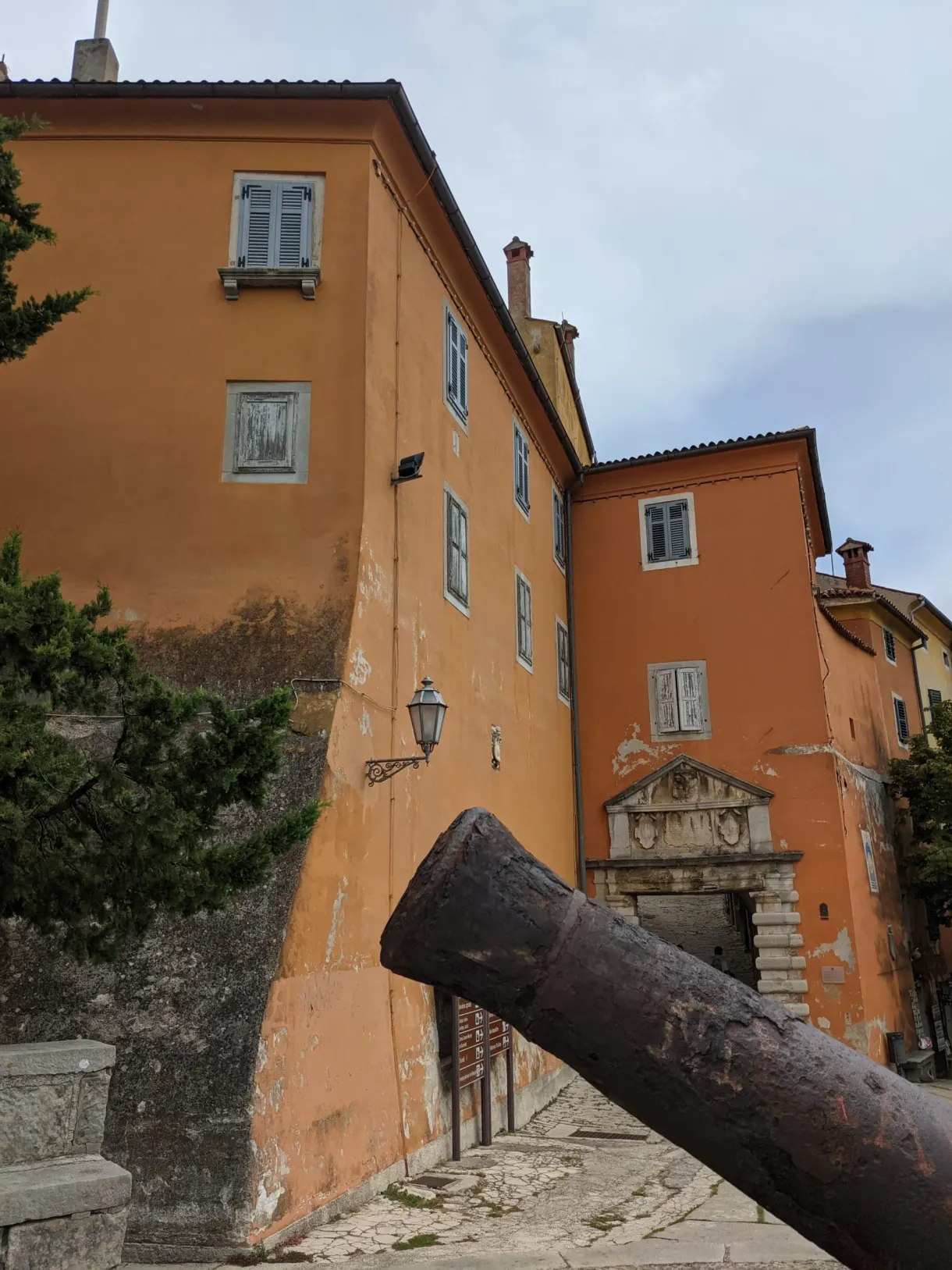
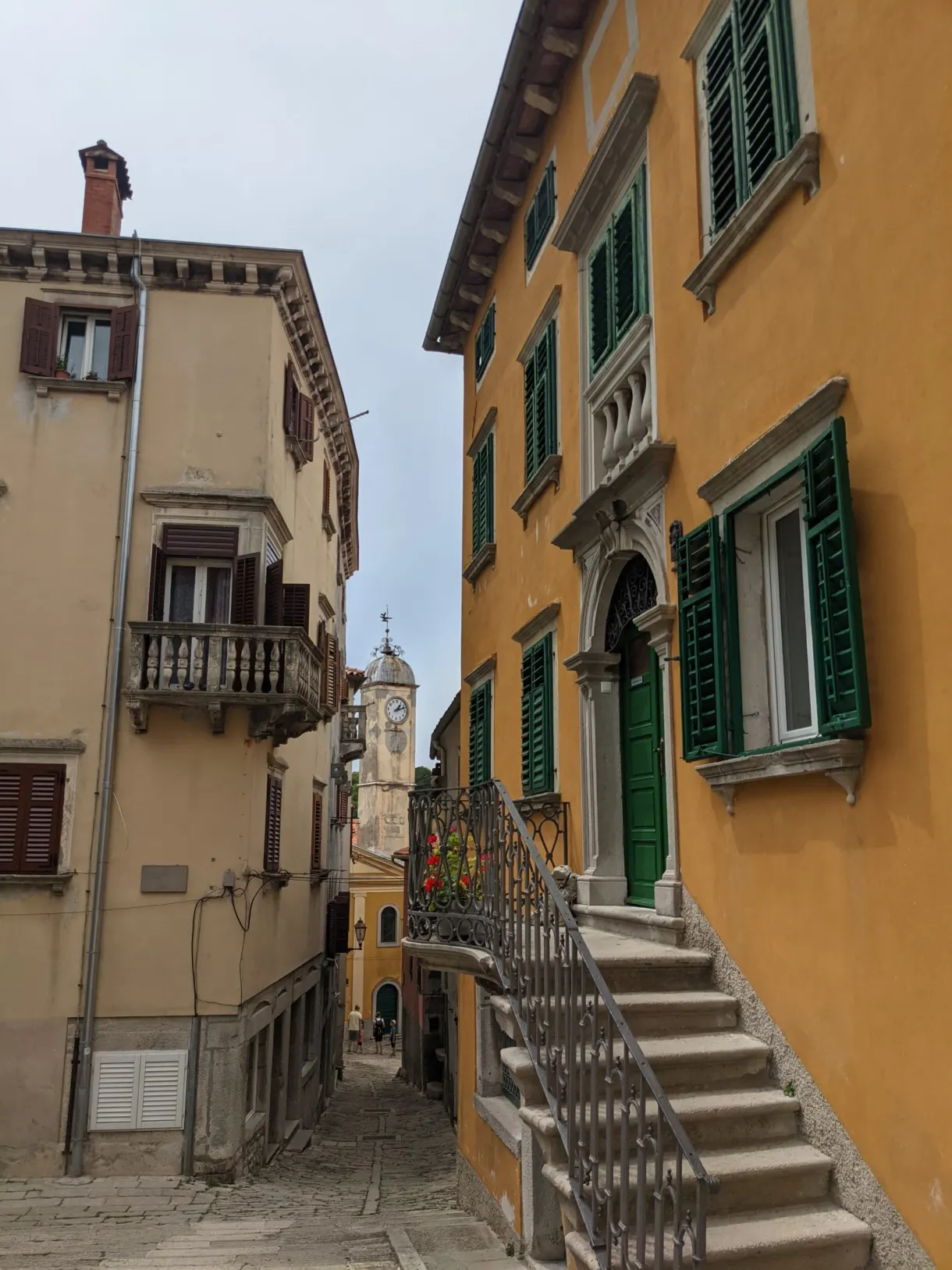
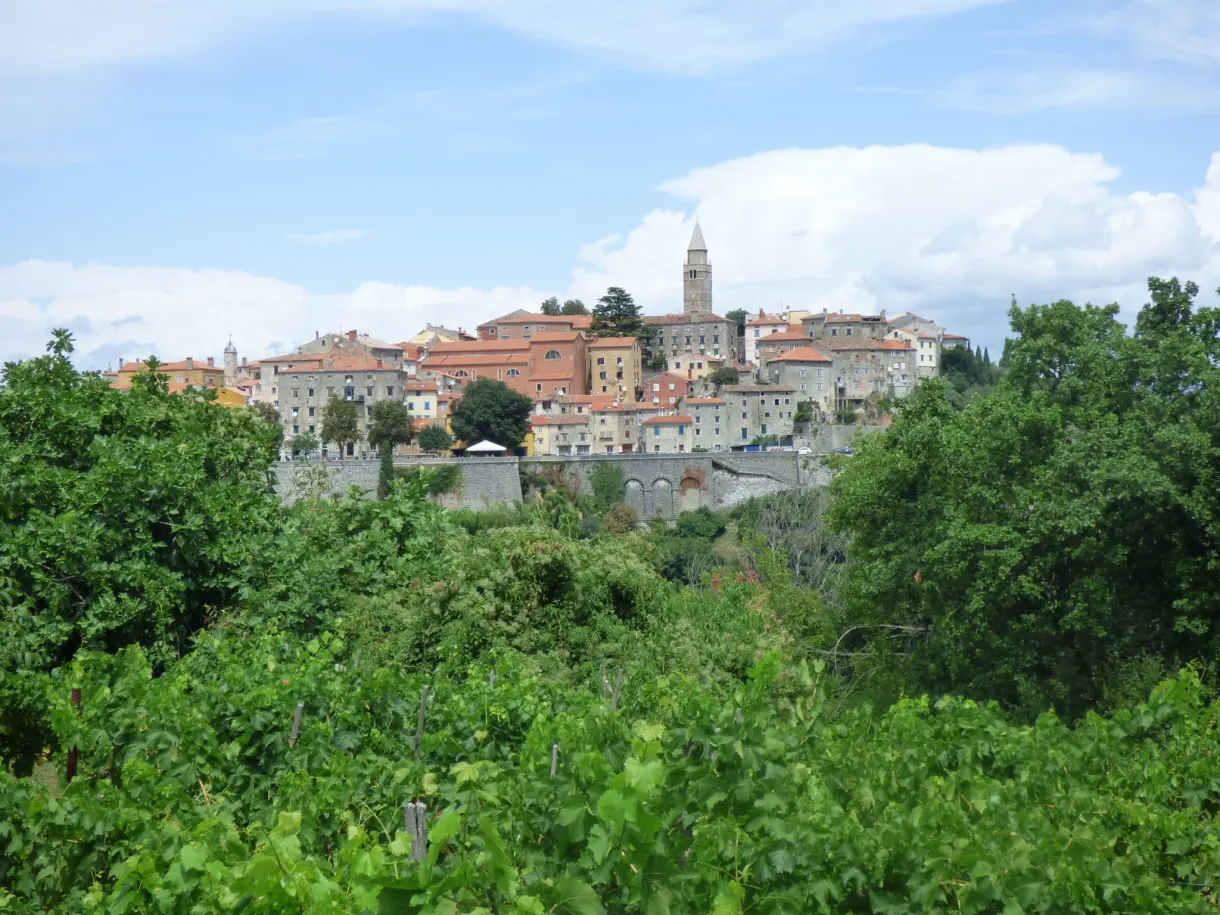
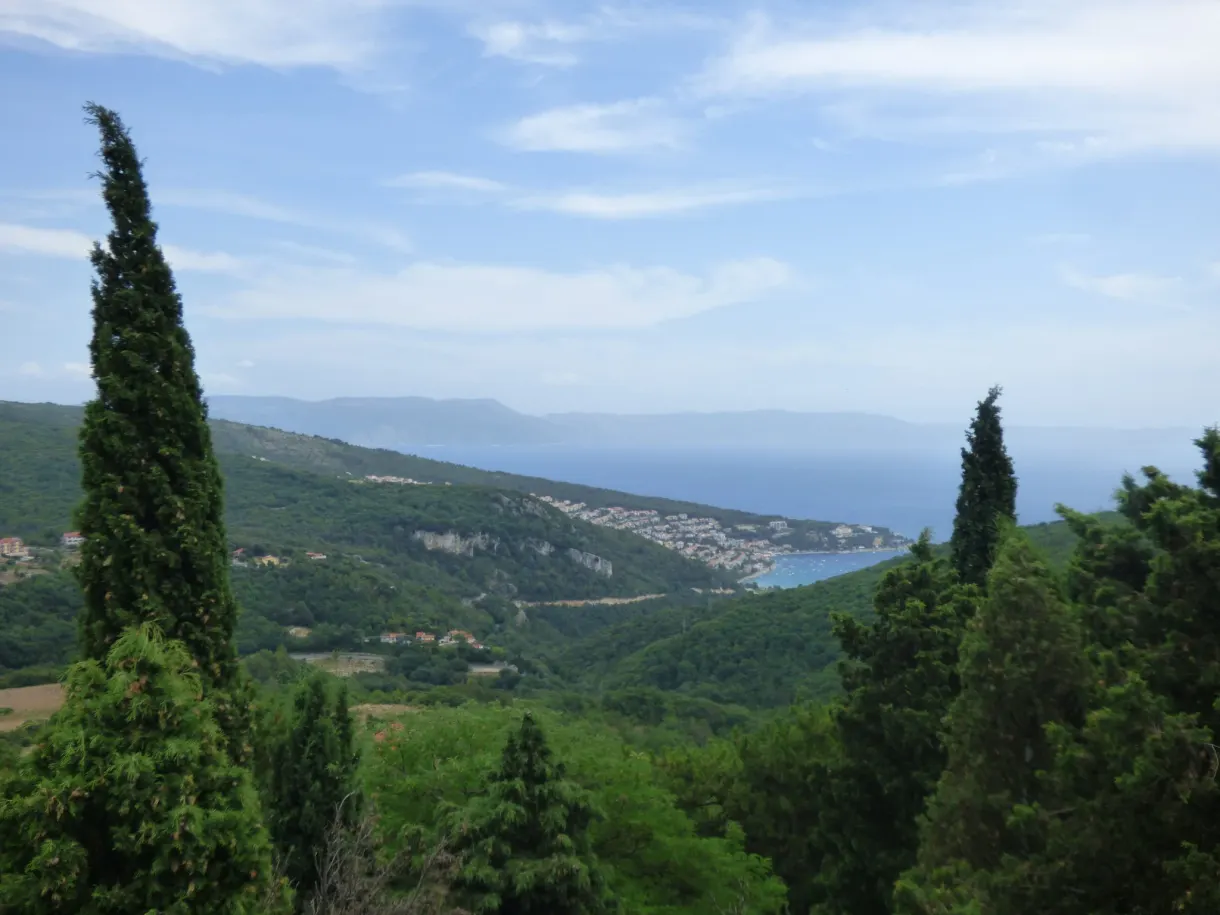
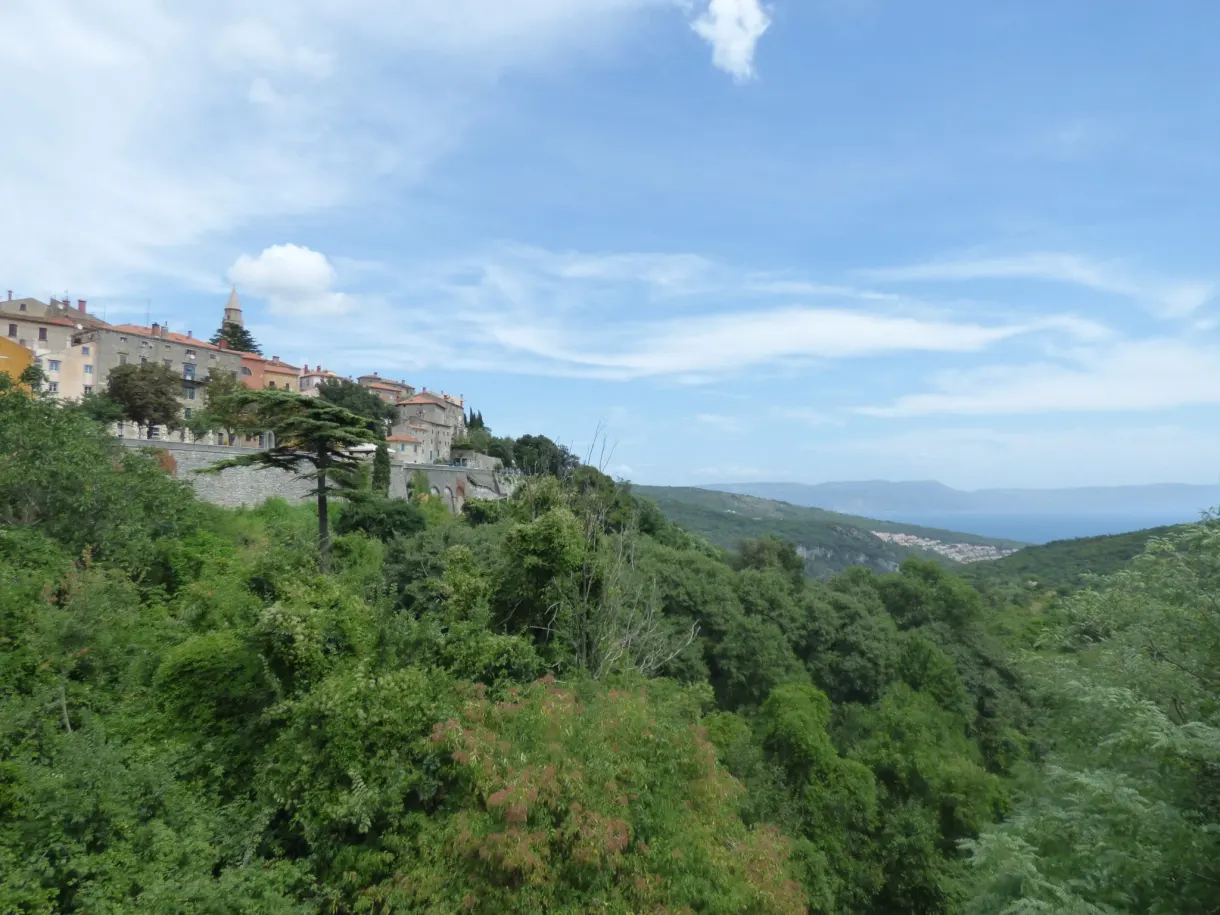
Next stop on our route, Labin, a colourful medieval town hoisted up on top of a hill that looks out over the region as far as the sea and the town of Rabac. The village is fairly small, we went round it quickly, but it is worth a look! Do not miss the panoramic view over the mountains and the sea from Vidikovac Fortica.
Plomin
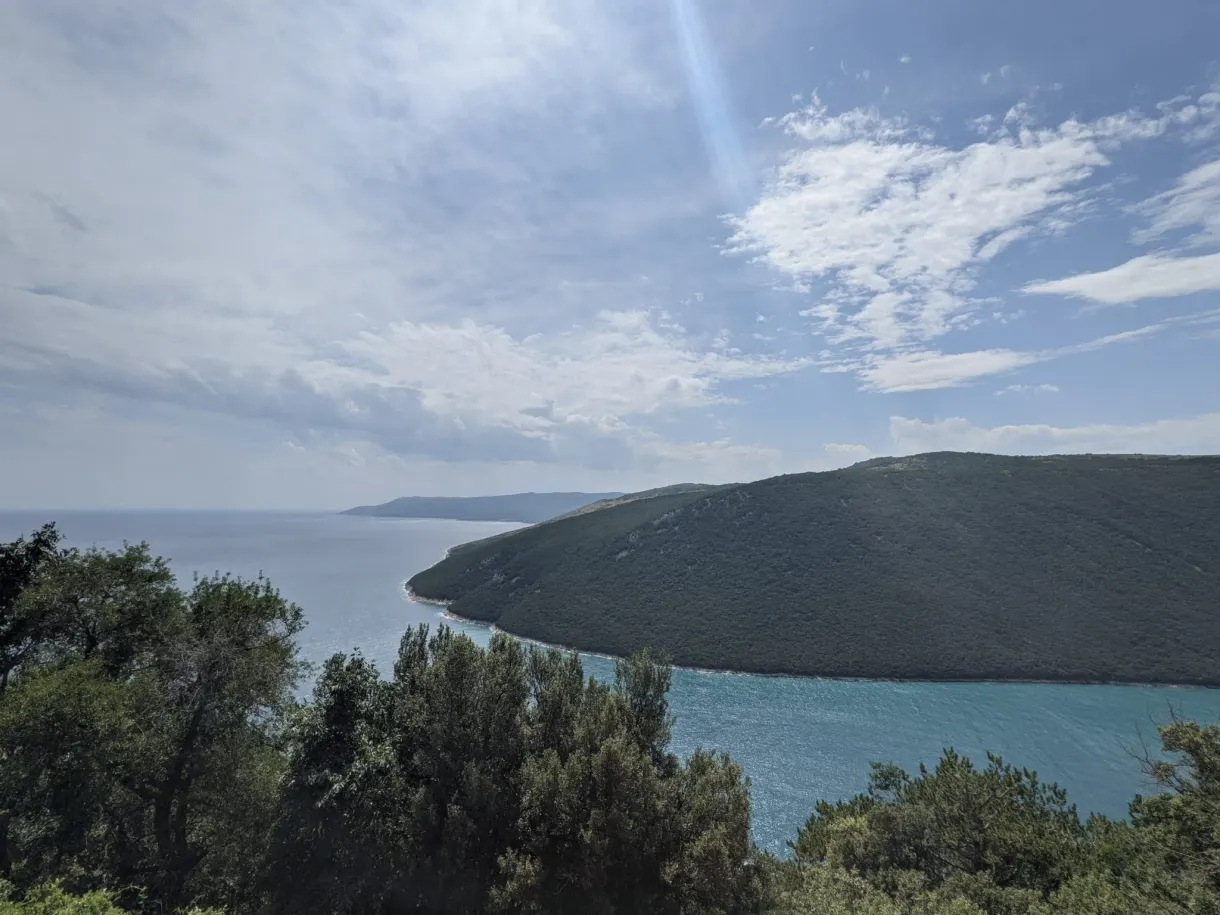
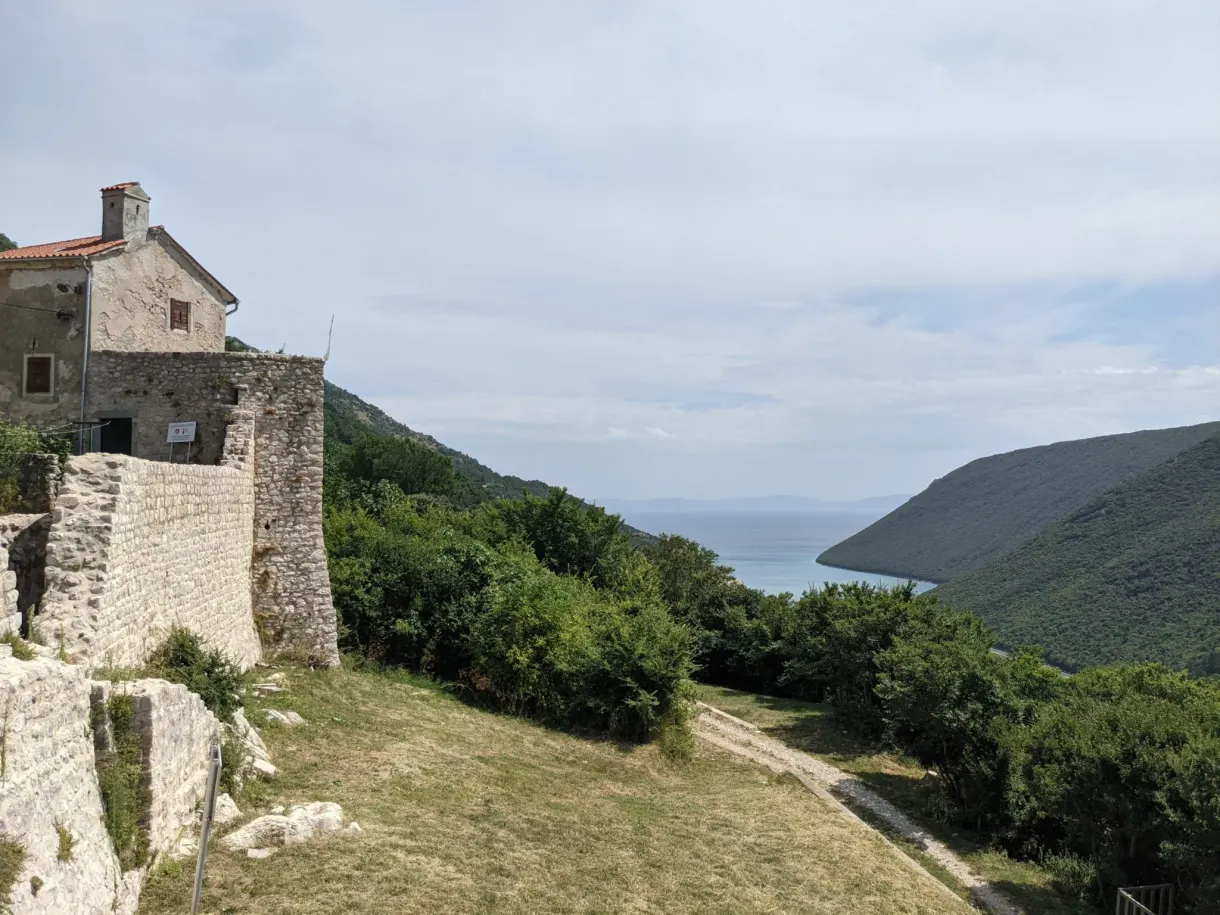
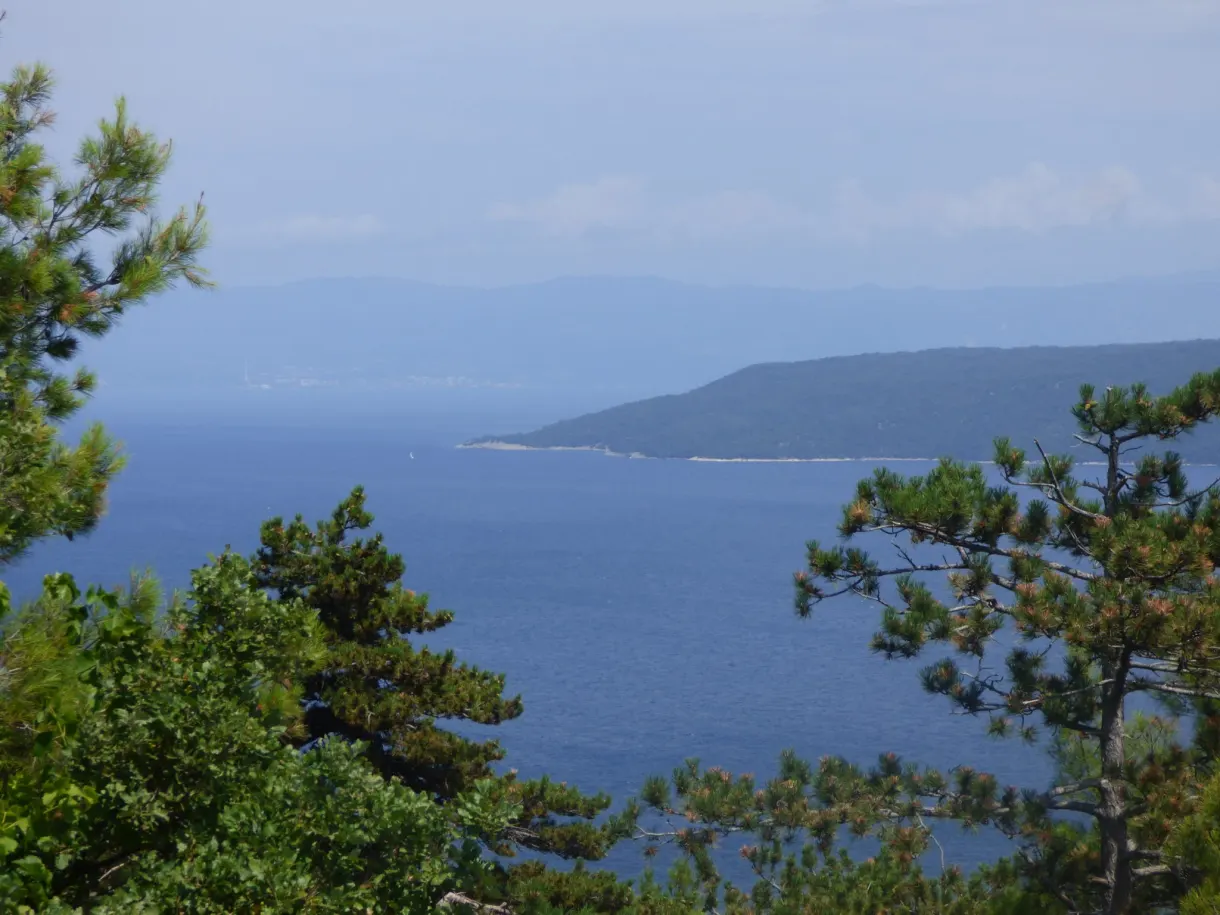
From Labin, we took the famous route 66 (another one!) to follow the coast down to the Gulf of Kvarner, a Croatian region neighbouring Istria. We stopped twice around Plomin: a first time in the village of the same name and a second time at the Flanona hotel, whose car park offers a breathtaking view over the fjord and the Adriatic Sea. While the stone village is typical and charming, it is not an essential stop if you do not have much time. The photos unfortunately do not do justice to the incredible landscape we had in front of our eyes.
Brseč
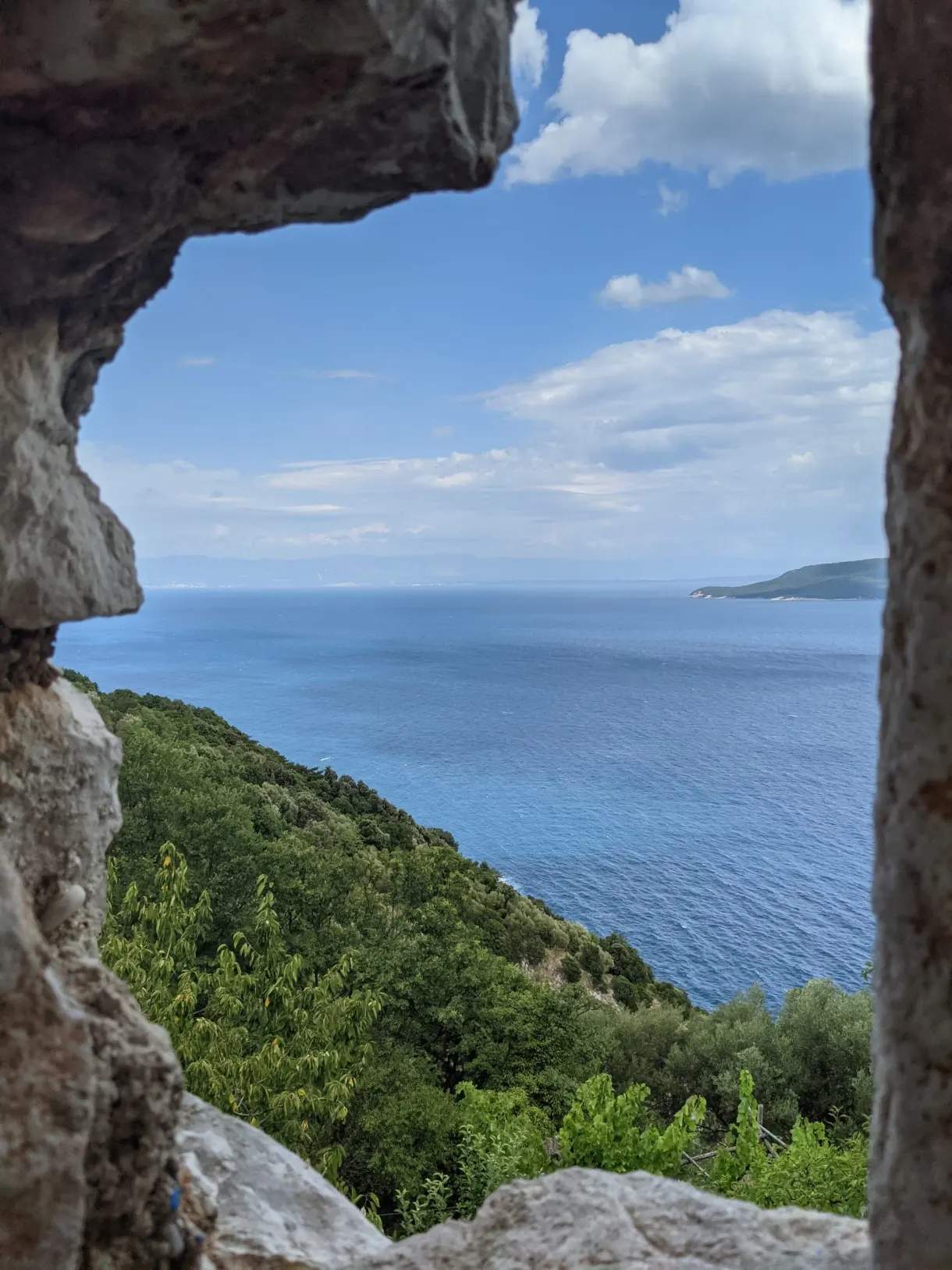
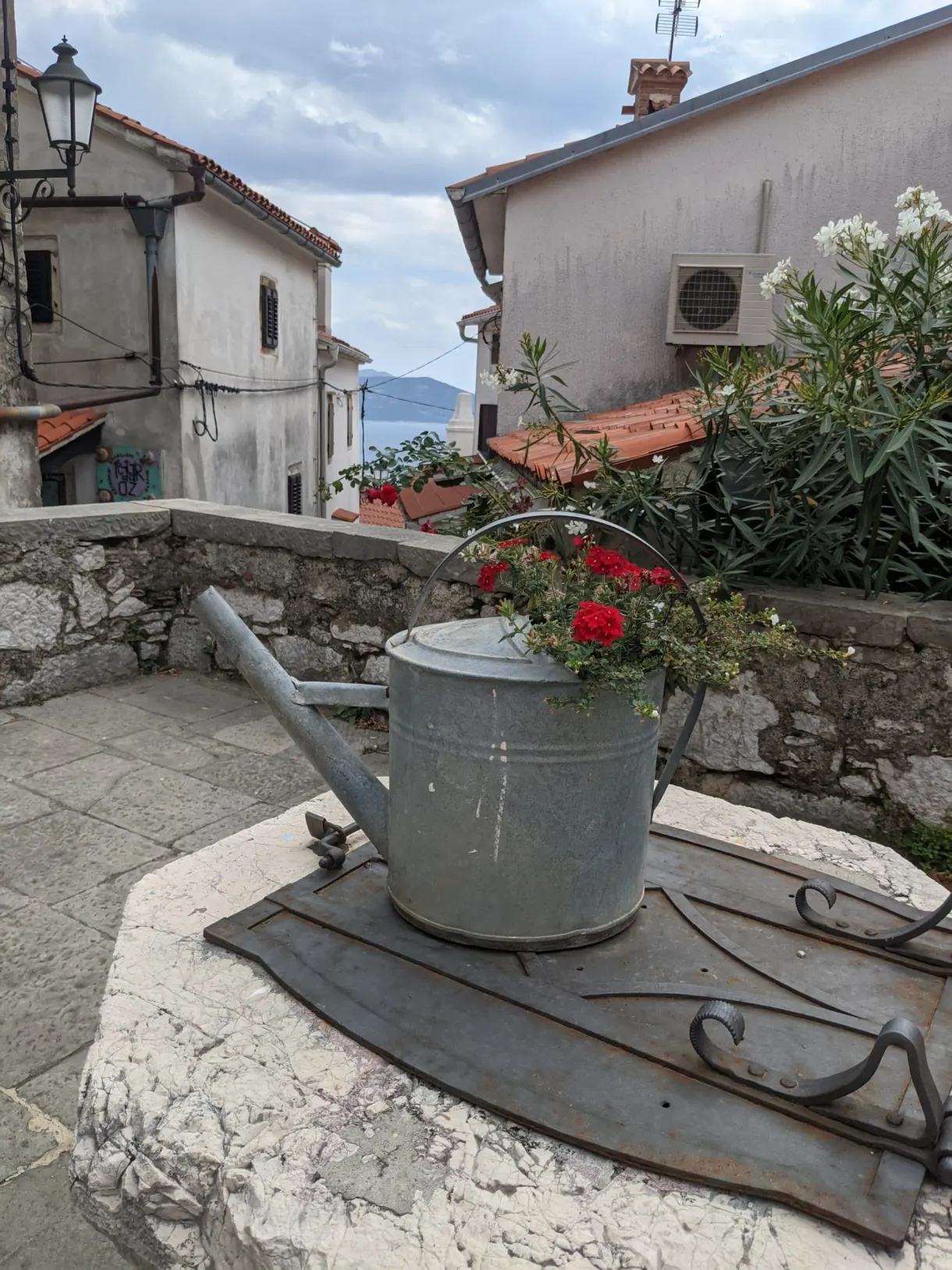
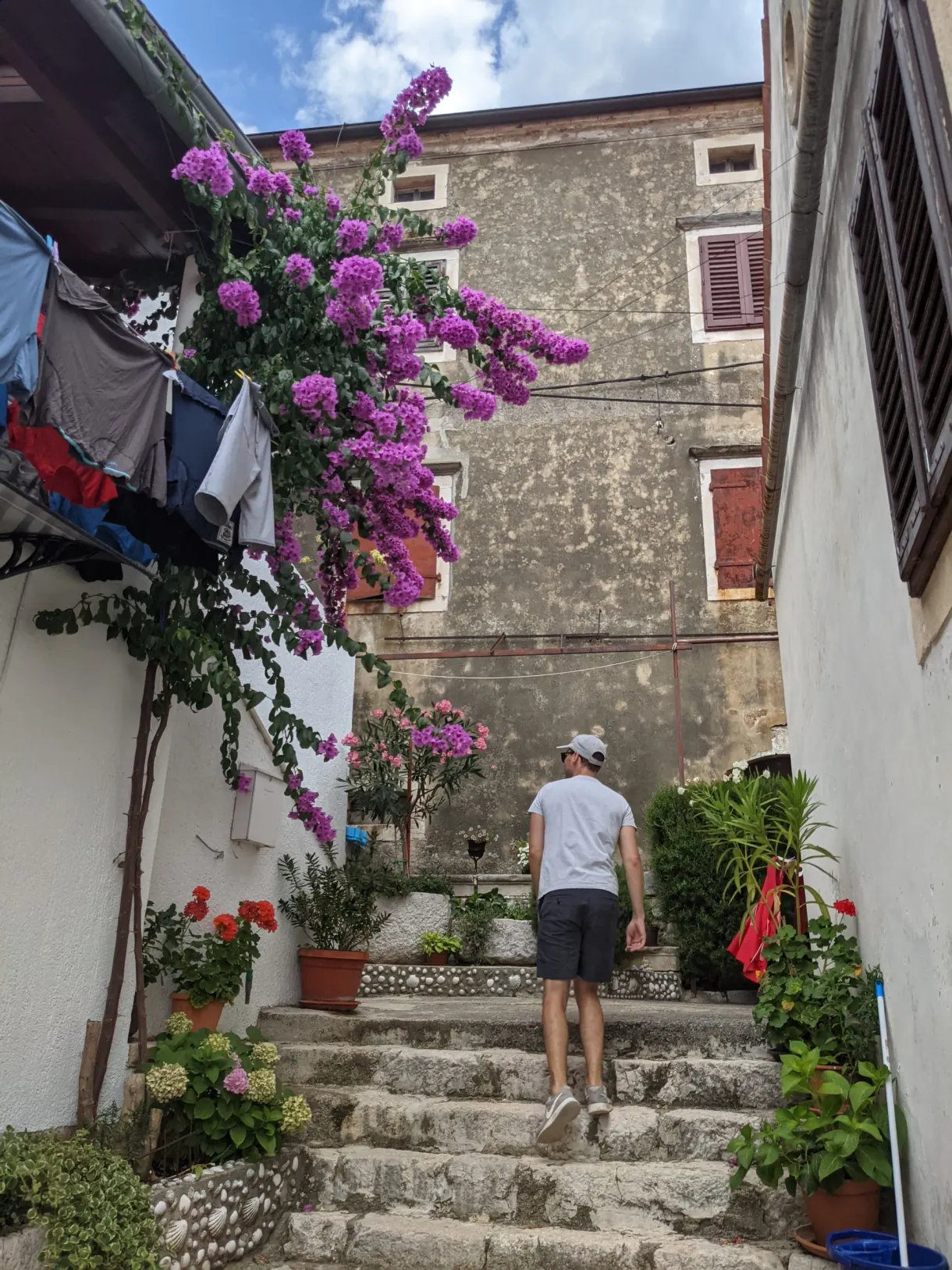
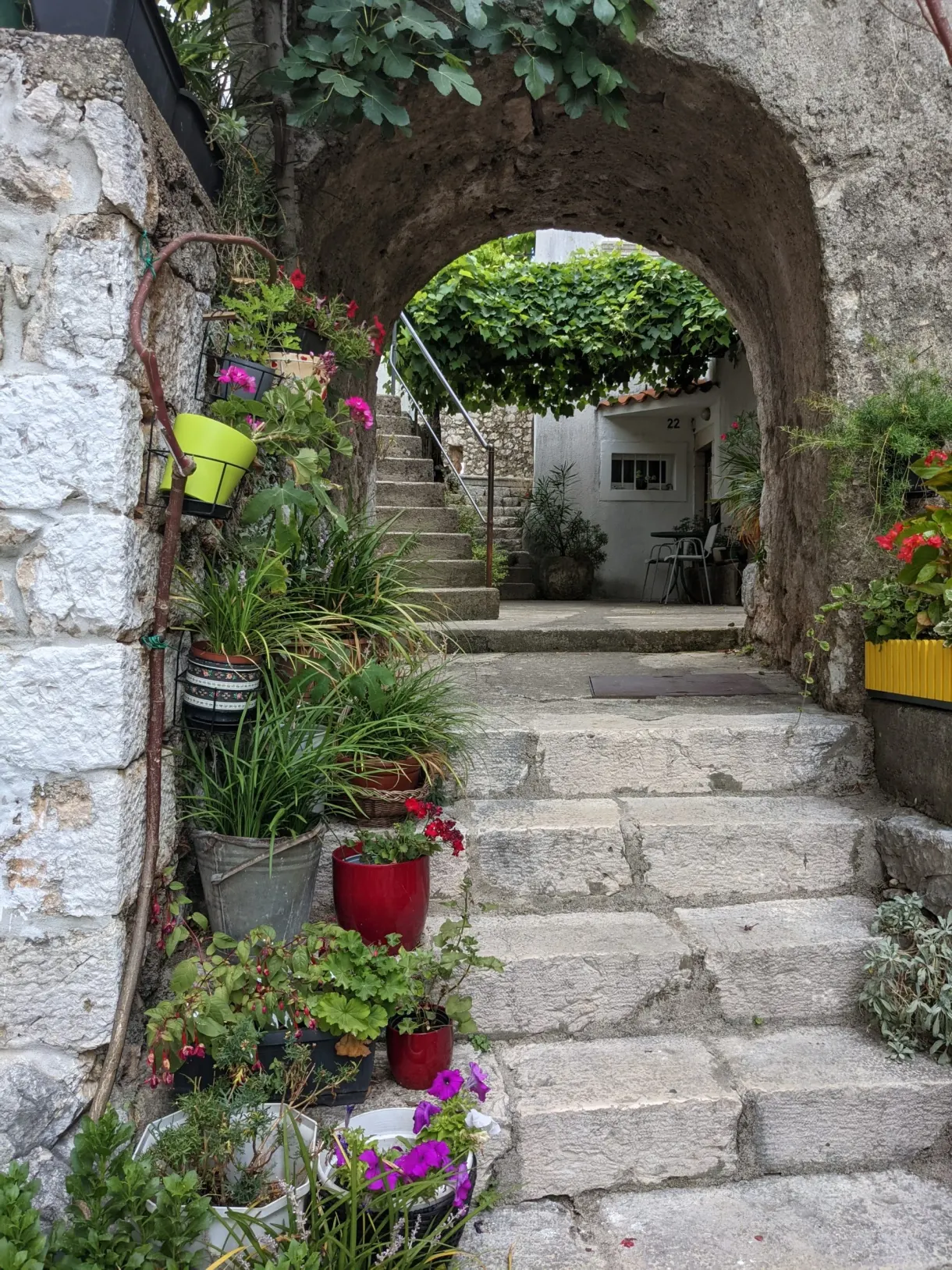
Brseč is a charming village hanging on the cliff above the sea: we were alone there, so this is not where you will meet the most tourists! And yet the village deserves a stop. Reckon on half an hour to wander the flowery lanes and take in the view over the sea from the fortifications.
Mošćenice
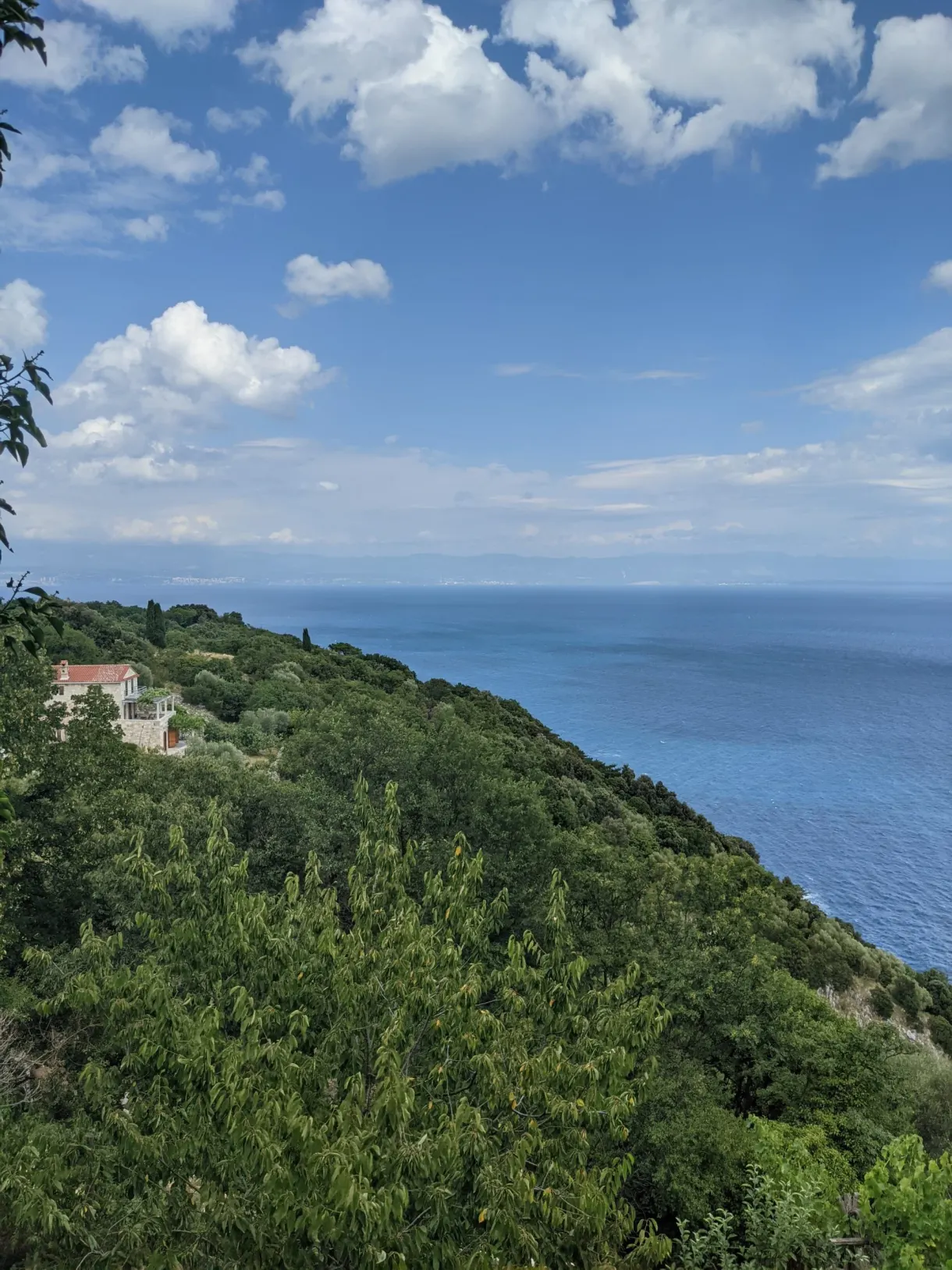
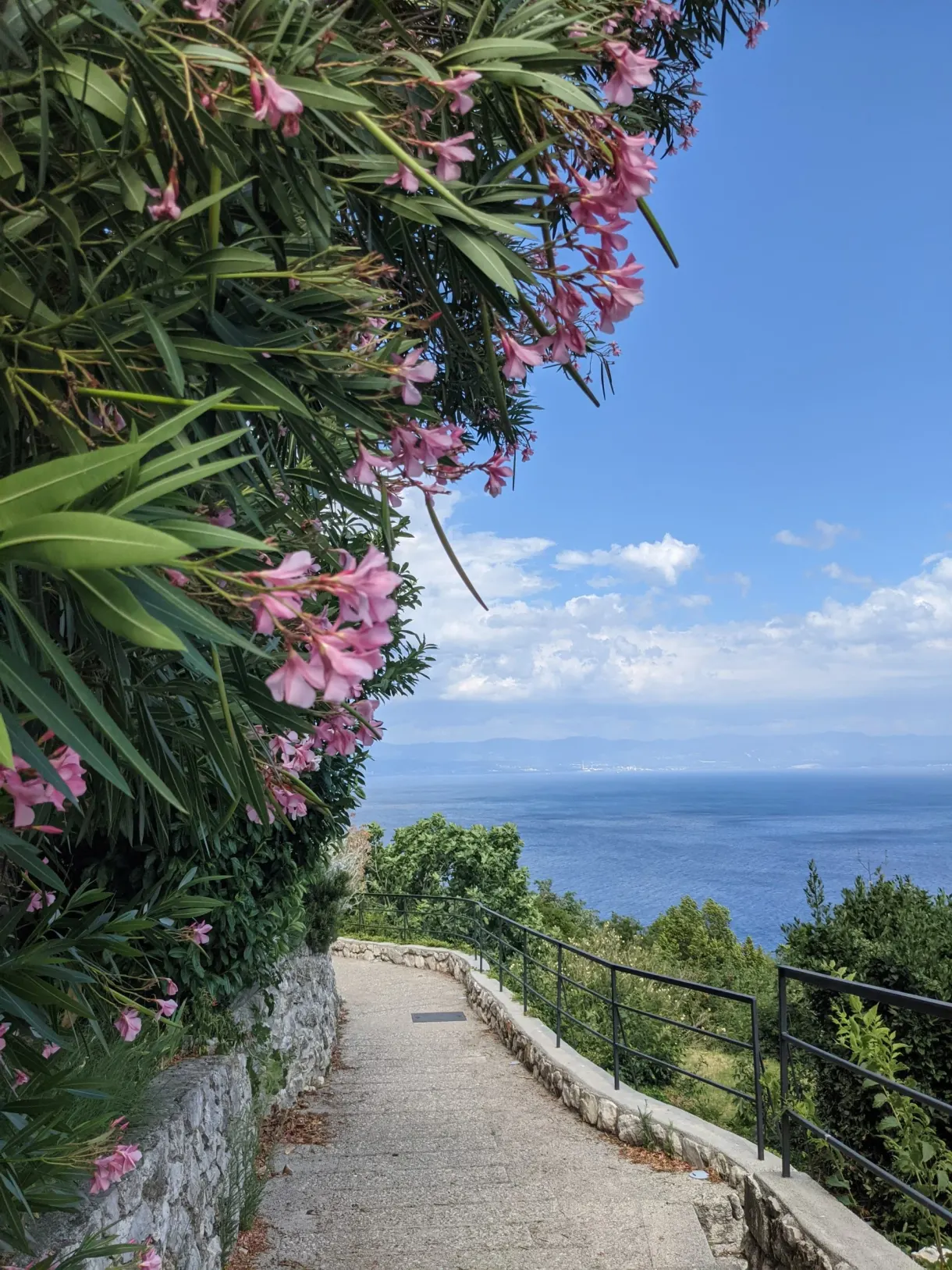
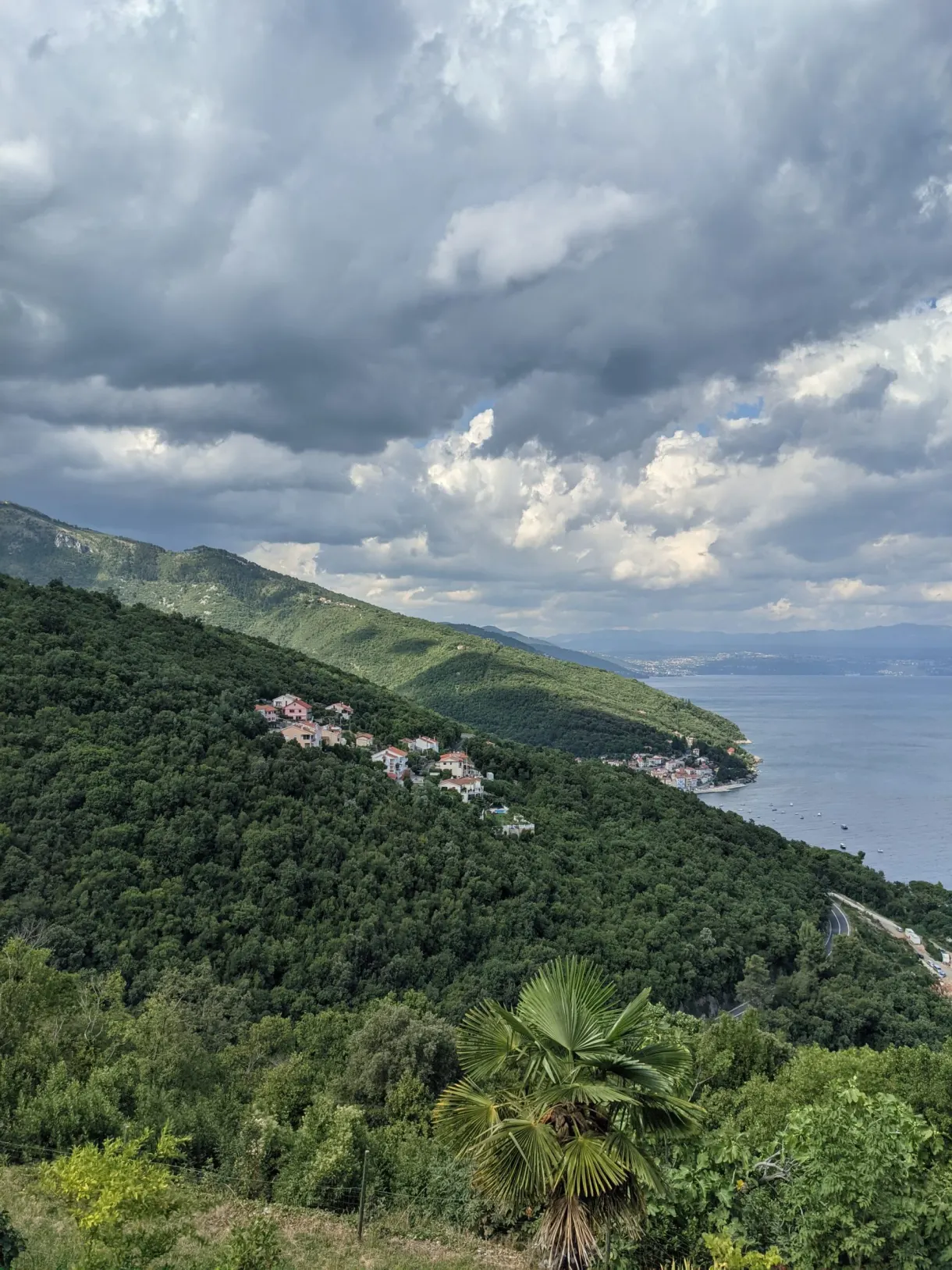
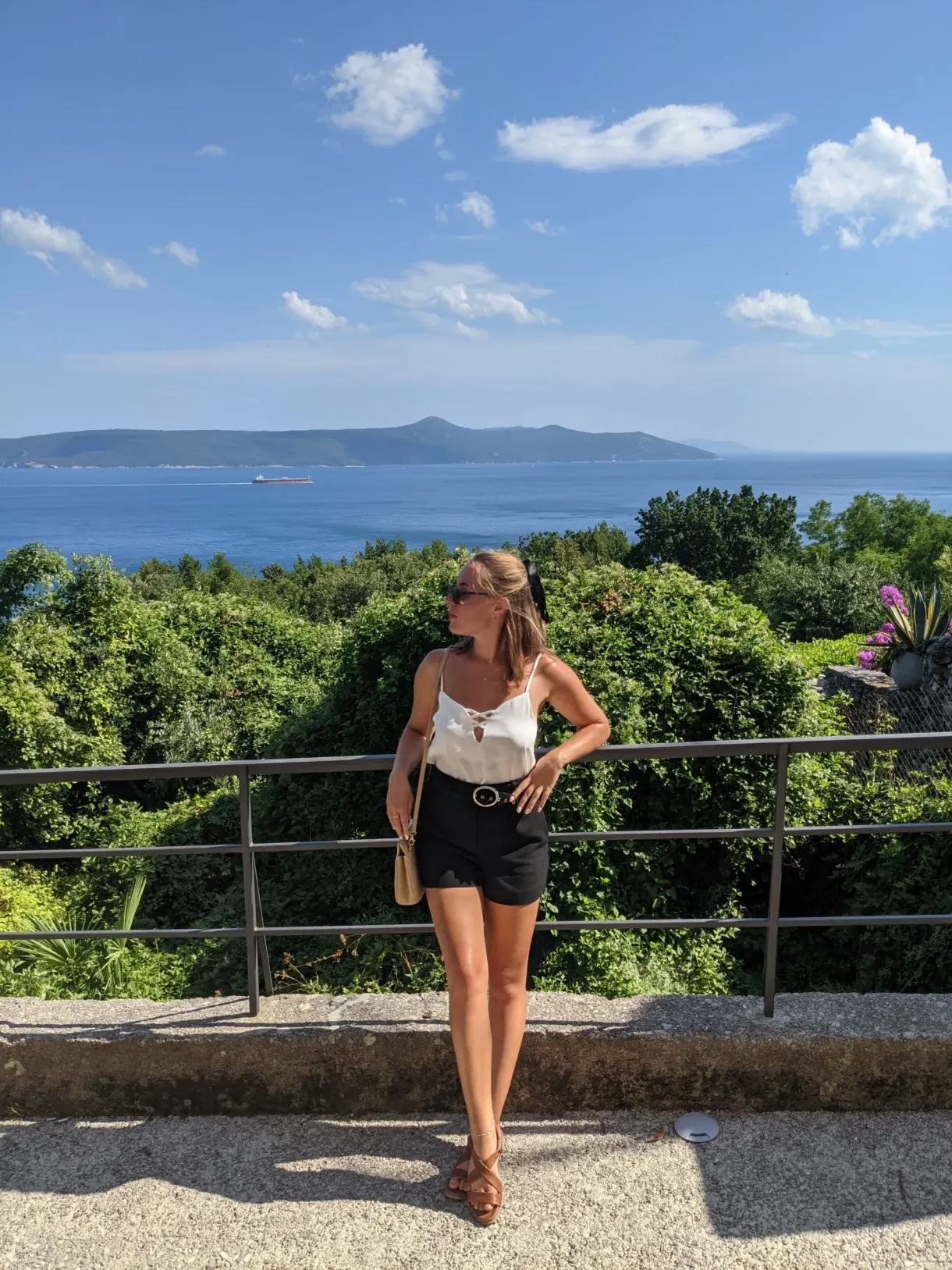
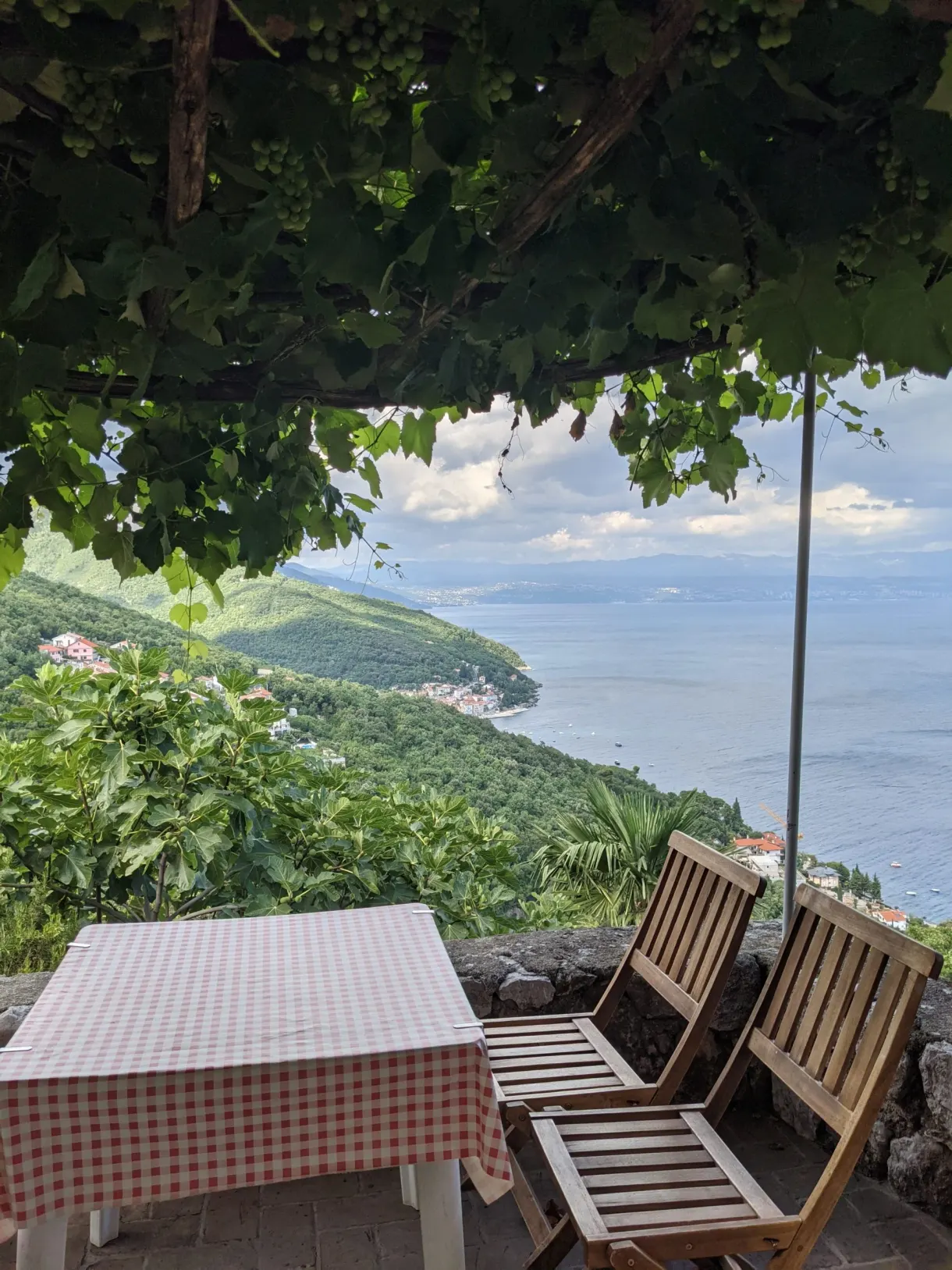
The next stop on route 66 was the hilltop village of Mošćenice, where the short walk along the ledge overlooking the sea was a real favourite! You should come here just for the view, which is well worth the winding road to reach the village. Once at the small car park, you take the stairs that go down towards the sea. The view over the lush green mountains plunging towards the sea is beyond sublime!
Lovran
Our last stop on the east coast was Lovran, where we had a late lunch at the restaurant Food & Wine Bar Ganeum (listed in our favourite spots at the end of this article). We did not linger there but the small historic centre is worth a look. We turned around here to go back to Istria because the coastal towns in the distance looked more and more built up and we did not want to visit an over-urbanised coastline.
The southern tip
Pula
From our accommodation in Kanfanar, we decided to go and explore the south of the region, starting with Pula, the biggest town in Istria. We thought we would find a historic town full of charm, but it was a huge disappointment… The surroundings of Pula are very built up and industrial and the seafront is completely disfigured by cranes and cargo ships. And it has to be admitted that the crushing heat did not help either in making the town pleasant to stroll around.
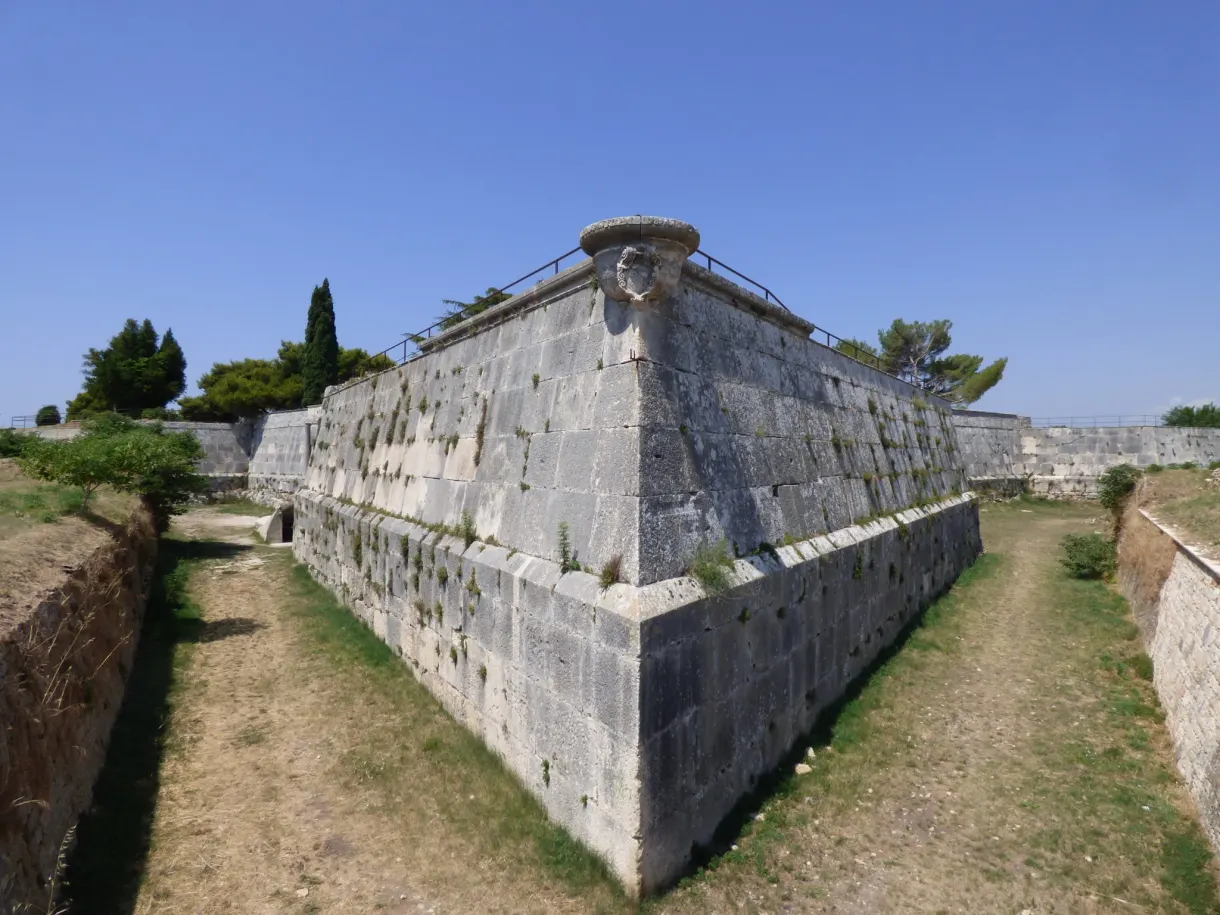
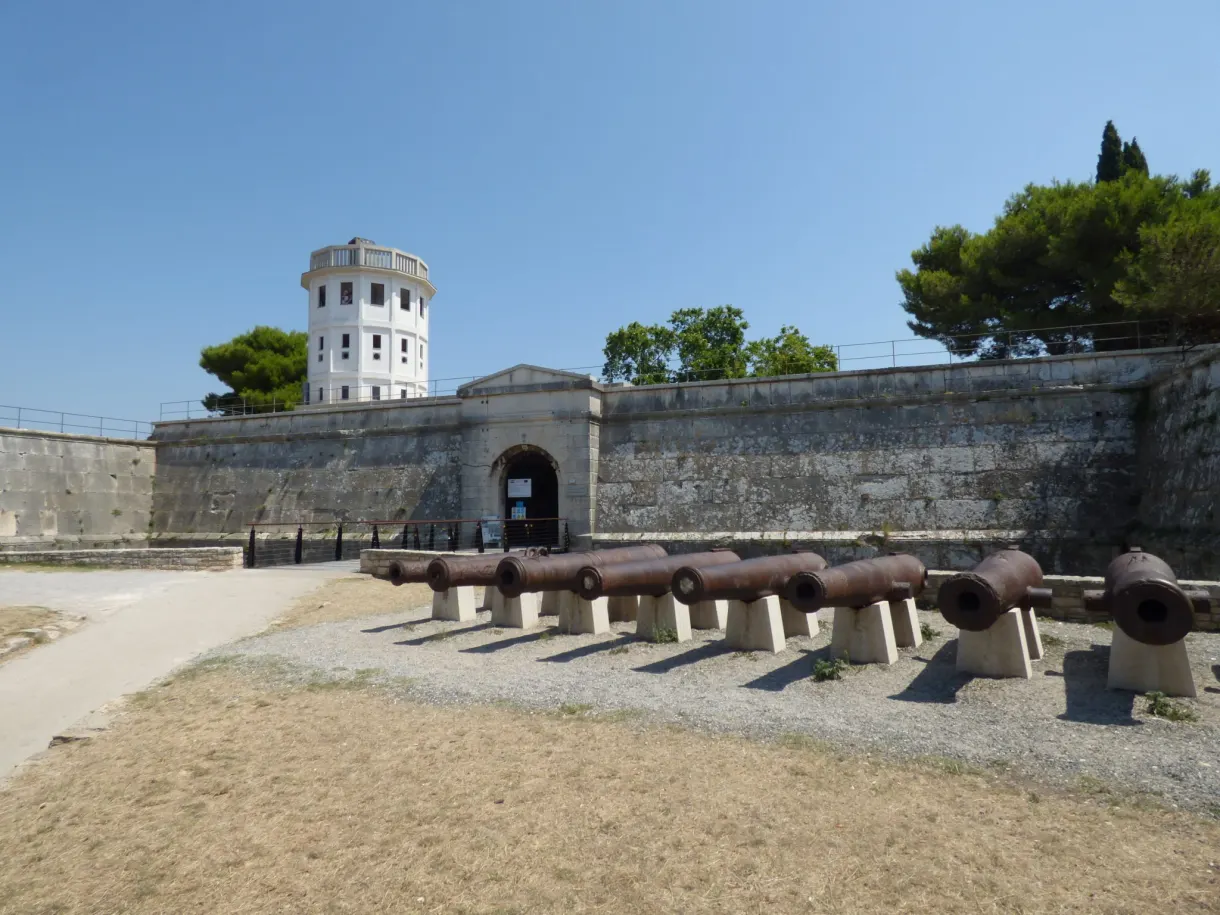
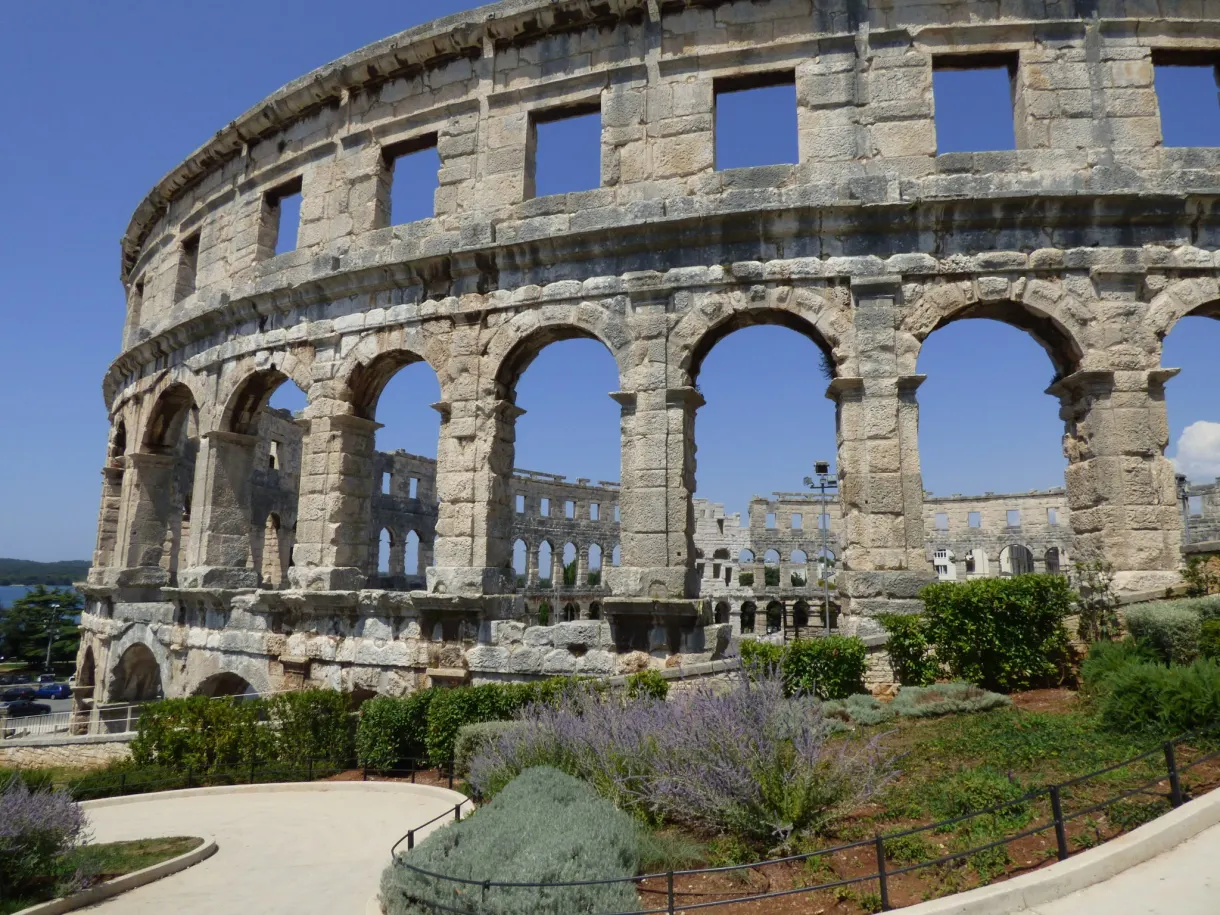
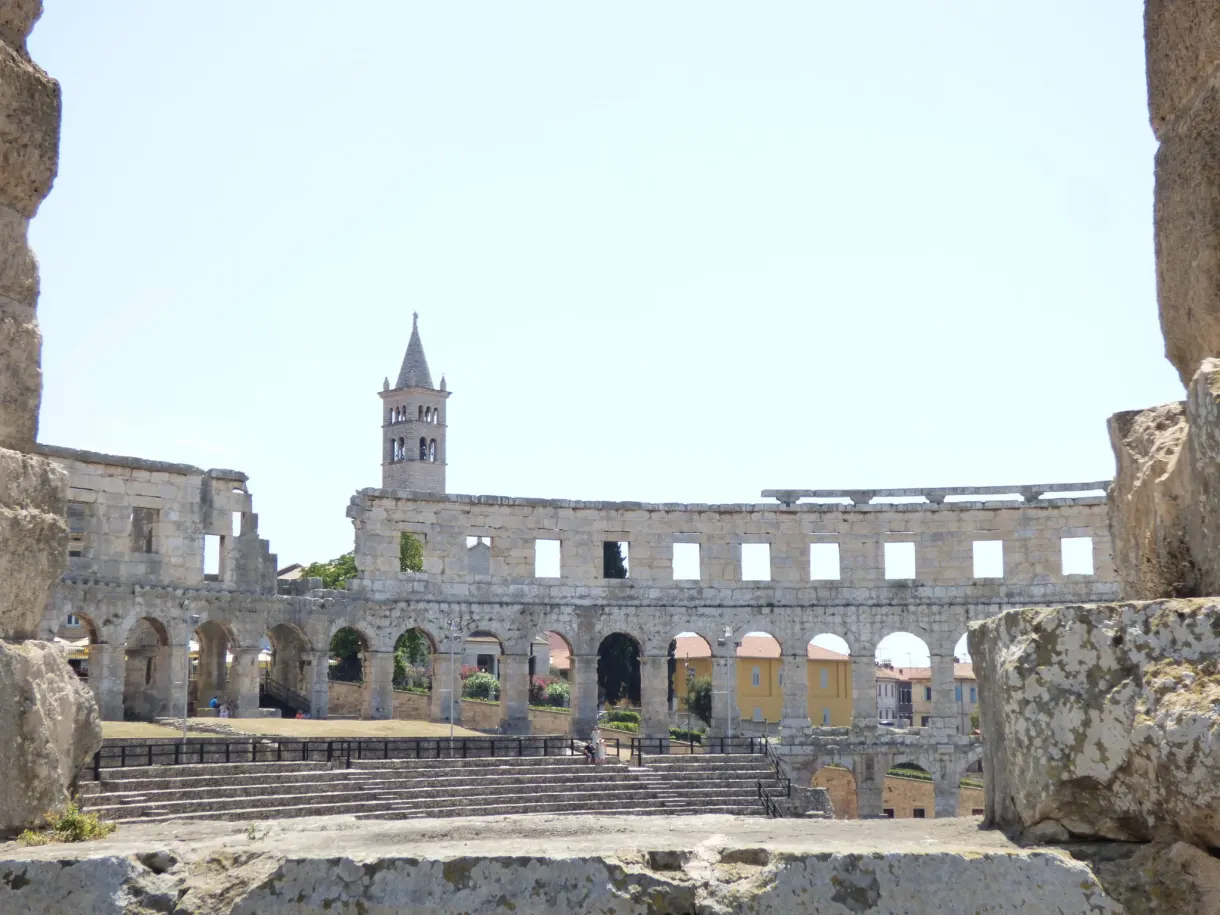
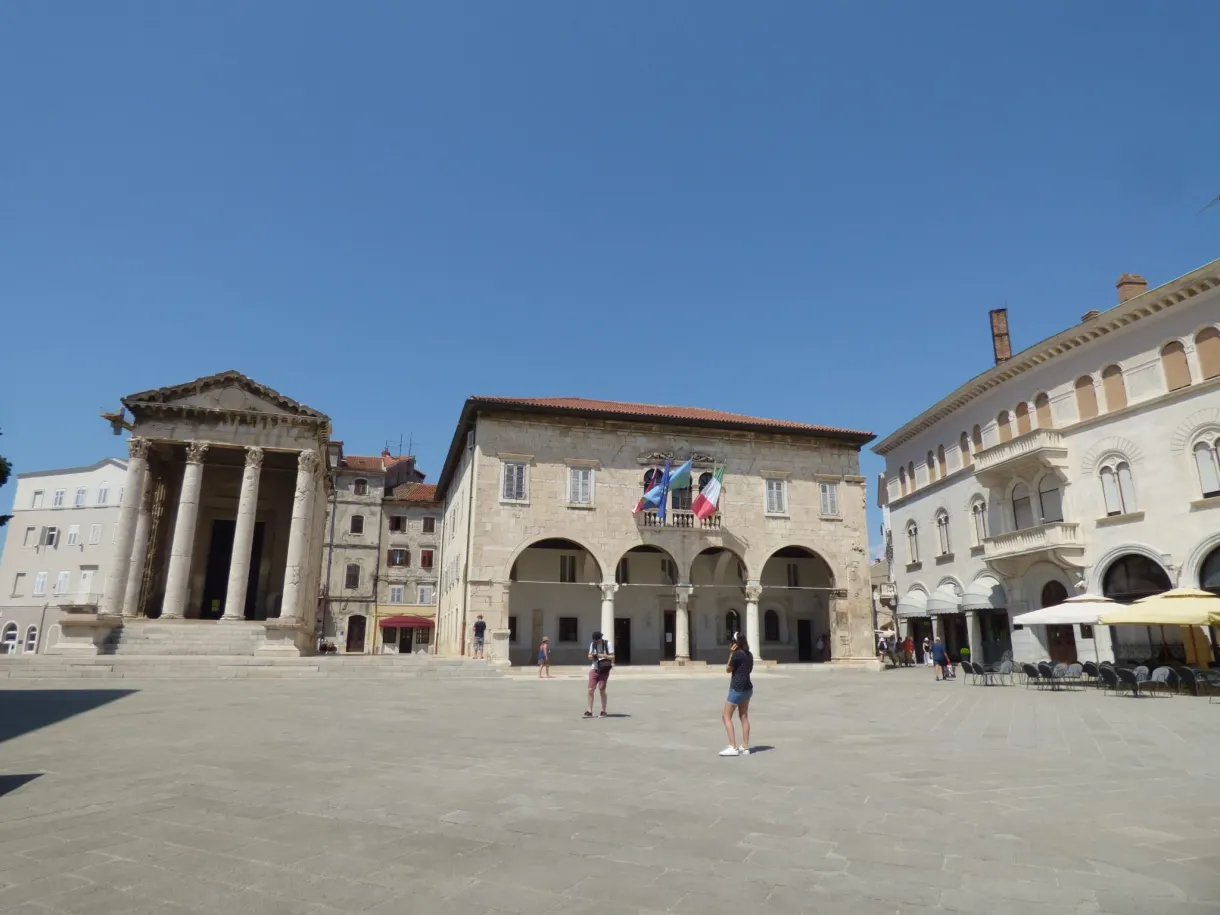
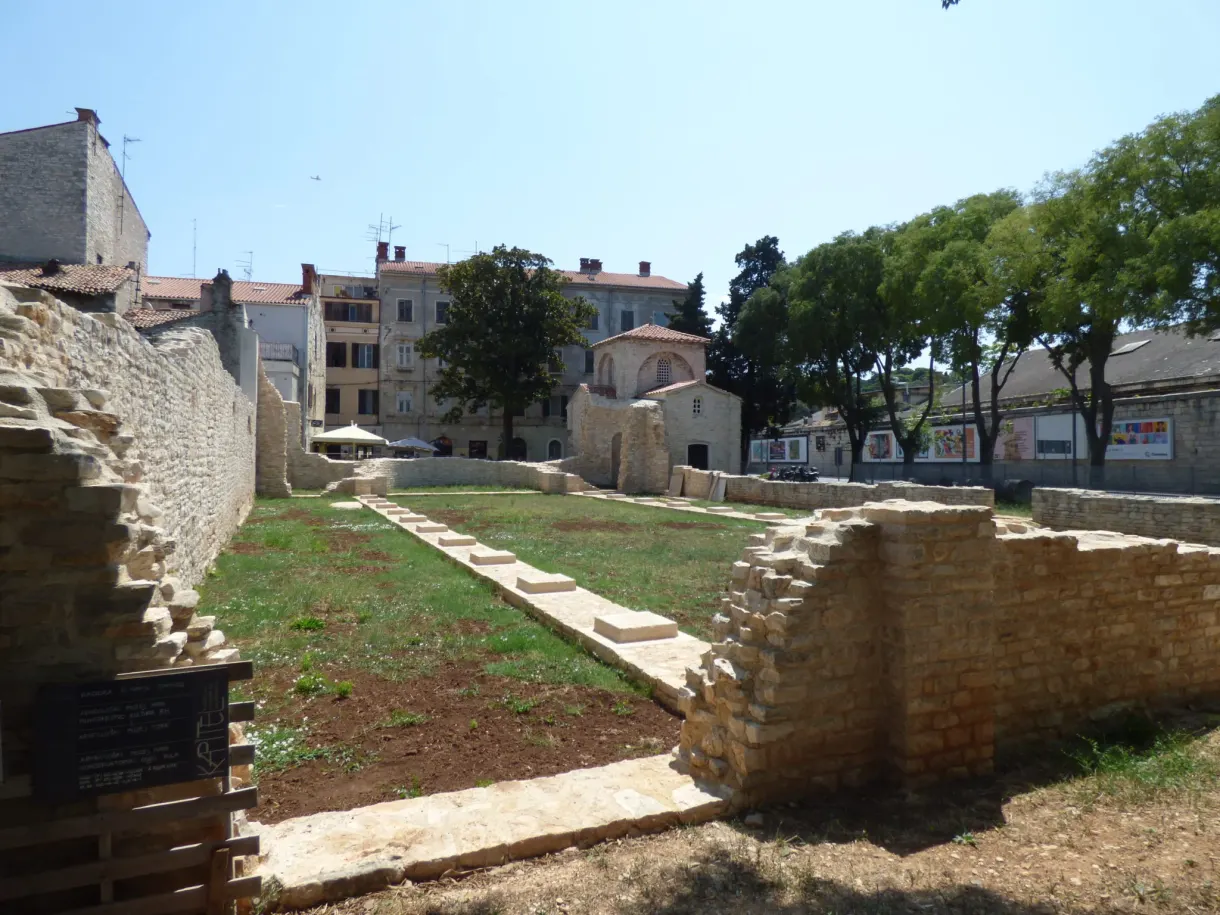
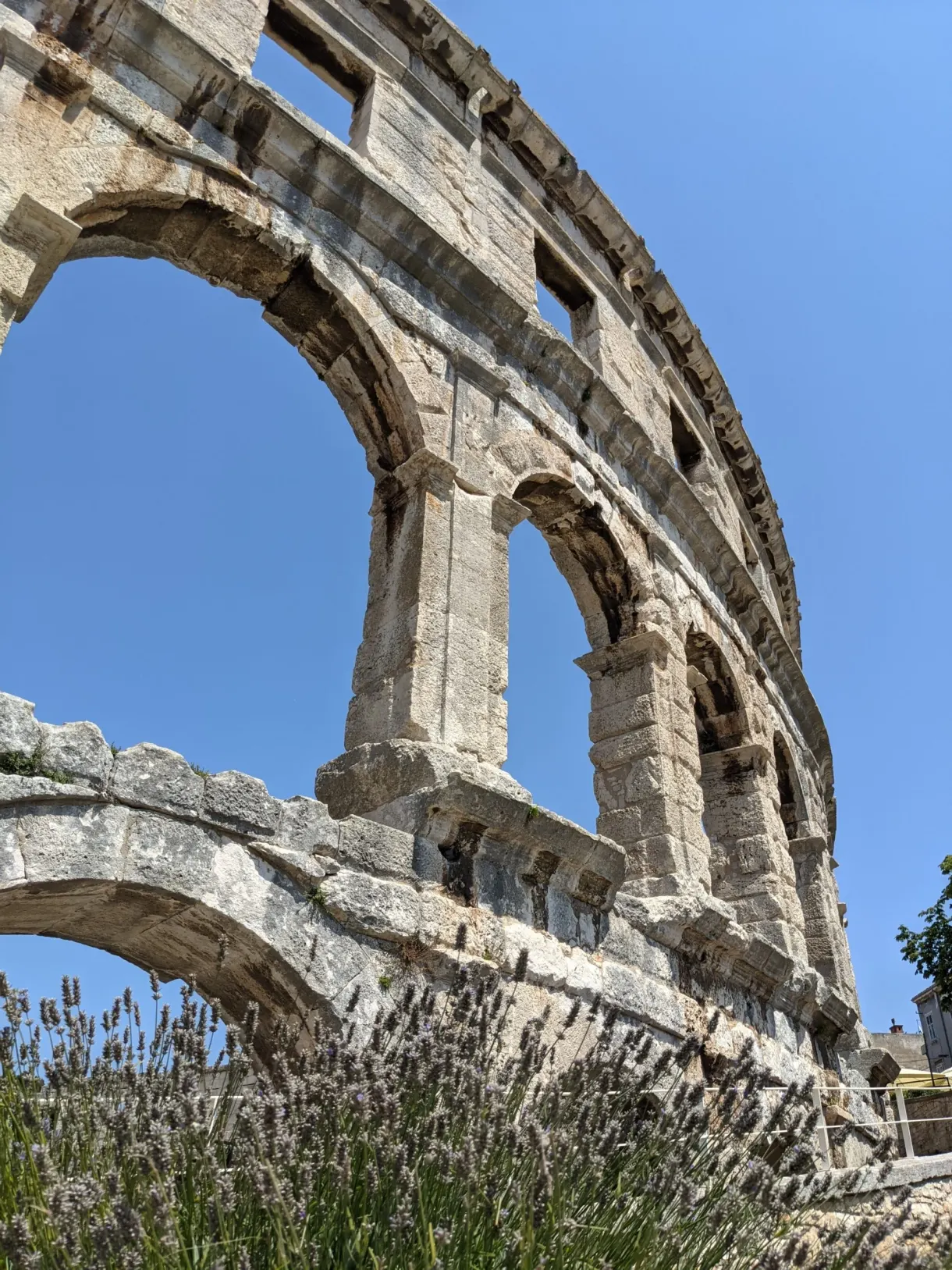
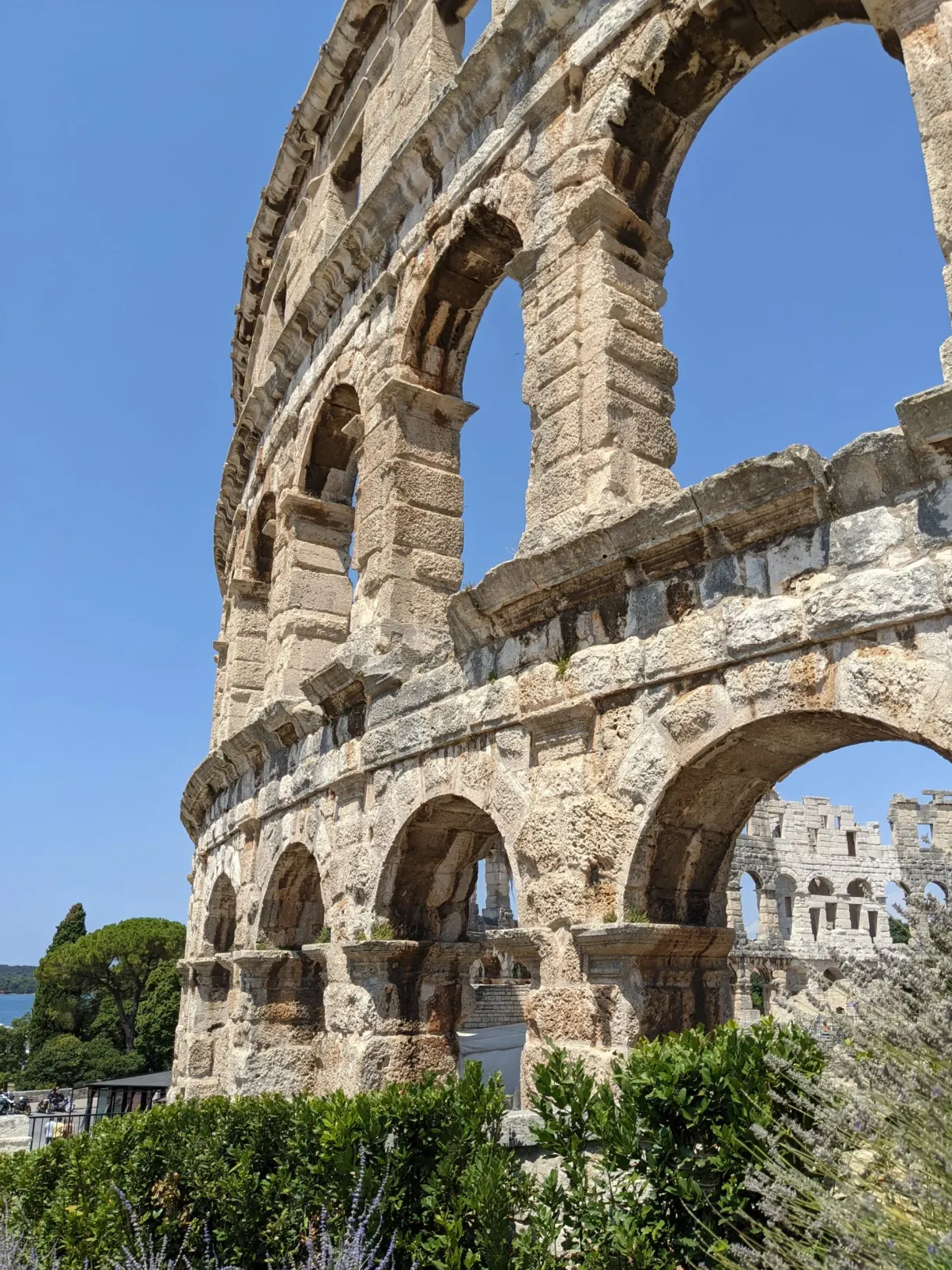
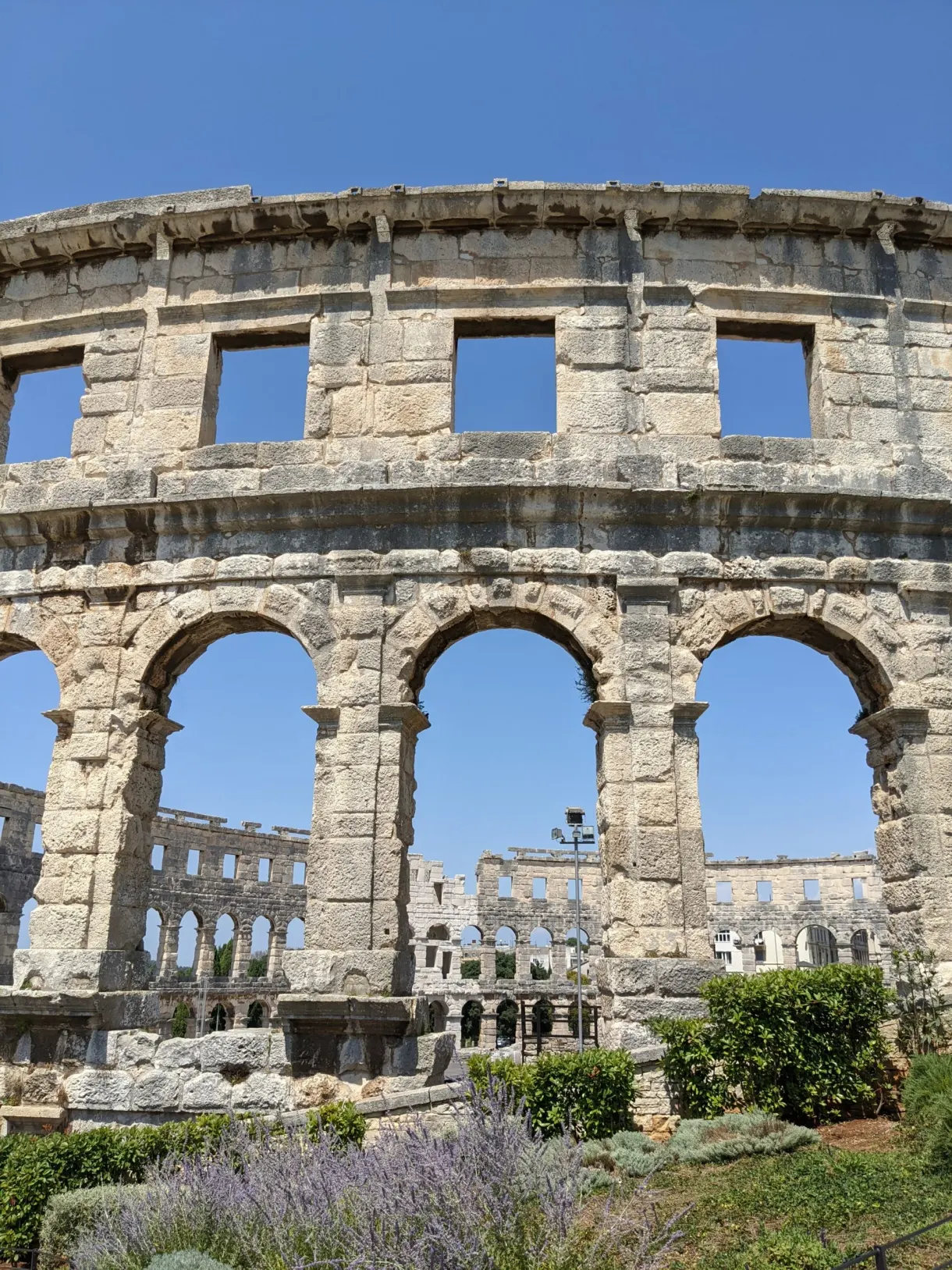
The old town centre is concentrated around the Kaštel, the so-called “Venetian” fortress that dominates the town and houses the Historical and Maritime Museum of Istria. We walked the rampart walk, following the bastions, but the view from the hill is not sensational. We then went down towards the centre, passing two old gates: the Twin Gate and the Gate of Hercules, of which remains are left. It is in this neighbourhood that you find the symbol of the town, the amphitheatre, said to be one of the six biggest amphitheatres of the ancient world still standing today. You can go all the way around the outside to admire the very well preserved high walls: we did not think it necessary to visit the inside because the tiers and the levels no longer exist. And finally, before getting back in the car, we passed by the main square of the centre, the Forum, where you find the town hall, the temple of Augustus and a few beautiful houses with Italian architecture.
Kamenjak
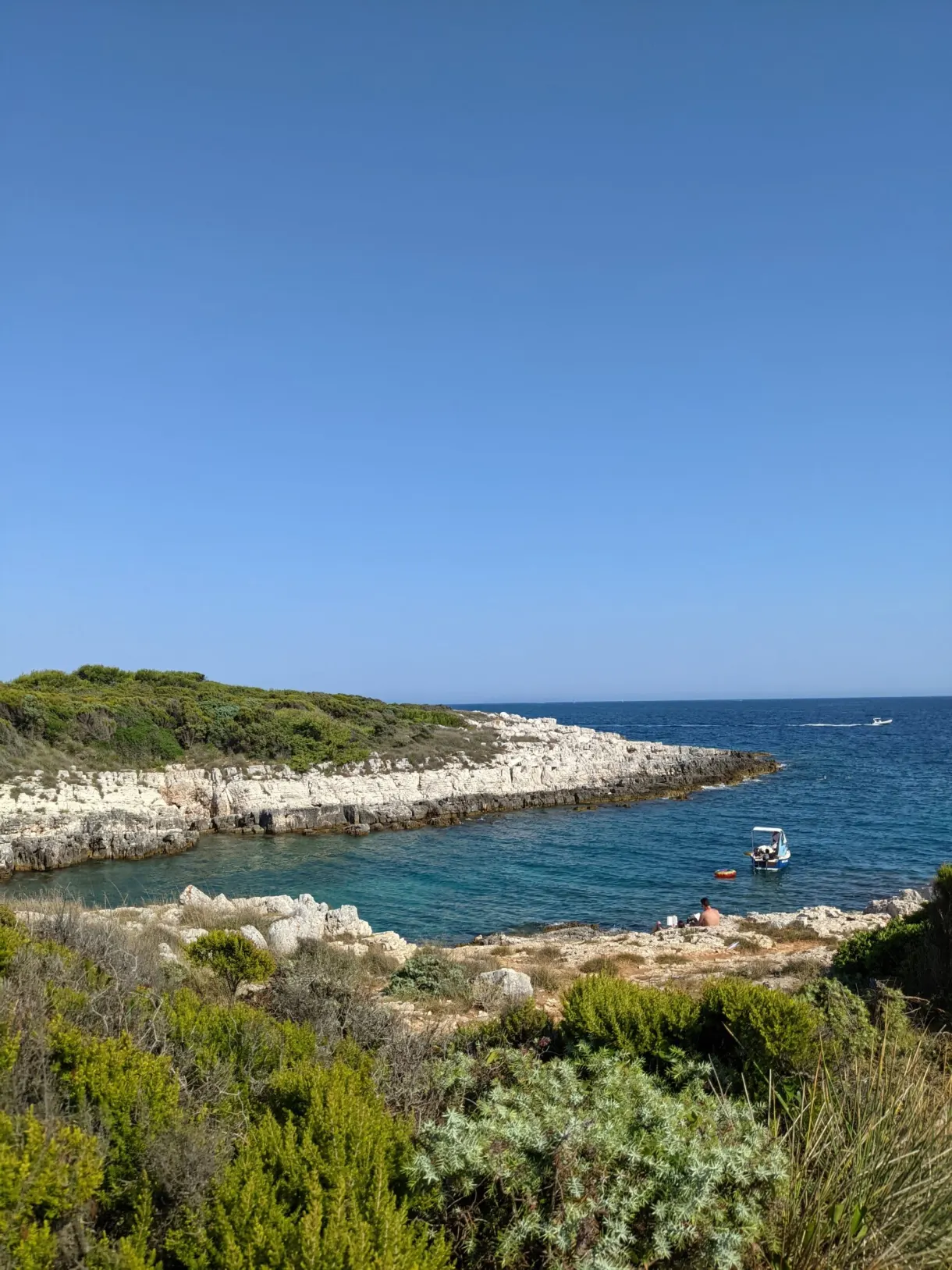
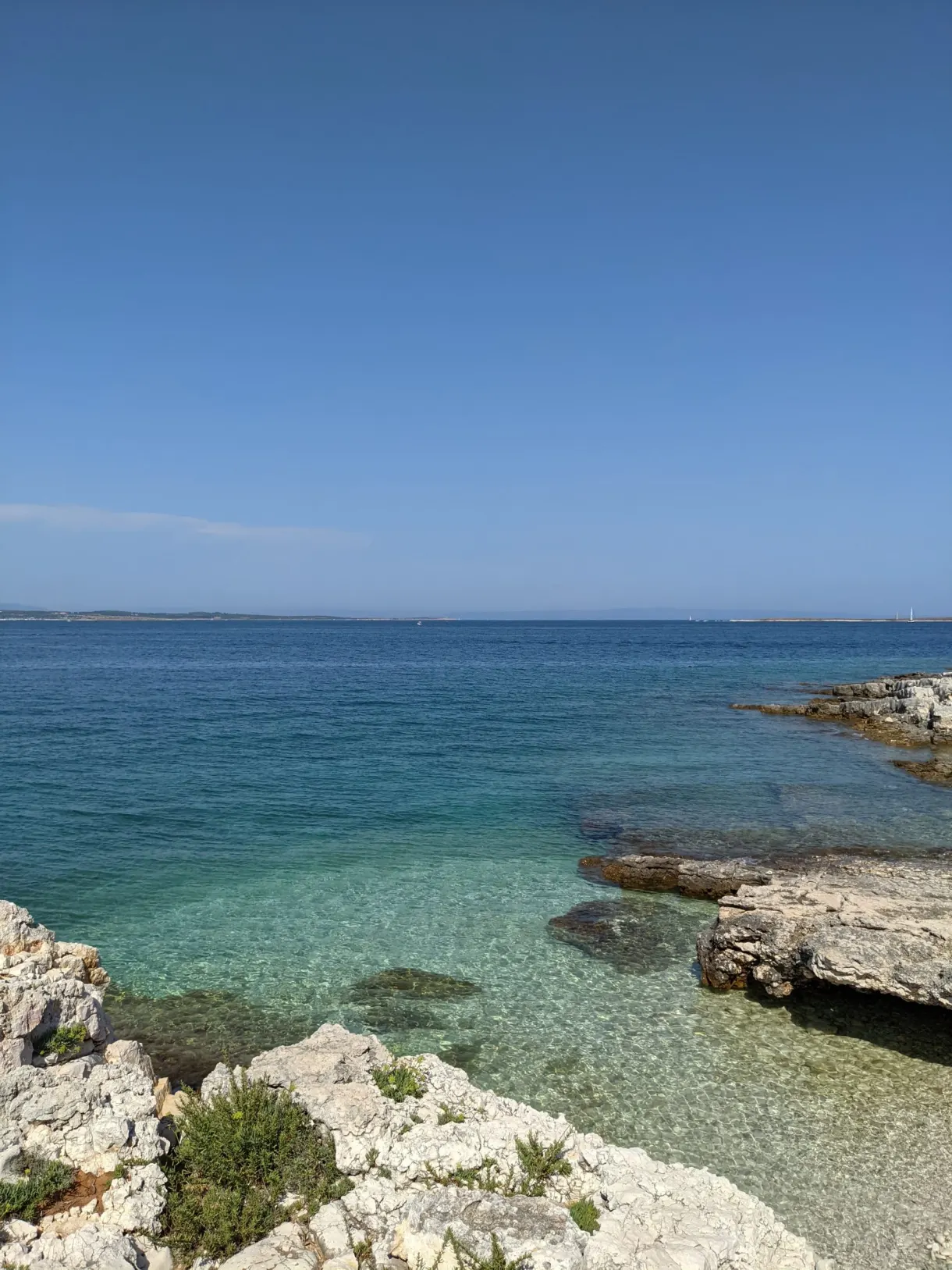
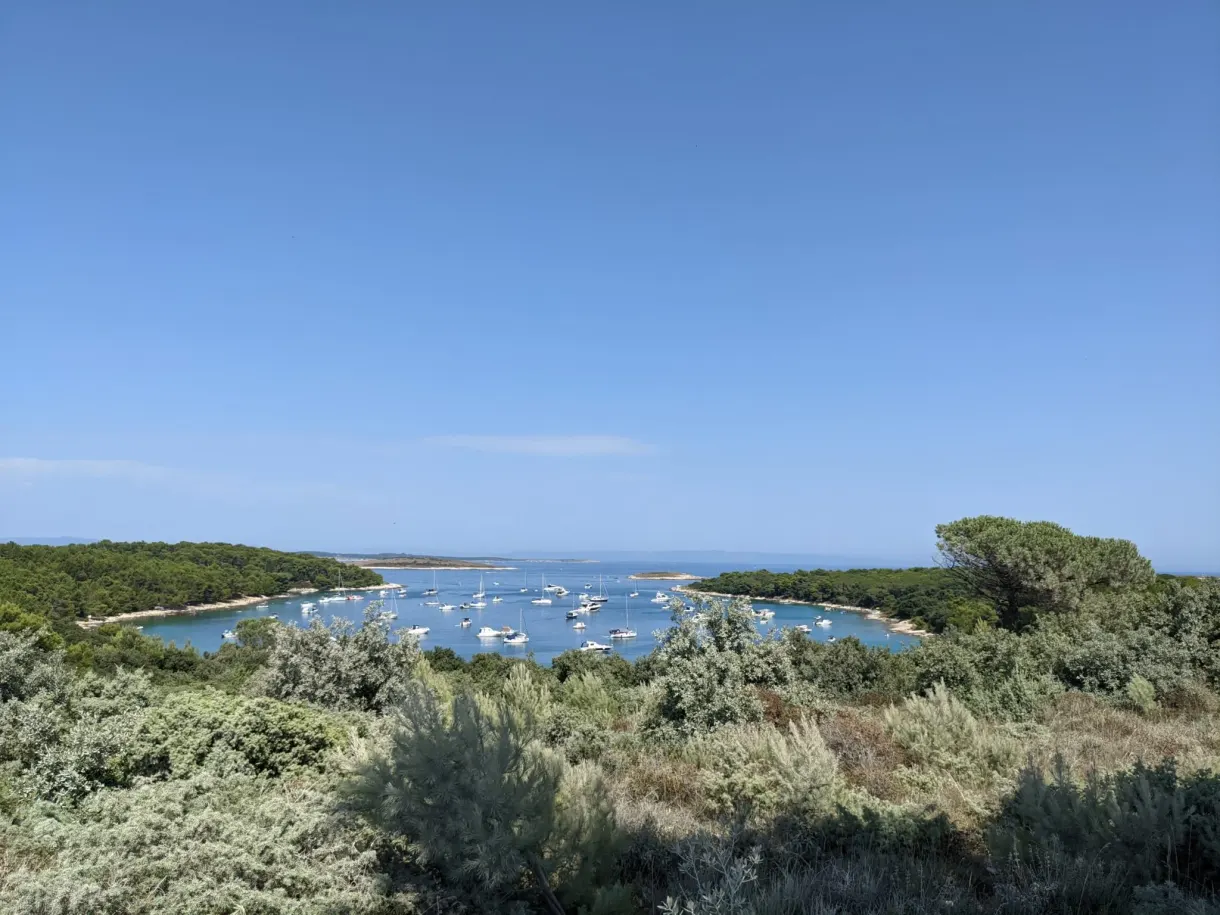
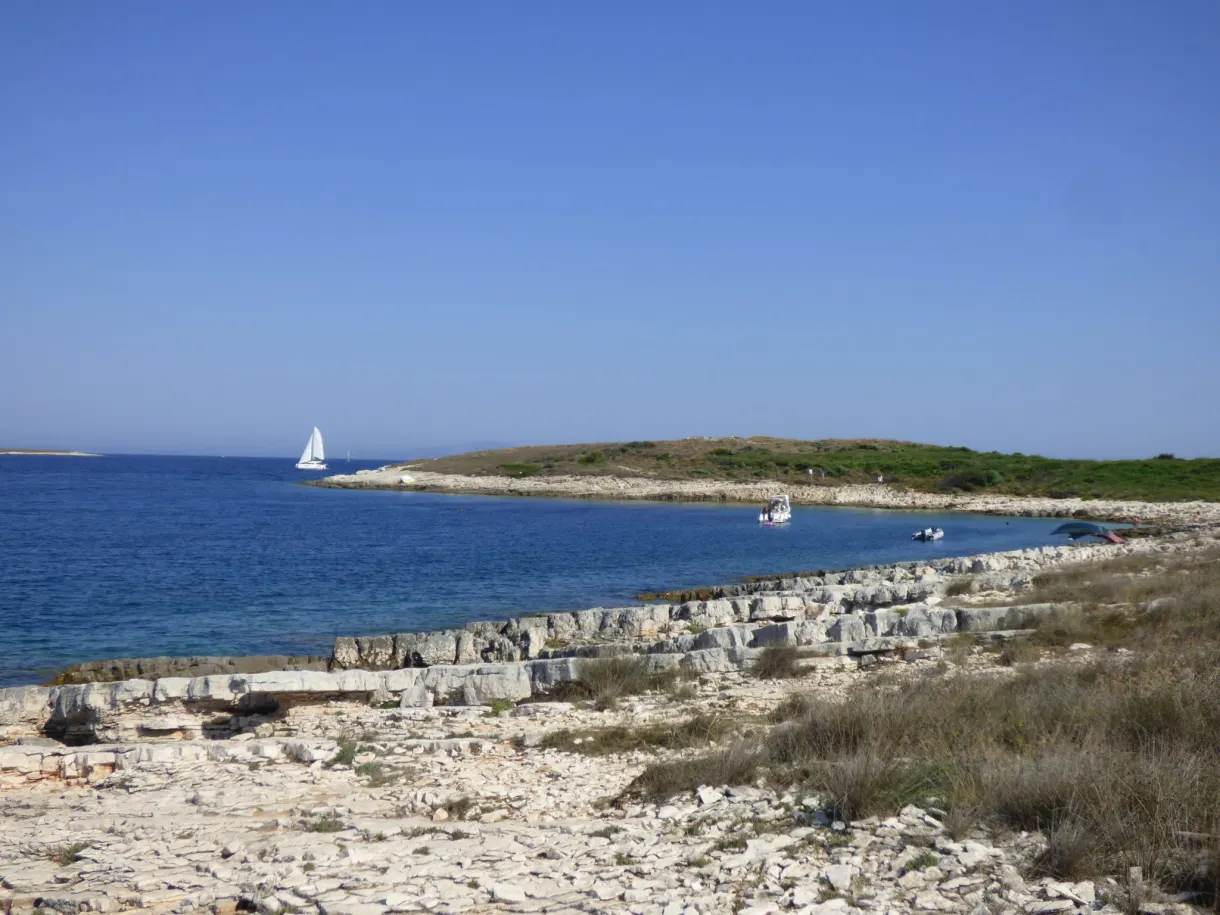
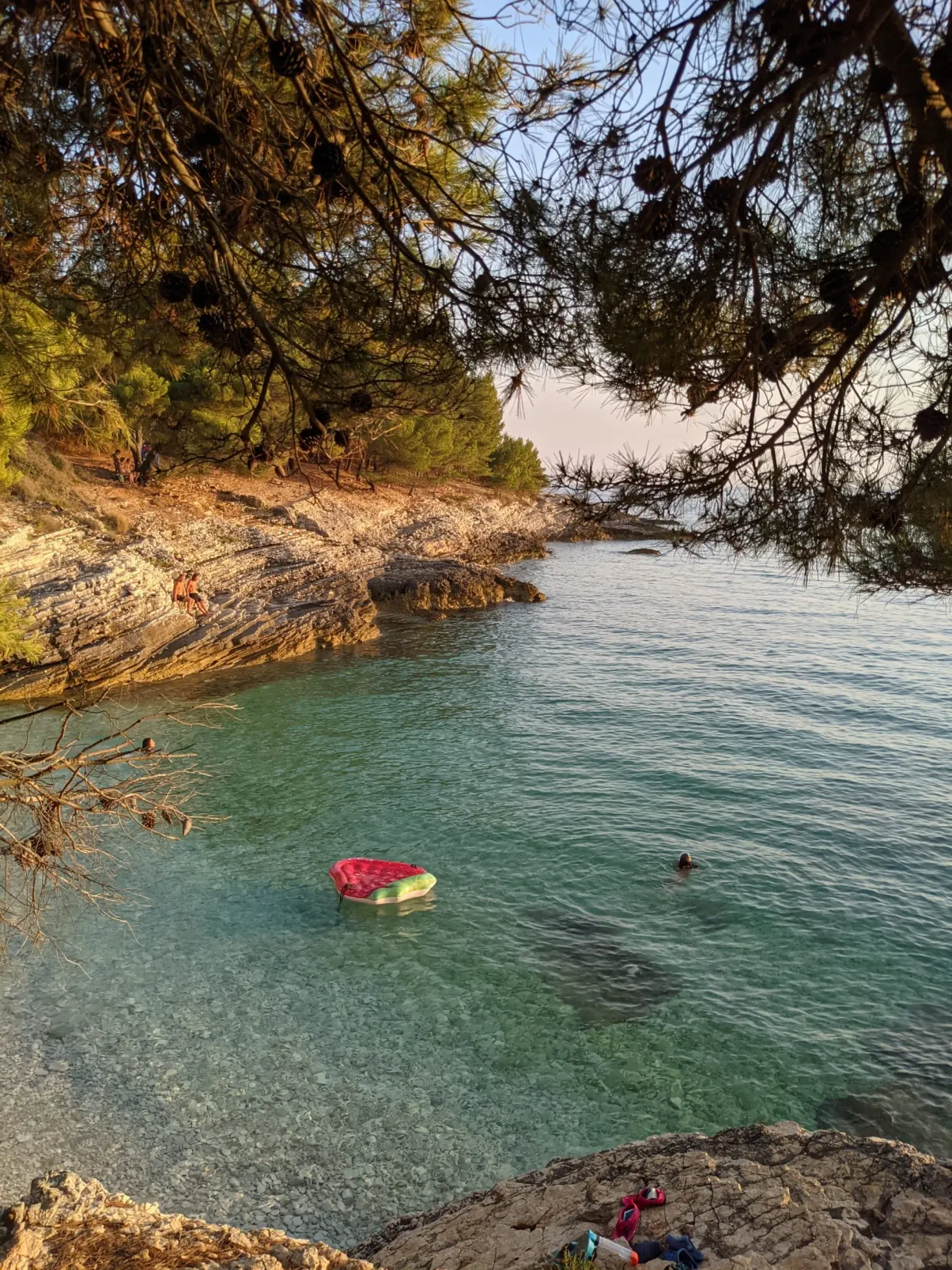
If the day had started with a disappointment at Pula, discovering the Kamenjak nature reserve was a real favourite in Istria! At the far south of the peninsula, this protected park is a little gem: you get in just after the village of Premantura, here on Google Maps. Entry to the park has to be paid for (80kn, 10,60€, payable by card) if you come by car (essential for getting around, in our opinion). The roads are not surfaced and look more like stony tracks: watch out for stones and dust!
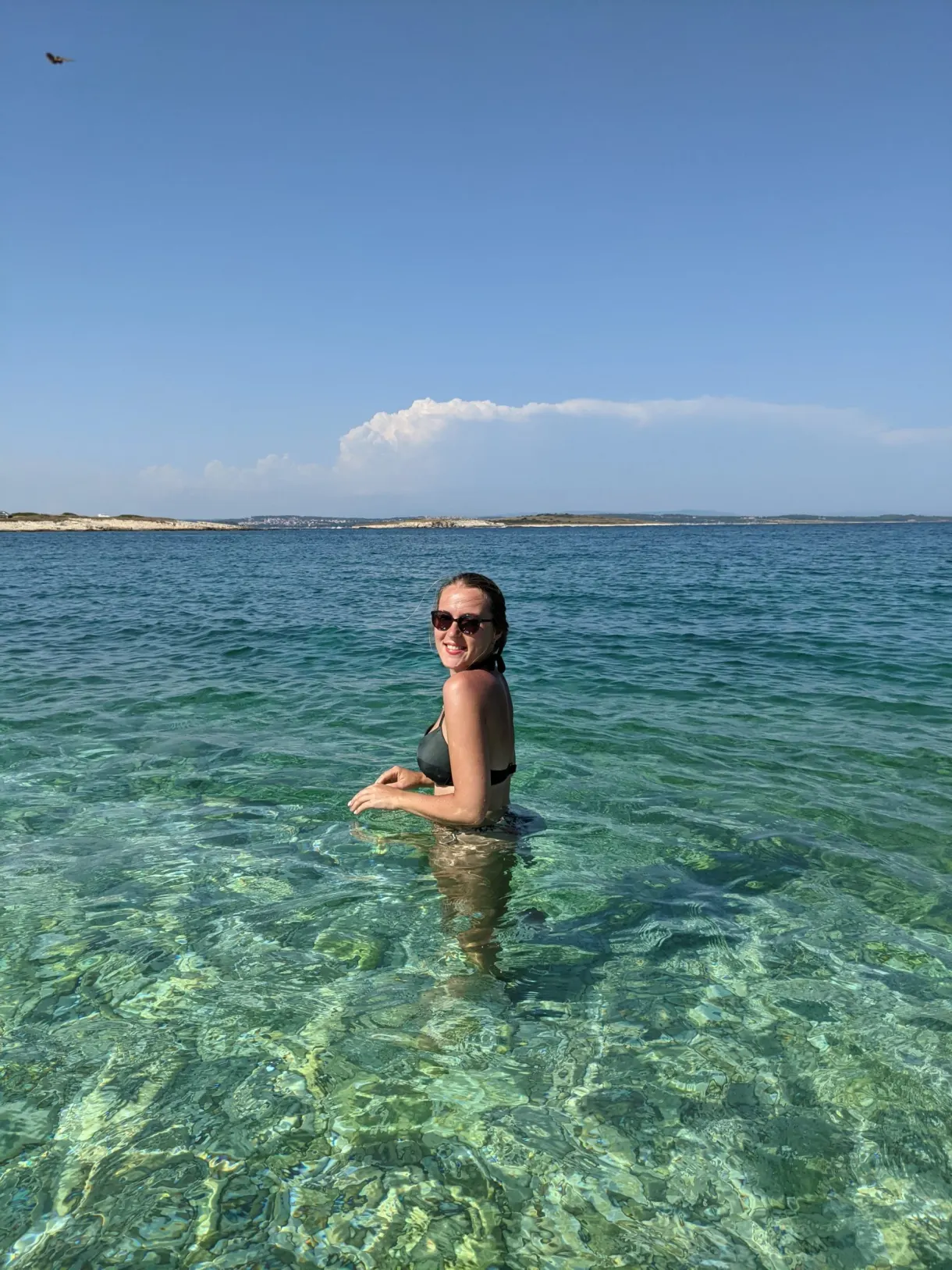
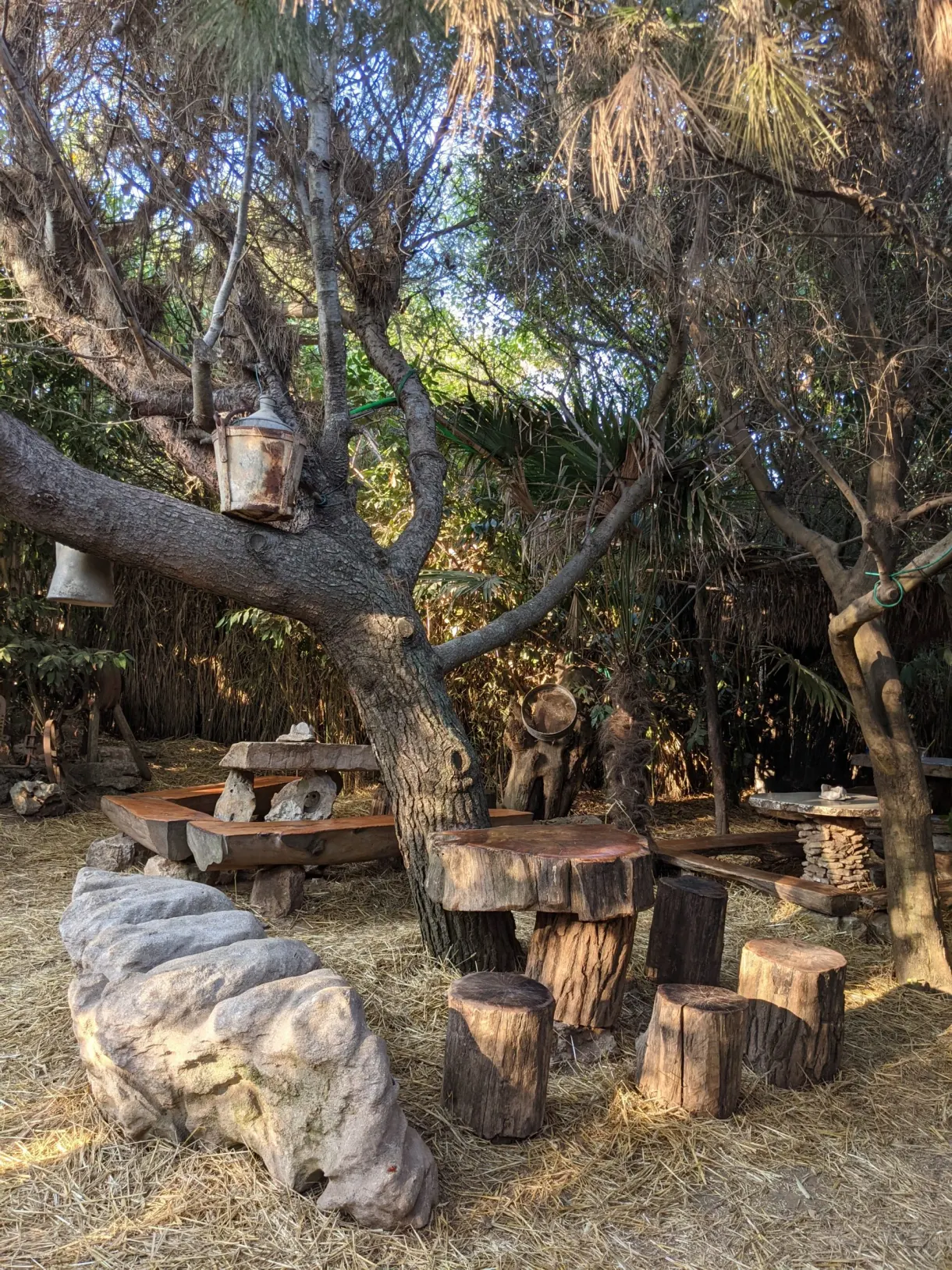
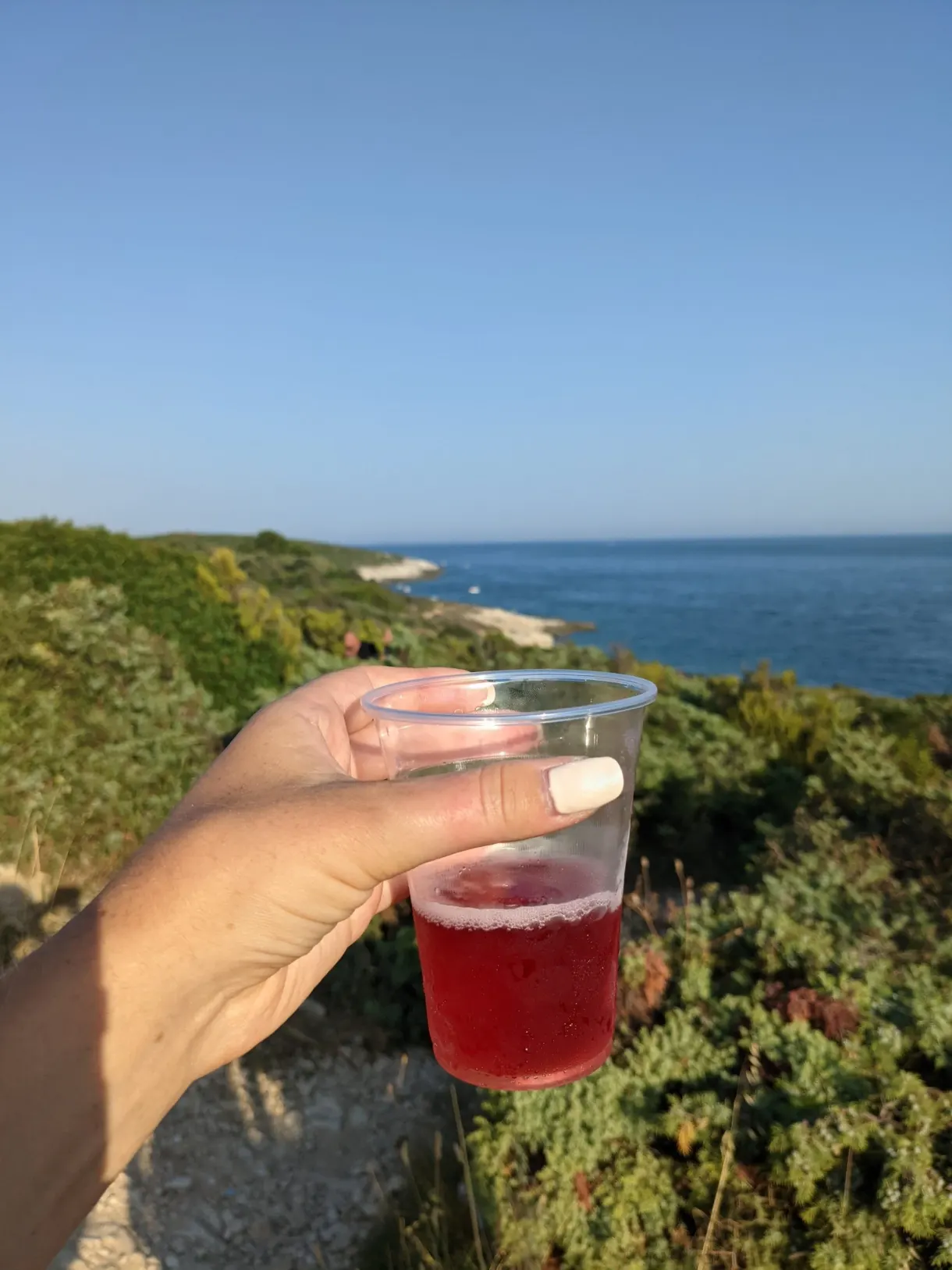
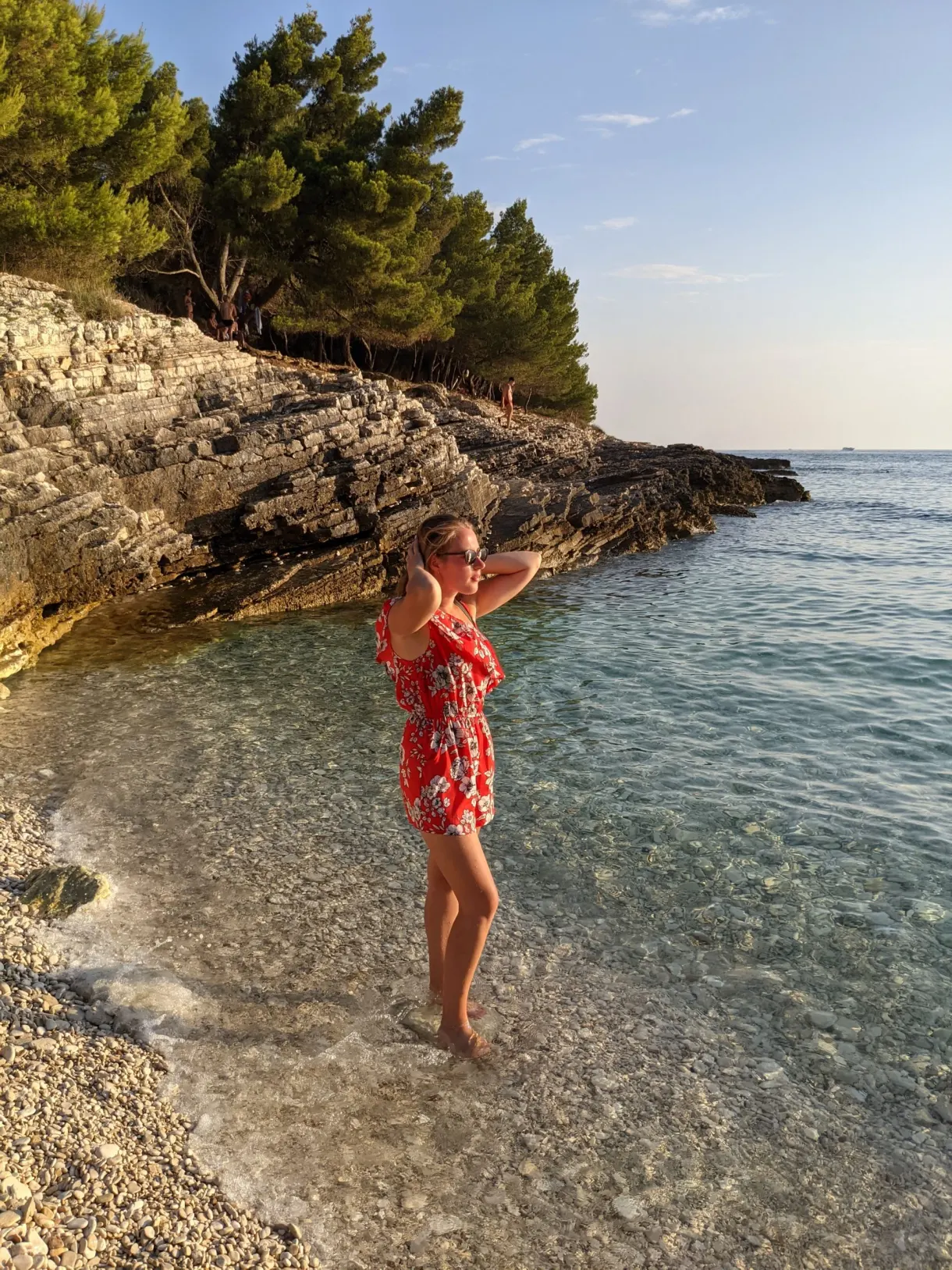
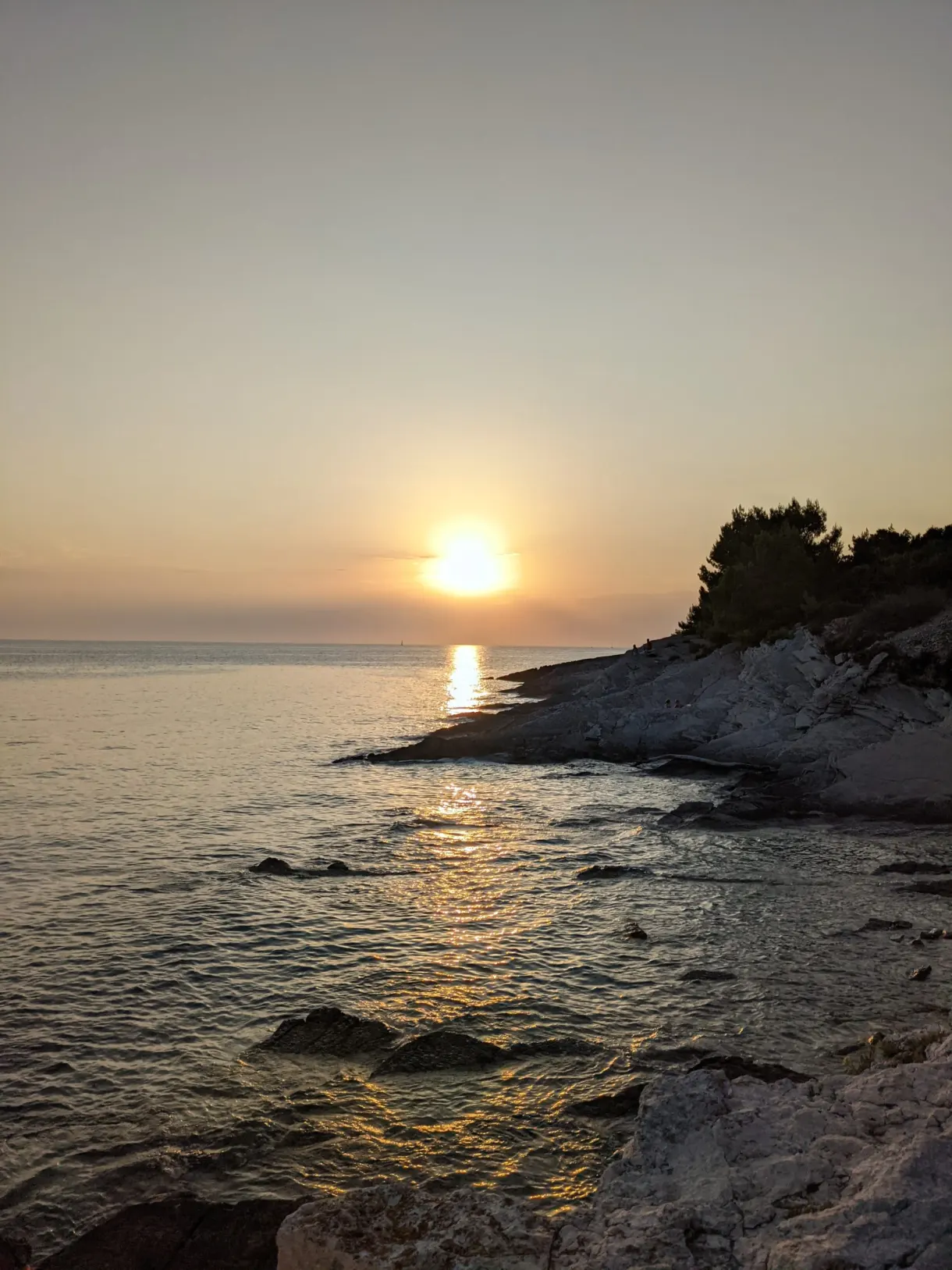
We headed straight for the south of the reserve, to Debeljak Cove, a magnificent creek with turquoise waters, perfect for cooling off, from which paths set out to reach Cape Kamenjak. At the end of the point there is a superb high viewpoint (Jistra South View Point) which lets you see the whole peninsula. After a few hours spent in the south, we slowly came back up towards the park entrance, stopping at the famous Safari Bar: a completely offbeat bar with unusual decor right by the sea (18kn, 2,40€ for the homemade iced tea, cash only). We then made two stops in different magnificent creeks to watch the sunset: Beach Plovanije and Beach Pinižule.
We spent more than five hours in the reserve enjoying the warm sea water and the landscapes: we strongly advise you to spend at least half a day there!
Our places to stay in Istria
We rented two places for this week in Istria so as to be as close as possible to the sights to visit, both in the north and in the south of the region. We strongly advise you to do the same, to avoid driving too much during the day.
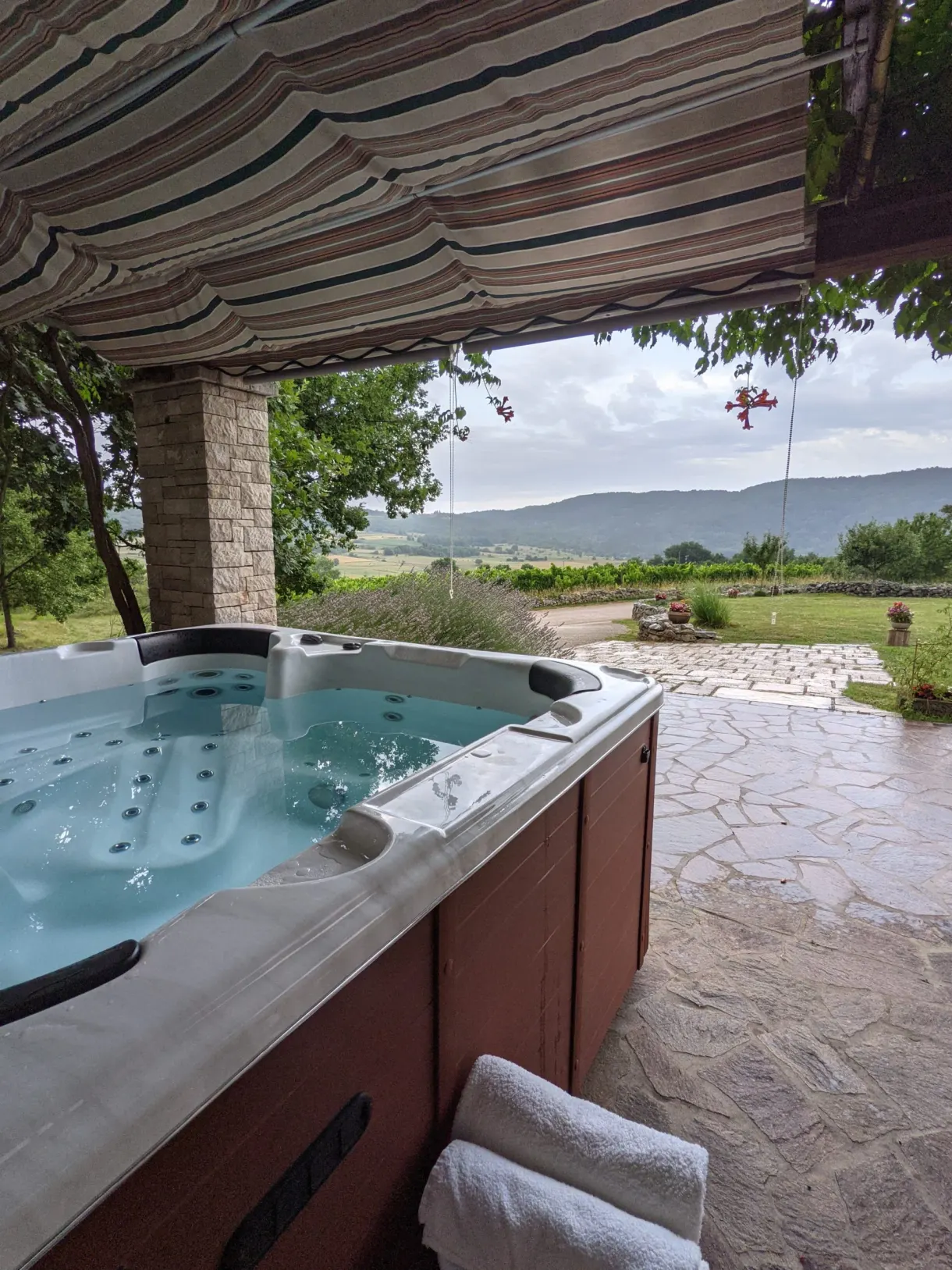
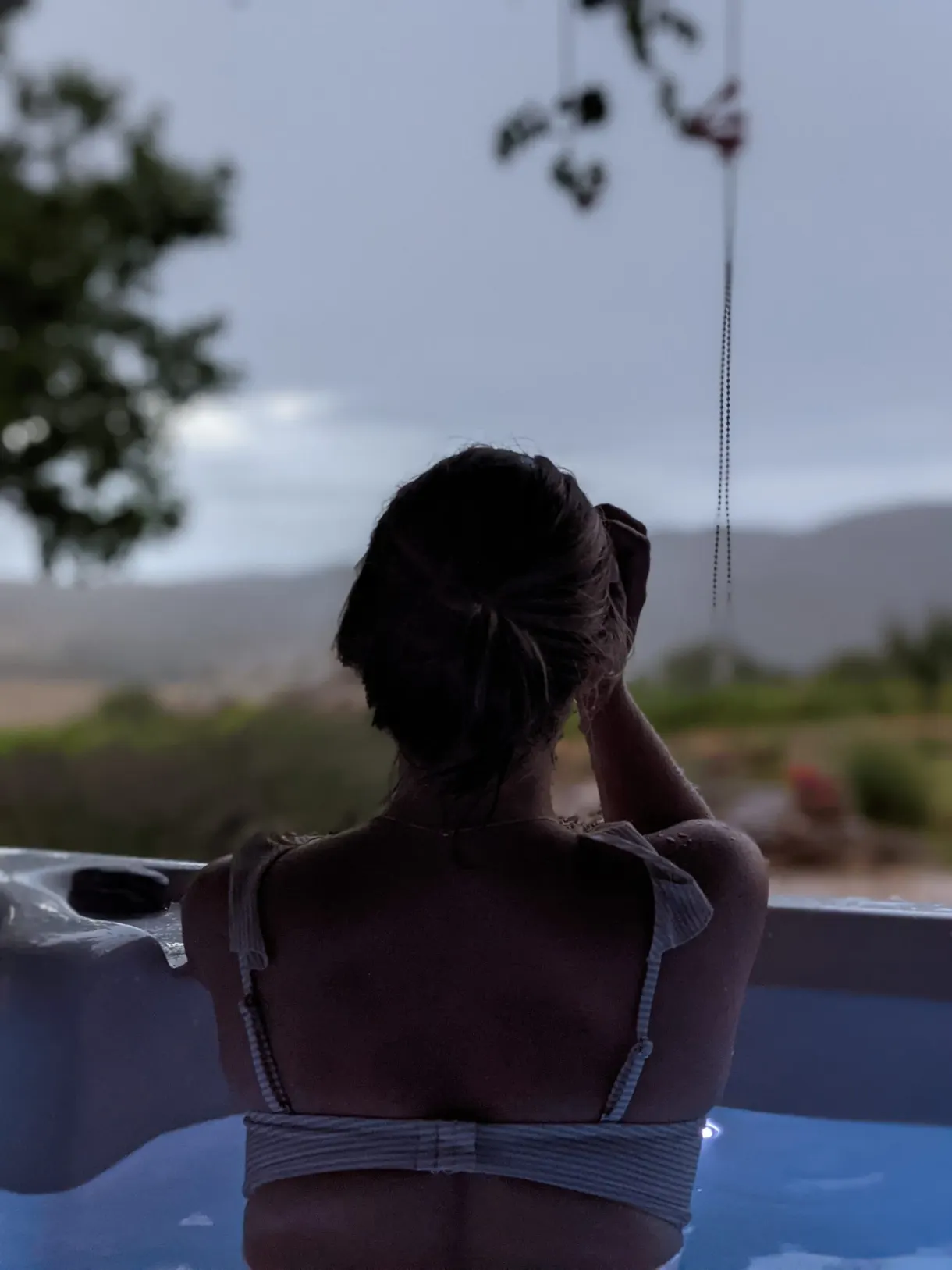
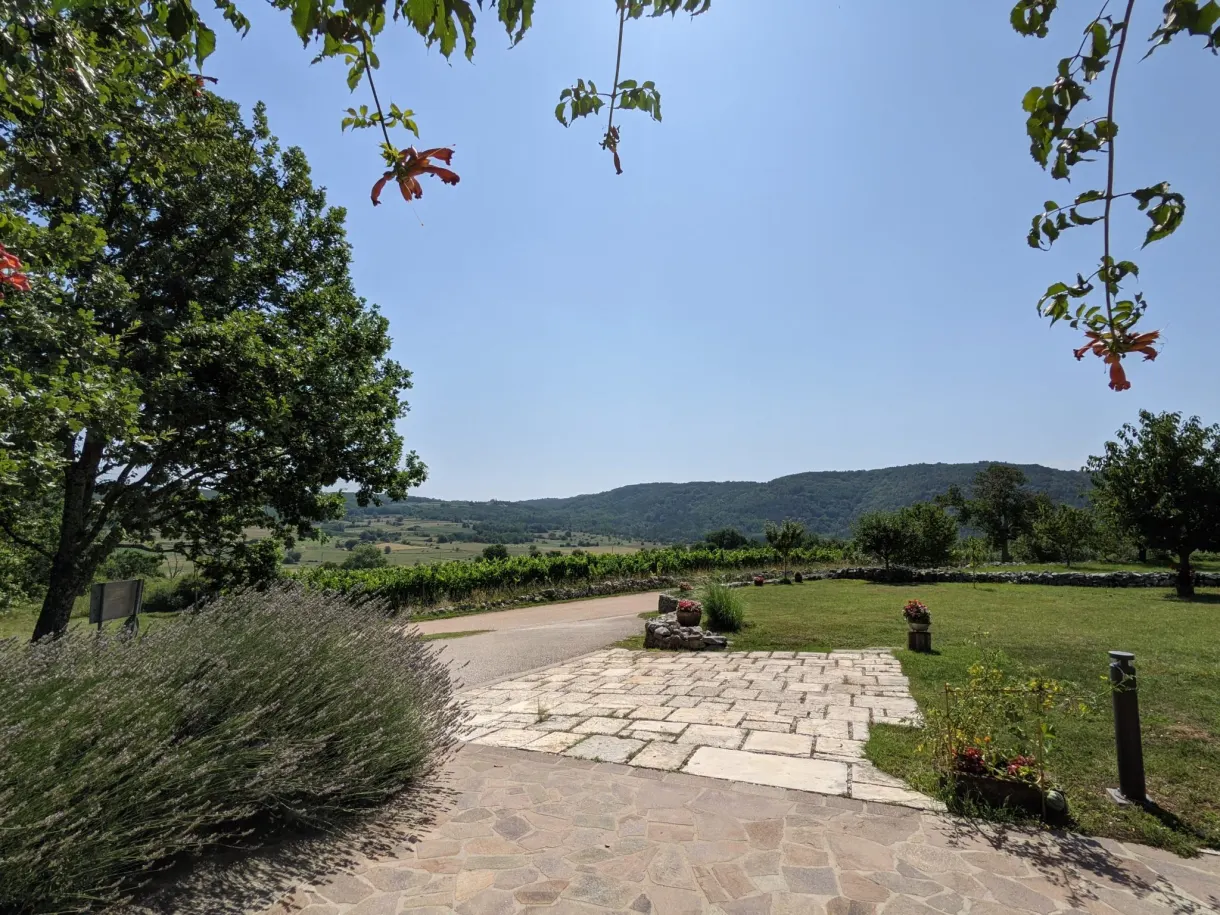
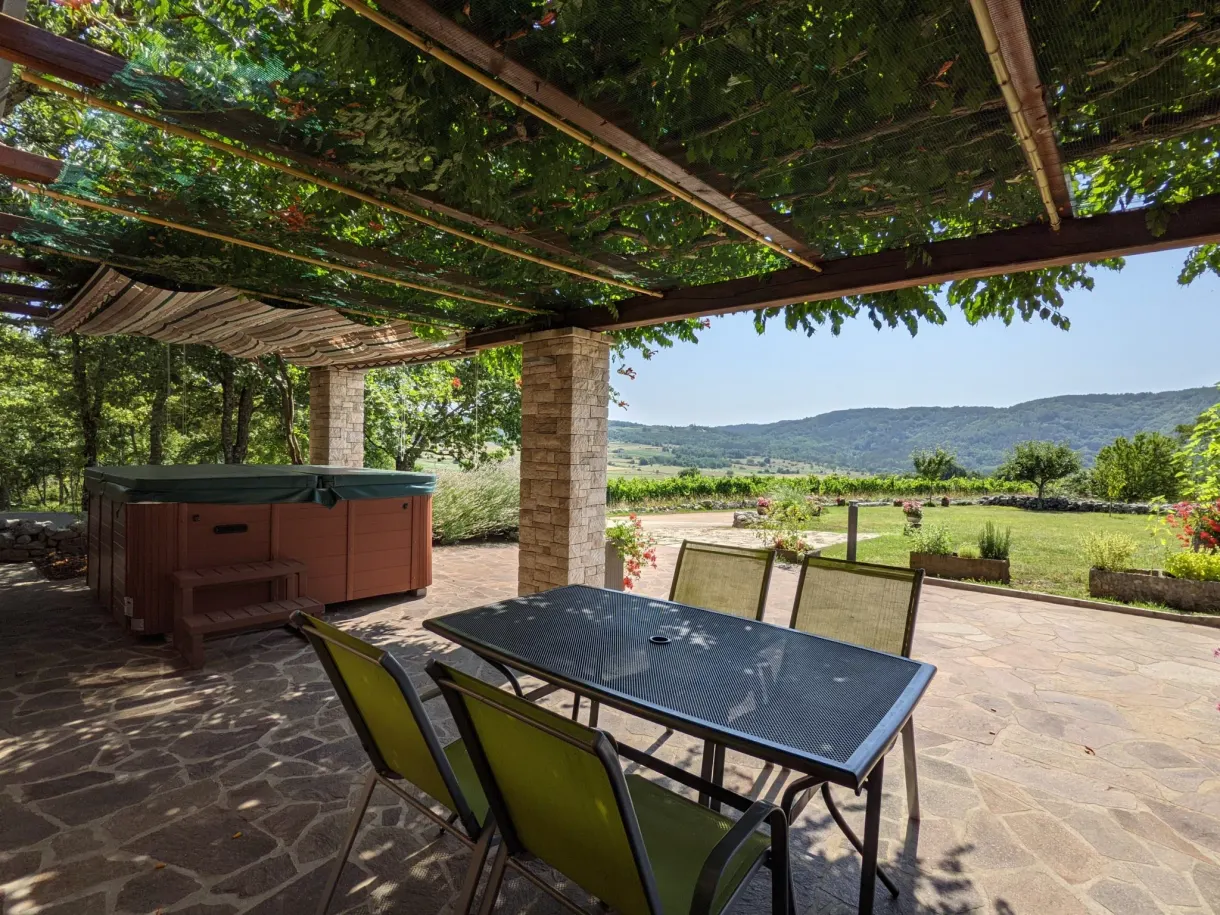
- Our stay began in the north of Istria (in Makovci) with a lovely gem unearthed on Airbnb: a small house with a terrace and a jacuzzi, quiet, with a view over the surrounding mountains. We stayed there 3 nights for 238€.
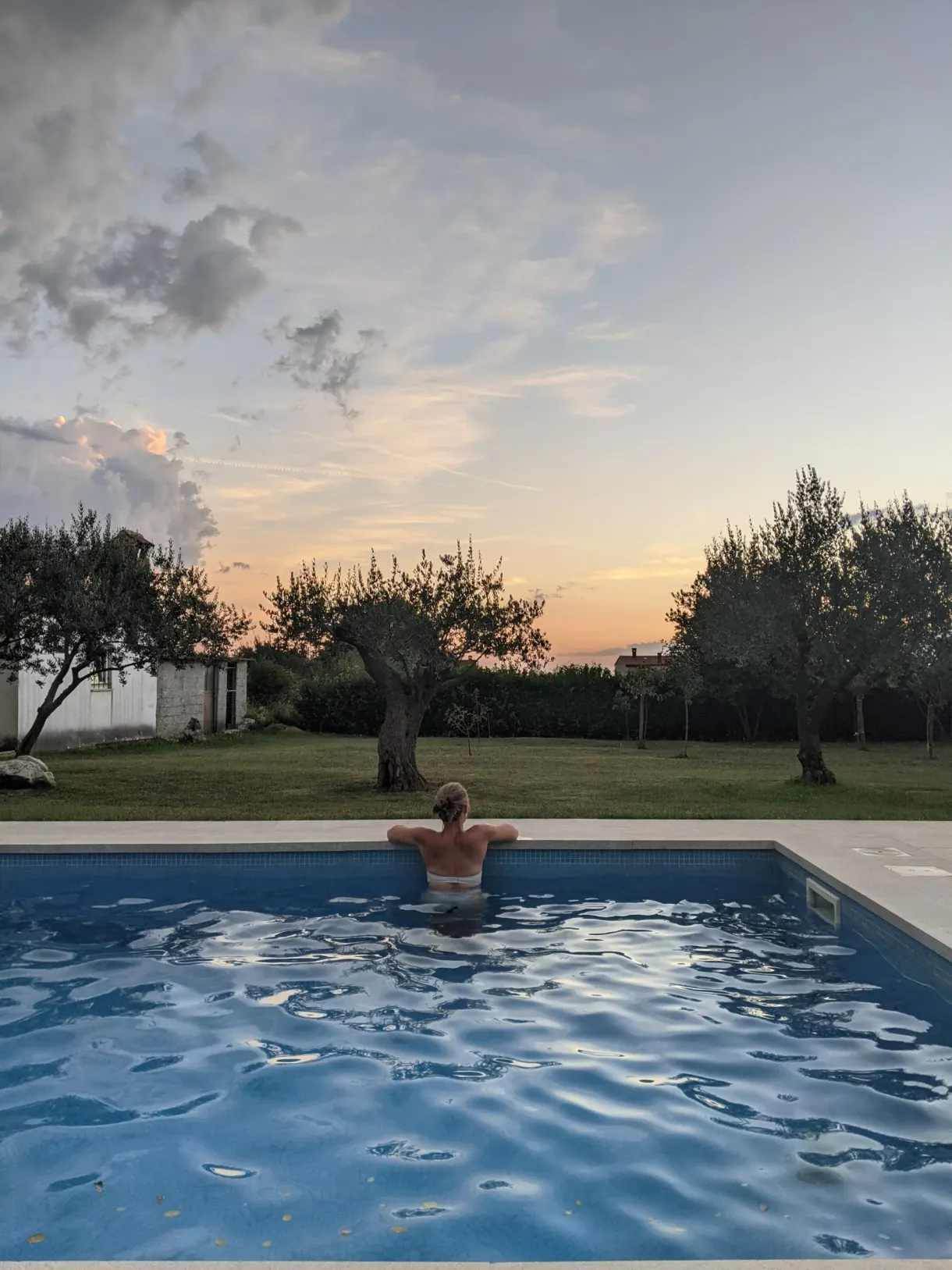
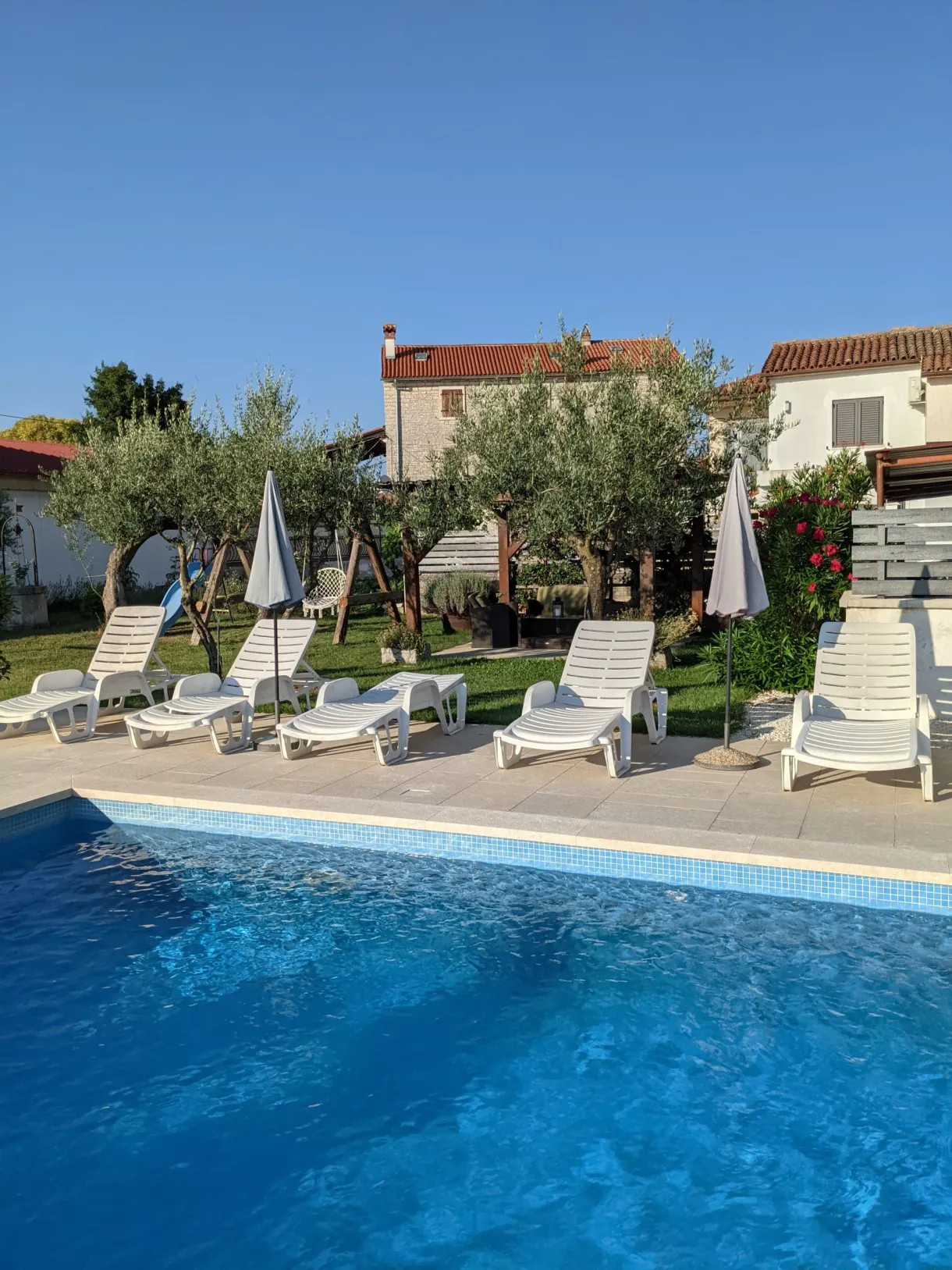
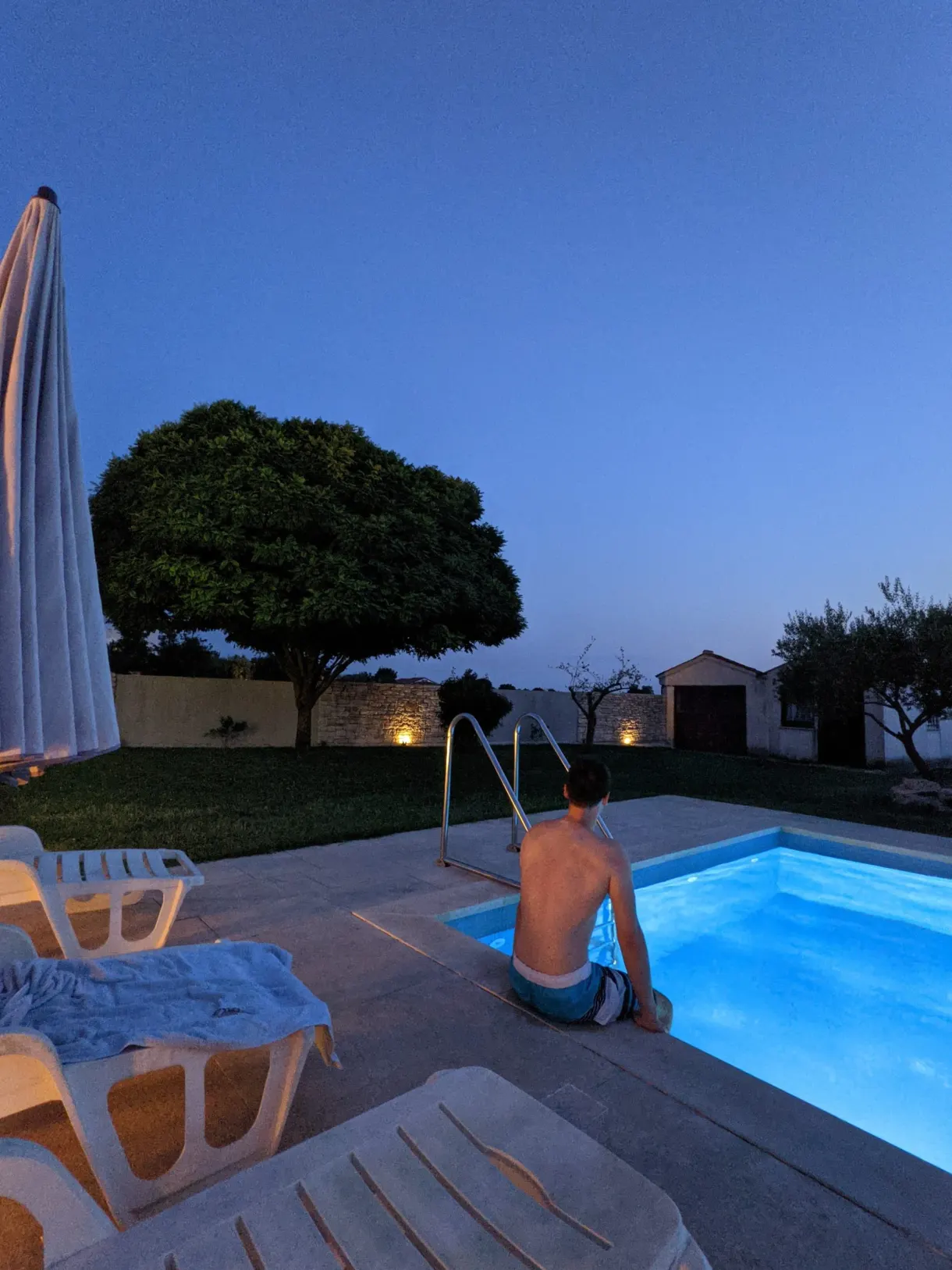
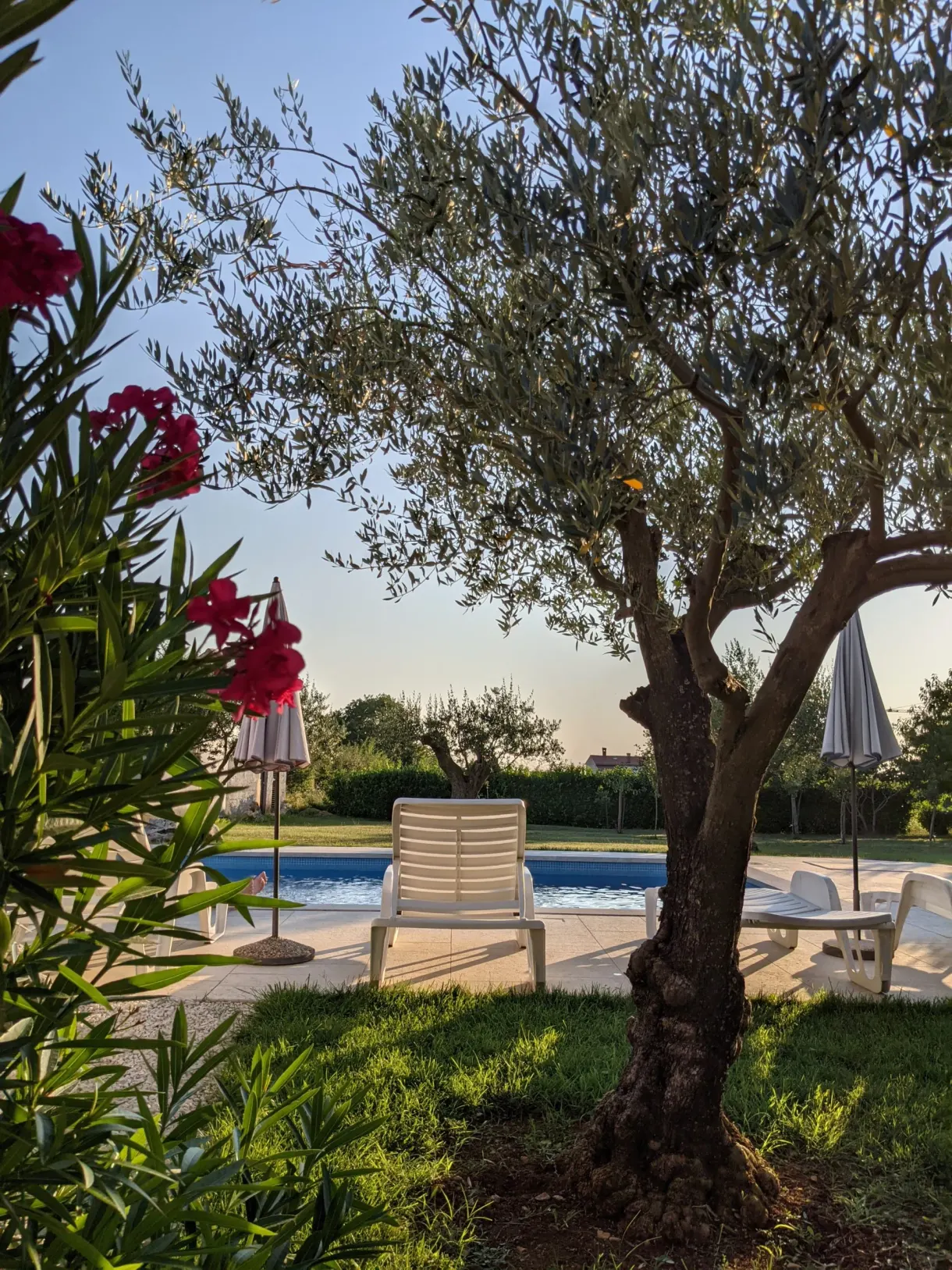
- We then spent four nights in Kanfanar, further south, in a one-bedroom flat rented on Airbnb with a garden and a pool shared (with a second flat), for 257€. We were at peace there and alone to enjoy the pool, whether during the day or in the evening!
Our favourite spots in Istria
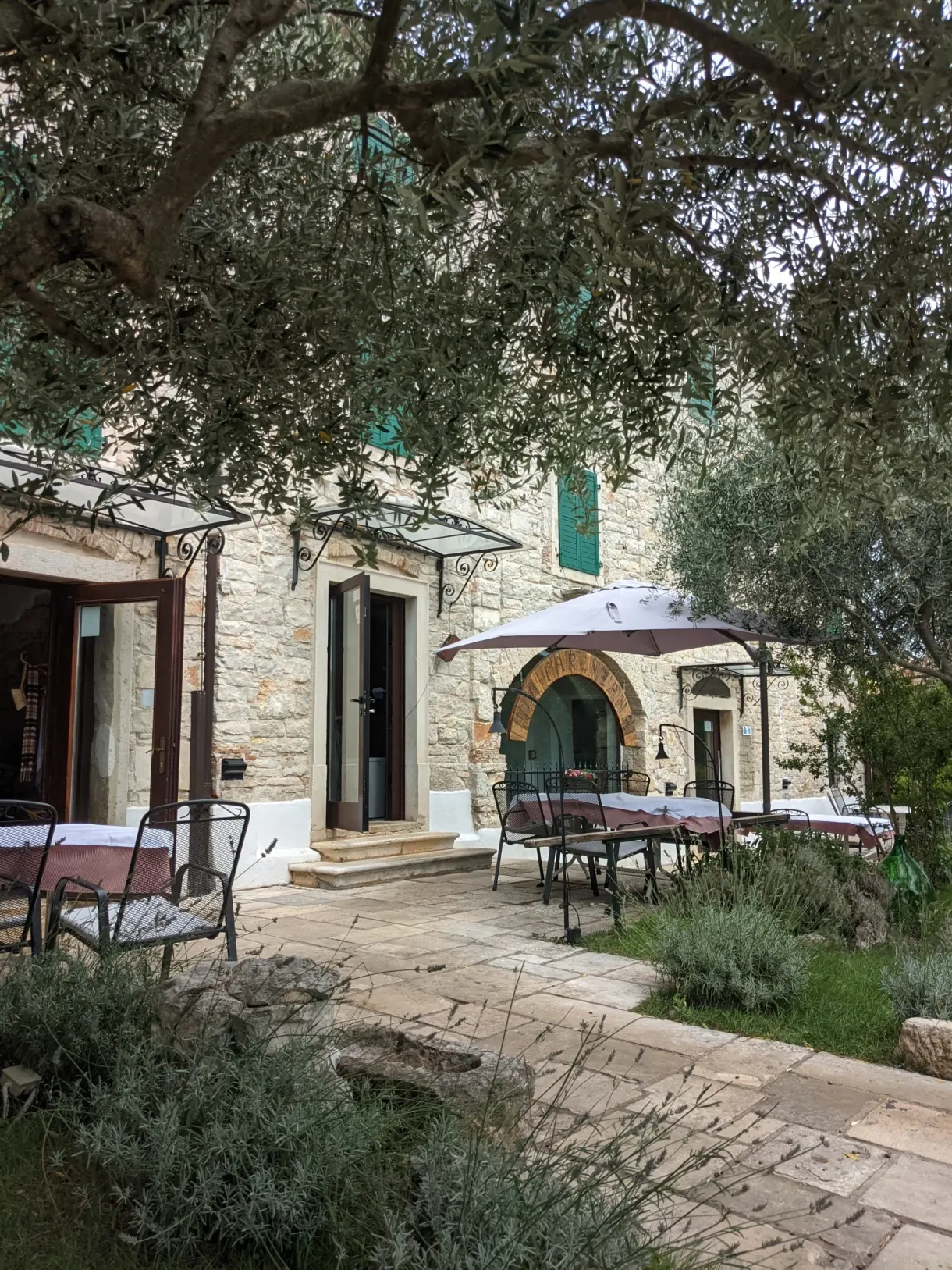
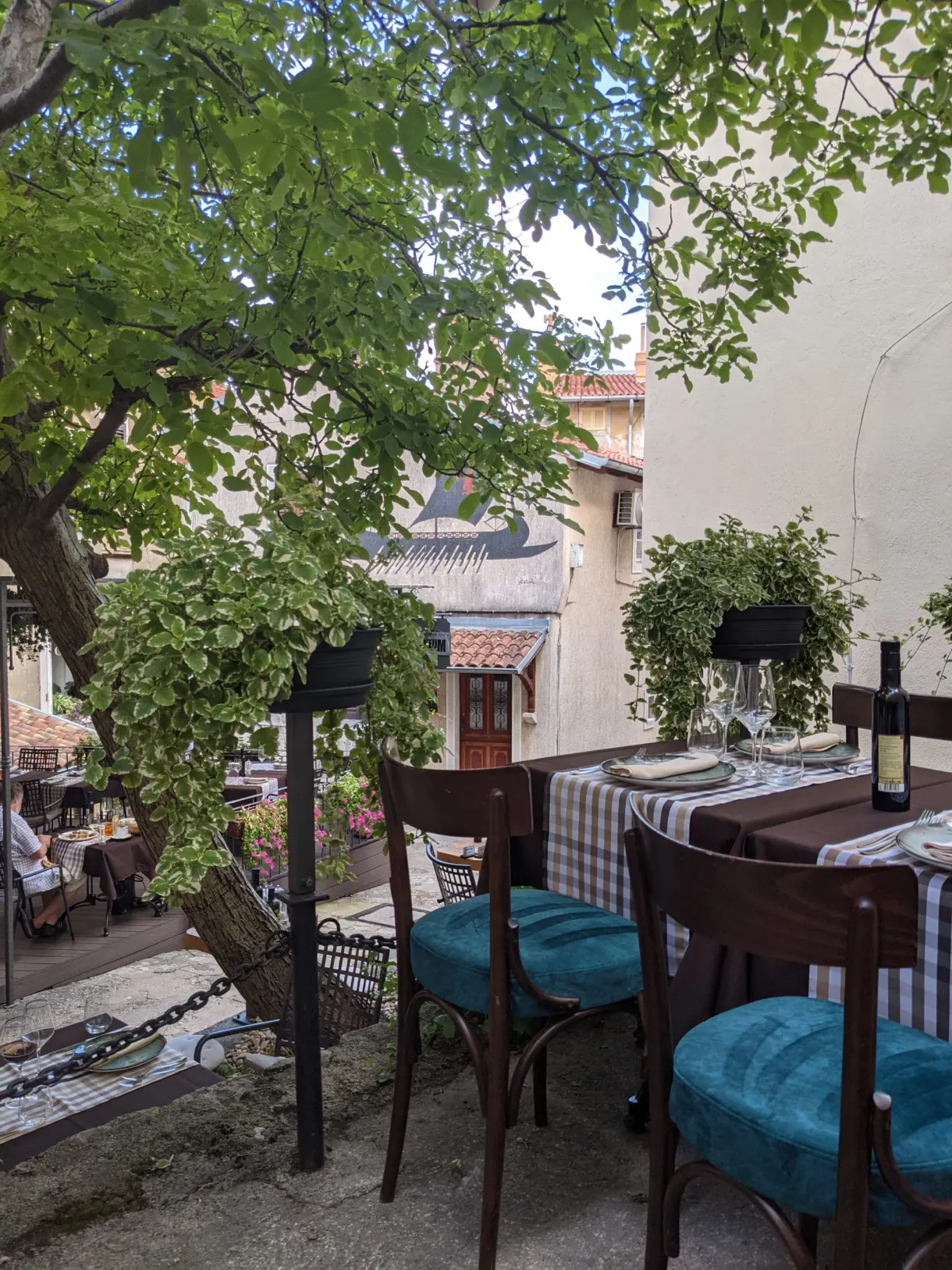
- La Parenzana in Buje: good restaurant a few kilometres from the Slovenian border, in the north of Istria, with a superb terrace under the olive trees (60€ for two for a mixed board and two mains).
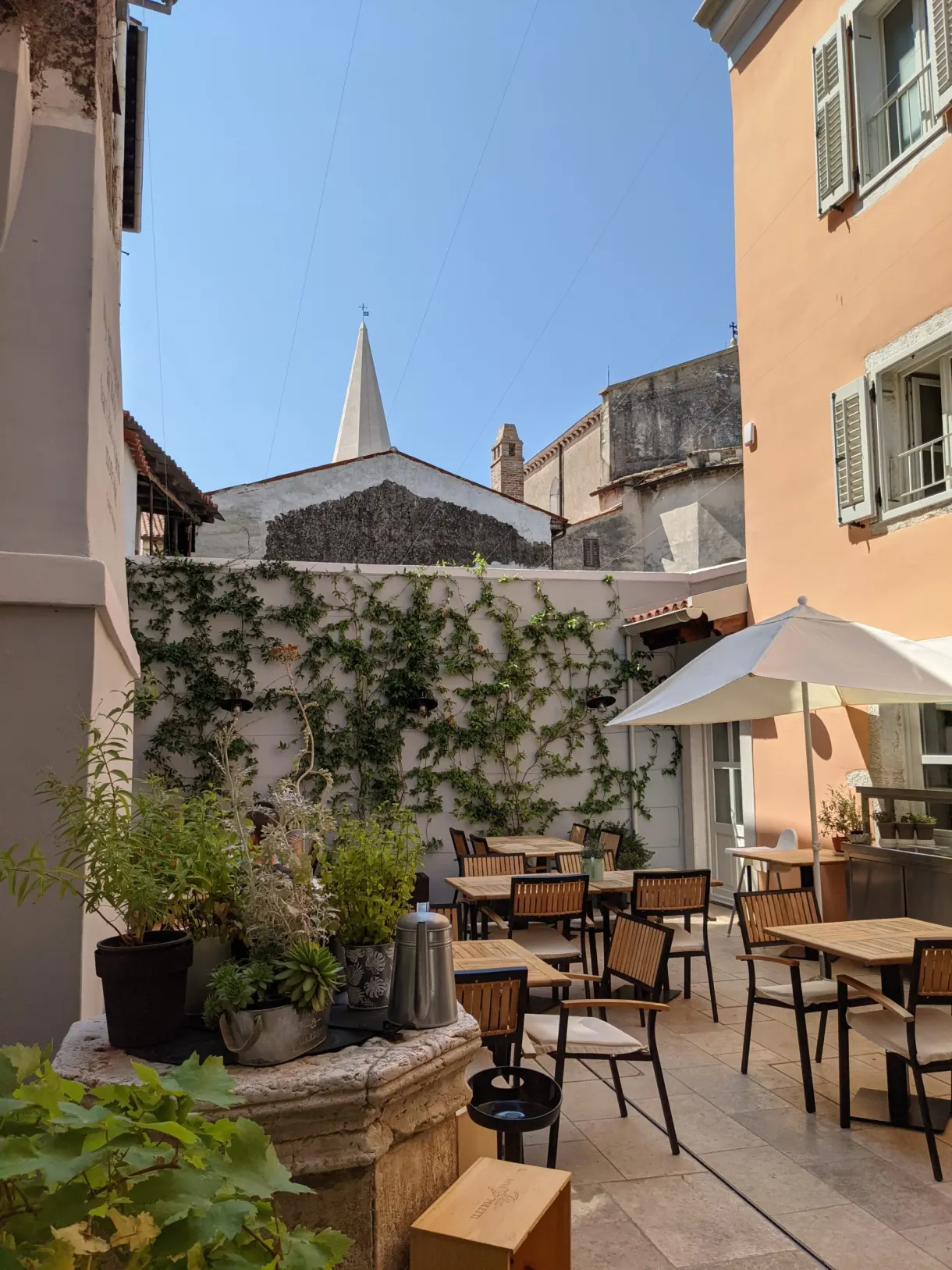
- Casa Manzolin Wine & Food by Poletti in Poreč: very good Gault&Millau restaurant just behind the Euphrasian Basilica (43€ for two for two starters, two mains and a dessert).
- Food & Wine Bar Ganeum in Lovran: good Gault&Millau restaurant with a shaded terrace in the old town of Lovran (52€ for a starter, two mains and a dessert).
- Pizzeria Grimani in Svetvinčenat: good pizzeria with a very beautiful terrace at the foot of the castle, at unbeatable prices (between 40 and 50kn, that is around 6€ for the pizza).
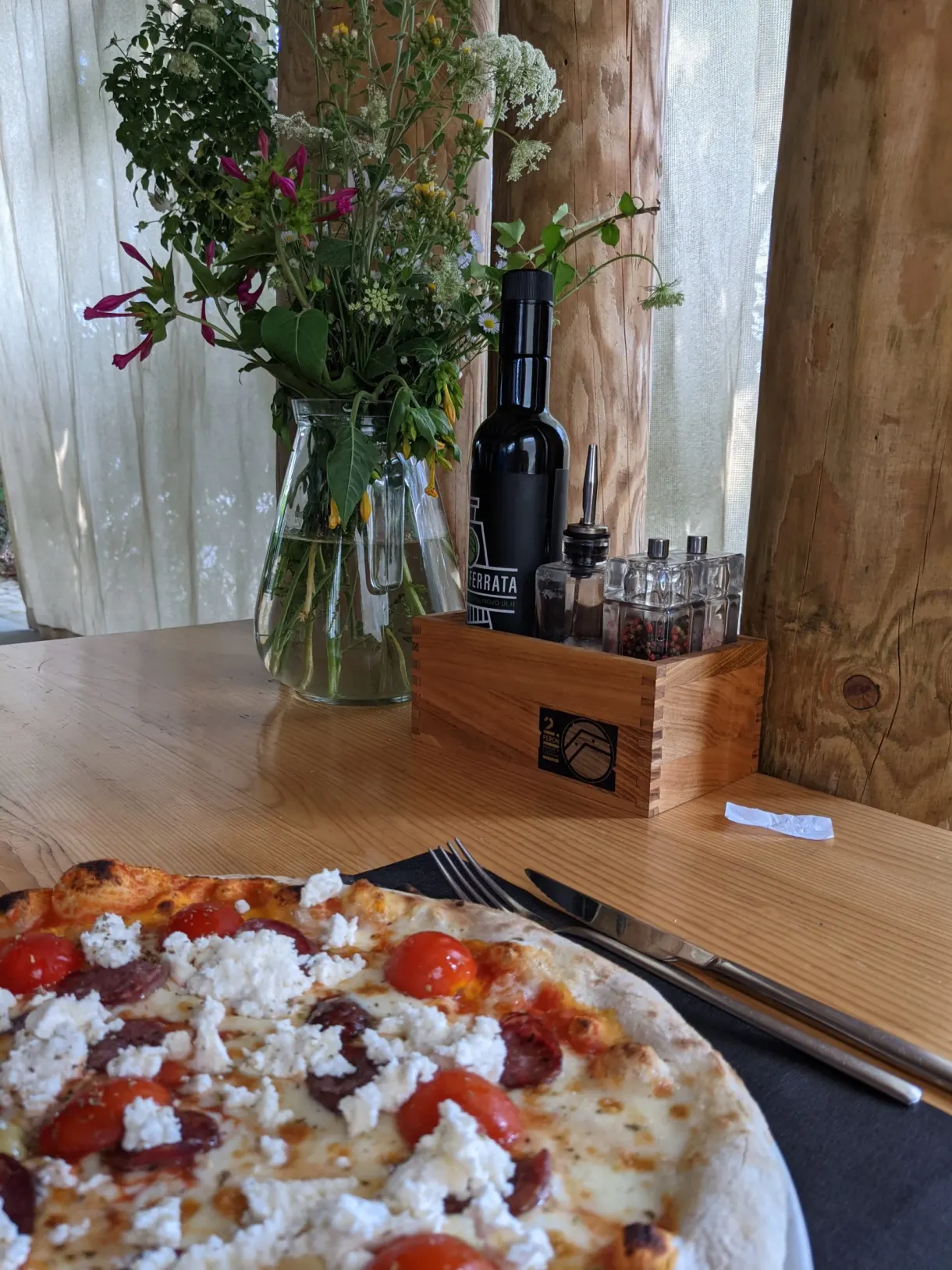
- Konoba-pizzeria 2.Peron in Cerovlje: Gault&Millau restaurant that serves generous pizzas at low prices (total bill: 17€ for two pizzas and 4 chocolate crêpes).
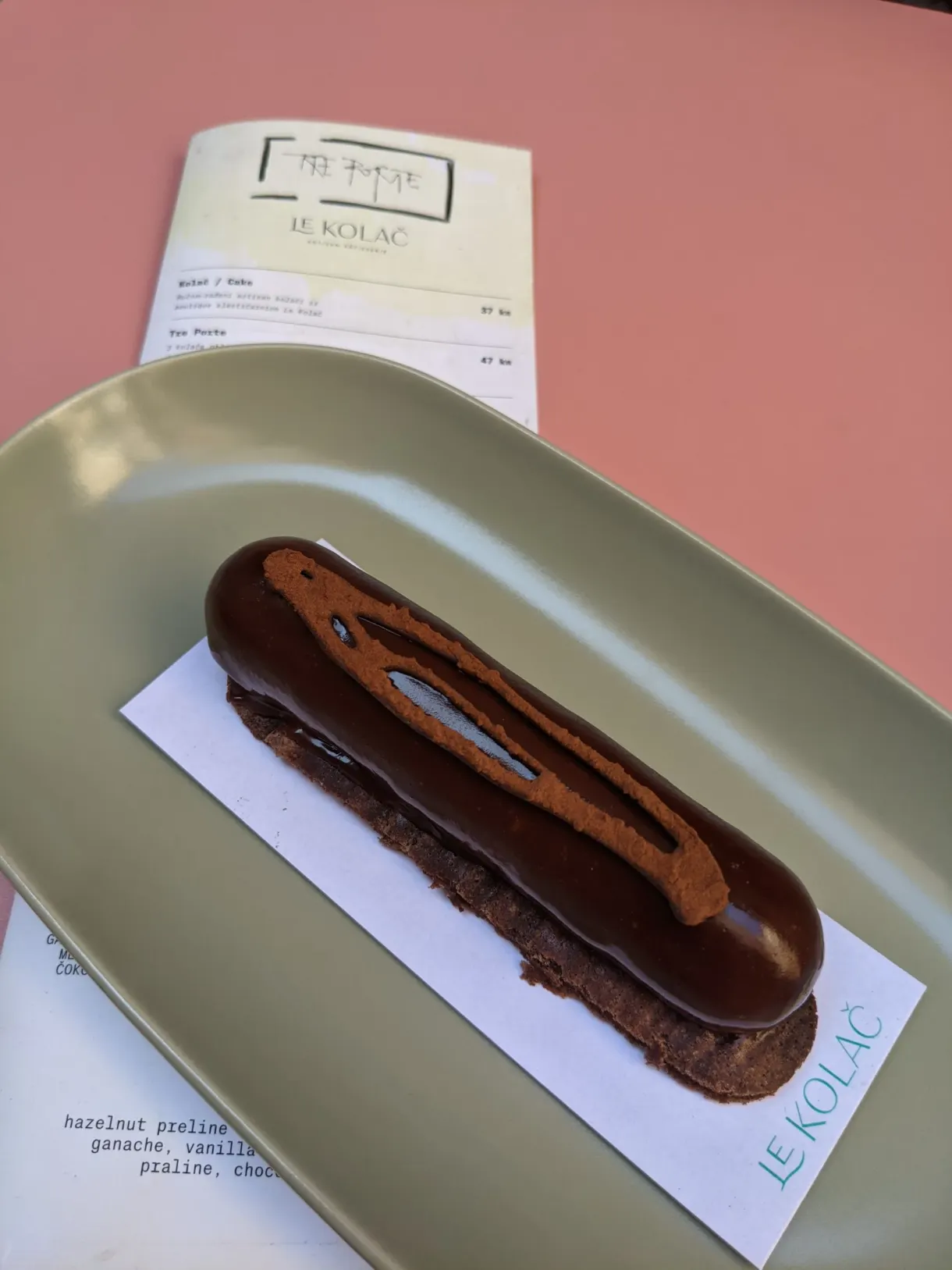
- Tre Porte Artisan Pâtisserie in Rovinj: a sweet break with “French style” pastries (a bit expensive, 37kn, that is more than 4€).
- Buffet Trevisol in Rovinj: trendy tea room that serves breakfast, sandwiches and cold drinks like homemade iced tea (expensive too).
What we thought of Istria
Istria is a beautiful region of Croatia that offers varied landscapes: a fairly nature-focused destination between land and sea, with picturesque little villages to visit, lush green countryside and coastlines to explore. You will find wooded mountains, vineyards, fjords, towns with historic centres and even a coastline with turquoise waters, all at once. The inland area reminded us enormously of our 2020 trip to the Luberon, a region in the south of France that has the same type of landscape and architecture, with villages perched in valleys. But despite all the charm of the region, we did not fall in love with Istria, which did not quite manage to take us out of our element.
We still advise you to stop there if you are planning a trip to the north of Croatia or to Slovenia, but for us, it is not the trip to do first in Europe!
This article contains affiliate links.
2 comments
Thank you for your comment! Marie & Romain
Margaux Langlois24 May 2023
Bonjour,
super article!
parmi tous les villages visités (Hors côte ouest), si vous deviez en choisir 5 ou 6 ce serait lesquels?
Merci!
Reply
Marie29 May 2023
Hello Margaux, merci pour ton message ! On retiendrait Grožnjan, Motovun (touristique mais il vaut le coup), Sveti Lovreč, Svetvinčenat (pour son château), Bale et les ruines de Dvigrad ; côté est, Brseč et Mošćenice. N’hésite pas à nous contacter par message sur Instagram si tu as d’autres questions 😊
Reply