A weekend in Aachen, Germany: what to see, what to do
Two days in Aachen, Germany, just 2 hours 40 minutes from Paris by train: discover Charlemagne’s cathedral, the town’s many museums, the Carolus Thermen and all our favorite spots.
· updated on
For the long New Year’s weekend, we decided to go explore a country we don’t hear much about around us: Germany. We settled on Aachen after checking the map of destinations you can reach by train from Paris. It’s a direct Eurostar ride from Paris Gare du Nord, just 2 hours 40 minutes.
Aachen, Aachen in German (yes, that’s just the name), is a town in Germany, in the state of North Rhine-Westphalia in the west of the country: sitting right at the heart of Europe, it borders both Belgium and the Netherlands. That strategic spot is why the Romans settled there, turning it into a well-known thermal spa town, before it became the capital of Charlemagne’s empire in the 9th century. Over the centuries, European powers signed several treaties there, in 1748 and 1818, and France and Germany signed yet another in 2019.
How long do you need to visit Aachen?
Plan on two days to visit Aachen: that’s the minimum to properly enjoy the town, its landmarks and its many museums. You can dedicate one day to the cathedral, the town hall and the historic center, and the second gives you time to go through the museums and then enjoy a few hours at the thermal baths. The historic center is small, so you can easily cover it on foot.
Just avoid landing on a Monday, since the museums are closed that day (only the town hall stays open). From Paris, you can do the whole weekend without a car, since the Eurostar arrives straight into Aachen station, a fifteen-minute walk from downtown.
How to get to Aachen from Paris
We took the direct Eurostar from Paris Gare du Nord, which gets into Aachen’s main station, Aachen Hbf, in 2 hours 40 minutes. We’d paid €32 one way per person in December 2023: keep an eye on prices, Eurostar lists tickets from €35, as long as you book early. Once there, you won’t need a car or public transport: everything we cover in this article can be done on foot, thermal baths included.
Our two-day itinerary
- Day 1: the historic center and the cathedral
- Wander around the historic center
- Guided tour of the old town with the Tourist Office
- Visit the Cathedral
- Visit two museums: Centre Charlemagne and the Suermondt-Ludwig art museum
- Day 2: museums and thermal baths
- Visit the International Newspaper Museum
- Visit a historic bourgeois house (Couven Museum)
- Visit the Town Hall (Rathaus)
- Unwind at the Carolus Thermen
What to see in Aachen?
Aachen Cathedral
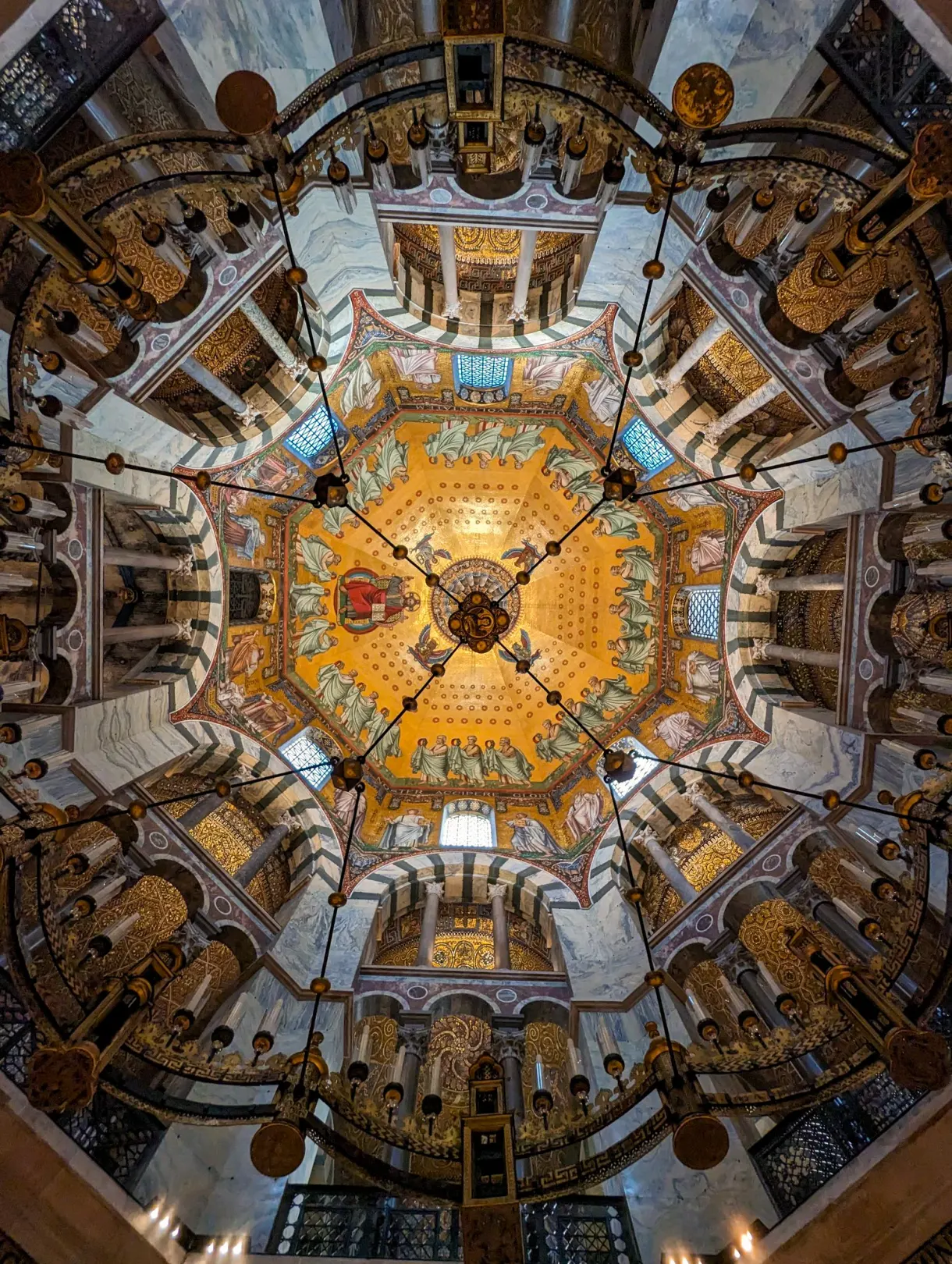
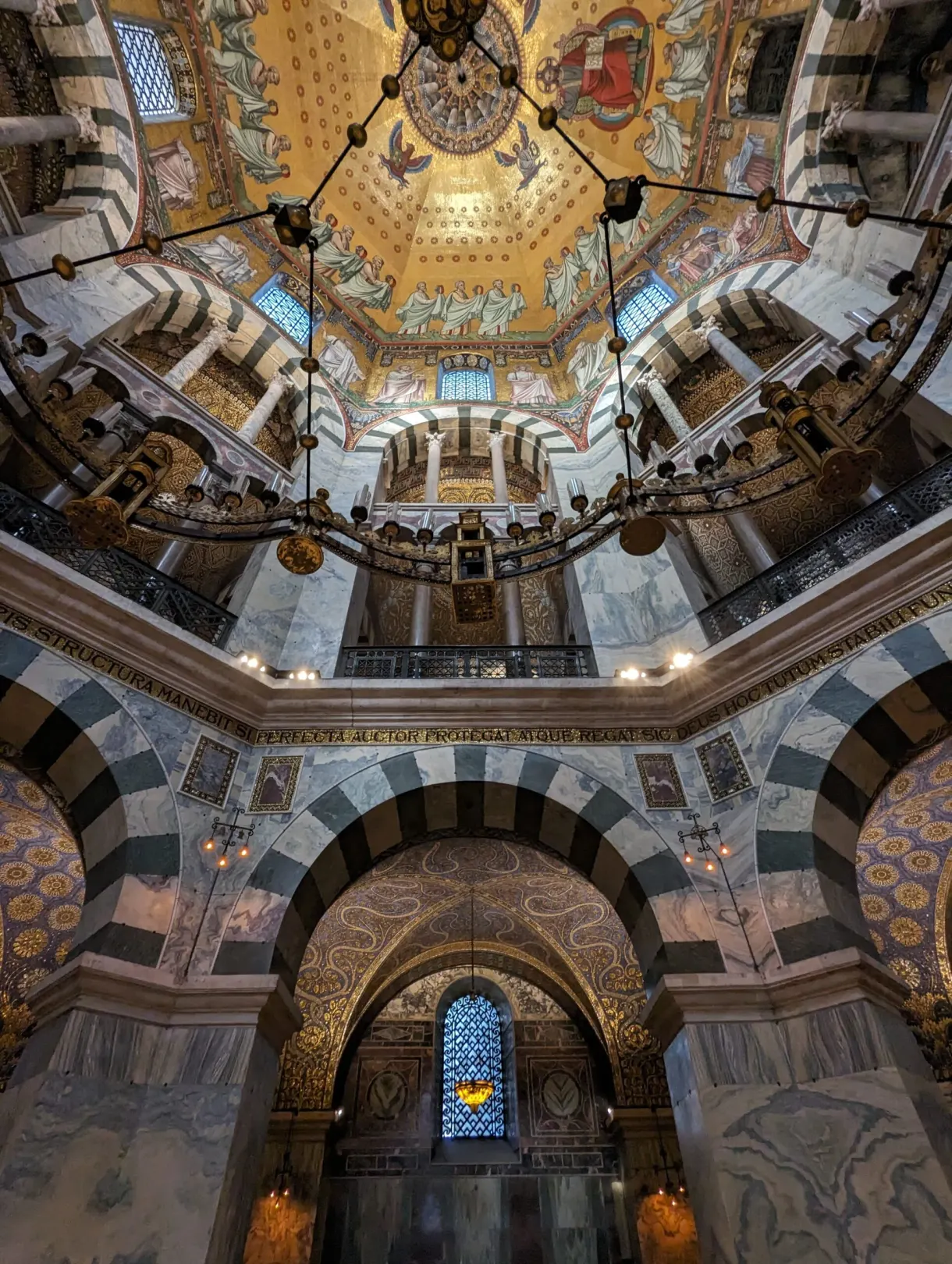
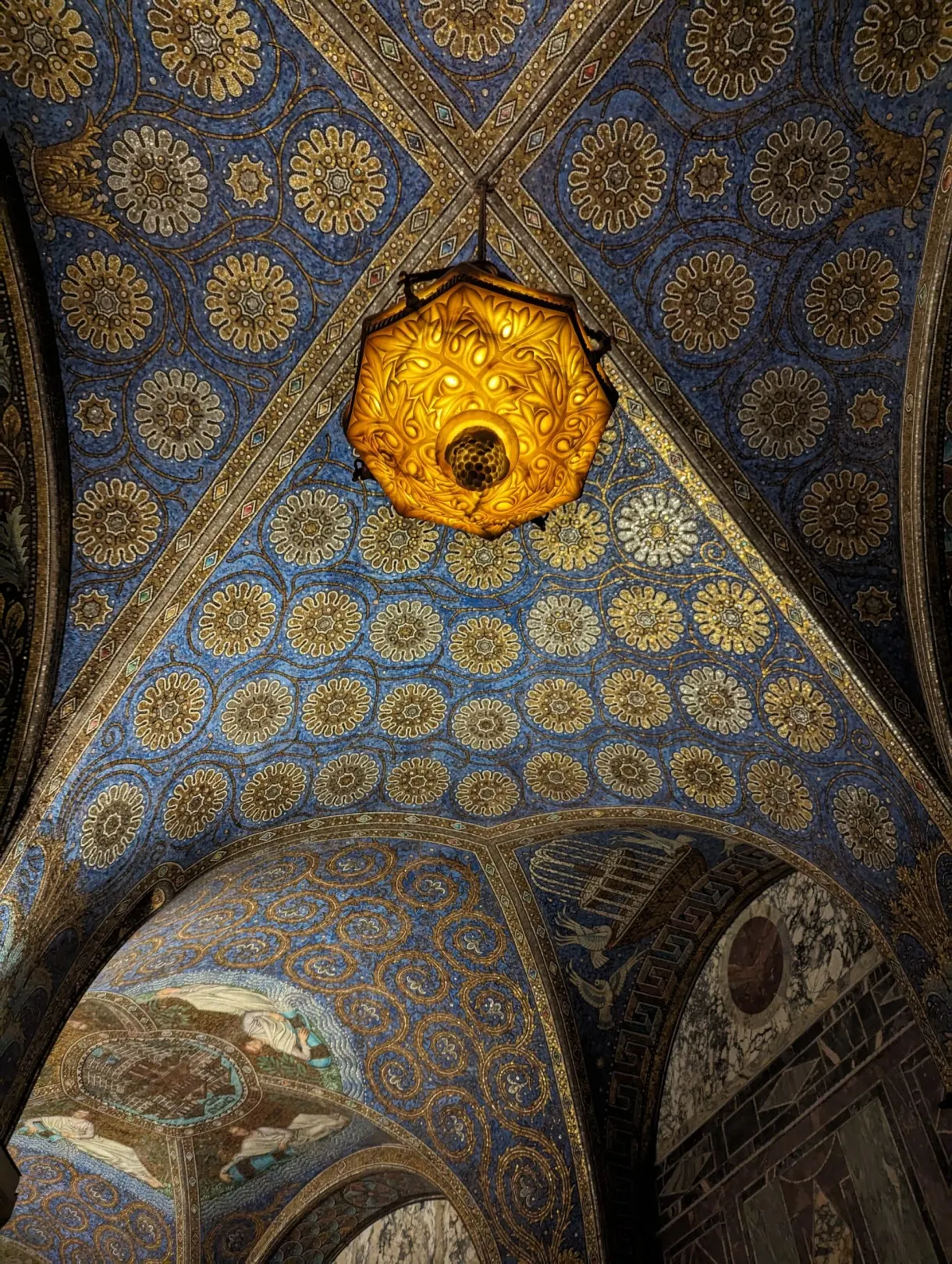
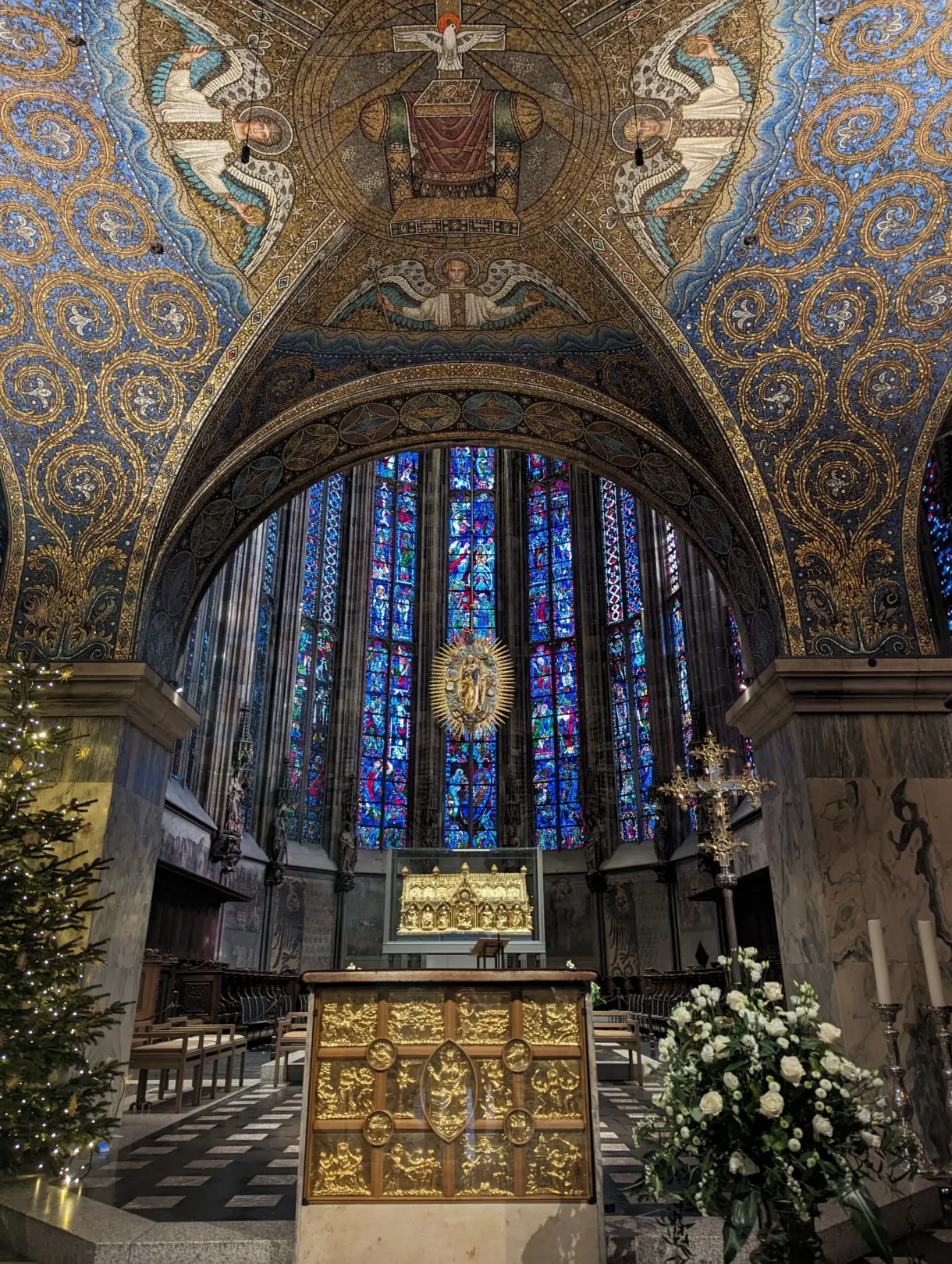
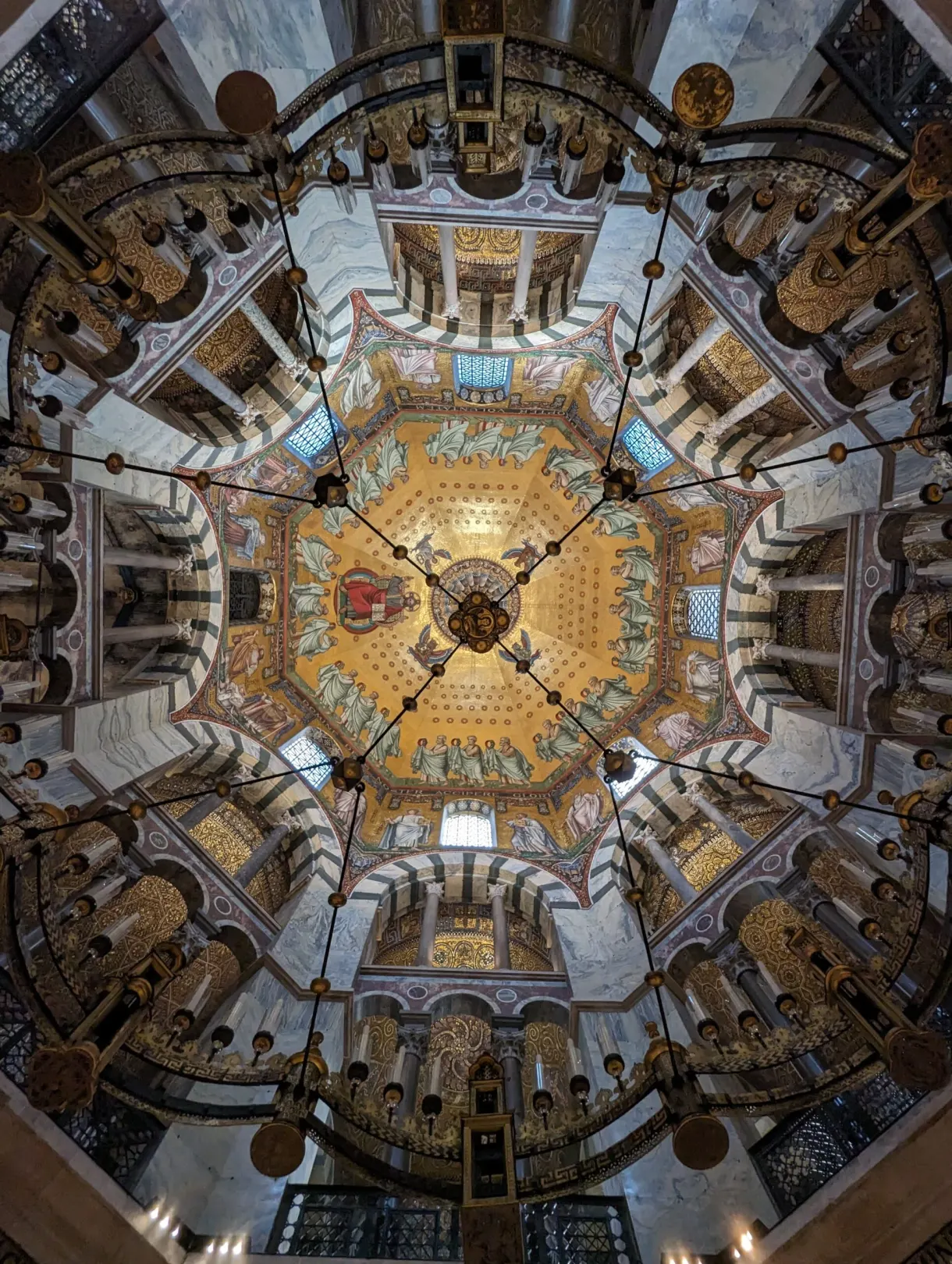
Aachen’s crown jewel is its cathedral, and it didn’t disappoint us. Charlemagne had his Palatine Chapel built in the late 8th century, the octagon that still forms its core, and he’s been buried there since 814. Thirty-one German kings were later crowned there, between 936 and 1531. Listed as a UNESCO World Heritage Site since 1978, Aachen Cathedral was the first German site added to the list. Honestly, it’s one of the most beautiful cathedrals we’ve ever visited: the interior, covered in gold mosaics, is simply stunning.
Charlemagne’s throne, upstairs, can only be seen on the cathedral’s guided tour. The cathedral treasury holds one of the richest church treasuries in the region, with 130 works of art on display: it too is listed as a UNESCO World Heritage Site.
- Prices: entry to the cathedral is free / €8.50 for the guided tour / €8 for the cathedral treasury
Historic center
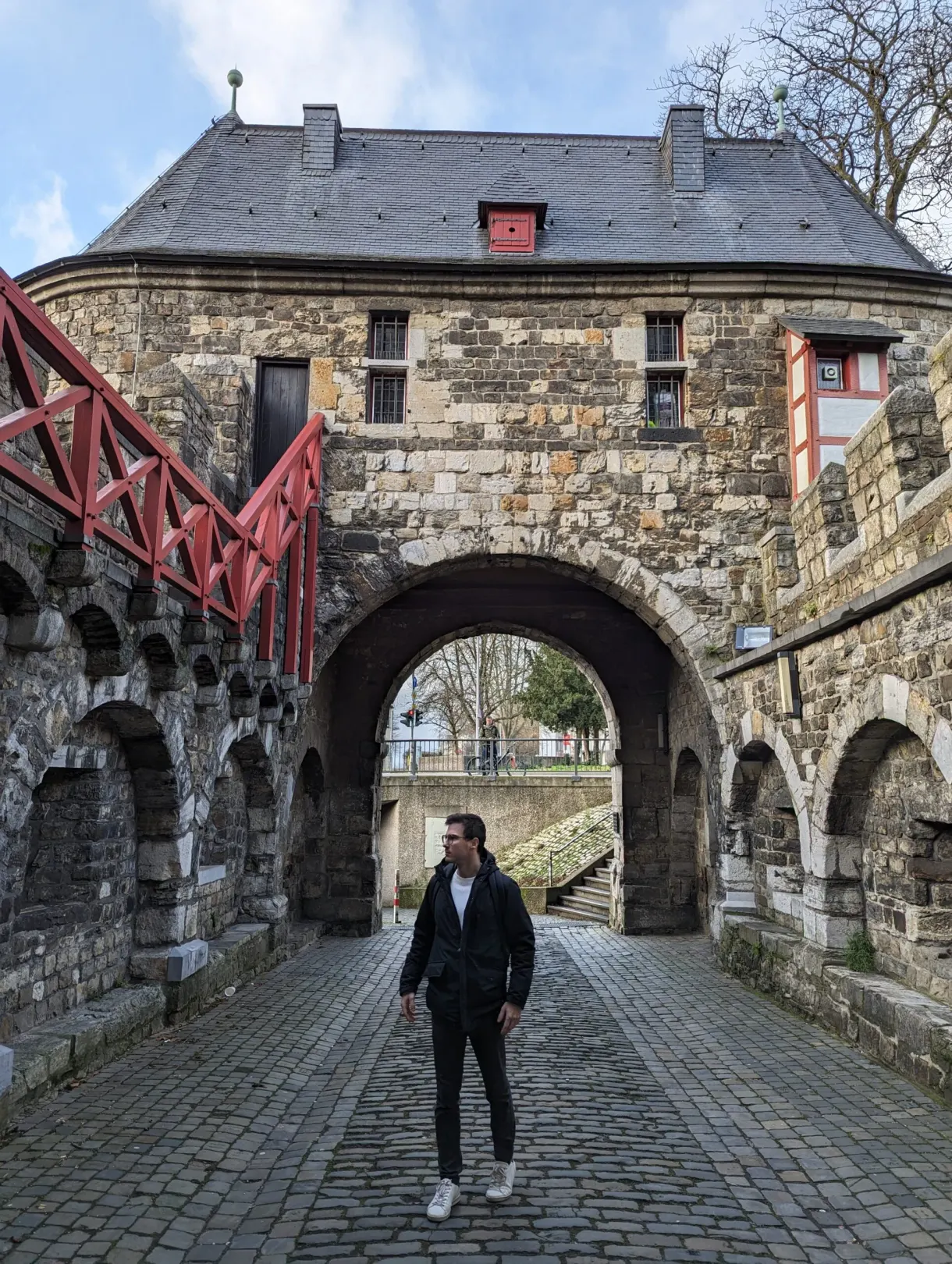
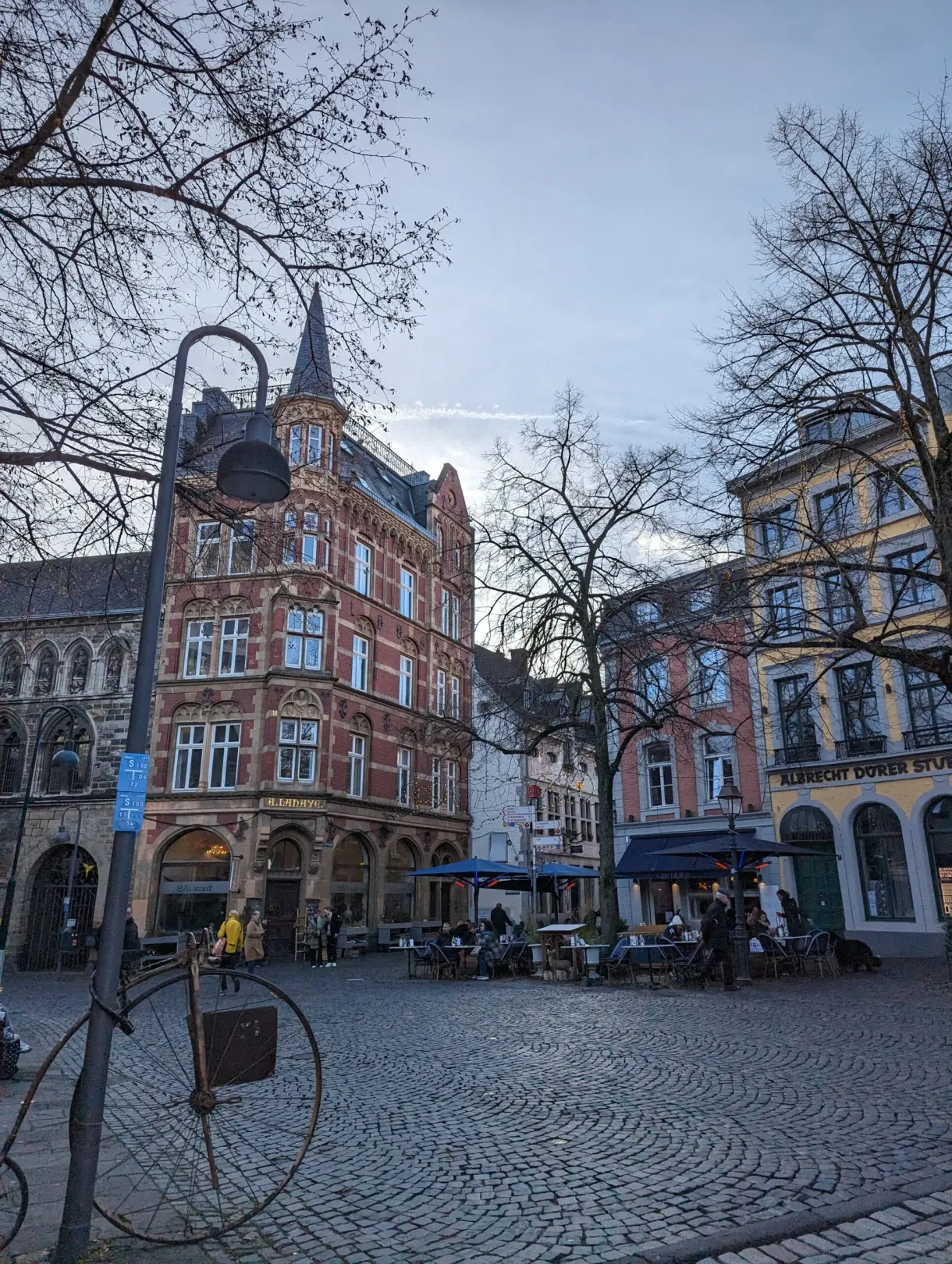
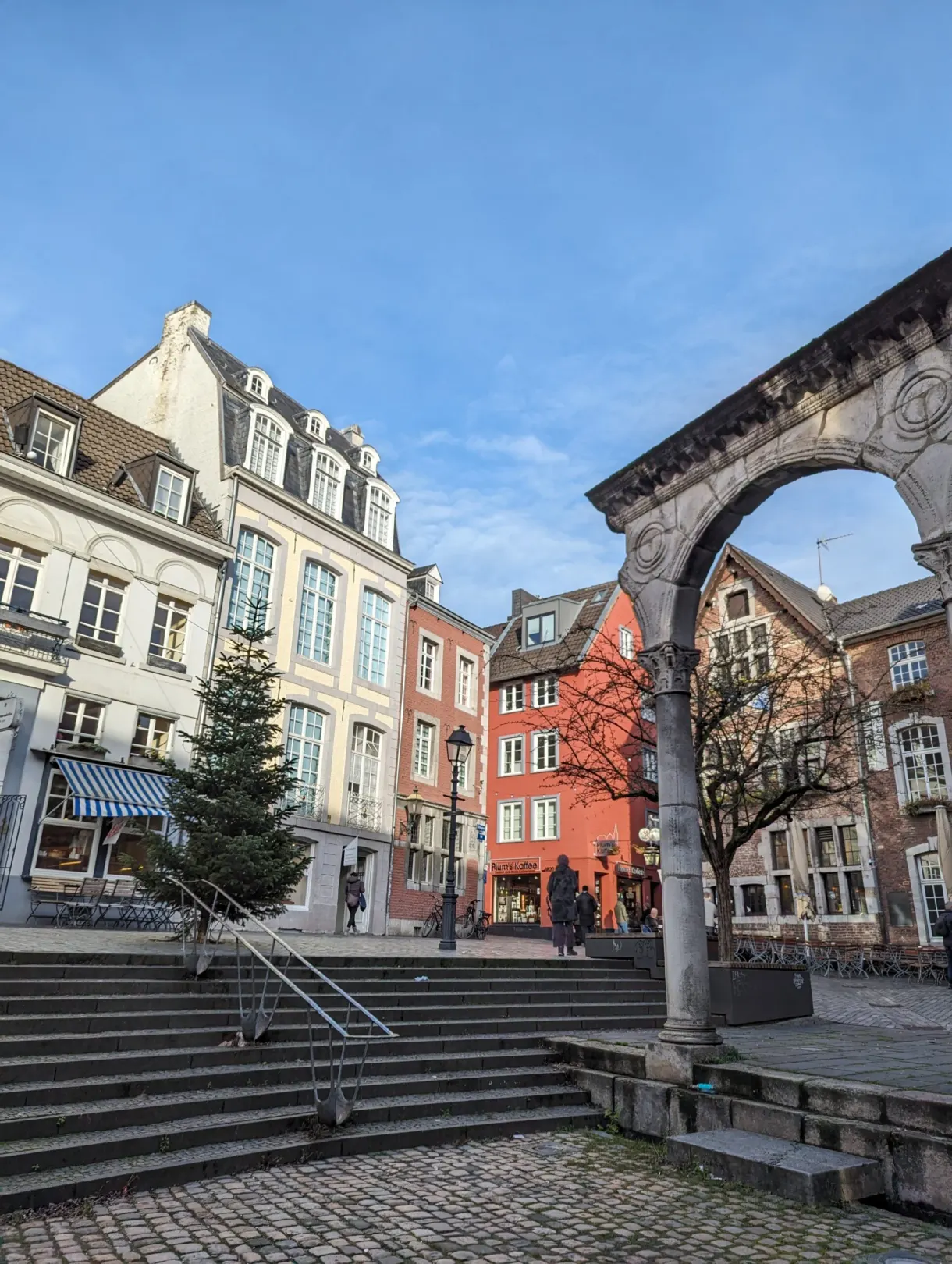
Aachen’s town center is pretty small, so it’s easy to find your way around. Here are the streets, squares and landmarks not to miss:
- Elisenbrunnen: a neoclassical pavilion housing two natural spring fountains (very sulfurous, brace yourself for the smell!)
- Archäologische Vitrine: a few Roman remains on display under glass in the middle of the park, next to the Tourist Office
- Ponttor: one of the town’s old city gates
- Katschhof: a lovely square between the town hall and the cathedral
- Römischer Portikus: a picturesque square mixing Roman remains and old houses
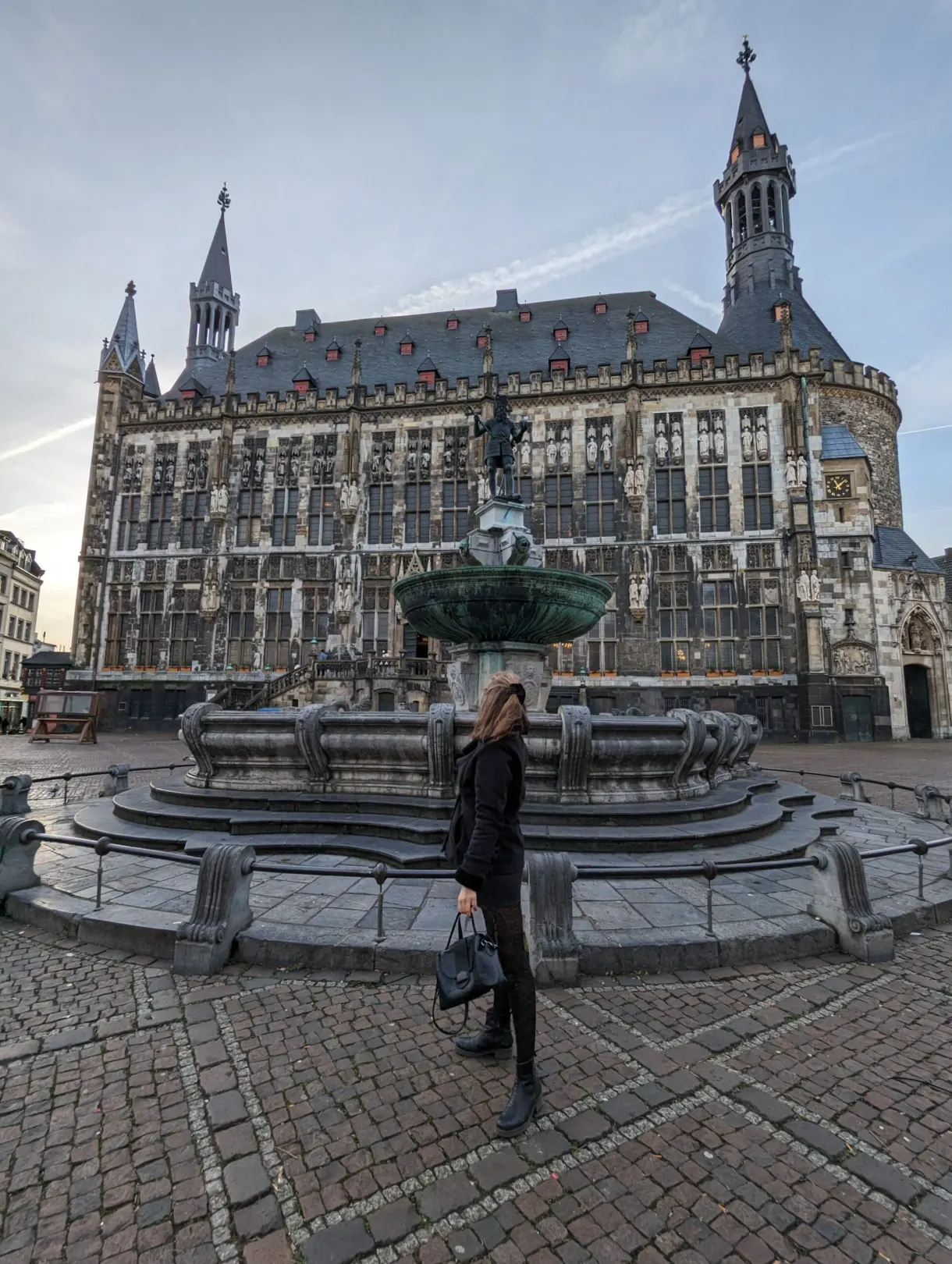
- Karlsbrunnen: a statue of Charlemagne in front of the Rathaus
- Puppenbrunnen: a quirky fountain with bronze puppets whose arms and legs you can move
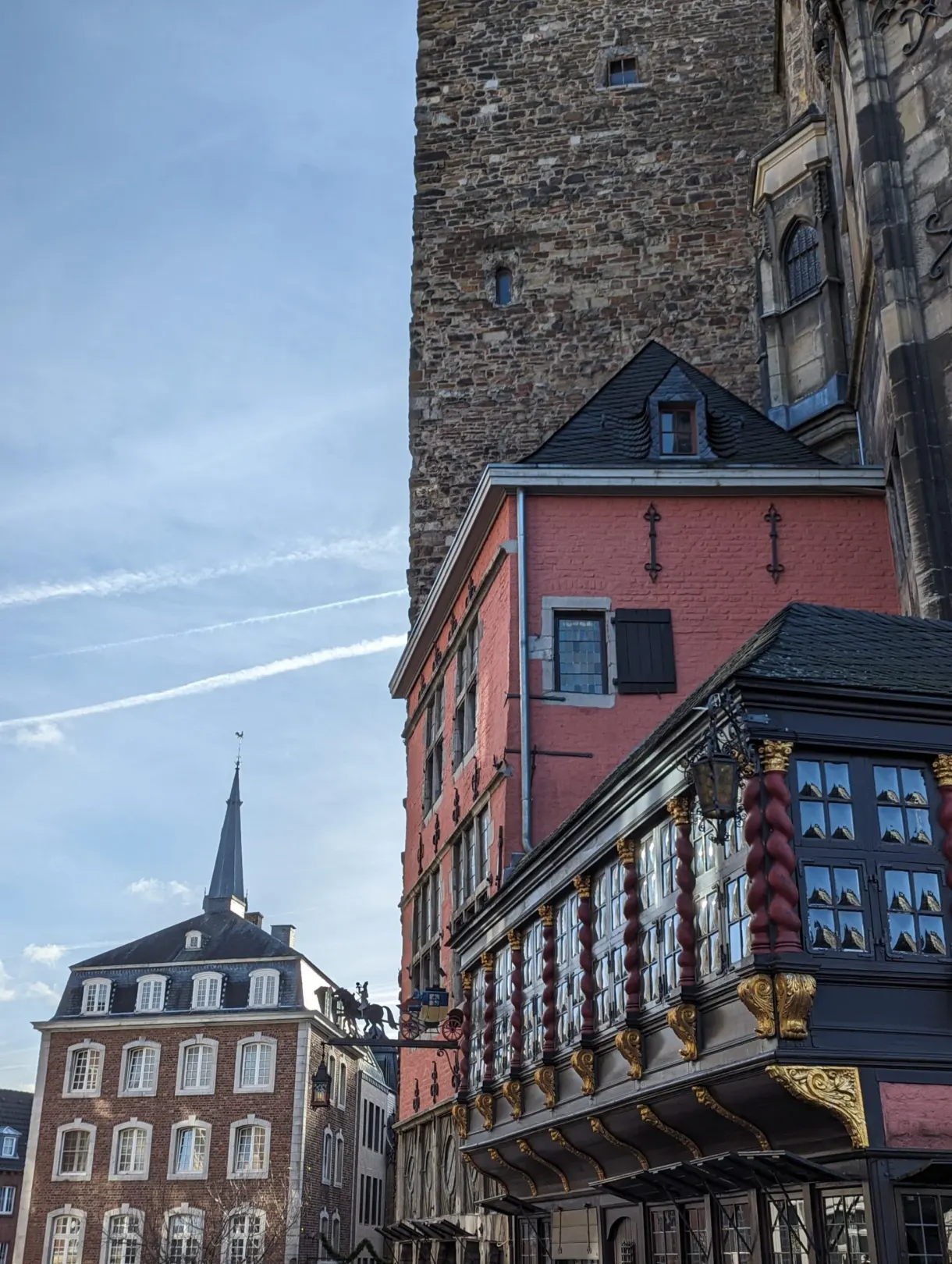
Rathaus (Town Hall)
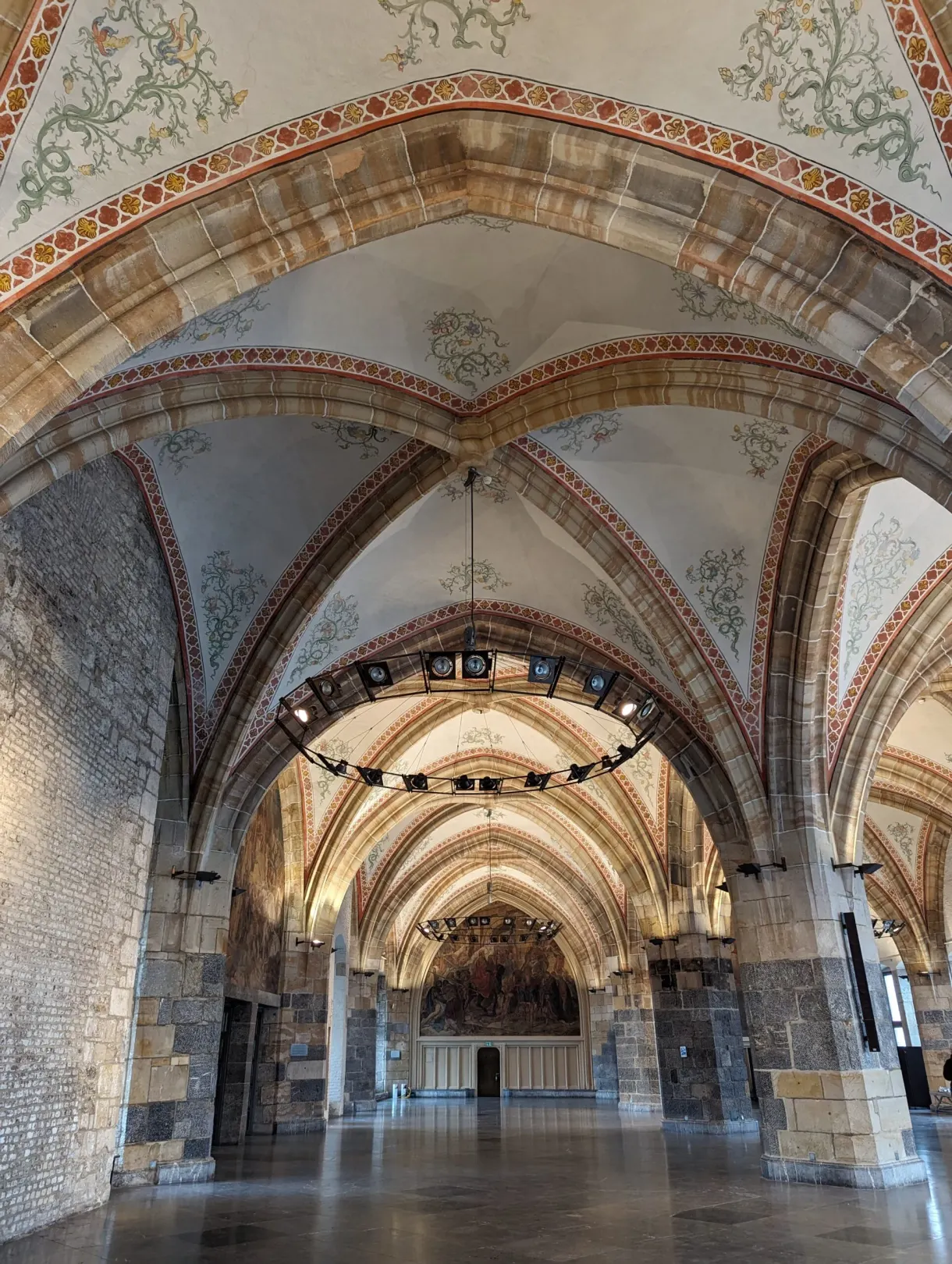
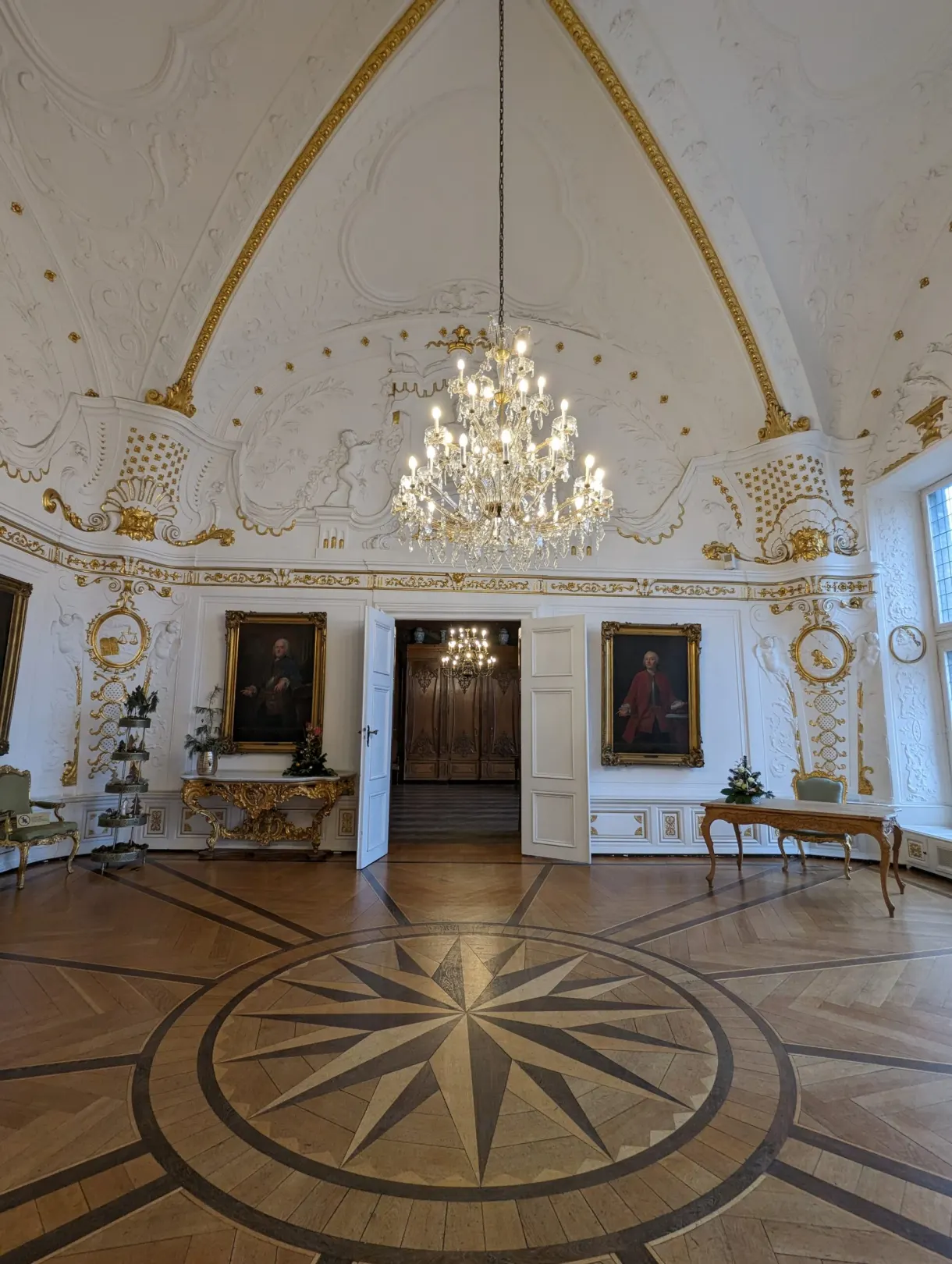
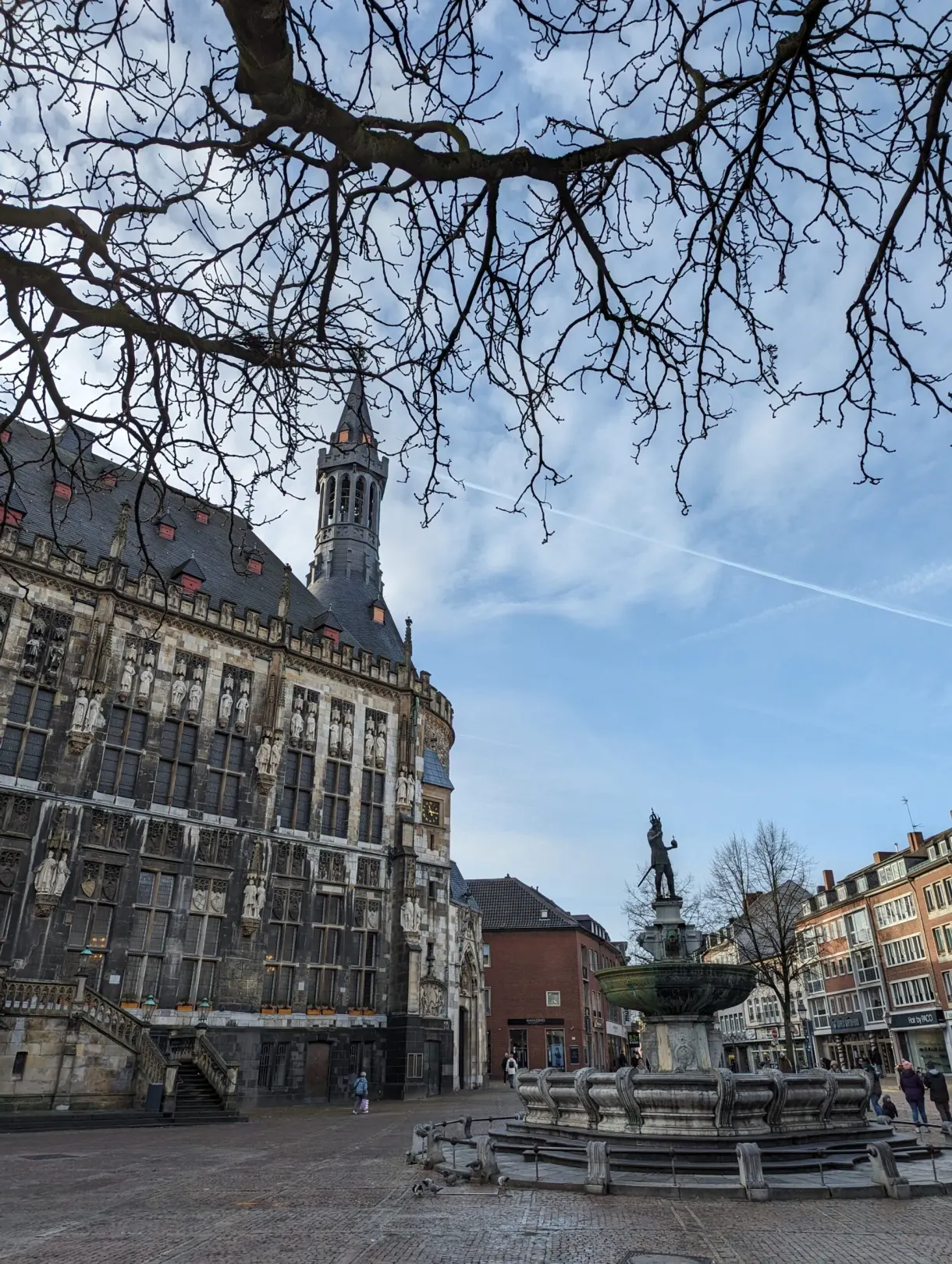
The Rathaus (Town Hall) is one of Aachen’s main landmarks. Built in the 14th century on the site of a former Carolingian palace, it’s a major political site in German and European history. It has hosted numerous treaties, including the Treaty of Aachen, which Emmanuel Macron and Angela Merkel signed on January 22, 2019 to complement the 1963 Élysée Treaty, sealing the renewed friendship between France and Germany. The town also hands out the Charlemagne Prize there every year, honoring a figure committed to European unity. Its Gothic architecture is very well preserved on the outside, and the interiors are beautifully showcased and restored. Definitely a visit worth doing!
- Price: €10 (full price)
- Hours: every day 10:00 to 18:00
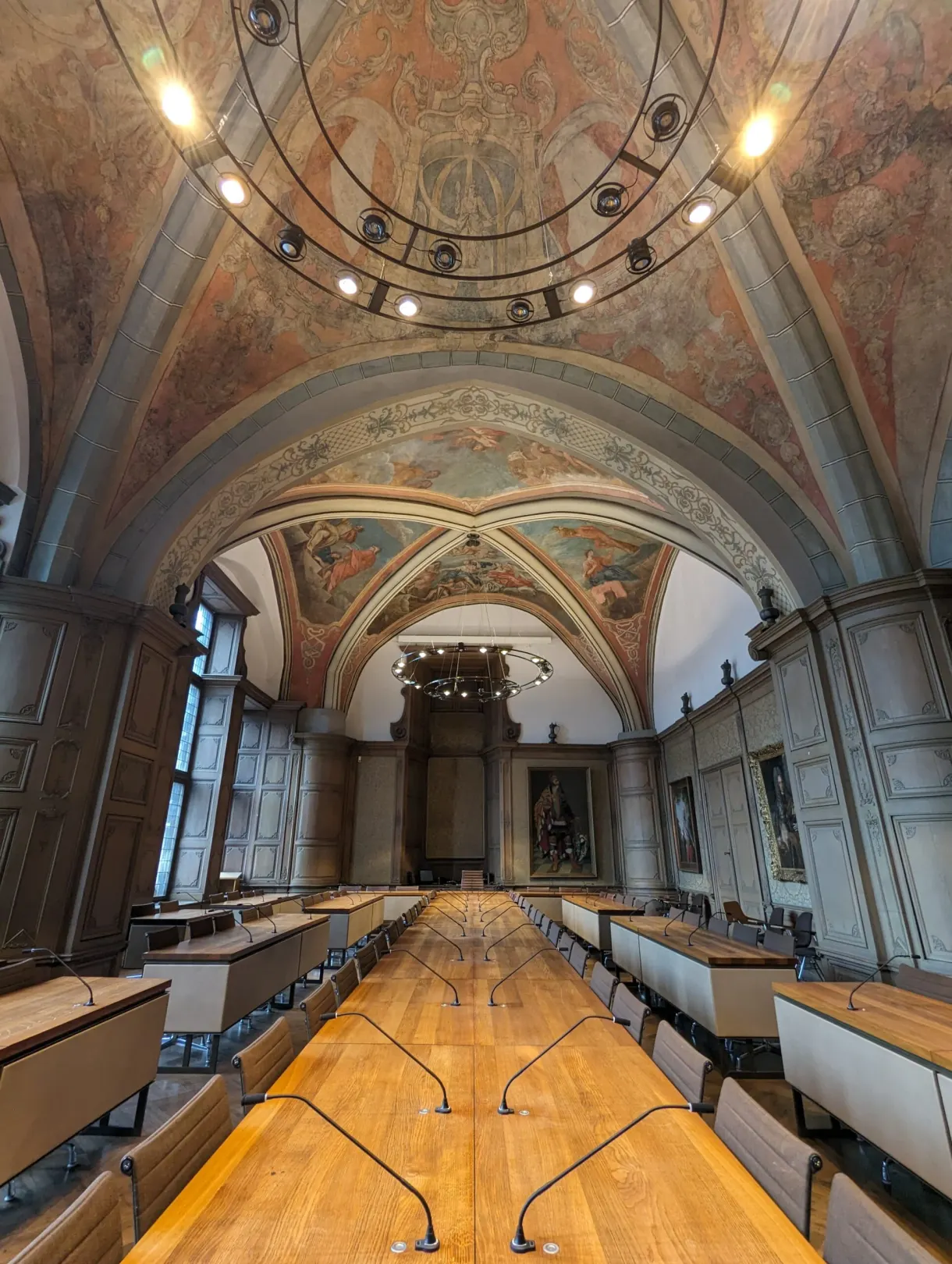
Aachen’s museums
If you’re planning to visit several museums, we’d suggest getting the “Six for Six” Museumcard (€30 full price / €18 reduced price), which gets you into 5 museums plus the Rathaus (Town Hall)*. You can pick one up at any of the museums.
*Provided by the Aachen Tourist Office as part of our collaboration with Aachen Tourismus
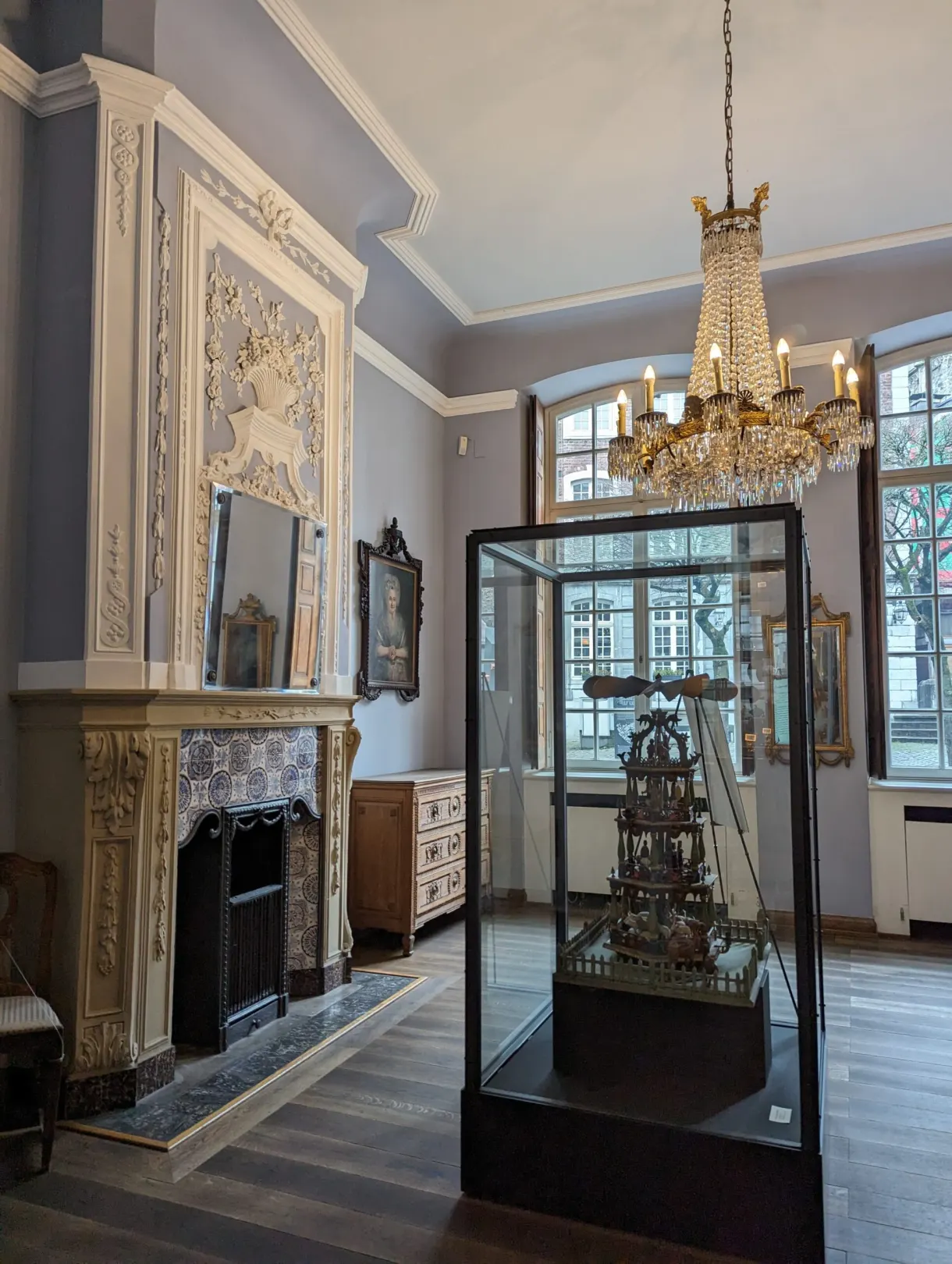
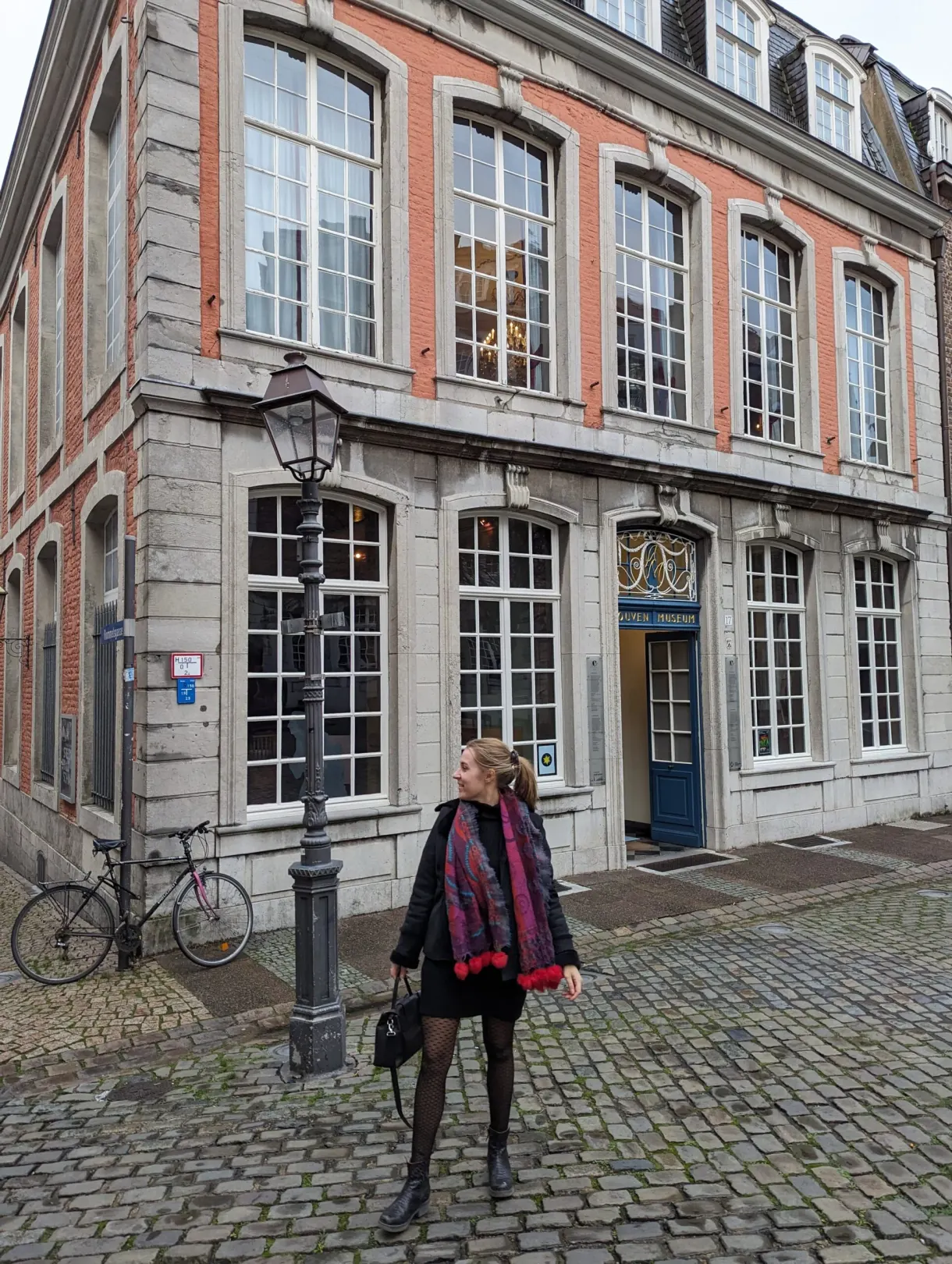
The Couven Museum is a great example of an 18th- and 19th-century bourgeois house, with all its furniture still in place, spanning different styles (Rococo, Biedermeier…). On the ground floor, don’t miss an old pharmacy.
- Price: €10 (full price)
- Hours: Tuesday to Sunday 10:00 to 17:00
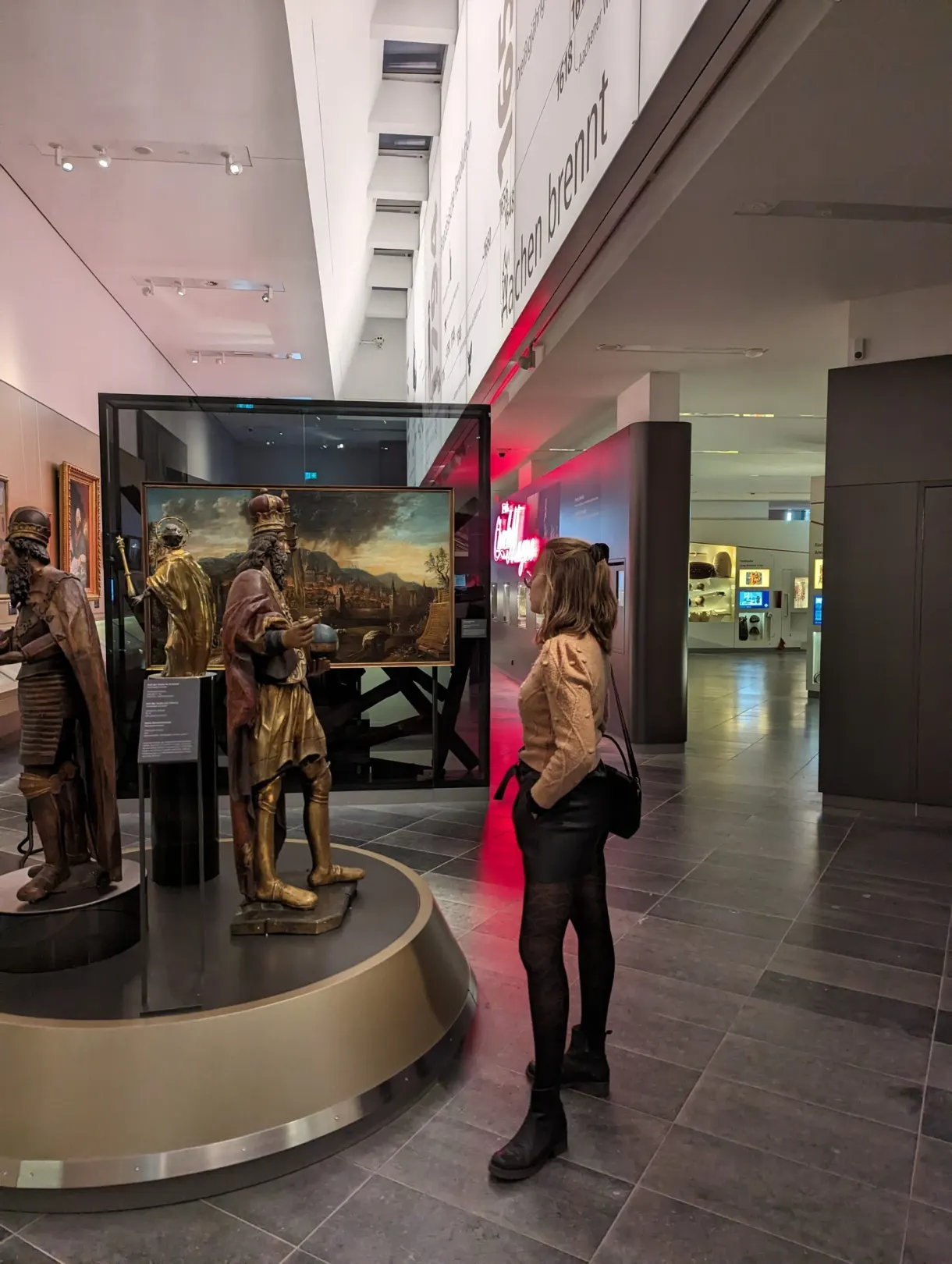
The Centre Charlemagne walks you through the history of Aachen from Roman times to today. Here again, the exhibits are modern and the route is a pleasant one to follow. The museum sits right behind the Rathaus, handy for combining both visits.
- Price: €10 (full price)
- Hours: Tuesday to Sunday 10:00 to 18:00
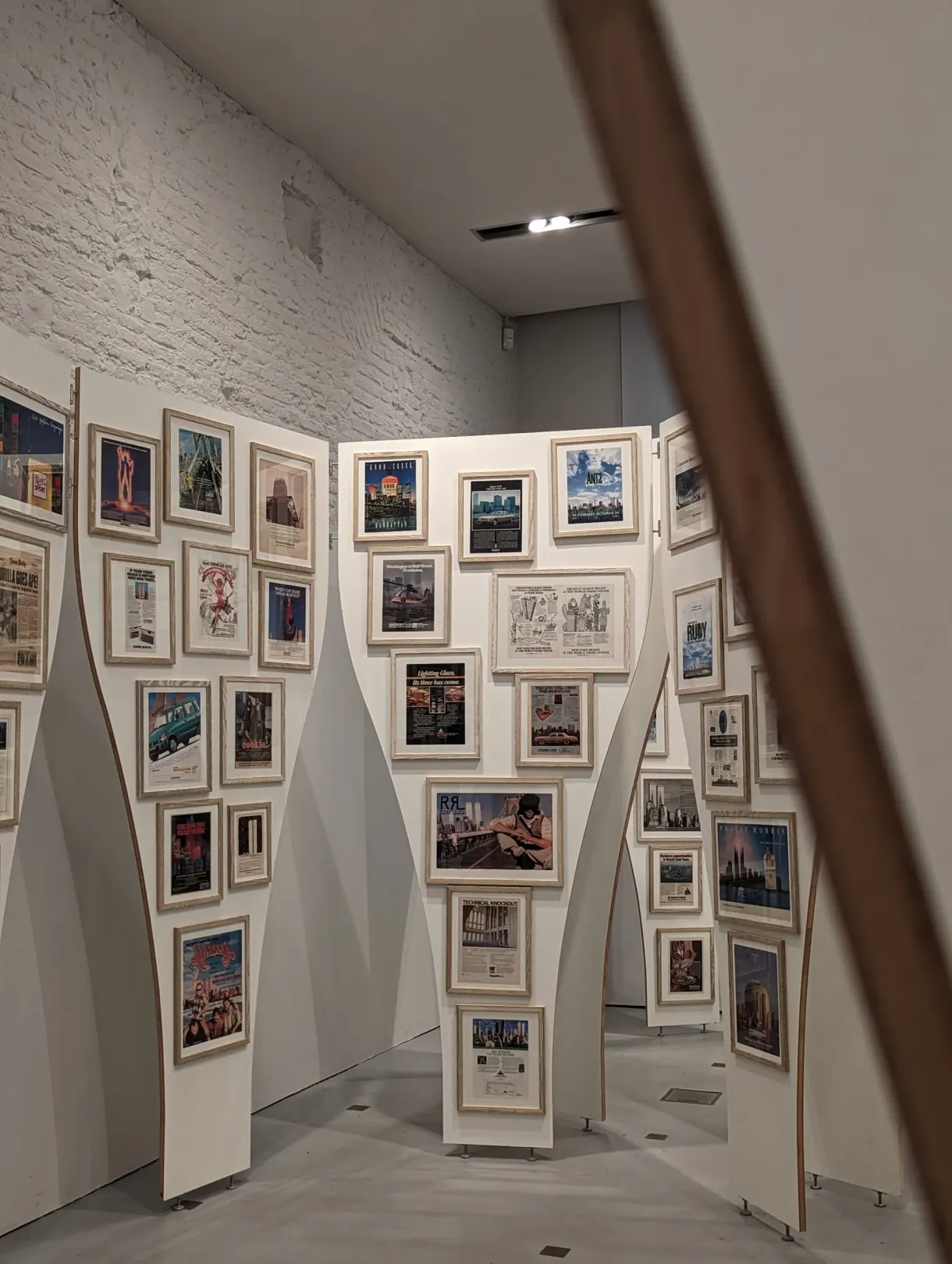
The International Newspaper Museum (Internationales Zeitungsmuseum) traces the history of media from the earliest days of sharing information right up to today. Pretty interactive and well put together, it’s a modern museum that’s a nice change from the usual ones you visit. A lovely surprise!
- Price: €10 (full price)
- Hours: Tuesday to Sunday 10:00 to 17:00
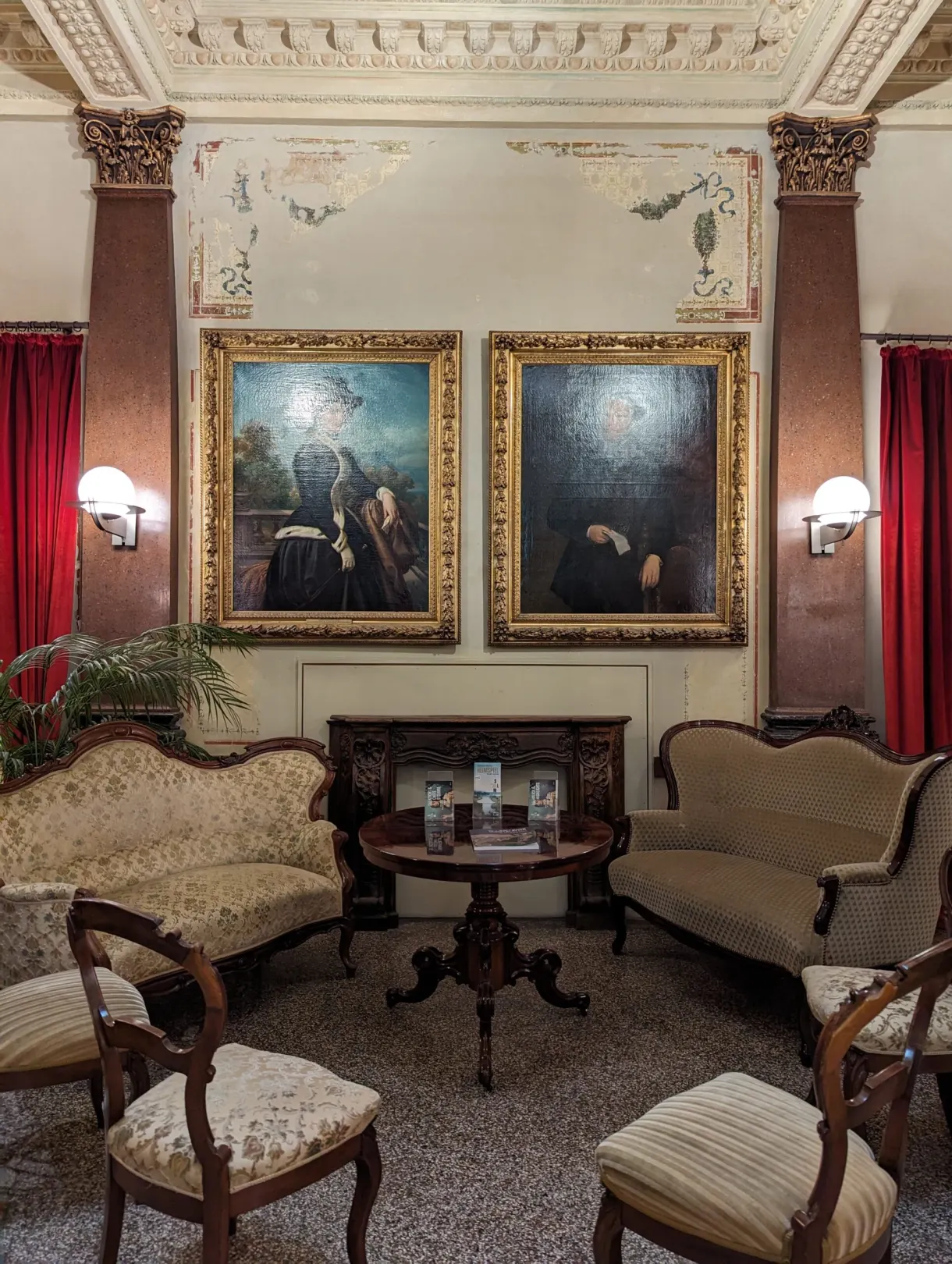
The Suermondt-Ludwig art museum displays fine collections of paintings and sculptures from the late Middle Ages onward. Unfortunately, when we visited, some rooms (particularly upstairs) were closed.
- Price: €10 (full price)
- Hours: Tuesday to Sunday 10:00 to 17:00
What to do in Aachen
Beyond the landmarks and museums, two things made our weekend: the guided tour of the town, and ending the day soaking in the hot water of the Carolus Thermen, the baths that have made Aachen’s reputation since Roman times.
Guided tour of the town
The Aachen Tourist Office runs guided tours of the town* for €15 per person (1 hour 30 minutes to 2 hours). Our guide, Hilbert, was fascinating and really funny: he told us loads of anecdotes about the town’s history. We highly recommend this tour, ideally on your first day to get your bearings.
*Provided by the Aachen Tourist Office
Aachen thermal baths
As spa lovers, there was no way we’d skip Aachen’s thermal baths. The Carolus Thermen offer several packages: pool only, or pool plus sauna, for a shorter or longer stay. We went for the “3 hour 30 minute pool” pass at €21 per person, the weekend and school-holiday rate (€19 on weekdays). Everything on site is optional extra, so remember to bring your flip-flops and towel. The pools, indoor and outdoor, aren’t all the same temperature, so you can mix things up without ever getting bored. We’d suggest spending a few hours there at the end of the day, if you’ve got some time to spare.
Photos are not allowed inside the thermal baths.
Accommodation: where to stay in Aachen?
For this weekend, we chose to stay at two different places, so we could give you a fuller picture of Aachen’s accommodation options. Both are in the town center, just a few minutes’ walk from the cathedral, and we’d recommend them if you’re working with a modest budget. To compare other options, our tips for booking great places to stay are gathered on this page.
- B&B Aachen City
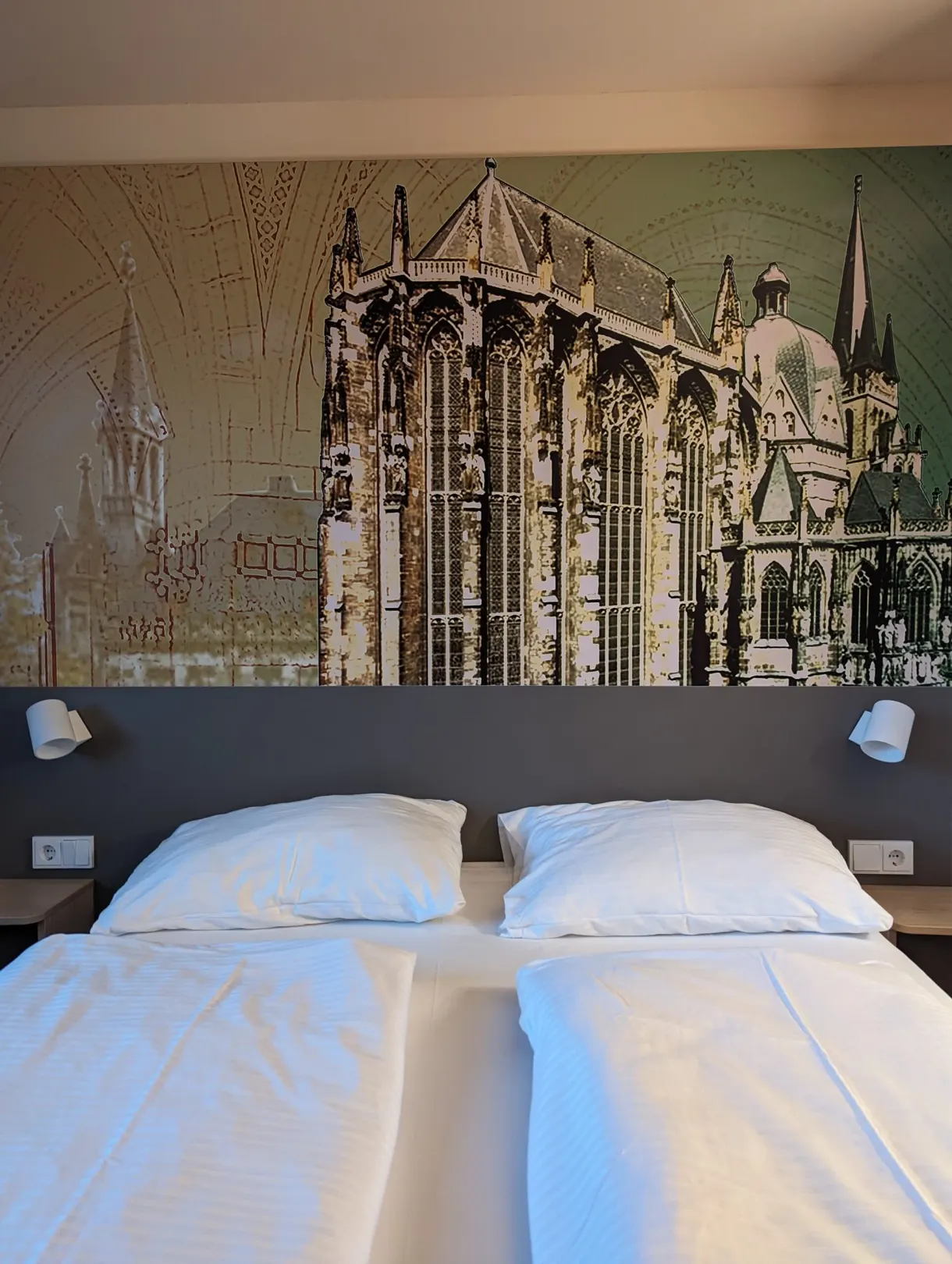
For our first night, we got the chance to try the B&B Aachen City hotel, well located in downtown Aachen, on a shopping street. It’s a good option if you don’t have a huge budget for accommodation: room prices start from €80 a night for a double. The room was pretty spacious, simply decorated and very clean. Breakfast, an optional extra at €10.50 per person, won us over: lots of organic products and a great spread of sweet and savory options.
One night with breakfast provided in partnership with the Aachen Tourist Office
- Motel One Aachen
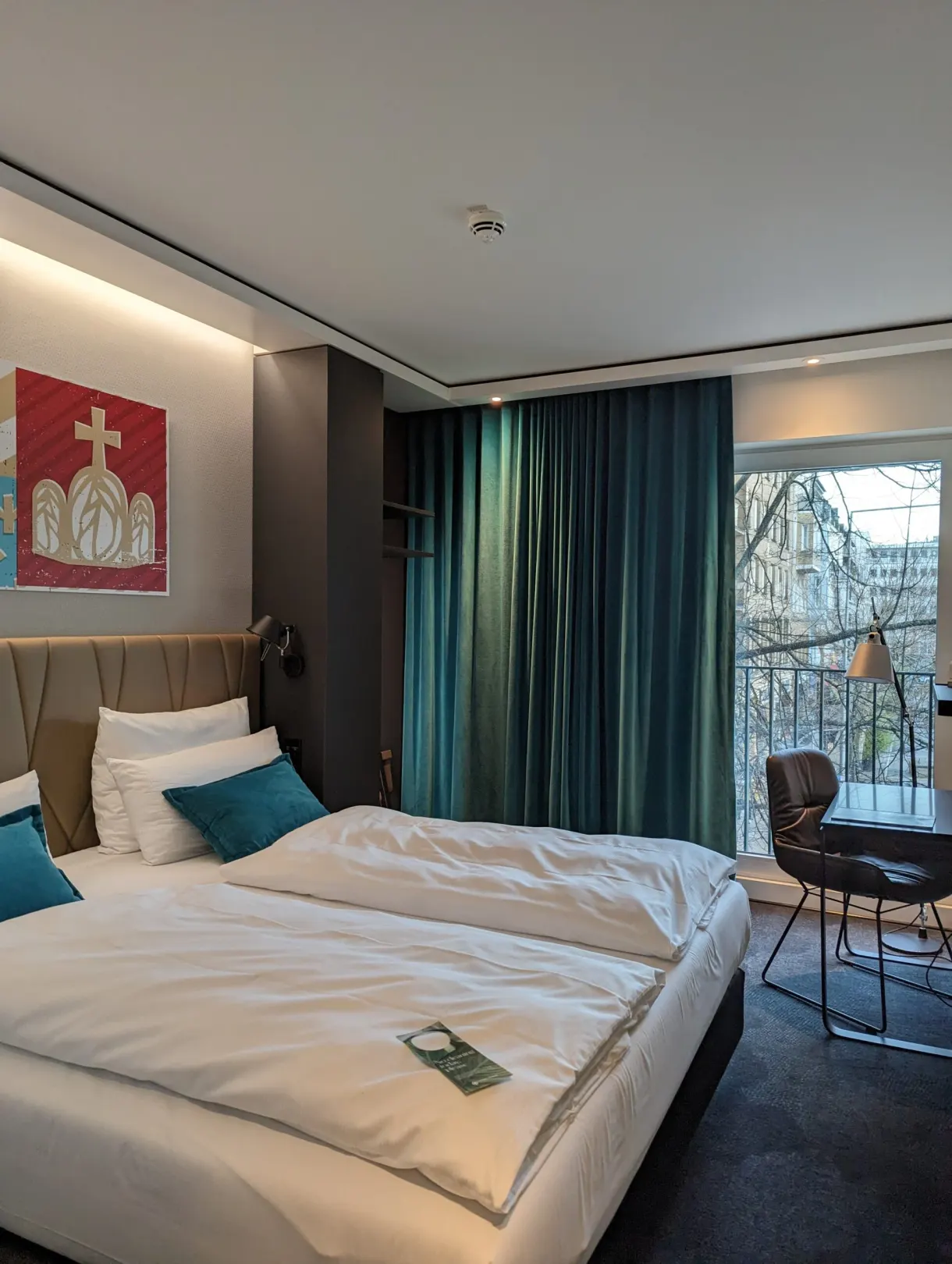
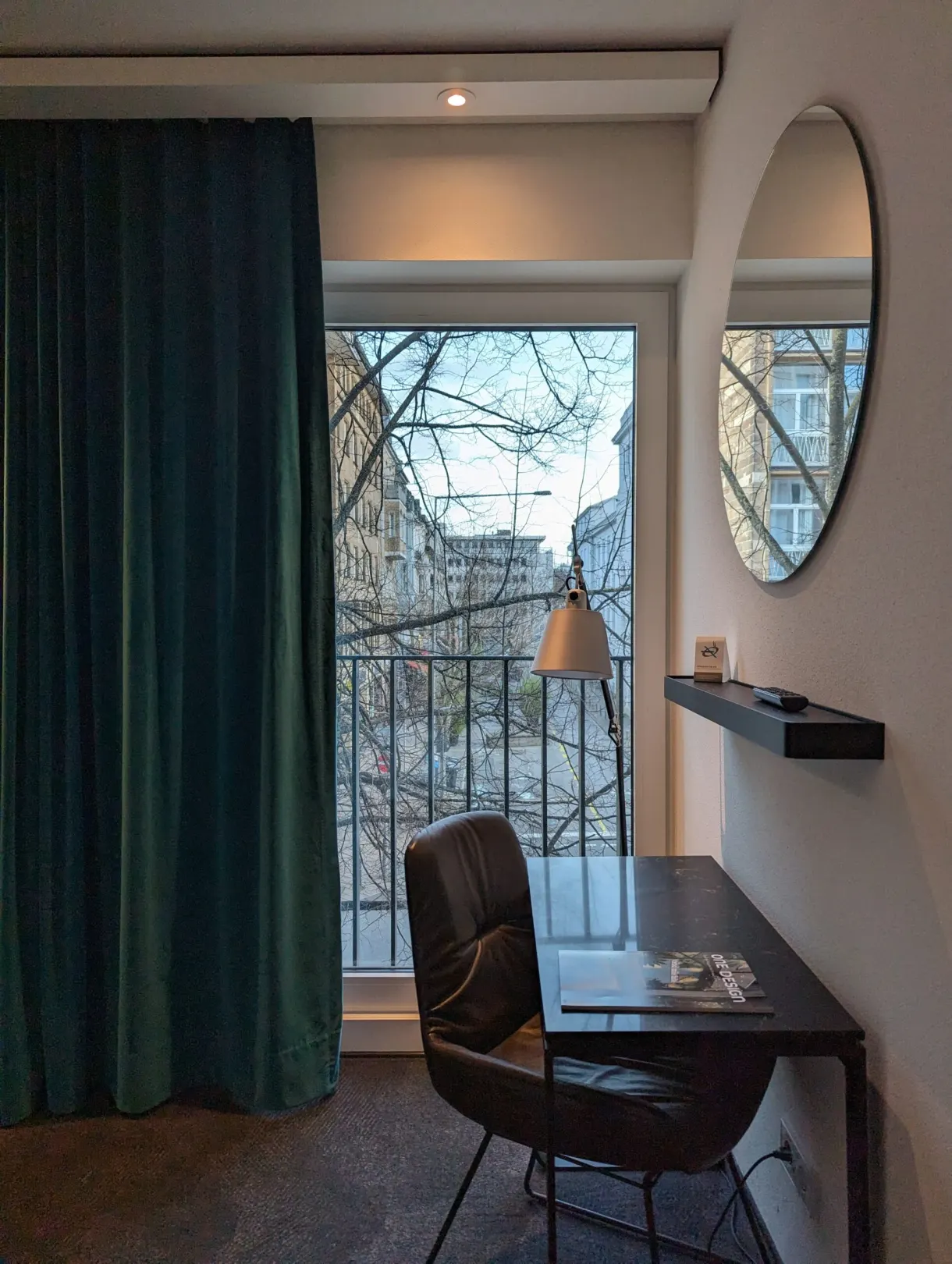
We spent our second night of the weekend at Motel One Aachen, for €89 a night in a double room. Good to know: breakfast is free if you sign up for the Be One hotel chain’s loyalty program. Our room was cosy, modern, comfortable and really well soundproofed: we were right on the street and didn’t hear a thing. As a bonus, there was a lovely view of the theatre from the second floor. The lobby, which doubles as a bar, is perfect for a drink or just to read a book; it’s also where breakfast is served in the morning. We were pretty impressed by it too: a good chunk of the products are organic or fair trade, with a huge choice of both sweet and savoury options. We highly recommend this hotel, ideally located right in the city centre.
Food and drink: where to eat in Aachen?
- AKL Libanesisches Restaurant: a great kebab/Lebanese spot for a quick lunch; €28.50 for the big “Maschawi BBQ Plate” to share between two, very generous.
- Madame Tam City: really good Vietnamese food in a lovely setting; €40 for two (two starters, two mains)
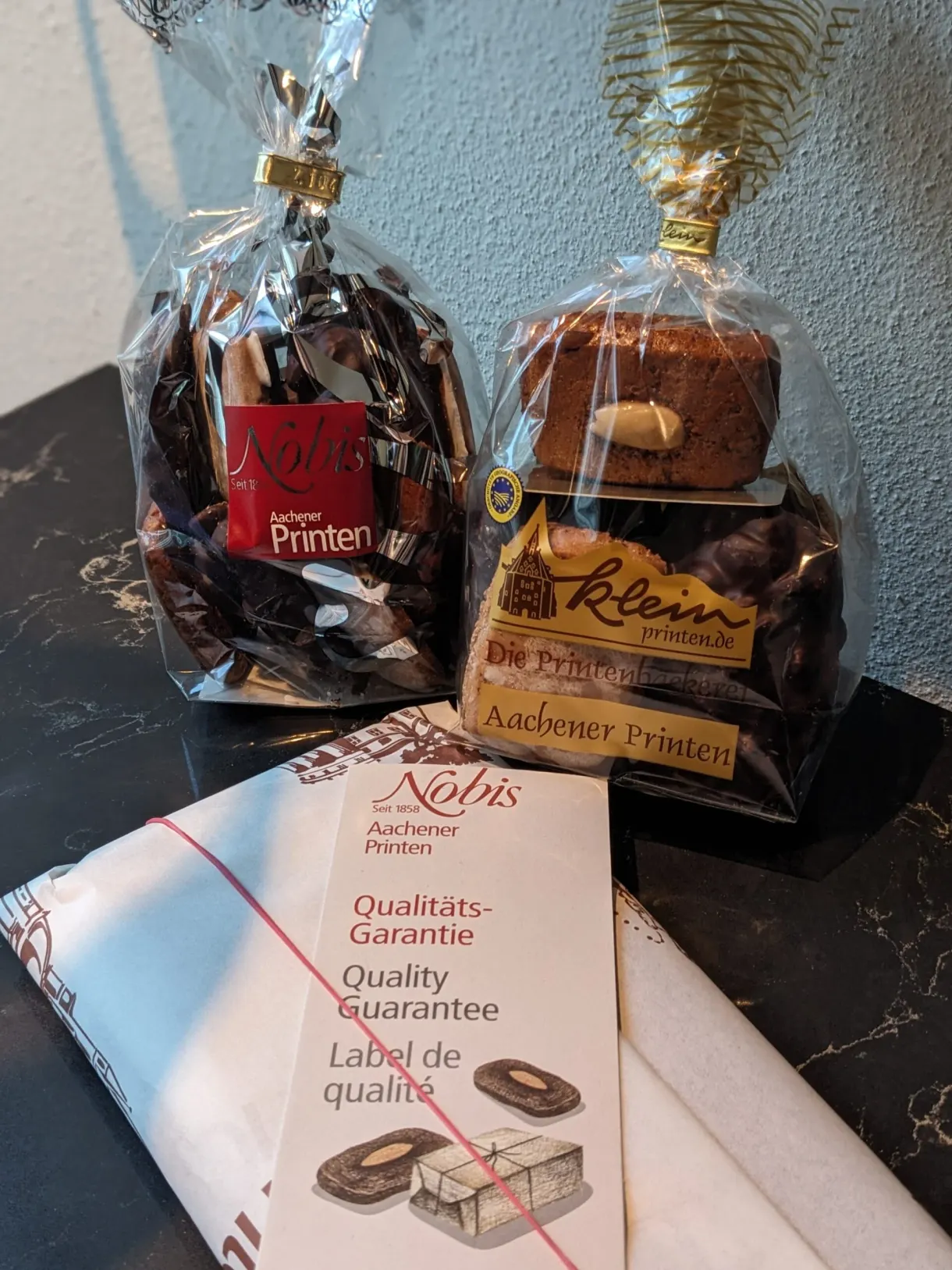
- Nobis and Klein: two great spots to pick up some Printen, the gingerbread-flavoured biscuits typical of Aachen, made especially for the holiday season.


What we thought of Aachen
This weekend was a lovely surprise. We had no idea what to expect, having barely ever heard of the town, and we discovered a small city rich in history and heritage, with a great range of museums and things to see. There’s just no way to get bored over a weekend here!
So if you’re looking for a destination that’s quick and easy to reach by train, especially from Paris, keep Aachen in mind. You can discover it in winter, during the holiday season like we did, or in the warmer months to make the most of the terraces and parks.
This trip was partly done in partnership with the Aachen Tourist Office.
Planning a trip to Germany? Read all our articles on this country!
Frequently asked questions about Aachen
Is Aachen in France or Germany?
Aachen is in Germany, not France, in the state of North Rhine-Westphalia. It’s the country’s westernmost major city, on the borders with Belgium and the Netherlands, about 30 kilometres from Maastricht and around 70 km from Cologne. Its French name, Aix-la-Chapelle, comes from history: from 1798 to 1814, the town was the capital of the French department of Roer.
What is the German name for Aix-la-Chapelle?
In German, the town is called Aachen, the name you’ll see on the signs. Its French name comes from the Latin aquae, meaning waters, referring to the hot springs the Romans made use of, and “la Chapelle” refers to Charlemagne’s Palatine Chapel, the heart of today’s cathedral.
How long do you need to visit Aachen?
Plan on two days to visit the cathedral, the town hall and the historic centre, plus the museums and a late afternoon at the Carolus Thermen, just like we did.
How to get to Aachen from Paris?
The Eurostar runs direct from Paris Gare du Nord to Aachen’s main station, Aachen Hbf, in 2 hours 40 minutes. We paid €32 one way per person in December 2023; these days, tickets start at €35.
What specialty should you bring back from Aachen?
Printen, spiced biscuits similar to gingerbread, known in German as Aachener Printen. We got ours from Nobis and Klein, the two spots we mentioned earlier in the article.
Leave a comment
Thank you for your comment! Marie & Romain
Be the first to leave a comment.